Home Blog Page 288

Japan to restart world’s biggest nuclear plant Wednesday

Japan to restart world's biggest nuclear plant Wednesday

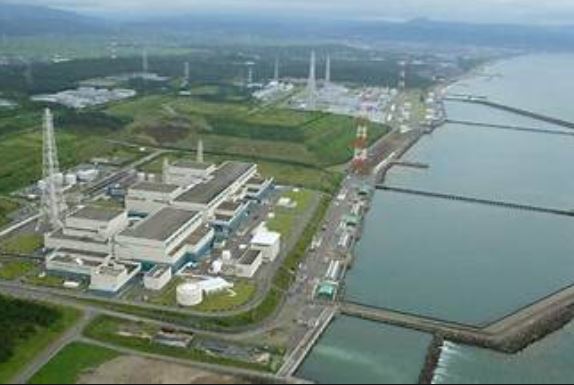
KARIWA, JAN 21 (DNA): The world’s biggest nuclear power plant is set to restart on Wednesday for the first time since the 2011 Fukushima disaster, its Japanese operator said, despite persistent safety concerns among residents.

The governor of Niigata province, where the Kashiwazaki-Kariwa plant is located, approved its resumption last month, although public opinion remains sharply divided.

After receving the final green light Wednesday, Tokyo Electric Power (TEPCO) said they were “proceeding with preparations… and plan to remove the control rods after 7:00 pm today and start up the reactor”.

On Tuesday, a few dozen protesters — mostly elderly — braved freezing temperatures to demonstrate in the snow near the plant’s entrance, whose buildings line the Sea of Japan coast.

 “It’s Tokyo’s electricity that is produced in Kashiwazaki, so why should the people here be put at risk? That makes no sense,” Yumiko Abe, a 73-year-old resident, told AFP.

                  Around 60 percent of residents oppose the restart, while 37 percent support it, according to a survey conducted in September.

                  Kashiwazaki-Kariwa is the world’s biggest nuclear power plant by potential capacity, although just one reactor of seven is restarting Wednesday.

                  The facility was taken offline when Japan pulled the plug on nuclear power after a colossal earthquake and tsunami sent three reactors at the Fukushima atomic plant into meltdown in 2011.

                  However, resource-poor Japan now wants to revive atomic energy to reduce its reliance on fossil fuels, achieve carbon neutrality by 2050 and meet growing energy needs from artificial intelligence.

                  Prime Minister Sanae Takaichi has voiced support for the energy source.

                  Fourteen reactors, mostly in western and southern Japan, have resumed operation since the post-Fukushima shutdown under strict safety rules, with 13 running as of mid January.

                  The Kashiwazaki-Kariwa unit would be the first run by Tokyo Electric power (TEPCO) — which also operates the stricken Fukushima Daiichi plant, now being decommissioned — to restart since 2011.

                  Nearly fifteen years after the disaster, “the situation is still not under control in Fukushima, and TEPCO wants to revive a plant? For me, that’s absolutely unacceptable,” said Keisuke Abe, an 81-year-old demonstrator.

Ishaq Dar inaugurates Pathfinder group’s Pakistan Pavilion

Ishaq Dar inaugurates Pathfinder group’s Pakistan Pavilion

DNA

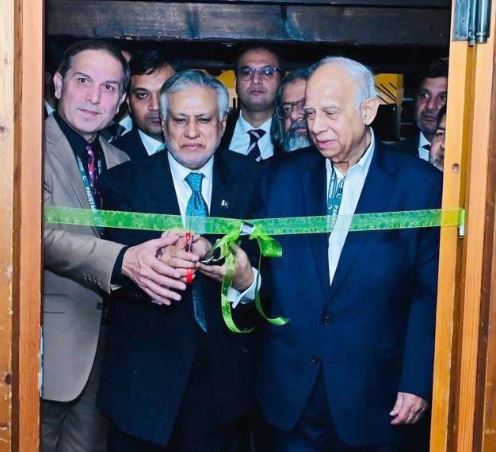
DAVOS: Deputy Prime Minister / Foreign Minister, Senator Mohammad Ishaq Dar  inaugurated the Pathfinder Group’s Pakistan Pavilion on the sidelines of the Annual Meeting 2026 in Davos.

DPM/FM appreciated the initiative to showcase Pakistan’s vast economic potential and emerging opportunities on a global platform, while highlighting the dynamism and innovation of Pakistani start-ups.

He underscored the critical role of start-ups in advancing socio-economic development and driving innovation across diverse sectors. He reaffirmed the Government’s commitment to facilitating and promoting entrepreneurs and start-ups, particularly those led by youth, to fully realize Pakistan’s economic potential.

NA passes Elections Amendment bill seeking to keep lawmakers’ assets ‘confidential’

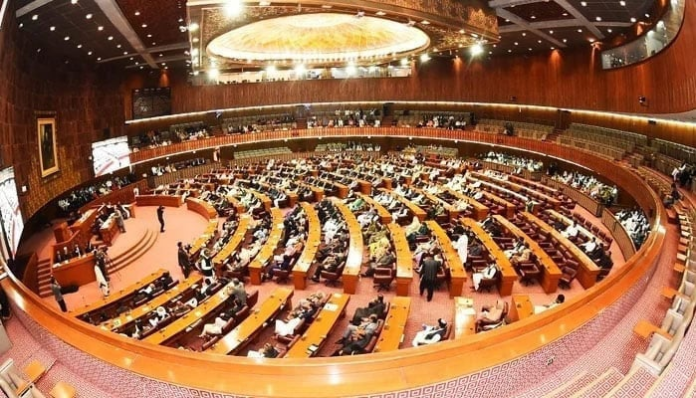
ISLAMABAD, JAN 21 /DNA/ : The National Assembly (NA) on Wednesday passed the Elections Amendment Bill, 2026, seeking to allow the withholding of public disclosure of lawmakers’ assets and liabilities if such disclosure is deemed to pose a serious threat to the life or safety of the member or their family.

Under the proposed amendment to Section 138 of the Elections Act, the bill seeks to insert a proviso stating:

 “Provided that the speaker of the concerned assembly or, as the case may be, the chairman of the senate my, on an application made by a member and for reasons to be recorded in writing, by a ruling delivered in the chamber, determine that the statement of assets and liabilities of that member shall not be published publicly by the commission if such publication would pose a serious threat to the life or safety of the members or, as the case may be, his family, for a period not exceeding one year at a time and subject to the condition that a complete and true statement of assets and liabilities shall be submitted confidentially to the election commission.”

The bill now requires approval from the Senate and assent from the president before it can become law.

This is a developing story and is being updated accordingly

Lavish spendings of rulers: a stark contrast to Pakistan’s struggling masses

Lavish spendings of rulers: a stark contrast to Pakistan's struggling masses

EDITORIAL

In the Islamic Republic of Pakistan, where the economy teeters on the brink of collapse and millions grapple with abject poverty, the ruling elite continue to indulge in opulent displays of wealth that defy logic and decency. The recent second marriage of Junaid Safdar, son of Punjab Chief Minister Maryam Nawaz Sharif, exemplifies this glaring hypocrisy. Held in Lahore amid extravagant celebrations, the event drew widespread criticism for its lavish spending, with reports highlighting millions poured into designer outfits, bespoke jewelry, and high-end accessories. Maryam Nawaz herself became a focal point of backlash.

Social media erupted with accusations of self-obsession and insensitivity, as PML-N leaders, who preach austerity to the masses, flouted their own rules. This isn’t just a family affair; it’s a symptom of a deeper malaise. Punjab enforces a “one-dish” policy for weddings to curb extravagance and promote simplicity, a measure ostensibly aimed at easing the burden on ordinary citizens during economic hardship. Yet, for the rulers, no such constraints apply.  PML-N figures like Marriyum Aurangzeb also drew attention for their glow-ups and ensembles, further fueling perceptions of elitism.

 They urge the public to embrace frugality while their lifestyles scream excess. This double standard is why Pakistan stagnates: one set of rules for the rich and powerful, another for the impoverished masses. Nowhere in true democracies do such disparities thrive unchecked. In established systems, leaders are held accountable, and public funds aren’t siphoned for personal grandeur. But in Pakistan, the divide is stark. As of 2025, approximately 45% of the population lives below the poverty line, based on updated World Bank thresholds of $4.20 per day.

This translates to over 107 million people scraping by on less than PKR 1,200 daily, with extreme poverty affecting 16.5%—a sharp rise from previous estimates. The national poverty rate surged to 25.3% in 2023/24, pushing 60.4 million into destitution amid floods, inflation, and instability.

Half the population—close to 120 million—struggles below this grim benchmark, with 82% unable to afford a healthy diet.

The human cost is heartbreaking. People are dying of hunger; parents, in despair, have resorted to killing their children because they cannot feed them. Women are forced into selling themselves to make ends meet. Undernutrition accounts for nearly half of under-5 child deaths, with 61 per 1,000 live births not surviving to age five. Acute malnutrition affects 18% of children under five, and stunting impairs 40%.

 These aren’t abstract statistics; they’re the reality in a nation blessed with resources but cursed by mismanagement. Corruption rules supreme, infiltrating every government department. Not a single sector is free from it. Transparency International’s 2025 survey ranks the police as the most corrupt at 24%, followed by tendering and procurement at 16%, and the judiciary at 14%. Bribery is rampant in public services, with inefficient bureaucracy and impunity exacerbating the issue.

 The IMF’s diagnostic highlights systemic weaknesses, estimating that addressing corruption could boost GDP by 5-6.5% over five years.

Money makes the mare go here—tenders are rigged, budgets opaque, and political capture stifles progress. Officials engage in graft with little fear, as anti-corruption laws are poorly enforced.

The economy’s fragility compounds this. Pakistan runs on IMF loans and financial support from friends like Saudi Arabia and the UAE, but even that lifeline is fraying. As of January 2026, the government seeks rollovers on $2.5 billion from the UAE at lower interest rates, including a 1996 loan still unpaid at 6.5%. Saudi deposits total $5 billion, with maturities in 2026, part of $12 billion bilateral debts alongside China.

Under the IMF’s Extended Fund Facility, these must remain intact, but optimism about ditching IMF aid soon rings hollow amid persistent crises. The country begs for extensions, unable to repay without them. When will we stand on our own feet? When will we stop begging and learn to live with dignity and honor? The rulers’ lavish spendings mock the poor’s suffering, perpetuating a cycle of inequality that hinders progress. True change demands accountability, transparent governance, and leaders who practice what they preach. Until then, Pakistan’s masses will continue to bear the brunt of elite indulgence, while the nation drifts further from prosperity.

PM Shehbaz lands in Switzerland to attend WEF 2026 in Davos

PM Shehbaz lands in Switzerland to attend WEF 2026 in Davos

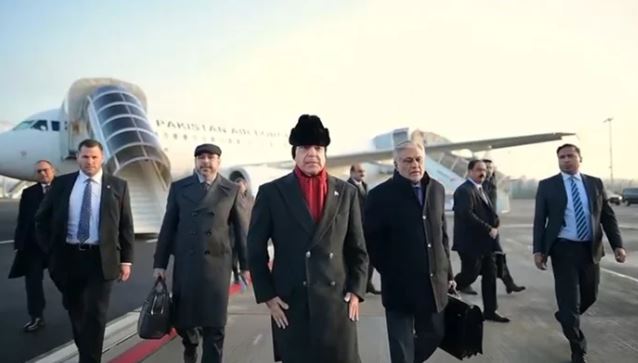
DAVOS, JAN 20: Prime Minister Shehbaz Sharif landed in Switzerland on Tuesday, where he will lead a high-level delegation to the annual meeting of the World Economic Forum (WEF) set to be held in Davos-Klosters from January 20 to 22, 2026.

Ambassador Asim Iftikhar Ahmad, Pakistan’s Permanent Representative to the United Nations, Pakistani Ambassador to Switzerland Marghoob Butt and diplomatic staff received the prime minister upon his arrival.

In a statement on X issued after arriving in Davos, the prime minister said he would advance Pakistan’s engagement at the World Economic Forum with global trade and investment partners.

“Pakistan’s ongoing economic reform journey is unlocking profound opportunities, driven by a resilient and entrepreneurial workforce and significant potential across energy, agriculture, minerals, and emerging technologies,” he added.

“We are ready to harness this potential into mutually beneficial economic cooperation and long-term investment,” he added.

PM Shehbaz is accompanied by Deputy Prime Minister and Foreign Minister Senator Ishaq Dar and other officials.

According to a statement issued by the Foreign Office, the prime minister is scheduled to hold multiple substantive engagements, including participation in the WEF’s Informal Gathering of World Economic Leaders (IGWEL) session titled “Restoring a Spirit of Dialogue in a Divided World.”

“The prime minister will also host/chair a Pakistan-specific high-level business roundtable with different corporate leaders,” the FO said.

It added that PM Shehbaz will interact with several world leaders, including business executives, on the sidelines.

According to the statement, the premier will articulate Pakistan’s perspective on global and regional peace and development, while highlighting the government’s vision and achievements in the areas of economy, trade, and investment.

“The WEF annual meeting brings together political leaders, business executives, heads of international organisations and civil society representatives. It deliberates on contemporary geopolitical, economic, social and environmental issues.”

Pakistan, Kazakhstan strengthen ties for educational development

Pakistan, Kazakhstan strengthen ties for educational development

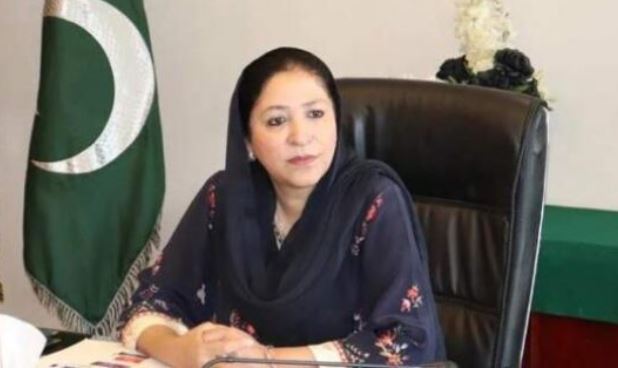
ISLAMABAD, Jan 20 (DNA): Minister of State for Federal Education and Professional Training, Ms. Wajiha Qamar met Tuesday with H.E. Yerzhan Kistafin, Ambassador of Kazakhstan to Pakistan, to discuss avenues for enhanced collaboration and partnership in the education sector.

The meeting focused on fostering bilateral cooperation aimed at advancing educational development in Pakistan through shared expertise, academic exchange, and institutional linkages. Both sides expressed strong commitment to building a lasting alliance that promotes innovation, capacity building, and global academic connectivity.

Key discussions included progress on the upcoming Memorandum of Understanding (MoU) between Pakistan and Kazakhstan in the field of education, as well as preparations for the forthcoming visit of the President of Kazakhstan to Pakistan. The MoU is expected to pave the way for student and faculty exchanges, joint research initiatives, and collaboration between educational institutions of both countries.

Ms. Wajiha Qamar emphasized the importance of international partnerships in strengthening Pakistan’s education system and reaffirmed the Government’s resolve to expand global academic networks. Ambassador Yerzhan Kistafin welcomed the initiative and reiterated Kazakhstan’s readiness to work closely with Pakistan for mutual benefit.

The meeting marks a significant step forward in deepening Pakistan–Kazakhstan relations and advancing shared goals in education and human resource development.

Study calls for restoring status of humanities in higher education system of Oman

Study calls for restoring status of humanities in higher education system of Oman

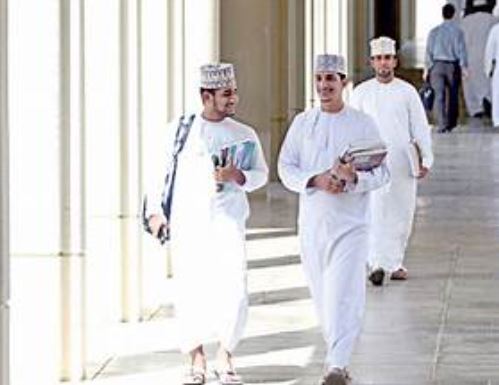
MUSCAT, Jan 20: A recent academic study has called for restoring the central role of the humanities within Oman’s higher education system, describing them as a cornerstone for building a balanced, sustainable knowledge-based economy.

The study, authored by Dr. Maryam bint Ali Al-Hanaei, Associate Professor of Intercultural Communication, and Prof. Mohammed bin Ali Al-Balushi, Professor of Archaeology and Heritage Studies at Sultan Qaboos University, was published in the Journal of Arabian Studies under the title “Reimagining the Knowledge Economy: A Critical Call to Recentre the Humanities in Omani Higher Education.”

The researchers argue that prevailing narratives surrounding the knowledge economy often equate progress and innovation solely with scientific and technological advancement, overlooking the vital contribution of the humanities and social sciences in developing critical thinking, reinforcing ethical values, and preserving cultural identity.

The study highlights a disconnect between national strategic frameworks—such as Oman Vision 2040 and the Cultural Strategy 2021–2040, which emphasize identity, culture, and creativity—and the realities of higher education practices that tend to prioritise scientific, technical, and business disciplines.

Through an analysis of faculty distribution and student enrolment patterns both inside and outside Oman, the study finds that while the humanities continue to hold a notable presence—particularly in education, community, and cultural fields—their share is gradually declining compared to engineering and technical disciplines, especially among students studying abroad.

The researchers stress that recentring the humanities is neither a luxury nor a purely cultural endeavour, but a strategic necessity for sustainable development. They argue that cultivating informed, creative citizens requires ensuring that scientific and technological progress remains aligned with ethical, social, and cultural values.

The study calls for education and research policies that foster integration between the humanities and scientific disciplines through interdisciplinary curricula, institutional and research support, and the embedding of humanities-based knowledge within national innovation systems—consistent with Oman’s aspirations for a knowledge society rooted in identity and openness to the world.

According to the study’s conclusions, investment in the humanities equips future generations with both technical competence and ethical and cultural awareness, supporting comprehensive and balanced development in the Sultanate.

Speaking to the Oman News Agency, Dr. Al-Hanaei said the research forms part of a broader intellectual project launched in 2022 to reassess the position of the humanities and the knowledge-production system within Omani higher education. She explained that the study presents a methodological critique of neoliberal approaches that frame education primarily as an economic tool measured by profitability rather than human or societal value—an approach that marginalises local and humanistic knowledge and creates ethical and epistemological gaps.

She added that academic experience reveals a clear contradiction between the principles of Oman Vision 2040—which stress identity, values, sustainability, and human development—and educational practices that prioritise technical and professional disciplines driven by market logic. This contradiction, she noted, raises fundamental questions about the purpose of education: whether it should merely supply labour-market skills or also nurture critical awareness, cultural belonging, and intellectual responsibility.

From an intercultural communication perspective, Dr. Al-Hanaei warned that a knowledge economy detached from humanistic and ethical foundations risks cultural homogenisation, erosion of local knowledge, and the separation of innovation from social responsibility.

For his part, Prof. Al-Balushi said the dominance of applied sciences in higher education and development policymaking reflects a deeper epistemological shift that reduces culture and heritage to measurable or economic resources detached from their historical and symbolic meanings. This shift, he noted, transforms humanity’s relationship with heritage from one of understanding and interpretation to functional exploitation.

He added that marginalising the humanities turns culture into a “silent product,” stripped of meaning and disconnected from memory, identity, and continuity. The humanities, he argued, restore the human being to the centre of the knowledge process by treating cultural and historical elements as phenomena rich in meaning that require interpretation before use.

Prof. Al-Balushi emphasised that both Oman Vision 2040 and the Cultural Strategy 2021–2040 place identity and heritage at the heart of sustainable development, making the humanities indispensable. Without them, heritage-related initiatives risk becoming technically successful but culturally shallow and lacking long-term relevance.

He warned that sidelining the humanities weakens society’s ability to critically engage with technology and allows applied sciences to shape values without debate. International experience, he noted, shows that unbalanced technocratic education systems can lead to the erosion of cultural reference points, weakening of language, and loss of historical memory.

He concluded that restoring the humanities is not an idealistic aspiration but a fundamental requirement for building a modern, balanced society—one that places the human being, along with values, memory, and identity, at the centre of the development process.

Moroccan National Football Team honored by Royal Reception after AFCON Final

Moroccan National Football Team honored by Royal Reception after AFCON Final

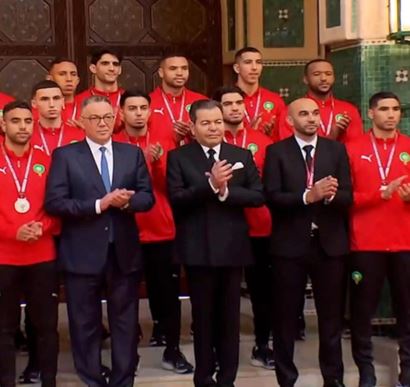
RABAT, JAN 20 /DNA/ – Under the High Instructions of His Majesty King Mohammed VI, the Prince Moulay Rachid received on Monday at the Royal Guests Palace in Rabat the members of the National Football Team, finalists of the Africa Cup of Nations (Morocco-2025). 

On this occasion, the Moulay Rachid was greeted by the President of the Royal Moroccan Football Federation, Fouzi Lekjaa, the National Team coach, Walid Regragui, and the members of the National Team, before posing for a commemorative photo. 

This reception reflects the High Benevolence with which His Majesty the King, has continually surrounded the youth and supported their development through sports, and the particular interest the Sovereign attaches to this sector in general, and to football in particular. 

H.M. King Mohammed VI, sent, immediately after the end of the final match between the national team and its Senegalese counterpart, a message of congratulations to the members of the National Team.

In this message, the Sovereign emphasized that, “through this distinguished campaign, you have demonstrated that perseverance, dedication, and team spirit are the keys to achieving excellence” and “also shown the world what Moroccan and African youth can accomplish when they believe in their talents and abilities”.

“You also proved, through determination and your heroic and honorable performance, the importance of my strategic vision to invest in human capital and modernize the Kingdom’s infrastructure, which demonstrated their resilience and their world-class level of preparation ahead of the organization of the 2030 World Cup,” HM the King stated in His message.

Polish minister visit to Pakistan Diplomatic row between New Delhi and Poland

The report added that Jaishankar, in televised remarks, said he wanted to discuss Sikorski’s “recent travels to the region”, calling it a direct reference to the Polish minister’s visit to Pakistan in October last year

News Desk

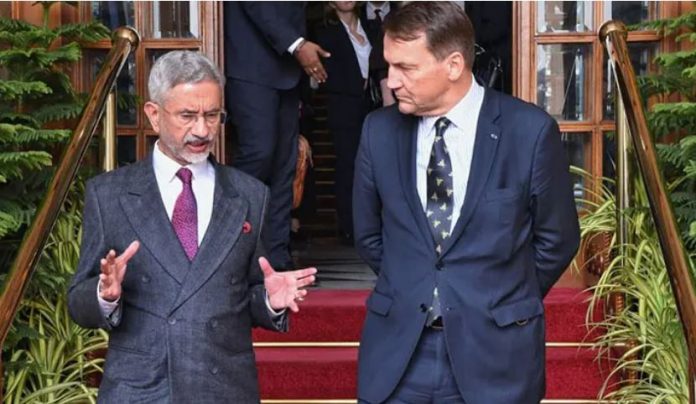
NEW DELHI: A diplomatic row has erupted between New Delhi and Warsaw after Indian Foreign Minister Dr Subrahmanyam Jaishankar took aim at Polish Deputy Prime Minister Radoslaw Sikorski’s recent visit to Pakistan, Indian media reported.

According to The Hindu, the visit by the Polish minister was the first since Prime Minister Narendra Modi visited Warsaw in August 2024, from where he travelled to Ukraine as well.

The report added that Jaishankar, in televised remarks, said he wanted to discuss Sikorski’s “recent travels to the region”, calling it a direct reference to the Polish minister’s visit to Pakistan in October last year.

During Sikorski’s two-day visit to Islamabad, Pakistan and Poland had agreed to deepen their political and economic ties during talks in Islamabad, with both countries pledging to transform their relationship into what they called a “comprehensive and mutually beneficial partnership”.

The Hindu reported that during the meeting between Jaishankar and Sikorski, the former said, “Poland should display zero tolerance for terrorism and not help fuel the terrorist infrastructure in our neighbourhood.”

According to the report, this was a “direct reference to the Polish FM’s visit to Pakistan in October 2025, where he had met Pakistan’s top leadership”. The report further quoted Jaishankar as saying that Sikorski, a former journalist who covered Afghanistan in the 1980s, was “no stranger to the region” and would be “certainly familiar with the longstanding challenge of cross-border terrorism”.

The Indian minister also took exception to the Polish minister’s previous comments about Delhi’s import of Russian oil; the report noted that Sikorski had stated in Paris earlier this month that he was “satisfied” by India’s reduction of Russian oil imports “because this is financing the war machine of Putin”.

“I have repeatedly underlined that the selective targeting of India is both unfair and unjustified. I do so again today,” Jaishankar told Sikorski, according to The Hindu.

Speaking to reporters after the meeting at Hyderabad House, Sikorski said that while the two sides agreed on concerns over terrorism, India’s participation in “Zapad 2025” military exercises in Russia and Belarus was seen as “threatening”, the report said.

India had taken part in Russia’s Zapad (West) joint drills with Belarus in September 2025, part of which took place close to Nato borders.

Helicopter carrying 3 people missing in southwest Japan: media

Helicopter carrying 3 people missing in southwest Japan: media

TOKYO, Jan. 20: A sightseeing helicopter carrying three people went missing near the summit of Mount Aso in Kumamoto Prefecture in southwestern Japan on Tuesday, public broadcaster NHK reported.

Police and fire departments are searching the area near the Nakadake crater of Mt. Aso, the report said.

Stay Connected

64FansLike
60FollowersFollow

Latest Reviews

Exchange Rates

USD - United States Dollar
EUR
1.14
GBP
1.34
AUD
0.70
CAD
0.71