Home Blog Page 2868

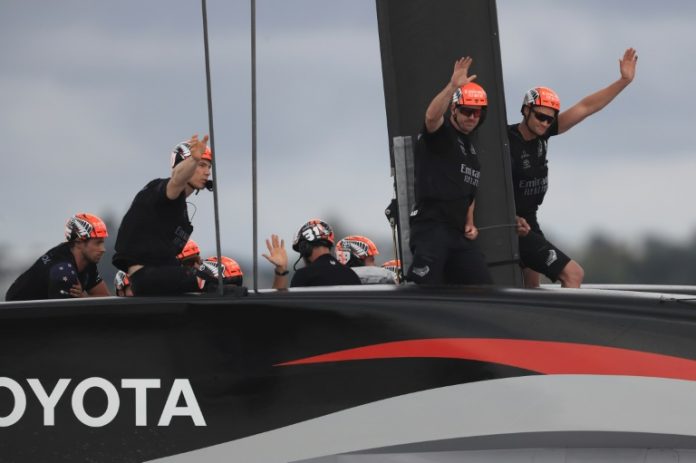
Team New Zealand one win from victory in America’s Cup

Auckland, March 16 : Team New Zealand reached match point in the America’s Cup with come-from-behind win in race nine Tuesday on Auckland’s Waitemata Harbour to extend their lead over Luna Rossa to 6-3.

The hosts need one more win to claim yachting’s most prestigious trophy in the best-of-13 series and can achieve the mark in the day’s second race later Tuesday.

Luna Rossa, desperate to keep the series alive, led for most of a dramatic race as the lead changed five times in shifting winds.

But the New Zealanders made a decisive charge on the fifth leg of six and won by 30 seconds to set up a potentially series-clinching race 10.

Luna Rossa will need to capture all four remaining races to win the Auld Mug trophy.

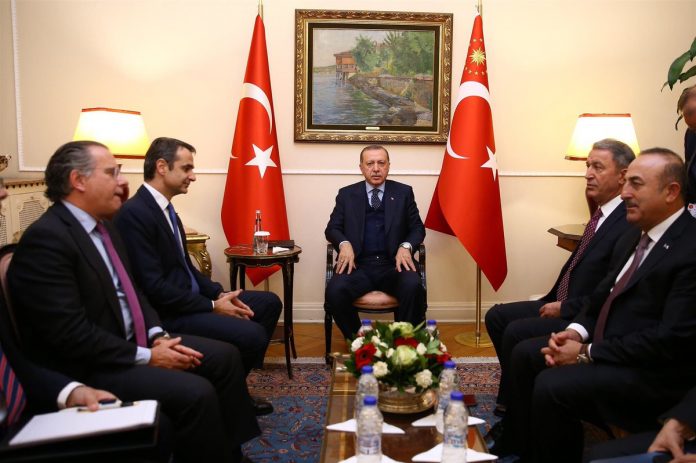
Greece, Turkey, meet for fresh talks on maritime dispute

Athens, March 16 : NATO members Greece and Turkey meet in Athens Tuesday to try once more to settle their standoff over eastern Mediterranean borders and energy rights.

Ankara ratcheted up the pressure a notch on Monday with a diplomatic note to Israel, Greece and the European Union.

It told them to seek its permission before assuming work on a proposed undersea power cable in disputed eastern Mediterranean waters.

Both sides cite a range of decades-old treaties and international agreements to support their conflicting territorial claims.

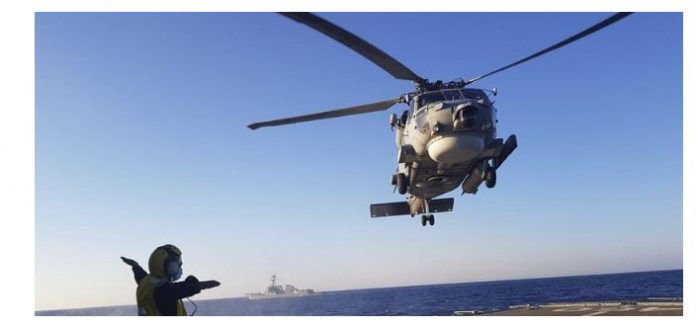
Hostilities flared last year when Ankara sent a research ship accompanied by a navy flotilla into waters near the Turkish coast that Greece asserts are theirs — a claim the EU supports.

Those waters are thought to be a possible source of natural gas reserves.

Turkey is furious that Athens is using its web of islands to lay claim to huge swathes of the Aegean and Mediterranean seas.

Tuesday’s meeting follows one in Istanbul in January, the first direct talks between the two sides on the dispute in nearly five years — and which happened only after pressure from the EU.

But the discussion will also be the 62nd such meeting since 2000, a long series that so far has little to show for it.

World Cup-winning Japan footballer turns down Olympic torch relay

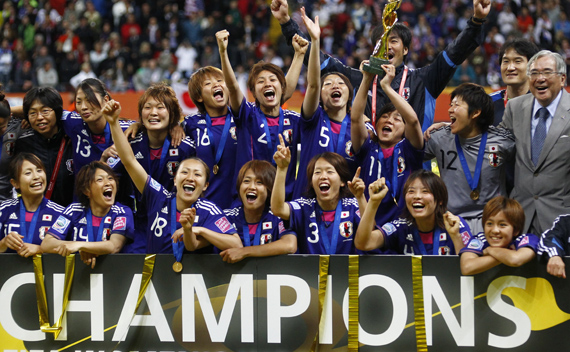
Japan's players celebrate with the trophy after the victory against the U.S. in their Women's World Cup final soccer match in Frankfurt July 17, 2011. REUTERS/Kai Pfaffenbach (GERMANY - Tags: SPORT SOCCER WORLD CUP)

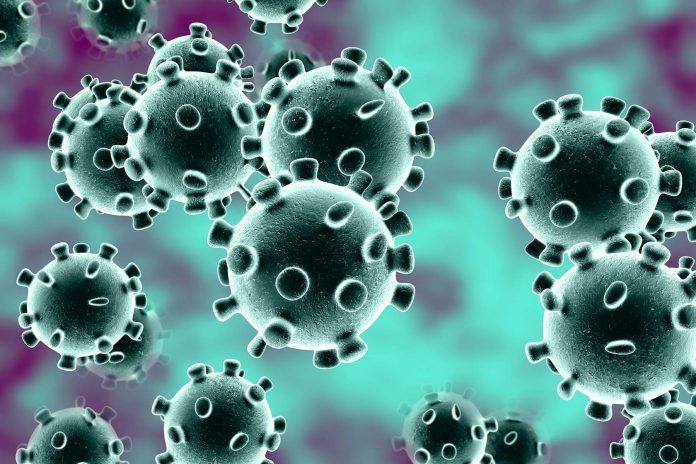
Tokyo, March 16 : World Cup-winning Japanese footballer Nahomi Kawasumi confirmed she will not take part in the coronavirus-delayed Tokyo Olympics torch relay, after originally pulling out last year because of concerns over the pandemic.

Kawasumi, who plays in the US for National Women’s Soccer League side Sky Blue FC, tweeted Monday that she has not changed her mind over being part of the event, due to start on March 25, citing worries over infections and travel arrangements.

Members of Japan’s 2011 World Cup-winning squad are due to use the Olympic flame to light the torch at the start of the nationwide relay in Fukushima.

“Once again, I have declined to be a torch runner on March 25, 2021,” tweeted Kawasumi, who was part of the team that stunned the US to win the 2011 final.

“The infection problem still hasn’t been resolved, and there’s also the fact that I live in the US, so I have made this decision,” she wrote.

“I’m praying for everyone’s health and that the situation can be resolved even one day earlier. The difficult days continue but let’s all stand firm together.”

Kawasumi withdrew from the event last year just days before it was due to begin, explaining there was “a high risk” of catching Covid-19 or infecting others.

The torch relay was postponed soon after, as International Olympic Commission chiefs and Japan’s then prime minister Shinzo Abe took the unprecedented decision to delay the Games by one year.

Games organisers announced Monday that spectators will be barred from the opening ceremony and the first leg of the relay, which is set to begin with pared-down celebrations broadcast online.

Fans will be allowed to line the route for the torch relay, but organisers have warned that “individual relay segments will be suspended if there is a risk of overcrowding”.

Organisers are expected to take a decision before the torch relay begins on whether spectators from overseas will be allowed to enter Japan for the Games.

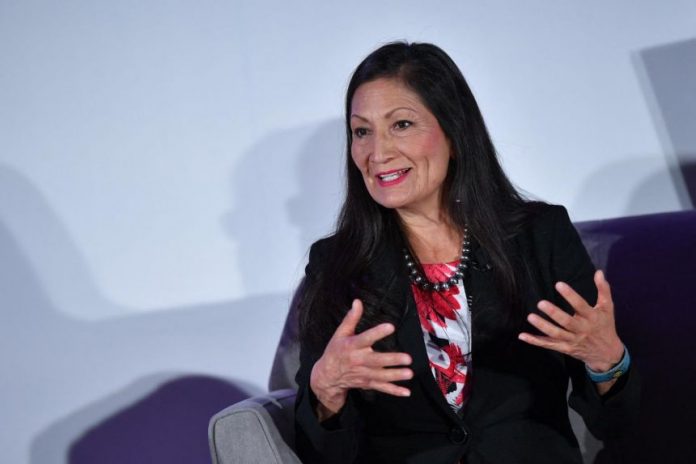
Deb Haaland becomes first Native American cabinet secretary

Washington, March 16 : Congresswoman Deb Haaland was approved by the US Senate Monday to join President Joe Biden’s administration, making her the first Native American to become a cabinet secretary.

She was confirmed by a vote of 51-40 to the position of Secretary of the Interior, overseeing a massive agency responsible for roughly one-fifth of land in the United States — including its many tribal reservations.

Haaland, 60, who hails from New Mexico’s Laguna Pueblo tribe, already made history in 2018 when she became one of the first two Native American women elected to US Congress.

“Rep Haaland’s confirmation represents a gigantic step forward in creating a government that represents the full richness and diversity of this country because Native Americans were for far too long neglected at the cabinet level and in so many other places,” the Senate majority leader, Democrat Chuck Schumer, said ahead of the vote.

“In elevating Rep. Haaland to lead the Department of Interior, we reset the relationship between the federal government and tribal nations to one of cooperation, mutual respect and trust.”

Haaland’s appointment was backed by a petition signed by some 120 tribal representatives, who urged Biden to make history by picking the congresswoman.

When her name first began to circulate for the position, Haaland noted she thought it was time for the world to start listening to indigenous communities regarding climate change and the environment.

“My ancestors have sacrificed a tremendous amount to keep my customs and traditions for me,” she told in 2018, during her first Congress run.

“So I want to make sure that I am bringing that perspective to the table in anything I do.”

Haaland has been a member of the House of Representatives since January 2019.

A single mother, she overcame alcoholism in her youth and for a time had to use government food stamps to survive.

Before Haaland, the only other Native American to serve in a US administration was Charles Curtis, Herbert Hoover’s vice president between 1929 and 1933, who liked to say he was “one-eighth Kaw Indian and 100 percent Republican.”

Pakistan records 58 more coronavirus-related deaths in a day

ISLAMABAD : Pakistan has recorded 58 more coronavirus-related deaths in the past 24 hours, taking the overall death toll to 13,595.

According to the latest statistics of the National Command and Operation Centre (NCOC), the COVID-19 has claimed 58 more lives and 2,511 fresh infections were reported during the said period.

The total count of active cases is 23,355 and the positivity rate increases up to 7.11 per cent.

In the past 24 hours, as many as 1,136 patients have recovered from the virus in a day and 1,895 patients are still in critical condition.

According to the National Command and Operation Centre (NCOC), with the fresh inclusion of the infections in the country the national tally of cases now currently stands at 609,964.

A total of 35,303 tests were conducted across the country during this period. Overall 573,014 people have recovered from the deadly disease so far while 9,565,066 samples have been tested thus far.

The federal government has decided to setup mass vaccination centres across the country in order to expedite the anti-COVID inoculation process, said sources

According to sources privy to the details, the National Command Operations Centre (NCOC) has also approved the establishment of the mass vaccination centres and had directed the provinces to implement the decision.

Chinese company, MCM gains foothold in Pakistan automotive market

Islamabad, Mar.16 : With eye-catching designs, luxury amenities and affordable prices, Master Changan Motors (MCM) assembled vehicles, have gained a foothold in Pakistan’s automotive market.

According to Gwadar Pro, Pakistan’s Master Group and Changan carmaker from China in a joint venture established the MCM in 2017 in Karachi. 

Changan chose Pakistan to assemble right-hand-drive vehicles and shortly took big leaps into the Pakistani automotive market.

Presently, the annual production capacity of the plant is 30,000 units. Changan has 20 dealerships around the country. 

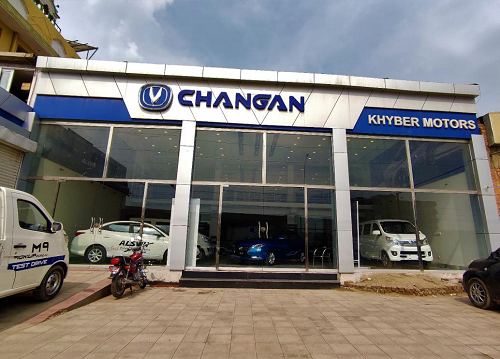
The Changan Khyber Motors dealership was established in Peshawar in mid-2019.

“Despite corona pandemic, we have sold around 300 units of Changan in 2020,” Mansoor Khan, Sale Executive MCM Peshawar told Gwadar Pro. “The way potential customers are coming to the dealership, I expect Changan cars and pickups to get a major share in KP’s auto market very soon,” he said.

Mansoor Khan said that Changan Alsvin, the ‘smart’ sedan has taken the automotive market by surprise. When MCM opened pre-booking, according to him, 17,000 units of Alsvin were booked in a very short period. 

“Changan Khyber Motors had 55 units of quota in Alsvin, which was pre-booked in just 36 hours,” he added.

He said that Alsvin contains Euro-5 engine, which is introduced for the first time in Pakistan. “The Bluecore Technology engine of Changan offers both efficiency and environment friendliness,” Mr. Khan said.

Muhammad Shah, who has pre-booked Alsvin sedan, said it was truly the smartest choice in this category of cars. 

“The main competitive advantage of Alsvin is its price, which is almost equal to the price of a used Japanese hatchback car,” he said.

“It is up to the customer to buy a new luxury car or a used car with fewer options for the same price,” Shah said.

Interactions with different drivers in Peshawar revealed that Changan M9 and M8 are popular and demanding mini-loaders in KP. Both are powerful light trucks with good cargo capacity and fuel average. 

“The vehicle comes with a powerful engine and above all it is fuel-efficient,” said Ijaz Ahmed who owns M9 PICKUP. He said drivers could open all three sides of the M9’s bed, which is quite handy during loading and unloading. 

It is the level of his satisfaction that Ijaz Ahmad has pre-booked KARVAAN MPV Plus, the mid-sized van for his family.

Eng. Muhammad Arif, who runs an automobile workshop at Ring Road Peshawar, told Gwadar Pro that selling 300 units in a year is a big achievement for Changan in KP. 

He said that the majority of people in this region opt to buy second-hand imported cars, however, Alsvin has the potential to challenge the status quo.

Changan, which means ‘lasting safety’ in the Chinese language, is one of the top automobile groups in China and a top-selling domestic Chinese automotive brand.

Turkey issues diplomatic note to Greece, Israel and EU over East Med

ANKARA, MAR 15 – Turkey, which has the longest continental coastline in the Eastern Mediterranean, has rejected maritime boundary claims made by Greece and the Greek Cypriot administration.

It has stressed that these excessive claims violate the sovereign rights of both Turkey and the Turkish Republic of Northern Cyprus (TRNC). Instead of opting to solve problems with Turkey through dialogue, Greece has, on several occasions, refused to sit at the negotiation table and opted to rally the European Union to take a tougher stance against Ankara.

In November 2019, Turkey and Libya signed a maritime delimitation deal that provided a legal framework to prevent any fait accompli by regional states. Accordingly, the attempts by the Greek government to appropriate huge parts of Libya’s continental shelf, when a political crisis hit the North African country in 2011, were averted.

The agreement also confirmed that Turkey and Libya are maritime neighbors. The delimitation starts from Fethiye-Marmaris-Kaş on Turkey’s southwestern coast and extends to the Derna-Tobruk-Bordia coastline of Libya.

In response, Egypt and Greece signed an agreement in August 2020, designating an EEZ in the Eastern Mediterranean between the two countries.

Between 2002 and 2016, dozens of rounds of talks were held to try and lay the foundation for full negotiations over the delimitation of maritime zones. After a five-year hiatus, prolonged by a dispute over overlapping claims for energy resources in the Eastern Mediterranean last year, the two resumed the exploratory talks on Jan. 25.

The two countries had initiated the talks to discuss the issues in the Eastern Mediterranean on March 12, 2002, in an effort to find a fair, sustainable and inclusive solution.

Talks were regularly held up until 2016, but there have been none since then due to political speculation and the Greek side’s reluctance to sit down at the negotiating table.

Bilateral discussions continued in the form of political consultations but did not return to the exploratory framework.

NATO members Turkey and Greece also participated in deconfliction talks last year, initiated by NATO Secretary-General Jens Stoltenberg, which were designed to reduce the risk of incidents in the Eastern Mediterranean.

The talks facilitated the establishment of a hotline between Athens and Ankara, allowing for conflict resolution at sea and in the air.

But obstacles remain, including what each side is willing to discuss. Greece says it will only address the demarcation of maritime zones in the Aegean and the Eastern Mediterranean, while Turkey argues that they should tackle all of the issues between the two sides, including air space and the status of certain Greek islands.

Turkey aims to have locally-developed COVID-19 vaccine by end of 2021

ANKARA, MAR 15 – Turkey is aiming to have its own vaccine by the end of 2021, the country’s industry and technology minister said on Monday.

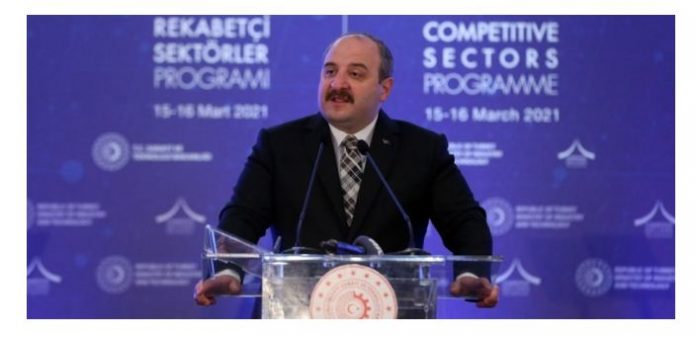
Speaking at a Competitive Sectors Program event, jointly organized by Turkey and the EU, Mustafa Varank said Turkey will begin human trials of the domestic vaccine after authorization from the Turkish Medicines and Medical Devices Agency (TITCK).

“For the three vaccine candidates — inactive, VLP and adenovirus-based — TITCK has received the applications”, Varank noted.

Noting that the process will take a long time, Varank said there is a “vaccines war” in the world and that poor countries do not receive vaccines.

“Therefore, we know that the vaccine we will develop will be an important success in the fight against the pandemic that will continue for many years, and we are making preparations to share this with other countries.”

He said that there are several projects in Turkish universities, adding: “For example, one of the professors in Kayseri is currently conducting the Phase 2 study of a vaccine candidate, and he is close to moving to Phase 3.”

Pakistan among biggest importers of major arms in Asia

ISLAMABAD, MAR 15 (DNA) – Pakistan was among the biggest importers of major arms in Asia and Oceania from 2016-2020, according to a Stockholm International Peace Research Institute (SIPRI) report published on Monday.

Asia and Oceania was the largest importing region for major arms, receiving 42 per cent of global arms transfers in 2016–2020. In addition to Pakistan, India, Australia, China and South Korea were also among the biggest importers in the region. International transfers of major arms stayed at the same level between 2011–15 and 2016–20.

Substantial increases in transfers by three of the top five arms exporters—the USA, France and Germany—were largely offset by declining Russian and Chinese arms exports. Middle Eastern arms imports grew by 25 per cent in the period, driven chiefly by Saudi Arabia (+61 per cent), Egypt (+136 per cent) and Qatar (+361 per cent). For the first time since 2001–2005, the volume of deliveries of major arms between countries did not increase between 2011–15 and 2016–20.

However, international arms transfers remain close to the highest level since the end of the cold war. “It is too early to say whether the period of rapid growth in arms transfers of the past two decades is over,” said Pieter D. Wezeman, Senior Researcher with the SIPRI Arms and Military Expenditure Programme.

“For example, the economic impact of the Covid-19 pandemic could see some countries reassessing their arms imports in the coming years. However, at the same time, even at the height of the pandemic in 2020, several countries signed large contracts for major arms.”

RUSSIAN AND CHINESE EXPORTS FALL: The United States remains the largest arms exporter, increasing its global share of arms exports from 32 to 37 per cent between 2011–15 and 2016–20. The USA supplied major arms to 96 states in 2016–20, far more than any other supplier. Almost half (47 per cent) of US arms transfers went to the Middle East.

Saudi Arabia alone accounted for 24 per cent of total US arms exports. The 15 per cent increase in US arms exports between 2011–15 and 2016–20 further widened the gap between the USA and second largest arms exporter Russia.

The third and fourth largest exporters also experienced substantial growth between 2011–15 and 2016–20. France increased its exports of major arms by 44 per cent and accounted for 8.2 per cent of global arms exports in 2016–20.

India, Egypt and Qatar together received 59 per cent of French arms exports. Germany increased its exports of major arms by 21 per cent between 2011–15 and 2016–20 and accounted for 5.5 per cent of the global total. The top markets for German arms exports were South Korea, Algeria and Egypt.

Russia and China both saw their arms exports falling. Arms exports by Russia, which accounted for 20 per cent of all exports of major arms in 2016–20, dropped by 22 per cent (to roughly the same level as in 2006–10). The bulk—around 90 per cent—of this decrease was attributable to a 53 per cent fall in its arms exports to India.

“Russia substantially increased its arms transfers to China, Algeria and Egypt between 2011–15 and 2016–20, but this did not offset the large drop in its arms exports to India,” said Alexandra Kuimova, Researcher with the SIPRI Arms and Military Expenditure Programme. “Although Russia has recently signed new large arms deals with several states and its exports will probably gradually increase again in the coming years, it faces strong competition from the USA in most regions.”

Exports by China, the world’s fifth largest arms exporter in 2016–20, decreased by 7.8 per cent between 2011–15 and 2016–20. Chinese arms exports accounted for 5.2 per cent of total arms exports in 2016–20. Pakistan, Bangladesh and Algeria were the largest recipients of Chinese arms.

GROWING DEMAND IN THE MIDDLE EAST: The biggest growth in arms imports was seen in the Middle East. Middle Eastern states imported 25 per cent more major arms in 2016–20 than they did in 2011–15. This reflected regional strategic competition among several states in the Gulf region. Saudi Arabia—the world’s largest arms importer—increased its arms imports by 61 per cent and Qatar by 361 per cent.

Arms imports by the United Arab Emirates (UAE) fell by 37 per cent, but several planned deliveries of major arms—including of 50 F-35 combat aircraft from the USA agreed in 2020—suggest that the UAE will continue to import large volumes of arms. Egypt’s arms imports increased by 136 per cent between 2011–15 and 2016–20. Egypt, which is involved in disputes with Turkey over hydrocarbon resources in the eastern Mediterranean, has invested heavily in its naval forces.

Turkey’s arms imports fell by 59 per cent between 2011–15 and 2016–20. A major factor was the USA halting deliveries of F-35 combat aircraft to the country in 2019, after Turkey imported Russian air defence systems. Turkey is also increasing domestic production of major arms, to reduce its reliance on imports.

IMPORTS BY STATES IN ASIA AND OCEANIA REMAIN HIGH: Asia and Oceania was the largest importing region for major arms, receiving 42 per cent of global arms transfers in 2016–20. India, Australia, China, South Korea and Pakistan were the biggest importers in the region. Japan’s arms imports increased by 124 per cent between 2011–15 and 2016–20.

Although Taiwan’s arms imports in 2016–20 were lower than in 2011–15, it placed several large arms procurement orders with the USA in 2019, including for combat aircraft. “For many states in Asia and Oceania, a growing perception of China as a threat is the main driver for arms imports,’ said Siemon T. Wezeman, Senior Researcher at SIPRI. ‘More large imports are planned, and several states in the region are also aiming to produce their own major arms.”

Arms imports by India decreased by 33 per cent between 2011–15 and 2016–20. Russia was the most affected supplier, although India’s imports of US arms also fell, by 46 per cent. The drop in Indian arms imports seems to have been mainly due to its complex procurement processes, combined with an attempt to reduce its dependence on Russian arms. India is planning large-scale arms imports in the coming years from several suppliers.

OTHER NOTABLE DEVELOPMENTS: Arms exports by the United Kingdom dropped by 27 per cent between 2011–15 and 2016–20. The UK accounted for 3.3 per cent of total arms exports in 2016–20. Israeli arms exports represented 3.0 per cent of the global total in 2016–20 and were 59 per cent higher than in 2011–15.

Arms exports by South Korea were 210 per cent higher in 2016–20 than in 2011–15, giving it a 2.7 per cent share of global arms exports. Between 2011–15 and 2016–20 there were overall decreases in arms imports by states in Africa (–13 per cent), the Americas (–43 per cent) and Asia and Oceania (–8.3 per cent). Algeria increased its arms imports by 64 per cent compared with 2011–15, while arms imports by Morocco were 60 per cent lower.

In 2016–20 Russia supplied 30 per cent of arms imports by countries in sub-Saharan Africa, China 20 per cent, France 9.5 per cent and the USA 5.4 per cent. China was the largest arms importer in East Asia, receiving 4.7 per cent of global arms imports in 2016–20.

Both Armenia and Azerbaijan have been building up their military capabilities through major arms imports in recent years. In 2016–20 Russia accounted for 94 per cent of Armenian arms imports while Israel accounted for 69 per cent of Azerbaijan’s arms imports. = DNA

=============================

Stay Connected

64FansLike
60FollowersFollow

Latest Reviews

Exchange Rates

USD - United States Dollar
EUR
1.14
GBP
1.34
AUD
0.69
CAD
0.71