Home Blog Page 286

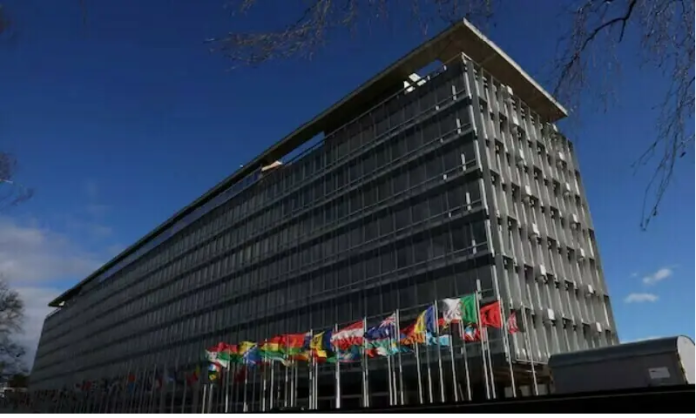
US set to quit World Health Organisation

WASINGTON, JAN 22 /DNA/ : The US is due to officially exit the World Health Organisation on Thursday, in the face of warnings it will hit both US health and global health and also in violation of a US law that requires Washington to pay the UN health agency $260 million in fees that it owes.

President Donald Trump gave notice that the US would quit the organisation on the first day of his presidency in 2025, via an executive order. Under US law, it has to give one-year notice and pay all outstanding fees before departure.

On Thursday, a US State Department spokesperson said the WHO’s failure to contain, manage and share information had cost the US trillions of dollars and the president had exercised his authority to pause the future transfer of any US government funds, support, or resources to the WHO.

“The American people have paid more than enough to this organisation and this economic hit is beyond a down payment on any financial obligations to the organisation,” the spokesperson said by email.

Quick return unlikely

Over the last year, many global health experts have urged a rethink, including most recently WHO Director General Tedros Adhanom Ghebreyesus.

“I hope the US will reconsider and rejoin WHO, he told reporters at a press conference earlier this month. Withdrawing from the WHO is a lose for the United States, and its a lose for the rest of the world.”

The WHO also said that the US has not yet paid the fees it owes for 2024 and 2025. Member states are set to discuss the US departure and how it will be handled at the WHOs executive board in February, a WHO spokesperson told Reuters by email.

“This is a clear violation of US law,” said Lawrence Gostin, founding director of the ONeill Institute for Global Health Law at Georgetown University in Washington, a close observer of the WHO. “But Trump is highly likely to get away with it.”

Speaking to Reuters at Davos, Bill Gates, chair of the Gates Foundation, a major funder of global health initiatives and some of the WHOs work said he did not expect the US to reconsider in the short-term.

“I dont think the US will be coming back to WHO in the near future, he said, adding that when he had an opportunity to advocate for it, he would. The world needs the World Health Organisation.”

What the departure means

For the WHO, the departure of the US has sparked a budgetary crisis that has seen it cut its management team in half and scale back work, cutting budgets across the agency.

Washington has traditionally been by far the UN health agency’s biggest financial backer, contributing around 18% of its overall funding.

The WHO will also shed around a quarter of its staff by the middle of this year.

The agency said it has been working with the US and sharing information in the last year.

It was unclear how the collaboration will work going forward.

Global health experts said this posed risks for the US, the WHO and the world.

“The US withdrawal from WHO could weaken the systems and collaborations the world relies on to detect, prevent, and respond to health threats,” said Kelly Henning, public health program lead at Bloomberg Philanthropies, a US-based non-profit.

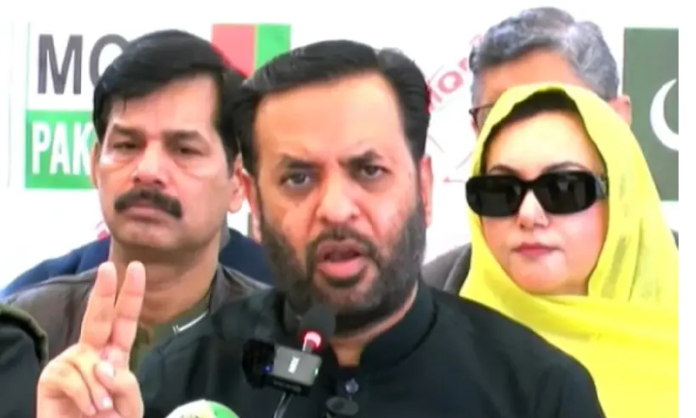
MQM-P demands Karachi be made ‘federal territory’, be declared ‘financial capital’

KARACHI, JAN 22 /DNA/: Muttahida Qaumi Movement-Pakistan (MQM-P) leader Mustafa Kamal on Thursday called on the federal government to declare Karachi a federal territory by making it the country’s “financial capital”.

The remarks come against the backdrop of the Gul Plaza inferno in the metropolis, which has resulted in lawmakers stressing the need for reforms in the city’s administration, particularly in local governments (LGs).

Kamal, addressing a press conference today, called on the federal government to “invoke Article 148 and 149 of the Constitution, and declare Karachi as the financial capital of the country”.

Article 148 of the Constitution pertains to the obligation of provinces and the federation, while Article 149 allows the federal government to issue directives to provinces in certain cases.

Article 149(ii) enables the federal government to direct provincial governments regarding the “construction and maintenance of means of communication declared in the direction to be of national or strategic importance.

Kamal stressed that given the potential of the metropolis, “it can not be given to such a provincial administration”, referring to the ruling PPP in Sindh.

“We have an administrative capital, but Karachi should be made a financial capital,” he reiterated, adding that the demand for provinces can be addressed later.

“A city that runs the entire country cannot remain under an administration engaging in democratic terrorism,” the MQM-P leader claimed.

Kamal insisted that the current city administration was “turning people against the state” by “disenfranchising them”, and cautioned that Pakistan’s enemies stood to gain from such a situation.

‘PPP taking unfair advantage of 18th Amendment’

The MQM-P leader further claimed that the PPP was taking “unfair advantage of the 18th Amendment”, alleging that it was being “used against us (Karachi citizens)”.

“End this 18th Amendment drama now,” Kamal said.

He also reiterated the party’s demand for strengthening the LG system.

Recalling the discussions ahead of the 27th Constitutional Amendment passed in November last year, he said that “even the prime minister agreed to the local government reforms”.

“The cabinet, including Khawaja Asif, Ahsan Iqbal, Rana Tanveer and Rana Sanaullah, supported it unequivocally. However, the PPP was the sole party which refused to comply,” the MQM-P leader said.

“They threatened to pull out from voting for the other clauses in the Amendment, so we had to retreat,” Kamal added, echoing his stance of the PPP creating a “deadlock”.

The MQM-P has been calling for empowering LGs for a long time, even tying its support for the 26th and 27th Amendments to the inclusion of related provisions in Article 140A.

However, after both Amendments did not address the matter, the party claimed that its suggested constitutional tweaks would now be advanced as the 28th constitutional amendment.

On Tuesday, the National Assembly session also echoed with calls for empowering LGs as lawmakers voiced their concerns over the deadly Gul Plaza tragedy.

MQM-P’s Farooq Sattar called for the “creation of more administrative units”, and PML-N’s Khawaja Asif also favoured strengthening LGs for better city management.

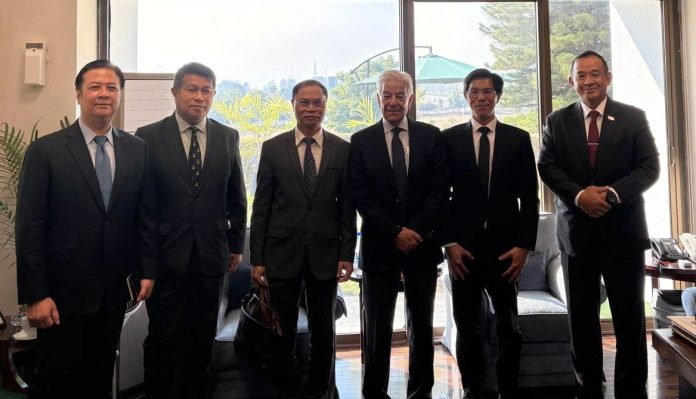
ASEAN Committee in Islamabad meets Defence Minister Kh. Asif

Federal Defence Minister Proposes Platform for ASEAN–Pakistan Security Dialogue

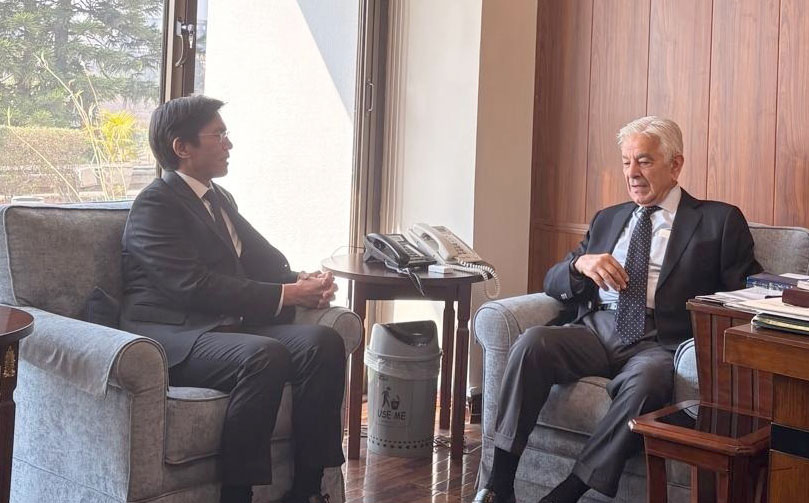
ISLAMABAD, JAN 22 /DNA/: The ASEAN Committee in Islamabad (ACI) paid a joint courtesy call on H.E. Mr. Khawaja Muhammad Asif, Federal Minister for Defence, to discuss the promotion of defence cooperation between ASEAN and Pakistan as well as regional security developments in various parts of the world. The meeting was marked by a spirit of friendship and mutual respect, reflecting the longstanding ties between Pakistan and the ASEAN member states.

During the discussions, both sides recognised the important opportunity for collaboration in the field of defence and international security. They noted that cooperation in this area is a cornerstone of relations between ASEAN and Pakistan, and agreed that closer engagement would contribute to peace and stability not only in South Asia but also in the wider Asia‑Pacific region.

The participants highlighted several priority areas where joint efforts could be particularly fruitful, including maritime security, cybersecurity, intelligence sharing, peacekeeping operations, and the development of defence industry partnerships. These areas were identified as critical to addressing contemporary challenges and ensuring that both ASEAN and Pakistan remain resilient in the face of evolving threats.

The Federal Minister for Defence welcomed the initiative and expressed Pakistan’s readiness to work closely with ASEAN partners. He proposed the establishment of a dedicated platform to maintain regular contact between the Ministry of Defence and ASEAN missions in Islamabad. This mechanism would serve as a channel for dialogue, coordination, and the exploration of new opportunities for cooperation on pressing security issues. The proposal was well received by the ASEAN Committee, which expressed its commitment to continue engaging with Pakistan in a constructive and forward‑looking manner.

The meeting concluded with a shared understanding that enhanced defence cooperation would strengthen regional security and contribute to global peace.

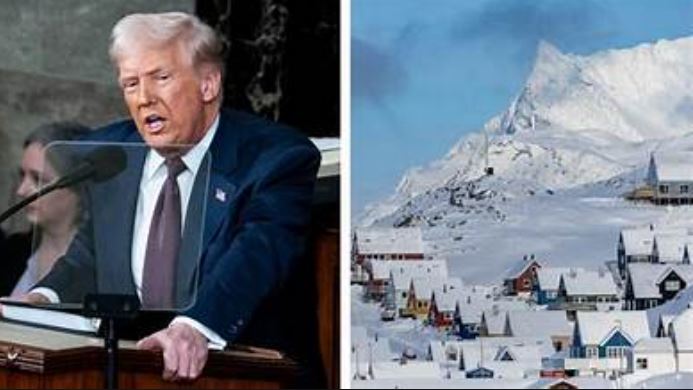
Trump’s Bid for Greenland at Davos

Qamar Bashir

Qamar Bashir

Davos, the frostbitten alpine enclave carved into Switzerland’s high mountains, has long been more than a resort town. Each winter, it becomes a political and economic marketplace where presidents, CEOs, scholars, and strategists trade contracts, alliances, and narratives of power. Temperatures plunge far below freezing, yet inside the halls of the World Economic Forum, the climate of international relations often burns far hotter than the Alpine air outside.

This year, the world’s attention did not rest on climate pledges or investment forecasts. It centered on the arrival of U.S. President Donald Trump, whose speech was anticipated less as an economic update and more as a declaration of how Washington now intends to shape the global order.

Trump opened with triumph. He portrayed the United States as an economy in resurgence—investment surging, jobs expanding, inflation easing, and industrial capacity returning home. These claims are broadly aligned with recent U.S. data showing strong capital inflows into technology, defense, and energy sectors, alongside continued labor market resilience. But the applause quickly faded as Trump pivoted from domestic success to global power.

The real tremor came not from his economic optimism, but from his vision of security. At the center of his message stood Greenland.

For years, analysts speculated that American interest in Greenland stemmed from two forces reshaping the Arctic: the opening of polar shipping lanes as ice melts, and the presence of rare earth minerals essential for modern technologies. In Davos, Trump dismissed both assumptions outright. He made it clear, in unusually direct terms, that he neither needs Greenland’s minerals nor seeks control over emerging Arctic sea routes.

Instead, he framed Greenland as a cornerstone of what he described as a continental missile defense shield—“Golden Dome” over the Western Hemisphere. In his telling, the United States is building a layered system designed to detect, track, and intercept missiles from any direction, and Greenland’s geography, he argued, is indispensable to making that shield effective. Without Greenland, he suggested, the system would be incomplete—not only for the United States, but for Canada as well.

The message was stark: this was not about commerce or resources. It was about transforming the Arctic into a forward platform for hemispheric security. That declaration sent a ripple through European and North American delegations.

Denmark’s government has long and consistently rejected any notion of transferring Greenland. Danish Prime Minister Mette Frederiksen has publicly called the idea “absurd,” emphasizing that Greenland is not an object of transaction but a self-governing territory whose future lies in the hands of its people. Greenland’s own leadership has echoed this position, welcoming cooperation and investment, but insisting that sovereignty is non-negotiable.

French President Emmanuel Macron has framed the Arctic question as part of a wider European responsibility. He has warned against turning the polar region into a theater of militarization and great-power rivalry, arguing that Europe must defend both its territory and its principles through collective security, not through the logic of dominance.

Germany’s chancellor has taken a similar stance, stressing that the stability of the international system depends on respect for borders, multilateral institutions, and the rule-based order that emerged from the wreckage of the twentieth century. Berlin’s Arctic policy, like much of Europe’s, emphasizes environmental protection, scientific cooperation, and governance through international frameworks rather than unilateral security architecture.

Canada, placed directly under Trump’s proposed “dome,” found itself in an especially delicate position. Ottawa has repeatedly affirmed that Arctic defense must be managed through NATO, NORAD, and international law, not through territorial realignment. Canadian officials have consistently stated that security in the North is a shared responsibility among circumpolar nations, not a justification for redrawing sovereignty.

Even Russia, often cast as the primary strategic rival in the polar north, has responded with measured caution. While Moscow continues to expand its Arctic military and infrastructure footprint, its official statements warn against turning the region into a flashpoint for confrontation, arguing instead for stability through treaties and regional cooperation.

Trump’s response to this resistance was neither conciliatory nor ambiguous. He described American military power in sweeping terms, emphasizing precision, reach, and technological dominance. He portrayed the U.S. defense system as unmatched—capable of neutralizing adversaries’ air defenses, striking targets across continents, and shaping the battlefield before rivals can respond. The tone was not diplomatic. It was declarative.

Security, in this vision, does not flow from international law or collective institutions. It flows from capability. His criticism extended to the very architecture of global governance. He questioned the effectiveness of the United Nations, arguing that it has failed to prevent wars or enforce peace, and suggested that Washington would increasingly disengage from international bodies that do not align with U.S. strategic priorities. This echoed earlier American withdrawals from multilateral agreements and institutions, reinforcing the image of a superpower stepping away from the system it once helped build.

Inside Davos, the contrast could not have been sharper. European leaders spoke of interdependence, shared security, and the dangers of a world governed by raw power rather than negotiated norms. Policy analysts warned that transforming sovereignty into a strategic variable—something to be adjusted for defense planning—could unravel decades of diplomatic precedent.

Beyond the speeches and symbolism, the implications run deep.If security becomes transactional—granted in exchange for alignment rather than guaranteed by law—then smaller and middle powers face a narrowing set of choices. They can align themselves with a dominant power’s strategic architecture, or they can seek protection through alternative coalitions, regional defense pacts, and diversified economic networks.

This shift is already visible. Countries across Europe, Asia, and the Global South are exploring ways to reduce reliance on single markets, single currencies, and single security patrons. New trade corridors, regional financial arrangements, and defense dialogues reflect a world quietly preparing for a future where power is more fragmented and competition more explicit.

Trump’s Davos address suggested that the post–Cold War era of institutional globalism may be giving way to a new age of fortified blocs—where defense systems, trade networks, and political alliances align along hard lines of strategic interest rather than shared ideals.

The world now stands at a crossroads. One path leads toward renewed commitment to multilateralism, where power is constrained by law and cooperation tempers rivalry. The other points toward a landscape of competing spheres of influence, where technological dominance and military reach define who sets the terms of global order.

Davos, once a forum for consensus, has become a stage for confrontation. And as snow continues to fall on the Alpine peaks, the chill spreading across international relations may prove far more enduring than the winter cold. The question now confronting the world is no longer whether a new order is emerging—but whether it will be shaped by dialogue, or by the silent geometry of missile shields drawn across the sky.

Qamar Bashir
Press Secretary to the President (Rtd)
Former Press Minister, Embassy of Pakistan to France
Former Press Attaché to Malaysia
Former MD, SRBC | Macomb, Michigan

Experts urge de-escalation, regional stability as Iran situation unfolds

Experts urge de-escalation, regional stability as Iran situation unfolds

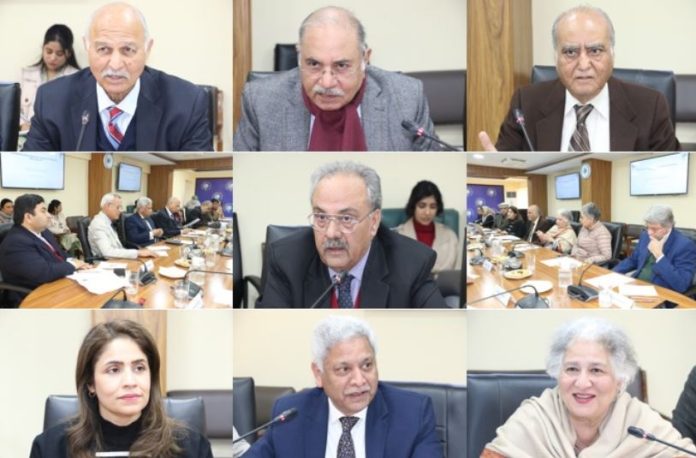
ISLAMABAD, Jan 21 (DNA): The Centre for Afghanistan Middle East and Africa (CAMEA) at the Institute of Strategic Studies Islamabad (ISSI) organised a roundtable discussion on the “The Situation in Iran: Regional Consequences & Pakistan’s Policy Approach” on Wednesday.

The event brought together former diplomats, leading academics, and prominent practitioners to deliberate on Iran’s current situation, its regional implications, and and Pakistan’s current and future policy outlook, said a press release.

Participants agreed that the situation in Iran remains fluid and complex, requiring careful assessment, and that Pakistan should continue to emphasise respect for sovereignty and Iran’s territorial integrity, restraint, dialogue, and de-escalation, while safeguarding regional stability and Pakistan’s own security and foreign policy interests.

The meeting was held under the Chatham House Rule.

Bahrain inaugurates largest electricity transmission station

Bahrain inaugurates largest electricity transmission station

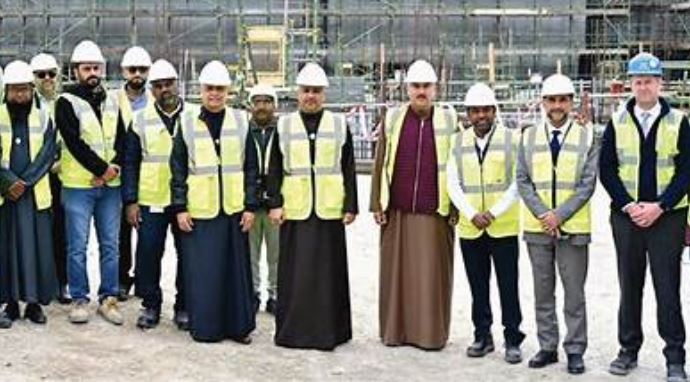
MANAMA, JAN 21: Bahrain on Tuesday inaugurated the 400-kV Al Jasra power station, the largest electricity transmission facility in the kingdom.

President of the Electricity and Water Authority Kamal bin Ahmed Mohamed said the project will enable the authority to implement strategic initiatives while enhancing the reliability and sustainability of electricity and water services, according to the Bahrain News Agency.

He explained that the project includes the construction of a 400/220 kV transmission station in Al Jasra, the installation of more than 120 km of 400 kV high-voltage cables and approximately 96 km of 220 kV cables, and their integration into the national electricity grid.

The project also upgrades the Gulf Cooperation Council electricity interconnection from 200 kV to 400 kV, increasing interconnection capacity with GCC countries from 926 megawatts to 1,359 megawatts.

Kamal noted that the Al Jasra station is one of Bahrain’s major national projects and was implemented in cooperation with leading international companies.

Russian minister visits Cuba as Trump ramps up pressure on Havana

Russian minister visits Cuba as Trump ramps up pressure on Havana

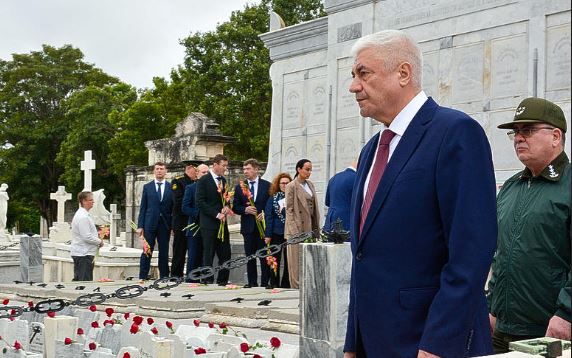
HAVANA, JAN 21: Russia’s interior minister met with top leaders of ally Cuba in Havana on Tuesday, a show of solidarity after US President Donald Trump warned that the island’s longtime communist government “is ready to fall.”

Trump this month told Havana to “make a deal,” the nature of which he did not divulge, or pay a price similar to Venezuela, whose leader Nicolas Maduro was ousted by US forces in a January 3 bombing raid that killed dozens of people.

Venezuela was a key ally of Cuba and a critical supplier of oil and money, which Trump has vowed to cut off.

                  “We in Russia regard this as an act of unprovoked armed aggression against Venezuela,” Russia’s Interior Minister Vladimir Kolokoltsev told Russian state TV Rossiya-1 of the US actions after landing in Cuba.

                  “This act cannot be justified in any way and once again proves the need to increase vigilance and consolidate all efforts to counter external factors,” he added.

                  On Tuesday, Kolokoltsev met with Cuban President Miguel Diaz-Canel who described the visit as having “enormous significance,” according to a statement from the Cuban government.

                  The visit, the government said, showed Russia’s “understanding” of Cuba’s situation and “a willingness to help and cooperate.”

                  Russia and Cuba, both under Western sanctions, have intensified their relations since 2022, with an isolated Moscow seeking new friends and trading partners since its invasion of Ukraine.

                  Russia’s ambassador to Havana, Victor Koronelli, wrote on X Tuesday that Kolokoltsev was in Cuba “to strengthen bilateral cooperation and the fight against crime.”

                  Cuba needs all the help it can get as it grapples with its worst economic crisis in decades and now the added pressure from Washington.

                  Trump has warned that acting Venezuelan President Delcy Rodriguez will pay “a very big price” if she does not toe Washington’s line — specifically on access to Venezuela’s oil and loosening ties with US foes Cuba, Russia, China and Iran.

                  The US chief of mission in Cuba, Mike Hammer, meanwhile, met the head of the US Southern Command in Miami on Tuesday “to discuss the situation in Cuba and the Caribbean,” the embassy said on X.

                  The command is responsible for American forces operating in Central and South America that have carried out seizures of tankers transporting Venezuelan oil and strikes on alleged drug-trafficking boats.

                  – Soldiers killed –

                  Cuba has been a thorn in the side of the United States since the revolution that swept communist Fidel Castro to power in 1959.

                  Havana and Moscow were close communist allies during the Cold War, but that cooperation was abruptly halted in 1991 with the dissolution of the Soviet bloc.

                  The deployment of Soviet nuclear missile sites on the island triggered the Cuban Missile Crisis of 1962, when Washington and Moscow came close to war.

                  During his first presidential term, Trump walked back a detente with Cuba launched by his predecessor Barack Obama.

                  Thirty-two Cuban soldiers, some of them assigned to Maduro’s security detail, were killed in the US strikes this month that saw the former Venezuelan leader taken away in cuffs to stand trial in New York.

                  Kolokoltsev attended a memorial for the fallen men on Tuesday.

New Zealand sets November 7 election date

New Zealand sets November 7 election date

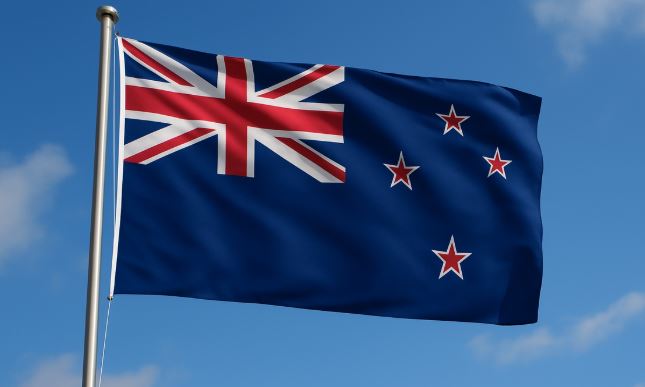
WELLINGTON, JAN 21: New Zealand’s Prime Minister Christopher Luxon called general elections for November 7 on Wednesday, touting his government’s record on the economy and crime.

Luxon said the election date, which lands a month after the All Blacks play at home against Australia, was swayed in part by the sports-mad country’s fixtures.

The latest Taxpayers Union/Curia survey released last month gave the opposition Labour Party a narrow lead of 31.6 percent to 30.0 percent over Luxon’s conservative National Party.

But the poll indicated that Luxon’s coalition government would still remain in power, based on those figures, with the support of its partner parties.

Luxon vowed that his government would “deliver on our plan to fix the basics”.

                  “When we took office the country was going in the wrong direction, and it’s taken a lot of hard work in the last two years to start turning things around,” the prime minister told reporters.

                  “The economy is picking up, with increasing business and consumer confidence, building and manufacturing taking off, and exports doing incredibly well.”

US urges Europe to avoid ‘reflexive anger’ over Greenland

US urges Europe to avoid 'reflexive anger' over Greenland

DAVOS, JAN 21 (DNA): Europeans should avoid “reflexive anger” and sit down with US President Donald Trump in Davos to hear his arguments about acquiring Greenland, Treasury Secretary Scott Bessent said Wednesday.

Trump was on his way to the annual meeting of the World Economic Forum in the Swiss ski resort, which has been overshadowed by a showdown with Europeans over his ambitions to seize the Danish autonomous territory.

“I will tell everyone: take a deep breath. Do not have this reflexive anger that we’ve seen and this bitterness,” Bessent told reporters.

  “Why don’t they sit down, wait for President Trump to get here and listen to his argument,” he said.

    Bessent said Trump would arrive in Davos about three hours late after an electrical issue forced him to change planes.

  Trump insists that mineral-rich Greenland is vital for US and NATO security against Russia and China as a melting Arctic opens up and the superpowers jostle for strategic advancement.

 EU chief Ursula von der Leyen told the meeting of global political and business elites on Tuesday that the 27-nation bloc would be “unflinching” in its response to Trump’s threats over Greenland.

                  Bessent said the statements from the EU and French leaders were “inflammatory”.

                  “We are asking our allies to understand that Greenland needs to be part of the United States,” the US Treasury chief said.

                  Bessent recalled that Denmark had sold Caribbean territories to the United States in 1917, which were renamed the US Virgin Islands.

                  He said Denmark, which was neutral during World War I, “understood then the importance of the US Virgin Islands. They were worried about the German ramifications and if the war spread to the Caribbean, and the US needed the US Virgin Islands.”

FASP Magnolia hosts learning session on advanced ‘Monobotanic’ floral design

ISLAMABAD, JAN 21: /DNA/ – The monthly gathering of FASP Magnolia, held on the 21st of January 2026 at Serena Islamabad, was an inspiring blend of tradition, learning, and celebration, captivating both new and seasoned members of the floral art society.

The meeting commenced with a serene recitation from the Holy Quran by Hina Kamran, followed by a review of the previous meeting’s minutes led by Bushra Maqsood.

The highlight of the event was an exclusive learning session conducted by the esteemed Ghazala Abdullah, a senior founding member and an ace floral artist renowned for her expertise and innovation. Ms. Abdullah introduced attendees to the sophisticated “Monobotanic Technique,” an advanced approach to floral design.

She explained that a Monobotanic Design is created by skillfully utilizing multiple parts—such as blooms, stems, foliage, and even roots—from plants belonging to a single botanical family or genus. This technique challenges the artist to find depth, texture, and harmony within a limited palette, pushing creative boundaries. Demonstrating the method, Ms. Abdullah crafted a series of innovative and breathtaking arrangements, leaving the audience in awe of the elegant possibilities this discipline offers.

“The session was not just a demonstration; it was a masterclass in seeing a single plant family in a whole new light,” remarked one attendee. The experience proved to be immensely valuable, offering fresh inspiration and advanced skills to veteran members while providing newcomers with a profound insight into high-level floral artistry.

Following the educational segment, the society celebrated its members born in January with the presentation of birthday gifts, adding a warm, personal touch to the proceedings. The enriching evening concluded on a congenial note as members enjoyed tea and further discussion, fostering camaraderie and a shared passion for floral art.

FASP Magnolia continues to be a vibrant community for floral enthusiasts in Islamabad, dedicated to nurturing creativity, sharing knowledge, and celebrating the beauty of nature through art.

Stay Connected

64FansLike
60FollowersFollow

Latest Reviews

Exchange Rates

USD - United States Dollar
EUR
1.14
GBP
1.34
AUD
0.70
CAD
0.71