Home Blog Page 2853

River water talks: Pakistan officials to leave for India today

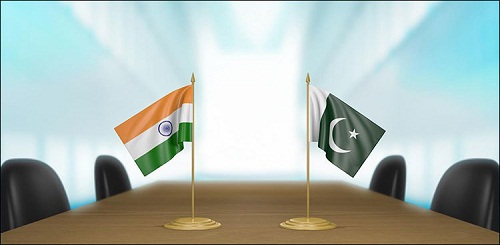
LAHORE : A delegation of Pakistan’s water officials will leave for New Delhi on Monday (today) for a two-day meeting of the Permanent Commission on Indus Waters.

Pakistan’s eight-member delegation to be led by Indus Water Commissioner Mehr Ali Shah will hold talks with India’s Water Commissioner Pardeep Kumar Saxena on March 23 and 24 in the Indian capital.

The previous session of talks was held in Lahore, two years ago. Pakistan will present its objections over India’s contentious water projects on Chenab river, sources said.

Pakistan have objections with regard to four contentious Indian hydro electric projects including Pakal Dul and Ratle power project.

In the previous round of talks in Lahore, officials from both countries had failed to gain any progress over the river water dispute and had ended in a stalemate.

The Permanent Indus Commission (PIC) was formed under the Indus Water Treaty which includes Indus commissioners of both countries. The treaty specifies that the waters of three eastern rivers namely Ravi, Beas and Sutlej, had been reserved for India whereas western rivers, namely Indus, Chenab and Jhelum, are for Pakistan.

The dispute arises over the Indian claims that it has unrestricted rights to develop hydroelectric power projects on the western rivers.

Saudi satellite ‘Shaheen Sat’ launches on Russian Soyuz rocket

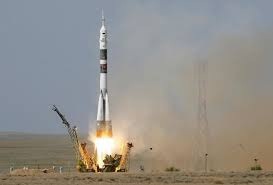
DUBAI: Saudi Arabia’s locally made satellites “Shaheen Sat” was launched on Monday along with several others from 18 different countries aboard the Russian Soyuz rocket.

Shaheen Sat – one of the two satellites designed and made in Saudi Arabia – will be used for photography and maritime tracking purposes.

Among the 38 foreign satellites in total, the Soyuz rocket is carrying Dubai’s environment nanosatand the “Challenge One”, the first satellite fully-made in Tunisia.

The Challenge One – originally scheduled to launch on the Tunisia’s Independence Day on March 20 – will focus on the “Internet of Things” and is a precursor to a constellation of 30 other satellites.

The rocket, which included satellites of Germany, South Korea, Japan, Canada, Italy and Brazil, lifted off from the Baikonur Cosmosdrome in Kazakhstan at 6:07 a.m. GMT.

The initial launch was originally scheduled for Saturday but was later postponed to Monday after a surge in voltage was detected.

Saudi King, Crown Prince pray for PM Imran recovery

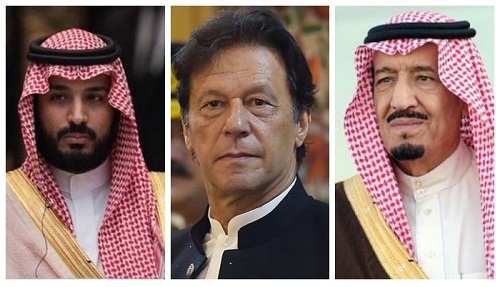
RIYADH (DNA): Saudi Arabia’s King Salman bin Abdulaziz Al Saud and Crown Prince Mohammed bin Salman bin Abdulaziz on Sunday wished Prime Minister Imran Khan a speedy recovery after the latter tested positive for the coronavirus.

State-run Saudi Press Agency (SPA), reported that the two leaders sent cables to PM Imran about his health.

“The Custodian of the Two Holy Mosques King Salman bin Abdulaziz Al Saud has sent a cable to Pakistan’s Prime Minister Imran Khan, after his infection with the novel coronavirus,” reported the SPA. A similar cable was sent by Prince Mohammad bin Salman.

The SPA stated that the Saudi King and the crown prince wished PM Imran Khan “permanent health and wellness, and a speedy recovery”.

PM Imran had tested positive for coronavirus on Saturday, following which he was quarantined at home.

Special Assistant to the Prime Minister on National Health Services, Regulations and Coordination Faisal Sultan announced the news on Twitter.

Following the PM’s test, First Lady Bushra Bibi also tested positive for COVID-19.

As per an update issued by Special Assistant to the Prime Minister on Political Communication Dr Shahbaz Gill on Sunday, the couple was feeling “comfortable with mild symptoms”.

COVID-19: Pakistan witnesses 3,669 new cases, 20 deaths in a day

ISLAMABAD: Coronavirus has claimed 20 more lives in Pakistan during the past 24 hours, taking the overall death toll to 13,863.

The latest statistics of the National Command and Operation Centre (NCOC) showed the COVID-19 has claimed 20 more lives and 3,669 fresh infections were reported during the period.

The total count of active cases is 33,070. The positivity ratio was recorded at 8.43 per cent during the past one day.

A total of 43,498 tests were conducted across the country during this period. Since the detection of the first COVID-19 case in the country, overall 9,817,491 tests have been conducted so far.

2,423patients are in critical condition across the country, whereas, 1,686 people recovered from the deadly disease during the last 24 hours. Overall 583,538 have regained their health from the COVID-19.

Reforms in Kazakhstan: implementations & achievements (P-I)

Dr. Mehmood Ul Hassan Khan

Economic sustainability heavily rests on institutionalization of constant structural reforms which paves the way towards immense socio-economic prosperity, poverty eradication, good governance and above all qualitative life.

Right from the beginning Kazakhstan President H.E. Kassym-Jomart Tokayev introduced comprehensive reforms in all sectors of the economy and civility alike due to which now its economy is flourishing despite ongoing human sage of the COVID-19. Its national politics is stable despite regional political uncertainties. Its society is united despite widespread disunity. Its state is functional despite global dysfunctional parameters. 

It provided a strategic road map for its successful implementation. It was indeed a gigantic step towards achieving the goals of smarter economy, e-governance, and massive industrialization, widespread of SME, Micro-financing facilities, poverty eradication, immense social development and above all development of social entrepreneurship in the country. It was a strategic orientation for further politicization and democratization in Kazakhstan in which genuine opposition has a greater participation, utility, scope and recognition in the political affairs of the country.

It was a first step in right direction to achieve strategic goals of vision 2050, the achievement of key national indicators of the 2025 Strategic Development Plan which aims to position the country to become one of the 30 most developed countries in the world, and the continued implementation of the “100 Concrete Steps” Plan to implement the Five Institutional Reforms of the Leader of the Nation, further diversity of the macro-economy, green energies, export oriented policies, inflows of FDIs, and last but not least, people and business friendly investment policies along with attractive tax incentives.

Series of structural reforms initiated by Kazakhstan President H.E. Kassym-Jomart Tokayev actually consolidated its socio-economic  achievements and further enhanced the relationship between the state and society and a resetd the country’s political system, leading to implementation of those political, social, and economic transformations necessary to face a new generation of modern challenges.

It was indeed a first major policy shift to change the predominance of commodity production, low competitiveness of the manufacturing sector of the economy, lack of access for small and medium-sized enterprises to long-term lending, and disproportionate social and economic development of the country’s regions. It actually started the concept of a balanced regional economic development in the country. Thus Kazakhstan’s government has shunned the widening distrust among the regions and promoted regional harmony and peace. 

In the past, local people and communities of different regions suffered from unequal access to utilities and state services, particularly in the urban-rural areas which have now been ratified and all far-flung areas have been included in the national development programs.

Human capital has now become foremost priority of Kazakhstan government. Provisions of primary and higher education have been streamlined. Numerous structural reforms have been initiated to achieve the desired goal of zero-corruption in the state’s affairs and society alike. The concepts of public administration have been revolutionized because of set-up of spirits of good governance.

Kazakhstan President H.E. Kassym-Jomart Tokayev chalked out three pronged policy i.e.  continuity, justice, progress for maturing political course, preservation of true and pursuing functional social justice by protecting the basic human rights, equal right, welfare and re-shaping and re-designing of social development in the country. All these principles have been elaborated in the “Well-being for all! Continuity. Justice. Progress” Action Plan for the Implementation of the Election Program of the President of the Republic of Kazakhstan. This document identifies 106 actions to be implemented in 19 thematic areas in the short and medium-term.

Kazakhstan President H.E. Kassym-Jomart Tokayev outlined main attributes of the reforms which provided a holistic approach to revolutionize the concept of structural reforms by pragmatism and quality, to advance further development and ensure its continued stability, as a consequence, avoiding unsystematic reforms and the manifestation of populism, which may risk destabilization of the internal political situation or even loss of statehood. It also upheld the concept of modern political philosophy of “universality” protecting the rights of majority by strengthening national unity and social cohesion. It also protected the concept of modern civilization and development based on continuity and gradualism.

The President of Kazakhstan Tokayev announced various political reforms to institutionalize concept of a functional and liberal democracy in the country. He has implemented the concepts of checks & balances and separation of powers by a strong presidency, an influential parliament and an accountable government”. It laid the foundation for the transformation of the extensive presidential system in the country.

Further diversity, pluralism of opinions and alternative points of view, as well as the formation of a new political culture through constructive dialogue have been introduced which included development of a multi-party system, political competition, and the improvement of legislation on peaceful assemblies.

Visionary Kazak President Tokayev reaffirmed the strategic importance of the “Listening State” which provided an ideal platform to introduce people’s friendly policies, programs and decrees to achieve optimal level of statehood, transparency, accountability and corruption free public administration and society alike. Somehow, deadly COVID-19 forced the state to bring some changes in the ongoing structural reforms but overall Kazakhstan remained on the track.

Kazak President Tokayev focused to connect socio-economic reforms by increasing the well-being of its people and an equitable distribution of national income. The Head of State outlined key principles of the country’s new economic course which was based on comprehensive overall hauling of national economy, greater role of private sector and beneficial role of the state by equitable distribution of benefits and responsibilities, the leading role of private enterprise, fair competition, opening up markets for a new generation of entrepreneurs, increased productivity, increased complexity and technological effectiveness of the economy, development of human capital, investment in a new type of education, green economy, protecting the environment and public accountability.

Role of state has been announced and consequently implemented too which has now changed its role as an owner and regulator which entaild the creation of favorable conditions for doing business, including the introduction of the principle of “regulation from scratch” and the creation on its basis of a qualitatively new system of “smart regulation” of business, continuation and completion of the privatization program implemented since 2016, revision of the mission, role and the functions of the quasi-public sector.

Sincere efforts are being carried out to change the social dimension of Kazakhstan government through the unification of laws and regulations governing this area and the development and adoption of a Social Code of Kazakhstan. It also included the system of social protection towards promoting work and self-reliance and preventing the manifestations of dependency and paternalism among citizens. It consisted of development of human capital through teaching the values of tireless work, discipline, responsibility, justice, honesty, frugality and solidity.

Kazakhstan President Tokayev also introduced a new organ “National Council of Public Trust (NCPT)” which played a deceive role in the further socio-economic development of the country through better execution, cooperation, collaboration and coordination among the different organs and departments of the state. It was established on June 12, 2019.

It was envisaged to develop proposals and recommendations on topical issues of state policy based on a broad discussion with representatives of the public. It was responsible for conducting public expert review of draft concepts, government programs and regulatory legal acts; considering significant strategic issues taking into account the views of civil society; and ensuring a constructive dialogue between representatives of the public, political parties, the non-governmental sector and government agencies. It was the new shape of earlier mechanisms of political dialogue, further democratization and development of civil society (2002-2003), the National Commission on Democracy and Civil Society (2004-2005) and the State Commission for the Development and Specification of the Program of Democratic Reforms (2006-2007).

Political reforms have been one of the key priorities of incumbent president of Kazakhstan who announced urgent political and socio-economic transformations in 2019. The political reforms consistd of three comprehensive plans. The first package of political reforms announced by the Head of State on December 20, 2019 at the second meeting of the NCPT has been fully implemented and is reflected in the adoption in various laws, the Law on the Procedure for Organizing and Holding Peaceful Assemblies, dated May 25, 2020 which laid the legal foundation for a qualitatively new culture of relations between society and the state and constitutional right of citizens, the Constitutional Law on Amendments to the Constitutional Law of Kazakhstan on Elections in Kazakhstan dated May 25, 2020 which established a 30 percent quota for women and youth representatives on electoral party lists. Similar amendments were made to the Law on Political Parties.

Moreover, the Law on Amendments to the Law of the Republic of Kazakhstan on Political Parties dated May 25, 2020, reduced the number of members required for the establishment of political parties from 40,000 to 20,000 people. The Law on Amendments to the Constitutional Law of the Republic of Kazakhstan on the Parliament of the Republic of Kazakhstan and the Status of its Members dated June 2, 2020 and the Law on Amendments concerning Parliamentary Opposition to the Law of the Republic of Kazakhstan on Committees and Commissions of the Parliament of the Republic of Kazakhstan dated June 2, 2020 further strengthened the role of parliament and opposition alike.

On the contrary, the Law on Amendments to Some Legislative Acts of the Republic of Kazakhstan on Improving Enforcement Proceedings and Criminal Legislation was incorporated on June 29, 2020 which removed all imperfections in criminal laws of the country. Interesting, death plenty has been abolished on January 2, 2021 through the Law on Ratification of the Second Optional Protocol to the International Covenant on Civil and Political Rights.

The second package of political reforms was announced by the President of Kazakhstan on September 2, 2020 which included the designing a new concept for the development of local self-government, gradual differentiation of the powers of local government and local self-government, expansion of property rights and increase in the revenues of the budgets of rural districts, strengthening control over the process of approving local budgets, strengthening the audit commissions of maslikhats, raising the status of local community gatherings and assemblies and taking into account by regional maslikhats of their opinions on pressing local issues for making specific decisions, direct elections of akims of rural villages in 2021. In this regard, the authorized government agencies developed a Draft Constitutional Law on Amendments to the Constitutional Law of Kazakhstan on Elections.

The development and adoption of the Law on Public Oversight designed to ensure greater openness and accountability of government agencies and quasi-public sector to society paved the way towards greater accountability and transparency.

The 2nd political reforms also cared about basic rights of children from cyberbullying, and joining the Optional Protocol to the Convention on the Rights of the Child on a Communications Procedure, improving national legislation to combat torture and bring it in line with the provisions of the Convention against Torture and Other Cruel, Inhuman, or Degrading Treatment or Punishment.

Lastly, on January 15, 2021, Kassym-Jomart Tokayev announced a third package of political reforms which outlinedpolicy changes to reduce the threshold for political parties to enter the Mazhilis of Parliament from 7 percent to 5 percent, introducing the “None of the above” ballot option for elections of all levels, introducing the elections of district akims to build on the elections of rural akims,  adoption of a separate law on the Human Rights Ombudsperson, defining their status, powers and streamlining their activities in various areas and sectors; strengthening the office of the Human Rights Ombudsperson, including the establishment of regional offices, further improving the public oversight system, legislating online petitions, introducing the Youth Development Index and expanding measures on encouraging charity, including the provision of tax and other benefits to enterprises and individuals participating in charitable events and volunteer projects. Some menaingul addition measures were also announced and thereafter implemented for the civil society development in the country. Some anti-money laundering laws were also promulgated on May 15, 2020.

Pak, China and Afghanistan art exhibition for youth kicks off in Beijing

BEIJING, Mar.22 : “Pakistan and China’s friendship was built on mutual trust, respect and support and over the past 70 years, the friendship between the two sides was tested and deepened.

Such an iron brotherhood is like an asset, which we hoped can be passed to the younger generation.” daid Ahmed Farooq, Deputy Chief of Mission at Embassy of Pakistan on the opening and award ceremony of China, Pakistan and Afghanistan art exhibition for young people.

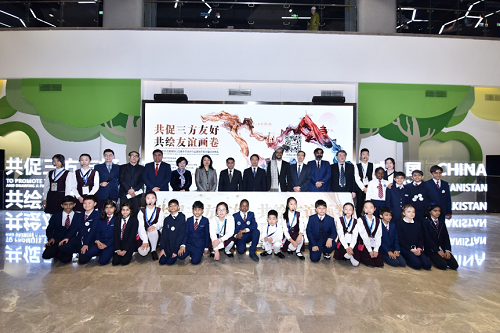
According to Gwadar Pro, sponsored by China Soong Ching Ling Foundation, the opening and award ceremony of China, Pakistan and Afghanistan art exhibition for young people was held at China Soong Ching Ling Youth Science & culture exchange center.

Hang Yuanxiang, Executive vice chairman of China Soong Ching Ling Foundation, Chen Feng, counselor of Department of Asian Affairs from Chinese Ministry of Foreign Affairs, Ahmed Farooq, Amb. Javid Ahmed Qaem, Ambassador of Afghanistan to China along with students from Pakistan International School and representatives of award-winning students in Beijing, attended the ceremony.

Echoing the Belt and Road Initiative, the event is aimed at promoting international friendship and mutual learning among the youngsters of China, Afghanistan, and Pakistan.

“I loved drawings which are among the most naturalistic, and I was deeply impressed by how the Pakistani and Afghan contestants are able to exquisitely capture the beauty of their motherland.

Through their paintings, I sensed their love for nature and peace, which resonate with traditional Chinese culture. I wish that I could visit Pakistan and Afghanistan someday.” Chinese contestant Ma Xuange told Gwadar Pro.

“My paintings were inspired by football, since I love the sport so much.”14-year-old Chinese contestant Lu Zening told Gwadar Pro with a grain.

His painting adopted Chinese traditional painting methods, depicted a scene of children from Pakistan and China playing football together.

“I am in the same league with a group of Pakistani students in an online game, that’s how the concept of ‘Iron brotherhood’ gets real for me.

My Pakistani buddies were all excited to learn that I come from China and we have made a deal of playing football together in real life in the near future.” Lu said.

11-year-old Pakistani contestant Mustafa Afridi printed the smiling faces of children in the 3 countries in their traditional clothes, with 3 flags of the countries connected like the ancient silk road. He wishes that friendship between the 3 countries could flourish and prosper.

Ahmed Farooq told Gwadar Pro that the three countries have a long history of culture and economic exchanges, and share a bright future.

The three sides should strengthen exchanges and cooperation to jointly promote development and regional peace.

New Chinese SUV to be introduced in Pakistan

ISLAMABAD, Mar. 22 : Pakistan’s Sazgar Engineering Works Limited (SEWL) is set to introduce a new Chinese SUV brand to Pakistan named HAVAL, Gwadar Pro reported on Monday.

SEWL is already in partnership with the Chinese company BAIC. SEWL will now partner with the Great Wall Motors (GWM) of China, which owns an SUV brand called HAVAL, said a news release.

HAVAL is famous for its professional SUVs and crossovers. According to reports by Pakwheels.com, the brand currently exports its SUVs to more than 60 countries in the world and more than 5 million people in the world own HAVAL SUVs.

SEWL is initially planning to launch the latest generation of two HAVAL SUVs, namely HAVAL H6 and HAVAL Jolion, in the Pakistani market.

Sazgar is known for its 3-wheelers in Pakistan. However, the company has been granted a greenfield status under the Auto Development Policy (ADP 2016-21), prompting it to partner with several car manufacturers.

HAVAL H6, being one of the highest selling SUVs in the world, features a 2.0-liter Turbo All-Wheel Drive (AWD) with a 7-speed dual-clutch transmission (DCT).

This SUV also comes with a panoramic sunroof, cruise control, steering wheel audio control, an Electronic Parking Brake (EPB), a 360 camera view system, adaption LEDs, 19-inch alloy wheels, an automatic parking system, six airbags, a Tyre Pressure Monitoring System (TPMS) and a Dual Zone Climate Control System.

While sample units of this SUV will come to Pakistan in the middle of April, a 1.5-liter hybrid variant of HAVAL H6 is also expected to launch in Pakistan in May 2021.

HAVAL Jolion is an entry-level small SUV similar to KIA’s Sportage. Jolion comes with a 1.5-liter turbocharged four-cylinder engine with a 7-speed dual-clutch transmission (DCT).

This SUV also features adaptive cruise control, four drive modes including Standard, Eco, Sport and Snow, 17-inch alloy wheels, six airbags, LED headlights and tail-lights, Rear fog lights, Daytime Running Lights (DRLs), and an Anti-Lock Braking System (ABS).

Trials and tests of the Jolion’s Completely Built Units (CBUs) will begin in Karachi by the end of March.

Affected by epidemic, number of domestic mobile payment users in Pakistan increased: Wang Yu

BEIJING, Mar. 22 : Affected by the epidemic, the number of domestic mobile payment users in Pakistan has increased rapidly, says a report published by Gwadar Pro.

Quoting Wang Yu, Senior Director of Risk Control Department of a Chinese financial services giant UnionPay, the report stayed that it is not taking place at a large scale, but Pakistan has a huge population of youth who can learn this system very fast and use it very well,

Digital finance not only changes the means of payment, but also subverts the lifestyle of the whole society.

“On the online side, mobile payment is frequently used for credit card repayment, online shopping, virtual goods, takeaway and other related scenarios.

Offline, it’s mainly used by small and micro businesses. People over 50 use mobile payments offline, mainly in vegetable markets, supermarkets and brick-and-mortar retail stores”, said Wang.

As early as 2018, China’s Ant Financial Services Group entered the Pakistani digital finance field through TMB. As its parent company Alibaba is headquartered in Zhejiang, this province has become one of the centers of cross-border e-commerce with the help of powerful digital finance.

According to Sheng Qiuping, Director of the Department of Commerce of the Province, “Alibaba Group has set up a site in Rwanda to involve the quality coffee and chilies producer Rwandan youth in e-commerce.

Last year, more than 20 outstanding young people from Rwanda were selected to attend the four-year undergraduate course of cross-border e-commerce at the Alibaba College of Hangzhou Normal University.

Through training and exchanges, more young people from the ‘Belt and Road’ countries can find jobs or start businesses through cross-border e-commerce. We plan to extend this model to more countries along the ‘Belt and Road’ routes”.

“Among others, like major players – Visa and MasterCard, UnionPay from China also went in Pakistan brought by Alibaba’s Alipay”.

With the rise of cross-border e-commerce in Pakistan, one of the major issues facing digital finance is how to resolve the financial barriers between countries.

“Cross-border payments are currently inconsistent in different countries, and complicated procedures and other problems need to be resolved urgently.

We hope to reduce the intermediate payment part and make trade more smooth and convenient”, said Zhuang Jin, Director of Service Trade Division, China’s Zhejiang Province.

To address this challenge, Pakistan’s Ambassador Aminul Haque said, he would like to invite trustworthy Chinese investments in this area. “Especially like WeChat payments. It is very efficient, very convenient.”

The significance of this novel means of payment reaches far beyond the sphere of commerce. According to Ambassador Haque, “Because we have seen e-commerce has been used to market the farm produce and the products of the villages in China.

And as part of the poverty alleviation strategy, the farmers were given the capacity building, the training of mobile use, how to use it to establish e-commerce stores, branding of the products.

So we are working with some of the Chinese companies to establish such an e-commerce platform in Pakistan as part of our own poverty alleviation program.”

Meanwhile, State Bank of Pakistan (SBP) has advised all banks to implement digital portals for end-to-end digitalisation of case submission and processing.

According to its recent statement, It plans to launch a central bank digital currency by 2025 and complete the digital reform of services and technology by 2030.

This follows the launch of Raast, an instant digital payment system to speed up the process of digitization in Pakistan and alleviate poverty.

“In fact I think that the banks that do not adopt the new technology will fail to be in the race”, said SBP Chief Representative at Beijing Shaikh Muhammad Shariq. “In coming days, small branches of banks that are in the residential areas aiming to provide basic facilities to its customers need to be closed down due to digital system.”

UK administers daily record number of COVID-19 jabs at over 873,500

LONDON, MAR 21 – Britain administered 873,784 COVID-19 vaccines on Saturday, a second daily record in as many days, Health Secretary Matt Hancock said on Sunday.

“This mammoth team effort shows the best of Britain,” Hancock said in a Tweet, thanking the British public for coming forward to receive the jab.

Stay Connected

64FansLike
60FollowersFollow

Latest Reviews

Exchange Rates

USD - United States Dollar
EUR
1.14
GBP
1.34
AUD
0.69
CAD
0.71