Home Blog Page 285

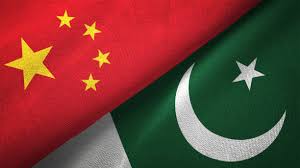
Parliamentary engagement fortifies Sino-Pak all-weather friendship

BEIJING, Jan 22 Against a volatile global geopolitical landscape, the just successfully concluded parliamentary leaders’ meeting between China and Pakistan in Beijing constitutes a pivotal step in fortifying their time-honored all-weather strategic cooperative partnership—especially as the two nations commemorate the 75th anniversary of the establishment of diplomatic relations this year.

This high-level legislative interaction transcends routine exchanges, institutionalizes cooperation mechanisms, and injects new vitality into the steady advancement of bilateral relations.

This was stated by Prof. Cheng Xizhong, Senior Research Fellow at the Charhar Institute, a non-governmental Chinese think-tank on diplomacy and international studies based in Beijing.

He said that the landmark consensus reached to establish a formal working relationship between the two parliaments represents a transformative breakthrough. Moving beyond ad-hoc visits to a structured and document-based institutional framework, this partnership will encompass the sharing of parliamentary practices, collaboration in international forums, and regular engagement—including virtual committee-level meetings focusing on sectors such as industry, agriculture and mining. This institutional synergy will effectively guide and synergize governmental cooperation, while unlocking Pakistan’s economic potential in key sectors where China has demonstrated strong cooperative interest.

Reaffirming their commitment to the second phase of the China-Pakistan Economic Corridor (CPEC 2.0) stands out as another key highlight. Both sides pledged to accelerate the corridor’s second phase, aligning it with China’s 15th Five-Year Plan and Pakistan’s Uraan Pakistan agenda. This focus on high-quality development in industry, agriculture and infrastructure dovetails with the vision of the Belt and Road Initiative (BRI), delivering tangible benefits for regional prosperity and people’s well-being, he added.

Prof Cheng said that in an era rife with division and fragmentation, Sino-Pak relations serve as an exemplary model for state-to-state interactions. This parliamentary meeting not only celebrates 75 years of profound camaraderie and mutual trust but also charts a clear course for deeper strategic coordination under China’s four Global Initiatives. As institutional links between the two nations continue to strengthen, their all-weather partnership will further safeguard regional stability, illuminate the path of win-win cooperation, and set a benchmark for genuine multilateralism across the globe.

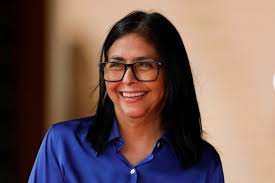
Interim Venezuela leader to visit US

Caracas, Jan 22 Venezuela’s interim president will soon visit the United States, a senior US official said Wednesday, further signaling President Donald Trump’s willingness to embrace the oil-rich country’s new leader.
Delcy Rodriguez would be the first sitting Venezuelan president to visit the United States in more than a quarter century — aside from presidents attending United Nations meetings in New York.
She said Wednesday that she approached any dialogue with the United States “without fear.”
“We are in a process of dialogue, of working with the United States, without any fear, to confront our differences and difficulties…and to address them through diplomacy,” said Rodriguez.
The invitation reflects a head-snapping shift in relations between Washington and Caracas since US Delta Force operatives swooped into Caracas, seized president Nicolas Maduro and spirited him to a US jail to face narcotrafficking charges.
Rodriguez was a former vice president and long-time insider in Venezuela’s authoritarian and anti-American government, before changing tack as interim president.
She is still the subject of US sanctions, including an asset freeze.

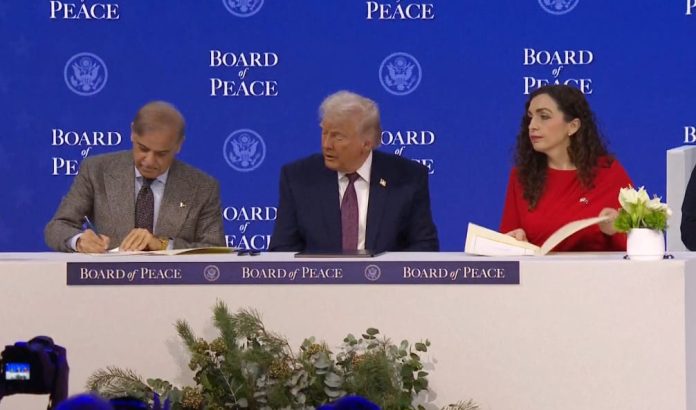
Trump to unveil ‘Board of Peace’ at Davos after Greenland backtrack

Davos, Switzerland, Jan 22 US President Donald Trump will show off his new “Board of Peace” and meet Ukraine’s leader at Davos on Thursday — burnishing his claim to be a peacemaker a day after backing off his own threats against Greenland.
Trump abruptly announced on Wednesday that he was scrapping tariffs against Europe and ruling out military action to take Greenland from Denmark, partially defusing a crisis which has shaken the meeting of global elites.
On his second day at the Swiss ski resort, Trump will seek to promote the “Board of Peace”, his controversial body for resolving international conflicts, with a signing ceremony for the organisation’s charter.
About 35 world leaders have committed so far out of the 50 or so invitations that went out, a senior Trump administration official told reporters on Wednesday.
Trump also said on Wednesday that Putin had agreed to join — despite the Kremlin so far saying it was still studying the invite.

Donald Trump’s “Peace Board”: Parallel Diplomacy or a Challenge to the UN Order?

By Musab Yousufi

The reported revival of a Donald Trump backed “Peace Board” has reopened an old but unresolved debate in global politics: is there a genuine need for alternative peace mechanisms outside the United Nations, or do such initiatives undermine the very architecture of international peace and security carefully built since 1945? The question is not merely institutional; it goes to the heart of how power, legitimacy, and conflict resolution operate in a rapidly splitting world order.

Is There a Need for a Peace Board?

Proponents argue that a peace board is necessary precisely because existing multilateral institutions have failed to deliver timely and effective conflict resolution. From Palestine to Syria, Yemen to Ukraine, UN-led processes have often stalled due to veto politics, great-power rivalry, and bureaucratic inertia. In this view, a smaller, interest-driven peace board backed by U.S. leverage could act more decisively, bypass procedural paralysis, and deliver pragmatic settlements.

Critics, however, see the need as artificial. They argue that peace does not suffer from a lack of forums but from a lack of political will particularly among powerful states. Creating parallel structures may address symptoms temporarily but risks eroding the legitimacy of universal institutions meant to protect weaker states.

Can the Board Address the Conflicts It Was Formed For?

Supporters claim the board is designed to focus on political normalization, economic incentives, and security cooperation especially in the Middle East. Drawing inspiration from the Abraham Accords, the initiative emphasizes state-to-state engagement rather than protracted ideological disputes. Yet this very design raises concerns: conflicts rooted in occupation, sovereignty, and self-determination most notably Palestine cannot be resolved through economic normalization alone. Without enforceable commitments, international legality, and inclusive representation, the board risks addressing only surface-level stability while deeper injustices remain unresolved.

A Challenge to the United Nations?

The emergence of a U.S. backed peace board is widely seen as a political challenge to the UN peace architecture. While not a formal disqualification of UN forums, it effectively sidelines them by shifting diplomatic gravity elsewhere. This creates an uncomfortable reality for UN leadership: peace initiatives led by major powers can overshadow multilateral mechanisms, reducing the UN to a reactive or ceremonial role. Such developments reinforce the perception that the UN is strong in rhetoric but weak in enforcement particularly when powerful states choose unilateral or minilateral pathways.

Is It a Wise Decision in the Presence of the UN?

From a U.S. strategic perspective, establishing a peace board aligns with Washington’s preference for results-oriented diplomacy and control over outcomes. However, from a global governance standpoint, the decision is problematic. It signals declining confidence in collective security and sets a precedent where powerful states create alternative institutions whenever multilateral ones become inconvenient. This trend risks normalizing fragmentation in global peace efforts, making conflict resolution contingent on power alignment rather than international law.

Middle Eastern Participation and Its Implications

Reports suggest that nine Middle Eastern countries have aligned themselves with the initiative, reportedly including the United Arab Emirates, Bahrain, Israel, Egypt, Jordan, Morocco, Sudan, Oman, and Saudi Arabia. While the depth of participation varies, their motivation is broadly strategic: security guarantees, economic integration, access to U.S. markets and technology, and alignment with Washington’s regional vision. For many of these states, joining the board is less about ideology and more about survival in a volatile regional environment. Normalization offers insulation against isolation and opens doors to investment and defense cooperation.

Does This Help Palestine or Marginalize It?

The central question remains whether such a board meaningfully advances the Palestinian cause. Experience suggests skepticism. While supporters argue that broader Arab-Israeli engagement could eventually create space for negotiations, critics counter that normalization without conditions weakens Palestinian leverage. Even if a majority of participating states are Muslim majority countries, their involvement may remain largely symbolic unless Palestinian statehood, borders, and rights are placed at the core of the agenda. Otherwise, the initiative risks becoming a formality peace in name, not in substance.

The Future of Global Politics and the UN

Looking ahead, global politics appears to be moving toward minilateralism, where small, power-driven groupings overshadow universal institutions. The UN may increasingly appear ceremonial issuing statements while real decisions are made elsewhere. Yet declaring the UN obsolete would be premature. History shows that multilateral institutions weaken and recover in cycles.

The UN’s failure to restrain powerful states or protect weaker ones is undeniable. Still, no alternative offers the same global legitimacy. Whether this phase leads to the UN’s marginalization or its eventual reform will depend on whether middle and small powers can reclaim multilateralism as a shared interest rather than a moral slogan.

Conclusion

Trump’s peace board reflects a broader shift in world politics from rules to power. It may produce short-term diplomatic breakthroughs, but at the cost of undermining inclusive global governance. The real test will be whether it delivers justice alongside stability. Without that balance, it risks joining a long list of initiatives that promised peace but settled for convenience.

(The author is Associate Professor and Head of the Department of International Relations at Riphah International University Islamabad.)

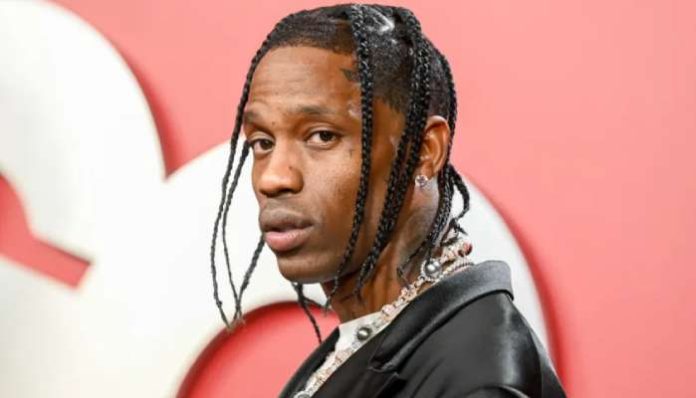
Travis Scott hopes Houston can welcome him back after Astroworld

Travis Scott is looking forward to returning to his hometown of Houston, but only if they’ll have him.

In a new Rolling Stone cover story published Wednesday, January 21, the Grammy-winning rapper reflected on the tragedy that occurred at his annual Astroworld Music Festival in November 2021.“When I did that festival, I was trying to bring something to where I’m from,” the Houston native, 34, shared. Unfortunately, he noted, “it’s like a time that was supposed to be so enjoyable just went wrong.”

Over four years after the tragedy, Scott is hoping to make amends.

“I would love to heal that in the city. But I would also want people to be receptive [to it]. I don’t want to force a reception,” he told Rolling Stone.

10 people passed away and hundreds more were injured in a fatal crowd crush on night one of Astroworld 2021 on November 5. Despite an emergency being declared, Scott continued the performance for over half an hour.

The next day, the rapper released a statement. “I’m absolutely devastated by what took place last night… I am committed to working together with the Houston community to heal and support the families in need.”

In an interview a month after the tragedy, Scott said that the responsibility of concertgoers’ safety falls on “professionals.” He also claimed at the time that he didn’t notice distress in the crowd, otherwise he would have stopped the show immediately.

Scott offered to pay for the funerals of all 10 victims. At least 7 of the victims’ families reportedly rejected the offer. 

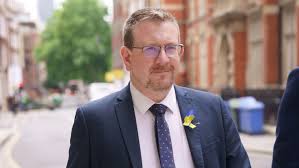
Suspended labour MP Andrew Gwynne set to resign following WhatsApp messages scandal

Andrew Gwynne, a former Labour health minister, is set to resign from his seat as a Member of Parliament (MP) for Gorton and Denton in Greater Manchester.

His resignation paves the way for the UK Labour Party’s most prominent figures, Andy Burnham, to return to national politics.Senior government and party sources indicated that he may be retiring due to medical reasons following a long suspension and an investigation into his conduct by the parliamentary watchdog.

Gwynne was suspended from the party in 2025 following a newspaper article in which his offensive messages from a private messaging group were published.

At that time, he apologised for his actions, justifying his remarks as “badly misjudged.”

The investigation on that matter is not concluded yet. However, his resignation news is emerging.

If Gwynne steps down, a by-election will be conducted in his constituency. This can be a route back to Parliament for Andy Burnham, the Mayor of Greater Manchester and a former cabinet minister.

Burnham, an extremely popular figure in Labour ranks, had always been seen as a potential challenger to Labour Party leader and Prime Minister Starmer, although under Labour Party law, Burnham had to first become an MP in order to run against Starmer and others for leadership.

ICCI President, Romanian Envoy set sights on EU trade corridor for Pakistan

Saifullah Ansar

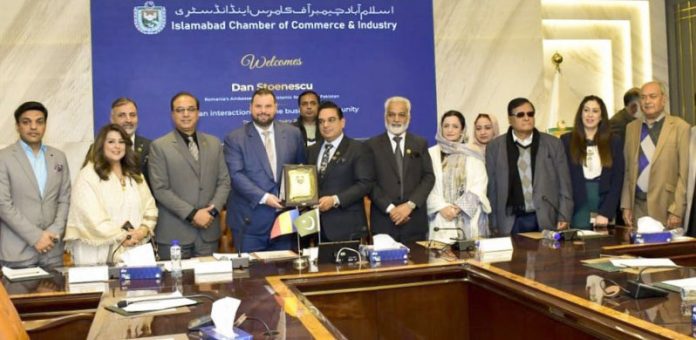
ISLAMABAD, JAN 22 /DNA/: The Romanian Port of Constanta can serve as a vital maritime gateway between Pakistan and Europe, significantly boosting bilateral trade and Pakistani exports to the European Union, said Romanian Ambassador to Pakistan His Excellency Dan Stoenescu during an interactive session at the Islamabad Chamber of Commerce and Industry (ICCI) on Thursday. He informed that talks are in the final stages with the Karachi Port authorities to sign a Memorandum of Understanding between the two ports, which will help establish maritime linkages and provide Pakistani exporters access to the EU market of over 450 million consumers with strong purchasing power. Deputy Head of Mission Mr. Eduard Robert Preda accompanied the Ambassador.

The Ambassador said that Romania is among the fastest-growing economies in Europe and, owing to its strategic geographical location, offers immense opportunities to expand bilateral trade and investment. He described Romania as a gateway to Central and Eastern Europe, adding that closer collaboration between the two countries can yield tangible economic benefits.

Ambassador Stoenescu emphasized the importance of Romania–Pakistan IT Forum as a platform to promote digital cooperation, joint ventures, innovation, and knowledge exchange between technology sectors of both countries. Through an elaborate presentation, he also highlighted Romania’s trade and investment potential and encouraged Pakistani businesses to strengthen linkages with Romanian Chambers of Commerce and business associations, assuring full facilitation from the Romanian Embassy.

He recalled that Romania and Pakistan shared a deep-rooted relationship spanning over sixty years, noting that Romanian workers and companies played a significant role in establishing Pakistan’s industrial base during the 1970s. He said Romania contributed extensively to the development of Pakistan’s oil refining infrastructure, particularly the National Oil Refinery (NRL) in Karachi, by providing technical expertise, engineers, and turnkey solutions for fuel, lube, and cement projects, thereby cementing strong industrial ties.

Earlier, in his welcome address, ICCI President Sardar Tahir Mehmood said that the current bilateral trade volume does not reflect the true potential of Pakistan–Romania relations. He stressed the need for joint efforts to enhance annual bilateral trade to at least US$500 million. Highlighting Pakistan’s export strengths, he said that textiles and apparel can find strong markets in Romania and, through it, the wider European Union. He also emphasized opportunities for joint ventures, particularly in advanced manufacturing and healthcare products.

He reiterated that ICCI stands ready to facilitate business to business linkages, organize sector focused delegations and create platforms where enterprises from both sides can cultivate long-term , profitable partnerships.

Senior Vice President ICCI Sardar Tahir Ayub expressed confidence that the Ambassador’s visit would serve as a catalyst in bringing the two countries closer and unlocking new avenues for mutual trade and investment.

Chairman ICCI Diplomatic Committee Zafar Bakhtawari, Advisor to ICCI President Naeem Siddiqui, and a large number of business leaders, including women entrepreneurs from various sectors, actively participated in the question-and-answer session.

Those present on the occasion also included Vice President Irfan Chaudhry, Executive Members Mian Shaukat Masood, Zulqurnain Abbasi, Imran Minhas, Waseem Chaudhry, Ishaq Sial, Raja Naveed Satti, Malik Abdul Aziz and others.

A city in crisis, a nation in waiting

Opinion

Ansar Mahmood Bhatti

The bustling metropolis of Karachi has once again been shaken by tragedy. A massive fire in a commercial plaza claimed the lives of more than 60 people, leaving families devastated and the city in mourning. The incident has sparked outrage, grief, and a fresh round of political blame‑shifting, as leaders and parties scramble to distance themselves from responsibility while citizens demand accountability.

The fire tore through the plaza with terrifying speed, trapping dozens inside. Rescue operations were hampered by inadequate safety measures, congested access routes, and the absence of proper emergency protocols. Survivors described scenes of chaos, with people desperately trying to escape through smoke‑filled stairwells and broken windows. For many, help arrived too late.

As the death toll mounted, Karachi’s residents voiced anger at the systemic failures that allowed such a disaster to unfold. Questions were raised about building codes, enforcement of safety regulations, and the preparedness of emergency services. Yet, instead of clear answers, what followed was a familiar cycle of political finger‑pointing.

Health Minister and MQM leader Mustafa Kamal was among the first to lash out, slamming the Sindh government for negligence and mismanagement. He accused provincial authorities of failing to enforce safety standards and of ignoring repeated warnings about the city’s deteriorating infrastructure. His words resonated with many who see Karachi as a city abandoned by those in power.

However, critics were quick to point out that MQM itself cannot escape responsibility. The party has ruled Karachi for long stretches and remains part of the coalition government. If Karachi is burning today, they argue, MQM too must share the blame. During its tenure, citizens were persecuted, money was extorted, and governance was marred by violence and corruption. The misery of Karachi’s people did not begin yesterday; it has been a long, painful continuum.

Equally troubling has been the silence from the top leadership of the Pakistan Peoples Party (PPP). Despite claiming for years that Sindh and Karachi were being transformed into a “model of development,” the reality on the ground tells a different story. The so‑called model has collapsed, and with each passing day, the collapse deepens.

Children continue to die after falling into open manholes. Roads remain broken, garbage piles up, and basic civic amenities are absent. For ordinary citizens, life has become a daily struggle against neglect. The tragedy at the plaza is not an isolated event but part of a larger pattern of systemic failure. Lip service from leaders has replaced genuine action, and Karachiites are left wondering how long they must endure such suffering.

Karachi, Pakistan’s economic engine, has long been plagued by mismanagement. Its people have faced persecution, extortion, and exploitation under successive governments. Each time a tragedy strikes, there is a flurry of activity, committees are formed, inquiries are announced, and promises are made. Yet, once the headlines fade, it is back to business as usual.

This cycle of neglect has bred cynicism among citizens. They see corruption so rampant that almost anything can be achieved with money, while rules and standard operating procedures (SoPs) are ignored. It is this culture of impunity that allows unsafe buildings to rise, unregulated businesses to flourish, and tragedies to repeat themselves.

The Karachi plaza fire is not just a local disaster; it is a reflection of the broader malaise gripping Pakistan. Across the country, similar stories unfold, accidents caused by negligence, lives lost due to corruption, and institutions failing to protect citizens. The tragedy underscores how deeply governance has eroded, leaving the nation vulnerable to crises of every kind.

For many, the question is no longer about who is to blame but whether Pakistan can ever break free from this vicious cycle. The yearning for a leader who can steer the country out of crisis, purge it of corruption, and restore faith in governance has become a recurring theme in public discourse. Citizens speak of waiting for a “messiah,” someone who can rise above partisan politics and deliver real change.

Behind the political rhetoric are the human stories, families grieving loved ones, children orphaned, and survivors scarred for life. These are the people who pay the price for negligence and corruption. Their suffering is a stark reminder that governance is not about slogans or speeches but about protecting lives and ensuring dignity.

Every open manhole that claims a child’s life, every unsafe building that collapses, and every fire that rages unchecked is a testament to the failure of those entrusted with responsibility. For Karachi’s citizens, the plaza tragedy is yet another chapter in a long history of betrayal.

The Karachi plaza tragedy has exposed once again the fragility of Pakistan’s governance structures. It has shown how corruption, negligence, and political expediency combine to create disasters that devastate lives. While leaders trade accusations, ordinary citizens continue to suffer.

The time for lip service is over. Karachi needs accountability, reform, and genuine commitment to safety and governance. Pakistan needs leadership that can rise above corruption and deliver on promises. Until that happens, tragedies like the plaza fire will remain grim reminders of a nation in crisis.

For now, Karachi mourns its dead, and Pakistan waits, still searching for the leader who can bring an end to this cycle of misery.

Severe heatwave to bring extreme bushfire conditions to Australia’s Victoria

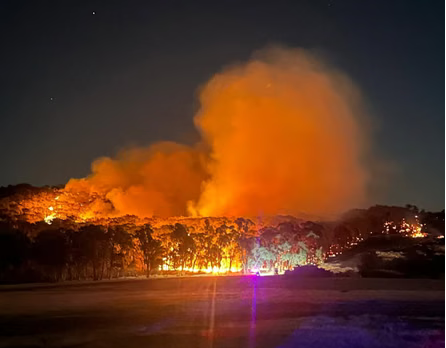
MELBOURNE, JAN. 22 (XINHUA/APP/DNA):Authorities in the Australian state of Victoria on Thursday issued a warning over a severe heatwave forecast to start on Saturday, with temperatures in rural areas expected to approach record-highs.

Victoria’s Emergency Management Commissioner Tim Wiebusch said at a press conference in Melbourne on Thursday afternoon that hot and windy conditions forecast to hit the state from Saturday will bring a return of extreme bushfire danger.

According to Bureau of Meteorology (BoM) forecasts, the maximum temperature in Melbourne is expected to reach 40 degrees Celsius on Saturday and 42 degrees Celsius on Tuesday.

The Country Fire Authority (CFA) has declared an extreme bushfire rating for Victoria’s west and southwest on Saturday and for the state’s northeast on Sunday.

Speaking alongside Wiebusch, BOM senior meteorologist Kevin Parkyn said that a “dome of heat” would sit over Victoria, with many regional centers expected to approach their all-time maximum temperature records.

It comes after a severe heatwave earlier in January caused a widespread bushfire crisis in Victoria, with more than 400,000 hectares of land burnt and over 1,000 structures damaged or destroyed, including 434 homes.

Wiebusch said on Thursday that seven major fires were continuing to burn across Victoria, three of which remained out of control.

CFA chief officer Jason Heffernan said that fire conditions during the looming heatwave would not be as severe as the catastrophic conditions earlier in January, but warned that fires would still spread rapidly.

Nestlé announces USD 60 Million additional Investment in Pakistan

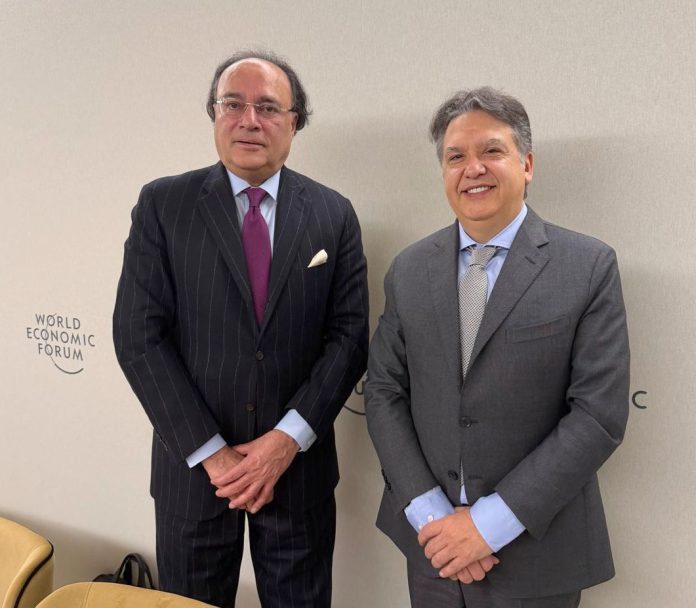
DAVOS, JAN 22 /DNA/: Federal Minister for Finance and Revenue, Senator Muhammad Aurangzeb, today chaired a high-level Business Roundtable on the sidelines of the World Economic Forum (WEF) Annual Meeting in Davos, bringing together Chief Executive Officers and senior leaders of leading global corporations to discuss Pakistan’s reform trajectory, investment climate, and long-term growth potential.

The roundtable formed part of the Government of Pakistan’s ongoing engagement with multinational investors to promote policy predictability, economic formalization, and sustainable, export-oriented growth.

A major highlight of the discussion was the announcement by Mr. Remy Ejel, Executive Vice President and Chief Executive Officer for Asia, Oceania, and Africa at Nestlé, of an additional investment of USD 60 million in Pakistan. Mr. Ejel stated that Nestlé will undertake a robust expansion of its operations in the country, reaffirming its long-term commitment to Pakistan.

He further announced that Nestlé intends to use Pakistan as a regional manufacturing and export hub, exporting products to 26 countries from Pakistan. Expressing strong confidence in Pakistan’s economic outlook, Mr. Ejel foresaw robust growth in Nestlé’s business in Pakistan in the coming years.

The announcement builds on Nestlé’s recent engagement with the Finance Minister in Islamabad, where the company had outlined its strategy centered on localization, advanced manufacturing, sustainability, and agricultural transformation. Nestlé has made significant progress in technology-driven manufacturing, with highly automated facilities, expanded use of renewable energy, improved packaging solutions, and digitalized supply chains, strengthening efficiency while reducing environmental impact.

Mr. Ejel highlighted Nestlé’s global scale as one of the world’s leading food, beverage, nutrition, and health companies, with operations in over 180 countries, a workforce exceeding 277,000 employees, and global revenues of approximately USD 114.25 billion (2025). He noted that Pakistan’s demographic profile, growing nutrition needs, and underpenetrated value-added food segments closely mirror successful growth trajectories seen in Southeast Asia.

Welcoming Nestlé’s investment announcement, Senator Muhammad Aurangzeb described it as a strong vote of confidence in Pakistan’s economic reforms and formalization drive. He reaffirmed the Government’s commitment to strengthening the tax ecosystem, ensuring policy consistency, and facilitating responsible long-term investment through continued engagement with the private sector, including via the Tax Policy Office established within the Finance Division.

The Finance Minister emphasized that Pakistan offers compelling opportunities in affordable nutrition, climate-resilient dairy, localized sourcing, and export-oriented manufacturing, and reiterated the Government’s resolve to position Pakistan as a competitive base for regional production and global value chains.

Stay Connected

64FansLike
60FollowersFollow

Latest Reviews

Exchange Rates

USD - United States Dollar
EUR
1.14
GBP
1.34
AUD
0.70
CAD
0.71