Home Blog Page 284

MSME’s crucial for economic growth: ICCI President

MSME’s crucial for economic growth: ICCI President

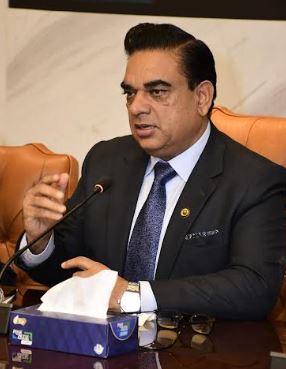
ISLAMABAD, JAN 23 /DNA/ – President of the Islamabad Chamber of Commerce and Industry (ICCI), Sardar Tahir Mehmood, has emphasized that achieving sustainable economic growth is directly linked to the strengthening of Micro, Small and Medium Enterprises (MSMEs), which he described as the backbone of Pakistan’s economy.

Talking to a representative delegation of industrial sector here on Friday,  the ICCI President said that MSMEs play a pivotal role in employment generation, poverty reduction, export growth, and innovation, and are indispensable for achieving a sustainable GDP growth rate of 6–7 per cent which is only possible through localization and export driven industry. He stressed that without empowering MSMEs, long-term economic stability and inclusive growth would remain unattainable.

Sardar Tahir Mehmood noted that MSMEs account for a significant share of industrial output and provide livelihoods to millions across the country, particularly youth and women. He said that targeted policy support, access to affordable finance, technology upgradation, and skill development are critical to unlocking the full potential of this sector.

The ICCI President urged the government to create a conducive business environment for MSMEs by simplifying tax regimes, reducing the cost of doing business, ensuring energy affordability, and facilitating ease of access to credit. He also called for enhanced public-private collaboration to help MSMEs integrate into local and global value chains.

Highlighting ICCI’s role, he said that the Chamber is actively working to promote entrepreneurship, start-ups, and capacity building of small businesses through advocacy, training programmes, and strong linkages between academia and industry. “ICCI remains committed to supporting MSMEs so that they can transform into competitive, resilient, and growth-oriented enterprises,” he added.

Sardar Tahir Mehmood further stated that a vibrant MSME sector is essential for integrated innovation, boosting exports, and ensuring balanced regional development. He expressed confidence that focused reforms and sustained support for MSMEs would significantly contribute to economic resilience and sustainable development.

Vietnam’s To Lam ‘unanimously’ re-elected party chief

Vietnam's To Lam 'unanimously' re-elected party chief

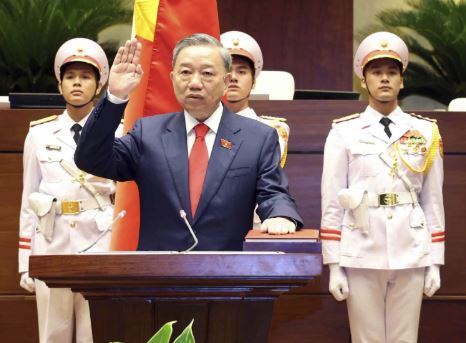
HANOI, JAN 23: Vietnam’s ruling Communist Party re-elected To Lam as general secretary on Friday, confirming the former security enforcer as the country’s top leader for the next five years and backing his vision for growth-oriented change.

In just 17 months as party chief, he has swept aside rivals and centralised authority in an aggressive reform drive officials describe as a “revolution”.

The party central committee “absolutely unanimously elected Comrade to Lam to continue holding the position of General Secretary”, the party said in a statement.

Tran Thanh Man, chairman of the National Assembly, said the party chief had received 180 votes out of 180 to remain in the top job.

Two main factions of the party are seen as vying for dominance over Vietnamese politics, the security wing aligned with Lam and a more conservative military wing.

The party also announced the new 19-member politburo, its highest decision-making body.

A woman’s desperate cry for justice in Sargodha

A woman's desperate cry for justice in Sargodha

In the quiet city of Sargodha, Punjab, a harrowing tale unfolded that exposes the rotten underbelly of Pakistan’s law enforcement system. A woman, driven to the brink by relentless police highhandedness, ended her life in a gruesome act of despair. Before consuming poison that led to her agonizing death, she recorded a video message—a final testament to her suffering.

In the grainy footage, shared widely on social media, she tearfully alleged that local police demanded 5 tola of gold and 2.5 million rupees in cash to pursue justice in her case. She had been knocking on the doors of senior police officials for months, pleading for help against an unspecified wrong done to her family. But her cries fell on deaf ears, met only with indifference and extortion demands.

“I cannot live this miserable life anymore,” she whispered, her voice breaking, before the screen went black. Her body was discovered hours later, convulsing in pain, a symbol of the ultimate price paid by the powerless in a system rigged against them.

This incident is not an isolated tragedy but a grim reflection of Pakistan’s pervasive “police terrorism,” as critics aptly term it. Daily stories of police brutality and corruption flood the press, yet many more go unreported, buried under threats or fear of reprisal. According to Transparency International Pakistan’s National Corruption Perception Survey 2025, 24% of respondents viewed the police as the most corrupt government department, with Punjab leading at 34%.

 International reports echo this damning verdict. The Corruption Perceptions Index by Transparency International ranks Pakistan 135th out of 180 countries, highlighting how police corruption erodes public trust and fuels societal decay.

 GAN Integrity’s country risk report notes that Pakistan’s police suffer from chronic corruption, poor training, and impunity, with three out of four citizens believing most officers are corrupt.

 No simple, honest person dares enter a police station; the treatment there is often disgusting—verbal abuse, physical torture, and blatant demands for bribes are commonplace. Yet, this same force bows obsequiously before the powerful. Landlords, politicians, and elites receive kid-glove treatment, while the poor are harassed and exploited. In Punjab, under prolonged PML-N rule spanning nearly two decades, police corruption has thrived amid favoritism and lack of accountability.

This double standard is a key reason Pakistan struggles to progress: a corrupt police force stifles justice, deters investment, and perpetuates inequality. The malaise extends even to the capital, Islamabad, where highhandedness persists unabated. Sectors like G-12, known as Mehra Abadi, have become notorious “no-go areas” where police fear to tread.

 Recently, the National Cyber Crime Investigation Agency busted an ATM fraud gang operating from this sector, arresting a woman ringleader and accomplices who preyed on unsuspecting citizens at busy booths.  G-12 is also a hub for drug peddling, with suppliers targeting nearby schools and colleges, darkening the futures of young children.

 Reports from 2018-2019 indicate that areas like G-12, G-7, and G-8 are infamous for drug sales, contributing to an alarming 50% drug use rate among students in Islamabad’s institutions.

 Despite anti-drug campaigns, the police’s reluctance to enter these zones allows criminals to flourish, preying on the vulnerable. Why does this continue? The current police system suits those in power. Rooted in the colonial-era Police Act of 1861, it prioritizes control over service. Reforms, promised in over 21 reports since independence, remain unimplemented.

 Politicians and elites benefit from a pliable force that suppresses dissent and protects their interests. Consequently, the poor suffer most—extorted, beaten, or driven to suicide like the woman in Sargodha. Her death is a wake-up call. Pakistan cannot afford more such gruesome tales. True progress demands police reform: independent oversight, better training, and zero tolerance for corruption. Until then, the cycle of misery will persist, claiming more lives in the shadows of unchecked power.

US negotiators meet Putin for high-stakes Ukraine talks

US negotiators meet Putin for high-stakes Ukraine talks

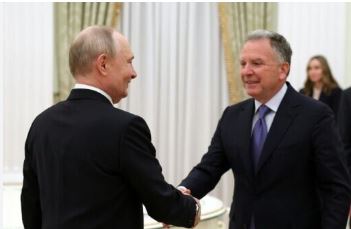
MOSCOW, JAN 23: Top US negotiators including Steve Witkoff met Russian President Vladimir Putin in Moscow late Thursday for talks on a US-drafted plan to end the Ukraine war, just as Kyiv announced it had agreed on post-war security guarantees with Washington.

Diplomatic efforts to end Europe’s deadliest conflict since World War II have gained pace in recent months, though both Moscow and Kyiv remain at odds over the key issue of territory in a post-war settlement.

Talks concluded after stretching past the three-hour mark, the Kremlin said in a statement released early Friday.

    Witkoff had previously said he believed the two sides were “down to one issue”, without elaborating.

   Video published by the Kremlin showed a smiling Putin shaking hands with Witkoff, US President Donald Trump’s son-in-law Jared Kushner and White House advisor Josh Gruenbaum.

    Russian negotiator Kirill Dmitriev and Kremlin aide Yuri Ushakov took part on the Russian side, the Kremlin said.

  The high-stakes meeting came just hours after Ukrainian President Volodymyr Zelensky said a draft deal was “nearly, nearly ready” and that he and Trump had agreed on the issue of post-war security guarantees.

  Russia, which occupies around 20 percent of Ukraine, is pushing for full control of the country’s eastern Donbas region as part of a deal.

  But Kyiv has warned that ceding ground will embolden Moscow and says it will not sign a peace deal that fails to deter Russia from launching a renewed assault.

After meeting Trump at the World Economic Forum in Davos, Zelensky said the security guarantees were “done”, speaking in English to journalists. He said the UK and France had already committed to forces on the ground.

– Europe ‘fragmented’ –

                  Neither Witkoff nor Kushner will stay in the Russian capital overnight, instead flying straight to Abu Dhabi, where talks will continue in “military to military” working groups, Witkoff said.

                  The details of the upcoming talks in the United Arab Emirates have not been released, and it is not clear whether Russian and Ukrainian officials will meet face-to-face.

                  Zelensky said these talks would last two days.

                  Trump repeated on Wednesday his oft-stated belief that Putin and Zelensky were close to a deal.

                  “I believe they’re at a point now where they can come together and get a deal done. And if they don’t, they’re stupid — that goes for both of them,” he said after delivering a speech at Davos.

                  Zelensky, at his address in Davos, blasted the EU’s lack of “political will” in countering Putin in a fiery address.

                  “Instead of becoming a truly global power, Europe remains a beautiful but fragmented kaleidoscope of small and middle powers,” he said.

                  Trump’s dramatic foreign policy pivots including a recent bid to take over Greenland — an autonomous Danish territory — have stirred worries in Europe about whether Washington can be trusted as a reliable security partner.

                  In his speech, Zelensky criticised Europe for pinning hopes on the United States defending them in case of aggression.

                  “Europe looks lost trying to convince the US President to change,” Zelensky said.

                  Russian strikes this week have left most of Kyiv without electricity, with residents of 4,000 buildings without heat in sub-zero temperatures.

                  Russia, which launched its Ukraine offensive in February 2022, says its strikes are aimed at energy infrastructure fuelling Ukraine’s “military-industrial complex”.

                  Kyiv says the strikes are a war crime designed to wear down its civilian population into submission.

Ministry of Information Assures Resolution of Journalists’ Pending Plot Allotments

Ministry of Information Assures Resolution of Journalists’ Pending Plot Allotments

DNA

Islamabad – The Ministry of Information has assured working journalists in the twin cities that the long-pending issue of residential plot allotments will soon be resolved. Starting Monday, the scrutiny committee will hold meetings on a daily basis to expedite the process. The ministry has also sought necessary records from the Capital Development Authority (CDA) to ensure that journalists who have already received plots or flats in the past do not qualify for fresh allotments.

A detailed meeting was held at the Ministry of Information with Federal Secretary Information, Ashfaq Ahmed Khalil, Principal Information Officer (PIO) Mubashir Hassan, and senior journalists. During the session, journalists briefed the secretary about the allotment cases that have remained pending for over a decade, and expressed concerns over repeated delays and postponements of committee meetings.

PIO Mubashir Hassan explained the reasons behind the delays and obstacles in the allotment process. Federal Secretary Khalil assured participants that the ministry is neither a hurdle in the allotment process nor intends to become one, emphasizing that allotments will be made strictly on merit and journalistic experience.

The secretary directed relevant officials to convene committee meetings daily from next week to address the issue promptly. It was also agreed that journalists who already own a plot or flat in Islamabad, or those who surrendered flats without reapplying, will not be eligible for new allotments. Similarly, journalists lacking at least 15 years of practice in Islamabad and 20 years of overall journalistic experience, or those who have left journalism for NGOs or other institutions, will not qualify.

Participants thanked the secretary and PIO for announcing immediate steps to resolve the matter. A proposal was also presented to include the Parliamentary Reporters Association of Pakistan (PRA) in future committees, instead of “dummy” journalist organizations, as PRA is recognized as a key forum actively working for the rights of journalists across the country.

Bangladesh refuse to go to India for T20 World Cup

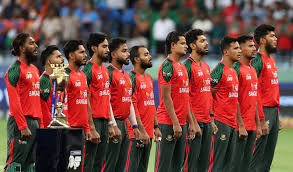
Dhaka, Jan 22 Bangladesh will not travel to India to play in next month’s T20 World Cup, its cricket board said on Thursday, effectively ruling the country out of the tournament.
“Our only demand is to play the World Cup — but not in India,” Bangladesh Cricket Board (BCB) President Aminul Islam Bulbul told reporters.
The refusal came a day after cricket’s governing body rejected Bangladesh’s plea to play its games in Sri Lanka instead.
“There is no scope for changing our decision,” said Asif Nazrul, an adviser for youth and sports issues in Bangladesh’s interim government.
The T20 World Cup begins on February 7, with Bangladesh scheduled to play their four group matches in the Indian cities of Kolkata and Mumbai.
The row between the neighbouring nations erupted on January 3 when the Indian cricket board ordered the Indian Premier League (IPL) franchise Kolkata Knight Riders to release Bangladesh fast bowler Mustafizur Rahman. Dhaka maintains that Indian media had exaggerated the scale of the violence.
The sport’s global governing body said on Wednesday it had “engaged with the BCB in sustained and constructive dialogue” to ensure Bangladesh could participate in the tournament, but added that those efforts had been “rebuffed”.
The International Cricket Council (ICC) said “independent security assessments, comprehensive venue-level security plans and formal assurances from the host authorities” found there was “no credible or verifiable threat to the safety” of the Bangladesh team.

              - 'Lose a huge audience' -


              However, Nazrul said Bangladesh's security concerns "did not arise from speculation or theoretical analysis".
              "They arose from a real incident -- where one of our country's top players was forced to bow to extremists, and the Indian cricket board asked him to leave India," he said.
              Bangladesh will hold elections during the World Cup, its first since a mass uprising in 2024 toppled then-prime minister Sheikh Hasina, a close ally of New Delhi.
              Political relations have since soured between Bangladesh and India, where Hasina fled after she was ousted.
              There are wider issues for India, which is preparing to host the 2030 Commonwealth Games that are seen as a stepping stone for its ambitions to host the 2036 Olympics.
              "Bangladesh is a cricket-loving nation. If a country of nearly 200 million people misses the World Cup, the ICC will lose a huge audience," the BCB's Bulbul said.
              "Cricket is entering the Olympics in 2028, Brisbane in 2032, India is bidding for 2036. Excluding a major cricket-loving country like Bangladesh would be a failure."
              Bangladesh's appeal to the ICC was not without precedent, with India's arch-enemy Pakistan to play all its games in Sri Lanka.
              That deal was struck after India, a financial and administrative powerhouse within cricket, refused to travel to Pakistan for the 2025 Champions Trophy and played its matches in Dubai instead.
              However, the ICC said a year later a similar shift was impossible for Bangladesh.
              "There are many precedents worldwide where matches have been moved to other venues due to security risks," Bangladesh's Nazrul said.
              ICC sources told AFP this week that Bangladesh could be replaced by Scotland, the highest-ranked team that did not qualify outright for the World Cup.

Japan suspends restart of world’s biggest nuclear plant

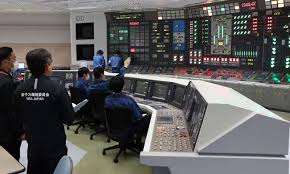
Tokyo, Jan 22The restart of the world’s largest nuclear power plant was suspended in Japan on Thursday, with the operator saying it does not know when the problem would be solved.
The Kashiwazaki-Kariwa plant in Niigata province had been closed since the 2011 Fukushima disaster, but operations to relaunch it had begun on Wednesday after it received the final green light from the nuclear regulator.
However, its operator the Tokyo Electric Power Company (TEPCO) said Thursday that “an alarm from the monitoring system… sounded during the reactor startup procedures”, causing it to suspend operations.
“We don’t expect this to be solved within a day or two. There is no telling at the moment how long it will take,” site superintendent Takeyuki Inagaki told a news conference.
“We will for now fully focus on trying to identify the cause of what happened,” he said.
The alarm that went off prompted TEPCO to “investigate the malfunctioning electrical equipment,” spokesman Takashi Kobayashi told AFP.
And “once it became clear that it would take time, we decided to reinsert the control rods in a planned manner”, he said, adding that the reactor “is stable and there is no radioactive impact outside”.
Control rods are a device used to control the nuclear chain reaction in the reactor core, which can be accelerated by slightly withdrawing them, or slowed down or stopped completely by inserting them deeper.
The restart, initially scheduled for Tuesday, had been pushed back after another technical issue related to the rods’ removal was detected last weekend — a problem that was resolved on Sunday, according to TEPCO.
Kashiwazaki-Kariwa is the world’s biggest nuclear power plant by potential capacity, although just one reactor of seven was restarted.
The facility was taken offline when Japan pulled the plug on nuclear power after a colossal earthquake and tsunami sent three reactors at the Fukushima atomic plant into meltdown in 2011.
However, resource-poor Japan now wants to revive atomic energy to reduce its reliance on fossil fuels, achieve carbon neutrality by 2050 and meet growing energy needs from artificial intelligence.
Kashiwazaki-Kariwa is the first TEPCO-run unit to restart since 2011. The company also operates the stricken Fukushima Daiichi plant, now being decommissioned.
Public opinion in Niigata is deeply divided: Around 60 percent of residents oppose the restart, while 37 percent support it, according to a survey conducted in September.
“It’s Tokyo’s electricity that is produced in Kashiwazaki, so why should the people here be put at risk? That makes no sense,” Yumiko Abe, a 73-year-old resident, told AFP this week during a protest in front of the plant.
Earlier this month, seven groups opposing the restart submitted a petition signed by nearly 40,000 people to TEPCO and Japan’s Nuclear Regulation Authority, saying that the plant sits on an active seismic fault zone and noted it was struck by a strong quake in 2007.

NATO chief cannot negotiate for Denmark on Greenland

Copenhagen, Jan 22 NATO chief Mark Rutte cannot negotiate on behalf of Denmark over Greenland, the Danish government said Thursday, a day after US President Donald Trump announced a deal following talks between the two men.
Trump backed down on threats to seize Greenland by force after meeting Rutte on Wednesday, saying he had reached a “framework” of a deal on the Danish autonomous territory.
Details of the agreement made at the World Economic Forum in the Swiss ski resort of Davos remain scant.
“The position of Denmark and that of Greenland are the same, and no negotiations were held yesterday with NATO about our sovereignty,” Denmark’s Prime Minister Mette Frederiksen told Danish television.
“Of course it is only Denmark and Greenland themselves that can make decisions on issues concerning Denmark and Greenland,” she said earlier in a statement.
The United States and Denmark will renegotiate a 1951 defence pact on Greenland, a source familiar with the talks between Trump and Rutte told AFP on Thursday.
Putting US military bases on Greenland under US sovereignty had not been discussed during the talks, the source said.
Danish Defence Minister Troels Lund Poulsen said on social media Thursday that Rutte “cannot negotiate an agreement on behalf of Denmark or Greenland”.
However, he said Rutte had “worked loyally to maintain unity within NATO” and it was “very positive” that the alliance wanted to do more to strengthen Arctic security.
“We have a clear red line,” he added. “We will not cede sovereignty over parts of the kingdom.”

Swiatek says packed tennis season makes it ‘impossible’ to switch off

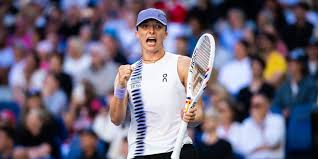
Melbourne, Jan 22 Six-time major champion Iga Swiatek stepped up her criticism of the tennis schedule Thursday saying that the season was too long and it was impossible to switch off.
The Polish second seed turned on the style to motor past the Czech Republic’s Marie Bouzkova 6-2, 6-3 and into the Australian Open third round in Melbourne.
It set up a clash against Russian world number 33 Anna Kalinskaya, who swept past Austria’s Julia Grabher 6-3, 6-3.
While Swiatek said she felt physically fine, she let rip about the ever-growing WTA schedule.
“For sure the schedule is packed. There’s not much time to reset completely. It’s kind of impossible,” she said.
“It feels like there’s no beginning of the season and end of the season because honestly, for people that work physically for 11 months basically, getting 10 days without the racquet, it’s not enough time to reset.
“I mean, that’s what I got. Because for four days you’re still thinking about the season and last days you already think about the preparation for the next one.”
Swiatek said her goal for 2026 was to try and “go somewhere and just reset and not do anything”.
“Like, unplug a bit better. Hopefully I’m going to have more energy till the end of the season.”
Swiatek has won four French Opens, the US Open and Wimbledon, but a title at Melbourne Park has proved elusive, with the 24-year-old making the semi-finals twice.
Last year she surged into the last four but failed to get past eventual winner Madison Keys.
Swiatek arrived in Melbourne this year on the back of two singles defeats at the lead-up United Cup and was then pushed hard by Chinese qualifier Yuan Yue in round one.
She was more convincing against Bouzkova, cutting down on the 35 unforced errors against Yuan to 27, while blasting 31 winners.
Serving was an issue for both players early on, exchanging first-set breaks before Swiatek got into her rhythm to take charge.
The Pole served to love to open set two, but a pair of baseline errors handed the Czech a break and she consolidated for a 3-1 advantage.
But it was a fleeting lead with Swiatek levelling at 3-3 and making the crucial break for 5-3 with a backhand winner before serving out for the match.

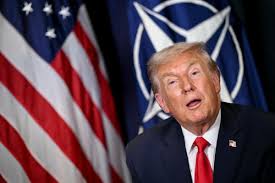
Trump announces Greenland ‘framework’, backing off force and tariffs

Davos, Switzerland, Jan 22 (DNA):US President Donald Trump said Wednesday he had reached a framework of a deal that satisfies him on Greenland, as he backed down both on threats to seize the island by force from Denmark and on imposing tariffs against European allies.
              Trump made the startling turnaround after talks with NATO Secretary-General Mark Rutte, who told AFP afterward that the meeting was "very good" but that "there's still a lot of work to be done".
              Trump, attending the World Economic Forum in the Swiss resort of Davos, said the framework was for a long-term deal, but he was conspicuously silent on whether it would mean US control over the Arctic island, which he has repeatedly demanded.
              "We have formed the framework of a future deal with respect to Greenland and, in fact, the entire Arctic Region", Trump said in a post on his Truth Social platform.
              Trump said he would therefore scrap tariffs of up to 25 percent that he had vowed days ago to slap starting February 1 on Denmark as well as close European allies that have sent troops to Greenland in solidarity, including Britain, France and Germany.
              Trump later told reporters from outlets including AFP that the deal "gets everything we wanted" and will be in force "forever".
              Asked if the United States would gain sovereignty over the vast but sparsely populated island, Trump hesitated and then said, "It's the ultimate long-term deal." 
              "I think it puts everybody in a really good position, especially as it pertains to security, and minerals and everything else," Trump said.
              "It's a deal that people jumped at, really fantastic for the USA, gets everything we wanted."
              NATO spokesperson Allison Hart said that Denmark, Greenland, and the United States will negotiate on "ensuring that Russia and China never gain a foothold -- economically or militarily -- in Greenland" -- a key stated concern of Trump.


              - Some relief in Europe, markets -


              Global markets that had been rattled by the rift and the threat of tariffs saw relief, with Wall Street's key indices climbing.
              Trump's threats had triggered one of the biggest transatlantic crises in decades, with warnings that he could single-handedly destroy NATO through aggression against a fellow member.
              His apparent turnaround brought guarded relief in Denmark, long a steadfast US ally, where Trump's bellicose language has triggered shock and feelings of betrayal.
              "Trump said that he will pause the trade war, he says, 'I will not attack Greenland'. These are positive messages," Foreign Minister Lars Lokke Rasmussen told Danish public television DR.
              Lokke had flown last week to Washington and met Vice President JD Vance, only to say afterward that the United States had not budged on seeking to control Greenland.
              But Aaja Chenmitz, one of two Greenlandic lawmakers in the Danish parliament, questioned why NATO would have a voice on the island's mineral wealth.
              "NATO in no case has the right to negotiate on anything without us, Greenland. Nothing about us without us," she posted.
              In Nuuk, where authorities started handing out brochures on how to live through a crisis, 65-year-old pensioner Lis Steenholdt said that Greenland and Denmark had been firm that the island is not for sale.
              "You have to believe the system. That's the only option we have right now," Steenholdt said.

Stay Connected

64FansLike
60FollowersFollow

Latest Reviews

Exchange Rates

USD - United States Dollar
EUR
1.14
GBP
1.34
AUD
0.70
CAD
0.71