Home Blog Page 2839

President Alvi to inaugurate 23rd Sustainable Development Conference on Dec 14

ISLAMABAD, DEC 11 (DNA) – President of Pakistan Dr Arif Alvi will inaugurate the 23rd Sustainable Development Conference (SDC 2020), the flagship annual activity of the Sustainable Development Policy Institute (SDPI), on December 14, 2020. The mega event titled ‘Sustainable Development in the Times of COVID-19’ will be concluded on 17 December 2020 with the closing remarks by Prime Minister of Pakistan Imran Khan. Conference is being held on a digital platform and interactive sessions can be attended by registering at  www.sdpi.org/sdc.

The four days proceedings of the conference would focus upon cooperation between developed and developing countries for sustainable development, Sustainable Development Goals (SDGs) and human centeredness. The virtual event expects participation of a large number of experts in different sectors both from Pakistan and abroad.

Besides several other panel discussions on some of the most critical issues of sustainable development of the contemporary world, discussion on ‘Impact of COVID-19 on Food Security: Challenges for Women’ and ‘Financial Inclusion of Women in Pakistan – Developing Gender-Responsive Financial Inclusion Models’ that will be held in collaboration with Embassy of the Kingdom of the Netherlands in Pakistan, Economic Growth, Social Protection, and the International Monetary Fund (IMF) Programme amid COVID-19’ in collaboration with Friedrich-Ebert-Stiftung and Fatima Jinnah Women University as knowledge partner, ‘Cultural Diplomacy in the Times of COVID-19’ in collaboration with Friedrich-Ebert-Stiftung, ‘Inclusive Tourism Sector Strategies to Support Post-Pandemic Recovery’ in collaboration with World Bank Pakistan and  ‘Informal Sector during the COVID-19 Pandemic: Challenges and Opportunities’ in collaboration with World Bank Washington DC would be some of the key highlights of the event.

Likewise, ‘Access to Water and Sanitation in a Post-COVID Pakistan’ in collaboration with WaterAid, ‘Education Methods in COVID-19 Response: Assessing Gendered Impact’ in collaboration with Malala Fund, ‘Future of BRI in the Post-COVID World’ in collaboration the Embassy of the People’s Republic of China,  ‘Setting Pakistan’s Agenda for Universal Social Protection (USP)’ and In collaboration the International Labour Organization’   and ‘Accelerating SDGs Achievement and Building Back Better from COVID-19 Pandemic in South Asia’ in collaboration with the United Nations Economic and Social Commission for Asia and the Pacific: Sub-regional Office for South and South-West Asia, are also the panels expected to generate important knowledge and policy recommendations on related developmental issues of the day.

The researchers, academicians, scientists, policy makers, legislators, and experts from different fields will come up with evidence-based policy interventions during this mega conference.  They will share best practices and present workable solutions to the emerging challenges related to sustainable development in the region.=DNA

================
Huawei helps build better education in Middle East thru latest ICT solutions

DNA

ISLAMABAD, DEC 11 – With many academic models reexamined during 2020, Huawei has previewed a series of digital transformation solutions to support continuous learning and quality education in the Middle East over the coming years. The company’s expanded Smart Education portfolio was unveiled in the Middle East during GITEX Technology Week and has been demonstrated to government and non-governmental organizations throughout the exhibition.

According to Huawei, the education of approximately 1.5 billion students worldwide has been disrupted due to the COVID-19 pandemic[1]. In response, local authorities have increasingly turned to information and communications technologies (ICT) in an effort to ensure teaching and learning can continue, and that today’s investments create long-term value.

Huawei has focused on five layers of digital transformation in the education sector. These include using ICT solutions to enhance teaching, learning, research, management, and support services. By working across these domains, Huawei is building end-to-end solutions that tap into its expertise across wired and wireless networks—especially 5G—as well as its strengths in connected devices and IoT networks.

“Both teachers and students have had to overcome unique challenges this year, but even before the COVID-19 pandemic, there was a real pivot happening to embrace converged digital platforms in education,” notes Alaa Elshimy, Managing Director & Senior VP of Enterprise Business Group, Huawei Middle East.  “Increasingly, we see organizations wanting the flexibility to have blended learning and teaching solutions that optimize online and offline time most effectively. New ICT solutions can not only improve learning and teaching experiences, but make it easier to manage academic programs.”

At the core of its education portfolio is the eClassroom for immersive learning environments in-person or remotely. These technologies enable classrooms to have 4K HD whiteboards, support one-click sharing of coursework, more fluent data interactions and annotations, and seamless video sharing. Huawei’s Online Learning solution then supports the publishing of coursework and other shared resources. It includes tools to rank and recommend courses, along with interactive community statistics and reports about how specific resources are being used. Huawei has also designed a National Research and Education Center solution that supports collaborative research, especially at the university level, enabling more education resources to be shared on the cloud and accessible through an ultra-broadband backbone network.

Behind the scenes, Huawei has tailored Wireless Campus solutions for the education field, offering full-scenario coverage so that anything that sits within a physical classroom or building is easily accessible across a designated campus area. That is combined with IP + Optical Network technologies that simplify wired connections and reduce energy cost and space by as much as 80% through the use of fiber.

These and many other industry solutions can be seen at Huawei’s stand at GITEX Technology Week. The company is collaborating with partners to showcase how governments and organizations in the Middle East can create new value through synergy across five tech domains. Located in Zabeel Hall, Stand: Z2-A10, more information on Huawei’s GITEX participation can be found here.

Saudi envoy calls on Minister for IPC

DNA

ISLAMABAD, DEC 11 – Saudi Ambassador to Pakistan, Nawaf bin Saeed Al Maliki on Friday called on Federal Minister for Inter-Provincial Coordination, Dr Fehmida Mirza in her office in Islamabad.

Dr Fehmida Mirza warmly welcomed the Saudi Ambassador and discussed matters pertaining to sports, tourism and other affairs of mutual interest. Saudi Ambassador briefed the Federal Minister that Saudi Arabia is planning to host Olympics 2030.

Dr Fehmida Mirza ensured all-out support from Pakistan for Saudi Arabia drive to host Olympics 2030. Federal Minister extended an invitation to the Saudi Ambassador to visit the Pakistan Sports Complex. Saudi Ambassador thanked Dr Fehmida Mirza for profuse hospitality and admired her profound concerns for the betterment of Sports infrastructure in Pakistan.

ICCI, Pink Ribbon sign MoU to raise awareness about breast cancer

ISLAMABAD, DEC 11 (DNA) – The Islamabad Chamber of Commerce & Industry (ICCI) and Pink Ribbon Pakistan have signed a Memorandum of Understanding to raise awareness about breast cancer with joint efforts and play a role to control it. Sardar Yasir Ilyas Khan President ICCI and Omer Aftab CEO Pink Ribbon Pakistan signed the MoU during a ceremony held at ICCI.

Speaking at the occasion, Sardar Yasir Ilyas Khan, President, Islamabad Chamber of Commerce and Industry said that breast cancer was on the rise in Pakistan as roughly one in eight women was vulnerable to develop it in their life. He said that almost 30 percent of cancers in women were reportedly breast cancers and 3 percent women were dying from this disease.

He said being a developing country, it was difficult for Pakistan to provide treatment to every cancer patient, therefore, it was very important to take preventive measures to avert any bad scenario. He said that contrary to around 98 percent survival rate, almost 50 percent breast cancer patients in Pakistan reportedly died due to delayed diagnosis as the ailment was usually concealed owing to attached taboos.

He emphasized for concerted efforts to create massive awareness by including the business community, intelligentsia, media, and health experts to prevent the prevalence of breast cancer in the country. He hoped that MoU of cooperation between ICCI and Pink Ribbon Pakistan would be instrumental in raising better awareness about this fatal disease and reducing its mortality rate.

Ms. Fatma Azim Senior Vice President and Abdul Rehman Khan Vice President ICCI said that poor diet, smoking, eating adulterated food & liquids and alcohol were some major risk factors for breast cancer and urged that society should be educated to avoid using these things.

They said that breast cancer could be diagnosed at an early stage by guiding and educating the women about its major causes. They said that ICCI would organize awareness sessions and seminars on the causes of breast cancer and how to control it. They said that ICCI would also use its publicity platforms to create awareness about this fatal disease.

Omer Aftab, Chief Executive Officer, Pink Ribbon Pakistan highlighted the role of his organization to fight against breast cancer. He said that Pink Ribbon Pakistan was in the process of constructing Pakistan’s first dedicated breast cancer hospital, which will be a breakthrough in breast cancer management in Pakistan.

He said that breast cancer patients will be treated with world class healthcare technology and hoped that their hospital would contribute significantly towards reducing the breast cancer mortality in Pakistan. He said that this year, the government organized many awareness sessions about breast cancer, which was laudable and hoped that the government would make effective policies besides providing better health facilities to control this fatal disease in the country.=DNA

=================

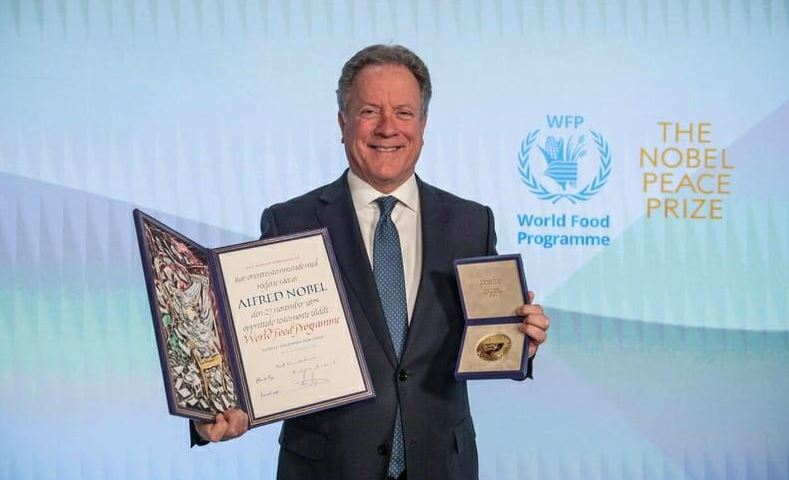
WFP chief urges world to help prevent famine

ROME (DNA) – Waking up this morning in the beautiful city of Rome, it is hard to imagine that in about 400 AD this city experienced a massive famine that ended up killing almost 90% of its population.  Students of history associate something else with that ancient date:  the beginning of the Fall of the Roman Empire.  Now, did the famine cause the fall?  Or did the fall cause the famine?  I think the answer is yes — both.

Waking up in this wealthy, modern, technologically advanced world, it’s hard to imagine us going through a famine like that.  But my tragic duty today is to tell you: famine is at humanity’s doorstep.  For millions and millions of people on earth.

Failure to prevent famine in our day will destroy so many lives and cause the fall of much we hold dear.

Capture2

On behalf of Secretary-General Guterres of the United Nations, our Board, our sister agencies, our incredible partners and donors and most importantly on  behalf of 19,000 peacemakers at the World Food Programme, and for all those who came before us, especially those who died in the line of duty and their families who carry on, and on behalf of the 100 million hungry people we serve, to the Norwegian Nobel Committee, thank you, for this great honour.

Also, thank you for acknowledging our work of using food to combat hunger, to mitigate againstdestabilization of nations, to prevent mass migration, to end conflict and… to create stability and peace.

We believe food is the pathway to peace.

I wish today that I could speak of how working together we could end world hunger for all the 690 million people who go to bed hungry every night. But, today we have a crisis at hand.

China’s nuclear aspirations

By Muhammad Omar Iftikhar

In an attempt to achieve a competitive advantage in the domain of nuclear technology, China recently launched its nuclear sun. According to sources, the HL-2M Tokamak reactor will provide a source of clean energy. The reactor is run on magnetic fields that combine hot plasma.

It is reported that the temperature of the core of this reactor can reach over 150 million degrees Celsius. China’s ambitions to work on nuclear fusion energy and now making the first successful stride in this regard will gain global attention. China is planning to collaborate with France, where the scientists are already working on the International Thermonuclear Experimental Reactor.

While China has been striving to produce a smaller-scale nuclear reactor since 2006, the HL-2M Tokamak reactor will be a step forward in China’s plans to create a clean energy source. In the years to come, the world’s natural recourses will be depleted beyond measure. They are already being consumed at a rapid pace. An alternate clean source of energy was required to pursue micro and macro level operations related to trade, commerce, transportation, manufacturing, and other fields.With the mammoth costs of creating and running the  HL-2M Tokamak reactor, China has teamed up with several countries.

They include the European Union, Japan, the Republic of Korea, Russia, the United States, and India. With nuclear fusion energy, the world will harness another source of energy that may replace natural alternate energy sources.The humans’ dependency on the sun may as well become a secondary concept when most or all of the commercial needs to produce energy will be fulfilled by the HL-2M Tokamak reactor.

This may represent a daunting futuristic reality where humans are capable of producing clean energy that can facilitate them to live on isolated areas on Earth or transfer the same technology to the Moon, in case there is a plan to create a research and residential base on the Moon.

Government hospitals are giving death instead of life!

In a civilized society, the importance of human life in general and in Islam in particular is immense. Islam says, whoever saves the life of one person, it is as if he saved the life of all humanity and whoever kills one person, it is as if he has killed the whole humanity. Our society is very demanding of the implementation of Islamic teachings, but the consciousness of Islam is not common here, that is why human lives are being mistreated in hospitals, and the recent example of which is the tragic incident of Khyber Teaching Hospital Peshawar where seven patients, including five COVID-19 patients, died due to lack of oxygen in the hospital. The management seems to be negligent in this incident, but the management is placing the entire responsibility on the oxygen supply company to save itself.

It is very unfortunate that irreparable loss of seven precious lives has taken place, but instead of being ashamed, those responsible are blaming each other, it is beyond comprehension that the incident took place in the hospital and the oxygen supply company is being held responsible. While the company’s job is to provide oxygen, it is the job of the hospital administration and doctors to provide oxygen to the patients and take care of them. The incident took place at night and the administration is being informed about it the next day at noon. It entirely shows the negligence of the administration, even knowing that the Coronavirus pandemic has engulfed the entire country. How can such shortcomings be tolerated in the treatment of patients? Although the hospital’s board of governors has set up a committee to investigate the incident, there is a need for those found responsible to be severely punished rather than replaced or fired, but we do not have a tradition of punishment.

The management of Khyber Teaching Hospital seems to be clearly responsible for the incident. However, the entire responsibility is being shifted to the oxygen supply company to save itself. According to the preliminary investigation, on December 4, a company called Pakistan Oxygen had supplied 3,700 cubic meters of oxygen, while the hospital tank could store up to 7,000 cubic meters of oxygen. In this regard, the General Manager Administration of Oxygen Company has clarified that the same hospital needed 30,000 cubic meters of oxygen in October, which they supplied. While in November, when the hospital asked for more supply, they provided about 60,000 cubic meters, which is about 2,000 cubic meters on a daily basis. The oxygen company had supplied the hospital with excess oxygen on December 4, keeping in view the November average supply, while the hospital management has been claiming after the incident that the company’s vehicle was delayed due to oxygen problem. The oxygen company has termed this claim as ‘false’ and said that the hospital administration was saying it to cover up its incompetence. The hospital administration called when the supply ran out and we immediately sent a vehicle, which can be checked from hospital records.

The management of this hospital did not extend the contract of Oxygen Company in a timely manner and did not even inform the company about the timely supply as per its requirement. Due to this irresponsible behavior, seven precious lives were lost but the administration is showing great shamelessness and arrogance. This is not the first case of death of patients in the country. Numerous such incidents have filled the history of government hospitals, which shows how bad the condition of all government hospitals in the country is. From the hospital administration to the staff, their irresponsible attitude towards people has not been hidden from anyone. So, the incidents that happen to the patients on a daily basis demand special attention of the government. The same will happen after the investigation into the Teaching Hospital Peshawar incident, as it has been happening before, because in hospitals across the country, from the management to the doctors and staff, there is a mafia wreaking havoc on government hospitals that guarantees the development of private hospitals. Unless this mafia is stopped, there will be no positive change in the condition of government hospitals.

The PTI government is taking most of the steps to provide health facilities to the people, but the common man is deprived of the fruits of the government’s measures. The government ministers seem to be dynamic as far as statements are concerned, but in practice the performance is zero. On the other hand, from the construction of hospitals to the purchase of modern equipment, corruption has reached its peak, but there is no one to hold it accountable. There is an extreme indifference in government hospitals that death is being given instead of giving life and these death dealers are none other than their own Messiah who is depriving the patients of the right to breathe by not giving them oxygen. The government will have to take steps to improve the performance of the hospital management. The presence and continuity of oxygen supply in the hospitals is a must, in which case any kind of negligence will result in the said incident. In view of the dangerous situation of the hospital, it should be made possible to provide oxygen to the patients from time to time in the hospitals, so that the patients could not be put to death as a result of any negligence in the future.

Written by

Attiya Munawer

EU provides Euro 58 mn for water security

A.M.Bhatti

ISLAMABAD: The European Union will provide EUR 58 million (PKR 11.1 Billion) to support the Government of Balochistan in its efforts to address water scarcity and improve access and quality of primary and middle-level education in the province.

The announcement follows the signing of two new financing agreements today by Mr. Noor Ahmed, Secretary, Ministry of Economic Affairs and Ms. Androulla Kaminara, Ambassador of the European Union to Pakistan.

The five-year Euro 40 Million programme on water governance – to be implemented from 2021 – will contribute to the transition in the arid regions of Balochistan towards sustainable, low water intensive agricultural and livestock farming systems.

The support will include incentives for farmers to use water more efficiently and unleash the potential of livestock by supporting sustainable rangelands management, with a special focus on the most vulnerable groups.

 This will not only contribute to improved productivity by making better use of scarce water resources, but also help improve groundwater recharge in the medium to long-term.The programme will also focus onstrengthening public extension services to ensure farmers receive appropriate support on water for agriculture and livestock.

The programme will be implemented by the Food and Agriculture Organisation of the United Nations (FAO) in collaboration with local partners. The European Union will also provide EUR 18 million (PKR 3.4 million) in support of the Government of Balochistan’s efforts to strengthen the education systems in the province.

The ‘Balochistan Education Support Programme II’, will work towards ensuring that all children have access to basic education and improving the quality of education.

The four-year programme will be implemented by the United Nations Children’s Fund – UNICEF. It will involve local communities in school development planning, help enhance the training of teachers, and support stronger education institutions.

In the COVID-19 context, the programme will also focus on SOPs for safe school reopening and operation, as well as on enrolment and retention drives in targeted districts to avoid massive dropouts due to the pandemic.

 The programme will also introduce innovative elements, such as work on inclusion of parallel education systems in mainstream education policy. Ambassador of the European Union to Pakistan, Androulla Kaminara said,“These new programmes are the result of a sustained collaboration between the European Union, the Government of Balochistan, and the Ministry of Economic Affairs to tackle the substantial development challenges in the province and unleash its potential.

Balochistan is one of the regions of Pakistan at greater risk from climate change, which threatens livelihoods. Also considering the socioeconomic impact of Covid-19, it is crucial to invest in low water agriculture to reduce poverty and malnutrition. In the education sector the EU is renewing its commitment to helping children, especially the most vulnerable, to receive an education and be able to follow their dreams, contributing to a better future for Pakistan.” Secretary EAD, Mr. Noor Ahmed hailed the EU and Pakistan’s long-term partnership and appreciated the EU’s support in Rural development, Education, Good Governance and Rule of Law under the Multiannual Indicative Programme (MIP 2014-20).

Ambassador of EU reiterated commitment of European Union to broaden and deepen the development cooperation with Pakistan, and to launch next Multi-annual Indicative Programme 2021-27 which will primarily be focused on priorities of the Government of Pakistan.

Pakistan Navy, ANF seize drugs in a joint operation

DNA

KARACHI, DEC 11 –  In a joint operation, Pakistan Navy (PN) along with Anti-Narcotics Force (ANF) apprehended 200 Kg of Ice and 99 Kg of Crystal off Jiwani, Baluchistan. The drugs, valued at approximately Rs 1.8 billion, were to be smuggled to unknown destination through Arabian Sea. The seized drugs were handed over to ANF for legal proceedings.

Successful execution of joint Anti-Narcotics Operation is a demonstration of PN resolve to counter illegal activities in the Maritime Zones of Pakistan and promote maritime security in the region.

SCODA welcomes Pakistani community to strengthen economic ties

SHANGHAI, Dec. 11 (DNA): The management committee of Shanghai Cooperation Organization Demonstration Area (SCODA) exchanged views with the Karachi Chamber of Commerce and Industry (KCCI) on economic and trade cooperation.

According to Gwadar Pro, recommendations for nine industrial parks in Pakistan to interact with SCODA, investment policy and model of SCODA and other related issues were discussed.

Mr. Xiang Zhiqiang, member of the Party Working Committee and Deputy Director of the Management Committee of SCODA welcomed KCCI and its member enterprises to carry out trade cooperation.

He advocated KCCI to lead various business associations and enterprises to exchange visits, enhance mutual understanding, promote cooperation, seek common development in agriculture, transportation, science and technology, humanities and other fields with SCODA once the epidemic is over.

“We wish to establish a dedicated communication and coordination mechanism to deepen the cooperation,” he added.

Shamsul Islam Khan, Vice President of KCCI stated that Pakistan’s economy is based on agriculture, and its seafood, fruits and other high quality agricultural products can be sold in China and exported to neighboring countries through cooperation with SCODA.

Wang Zihai, Deputy Director of Pakistan-China Center gave a brief introduction of their processing work and stressed that recently China has signed RCEP with 14 countries, which also brings great potential for Pakistan. Pakistan can work closely with RCEP countries through the platform of SCODA in China, he added.

Stay Connected

64FansLike
60FollowersFollow

Latest Reviews

Exchange Rates

USD - United States Dollar
EUR
1.17
GBP
1.35
AUD
0.67
CAD
0.72