Home Blog Page 2834

Community development key to mountains biodiversity conservation

ISLAMABAD, DEC 14 (DNA) – The conservation of mountain resources and biodiversity conservation is the responsibility of every citizen either living in the mountains or downstream. Community empowerment to protect and conserve the mountain biodiversity resources and use them more wisely is the key solution to fast degrading mountain ecosystems.

Pakistan Mountain Festival Founder and Director Munir Ahmed made these remarks while addressing the interactive seminar organized by the Pakistan Wildlife Foundation, Mivida Pakistan and Development Communications Network (Devcom-Pakistan) for youth and mountain communities in connection with 10th Pakistan Mountain Festival on Monday.

Munir Ahmed said mountain communities should have strong networking with the citizens’ organizations and environmentalists downstream to become a strong voice against the cartels of timber and land mafia. The mountain biodiversity conservation and protection is the responsibility of local communities because their life and livelihood depend on these resources. He also urged the federal and provincial governments to take stern action against the land and timber mafia causing irreparable loss to the mountain biodiversity.

The communities shall refrain from changing the land-use of their real estate assets rather develop them environmental friendly abode for homestay of visiting tourists. The government shall also take action against the changed land-use that is mostly in violation of the respective legislation and international treaties and conventions.

We need to protect our mountain communities and the population downstream from disasters originating from the mountains, decrease the Glaciers Lake Outburst Floods (GLOF), land-sliding and promote eco-tourism, he said.

Mivida Pakistan Director Eco-conservation initiatives Safwan Shahab said community youth should be empowered to take the mountain conservation responsibility by putting small but significant local initiatives. We need to educate mountain communities and engage in conservation efforts to decrease the mountain’s biodiversity loss that is causing disasters and increasing local impact of climate change.

Young environmentalist and junior ambassador Pakistan Wildlife Foundation Minahil suggested the youth to develop social media platforms to highlight the mountain treasures and challenges confronting the local communities.

Islamabad Devcom Centennial Leo Club founder Shaaref Munir urged the citizens to reduce carbon footprint by reducing consumption of goods and resources, and Greenhouse Gas emissions.

A young environmentalist Saima Khan asked the women to adopt the conservation practices by reducing domestic consumption of daily consumables. To stop migration of mountain communities, she urged the government to provide local youth and women with skills to package and market the local horticultural, agricultural products, and handicrafts.

Development Communications Network (Devcom Pakistan) and DTN in connection with 10th Pakistan Mountain Festival organized a national webinar the other day. The panel of experts included Senior Scientific Advisor Ev-K2-CNR Ashiq Ahmed Khan, FAO Pakistan Deputy Country Representative Farrukh Toirov, World Bank Senior Technical Advisor on tourism Kiran Afzal, Water and Climate Change Expert Ali Tauqeer Sheikh, WWF Pakistan Senior Director Biodiversity Rab Nawaz, AKRSP former General Manager Muzaffaruddin, SDPI Director Environment Dr. Imran S. Khalid, and Executive Director Devcom-Pakistan Munir Ahmed.

FAO Pakistan Deputy Country Representative Farrukh Toirov said about 60 per cent of Pakistan is mountainous, and 50 percent of what are the biodiversity hotspots and 30 percent key biodiversity areas. Mountains cover 27 percent of the earth’s land surface, provide 60-80 percent of the freshwater 60-80%, hydro and wind energy, and food.

Mr Toirov suggested six pointed action agenda to combat the challenges confronting the mountains biodiversity including increased investment in research and sound data collection, enhanced local capacities to reduce biodiversity loss, to inform policy makers to promote, inform policy makers to promote conservation actions and increase the resilience of mountain communities, engage and advocate with conventions, networks and movements, support sustainable agriculture in mountains to reverse agro-biodiversity loss, and promote indigenous knowledge and its role in maintaining mountain biodiversity, agro-ecosystems and improving food security.

World Bank Group Senior Private Sector Specialist on Tourism Kiran Afzal said the World Bank projects are promoting responsible tourism by engaging communities and the corporate sector to reduce and recycle solid waste. Private sector needs to be sensitized to take up conservation approaches.

Senior Scientific Advisor Ev-K2-CNR Ashiq Ahmed Khan urged the government to have national mountains biodiversity to fill up the serious gaps for biodiversity conservation including research, data, indigenous knowledge and cultural practices. Mountaineers have dumped tons of waste in the base-camps and on the routes to the mountain tops. We need to have mechanisms to handle it too. He suggested having biospheres instead of National Parks.

Water and Climate Change expert Ali Tauqeer Sheikh said rapidly increasing population and absence of resource management is the big challenge for the entire country. Loss of mountain biodiversity is causing scarcity of water resources even in the hubs of glaciers. Excessive use of fertilizers and GMO seeds also harming the fragile ecosystems of mountains.

WWF Pakistan Senior Director Biodiversity Rab Nawaz suggested to have a centre of excellence in mountain research, and to have qualified experts in mountains biodiversity conservation and sustainable development. We don’t have an integrated master plan to use the mountain resources.=DNA

====================

PM Imran praises professionalism, operational readiness of Pakistan Navy

DNA

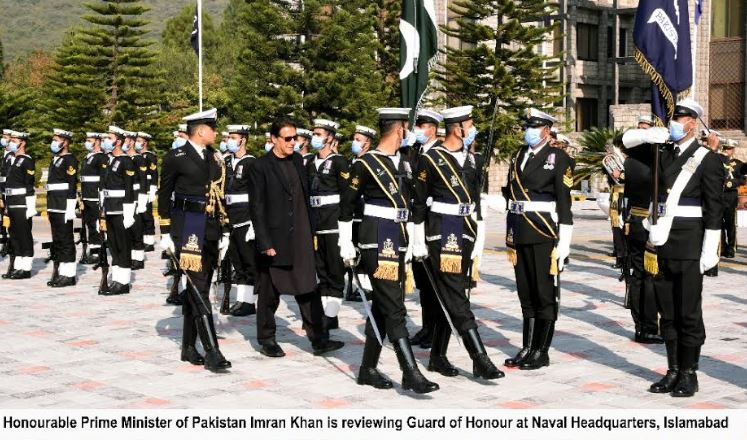
ISLAMABAD, DEC 14 – Prime Minister lmran Khan has visited Naval Headquarters, Islamabad, on Monday. Upon arrival Prime Minister was welcomed by Chief of the Naval Staff, Admiral Muhammad Amjad Khan Niazi and was presented Guard of Honour by a smartly turned out contingent. Prime Minister laid floral wreath at Shuhada monument and was introduced to the Principal Staff Officers at Naval Headquarters.

The Prime Minister greatly appreciated the professionalism and operational readiness of Pakistan Navy. Prime Minister reposed complete confidence on the preparedness of Pakistan Navy in safeguarding country’s sea frontiers. He also acknowledge Pakistan Navy’s contribution towards regional maritime security by contributing in international efforts and taking own initiatives. Prime Minister showed his satisfaction on steps taken to ensure security of Pakistan’s coast, Gwadar Port and maritime related projects of CPEC.

DNA 14-6

The Prime Minister further assured full support of the Government for capacity building of Navy to meet the evolving challenges in maritime domain. He further added that the Government fully realizes the importance of maritime sector and its immense economic potential which can be utilized for the prosperity of the country. In the same spirit, Government’s vision of declaring 2020 as ‘Year of Blue Economy’ was to set the strategic direction for spurring growth of maritime sector.

Earlier, Prime Minister and the Minister for Defence, Finance & Maritime Affairs, Special Assistant to Prime Minister on NSD & SPP and Secretaries Defence, Finance, Foreign and Maritime Affairs were given detailed briefing on maritime security challenges and Pakistan Navy’s perspective on development of maritime sector.

The Naval Chief thanked Prime Minister for his visit and reposing confidence in the Navy. He also assured that Pakistan Navy with the help of Allah SWT will continue to defend the country’s sea frontiers & maritime interests and shoulder the responsibilities with honour both during peace and war.

Steel sector faces another crisis due to drastic increase in cost of raw material

Contrary to the misleading statement of a body of developers, a question is worth asking that have the steel prices really risen?

DNA

Islamabad, DEC 14 – The drastically increasing prices of raw material is creating crisis like situation for the struggling steel sector of Pakistan. During the last two years, when major players declared heavy losses, largely the steel sector absorbed the impact of increase of inputs without passing it on to the end consumer.

However, it is becoming extremely difficult for the steel sector to absorb the latest impact of growing price of raw material internationally.  In this situation, Pakistan Association of Large Steel Producers urge the govt to remove all duties on the raw material to offset the impact of drastic increase in the cost of raw material which is crossing 400 USD per ton.

Contrary to the misleading statement on the part of a body of developers, the domestic steel bar prices have dropped over the past two years by 8% in dollar terms, from USD 806 in 2018 to USD 746 today. The reason steel prices have increased since 2018 in PKR terms is primarily due to a 45% depreciation of the PKR against the USD, which resulted in increased prices of imported raw materials.

The last few years have been incredibly tough for the steel industry, facing massive increase in costs. The PKR has depreciated by 45% against the USD since January 2018, having a massive impact on raw material and energy costs for the steel industry. Since 2018, electricity costs have risen by 56% and the cost of gas has risen by 116%! Between January 2018 and early 2020, interest rates had doubled from 6% to 13%, increasing financial costs of an industry that is highly leveraged by nature. Finally, the Covid-19 lockdowns exaggerated the losses made by the steel industry and led to a large increase in trade debts, resulting in higher borrowing and financial costs.

Despite the above challenges, the steel industry did not pass through a large portion of these cost increases but reduced profit margins to continue supplying steel bars at a competitive price point to the construction sector. This is evident from profit margins of steel bar manufacturers that shrunk from approximately 8% to 3% between 2018-2020.

While facing severe challenges, industry leaders have also invested billions in bringing latest European technology to reduce energy consumption and improve product quality. Many players have increased capacity to attain benefits of economies of scale and cater for local demand. These are some examples of how the steel industry has been able to reduce steel prices in USD and is now in discussion with various government ministries to start exporting steel bars to regional countries as well.

Looking forward, it seems that steel prices are on the rise world over. Due to global supply chain disruptions due to the second wave of Covid-19, raw material supply is becoming increasingly constrained and steel scrap prices have risen from USD 305 in August 2020 to USD 405 today. This translates to a cost increase of over PKR 15,000/-. With industry margins as low as 3%, companies have no choice but to pass on these increases to consumers. However, steel companies also believe this is a temporary phenomenon. As the Covid-19 disruptions ease, raw material prices will also normalize. With over 300 companies manufacturing steel bars, the steel bar market is highly competitive and reduction in costs are very rapidly translated into lower prices in the local market.

Even amidst an increasing pandemic, everything is not doomed. The industry is upbeat over rising steel demand from the housing and infrastructure sector, which has been spurred by the government’s resolve to kick start the economy. Steel bar manufacturers have spent billions to increase capacity in anticipation of catering to the increased demand from projects such as the PM’s Naya Pakistan Housing initiative.

Contrary to recent statements by a developer, the steel industry is working on extremely low margins to provide cost effective steel bars to the construction sector. In order to make the construction industry more cost effective, the PM’s office should undertake an analysis to see what profit margins the builders and developers are working on and whether some further regulation in this area will help reduce housing prices.

In Pakistan, there are approximately 300 manufacturing units that provide steel to the construction sector, jobs to approximately 100,000 people, government revenue in excess of PKR 100 billion per annum, and have invested over PKR 150 billion in the industry.

3-day moot on Pak-UK education gateway to begin on Dec 15

ISLAMABAD, Dec 14 (DNA): As COVID-19 has transformed the entire world systems, the Higher Education Commission (HEC), Pakistan and the British Council, Pakistan will hold a three-day virtual conference on December 15-17 to discuss the future of the higher education sector in the post-pandemic world.

The conference entitled “Pakistan-UK Education Gateway: Rethinking and Reshaping a Resilient Higher Education System” will discuss key issues facing the sector in the ‘new’ normal, the role of leadership in building resilient HE systems, and lessons learnt from the pandemic. It will celebrate some of the concrete contributions that the Pak-UK Gateway programme has made so far.

Federal Minister for Education Shafqat Mehmood, Chairman HEC Tariq Banuri, Executive Director HEC Dr. Shaista Sohail, British High Commissioner to Pakistan Christian Turner, Director Education, British Council, Nishat Riaz, Vice Chancellors, faculty, and students from both the UK and Pakistan will attend the conference.

The British Council in Pakistan and the HEC launched the Pak-UK Education Gateway in 2018, with an aim to enhance partnership between the higher education sectors of Pakistan and the UK.

The key areas of collaboration under the joint programme include, innovative and collaborative research, higher education leadership, quality assurance and standard setting, distance learning, international mobility, transnational education, and community engagement.

In addition to bringing partners from the Pakistan and UK together to share best practices and lessons learnt during the pandemic and promote cooperation and partnerships between both countries, the recipients of the HEC-British Council joint Research Grants shall be announced along with the upcoming British Council Scholarship schemes for young women in Pakistan.=DNA

==================

Tackling Rapid Coronavirus Increase

Hamza Ali

As the death toll has risen to over four hundred thousand with almost 3000 cases being reported daily, there is a need to strictly follow SOPs though WHO says Pakistan is among countries from whom the international community should learn how to deal with the Covid-19 pandemic.

The second wave is more lethal despite the nation displayed unity and civic sense but there is a dire need to curtail social exposure; the shortage of ICU beds, ventilators and even oxygen may cause severe damage to government’s efforts. Rapid increase in positive cases requires urgent steps to save lives and livelihoods; citizens should help in implementing safety guidelines in public places.

The virus has infected nearly 67 million people and killed close to 1.6 million. “Today marks an overdue and much-needed moment of reckoning. None of us could have imagined, this time last year, what was to come,” said General Assembly president Volkan Bozkir. UN Secretary General Antonio Guterres said, “it is time to reset”, the global response to crises like this. “As we build a strong recovery, we must seize the opportunity for change”.

Pakistan PM Imran Khan while describing the Covid-19 pandemic as “the most serious global crisis since WWII, presented a 10-point agenda for urgent action before the UN GA, underlying the measures the world community needs to take to defeat the pandemic. The first item on his list is a request for debt suspension till the end of the pandemic for low-income and most affected countries. He suggested cancellation of debt of least developed countries that are no longer in a position to repay their loans. Other items on the agenda include: restructuring of the public sector debt of other developing countries under an agreed inclusive multilateral framework; a general allocation of special drawing rights of &500 billion; expanded concessional financing to lower income countries through multilateral development banks; and creation of a new ‘liquidity and sustainability facility’, which should provide short-term loans at lower costs. The agenda also includes a reminder to rich nations to fulfill 0.7 percent of their official development assistance commitments and mobilizing the required $1.5 trillion annual investment in sustainable infrastructure. He also urged the world to help meet the agreed target of mobilizing $100 billion per year for climate action in developing countries. He called for immediate action to stop massive illicit financial outflows from developing countries to rich countries, to offshore tax havens. He also suggested immediate return of assets stolen by corrupt politicians and criminals back to these countries.

On the other hand, various countries have taken strict measures to live with the coronavirus. Take example of Tokyo; the Japanese government committee chairman has said that it takes at least one and a half years for the vaccine to be fully developed and officially put into use. Since the enemy cannot be completely eliminated, it is necessary to learn to coexist with the virus. “Only by following the new rules of life can we live in peace with the corona virus for a long time. In fact, most of the methods have been implemented in China.

The Japanese government while deciding to coexist with the demon, announced the “new life model” calling the people to be prepared to follow this model for an extended period of time and learn to live and work with the virus. Looking closely at these new life models, it can be seen that the Japanese government established these very practical set of SOPs using principles of rationality, science, and risk assessment. There are three basic points: keep a distance between people; wear a mask; and wash hands frequently.

Specific requirements urge people to keep a distance of two meters; play as much as possible outdoors; try to avoid being face to face direct facing when speaking to other people; go home and wash your face and clothes immediately; wash as soon as you touch someone’s hand; try online shopping and electronic settlement; supermarket shopping is best for 1 person, to choose time there are less people; try not to touch commodity samples; don’t talk on public transportation; go to work by bike or on foot; it is best to use electronic business cards; try to use video conference when meeting; to control the number of people in meetings, wear masks and open windows for ventilation; work at home or commute at off peak time; do not go to countries or places where the virus is endemic; try not to return home to visit relatives and travel, and control business trips; when you have symptoms, remember where you went and who you met; eat meals with others not face to face, preferably side by side; do not use large bowls and large pots to share food, implement a divided individual portion system; chat less at meal, eat more vegetables; try not to have too many people gathering at meal together as possible; avoid closed spaces, dense crowd flow, intimate contact; self-test body temperature every morning to strengthen health management; cover the lid when flushing the toilet; don’t stay too long in a narrow space; when walking and running, the number of people should be small, when meet each other stagger the distance.

Unfortunately, amidst the second wave of coronavirus, which is spreading at intense pace, due to which more than 50 deaths are being recorded daily, the public gatherings and rallies by PDM are continuing to hold. They may not accept it because it’s against their political ego, but they must realize that the common sense directly relates to the lives of innocent people. Their gathering in large numbers will put the people’s life at risk of death as the resurge of coronavirus is already playing havoc. This is like going insane to fulfilling venomous objectives. Playing with people’s life is a deliberate attempt to obliterate masses – for the sake of no return. If PDM continues doing so, the cases of coronavirus contract increase manifold.

It is predicted that the coronavirus increase will die down soon, our National Disaster Management department is doing well in this direction, but many opine that it would stay even longer than expected. So, Pakistan needs to adopt measures like that of Japan and the political parties must shun the path of dragging people to risk of life only for fulfilling their political agendas.

(The writer is freelance columnist)

A Cry Over Kashmir

Farooq Alay

How long shall this brutal massacre, rape and arson continue in the India occupied Kashmir? Isn’t there an end to repression, over one and a half years long curfew, arrests, tortures, sieges and abductions? There is a long list of Indian atrocities; may I present here for record?

There are recorded incidents of massacre, mass graves, extrajudicial killings, torture, sexual violence, suicide and psychological problems, disappearances and human rights violations. In Gawakadal massacre, on 21 January 1990, 51 civilians were killed by Indian troopers during protests against earlier raids in which wanton arrests and molestation of women were conducted. On January 25, 1990, two BSF patrolling parties in Handwara indiscriminately fired at peaceful protesters and killed 25 people. Indian forces killed 33 protesters and injured 47 on 1 March 1990 at Zakoora Crossing and Tengpora Bypass Road in Srinagar. At the funeral of Mirwaiz Muhammad Farooq on May 21, 1990 over 60 civilians were killed by paramilitary forces and hundreds injured in the indiscriminate firing on the funeral procession. On 6 January 1993 Indian troops killed 55 civilians in the town of Sopore and set many homes and buildings on fire. On 22 October 1993 the Indian Army killed 51 civilians during protests over the siege of the Hazratbal Mosque. 25 of those killed were students. On 27 January 1994 the Indian Army killed 27 civilians, mainly traders, in Kupwara district. Survivors say that the soldiers carried out the massacre to punish people for observing shutdown on January 26.

Mass Graves: a state HRC inquiry in 2011 confirmed there were thousands of bullet-ridden bodies buried in unmarked graves in IOK. Out of 2730 bodies, uncovered in 4 of the 14 districts, 574 bodies were identified as the missing. Total number of unmarked graves was more than 6,000.Likewise, extrajudicial killings at the hands of Indian security personnel were recorded by AI in its 1995 report,that hundreds of civilians had been victims of extrajudicial killings, which were often claimed by officers as occurring during “encounters” or “cross-fire”.95,623 brave Kashmiris were killed between January 1989 and June 2020, and 11,207 women gang raped or molested, according to the J&K Coalition of Civil Society.In October 2002, 300-500 people were killed during the election campaign.

Sexual violence and Torture: In Imroz’s study sample of 50 villages, more than 2,000 extreme cases of torture by army and paramilitaries were practiced since 1989. The frequent rape of Kashmiri women routinely goes unpunished. HR groups state that 150 Indian officers of the rank of major or above participated in sexual violence. One of the most horrific incidents is of gendered violence mass rapes committed by ISF in 1991; they raped 150 women and tortured nearly 200 men, during CASO in the region is the Kunan Poshpura.

According to a survey in 2012, 17,000 people, mostly women, have committed suicide during the past 20 years in the Valley. Sexual violence has been routinely perpetrated on Kashmiri women, with 11.6% of respondents saying they were victims of sexual abuse.” Due to the impact of the conflict, a number of people in the valley suffer from various psychological problems like stress, anxiety, mood and post-traumatic disorders. In 2016, the hospital is said to have been overcrowded with more than 100,000 patients.

Disappearances: As per local rights bodies, there are over 8,000 Kashmiri youth, who were killed in custody and were later buried in unmarked graves in these graveyards. In occupied Kashmir, boys aged 14 and 16 are held under dreaded Public Safety Act and sent to jails in India or bring them in the areas near the Line of Control and martyred them in fake encounters. Scratch a little deeper and the wounds of decades of conflict sweeping across the region open up when its 1500-odd widows and ‘half widows’ describe the pain of losing their husbands in course of the ongoing freedom fight. In June 2018, the United Nations, in its first-ever human rights report on Kashmir, wrote that there is also almost total impunity for enforced or involuntary disappearances, with little movement towards credibly investigating complaints, including into alleged sites of mass graves in Kashmir. According to APDP report, people are being detained under the mechanisms of a plethora of existing laws as well as many are held outside the purview of law, in order to suppress any form of political expression by the Kashmiri people.

HR Violations After Article 370 and 35A Abbrogation: Since the unrelenting military siege and crippling lockdown imposed by the fascist Modi on August 5, 2019, Indian troops have martyred 235 Kashmiri, at least 1321 people were critically injured. Indians damaged over 2940 houses and structures and molested 74 women during 2001 CASOs and arrested 13562 across the occupied territory. The Indians in quite violation of the international laws, started a new practice of burying the bodies of the martyred youth secretly, without religious funeral, at distant locations places in unmarked graves in the territory. World HR organizations like Amnesty International, International Committee of the Red Cross and Asia Watch to take notice of the plight of illegally detained innocent youth, lodged in various jails of India and Kashmir. As per local rights bodies, there are over 6,000 Kashmiri youth, who were killed in custody and were later buried in unmarked graves in these graveyards.

During all the CASO’s a common practice can be seen that Indian troops forcibly enter the houses, harass the inmates, arrest the youth and ransack their properties. It can be seen that after the abrogation of article 35A and 370, there was increase in the number of injured youth by pallet bullets and other deadly means. By injuring the youth with irreversible damages ISF are creating a whole generation of crippled and paralyzed Kashmiriswith lots of mental health crisis, who want be productive for their society. A 2010 US State Departmentreport cited extrajudicial killings by security forces in areas of conflict such as Kashmir as a major human rights problem in India. Christ of Heyns, a special rapporteur on extrajudicial executions, has warned India that “all of these draconian laws had no place in a functioning democracy and should be scrapped.” On 14 June 2018 for the first time ever UNHRC released a report of 49 pages on human rights violations in Kashmir and accused India on the issue. Secretary General of AI Kumi Naidoo urged the Indian government to act in accordance with international human rights law and standards towards the people living in occupied Kashmir.

New British Foreign Secretary Dominic Raab told the House of Commons that the human rights situation in IHK following the lockdown of the region by the Modi government is “an international issue”. Antonio Guterres: “I go on with a clear opinion that human rights must be fully respected in the territory. Dialogue between India and Pakistan is an absolutely essential element for the solution of the Kashmir”.Geneva spokesperson OHCHR, Rupert Colville Tuesday 29th October 2019 says: “We are extremely concerned that the population of IHK continues to be deprived of a wide range of Human Rights and we urge the Indian authorities to unlock the situation and fully restore the rights that are currently being denied.” Likewise, UAE Ambassador Hamad Obaid Ibrahim Al Zaabi said that 177-day lockdown in occupied Kashmir is complete violation of human rights and the Indian Army’s atrocities have caused serious concerns.

(The writer is freelance columnist)

US Electoral College will vote today to confirm Biden’s presidential win

Electors will gather in state capitols across the United States on Monday (today) to formally vote for Joe Biden as the next US president, effectively ending President Donald Trump’s frenzied but failing attempt to overturn his loss in the Nov 3 election.

The state-by-state votes, traditionally an afterthought, have taken on outsized significance this year in light of Trump’s unprecedented assault on the nation’s democratic process. Pushing false claims of widespread fraud, Trump has pressured state officials to throw the election results out and declare him the winner.

In the United States, a candidate becomes president not by winning a majority of the national popular vote but through an Electoral College system, which allots electoral votes to the 50 states and the District of Columbia largely based on their population.

Election results show Biden, the Democratic former vice president, won 306 of the 538 electoral votes available — exceeding the necessary 270. Trump, a Republican, earned 232.

In capitols such as Lansing, Michigan; Harrisburg, Pennsylvania; and Atlanta, Georgia, electors — typically party loyalists — will gather to formally cast those votes.

While there are sometimes a handful of “rogue” electors who vote for someone other than the winner of their state’s popular vote, the vast majority rubber-stamp their state’s results, and officials do not expect anything different on Monday.

Trump has called on Republican state legislators to appoint their own electors, essentially ignoring the will of the voters. State lawmakers have largely dismissed the idea.

The votes cast on Monday will be sent to Congress to be officially counted on Jan 6, the final stage of America’s complex election process.

Trump said late last month he will leave the White House if the Electoral College votes for Biden, but has since pressed on with his unprecedented campaign to overturn his defeat, filing without success numerous lawsuits challenging state vote counts. On Friday, the USSupreme Court dismissed a lawsuit filed by Texas that sought to invalidate the results in four states that Biden won.

Once the Electoral College vote is complete, Trump’s sole remaining gambit would be to convince Congress not to certify the count on Jan 6. Federal law allows individual lawmakers to challenge states’ electoral votes, which prompts both the House of Representatives and the Senate to debate the objections before voting on whether to sustain them.

Mo Brooks, a conservative Republican congressman, has vowed to file challenges when Congress reviews the vote next month, though it is all but certain both chambers would reject his effort. Democrats control the House, while several moderate Republicans in the Senate have already publicly accepted Biden’s victory.

‘Landmines’

In 2016, Trump won the Electoral College despite losing the popular vote to Democrat Hillary Clinton by nearly three million votes. The formal vote earned extra attention when some Democratic activists called for electors to “go rogue” against Trump. In the end, seven electors broke ranks, an unusually high number but still far too few to sway the outcome.

Even if Monday’s vote runs smoothly, Trump’s efforts — such as encouraging state legislatures to appoint their own sets of “dueling” electors — have exposed the potential flaws in the system, said Robert Alexander, a professor at Ohio Northern University who has written a book about the Electoral College.

“There are a lot of landmines in the Electoral College, and this election really revealed a lot of them,” he said.

While the electoral votes normally involve some pomp and circumstance, most events this year will be significantly scaled back due to the coronavirus pandemic.

In Michigan, for instance, the 16 electors are allowed to bring only a single guest; Arizona has shifted its ceremony from the capitol building to an unassuming government facility and pared down the list of invitees. At least one state, Nevada, intends to hold its electoral vote entirely virtually.

The process of choosing electors varies by state. In some, state parties pick electors at local or state conventions, while in others, the party leadership chooses the slate. In Pennsylvania, the presidential candidates themselves pick their electors, while in California, Democratic congressional nominees select them.

A few electors, such as Stacey Abrams, the former Georgia gubernatorial candidate, are well known political figures. But most are longtime state party devotees, such as Bonnie Lauria, a retired General Motors worker in West Branch, Michigan.

“I’ve held most offices, from the local level up to state central,” the 79-year-old said. “This is one I haven’t had the privilege of being part of. I’m glad it’s my turn.”

Another Michigan Democratic elector, Blake Mazurek, a 52-year-old history teacher, said he hopes the vote sends a message that the democratic system is still functioning despite Trump’s rhetoric.

“I hope there’s a sense of assurance to many in America that our country is not entirely broken,” he said.

China bails out Pak to repay Saudi debt

This is the second time China has come to Pakistan’s rescue. Earlier this year, Islamabad repaid $1 billion to KSA in the first quarter of the current fiscal year

News Desk/DNA

ISLAMABAD: China has agreed to immediately provide $1 to $1.5 billion financing line to Pakistan, allowing Islamabad to repay $1 billion to the Kingdom of Saudi Arabia this week.

This is the second time China has come to Pakistan’s rescue. Earlier this year, Islamabad repaid $1 billion to KSA in the first quarter of the current fiscal year. With the latest repayment, Pakistan has so far repaid $2 billion out of the total $3 billion debt. Islamabad had paid mark up of over 3 percent on SAFE deposit.

The last tranche of $1 billion will be repaid next month. When contact, a Ministry of Finance official said “these are bilateral confidential matters”.

But top official privy to the development said the financing arrangement was part of the International Monetary Fund (IMF) programme and the lending body had sought written and verbal guarantees that these bilateral financing arrangements would be rolled over during package period.

IMF Mission Chief for Pakistan Ernesto Ramirez Rigo had flown to Beijing to get Chinese endorsement to make it a part of financing plan at the time of signing of the IMF agreement.

The money had been deposited in State Bank of Pakistan on December 15 2018 with a three years maturity period. Islamabad is repaying the amount ahead of schedule.

With new facility, Pakistan’s reliance on China increases. The country’s financial account has already turned negative of $1.33 billion because of outflow of dollars.

So far, increased remittances helped Islamabad to avoid an eruption of full fledged balance of payment (BoP) crisis as remittances from abroad remained over $2 billion over the last consecutive five months.

Mountains and well-being world’s population

SPECIAL TO ISLAMABAD POST

Viladimir Norov

December 11 is International Mountain Day established by the UN General Assembly in 1992 and adopted by Agenda 21 during the UN Conference on Environment and Development.

The main purpose of this holiday was to educate the general public about the need to effectively use and protect mountain ecosystems and biodiversity in order to solve global environmental problems in mountain areas and rural development besides to strengthen the achievements of mankind in this sphere.

International Mountain Day is celebrated in many countries around the world, where people care about mountainous areas. Each year is dedicated to a new theme. The theme for this year’s celebration is mountain biodiversity. On this day the UN General Assembly encourages the world community to organize conferences, seminars, round tables, and other events at all levels.

Mountains, including mountain ranges and mountain systems, occupy nearly one-fourth of the planet. It includes a huge part of the world’s freshwater reserves and endangered species of fauna and flora. Mountains are also a popular destination for hiking and mountain climbing.

Half of the world’s biodiversity areas are located in mountains and mountainous areas, where more than 15% of the world’s population lives. About half of the world’s population depends on the water, food, and energy resources that mountains contain.

Most of the people of the Earth inhabiting mountain valleys live below the poverty line, constantly suffering from natural disasters. In the absence of developed infrastructure, they are at risk of food security and employment opportunities, as well as has no access to adequate health care, education, and quality public services.

As a rule, the inhabitants of these areas, feeling their insecurity in the face of modern challenges, are forced to migrate to the cities.There is a decline of agriculture, degradation of arable land and loss of cultural diversity, knowledge, and dying national traditions and historical heritage.

The Shanghai Cooperation Organization fully supports the celebration of International Mountain Day. With the continued degradation of life-sustaining natural resources of mountains: water, land, biological, mineral, recreational, and others, their protection and rational use are at the forefront of the national security system of the SCO countries.

Undoubtedly, mountain systems in the SCO area are an invaluable source of water, energy, and biological diversity. Our countries contain vast uplands, the main mountain systems of the Earth, where large glaciers are located.

In recent decades, there is an increasing trend of melting of mountain glaciers and their catastrophic reduction, which may lead to their disappearance in many areas of the world. The melting of glaciers has become particularly noticeable in the Tibetan Plateau. Glaciers in the Himalayas are losing up to 8 billion tons of ice annually, and the rate of melting is increasing at an alarming rate.

The glaciers of the Tien Shan mountain system, which stretches from east to west across China, Kyrgyzstan, Kazakhstan, Tajikistan, and Uzbekistan, have lost about 27% of their mass and more than 18% of their area in the last half-century. Of the 8,200 glaciers in the Tien Shan, more than 2,000 have melted in the recent past. The international experts using the newest methods of climate forecasting have pointed the fact that half of the ice cap of Tien Shan will melt by 2050.

According to scientists, global warming will melt the ice caps of all mountains and glaciers in the next hundred years. Scientists note that the melting of many glaciers has accelerated in recent years. For example, the Jacobswan Glacier on Greenland Island has doubled its rate of melting after six years and is now shrinking at a rate of about 12 km per year.  A group of European scientists said that Everest could lose up to 96 percent of its glaciers by 2100. Such scientific research was published in the journal “The Cryosphere”. All this is due to the development of industrialization, the neglect of human nature, expressed by an increase in emissions of harmful substances into the atmosphere, drying up of rivers and reservoirs, as well as deforestation, which is a natural shield against pollution.

Scientists and environmentalists are seriously concerned about these phenomena, since such destruction of the ice cover may contribute to other environmental problems throughout the region, including a significant reduction in freshwater supplies.

It is also worth mentioning that one of the most well-known and at the same time major environmental problems – the drying up of the Aral Sea, which is closely related to this phenomenon. Scientists note that the salt from the bottom of the Aral Sea is carried by wind currents towards mountain ranges and settles on glaciers, thereby accelerating melting of the glaciers. Restoration of the Aral Sea ecosystem is a very difficult task, requiring financial investment and considerable efforts on the part of the world community.

The disappearance of glaciers can completely change the climate of the region, which will have a negative impact on the animal and plant life, as well as on many aspects of the socio-economic life of the population of mountainous areas.

Member States attach great importance to the integrated solution of mountain development problems. In particular, at the plenary session of the UN General Assembly, which was held on December 19, 2019, a resolution “Sustainable Mountain Development” presented by Kyrgyzstan and Italy was adopted. The resolution was also co-sponsored by 80 UN Member States including the SCO countries. The resolution stresses the importance of preventing glacier melting, reducing biodiversity and environmental degradation to ensure and maintain an acceptable standard of living for the residents whose economic activities depend entirely on the natural resources of mountain ecosystems.

The resolution also mentions initiatives of UN Member States to promote sustainable development of mountain areas, such as the proclamation, on the initiative of Kyrgyzstan, of the International Mountain Day in 2003 and the International Year of Mountains in 2002, the establishment of the Group of Friends of Mountain Countries, created in August 2019 in New York.

Considering the need to intensify work on systematic monitoring of mountain glaciers in 2009 at the conference on climate change in Copenhagen, Tajikistan initiated the establishment of the International Fund for the Protection of Glaciers and invited developed countries and international organizations to provide financial and technical assistance to developing countries to monitor and protect glaciers. The importance of this initiative was also noted during the meeting of the Council of Heads of Government (Prime Ministers) of SCO Member States held on November 30, 2020.

It is important for our Organization to comprehensively study the interconnectedness of environmental problems, exchange information and experience between specialized institutions, take conservation and restoration measures, diversify mountain economies, preserve specific mountain ecosystems, conduct scientific environmental research in mountain and hilly areas, and identify vulnerable mountain areas. In this context Kazakhstan’s initiative to make a register of environmental problems in SCO is timely.

An undoubted priority for the preservation of mountain ecosystems and the improvement of the well-being of the local population of mountainous areas is the use of environmentally safe technologies.  The parties are considering Uzbekistan’s initiative, the SCO Green Belt Program, which is designed to unlock our countries’ potential for the use and priority implementation of modern resource-saving and environmentally friendly technologies, exchange experience in manufacturing, installation, operation, and maintenance of modern energy-saving equipment, use of environmentally friendly technologies, creating new jobs, and improving the quality of life of the citizens.

Currently, one of the main normative documents of the Organization is the Concept of Cooperation of SCO Member States in Environmental Protection, which contributes to maintaining the ecological balance, ensuring environmental safety, promoting “green” development, and financing environmental projects and programs.

It should be noted that in 2019, for the first time, the SCO launched a mechanism for the Meeting of Heads of Ministries and Agencies of Shanghai Cooperation Organization Member States Responsible for Environmental Protection

During the meeting held in Moscow on September 27, 2019, the member states discussed a wide range of environmental issues and agreed on the possibility of establishing thematic Expert Groups of SCO Member States in the field of biodiversity conservation, climate change adaptation, and mitigation, waste management. The parties stressed the need to raise the level of environmental education and awareness at all levels, and to carry out environmental research, including in mountainous areas.

The SCO is interested in interacting with the UN Environment Programme to jointly implement the environmental component of sustainable development. The organization will promote integrated management and protection of mountain ecosystems, taking into account the activities of relevant international and regional organizations.

Global climatic changes, widespread warming, are posing a direct threat to the ecosystem of mountains which urgently require the activation of efforts of the world community to adopt a set of socio-political, environmental, economic, and other measures to mitigate the consequences of this phenomenon.

To address these problems, the Shanghai Cooperation Organization, together with the international community, will contribute to implementing the 2030 Agenda for Sustainable Development.

The Writer is the Secretary General of SCO.

Romania, Pakistan have uninterrupted ties for 56 years

Ambassador of Romania to Pakistan Nicolae Goia talked to CENTRELINE, daily Islamabad Post and DNA news agency, on the occasion of national day of Romania. The ambassador touched upon various issues ranging from bilateral relations to COVID 19 latest situation in his country. Here is the text of his interview.

EXCLUSIVE

Ansar Mahmood Bhatti

  1. Let us begin with COVID situation. As we know everybody is affected by the pandemic. Please share with us Romanian govt’s steps to tackle this pandemic.

          In 2020 COVID-19 affected almost all countries and more than 50 million people around the world. It has governments operating in a context of radical uncertainty, and faced with difficult trade-offs given the health, economic and social challenges it raises. By spring 2020, more than half of the world’s population had experienced a lockdown with strong containment measures. Beyond the health and human tragedy of the coronavirus, it is now widely recognized that the pandemic triggered the most serious economic crisis since World War II.

Our countries are facing unprecedented challenges from COVID-19 the strain on our governments is extreme, and the impact on people all over the world continues to grow.

Under the terms of a government emergency ordinance, Romania’s government is taking steps to address the short-fall in income that people and businesses may be experiencing. The measures pertain to the technical unemployment allowance, the granting of free paid days to parents for the purpose of child-care, and the payment of the return to work incentive, amongst others.

DSC_1206

The next measures taken by the Romanian authorities against the spread of coronavirus (COVID-19) in Romania benefited from a high percentage of approval from the population and were considered to be qualitative. 

  1. How would you describe bilateral relations between Pakistan and Romania in the fields of politics; trade and culture?

Romania and Pakistan have established diplomatic relations in 1964, we have had uninterrupted diplomatic ties for  56 years, during which my country has contributed to the development of Pakistani economy by building cement factories in Labelled and Kohat, refineries in Karachi, tractor assembly factory near Islamabad and many other projects in various fields.

We have tradition, we have many success stories, and we have all the necessary ingredients to reset our economic cooperation to a much higher level that it is right now. As the ambassador of Romania in Pakistan, I will put high on my agenda laying down the foundation for increasing the people to people contact, work system so that our expertise in the fields like construction, infrastructure, insurance, banking and finance, MSE etc. will be transferred to our Pakistani partners. We are going to encourage Romanian businessmen to invest in Pakistan, we will support the process of training young Pakistani in Romania.

Bilateral political relations between Romania and Pakistan are from cordial to excellent. An important number of high level visits on both sides have given impetus to these relations.

We aim to expand our bilateral political dialogue and keep in mind that the consultations between Ministries of Foreign Affairs are becoming instrumental in promoting and supporting the mutually beneficial items on our common agenda, as well as in preparing high level contacts.

The real potential of parliamentary relations between Romania and Pakistan demands more frequent contacts at the different level (Parliament or Senate), in order to identify and employ all the resources available for promoting and developing the cooperation in the political, economic, trade, education, defence, cultural fields, as well as, fighting against terrorism and extremism.

The very existence of the Romanian and Pakistani parliamentary friendship groups is important to continue parliamentary contacts at all levels with Pakistan, especially to the political-diplomatic dialogue between both Parliaments.

The economic and trade relations between both countries have been growing for the last decades and Romania is an important trading partner of Pakistan. Both countries have been enjoying historical friendship and traditional cooperation in many fields for the past many years but there is a need to enhance trade volume between booth countries. Our main priority is to increase and diversify the commercial exchanges between Romania and Pakistan, in a balanced manner for exports and imports.

DSC_1166
  1. Both Romania and Pakistan have a lot to share with each other and benefit from each other experience . Can you identify some areas where both Pakistan and Romania can cooperate?

Nowadays, there is a strong need to strengthen the international economic cooperation and, simultaneously, to reconstruct the traditional relationship with the old friends, Pakistan among them.

Besides the bilateral cooperation through mutual investments, we are also interested to find options of working together on the third markets where, Romania and Pakistan might conjugate their resources and energies in the most constructive way. This is, unfortunately, a domain which had been somehow neglected lately because of focusing on the internal reconstruction of economy. Romania and Pakistan do have common areas of interest both geographically (Near East, Northern Africa etc.) and thematically (the common interest of developing sectors as IT and communications, civil constructions and infrastructure, agriculture etc.).

Our priorities, bilaterally, but also at EU level, are to support the democratic evolution of Pakistan, to intensify commercial trade and investments, and to consolidate  regional stability, with special focus on the situation in Afghanistan.

I am fully aware that the huge  potential of our bilateral relations demands more frequent contacts at the government level, in order to identify and employ all the resources available for promoting and developing our cooperation in the political, economic, trade, energy, culture, education, defence fields.

Romanian companies could be involved in development project in Pakistan by supplying equipment and other components. Our companies have the capacity and technical expertise to cooperate in areas such as oil and gas exploration and extraction, petrochemical refining facilities, tractors and farm equipment, training aircraft for military pilots, helicopter maintenances, security and surveillances systems, construction of high power lines, equipment for power plants, assembly of trucks and motor vehicles.

I would like to point out in this context the excellent cooperation between Pakistan and Romania in the military field. Romania Damen Shipyards – Galati constructed two modern 2,300-ton corvettes for Pakistan Navy. The last corvette was launched on September of 2020. The ships will be used by Pakistan Navy for a range of tasks, including maritime security operations, surveillance and intelligence gathering, combat search-and-rescue (CSAR), and anti-surface and anti-air operations.

  1. People to people contacts are yet another field that can help bring people of both countries closer. How do you view this and how can we increase people to people cooperation between the two countries?

Bilateral cultural relations are playing an important role in the development of friendship and partnership between the peoples of Romania and Pakistan. I believe that cultural ties thanks to historical relations and the warm feelings that the two peoples share for each other create a huge potential for greater collaboration. We are also convinced that future holds even better prospects as regards cultural relations between Romania and Pakistan.

Culture is an area where we can cooperate with each other in order to increase  people to people cooperation between the two countries . I genuinely believe Pakistan has a rich cultural background and so does Romania, therefore, multiplying the number  of contacts in this particular area shall be high on my agenda during my stay.

I am fully aware that the huge  potential of our bilateral relations demands more frequent contacts at the government level, in order to identify and employ all the resources available for promoting and developing our cooperation in the political, economic, trade, energy, culture, education, defence fields.

I believe that the bilateral political dialogue is ripe enough to accommodate periodical exchanges of views and assessments on regional stability and security issues, related mainly to the strategies embraced by our governments that aim at managing and solving the frozen conflict and at ensuring a balanced regional development with a special emphasis on Afghanistan.

I am interested in continuing to update and modernize the bilateral framework, taking into account that Romania is a   member of  the EU.

Romanian companies could be involved in development project in Pakistan by supplying equipment and other components. Our companies have the capacity and technical expertise to cooperate in areas such as oil and gas exploration and extraction, petrochemical refining facilities, tractors and farm equipment, training aircraft for military pilots, helicopter maintenances, security and surveillances systems, construction of high power lines, equipment for power plants, assembly of trucks and motor vehicles.

There is a big interest in developing cooperation in the education and culture sector shown by Romanian and Pakistani institutes. I hope that the number and the diversity of the cultural exchanges between our both countries will increase in the future, for a better reciprocal understanding, strengthening our traditional friendship and enhancing the people contacts.

  1. Your impressions about Pakistan and security situation here?

Pakistan is strategically located between the twin forces of competition and collaboration in the mega-region that embraces Central Asia, South Asia, Middle East, and Caucasus. In this context it is important to note that Pakistan has a versatile geopolitical potential which can multiply opportunities for cooperation with important regional players.

Increased regional stability could have a stabilizing effect for ongoing domestic efforts, hence Pakistan had committed itself to supporting the reconciliation effort in Afghanistan and is working toward normalization of relations with India.

In my opinion Pakistan has been very active diplomatically since its inception and the new government it working with success on global perception management in order to achieve foreign policy objectives.

I, as the Romanian Ambassador in Pakistan, have developed a true affection for your country, my second home for a while, and wish with all my heart that Pakistan will enjoy stability, peace and prosperity the Pakistani people so much deserve.

  1. Tourism is yet another field where both countries can cooperate. Do you agree?

The tourism industry is the world’s largest and most complicated industry and this complexity is because of having a strong bond with social, cultural, political and environmental issues. In the meantime, because of the connection between tourism and the environment together, the effects of tourism in this area are more remarkable. So in this regard, attention and understanding of the effects of tourism on the environment and its governing law seems necessary in order to meet the challenges and achieve the goals of sustainable tourism.

Today, attention to the tourism industry has been doubled out of the importance and its relevance to the other social categories. So trying to resolve and believe in the necessity of development of the industry is more and more evident in Pakistan.

In Romania the tourist industry along with protection of the natural cover, soil, air and water is one of the most profitable industries. This industry also could lead to job creation in Pakistan. Employment can be found in a variety of occupations including: transportation, food, crafts, hospitality, etc. take place. Also used the land and developed areas to recreational activities will create jobs and generate income. Also, tourism puts people in closer contact with nature and the environment.

  1. Anything you would like to add.

Unfortunately, the Covid-19 pandemic prevents us from coming together on this year’s National Holiday. The Romanian Embassy would have loved to celebrate this joyful occasion with our friends from Pakistan. However, due to the ongoing health crisis we are unable to hold the usual national day reception this year. We sincerely hope that we will be able to resume festivities and events next year.

As we face these challenging times together, we admire your Government’s careful handling of the pandemic, and the commitment to individual and communal responsibility shown by the Pakistani people.

Let us take the opportunity of our National Holiday to reflect on the events that have paved the way for our current life in freedom and prosperity. Let us be proud of the achievements of Romania and its people, at home and around the world.

In the hope that receptions and meetings will be possible again soon, I wish you and your families all the best on the occasion of National Day and thank you for your friendship with Romania.

Thank you very much. God bless you all.

Romania Pakistan zindabad!

Stay Connected

64FansLike
60FollowersFollow

Latest Reviews

Exchange Rates

USD - United States Dollar
EUR
1.17
GBP
1.35
AUD
0.67
CAD
0.72