LAHORE – PPP chairperson Bilawal Bhutto-Zardari on Wednesday said he was ready to give up his party’s government in Sindh for the sake of democracy, but the final decision in this regard would be taken according to the joint opposition’s strategy.
“I have said this before and am reiterating that if sacrifice of the Sindh government and the National Assembly is needed for the sake of democracy […] then we are ready to make this sacrifice, but the strategy and process for it will be decided by the PDM leadership,” he said while speaking to reporters in Lahore.
Bilawal said the Pakistan Democratic Movement (PDM) would use these resignations as “atom bombs” and it will be mutually decided when and how to best use them. He reaffirmed that the PDM had decided that lawmakers of opposition parties would hand over their resignations to their respective party leaders by December 31.
While stating that the opposition will also stage a long march after the resignations if the PTI government refuses to quit, Bilawal conceded that in the past, “third-party forces” had used the political vacuum created in the wake of such measures.
“The PPP remains sensitive to this, that is why […] we will want to implement such a strategy and use it in such a way that the country is not thrust into that difficult situation,” the PPP leader stressed.
He lashed out at the government for its handling of the sugar crisis, flour crisis and petrol crisis, saying “the government is making no effort for reducing these difficulties for the people.”
He said if this was the promised “change” where people had to bear the burden of such crises, then all of the nation was saying with one voice “Imran Khan must go”.
Citing the examples of his mother and grandfather, Bilawal said, “We know the workings of resistance and negotiations both.” He said the “time for talks has passed,” but when “Imran Khan goes and vacates his seat then […] us democratic forces can talk and discuss”.
Bilawal was addressing the media on the sixth anniversary of the Army Public School (APS) attack in Peshawar and criticised the government for allegedly letting the “killers of our APS children” escape, saying it did not have the “strength and effort to take action against terrorists”.
Instead, he alleged, the government only clamped down on “political opponents, bloggers and media owners”.
LAHORE – PPP chairperson Bilawal Bhutto-Zardari on Wednesday said he was ready to give up his party’s government in Sindh for the sake of democracy, but the final decision in this regard would be taken according to the joint opposition’s strategy.
“I have said this before and am reiterating that if sacrifice of the Sindh government and the National Assembly is needed for the sake of democracy […] then we are ready to make this sacrifice, but the strategy and process for it will be decided by the PDM leadership,” he said while speaking to reporters in Lahore.
Bilawal said the Pakistan Democratic Movement (PDM) would use these resignations as “atom bombs” and it will be mutually decided when and how to best use them. He reaffirmed that the PDM had decided that lawmakers of opposition parties would hand over their resignations to their respective party leaders by December 31.
While stating that the opposition will also stage a long march after the resignations if the PTI government refuses to quit, Bilawal conceded that in the past, “third-party forces” had used the political vacuum created in the wake of such measures.
“The PPP remains sensitive to this, that is why […] we will want to implement such a strategy and use it in such a way that the country is not thrust into that difficult situation,” the PPP leader stressed.
He lashed out at the government for its handling of the sugar crisis, flour crisis and petrol crisis, saying “the government is making no effort for reducing these difficulties for the people.”
He said if this was the promised “change” where people had to bear the burden of such crises, then all of the nation was saying with one voice “Imran Khan must go”.
Citing the examples of his mother and grandfather, Bilawal said, “We know the workings of resistance and negotiations both.” He said the “time for talks has passed,” but when “Imran Khan goes and vacates his seat then […] us democratic forces can talk and discuss”.
Bilawal was addressing the media on the sixth anniversary of the Army Public School (APS) attack in Peshawar and criticised the government for allegedly letting the “killers of our APS children” escape, saying it did not have the “strength and effort to take action against terrorists”.
Instead, he alleged, the government only clamped down on “political opponents, bloggers and media owners”.
ISLAMABAD – The only zoo in Islamabad — which drew international condemnation for its treatment of lonely elephant Kaavan — closed on Wednesday after its final occupants were relocated abroad.
Two Himalayan bears named Bubloo and Suzie were the last to leave the Islamabad facility, almost three weeks after the country’s only Asian elephant was flown to a wildlife sanctuary in Cambodia.
“The Islamabad zoo is now completely closed for both public and officials,” Saleem Shaikh, a spokesman for Pakistan’s ministry of climate change told AFP.
“Both the bears will be flown to a sanctuary in Jordan.”
Shaikh said the move was arranged with the help of Four Paws International — the same group that spearheaded the relocation of Kaavan whose plight was championed by singer and Oscar-winning American actress Cher.
She flew to Pakistan to see the elephant’s departure, and then to Cambodia to watch him arrive.
The ailing health of Kaavan, an overweight, 35-year-old bull, highlighted the woeful state of Islamabad’s zoo, where conditions were so bad that the Islamabad High Court judge in May ordered all animals to be moved.
Two lions died during their relocation when zookeepers attempted to pry them from their pen by setting ablaze piles of hay. An ostrich also died in the move.
Islamabad Zoo was established in 1978 on 10 hectares of land as a home for indigenous species. Authorities now plan to expand it as a wildlife conservation centre.
With little legislation to safeguard animal welfare, zoos across Pakistan are notorious for their poor conditions. In 2018, some 30 animals died within months of a new zoo opening in the northwestern city of Peshawar, including three snow leopard cubs.
Earlier this week, the IHC observed that the “bears’ natural habitat was the high altitude plateau of Deosai National Park in the Himalayas”. “It was indeed inhumane to have deprived them of living in their natural habitat, merely for the entertainment of humans.”
IHC Chief Justice Athar Minallah termed the zoo a ‘dungeon for animals’, and said a zoo, no matter how well equipped, is no less than a concentration camp for living beings.
They were subjected to unimaginable pain and there is no justification for it as the bears’ behaviour was unnatural while imprisoned, he added.
He said it is time to end imprisonment of sentient animals in cages at zoos and let balance be restored so they could live with dignity in their respective natural habitats and enjoy their natural rights.
ISLAMABAD, DEC 16 – A delegation of Taliban Political Commission (TPC), headed by Mullah Abdul Ghani Baradar, called on Foreign Minister Makhdoom Shah Mahmood Qureshi today for exchange of views on the Afghan peace process.
Reaffirming Pakistan’s support for a peaceful, stable, united, sovereign and prosperous Afghanistan,the Foreign Minister reiterated Pakistan’s belief that there is no military solution to the conflict in Afghanistan. He underlined that Pakistan will continue to facilitate the Afghan peace process and expressed the hope that the Afghan parties would seize this historic opportunity to establish lasting peace in Afghanistan through an inclusive, broad-based and comprehensive political settlement.
Welcoming the announcement of the agreement on Rules and Procedures between the two negotiating sides in Doha, Foreign Minister Qureshi conveyed that the agreement reflects a common resolve of the parties to secure a negotiated solution.He emphasized importance of measures by all sides for reduction in violence leading to ceasefire.The Foreign Minister added that Pakistan will respect the decisions taken by the Afghan parties through the Afghan-led and Afghan-owned peace process.
The Foreign Minister also underlined the need for guarding against the machinations of “spoilers” from disrupting the process.
The Foreign Minister highlighted the steps being taken by Pakistan to deepen the economic relations and people-to-people exchanges including visa facilitation and enhancing trade and transit for the welfare of fraternal Afghan people.
Emphasizing Pakistan’s commitment to safe and dignified return of Afghan refugees to their homeland, the Foreign Minister expressed the hope that peace and stability in Afghanistan will help create conducive conditions for a time-bound and well-resourced roadmap supported by international community. He also stressed the importance of the international community playing its role in reconstruction and economic development of Afghanistan.
The delegation thanked Pakistan for hosting millions of Afghan refugees for more than four decades.The Taliban Political Commission’s delegation appreciated Pakistan’s facilitative role in the Afghan peace process and shared its perspective on various aspects of the Intra-Afghan Negotiations.
The Taliban Political Commission delegation is visiting Pakistan from 16-18 December 2020 as part of Pakistan’s efforts of outreach to all Afghan stakeholders for a peaceful resolution of the Afghan conflict.
ISLAMABAD, DEC 16 – The Competition Commission of Pakistan (CCP) has concluded its enquiry in the matter of prima facie violation of the Section 4 (Prohibited Agreements) Competition Act, 2010 by all Pakistan Cement Manufacturers Association and its member undertakings
The enquiry was initiated based on the information gathered through various media reports, concerns and complaints expressed regarding increase in cement prices, in North region, particularly during the month of April, May & June 2020. The reports indicated that an increase of Rs. 45 – Rs55 per cement bag, was apparently decided by the cement manufacturers under the umbrella of APCMA. From the information gathered, it was revealed that during the months of June-July 2019, a sharp increase in cement prices was recorded in Islamabad (Rs. 63/50 kg bag), Lahore (Rs. 101/50 kg bag) and Karachi (Rs. 32/50 kg bag) translating into a hike of 11.4%, 18.6% and 5.0% respectively.
Various factors among others lower demand of cement in the first two quarters of 2020, and almost parallel increase in cement prices and data collected from Pakistan Bureau Statistics and the cement companies, became the basis of CCP’s enquiry. Sudden rise in price by the cement manufacturers at a time when there was low demand compared to the installed capacity of the manufactures and considering the fact that the input cost (fuel cost (coal and oil), and interest rate had declined, raised suspicion of a collective rise in prices by cement companies.
On 24th September 2020, the CCP conducted search and inspection of the APCMA main office and the office of Senior Vice Chairman of the APCMA’s Executive Committee; a senior employee of a major cement company in Lahore. The evidence suggested possibility of a cartel/collusive arrangement between the cement manufacturers.
Evidence gathered during raids on the premises of APCMA and DG Khan Cement demonstrates active participation in the collusive decisions by all major companies including DG Khan, Askari Cement, Fauji Cement, Lucky Cement, Cherat Cement, Pioneer, Fecto and Bestway. Decisions were taken at the highest forums i.e. CEOs, Chairmen and senior executives including Directors with orders for strict compliance and adherence of the same.
The CCP’s search and inspections conducted were challenged in the Sindh High Court in which the petitioners wanted protection from the search inspections conducted both in the North and South regions. However, Sindh High Court restricted itself to the search inspection that was conducted in South Region and restrained CCP and its officers from using the material collected during the raid conducted on November 19, 2020 (in the South Region) from the premises of the plaintiffs. In compliance, the Commission restrained from relying on the evidence from the search and inspection conducted in the South till the next date of the hearing i.e. December 22, 2020.
The enquiry report found hard core evidence of cartelization in cement industry and collusive behaviour in respect of production, division of markets by territory, fixing of dispatch quota and price fixation from the documents recovered during search and inspection in the North region. The data recovered highlighted the presence of a WhatsApp group named “APCMA Marketing Officials” which was created on 15th November 2018 and was used as a medium to communicate and decide on the fixation of price.
Similarly, scrutiny and forensic analysis of the electronic data revealed that representatives of cement companies located in the North region exchange information through WhatsApp and text messages, and emails regarding the fixation of cement price and its underlying cost factors, quota allocation, etc. Moreover, companies in the North region have been found discussing and deciding upon the cost components of cement which include; freight, axle load, fuel prices and taxes and duties.
It was observed that the cement companies located in the North region are being directed not to distribute cement in South region apparently due to different price levels and quota arrangement. North region is further divided into major cities/zones and for each city/zone some companies are designated as ‘premium brands’ which allows them to sell at a higher maximum retail price, whereas, all others sell at a price lower than the premium brands.
From the examination of the dispatch data it is noted that irrespective of the actual production the share of each cement plant in total dispatches remains equivalent to its share (as per quota) in the total installed capacity in the North region. From the assessment of the impounded evidence it is noted that quota allocation agreed is implemented on daily basis as prescribed by APCMA for manufacturers located in the North region. Dispatch quantities are discussed and agreed upon either through the WhatsApp group or in meetings.
The enquiry Committee has recommended that the Commission, in light of hard core evidence of collusive behaviour and cartelization of cement industry, many consider initiating proceedings under Section 30 of the Act against the APCMA and its members’ undertakings in terms of the findings of the enquiry report.
RAWALPINDI, DEC 16 (DNA) – The Rawalpindi Chamber of Commerce and Industry (RCCI) has donated latex gloves, hand sanitizers and masks to Rescue 1122 to prevent the Corona epidemic. RCCI President Nasir Mirza handed over hand sanitizers, gloves and masks to the representatives of Rescue 1122 at Commissioner’s Office Rawalpindi.
Commissioner Rawalpindi Captain (retd) Mahmood, RCCI Vice President Shahraiz A Malik, Executive Member Alam Chughtai and Rescue 1122 officials were also present on the occasion.
The Commissioner Mahmood appreciated the initiative of the Rawalpindi Chamber and said that rescue officials were playing the role of front line soldiers in the fight against Corona. . He said that we will defeat this epidemic with the help of the community.
On this occasion, President Nasir Mirza said that Rawalpindi Chamber has always been at the forefront in providing relief to the people during natural calamities and epidemics.
“The epidemic is no less than a challenge,” he said. It can only be controlled through SOPs and safety measures, he added.=DNA
KARACHI: Deputy Chairman Senate of Pakistan Saleem Mandviwalla, while speaking at a webinar organized by Karachi Chamber of Commerce & Industry (KCCI) on Wednesday to develop national consensus on core economic agenda, stated that inconsistency and changes in policies have always been a problem as these changes either implemented through federal budget or otherwise throughout the year create a challenging environment for the business community. Therefore, all the Chambers and trade associations and FPCCI must unite and make collective efforts to effectively deal with issues being faced by the entire business and industrial community.
The webinar was also attended by Member National Assembly Ahsan Iqbal Chaudhry, Vice Chairman Businessmen Group Anjum Nisar, President KCCI M. Shariq Vohra, Senior Vice President Saqib Goodluck, Vice President Shamsul Islam Khan and others.
Saleem Mandviwalla advised all the Chambers to encourage their members to bring cases of harassment by NAB to Chamber’s notice and the same should subsequently be forwarded to Deputy Chairman Senate’s office so that these could be taken up with National Accountability Bureau (NAB) in order to get them resolved.
He stated that he has received hundreds of applications from all over the country from businessmen who have been victimized by NAB. “These businessmen were victimized as they carried out businesses with people currently being investigated by NAB”, he said, adding that businessmen should not be scared of the government authorities and come forward to highlight NAB’s harassment.
Speaking on the occasion, MNA Ahsan Iqbal underscored that it was the private sector that holds the key to progress of any nation as the days when the national investment used to lead are gone. Economies are increasingly dependent on Foreign Direct Investment and private investment. Unfortunately, Pakistan has not been able to harness the potential of foreign direct investment and private sector investment. The economy would never flourish when private sector remains shy to invest in the economy, he added.
He said, “We are now living in an extraordinary time, a time for paradigm shift. The whole model of business is undergoing fundamental changes and the models for industrial revolution developed some 300 years ago are becoming irrelevant as today the knowledge economy holds key to wealth creation.”
Hence, there is a need to explore new ways, compatible sources for wealth development and enhance capacity, Ahsan Iqbal said, adding that time has come that all the key stakeholders of Pakistan including the politicians, judges, military, bureaucracy, media and the private sector have to sit down together to develop a 10-year long national charter or a code of conduct on economy, democratic governance, justice, social issues, foreign policy and national security. “These are the fundamental areas in which we need consensus. Key to national economic development lies not in setting out policies, it lies in creating an enabling environment and it lies in developing confidence amongst the drivers of the economy who the investors.”
He pointed out that a country like Vietnam maintains US$9 billion FDI and Myanmar attracts US$4 to US$5 billion FDI per annum while Pakistan with a population of 210 million people was barely attracting US$1 billion. “Given our population and market size, we should be attracting US$20 to US$25 billion FDI per annum which will only come if our private sector is investing. If our private sector is not investing, FDI will also not come”, he added. “Economic stability can only be achieved through political stability hence we must learn from our mistakes and start speaking the truth also. We must understand that without stable politics there cannot be a robust economy”, he opined.
Vice Chairman BMG Anjum Nisar, in his remarks, stated that it was a matter of grave concern that even after more than 70 years of existence, Pakistan’s exports were hovering around US$24 billion whereas the FDI was around US$1.5 billion which actually is a shame for a country like Pakistan. “Hence, it was very essential to come up with Charter of Economy which must address the basic issues and we must also look at other models around the world to see what strategies were pursued by many countries to improve their exports, FDIs and other economic indicators. Secondly, the political parties have right to protest but we have to deal with political uncertainty in order to pull the country out of economic crises.”
Earlier, while welcoming the webinar participants, President KCCI M. Shariq Vohra stated that the Karachi Chamber has initiated a series of webinar to develop national consensus on core economic agenda as it was very crucial to put the political differences aside and establish long term goals under a Charter of Economy for a period of 20 years in order to ensure economic and industrial stability all over the country.
ISLAMABAD, DEC 16 – Federal Minister for Finance and Revenue Dr. Abdul Hafeez Sheikh chaired the meeting of the Economic Coordination Committee (ECC) today. Minister for Interior Sheikh Rashid Ahmed, Minister for Industries and Production Hammad Azhar, Minister for Economic Affairs Khusro Bakhtiar, Adviser to the Prime Minister on Commerce Abdul Razak Dawood, Adviser to the PM on Institutional Reforms and Austerity Ishrat Hussain, SAPM on Revenue Dr. Waqar Masood, SAPM on Petroleum Nadeem Babar, Federal Minister for Maritime Affairs Ali Haider Zaidi, SAPM on Poverty Alleviation and Social Safety Dr. Sania Nishtar, SAPM on Energy Tabish Gauhar, Federal Minister for Privatization Muhammad Mian Soomro and Federal Minister for Energy Omar Ayub Khan participated in the meeting. Governor State Bank of Pakistan Dr. Reza Baqir joined the meeting through video link.
ECC approved Mobile Device Manufacturing and Electric Vehicles Policy (02-03 wheelers and HCVs {Heavy Commercial Vehicles}) presented by the Ministry of Industries and Production. After due deliberation, the forum approved removal of withholding tax of 4% on manufacturing to retailers of locally manufactured phones to incentivize the sector. Moreover, removal of Sales Tax on locally manufactured phones was also approved in principle and modalities would be worked out in consultation with the Finance Division.
ECC approved the following technical supplementary grants:
a)219.300 million for the operationalization of the newly established Isolation Hospital and Infections Treatment Centre, Islamabad.
b)305.462 million to payoff Pakistan’s annual contribution to World Health Organization (WHO).
c)106.775 million to the ICT Administration for various projects
d)706.82 million for FATA, temporary displaced persons, Emergency Recovery Project, NADRA.
e)278.091 million for Annual Contribution of Pakistan to UNFA, PPD & IPPF-FPAP for FY-2018-19, 2019-20 & 2020-21.
f)53.10 million for procurement of medical equipment, machinery and medicines to combat COVID-19.
The Finance Secretary briefed the forum about rationalization of subsidies (phase-I). A detailed presentation was given by SAPM on Revenue focusing on Electricity, Food and National Savings during the first phase. The Chair appreciated the detailed plan for rationalization of subsidies, its various components and directed to present a comprehensive summary with concrete proposals suggesting a way forward before ECC.
Priority Berthing for wheat and sugar imports was also discussed during the meeting. Minister for Maritime Affairs updated the forum about latest position of wheat vessels and operations of Karachi Port Trust (KPT) and Port Qasim Authority (PQA) accordingly. The Chair directed that the Logistic Committee of the ECC would be chaired by the Minister for Maritime Affairs to workout SOPs ensuring all stakeholders including private sector are onboard with reference to priority berthing.
Ministry of National Food Security and Research presented a summary for provision of additional quantities of wheat to the Government of AJ&K and Utility Stores Corporation. The Chair directed to provide first load of the additional quantities to both AJ&K and USC on priority as an interim arrangement to ensure smooth supply of wheat across the country. The detailed proposal would be discussed in the next ECC meeting.
ECC approved the new re-lending policy 2020 presented by Economic Affairs Division. The new re-lending policy will reflect the changes in the borrowing cost of the government, take into account variation in the exchange rate and pass on actual rates to the borrower for transparency. Other terms and stipulations, including with respect to recovery of commitment fee as in the policy in vogue, will continue to apply.
The ECC also accorded approval for issuance of offshore Pakistan Rupee (PKR) linked Bonds to the International Finance Corporation (IFC). This will help in availability of financing to priority sectors, promote private sector investments and bring foreign exchange liquidity in domestic foreign exchange market in the post-COVID-19 scenario.
The Karachi Transformation Plan was postponed to the next ECC meeting.
The denizens of this tensile town for years have been served with a range of worn-out Italian cuisine variations on the same handful of dishes in the likes of overcooked pastas, thick crusted pizzas, under- cooked Ravioli’s and cream filled Italian desserts offered from identikit menus where the guests can also spot Chicken Karahi, Chowmein and Cheese nans.
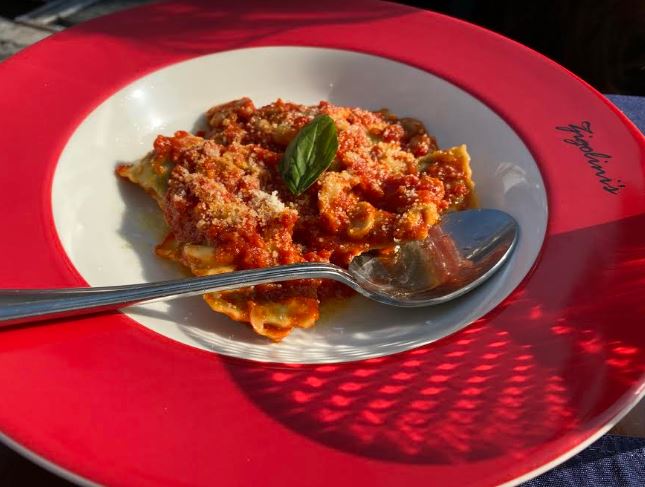
Zigolani, the Italian restaurant at Marriott hotel, Islamaabad is cut above the rest when it comes to bona fide Italian cuisine. The eatery’s legitimacy has further been baptized with the arrival of its new Italian chef Paolo Collavii.
Traveling around the world for last forty years, the new Executive Chef at Zigolani has arrived in Islamabad and brings with him a rich experience from the world of gastronomy as well as Italian culinary heritage and traditions. From Morocco to Greece, Kuwait to Singapore, Turkey to South Korea , Chef Collavii have been around, being part of the many pre-openings of bistros, cafes and restaurants in five star hotels, running kitchens in small as well as many metropolitan cities . However the first job of his career was as a trainee Chef at a cruise ship kitchen where he worked behind the burners for 5 years while in his teens.
The menu at Zigolini offers a wide range of small starters, perfect for sharing, including a melt –in-the savories, moving on to the more solid affair with a selection from the main course in the likes of fish, lamb, beef and sea food dishes, either accompanied by Pasta’ and Ravioli’s or stand alone . However the flagship item at any Italian restaurant is “Pizza” and the Wooden –oven, handmade pizza prepared by the chef, is not only a treat for the taste buds but for the eyes as well. Garlic, mozzarella cheese and a few herbs of one’s liking is what one can find at any Italian restaurant in Italy and now in Islamabad.
In a drive to make Zigolani, a paragon of purism, the new chef wants to offer an Italian menu that is veritable and powerfully evocative of each of the regions landscape picked up from across the length and breadth of Italy so that the culinary regionalism burns fiercely and is quintessential. The Risotto from the north, the ripe tomatoes from the south regions and the seafood treasure trove from the Arctic and Mediterranean seas
Due to the SOP’s issued by the Government of Pakistan and the administration of Islamabad, Marriott hotel has creatively laid down dining tables in the big spacious driveway in open air to facilitate their regular visitors. The guest once seated can order from the menu’s laid down on the tables from their Chinese restaurant, Dynasty, Royal Elephant, the Thai eatery, Dumpukht, the Pakistani restaurant and Zigolani.
As my temptation was to try the new chef’s menu, the choice was obvious. The food began to arrive in a steady stream. Served as per the order close to the typical Italian culinary tradition, well structured antipasti arrived at the table with the cheese and charcuterie board which went with the saying that “you eat with your eyes”. It was clear that an experienced hand is at work, it really did make a case in point.
Simple and delicious, the main course was accompanied by seafood, chicken, eggplant and beef dishes married to Pastas, Raviolis and risottos. Tagliata di manzo was the beef dish and is one of Italy’s most popular meat savories. It’s a boneless piece of grilled beef, served in slices. Tagliare, means “to cut”. To make the beef Tagilita, all you need is high quality cut of beef and some herbs, balsamic vinegar reduction and rustic potatoes bursting out of their skins as explained by the chef. It is one of the most popular ways to serve it is alongside peppery arugula salad, with thinly shaved Parmigianino Reggiano and a drizzle of extra virgin olive oil and balsamic vinegar, the chef further elaborated as I started to do justice to the dish. The beef texture was indeed strident and the aromatic taste of olive oil and balsamic vinegar doing a tango with green herbs, just took it to the next level.
Peeking up from a deep puddle of soup was what chef introduced as Zuppa de pesce allo zafferano. “Usually it is served in a soup bowl, but I prefer a deep dish to make more space for the soup. The broth is made from the fish whereas red snapper, squids and prawns was a party of three making their presence felt. I also used Saffron because in Pakistan, the quality is very good and it’s not expensive as well”. He informed. On the side there were two pieces of crusty bread brushed with dry garlic rubbed before being roasted. The soup was simply mouth watering. The amalgamation of three seafood delicacies, swimming with vinegar and olive oil, It was a master class in brothery and it will slap you awake with the tinge and acidity.
The mastery of traditional way of cooking food depends upon how deep one has gone into the culture and tradition of its roots and with arrival of every dish, its texture, taste and above all, the presentation , it leaves no doubt in one’s mind that chef Paolo Collavii knows what food, culture and tradition is all about . He knows and loves the Roman repertoire and wants to give it, the love it deserves.
It was worth sticking around for dessert as the chef has already warned to keep some room. In comes the Tiramisu on white platter, dusted with cocoa powder. It was hands down a mouth burst, served with its silkiness. Texturally, aligned, pregnant with mascarpone cheese, releasing its ballast of sweet syrup as you spoon it, was a star turn.
At least a fifth of the world’s population may not have access to a Covid-19 vaccine until 2022, according to a study published on Wednesday, with wealthier nations reserving more than half of next year’s potential doses.
With hopes that vaccines can bring an end to a pandemic that has killed some 1.6 million people, countries including the United States, Britain and the United Arab Emirates have already begun rolling out immunisation programmes.
Eager to increase their chances of having access to at least one of the dozens of vaccines in development, many nations have snapped up allocations of several different drugs.
Wealthy nations — accounting for just 14 per cent of the global population — have pre-ordered just over half of the vaccine doses expected to be produced by the 13 leading developers next year, researchers from the Johns Hopkins Bloomberg School of Public Health found.
There are fears that poorer nations will be left behind.
Even if the drug makers all produce effective, safe vaccines and meet their maximum global manufacturing targets, the study said “at least a fifth of the world’s population would not have access to vaccines until 2022”.
The research, published in the BMJ medical journal, looked at publicly available data and found that as of mid-November, reservations totalled 7.48 billion doses — equivalent to 3.76 billion immunisation courses, because most vaccines require two jabs.
That is out of a total maximum projected manufacturing capacity of 5.96 billion courses by the end of 2021.
Pooled purchasing scheme
The study estimated that up to 40pc of the vaccine courses from the leading manufacturers might be available for low and middle-income countries, but said this would depend on how rich countries share what they have bought.
The authors, who cautioned that public information was incomplete, called for “greater transparency and accountability” over support for equitable global access.
They suggested the implications could go well beyond health.
“To varying degrees, trade with and travel to countries might face continued disruption until access to effective preventive or treatment measures, such as Covid-19 vaccines, becomes more widely available,” the report said.
Many countries have joined a pooled purchasing mechanism COVAX — coordinated by the World Health Organisation, the Coalition for Epidemic Preparedness Innovations and vaccines alliance Gavi — aiming to ensure that people across the world have access to a Covid-19 vaccine, regardless of wealth.
The initiative is hoping to have two billion doses available by the end of 2021. But neither the United States nor Russia have so far joined the programme.
‘Devastating crisis’
Jason Schwartz, at the Yale School of Public Health, said US participation in coordination efforts would be “invaluable” in helping ensure people across the world have access to vaccines “that will ultimately help bring an end to this devastating global health crisis”.
In a BMJ editorial, Schwartz said the requirement for two doses and the very low temperatures needed to store some of the vaccines added to the challenges for many countries.
“The operational challenges of the global Covid-19 vaccination programme will be at least as difficult as the scientific challenges associated with rapidly developing safe and effective vaccines,” he said.
The Johns Hopkins authors said prices for immunisations ranged from $6 per course to as high as $74. They found that if all the vaccines work as hoped, many richer nations would have already reserved at least one immunisation per person.
Researchers said that Canada had ordered the equivalent of four doses per person, the United States has reserved just enough for one vaccine course per person, while countries like Indonesia have reserved less than one vaccine course for every two people.