Home Blog Page 281

Decision taken to include Islamabad airport in privatisation programme

Decision taken to include Islamabad airport in privatisation programme

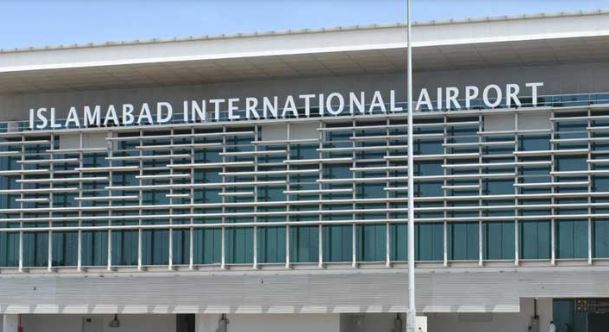
ISLAMABAD, JAN 24: A decision has been taken to include Islamabad International Airport in the privatisation programme.

According to the Privatisation Commission, the major airports of Islamabad, Karachi and Lahore will be outsourced. The decision on airport privatisation has been made purely on economic and administrative grounds.

The Privatisation Commission has clarified that reports regarding the cancellation of any agreement or lease relating to Islamabad Airport are baseless. It has also stated that no agreement has been finalised for Islamabad Airport with any country, including the UAE.

According to the statement, all three airports will be outsourced under long-term commercial concessions. The main objective of privatisation is to improve airport performance, provide modern facilities to passengers and increase revenue.

The commission said that open bidding for Islamabad, Karachi and Lahore airports has been scheduled for November 2025. Equal opportunities will be provided to both domestic and foreign investors.

The statement further said that transparency and fair competition will be ensured throughout the privatisation process.

Uzbekistan, Pakistan: Strategic partnership toward regional stability and integration

Uzbekistan, Pakistan: Strategic partnership toward regional stability and integration

ISLAMABAD, JAN 24: A roundtable discussion titled “Uzbekistan- Pakistan: Bridging regions and creating new opportunities” was held at the International Institute for Central Asia in Tashkent.

The event, organized in cooperation with the Embassy of Pakistan in Uzbekistan, brought together representatives of relevant ministries, business circles, analytical centers, and the academic community.

It is worth noting that in recent years, relations between the two friendly countries have risen to an entirely new level. In particular, the formalization of the strategic partnership in 2021 indicates that bilateral ties have reached a qualitatively new stage, said a release issued here on Saturday.

Today, this cooperation is characterized by active political dialogue, expanded trade and economic relations, increased investment flows, and intensified cultural and humanitarian exchanges.

In particular, the official visit of the Prime Minister of Pakistan, Muhammad Shehbaz Sharif to Uzbekistan in February 2025 provided strong momentum to this process. During the visit, important agreements were reached to deepen cooperation in trade, transport, science and education, culture, and security. The sides set clear targets to increase bilateral trade turnover to $2 billion.

Last year, the increase in mutual trade volume to $400 million indicates that Pakistan is becoming an important foreign trade partner for Uzbekistan.

As part of efforts to strengthen economic cooperation, the opening of the UzbekPak International Trading Centre and the UzbekPak Cultural Centre in Karachi became an essential institutional step.

These platforms serve not only to promote industrial and agricultural products, but also to strengthen cultural ties between our peoples.

Cooperation in transport and logistics is another priority area of Uzbekistan – Pakistan relations.

The Uzbekistan – Afghanistan – Pakistan Trans-Afghan railway project has significant potential as a strategic transport corridor linking Central and South Asia.

In addition, agreements reached to develop air cargo transportation between Tashkent and Karachi, including the delivery of agricultural products, are gaining practical importance.

During the meeting, these pressing issues were discussed, creating a significant opportunity to develop approaches for a new qualitative stage of the strategic partnership and to advance concrete initiatives in trade, transport, education, science, culture, and tourism. Within the framework of the event, special attention was paid to strengthening ties among the analytical, academic, and business communities of Uzbekistan and Pakistan.

In addition, practical recommendations were developed for inclusion in the agenda of the high-level dialogue, and new initiatives were put forward to enhance Pakistan’s cooperation with Central Asian countries.

In a word, cooperation between Uzbekistan and Pakistan is turning into a strong bridge built on trust, pragmatism, and shared interests. The roundtable discussion held in Tashkent has become an essential step toward further expanding and strengthening this bridge.

US extends Serbia’s NIS license amid talks on Russian exit

US extends Serbia's nis license amid talks on Russian exit

BELGRADE, JAN 24: The United States has extended a temporary operating licence for Serbia’s sanctioned oil company, the latter’s energy minister confirmed on Friday, as negotiations continue over the exit of Russian majority shareholders.

Washington’s sanctions on the Petroleum Industry of Serbia (NIS), part of its crackdown on Russia’s energy sector, have previously forced a months-long shutdown of the country’s only oil refinery.

Production restarted earlier this month after a temporary reprieve was granted by the Office of Foreign Assets Control (OFAC), which was due to expire at midnight.

But according to Serbian Energy Minister Dubravka Djedovic Handanovic, the licence has now been extended until February 20.

“We have secured almost an additional month for NIS to continue operating, to be supplied via the Adriatic Oil Pipeline, JANAF, and for crude to continue arriving in Serbia,” Handanovic told local TV Pink.

A previous March 24 deadline remains for negotiations over the full exit of Gazprom’s interest in the company, with Hungarian energy giant MOL agreeing to basic terms with Russian firm earlier this week.

– Nis’s assets –

After months of delay, Washington imposed sanctions on NIS on October 9, cutting off supplies to the refinery.

The move has had a strong impact in Serbia, a close Kremlin ally and one of the few European states not to sanction Russia over the war in Ukraine.

NIS employs about 13,500 people in Serbia and contributed over two billion euros ($2.5 billion) in tax revenue in 2024 or nearly 12 percent of the national budget.

The company operates around 330 petrol stations, roughly one in five nationwide, and if acquired by MOL, the combined network would exceed 380 stations.

                  The company also operates in Bosnia, Romania, Bulgaria and Angola.

                  Serbia sold a majority stake in NIS to Gazprom in 2008 for 400 million euros ($470 million), with several billion invested since.

                  NIS is currently 45 per cent owned by Gazprom Neft, which is under US sanctions, while the parent company, Gazprom, transferred its 11.3 per cent stake in September to its affiliated firm, Intelligence.

                  The Serbian state owns nearly 30 percent, with the rest held by minority shareholders. Officials say the state intends to raise its stake by 5 percent after a sale.

                  MOL has also confirmed that it is in talks with ADNOC, the national oil company of the United Arab Emirates, to join as a minority shareholder.  

Bangladesh readies for general election, worries among Hasina supporters

Bangladesh readies for general election, worries among Hasina supporters

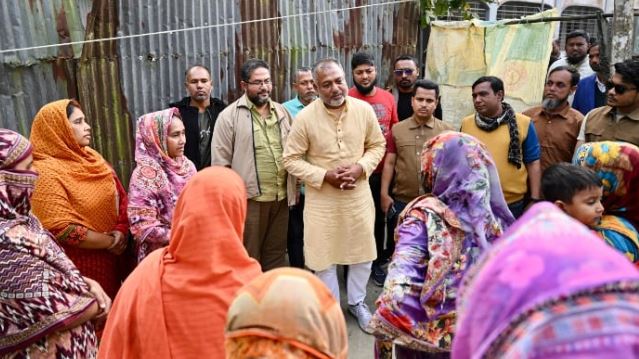
GOPALGANJ: Bangladesh is preparing for the first election since the overthrow of Sheikh Hasina, but supporters of her banned Awami League (AL) are struggling to decide whether to shift their allegiance.

In Gopalganj, south of the capital Dhaka and a strong bastion of Hasina’s iron-grip rule, residents are grappling with an election without the party that shaped their political lives for decades.

“Sheikh Hasina may have done wrong — she and her friends and allies — but what did the millions of Awami League supporters do?” said tricycle delivery driver Mohammad Shahjahan Fakir, 68, adding that he would not vote.

“Why won’t the ‘boat’ symbol be there on the ballot paper?” he said, referring to AL’s former election icon.

The Muslim-majority nation of 170 million people will hold elections on February 12, its first since the uprising.

Hasina, who crushed opposition parties during her rule, won landslide victories in Gopalganj in every election since 1991.

After a failed attempt to cling to power and a brutal crackdown on protesters, she was ousted as prime minister in August 2024 and fled to India.

She was sentenced to death in absentia for crimes against humanity by a court in Dhaka in November, and her former ruling party, once the country’s most popular, has been outlawed.

Human Rights Watch has condemned the AL ban as “draconian”.

“There’s so much confusion right now,” said Mohammad Shafayet Biswas, 46, a banana and betel leaf seller in Gopalganj.


“A couple of candidates are running from this constituency — I don’t even know who they are.”

As a crowd gathered in the district, one man shouted: “Who is going to the polling centres? We don’t even have our candidates this time.”

‘Dehumanise’
Hasina’s father, Sheikh Mujibur Rahman, the founding president of Bangladesh, hailed from Gopalganj and is buried in the town.

Statues of Rahman have been torn down nationwide, but in Gopalganj, murals and statues are well-maintained.

Since Hasina’s downfall, clashes have broken out during campaigning by other parties, including one between police and AL supporters in July 2025, after which authorities filed more than 8,000 cases against residents.

Sazzad Siddiqui, a professor at Dhaka University, believes voter turnout in Gopalganj could be the lowest in the country.

“Many people here are still in denial that Sheikh Hasina did something very wrong,” said Siddiqui, who sat on a government commission formed after the 2025 unrest.

“At the same time, the government has constantly tried to dehumanise them.”

This time, frontrunners include candidates from the Bangladesh Nationalist Party (BNP) and Jamaat-e-Islami.

Both are from Hasina’s arch-rivals, now eyeing power. “I am going door to door,” BNP candidate SM Zilany, 57, told AFP, saying many would-be voters had never had a candidate canvass for their backing.

“I promise them I will stand by them.”

Zilany said he had run twice against Hasina — and was struck down by 34 legal cases he claimed had been politically motivated.

This time, he said that there was “a campaign to discourage voters from turning up”.

This photograph, taken on January 14, 202,6 shows Bangladesh Nationalist Party (BNP)s election candidate SM Zilany speaking during an interview with AFP in his electoral constituency, Gopalganj, Bangladesh. — AFP
Jamaat candidate MM Rezaul Karim, 53, said that under Hasina, the party had been driven underground.

“People want a change in leadership,” Karim told AFP, saying he was open to all voters, whatever their previous loyalties.

“We believe in coexistence; those involved in crimes should be punished; others must be spared,” Karim said. Those once loyal to Hasina appear disillusioned.

Some say they had abandoned the AL, but remain unsure whom to support.

“I am not going to vote,” said one woman, who asked not to be named.

“Who should I vote for except Hasina? She is like a sister.”

Any strike will mean ‘all-out war’: Iran warns as US sends ‘armada’ to Middle East

Any strike will mean 'all-out war': Iran warns as US sends 'armada' to Middle East

TEHRAN, JAN 24: Iran will treat any attack “as an all-out war against us,” a senior Iranian official said on Friday, ahead of the arrival of a US military aircraft carrier strike group and other assets in the Middle East in the coming days.

“This military build-up – we hope it is not intended for real confrontation – but our military is ready for the worst-case scenario. This is why everything is on high alert in Iran,” said the senior Iranian official, speaking on condition of anonymity.

“This time we will treat any attack – limited, unlimited, surgical, kinetic, whatever they call it – as an all-out war against us, and we will respond in the hardest way possible to settle this,” the official said.

US President Donald Trump said on Thursday that the United States had an “armada” heading towards Iran but hoped he would not have to use it, as he renewed warnings to Tehran against killing protesters or restarting its nuclear programme.

“If the Americans violate Iran’s sovereignty and territorial integrity, we will respond,” said the Iranian official. He declined to specify what an Iranian response might look like.

“A country under constant military threat from the United States has no option but to ensure that everything at its disposal can be used to push back and, if possible, restore balance against anyone who dares to attack Iran,” the official said.

The US military has in the past periodically sent increased forces to the Middle East at times of heightened tensions, moves that were often defensive. However, the US military staged a major build-up last year ahead of its June strikes against Iran’s nuclear programme.

Indonesia landslide kills eight, more than 80 missing

Indonesia landslide kills eight, more than 80 missing

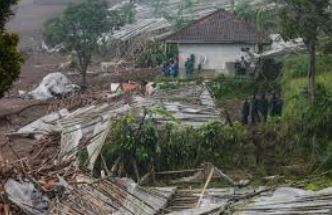
CISARUA, Jan 24: A landslide killed at least eight people and more than 80 are missing on Indonesia’s main island of Java on Saturday, a disaster official said.

Triggered by heavy rainfall, it struck two villages in Java’s West Bandung region at around 2:30 am (1930 GMT Friday) and buried residential areas.

Abdul Muhari, a spokesman for the national disaster agency, or BNPB, confirmed that eight people were killed.

“As of Saturday 10:30 am, dozens of residents were reported safe, and 82 people were still being searched for,” he said in a statement.

The disaster follows flooding and landslides late last year that killed around 1,200 people and displaced more than 240,000 in Indonesia’s Sumatra island, according to official figures.

Environmentalists and experts have pointed to the role forest loss played in the flooding and landslides that washed torrents of mud into villages.

West Bandung’s mayor Jeje Ritchie Ismail told reporters that the military, police and volunteers were assisting in the search for the missing.

                  However, he warned that the terrain was extremely difficult and that the ground remained unstable.

                  The local search and rescue agency said it was conducting manual excavation, spraying the soil with water pumps and using drones to search for the victims.

                  – Forest loss –

                  Floods and landslides are common in Indonesia during the rainy season, which typically runs from October to March.

                  Tropical storms and intense monsoon rains pummelled parts of South and Southeast Asia late last year, triggering deadly landslides and floods from the rainforests of Sumatra to highland plantations in Sri Lanka.

                  Forests help absorb rainfall and stabilise the ground held by their roots, and their absence makes areas more prone to flash flooding and landslides, David Gaveau, founder of conservation start-up The TreeMap, told AFP in December.

                  More than 240,000 hectares of primary forest were lost in 2024, according to analysis by The TreeMap’s Nusantara Atlas project.

                  Indonesia is regularly among the countries with the largest annual forest loss, NGOs have said, adding that mining, plantations, and fires have caused the clearance of large tracts of its lush rainforest over recent decades.

                  The government stripped more than two dozen permits this week from forestry, mining and hydroelectric companies in Sumatra.

                  Saturday’s landslide also comes after torrential rains battered Indonesia’s Siau island this month, causing a flash flood that killed at least 16 people. 

Pakistan Navy evacuates Sri Lankan sailor in high-seas rescue

Pakistan Navy evacuates Sri Lankan sailor in high-seas rescue

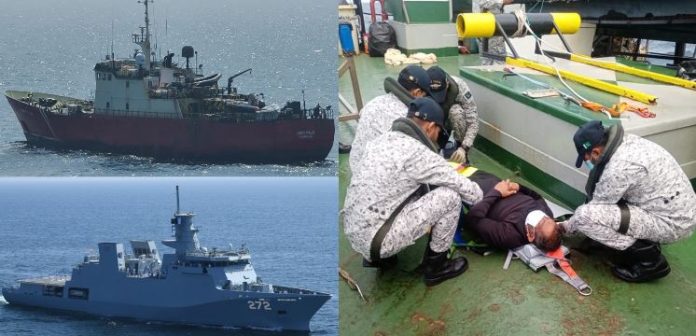
​ISLAMABAD, JAN 24: /DNA/ – In a swift humanitarian operation Pakistan Navy Ships TABUK and MOAWIN have successfully conducted medical evacuation (MEDEVAC) of a Sri Lankan national requiring urgent medical attention on an Indonesian Flagged, MV GREY PALM on the high seas at 800 Nautical Miles (approximately 1500 KM) off Pakistan’s coast.

​The operation was initiated following a formal request from Sri Lankan Maritime Rescue Coordination Centre (MRCC) for provision of medical assistance to a Sri Lankan national crew member in critical condition onboard MV GREY PALM positioned 800 Nautical Miles (approximately 1500 Kilometres) from Pakistan’s Coast. Pakistan Navy dispatched its Ships as a first responder and evacuated the sick crew member along with attendant. Subsequently the patient was immediately provided with necessary treatment onboard PN Ship. The Sri Lankan authorities and family of the individual thanked Pakistan for prompt response and support.

​The successful medical evacuation is yet another testament to operational readiness and long-standing commitment of Pakistan for the safety of life at sea, irrespective of nationality.

Maharaja Ranjit Singh’s rule a model of indigenous, secular governance: Murtaza Solangi

Maharaja Ranjit Singh’s rule a model of indigenous, secular governance: Murtaza Solangi

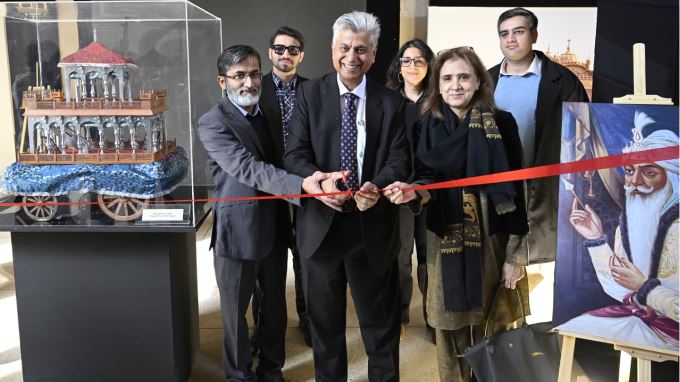
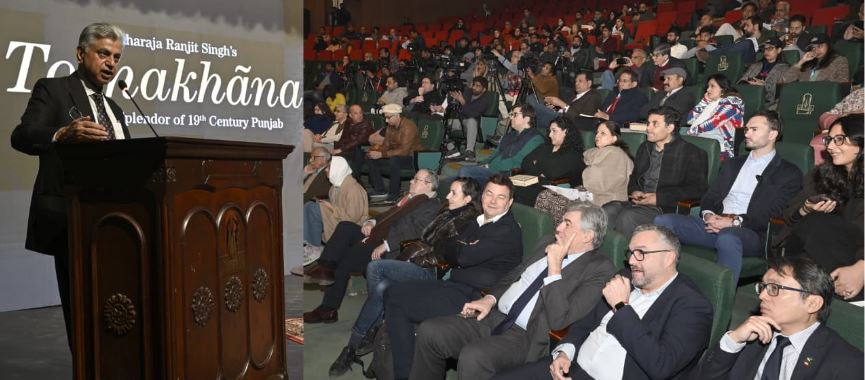
LAHORE, JAN 24 (DNA): Spokesperson to the President of Pakistan, Murtaza Solangi, on Saturday termed the four-decade rule of Maharaja Ranjit Singh as a remarkable model of indigenous governance, highlighting its secular character, administrative unity and rich local craftsmanship.

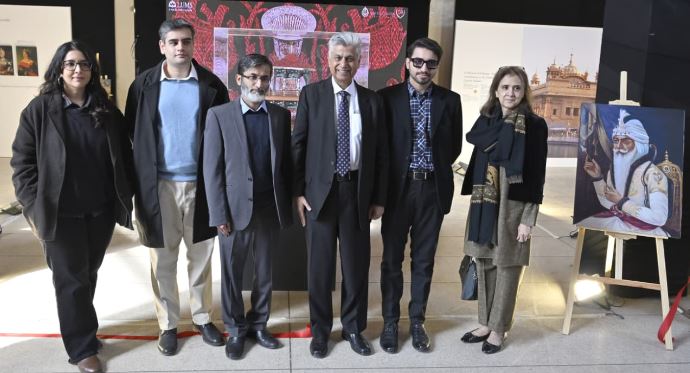
Speaking at inaugural ceremony of an exhibition in connection with Afkar-e-Taza-Thinkfest 2026  held at Alhamra Hall here on Saturday, Solangi said it would be inaccurate to describe Maharaja Ranjit Singh’s rule as imperial or monarchic, noting that there was no clear successor after his death and the consequences of that period were well known. He said that during his reign, Punjab was unified and expanded beyond its traditional boundaries to Peshawar, Kashmir and Multan.

He expressed particular admiration for the inclusive nature of the administration during that era, stating that despite Maharaja Ranjit Singh’s personal religious beliefs, Muslims and Hindus held key positions in the government. “It was a fairly secular rule, which stands out in history,” he observed.

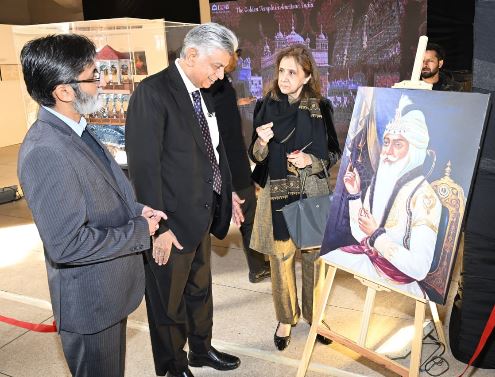
Referring to an exhibition curated by Dr Murtaza Taj and Dr Nazra, Solangi said their work had provided a valuable opportunity to witness the extraordinary craftsmanship of the period. He stressed that most of the artifacts on display were not the result of loot or plunder, but rather reflected indigenous genius and the exceptional skills of local artisans of Punjab.

He said the exhibition showcased a wide range of items, including weapons, coins, jewellery, gold artifacts and carriages, all of which testified to the creativity and craftsmanship of the people of the region.

Solangi thanked Dr Murtaza Taj and Dr Nazra for their efforts in preserving and presenting this historical legacy, saying their work had helped especially young people better understand the significance of Maharaja Ranjit Singh’s rule and the developments that took place during those four decades.

He added that such initiatives played an important role in reconnecting the younger generation with their history and cultural heritage.=DNA

Naqvi, US Envoy agree on joint crackdown on illegal immigration

Naqvi, US Envoy agree on joint crackdown on illegal immigration

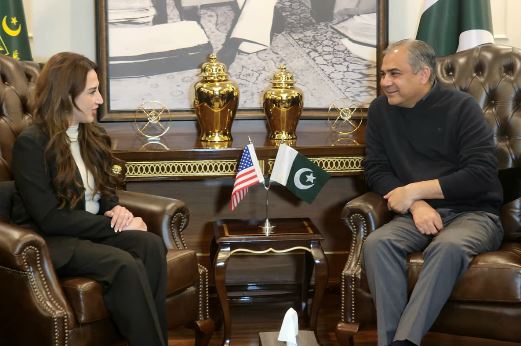
ISLAMABAD, JAN 24 (DNA): Federal Minister for Interior Mohsin Naqvi held an important meeting with U.S. Ambassador Natalie Baker. During the meeting, detailed discussions were held on Pakistan–U.S. relations and enhancing cooperation in areas of mutual interests. Talks also covered preventing illegal immigration and the effectiveness of the pre-immigration clearance system. Both sides agreed to increase cooperation at all levels, especially in police training and among law enforcement agencies.

‎It was decided that joint operations will be conducted against fake and fraudulent visa networks under comprehensive SOPs. Interior Minister Mohsin Naqvi said that a zero-tolerance policy has been adopted against the agent mafia, and U.S. cooperation in this regard would be welcomed. He added that he is personally overseeing action against fake visa networks.

‎The Interior Minister further stated that passports have been made foolproof through modern technology. Emphasizing that illegal immigration is a serious issue, he said a full-scale crackdown is underway against those attempting to go to the United States illegally. He highlighted that due to effective government measures, illegal immigration has declined by 47 percent, and those involved in fake documentation networks deserve no leniency.

‎U.S. Ambassador Natalie Baker reiterated that the United States attaches special importance to relations with Pakistan, noting that both countries’ priorities are aligned and that enhanced mutual cooperation will further strengthen bilateral ties.

IRS unveils action plan for ‘Pakistan-Kazakhstan Cooperation’ ahead of President Tokayev’s visit

IRS unveils action plan for ‘Pakistan-Kazakhstan Cooperation’ ahead of President Tokayev’s visit

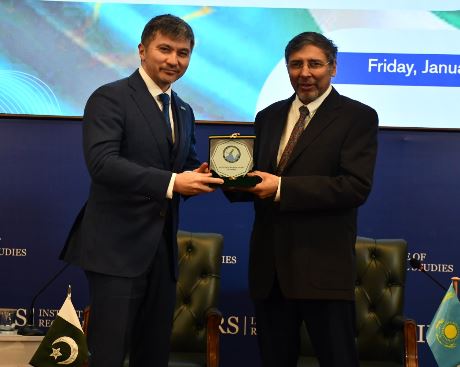
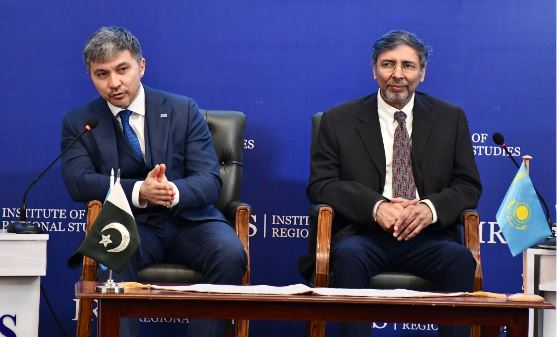
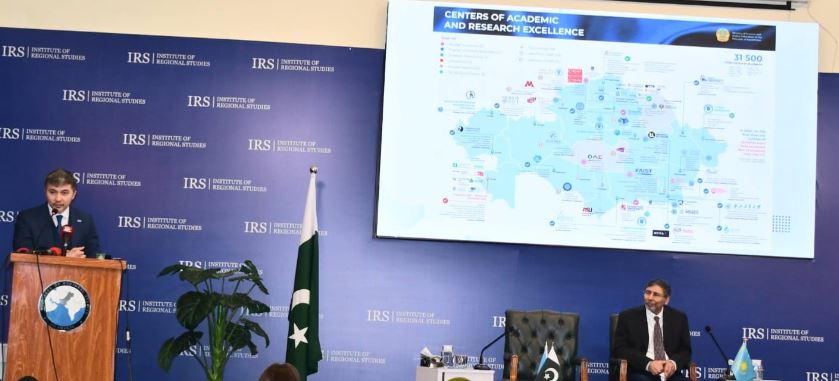
ISLAMABAD, JAN 24 /DNA/ – The Institute of Regional Studies (IRS), Islamabad, through its Central Asia Program for Regional Cooperation and Connectivity, hosted a curtain-raiser high-level event titled “Understanding the Action Plan of Cooperation Between Astana and Islamabad,” ahead of the first official visit of the President of Kazakhstan, H.E. Kassym-Jomart Tokayev, to Pakistan in February 2026.

The event brought together diplomats, scholars, and policy experts to reflect on the bilateral Action Plan of Cooperation and discuss avenues for further strengthening Pakistan–Kazakhstan relations.

In his opening remarks, Ambassador Jauhar Saleem, President of the Institute of Regional Studies, welcomed H.E. Yerzhan Kistafin, Ambassador of Kazakhstan to Pakistan, and highlighted the significance of President Tokayev’s forthcoming visit. He emphasized the strong political ties and shared cultural heritage between Pakistan and Kazakhstan, stressing the need to translate these historic bonds into tangible and result-oriented cooperation.

He noted that the upcoming visit would serve as a cornerstone for advancing bilateral understandings, strengthening operational linkages, and deepening regional and diplomatic engagement.

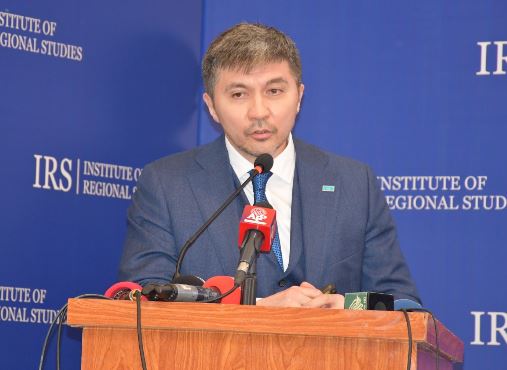
Delivering the eminent lecture, Ambassador Yerzhan Kistafin highlighted the long-standing friendship between the two countries and recalled that Pakistan was among the first states to recognize Kazakhstan following its independence in 1991. He referenced early high-level exchanges that laid the foundation for decades of robust diplomatic relations.

The Ambassador outlined Kazakhstan’s strategic focus on regional connectivity and economic cooperation, underscoring initiatives aimed at enhancing business-to-business collaboration, infrastructure development, and trade facilitation. He highlighted Kazakhstan’s ambition to transition from a landlocked to a land-linked country through regional infrastructure connecting Central Asia with the Middle East, Europe, and China, and underscored the importance of the Karakoram Highway and potential railway linkages in strengthening Pakistan–Kazakhstan connectivity.

Ambassador Kistafin also identified promising avenues for cooperation in sectors such as textiles, pharmaceuticals, finance including Islamic banking, education, tourism, sports, and culture to strengthen people-to-people ties. He stressed the importance of addressing shared regional challenges, including security concerns, drug trafficking, and language barriers, through constructive dialogue and cooperation, while emphasizing youth engagement, cultural exchanges, and academic collaboration as key drivers of mutual understanding. He reaffirmed Kazakhstan’s commitment to expanding cooperation with Pakistan, noting that shared prosperity and regional stability depend on close collaboration between Astana and Islamabad.

The interactive question-and-answer session featured substantive discussion on transportation and railway connectivity, regional security, trade facilitation, defense cooperation, and youth engagement. Participants reaffirmed the shared priority of promoting peaceful relations, strengthening regional connectivity, and expanding economic and cultural ties.

In his concluding remarks, Ambassador Jauhar Saleem expressed optimism about the future of Pakistan–Kazakhstan relations and reaffirmed the IRS’s commitment to promoting regional understanding through its Central Asia Program, led by Mr. Hamzah Rifaat.

He also welcomed Azerbaijan’s integration into the broader Central Asian development framework and reiterated the Institute’s guiding principle, “Know thy neighbours,” emphasizing that sustained dialogue and informed engagement with Pakistan’s neighbourss are essential for enduring friendship and cooperation.

Stay Connected

64FansLike
60FollowersFollow

Latest Reviews

Exchange Rates

USD - United States Dollar
EUR
1.14
GBP
1.34
AUD
0.70
CAD
0.71