Home Blog Page 28

FPCCI rejects visa selling allegations as baseless

FPCCI rejects visa selling allegations as baseless

KARACHI, JUL 21 /DNA/ – Secretary General of the Federation of Pakistan Chambers of Commerce and Industry (FPCCI), has categorically and unequivocally rejected and strongly rebuts the recent news report published in Urdu Daily Jang and appeared on July 21, 2026; alleging the involvement of FPCCI officials in visa selling and human trafficking under the guise of a women’s trade delegation by a women chamber.

The apex trade body has termed the allegations as fabricated, malicious, and a deliberate attempt to tarnish the reputation of the institution. Strongly condemning the publication of the unfounded news item.

The Secretary General said that this news is completely false, unfactual, and entirely baseless. The Federation of Pakistan Chambers of Commerce and Industry operates with the highest level of integrity, transparency, and strict adherence to the law.

FPCCI has absolutely nothing to do with this alleged visa scandal, human trafficking, or any such illicit activities. We strictly condemn this malicious smear campaign directed at Pakistan’s premier trade body.

The Secretary General stressed that FPCCI maintains rigorous, merit-based protocols for processing, vetting, and verifying all outgoing international trade delegations.

The FPCCI Secretary General urged the media to verify facts before publishing defamatory content and reserves the right to take legal action under the PECA Act against the dissemination of such counter-factual news that aims to damage the credibility of the institution.

The Secretary General stated that FPCCI neither requested visas for the alleged women’s delegation, nor were any visas issued at the FPCCI’s request. He added that, as a matter of policy, all visa recommendations are issued exclusively from FPCCI Head Office Karachi and bear an embossed seal and QR code—a process in practice since 2023 with all Embassies and Consulate Generals in the Country. Since FPCCI has issued no such recommendation, therefore, allegations regarding the issuance of two dozen visas to a friendly country for exorbitant fees, followed by visa rejections and inquiry are entirely baseless.

The Secretary General FPCCI further clarified that there are over 300 Trade Organizations in the Country, including 31 Women’s Chambers of Commerce, all of which are duly licensed by the Directorate General of Trade Organizations, as independent entities. These Trade Organizations operate autonomously; therefore, FPCCI is not responsible for the actions of its affiliate Trade Organizations. Furthermore, the Secretary General said that there has been no communication from any level of the government regarding an inquiry into the alleged scandal, nor has FPCCI provided any assurance to the government to conduct an internal investigation in the alleged matter. Secretary General also vehemently denied that the correspondent of the aforementioned newspaper has ever contacted any of the FPCCI Official to seek a clarification in the matter.

The Secretary General FPCCI has demanded an immediate and unconditional correction of the mala-fide news report; and, publication of its official rebuttal prominently as FPCCI completely dissociates itself with the subject news without any iota of doubt.

Iran attacked Kuwaiti power and water desalination plants on Monday, ministry says

Iran attacked Kuwaiti power and water desalination plants on Monday, ministry says

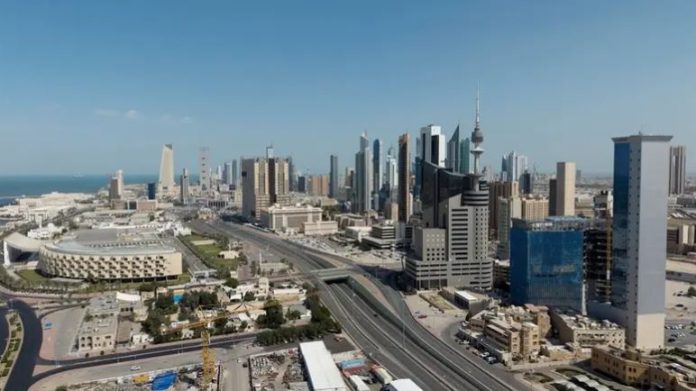
KUWAIT CITY, JUL 21: Iran attacked several Kuwaiti power generation and water desalination plants on Monday for the fourth consecutive day, causing fires at a number of facilities, Kuwait’s ministry of Electricity, Water and Renewable Energy said on Tuesday.

Fires were extinguished, damage was being assessed and repairs were ongoing, the ministry added.

ISSI, PAIDAR host event marking South Africa’s National Day

ISSI, PAIDAR host event marking South Africa’s National Day

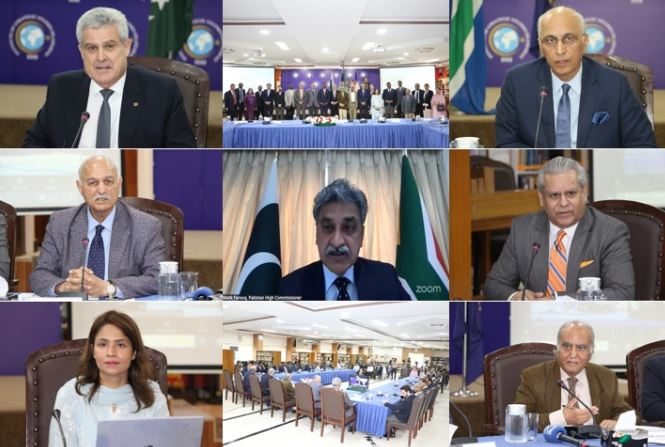
ISLAMABAD, JUL 21 /DNA/ – The Centre for Afghanistan, Middle East & Africa (CAMEA) at the Institute of Strategic Studies Islamabad (ISSI), in collaboration with Pakistan Africa Institute for Development and Research (PAIDAR), organized an event to commemorate South Africa’s National Day and Nelson Mandela International Day.

The proceedings began with the national anthems of Pakistan and South Africa. Speakers included Ambassador Moin Ul Haque, Director General ISSI; Ambassador Khalid Mahmood, Chairman, BoG, ISSI; Senator Mushahid Hussain Sayed, President PAIDAR; Muhammad Farooq, High Commissioner of Pakistan to South Africa; and Dr. Amina Khan; Director, CAMEA. The Chief Guest on the occasion was Rudolph Pierre Jordaan, Acting High Commissioner of South Africa to Pakistan, and the Guest of Honor was Ambassador Hamid Asghar Khan, Additional Foreign Secretary (Africa), Ministry of Foreign Affairs, Pakistan.

Ambassador Moin ul Haque underscored the significance of commemorating South Africa’s National Day and celebrating Nelson Mandela International Day. He noted that Pakistan and South Africa enjoy warm and longstanding relations, rooted in shared values of justice, freedom, equality, and mutual respect. Recalling Pakistan’s steadfast support for South Africa’s struggle against apartheid, he highlighted the growing cooperation between the two countries in bilateral and multilateral forums. Paying tribute to Nelson Mandela, he described him as a global symbol of reconciliation, resilience, and moral courage whose enduring legacy continues to inspire humanity and strengthen the bonds of friendship between Pakistan and South Africa.

Acting High Commissioner R. Pierre Jordaan thanked ISSI for commemorating Nelson Mandela International Day alongside South Africa’s National Day. He noted that the occasion celebrated South Africa’s democratic journey and Mandela’s enduring legacy. He highlighted Mandela’s lifelong struggle for justice, equality, reconciliation, and human dignity, describing him as a global symbol of peace whose leadership continues to inspire people around the world. Recalling Mandela’s message of forgiveness over bitterness after 27 years of imprisonment, he emphasized that true leadership lies in reconciliation, compassion, and service to humanity. Reflecting on today’s global challenges, he called for greater respect for international law, multilateralism, and the peaceful resolution of conflicts. He stressed that Mandela’s vision remains a powerful reminder that lasting peace can only be achieved through dialogue, justice, and shared responsibility. Concluding with Mandela’s words from Long Walk to Freedom, he encouraged everyone to work towards a more just, peaceful, and inclusive world, reminding the audience that “it is still in our hands to do good.”

Dr. Amina Khan in her remarks highlighted the significance of South Africa’s National Day and Nelson Mandela International Day as occasions to celebrate the values of freedom, justice, equality and reconciliation. She paid tribute to Nelson Mandela’s enduring legacy and recalled Pakistan’s longstanding support for the anti-apartheid struggle, including Mandela’s historic visit to Pakistan and ISSI in 1992. She also reaffirmed CAMEA’s commitment to strengthening Pakistan-Africa relations under the ‘Engage Africa’ policy.

Senator Mushahid Hussain Sayed said that as Pakistan commemorates South Africa’s National Day and celebrates Nelson Mandela International Day, it takes pride in South Africa’s commitment to human rights and universal freedoms. He noted that Nelson Mandela admired Quaid-e-Azam Muhammad Ali Jinnah and drew parallels between the two leaders’ unwavering commitment to securing freedom for their people. He concluded by recalling Pakistan’s financial and diplomatic support for South Africa’s anti-apartheid struggle and described Mandela as a timeless symbol of freedom.

High Commissioner Muhammad Farooq paid tribute to Nelson Mandela’s enduring legacy, noting that the story of modern South Africa is inseparable from his struggle for justice, equality, and human dignity. He observed that Mandela’s true greatness lay not only in overcoming oppression but also in his wisdom, humility, and commitment to reconciliation. Recalling Pakistan’s steadfast support for the anti-apartheid struggle, he underscored the strong ties between Pakistan and South Africa and noted that Mandela holds a special place in the hearts of the Pakistani people, having been honoured with Pakistan’s highest civilian awards for his extraordinary contributions to humanity, freedom, and justice.

Ambassador Hamid Asghar Khan reflected on Nelson Mandela’s enduring legacy, drawing parallels with the visionary leadership of Quaid-e-Azam Muhammad Ali Jinnah. Recalling Pakistan’s steadfast support for the anti-apartheid struggle, he highlighted the shared values of justice, freedom, and South-South cooperation that underpin Pakistan-South Africa relations. He also emphasized the need for greater high-level political engagement to unlock the untapped potential in bilateral ties, particularly in trade, investment, tourism, and education.

In his concluding remarks, Ambassador Khalid Mahmood, highlighted Nelson Mandela’s enduring legacy of peace, justice and reconciliation. He reaffirmed the longstanding friendship between Pakistan and South Africa, expressing confidence that bilateral cooperation would continue to grow for the mutual benefit of both countries.=DNA

==================

The Battle of Ideas and Pakistan’s Future

The Battle of Ideas and Pakistan's Future

Dr. Muhammad Akram Zaheer

Politics is often understood through elections, governments and the exercise of state power. Yet history repeatedly demonstrates that lasting authority is not secured by laws alone. Nations rise and decline not merely because of military strength or economic resources, but because of the ideas that shape public attitudes and define what people accept as natural, legitimate and desirable. It was this deeper dimension of power that the Italian political thinker Antonio Gramsci sought to explain through his influential concept of cultural hegemony.

Writing during the early twentieth century, Gramsci challenged the conventional belief that governments rule primarily through force. He argued that durable political authority depends on consent as much as coercion. Every society develops institutions that influence the beliefs, values and habits of its citizens. Schools, universities, families, religious institutions, newspapers, literature, television and, in today’s world, digital platforms all contribute to shaping public opinion. When these institutions reinforce a shared understanding of society, governments enjoy stability because citizens come to regard the existing order as both legitimate and inevitable.

Gramsci described this process as cultural hegemony. The dominant groups in society retain influence not simply because they possess economic or political power, but because they are able to define the prevailing ideas, values and assumptions that become widely accepted. Power, therefore, operates through persuasion as much as through authority.

This insight remains remarkably relevant in the twenty-first century. Countries now compete not only through military capability or economic performance but also through information, narratives and public diplomacy. The struggle over ideas has become a defining feature of international politics. Nations invest heavily in education, media, cultural exchanges, scientific research and technological innovation because they recognise that influence begins long before negotiations or conflicts arise.

Pakistan’s experience illustrates the importance of this lesson. Since independence, the country has often devoted considerable attention to immediate political crises while paying comparatively less attention to the institutions responsible for shaping long-term national thinking. Frequent policy shifts, changes of government and competing political narratives have weakened the development of a coherent national vision.

Education is perhaps the most obvious example. Successive governments have introduced reforms, yet disparities in curriculum, standards and access continue to divide society. Public schools, private institutions and religious seminaries frequently produce graduates with different intellectual foundations and contrasting understandings of citizenship. Such divisions make it difficult to cultivate a common civic culture capable of supporting democratic stability and national cohesion.

The media landscape has undergone an equally dramatic transformation. Traditional newspapers continue to play an important role in informing public debate, but television channels and social media increasingly dominate the flow of information. While these platforms have expanded freedom of expression, they have also encouraged sensationalism, misinformation and political polarisation. Public discussion often becomes driven by immediate controversies rather than thoughtful examination of long-term national priorities.

Gramsci would likely argue that societies cannot expect political stability if the institutions responsible for producing informed citizens are themselves fragmented. A nation that neglects the quality of its educational system, intellectual discourse and cultural institutions risks allowing confusion and division to replace consensus.

This does not imply that governments should seek ideological conformity or suppress dissent. On the contrary, Gramsci believed that ideas should be contested openly. Healthy societies encourage debate while strengthening the institutions that enable citizens to distinguish evidence from propaganda, reason from emotion and national interest from partisan rhetoric.

For Pakistan, this means investing in intellectual capacity with the same seriousness traditionally reserved for physical infrastructure. Roads, ports and energy projects are essential for development, but so too are universities that encourage original research, schools that promote critical thinking, libraries that remain accessible to all and media organisations committed to professional standards.

Another important lesson concerns the relationship between culture and national identity. Pakistan possesses a rich civilisational heritage shaped by Islamic traditions, regional languages, literature, art and diverse cultural practices. These should not be viewed as competing identities but as complementary elements of a shared national experience. A confident nation does not fear diversity; it draws strength from it.

The country’s universities also deserve renewed attention. Higher education should extend beyond producing graduates for the job market. Universities must become centres of intellectual inquiry where difficult questions are examined without fear and where policy debates are informed by evidence rather than political expediency. Countries that lead in science, technology and innovation are generally those that protect academic freedom while demanding high standards of scholarship.

Foreign policy offers another arena where Gramsci’s insights remain instructive. Pakistan often finds itself navigating complex geopolitical rivalries involving major powers and neighbouring states. Diplomatic success increasingly depends not only on strategic partnerships but also on international credibility. A country respected for the quality of its institutions, educational achievements, cultural contributions and scientific progress enjoys greater influence than one known only through the lens of security concerns.

Soft power has become an indispensable component of national strength. Literature, cinema, academic exchanges, sports, humanitarian engagement and technological innovation all shape how nations are perceived abroad. Pakistan has made notable contributions in many of these fields, yet these achievements deserve greater institutional support and international visibility.

Political leadership, meanwhile, carries a special responsibility. Leaders naturally compete for electoral advantage, but they should avoid reducing every national issue to partisan confrontation. Public trust grows when political actors demonstrate respect for constitutional processes, independent institutions and factual public debate. The quality of democratic culture ultimately depends on the example set by those who occupy positions of influence.

Citizens, too, have an equally important role. Cultural hegemony is not created solely by governments or elites. Every conversation in a classroom, every newspaper editorial, every university lecture and every family discussion contributes to the broader political culture. Responsible citizenship requires intellectual curiosity, tolerance of differing opinions and a willingness to engage with evidence rather than rumours.

Gramsci’s greatest contribution was his reminder that power begins with ideas. Military capability may defend borders, and economic growth may improve living standards, but neither can substitute for a society united by informed citizens and resilient institutions. Nations that neglect the battle of ideas often discover that political instability originates long before it appears in parliament or on the streets.

Pakistan stands at an important moment in its development. Its youthful population, expanding digital connectivity and growing educational aspirations present significant opportunities. Realising this potential, however, requires sustained investment in knowledge, culture and institutions that cultivate informed public opinion. Building highways and industrial zones is necessary, but building intellectual confidence is equally important.

Gramsci’s message was neither a blueprint for domination nor a call for ideological control. It was a recognition that the future belongs to societies capable of shaping ideas through education, dialogue and culture. For Pakistan, the challenge is not merely to govern effectively but to nurture a political culture where democratic values, social responsibility and informed citizenship become enduring national strengths. Such a transformation would not produce immediate headlines, but it would provide the strongest foundation for lasting stability and national progress.

Rise, Reign and Reminder

Rise, Reign and Reminder

by Muhammad Mohsin Iqbal

In this boundless universe, every rise save that of Almighty Allah, the Most High, carries within it the seed of its own fall. This profound truth, as old as creation itself, has once more been revealed to the watching eyes of humanity during the recently concluded Football World Cup. The planet’s finest talents converged upon the grand stage, their skills dazzling millions and earning fervent admiration from supporters across every continent. Among them all, two luminous figures stood pre-eminent; Cristiano Ronaldo of Portugal and Lionel Messi of Argentina. For more than fifteen years these extraordinary athletes have reigned supreme, their legendary rivalry illuminating the beautiful game with unmatched brilliance. Both had scaled the loftiest peaks of sporting glory, yet both departed their final matches in this tournament with eyes dimmed by sorrow and hearts burdened by the sting of defeat.

Cristiano Ronaldo, born in 1985, and Lionel Messi, born in 1987, represent the pinnacle of modern football. Ronaldo embodies athletic perfection—explosive pace, powerful heading, deadly accuracy from penalties and distance, and a versatility that allowed him to conquer multiple leagues with distinction. His career spans Sporting CP, two spells at Manchester United, glorious years at Real Madrid, Juventus, and now Al-Nassr, where he continues to defy time. With well over 1,300 senior appearances and nearly 970 official goals, he stands as the all-time leading scorer in men’s football history. His record of 146 international goals for Portugal and 140 in the Champions League underscores a hunger for victory that few have matched.

Messi, meanwhile, enchants with an almost otherworldly mastery of the ball. His close control, visionary passing, free-kick artistry, and ability to orchestrate play from deep positions have produced over 910 senior goals and a staggering tally of assists, often leading creative statistics even in the twilight of his career. Primarily loyal to Barcelona before moves to PSG and Inter Miami, he has dominated wherever he has played.

Both men have graced six World Cups between 2006 and 2026. Ronaldo scored in every single tournament—a singular achievement—netting eleven goals across his appearances and guiding Portugal to a best finish of fourth place in 2006. In 2026, Portugal reached the round of sixteen before falling to Spain; Ronaldo contributed three goals in what proved his farewell to the global stage.

Messi’s World Cup story gleams even brighter in its culmination. With twenty-one goals, the highest total in the competition’s history, and numerous assists, he inspired Argentina to triumph in 2022. In 2026, the Albiceleste fought their way to the final once more, only to suffer a narrow 1-0 defeat to Spain after extra time. Messi’s eight goals in that campaign, crowned by a hat-trick, added fresh chapters to his record of thirty-plus appearances and indelible influence.

Their rivalry has enriched football immeasurably. Ronaldo’s raw power and longevity give him the edge in total goals and appearances, while Messi frequently surpasses in efficiency, dribbles completed, and sheer creative impact. In big moments and knockout ties, both have delivered memories that will endure for generations. Yet beyond the statistics lies something deeper. Ronaldo has long been the more open and engaging with fans and the public—his warmth, ready smile, and visible affection winning him a special place in the collective heart. Messi, more reserved and introspective, allows his sublime talent to speak for him. In victory and in adversity alike, Ronaldo’s softened manner at the height of his fame reveals a truth often overlooked; true greatness is measured not only by trophies but by humility and love for one’s fellow man.

Fortune has smiled upon both off the pitch as well. Through prodigious salaries, lifetime endorsement deals with Nike and Adidas, and successful business ventures, each stands among the wealthiest in their profession. Ronaldo’s net worth approaches 1.4 billion dollars, bolstered by the expansive CR7 brand—luxury hotels such as the Pestana CR7, gyms, fashion lines, fragrances, and more—alongside a fleet of supercars, private jet, and one of the richest club contracts ever signed.

Messi’s fortune, estimated near 1.1 billion, includes the MiM Hotels, his beverage brand, retail stores, substantial real estate holdings in Barcelona and Miami, and equity in Inter Miami. Their philanthropy matches their success. Ronaldo has given millions to hospitals during the pandemic, cancer centres, children’s surgery, and disaster victims, often donating blood and auctioning personal items. Messi’s foundation focuses on education and opportunity for underprivileged youth, while he too has supported hospitals, UNICEF initiatives, and humanitarian causes in Argentina and beyond. Both have quietly and publicly channelled tens of millions toward uplifting others.

As the curtain falls on another World Cup, Ronaldo and Messi depart the international arena not as diminished men, but as titans whose rises illuminated an era. Their final defeats remind us that earthly crowns are transient. In Ronaldo especially, whose open heart and gracious bearing endeared him even at the summit of his powers, we see the grace that endures beyond victory. In this universe, all must one day descend—yet the memory of such spirits, and the lessons they impart, linger long after the final whistle.

Kazakhstan envoy recognizes role of Islamabad POST/CENTRELINE/DNA

Kazakhstan envoy recognizes role of Islamabad POST/CENTRELINE/DNA

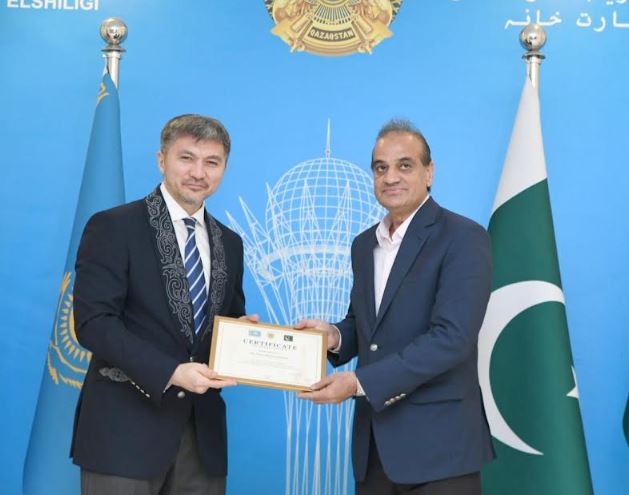
Ansar Mahmood Bhatti Chief Editor received the award

DNA

ISLAMABAD: The Ambassador of Kazakhstan to Pakistan, Yerzhan Kistafin, has awarded a Certificate of Appreciation to the Chief Editor of Daily Islamabad Post, Centreline, and DNA News Agency in recognition of their role in promoting bilateral relations between Kazakhstan and Pakistan. Ansar Mahmood Bhatti Chief Editor received the award. The ceremony highlighted the importance of media in strengthening diplomatic ties and fostering mutual understanding between the two nations.

Ambassador Kistafin emphasized that the media plays a vital role in building bridges between peoples and nations, and he expressed gratitude for the efforts of these publications in projecting Kazakhstan’s vision and priorities to the Pakistani audience. Notably, Ambassador Kistafin’s very first interview after his arrival in Pakistan was given to Centreline, Islamabad Post, and DNA News Agency, underscoring the trust and value he places in their journalistic work.

The recognition reflects Kazakhstan’s commitment to deepening cultural, political, and economic cooperation with Pakistan. It also highlights the role of independent media in shaping narratives that encourage friendship and collaboration. The award ceremony marks another step forward in the growing partnership between the two countries, with media continuing to serve as a cornerstone for dialogue and diplomacy.

Pakistan secures top global apparel role as Ijaz Khokhar becomes IAF Vice President

Pakistan secures top global apparel role as Ijaz Khokhar becomes IAF Vice President

Country’s apparel exporters gain a global voice as first Pakistani elected to senior leadership of the International Apparel Federation

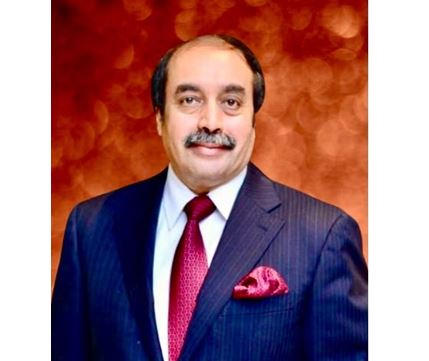
LAHORE, JUL 21 /DNA/ – Pakistan’s value-added apparel industry has achieved a historic milestone as former Chairman of the Pakistan Readymade Garments Manufacturers and Exporters Association (PRGMEA), distinguished apparel industry leader and Sialkot’s leading exporter Ijaz A. Khokhar has been elected Vice President of the International Apparel Federation (IAF).

He is the first Pakistani apparel manufacturer and exporter to hold this prestigious global office in the federation’s history, making the achievement a proud moment not only for Sialkot but for the entire country.

IAF President Stefano Festa Marzotto announced Khokhar’s nomination in recognition of his long association with the federation and his outstanding services to the global apparel industry. The nomination was unanimously endorsed and approved by the General Assembly. Marzotto praised Khokhar’s valuable contributions to the promotion and development of the apparel sector.

The landmark appointment has been widely welcomed by PRGMEA, textile and apparel associations, chambers of commerce and the wider business community. They described it as a proud moment for Pakistan and expressed confidence that Khokhar’s extensive international experience and deep understanding of global supply chains will strengthen Pakistan’s voice in the international apparel community, open new opportunities for trade, investment, market access and global collaboration, and further enhance the country’s image as a competitive and reliable sourcing destination. They also extended their heartfelt congratulations and best wishes for a successful tenure.

Founded in 1972, the International Apparel Federation (IAF) is the world’s leading and only global federation representing apparel manufacturers, national associations and allied industries. Its membership spans more than 40 countries, representing over 100,000 companies employing more than 20 million people. The federation promotes international cooperation, sustainable supply chains, innovation, technology, global trade, knowledge sharing and harmonization of industry standards, while serving as the leading global voice of the apparel industry.

Khokhar has maintained a long association with the IAF, previously serving as an Executive Board Member and Regional President. In these roles, he actively promoted stronger cooperation among apparel-producing countries and advocated greater representation for developing economies in global trade.

A pioneer of Pakistan’s martial arts garments industry, Khokhar heads Ashraf Industries (Pvt.) Ltd., Sialkot, a globally recognized manufacturer and exporter of martial arts uniforms since 1969. Under his leadership, the company has earned an outstanding international reputation for quality and innovation while successfully competing in global markets.

Throughout his distinguished career, Khokhar has served multiple terms as Chairman of PRGMEA and currently serves as its Chief Coordinator. He is also a founding Executive Board Member of the Asian Apparel Federation (AAF), a lifetime member of FPCCI and SAARC Chamber, and a Trustee of Sialkot Dry Port Trust. He has consistently promoted regional cooperation among Asia’s major apparel-producing countries to strengthen Pakistan’s apparel exports.

In recognition of his outstanding contribution to Pakistan’s economy and exports, Khokhar was awarded the Sitara-e-Imtiaz, one of Pakistan’s highest civilian honours, in 2007. He also received the Businessman of the Year Gold Medal from the Prime Minister of Pakistan. Under his leadership, Ashraf Industries won the FPCCI Export Trophy for 25 consecutive years (1983–2008) as one of Pakistan’s leading exporters of martial arts uniforms.

Business leaders said Khokhar’s election reflects not only his decades of visionary leadership and invaluable contribution to Pakistan’s apparel sector but also the growing international recognition of the country’s value-added textile industry, particularly Sialkot’s SME sector. They expressed optimism that his new global role will strengthen Pakistan’s presence in international policy discussions, promote sustainable growth, encourage investment and create greater opportunities for the country’s apparel exporters in global markets.

Trump warns Iran will pay ‘many times over’ for US troop deaths

Trump warns Iran will pay ‘many times over’ for US troop deaths

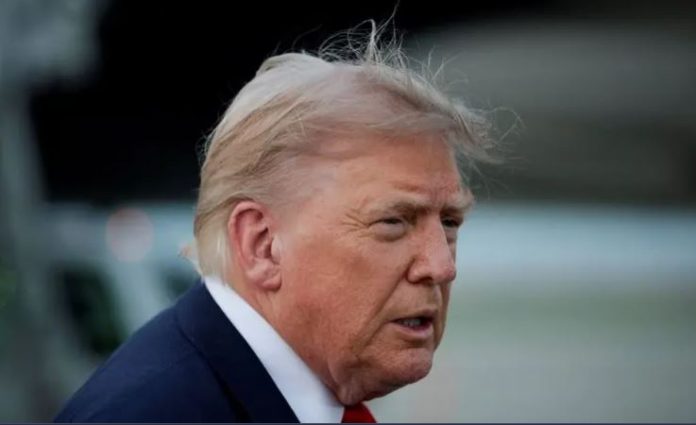
WASHINGTON, JUL 20: President Donald Trump warned Iran on Monday that it would pay “many times over” for every US soldier it killed after Washington announced over the weekend three new military fatalities and one service member missing in action.

“Every time Iran kills an American Soldier they will pay for that killing many times over!” Trump posted on his platform, Truth Social. “This directive has been passed on to Secretary of War, Pete Hegseth, Chairman of the Joint Chiefs of Staff, Daniel Caine, and every Leader in the Military.”

Iranian interior minister arrives

Iranian interior minister arrives

DNA

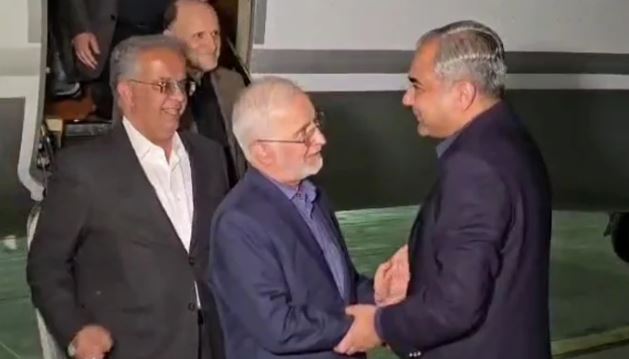
ISLAMABAD: Iran’s Interior Minister Eskandar Momeni on Monday night arrived in Islamabad on an official visit. Upon his arrival in Pakistan, the senior Iranian official was received by Interior Minister Mohsin Naqvi.

During his visit, Momeni will meet Prime Minister Shehbaz Sharif and Chief of Defence Forces and Chief of the Army Staff Field Marshal Syed Asim Munir, reported state-run Pakistan TV.

Earlier reports had suggested that Momeni was likely to engage with Pakistani officials who previously mediated a now-collapsed interim ceasefire between the US and Iran.

Momeni’s visit comes as mediator Pakistan continues its diplomatic efforts to rescue the Islamabad Memorandum of Understanding (MoU) signed last month between the US and Iran.

In the ninth consecutive night of attacks on Monday, Washington expanded its strikes across Iran, including a city hosting a nuclear power plant.

Iran kept up its own attacks across the region in response, with its Islamic Revolutionary Guards Corps (IRGC) announcing they had hit targets in Bahrain, Jordan and Syria, while Bahrain said Tehran had targeted its air navigation systems.

Iranian security personnel harassed, detained French embassy staff in Tehran, FM Barrot says

Iranian security personnel harassed, detained French embassy staff in Tehran, FM Barrot says

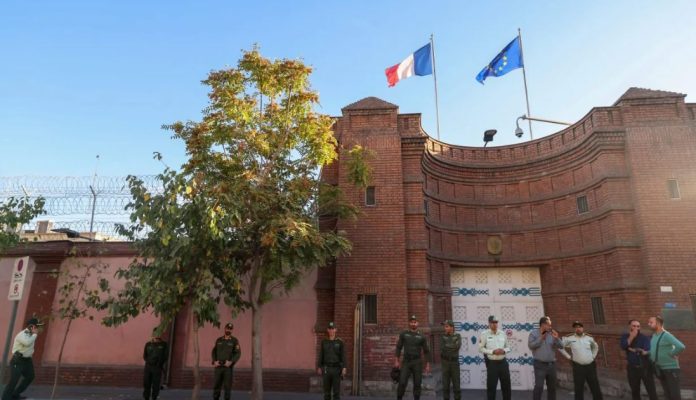
TEHRAN, JUL 20: Two employees of France’s embassy in Tehran were aggressively harassed and detained by Iranian security forces on Sunday, French Foreign Minister Jean-Noël Barrot confirmed in a Monday X/Twitter post.

Barrot stated that both staff members were detained and interrogated for several hours without reason, with one being physically assaulted in the process.

According to Barrot, the employees were eventually allowed to return to the French embassy and are safe, but will be returning to France in the coming hours.

“I informed the Iranian Foreign Minister that this extremely serious and unacceptable violation of the integrity of our agents cannot go without consequences,” Barrot stated.

He decried the incident as “shocking” and a “flagrant violation” of diplomatic immunities and privileges afforded to embassy staff.

Stay Connected

64FansLike
60FollowersFollow

Latest Reviews

Exchange Rates

USD - United States Dollar
EUR
1.15
GBP
1.35
AUD
0.70
CAD
0.71