Home Blog Page 279

Pakistan, Bangladesh resolve to bolster ties in various sectors

Pakistan, Bangladesh resolve to bolster ties in various sectors

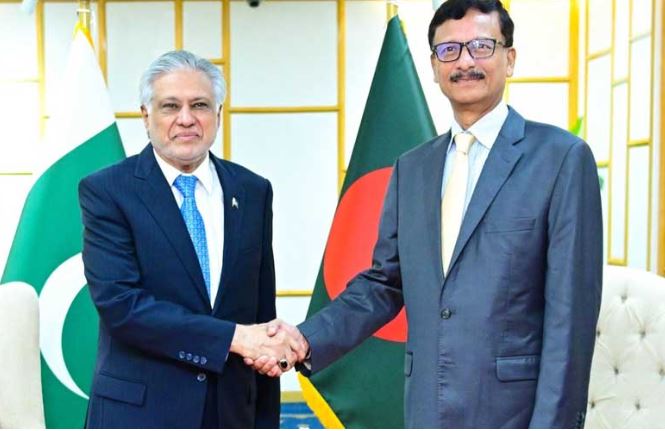
ISLAMABAD, JAN 25: Pakistan and Bangladesh have expressed their resolve to further strengthen ties across multiple sectors.

According to details released on Sunday, Deputy Prime Minister Ishaq Dar held a telephonic conversation with Bangladesh’s Foreign Affairs Adviser, Md Touhid Hossain. In the call, the two discussed matters of mutual interest, as well as regional and global developments in detail.

Dar, and the Bangladeshi Foreign Affairs Adviser, Touhid Hossain, reviewed bilateral trade and economic cooperation. The two leaders reiterated their commitment to strengthening cooperation in several sectors. They stressed the importance of sustainable ties to advance shared interests and promote regional peace and prosperity.

Separately, Dar speaks with Qatar’s Minister of State
In a separate telephonic conversation, Ishaq Dar spoke with Qatar’s Minister of State, Dr Mohammed bin Abdulaziz Al-Khulaifi.

The two discussed bilateral cooperation in various sectors in detail. They also spoke about recent global developments affecting the region.

Crippling power outage ends in Greenland capital

Crippling power outage ends in Greenland capital

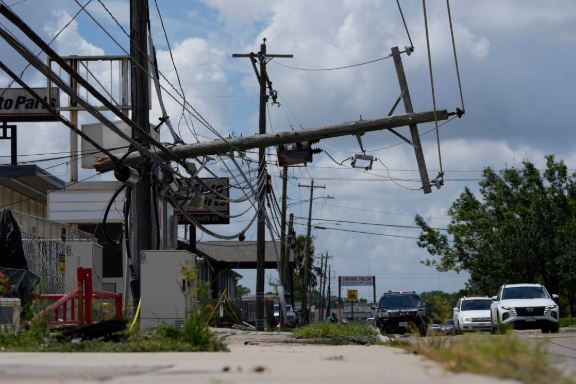
NUUK, JAN 25: Power returned to Greenland’s capital Sunday after a sweeping outage overnight caused by a transmission failure due to strong winds, the state utility company Nukissiorfiit said.

Nuuk, home to around 20,000 people and mostly powered by a hydroelectric plant, was left without electricity at around 10:30 pm (0030 GMT) on Saturday.

“The entire city now has electricity, water, and heating again,” Nukissiorfiit said on Facebook early Sunday.

Internet connectivity had also been affected. Internet monitor NetBlocks reported a significant decline in connectivity in Greenland, “with high impact to capital Nuuk”.

It came days after Greenland’s government published a brochure offering residents advice on crisis preparedness, while US President Donald Trump repeatedly threatened to seize the autonomous Danish territory by force.

Trump backed down after meeting NATO Secretary-General Mark Rutte on Wednesday, saying they had reached a “framework” deal on the Arctic island.

Afghanistan’s Unhealed Wound

Afghanistan’s Unhealed Wound

Hashim Raza Adv/Peshawar, LLM (UK) Raza 

For more than four decades, Afghanistan has remained a bleeding wound—surviving, but never truly recovering. From monarchy and semi-monarchy to revolutionary upheavals and proxy wars, every political experiment has left deep scars. While earlier systems preserved relative peace, particularly in urban centers, they failed to reform outdated dogmas. Conversely, leftist revolutionaries pursued economic change without sufficient regard for Afghanistan’s socio-cultural fabric or its complex geography. This imbalance turned the country into a global choke point—contested by Western capitalism, Arab petro-politics, and Islamist movements alike.

In the name of jihad, billions of dollars were funneled into Afghanistan, transforming it into a battlefield for competing global interests. As documented by German writer Ian Johnson, even mosques in Europe—such as those in Munich—became hubs of radical mobilization. A society that was once comparatively liberal, at least in its cities, was gradually pushed toward fanaticism. As John Cooley notes, some of the most tacit support for Afghan mujahideen even came from unlikely quarters, including Israel. Among these factions, Gulbuddin Hekmatyar emerged as a favored figure, despite the immense destruction he inflicted on Afghanistan—arguably surpassing even his rival, Ahmad Shah Massoud.

Within the Afghan communist leadership, figures such as Dr. Najibullah stood out as nationalists first and communists second. Najibullah was notably opposed to the Soviet invasion. Ajmal Khattak, a staunch Pashtun nationalist, later acknowledged that both he and Najibullah made it clear to Moscow that they would never support the doctrine of “hot pursuit.” This understanding eventually contributed to the Soviet withdrawal, though it also forced leaders like Najibullah and Khattak to seek protection in Moscow.

Pakistan, meanwhile, opened its doors to Afghan refugees—particularly in Khyber Pakhtunkhwa—despite never being a signatory to the international refugee convention. Nearly four million Afghans crossed the border. While many benefited from petro-dollars and the shadow economy of the Afghan jihad, Pakistan paid a heavy price. Crime rates soared, kidnappings and land grabbing became rampant, and demographic pressures intensified. The population exploded from around 100 million to nearly 250 million. Slogans glorifying jihad appeared on walls, but the economic and social burden proved overwhelming, especially during the Musharraf era, when limited resources had to sustain a rapidly growing population.

A new and deadlier form of terrorism also emerged. As Brigadier Mohammad Yousaf recounts in *The Bear Trap*, suicide bombing—a grim innovation introduced by Arab extremists—became a defining feature of conflict in the region. When this still failed to satisfy imperial ambitions, the Taliban were brought to power. Though their rule was centered in Afghanistan, their roots extended deep into neighboring Pakistan. At the same time, sectarianism intensified within Pakistan itself, a trend well documented by journalists and scholars such as Ahmed Rashid and researchers like Dr. Mujahid, author of *Punjabi Taliban*.

The Taliban’s first major act was the public hanging of Dr. Najibullah and his brother—an event that sent shockwaves through Afghanistan and deeply affected sympathizers across the border. Najibullah had earlier urged regional consensus among Pakistan, Iran, India, China, and Russia—a vision that threatened American strategic interests and was therefore fiercely resisted.

The legacy of the Afghan jihad continues to destabilize both Afghanistan and Pakistan. Seminaries and mosques—many funded by Saudi Arabia, as revealed in *Ghost Wars*—along with sponsorship from various sectarian groups, have entrenched ideological militancy. With an estimated 2,500 madrassas in Afghanistan and around 30,000 in Pakistan, the ideological bond between militant groups on both sides of the border remains strong. Whether labeled Taliban, TTP, or “Pakistani Taliban,” the differences are largely nominal; ideologically and culturally, they are cut from the same cloth.

Recent attempts at peace, including mediation efforts framed in Islamic terms, have been undermined by competing interests—particularly those of Turkey and Qatar. From the outset, Qatar has invested heavily in Taliban ideology, not merely as a political strategy but as a long-term belief system. Alongside the UAE, Qatar has often served broader US and Israeli interests, while also competing with Saudi Arabia. Energy ambitions—such as gas pipelines through Iran and Turkey—have further complicated regional calculations, making Afghanistan an arena of continued interference.

The Taliban must recognize that they are approaching a point of no return. In Pakistan, political forces have lost leaders and workers to Taliban violence; whatever sympathy or religious-political support once existed is rapidly eroding. In Afghanistan, secular, progressive, and nationalist forces—along with Tajiks, Uzbeks, and Hazaras—have suffered immensely under Taliban brutality. Women, children, artists, and musicians remain especially vulnerable. Governing through the lens of a single rigid school of thought cannot ensure stability.

The Taliban are not merely required to change policies, but to transform their entire ethos. They must respect women’s rights, protect children, and allow space for culture, music, and art. Above all, they must avoid becoming proxies in a new neo-economic war over minerals and resources. Afghanistan must confront new realities and abandon obsolete dogmas.

At the very outset of this discussion, it is also essential to recall how the true nature of jihadist groups was laid bare by Amir Mir in *The True Face of Jihadis*, including the role of their sister organizations operating in Pakistan. Ignoring these truths will only allow the wound to fester.

Unless the international community—and regional actors—address this history with honesty and responsibility, Afghanistan’s wound will continue to bleed. Left unattended, it risks becoming a global infection, a parasitic conflict feeding endlessly on human suffering. Hashim Raza Adv/Peshawar, LLM (UK) Raza 

GPB: US Jewish New plan of Palestinians genocide 

GPB: US Jewish New plan of Palestinians genocide 

Shamim Shahid 

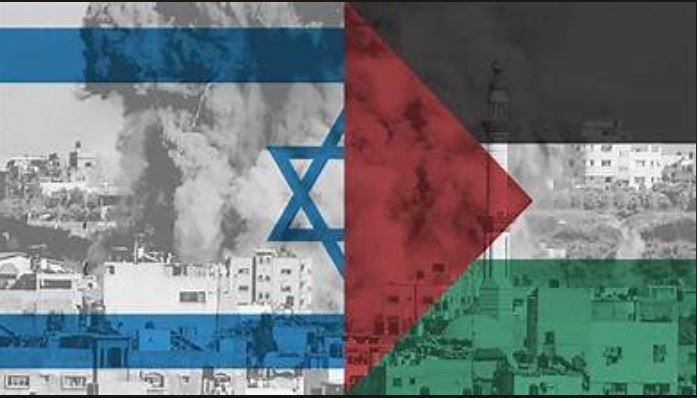
At the moment, the US President Donald Trump’s initiative GHAZA PEACE BOARD is being discussed throughout the world. Though purposes of this initiative or body is no more secret as it would help US or Global Jewish lobbies of materialising its long standing objectives of getting occupation of the holy land and enabling Israel to be supreme throughout Middle East.

 On such grounds, maximum countries especially non Muslim Europeans are opposing this plan. Through this plan, US President has also exposed inefficiency and weakness of several Muslim countries including Pakistan before rest of the world. Besides others each signatory would pay a huge amount of one billion US dollars which meant for meeting needs of what they called peace forces. 

Similarly the member countries or signatories would dispatch troops or personnel of security forces to be deployed in Ghaza strip for maintaining law and order. However, dispatching or deployment of peace keeling troops is made mandatory with the approval of President Trump. It is astonishing that President Trump trusting Pakistan and attaching great hopes with CDF Gen Asim Muneer and Prime Minister Shebaz Sharif but didn’t trust Turkey and its president. On such grounds Presidend in first instance has not only welcomed but even jubilated Pakistan’s decision of joining the Ghaza Peace Board.

No one can deny the fact that Pakistan itself facing worst kind of financial crises. Its day to day financial needs is depending in loans from IMF and other sources. In such a circumstances, Pakistan’s decision of joining the Ghaza Peace Board and donating huge amount of one billion US dollar is also surprising and is under discussion. Each and every one say how it is possible for Pakistan to afford one billion dollars.

Analysts believes that  in the new global scenario, Pskistan has lost almost its utility  and intends to be in lime light at global level. In particular, Pakistan is desirous to be in US close circles. Though majority people, especially public opinion makers are unhappy with the Ghaza Peace Board and Pskistan decision of becoming its member or signatory. Known foreign  affairs expert and former ambassador to United States Dr Maleeha Lodgi in media talk said, ” how it is possible for US to help the Palestinians to remain in peace in Ghaza strip as President Trump and others already vetoed at least 8 UN resolutions in this respect.” Another expert believes that by joining the Ghaza Peace Board Pakistan has made aldo unhappy China and several other countries.

 Through this terrible and harmful decision, the US and Jewish lobby also succeed on barrial of Camp David Accord which had enabled the Palestians of getting an independent and sovereign state- called Palestinian Authority. Though on the name of Islam and Jehad, the Camp David Accord was sabotaged but it was a land slide achievement on the part of late Palestinian leader Yasar Arafat. Soon after its signing in 1978, a number of mysterious militant groups emerged and made active in  Middle East. These groups were known as Hizbullah and Hamas. Hamas entered into armed resistance against Israel, causing unprecedented human and logistic losses to Palestinians. At the moment almost of developments and infrastructures in Ghaza strip destroyed. The one time independent Palestinian Authority looks likes ruins and under seige of Jews. Soon after assuming the office some one year back President Trump had floated the idea of rehabilitating the Palestinians somewhere else. That idea was opposed and rejected. Now he succeeded in his such idea but with a new slogan. And no other than so called Islami leaders are responsible for such US achievement. 

Whatever is US President, his aides and allies ambitions but it seem hard to force Palestinians for displacement. However, this decision will definitely cause unrest amongst smaller nations throughout the world. Though through Ghaza Peace Board, President Trump has made useless UN, NATO and OIC, therefore responsibility rests with EU, China, Russia and others to think ways and means for blocking US aggression against smaller countries.

Zhao Shiren lauds Mohsin Naqvi’s role in Pakistan-China friendship

Zhao Shiren lauds Mohsin Naqvi’s role in Pakistan-China friendship

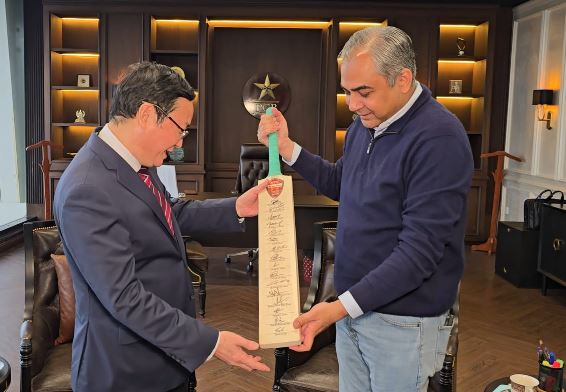
LAHORE, JAN 25 /DNA/ – ‎Federal Interior Minister and Chairman Pakistan Cricket Board, Mohsin Naqvi, met the Chinese Consul General Zhao Shiren. Mohsin Naqvi paid tribute to Zhao Shiren for his services as Chinese Consul General and extended best wishes to him.

‎While speaking to Federal Interior Minister and PCB Chairman Mohsin Naqvi, Chinese Consul General Zhao Shiren said that everyone acknowledges his remarkable pace. He added that Mohsin Naqvi has played a valuable role in strengthening Pakistan–China bilateral relations. He said that first as Chief Minister Punjab and now as Interior Minister, Mohsin Naqvi has done extraordinary work to further strengthen Pakistan–China friendship. He also stated that his stay in Pakistan was extremely pleasant.

‎Talking to Chinese Consul General Zhao Shiren, Federal Interior Minister and PCB Chairman Mohsin Naqvi said that he shares a brotherly relationship with him, which will continue in the future as well. He added that his absence in Lahore will always be felt.

‎Mohsin Naqvi said that his recent visit to China included a very pleasant and productive three-and-a-half-hour-long meeting with Chinese Minister of Public Security Wang Xiaohong. He said that bilateral relations in areas of mutual interest are moving forward. He further said that he will visit China again in September and will meet his brother.

‎Mohsin Naqvi presented the Chinese Consul General Zhao Shiren with a bat signed by players as a gift. The Chinese Consul General presented Mohsin Naqvi with a book written by Chinese President Xi Jinping.

Security forces kill 3 Indian-proxy terrorists in Balochistan operation

Security forces kill 3 Indian-proxy terrorists in Balochistan operation

RAWALPINDI, JAN 25 /DNA/ – Security forces conducted an intelligence based operation in Panjgur District of Balochistan, on reported presence of terrorists belonging to Indian proxy, Fitna al Hindustan.

During the conduct of operation, own forces effectively engaged the terrorists’ location, and after an intense fire exchange, three Indian sponsored terrorists were sent to hell (including Local Area Terrorist Commander Farooq alias Soro, Terrorist Adeel & Terrorist Waseem).

Weapons, ammunition and explosives were also recovered from the terrorists, who remained actively involved in numerous terrorist activities in the area.

Sanitization operations are being conducted to eliminate any other Indian sponsored terrorist found in the area. Relentless Counter Terrorism campaign under vision “Azm e Istehkam” (as approved by Federal Apex Committee on National Action Plan) by Security Forces and Law Enforcement Agencies of Pakistan will continue at full pace to wipe out menace of foreign sponsored and supported terrorism from the country.

Final round of Myanmar vote set to seal junta ally’s victory

Final round of Myanmar vote set to seal junta ally's victory

MANDALAY, JAN 25: Myanmar opened the final round of its month-long election on Sunday, with the dominant pro-military party on course for a landslide in a junta-run vote critics say will prolong the army’s grip on power.

The Southeast Asian nation has a long history of military rule, but the generals took a back seat for a decade of civilian-led reforms.

That ended in a 2021 military coup when democratic figurehead Aung San Suu Kyi was detained, civil war broke out, and the country descended into humanitarian crisis.

The election’s third and final phase opened in dozens of constituencies across the country at 6:00 am on Sunday (2330 GMT Saturday), just a week shy of the coup’s five-year anniversary.

The military pledges the election will return power to the people but with Suu Kyi sidelined and her hugely popular party dissolved, democracy advocates say the ballot is stacked with military allies.

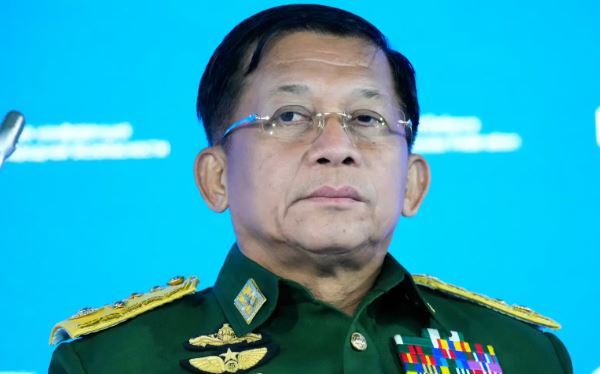
  Junta chief Min Aung Hlaing — who has not ruled out serving as president after the poll — toured voting stations in Mandalay, wearing civilian dress.

                  “This is the path chosen by the people,” he told reporters in response to a question from AFP. “I am also a part of the people, and I support this.”

                  “The people from Myanmar can support whoever they want to support,” he said.

                  Voting is not being held in rebel-held parts of the country, and in junta-controlled areas rights monitors say the run-up has been characterised by coercion and the crushing of dissent.

                  Teacher Zaw Ko Ko Myint cast his vote at a Mandalay high school around dawn.

                  “Although I do not expect much, we want to see a better country,” the 53-year-old told AFP. “I feel relieved after voting, as if I fulfilled my duty.”

                  – ‘Fabricated vote’ –

                  The Union Solidarity and Development Party (USDP) — packed with retired officers and described by analysts as a military puppet — won more than 85 percent of elected lower house seats and two-thirds of those in the upper house in the poll’s first two phases.

                  “The junta has orchestrated the election specifically to ensure a landslide by its political proxy,” UN rights expert Tom Andrews said in a statement Friday.

                  “States that endorse the results of these polls will be complicit in the junta’s attempt to legitimise military rule through a fabricated vote.”

                  Official results are expected late this week, but the USDP could claim victory in the hours after polling closes.

                  A military-drafted constitution also gives the armed forces a quarter of the seats in both houses of parliament, which will vote as a whole to pick the president.

                  “I don’t expect anything from this election,” a 34-year-old Yangon resident told AFP earlier, requesting anonymity for security reasons. “Things will just keep dragging on.”

                  Suu Kyi’s National League for Democracy party thrashed the USDP in the last elections in 2020, before the military seized power on February 1, 2021, making unfounded allegations of widespread vote-rigging.

                  The 80-year-old Nobel Peace Prize laureate remains detained incommunicado at an unknown location on charges rights monitors dismiss as politically motivated.

                  – ‘Not safe at all’ –

                  The military has long presented itself as the only force guarding restive Myanmar from rupture and ruin.

                  But its putsch tipped the country into full-blown civil war, with pro-democracy guerrillas fighting the junta alongside a kaleidoscope of ethnic minority armies which have long held sway in the fringes.

                  Air strikes are frequent in some regions, others enjoy relative peace, while some zones are blockaded, haunted by the spectre of starvation.

                  Polling was called off in one in five lower house constituencies, but some frontline locations went to the polls Sunday.

                  “Candidates still haven’t held any campaigning because of security,” complained one parliamentary candidate, speaking on condition of anonymity for security reasons. “It’s not safe at all to travel.”

                  There is no official death toll for Myanmar’s civil war.

                  But monitoring group ACLED, which tallies media reports of violence, estimates more than 90,000 have been killed on all sides.

                  Meanwhile, more than 400 people have been pursued for prosecution under stark new junta-tailored legislation forbidding “disruption” of the election.

                  It punishes protest or criticism with up to a decade in prison, and arrests have been made for as little as posting a “heart” emoji on Facebook posts criticising the polls.

                  Turnout in the first and second phases of the vote was just over 50 percent, official figures say, compared to roughly 70 percent in 2020.

Last Pakistan-EU summit held in 2010

Last Pakistan-EU summit held in 2010

Saifullah Ansar

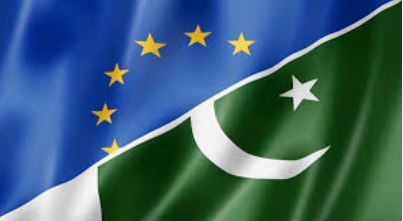
ISLAMABAD, JAN 25 /DNA/ – The last formal EU-Pakistan Summit was held more than fifteen years ago, on June 4, 2010, in Brussels. That meeting marked the second high-level summit between the two sides, following the inaugural session in 2009. Since then, no formal summit has taken place, but bilateral engagement has continued through structured dialogues and cooperation frameworks.

Most recently, the 7th Round of the EU-Pakistan Strategic Dialogue was convened in Islamabad on November 21, 2025. The talks focused on strengthening trade ties, enhancing security cooperation, and reviewing Pakistan’s participation in the EU’s Generalised Scheme of Preferences Plus (GSP+), which provides tariff concessions in exchange for compliance with international conventions.

Relations between Pakistan and the European Union are currently guided by the Strategic Engagement Plan (SEP), signed in 2019. The SEP provides a comprehensive framework for cooperation across political, security, and economic domains, ensuring continuity in engagement despite the absence of formal summits.

In addition to the Strategic Dialogue, the 15th Meeting of the EU-Pakistan Joint Commission was held in December 2025. This meeting placed particular emphasis on trade relations, highlighting the EU’s role as one of Pakistan’s largest trading partners. Both sides reaffirmed their commitment to expanding market access, addressing trade barriers, and promoting investment opportunities.

Observers note that while the lack of formal summits since 2010 reflects certain political and logistical challenges, the ongoing dialogues and commission meetings demonstrate a sustained commitment to partnership. The EU continues to view Pakistan as a key regional player, while Islamabad values Brussels as an important economic and diplomatic partner.

With the Strategic Dialogue and Joint Commission meetings reinforcing cooperation, both sides appear determined to maintain momentum in their relationship, even in the absence of summit-level engagements.

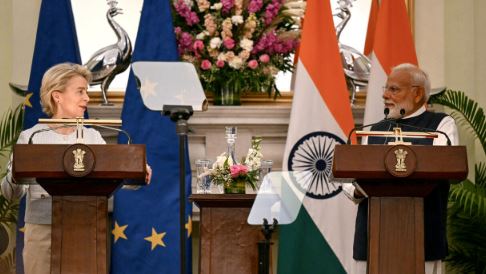
Antonio Costa in New Delhi EU, India to have a free trade pact

Antonio Costa in New Delhi EU, India to have a free trade pact

While the EU eyes India as an important market for the future, New Delhi sees the European bloc as an important source of much-needed technology and investment to rapidly upscale its infrastructure and create millions of new jobs for its people

News Desk

NEW DELHI: European Council president Antonio Costa arrived in India on Sunday, as the EU and New Delhi seek to seal a free trade pact, capping nearly two decades of negotiations between the economic behemoths.

Costa and European Commission president Ursula von der Leyen are chief guests for this year’s Republic Day celebrations in New Delhi on Monday before an EU-India summit on Tuesday, where they hope to shake hands on the accord, described as the “mother of all deals”.

“President Costa is in New Delhi for the 16th EU-India summit taking place on Tuesday,” the EU Council said on X.

“The summit will be an opportunity to build on the EU-India strategic partnership and further strengthen collaboration across key policy areas.”

India, the world’s most populous nation, is on track to become the world’s fourth-largest economy this year, according to International Monetary Fund (IMF) projections.

While the EU eyes India as an important market for the future, New Delhi sees the European bloc as an important source of much-needed technology and investment to rapidly upscale its infrastructure and create millions of new jobs for its people.

“We are on the cusp of a historic trade agreement,” Leyen said ahead of the summit.

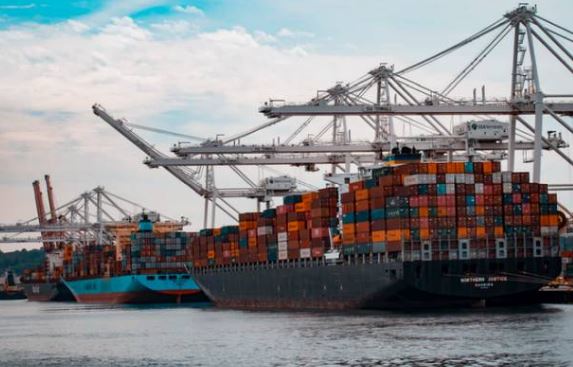
Bilateral trade in goods reached €120 billion ($139bn) in 2024, an increase of nearly 90 per cent over the past decade, according to EU figures, with a further €60bn ($69bn) in trade in services.

The pact would be a major win for Brussels and New Delhi as both seek to open up new markets in the face of US tariffs and Chinese export controls.

“The EU and India are moving closer together at the time when the rules-based international order is under unprecedented pressure through wars, coercion and economic fragmentation,” the EU’s top diplomat, Kaja Kallas, said on Wednesday.

Negotiations, however, are still ongoing with talks focusing on a few sticking points, including the impact of the EU’s carbon border tax on steel exports and safety and quality standards in the pharmaceutical and automotive sectors, according to people familiar with the discussions.

New Delhi, which has relied on Moscow for decades for key military hardware, has tried to cut its dependence on Russia in recent years by diversifying imports and pushing its own domestic manufacturing base. Europe is doing the same vis-à-vis the United States.

Oman Extends Ban on Export of Key Waste Types

Oman Extends Ban on Export of Key Waste Types

MUSCAT, JAN 25: The Environment Authority (EA) has announced the extension of the suspension of environmental permits for the export of the following types of waste:

Used cooking oils of all kinds, used tyres and batteries, iron, copper, aluminum scraps and plastic waste.

This suspension is effective from 1 January 2026 until further notice, as part of the regulatory measures adopted by the Authority to enhance the circular economy, improve resource-use efficiency, and support national industries.

Stay Connected

64FansLike
60FollowersFollow

Latest Reviews

Exchange Rates

USD - United States Dollar
EUR
1.14
GBP
1.34
AUD
0.70
CAD
0.71