Home Blog Page 277

Indonesia receives Rafale jets

Indonesia receives Rafale jets

DNA

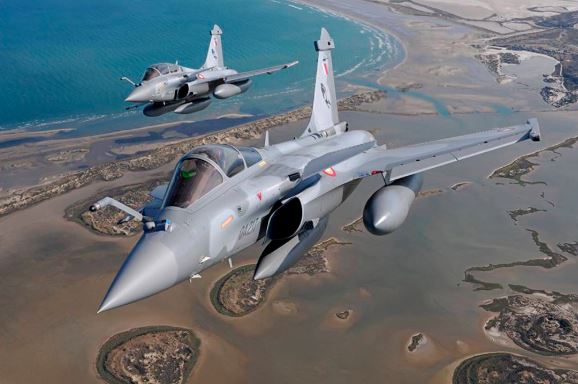
JAKARTA: Indonesia has received three Rafale fighter jets from France in the first deliveries from a multi-billion dollar defence deal between the two countries, a defence ministry official told Reuters on Monday, marking a major upgrade to the country’s ageing military hardware.

Jakarta, France’s main arms client in Southeast Asia, has placed orders for as many as 42 Rafales, built by Dassault Aviation, as well as French frigates and submarines, as the archipelago steps up defence spending under President Prabowo Subianto, a former special forces commander.

“The aircraft have been handed over and are ready for use by the Indonesian Air Force, Defence Ministry spokesperson Rico Ricardo Sirait said in a message in response to a Reuters query — the first confirmation that Indonesia has possession of the advanced military aircraft after striking an $8 billion deal with France in 2022 and expanding it last year.

Republic Day of India celebrated in Islamabad

Republic Day of India celebrated in Islamabad

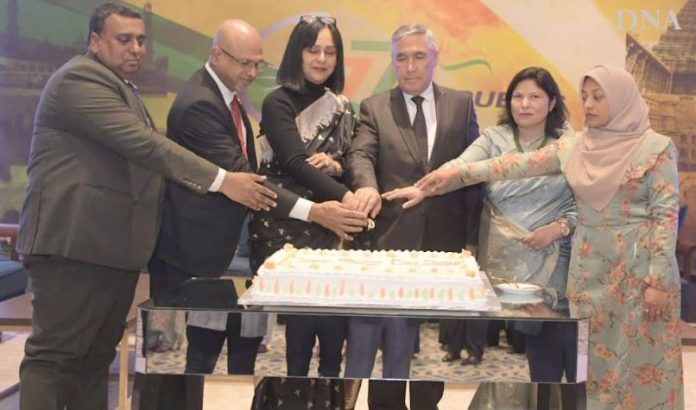
ISLAMABAD, JAN 26 (DNA) – A diplomatic reception was hosted to mark the 77th Republic Day of India. The event, held at the Indian mission, saw participation from representatives of several South Asian nations.

The reception was attended by Charge d’Affaires of India, Ms. Geetika Srivastava, alongside the Ambassadors and High Commissioners of fellow SAARC countries, including Bangladesh, Sri Lanka, Nepal, and the Maldives. The diplomats participated in a ceremonial cake-cutting to commemorate the occasion.

A large number of guests from various walks of life, including members of the local Indian community, Pakistani officials, media representatives, and business figures, attended the reception.

The event highlighted the diplomatic engagements within the SAARC region. Republic Day marks the date on which the Constitution of India came into effect on January 26, 1950.

UAE will not allow attacks on Iran from its soil: foreign ministry

UAE will not allow attacks on Iran from its soil: foreign ministry

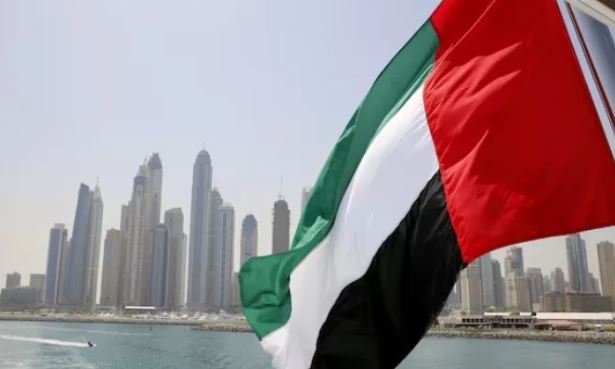
ABU DHABI, JAN 26: The United Arab Emirates (UAE) will not allow attacks on Iran to be launched from its territory, the foreign ministry said in a statement on Monday.

Last week, President Donald Trump said a US “armada” was heading toward the Gulf and that Washington was watching Iran closely after the protests subsided in the country.

The foreign ministry said in a statement it “has reaffirmed the United Arab Emirates’ commitment to not allowing its airspace, territory or waters to be used in any hostile military actions against Iran”.

The UAE hosts thousands of US personnel at Al Dhafra airbase near the capital Abu Dhabi, one of several American military sites in the Gulf.

The UAE also refuses to provide logistical support for attacks, the statement said, adding that “dialogue, de-escalation, adherence to international law, and respect for state sovereignty” were the best way to address “current crises”.

Iran has said it would treat any attack “as an all-out war against us”, as the US dispatched a military aircraft carrier strike group and other assets in the Middle East earlier this month.

US warships, including the aircraft carrier USS Abraham Lincoln, several destroyers and fighter aircraft, started moving from the Asia-Pacific as tensions soared between Iran and the US in recent months.

“This military build-up — we hope it is not intended for real confrontation — but our military is ready for the worst-case scenario. This is why everything is on high alert in Iran,” said the senior Iranian official, speaking on condition of anonymity.

“This time we will treat any attack – limited, unlimited, surgical, kinetic, whatever they call it — as an all-out war against us, and we will respond in the hardest way possible to settle this,” the official said.

The US military has in the past periodically sent increased forces to the Middle East at times of heightened tensions, moves that were often defensive. However, the US military staged a major build-up last year ahead of its June strikes against Iran’s nuclear programme.

Cambodia-Thailand situation on the table at ASEAN Foreign Ministers’ Retreat

Cambodia-Thailand situation on the table at ASEAN Foreign Ministers’ Retreat

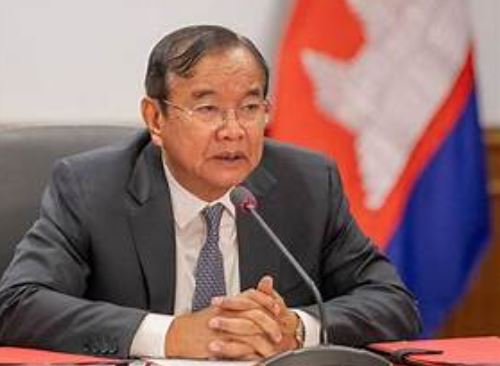
PHNOM PENH, Jan 26: Deputy Prime Minister Prak Sokhonn, Minister of Foreign Affairs and International Cooperation, will attend the ASEAN Foreign Ministers’ Retreat and Related Meetings in the Philippines, where the current situation between Cambodia and Thailand will also be raised, according to a press release from the foreign ministry.

A January 26 ministry press release explained that the meeting, themed “Navigating Our Future, Together”, will be held in Cebu. This marks the first meeting since the Philippines assumed the ASEAN chairmanship from Malaysia.

The meeting will review the progress made since the 47th ASEAN Summit and Related Summits held in Malaysia, as well as discuss priorities and key deliverables under the Philippines’ ASEAN Chairmanship for 2026, with the aim of achieving the ASEAN Community 2045.

The ministry stated that the foreign ministers will also address regional and international issues of common interest and concern, including developments in Myanmar and follow-up actions to the Special ASEAN Foreign Ministers’ Meeting on the Current Situation between Cambodia and Thailand, held on December 22, 2025.

Pakistan, Myanmar vow stronger ties via sustained diplomatic engagement

Pakistan, Myanmar vow stronger ties via sustained diplomatic engagement

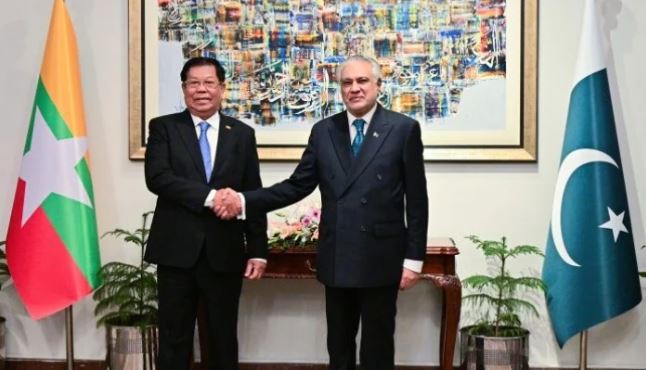
ISLAMABAD, JAN 26: Pakistan and Myanmar on Monday moved to reinvigorate their bilateral relationship, reaffirming their commitment to deepen multi-sectoral cooperation through sustained and structured engagement after a prolonged gap in high-level exchanges.

The two nations have expressed their commitment to expand cooperation across diverse sectors, including religious tourism, people-to-people and cultural exchanges, trade, economy, science, and academic linkages, with a view to promoting shared prosperity.

The resolve was expressed during delegation-level talks and a joint press stakeout by Deputy Prime Minister (DPM) and Foreign Minister Ishaq Dar and Union Minister for Foreign Affairs of Myanmar Than Swe in Islamabad.

In his remarks, DPM Dar said discussions remained very productive and comprehensive. He underscored the importance of advancing engagement towards sustained, structured and results-oriented initiatives, particularly in capacity building.

He said the visit of Myanmar’s FM reflected the importance that both countries attach to revitalising and strengthening Pakistan-Myanmar relations.

Dar said Pakistan and Myanmar enjoy cordial and friendly relations and that Pakistan greatly values this partnership and remains keen to further enhance cooperation across a wide range of mutually beneficial fields.

He stressed that all contentious issues should be resolved through dialogue and diplomacy and emphasised the importance of further deepening cooperation in academic linkages. Pakistan attached great importance to its relations with Myanmar and deeply valued their long-standing friendship and cooperation, he added.

Noting a gap in high-level visits, the DPM said the last visit from Myanmar took place in 2015, while from Pakistan, President Asif Ali Zardari visited Myanmar in 2012.

Dar said the bilateral ties were rooted in history and mutual respect, as reflected in early diplomatic exchanges following Pakistan’s independence. He added that Pakistan sincerely desires peace, stability, and prosperity for Myanmar and hopes that the forthcoming general elections would contribute to stability, development, and inclusive governance.

FM Swe thanked the government and people of Pakistan for the warm hospitality extended during his visit. He said that soon after their independence, both countries established valuable ties because of the two great leaders, Quaid-i-Azam Muhammad Ali Jinnah and Myanmar’s founder General Aung San, who had worked for independence from British rule.

Than Swe said successive governments in both countries have maintained good and friendly relations. He noted that 2026 would mark the 77th anniversary of diplomatic relations and expressed the hope that both sides would find ways to further strengthen ties and benefit from multi-sectoral cooperation.

Earlier, the two countries reviewed the full gamut of bilateral relations and exchanged views on regional and international peace and security. The two leaders also agreed to remain in close contact on matters of mutual interest.

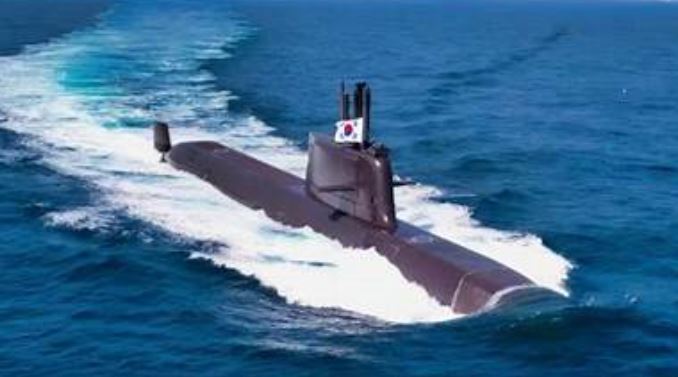
S. Korea seeks nuclear-powered submarines to strengthen deterrence

S. Korea seeks nuclear-powered submarines to strengthen deterrence

SEOUL, JAN 26: South Korean Foreign Minister Cho Hyun confirmed Monday that his country is seeking to acquire nuclear-powered submarines as a step that would strengthen deterrence on the Korean Peninsula and reinforce the Korea-US alliance.

This came during a meeting with US Under Secretary of War for Policy, Elbridge Colby, who is visiting Seoul.

 Seoul’s Foreign Ministry said in a statement that Minister Cho stressed that cooperation on nuclear-powered submarines would strengthen South Korea’s deterrence capabilities and, in turn, contribute to the alliance He also called for concrete follow-up steps through working-level consultations between the two sides.

Colby, in response, expressed Washington’s appreciation for South Korea’s commitment to playing a a more proactive role in defending the peninsula by strengthening its own defense capabilities, the ministry said.

He reaffirmed that the US Department of War would actively support the swift implementation of key agreements reached by the two leaders.

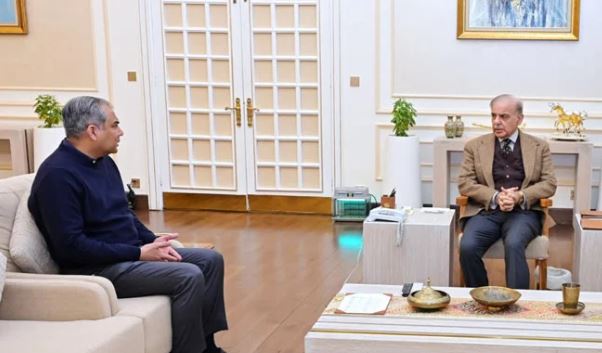
Pakistan to take decision on T20 World Cup participation on Friday or next Monday: Naqvi

Pakistan to take decision on T20 World Cup participation on Friday or next Monday: Naqvi

ISLAMABAD, JAN 26: Pakistan Cricket Board (PCB) Chairman Mohsin Naqvi on Monday said that a final decision regarding Pakistan’s participation in the ICC T20 World Cup 2026 would be taken either on Friday or next Monday.

Naqvi’s statement came after he met Prime Minister Shehbaz in Islamabad and briefed him on Pakistan’s stance regarding participation in the tournament.

Taking to X, the PCB chief said: “He [PM Shehbaz] directed that we resolve it while keeping all options on the table. It was agreed that the final decision will be taken either on Friday or next Monday,” he added.

The meeting follows reports of a potential boycott by Pakistan after the International Cricket Council (ICC) rejected the Bangladesh Cricket Board’s (BCB) request to move their games to a venue outside India.

The BCB requested the venue change after Bangladesh pacer Mustafizur Rahman was removed from the Indian Premier League (IPL) on the Indian cricket board’s instructions, sparking fury in Bangladesh.

However, the ICC replaced them with Scotland in the showpiece event on Saturday, saying it was not feasible to change the schedule so close to the February 7 start of the tournament.

In a statement on Saturday, the ICC said that it made the decision after finding no “credible or verifiable security threat” to the Bangladesh national team in India.

Bangladesh’s exclusion triggered reports of Pakistan’s possible withdrawal from the tournament.

Bangladesh-India row
Relations between Bangladesh and India have been strained relations in recent times, with political tensions between the two neighbouring countries after Bangladesh’s former prime minister, Sheikh Hasina, fled to New Delhi following protests against her.

Political tensions have since then spilt into cricket.

Bangladesh bowler Mustafizur Rahman was dropped from this year’s Indian Premier League despite signing with its Kolkata franchise. Bangladesh responded by banning IPL broadcasts in the country and demanding to play World Cup matches in Sri Lanka.

The standoff mirrors previous tensions in South Asian cricket.

For the Champions Trophy last year, the Indian cricket board (BCCI) stuck to its policy of not touring Pakistan because of the strained political ties between the bitter neighbours, who play each other only in ICC events.

Like for the 2023 Asia Cup in Pakistan, a “hybrid model” was agreed on under which India were allowed to play their Champions Trophy matches in Dubai to salvage the tournament.

Under the agreement running until 2027, Pakistan will play in a neutral venue for any ICC event, including the T20 World Cup, where they are scheduled to play their matches in Sri Lanka.

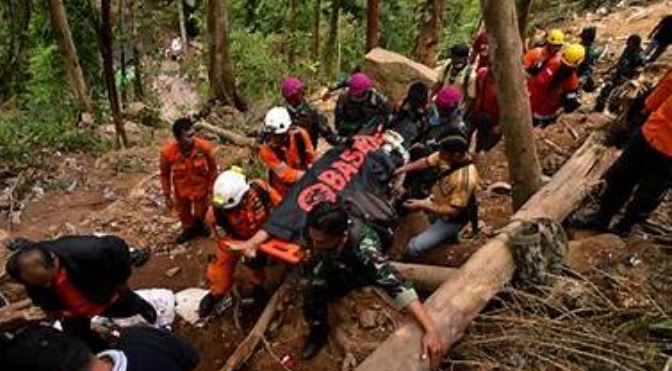
Indonesia landslide death toll rises to 17, dozens missing

Indonesia landslide death toll rises to 17, dozens missing

CISARUA, JAN 26: The death toll in a massive Indonesian landslide hit 17 on Monday as rescuers used heavy equipment to hunt for dozens still missing days after heavy rains unleashed a torrent of mud.

People gathered near the site in Java’s West Bandung region, desperately awaiting news of their loved ones as rescuers, who fear another landslide, scoured the unstable area.

The flow of soil and debris barrelled through the village of Pasirlangu early on Saturday, burying residential areas and forcing dozens to evacuate their homes.

“It’s impossible that they are still alive. I just want their bodies to be found,” said Aep Saepudin, who has been coming to the village daily for updates about his 11 family members who are missing, including his sister.

  “My heart aches. I feel so sad seeing my older sister like that (buried by the landslide)”, he told AFP.

  Abdul Muhari, a spokesman for the national disaster agency, confirmed on Monday that at least 17 people were killed and local officials said 73 were still missing.

                  More than 50 houses were severely damaged by the disaster, which also displaced more than 650 people, the local disaster agency added.

                  Dozens of rescuers were searching the area at the foot of Mount Burangrang on Monday under dark rain clouds, an AFP reporter saw.

                  They excavated manually and used heavy equipment, but said they had to tread carefully for fear of another landslide due to the unstable ground and bad weather.

                  “What we worry about most is the risk of subsequent (landslides). Sometimes when we’re in the operation, we aren’t focusing on the slopes that still have the potential for landslides,” rescuer Rifaldi Ashabi, 25, told AFP.

                  – ‘Should be forested’ –

                  The disaster comes after the government pointed to the role forest loss played in flooding and landslides on Sumatra island late last year, which killed around 1,200 people and displaced more than 240,000.

                  The government has filed multiple lawsuits following the Sumatra floods, seeking more than $200 million in damages against six firms.

                  It also stripped more than two dozen permits last week from forestry, mining and hydroelectric companies in Sumatra.

                  West Java’s governor Dedi Mulyadi blamed Saturday’s disaster on the sprawling plantations around Pasirlangu, mostly used to grow vegetables, and pledged to relocate affected residents.

                  “This area should be forested. Local residents should be relocated because the potential for landslide is high,” Dedi said in a statement Saturday.

                  Forests help absorb rainfall and stabilise the ground held by their roots, while their absence makes areas more prone to flash flooding and landslides, David Gaveau, founder of conservation start-up The TreeMap, told AFP in December.

                  Floods and landslides are common across the vast archipelago during the rainy season, which typically runs from October to March.

                  This month, torrential rains battered Indonesia’s Siau island, causing a flash flood that killed at least 16 people.

Egypt calls on int’l community to prevent any measures undermining UNRWA’s role

Egypt calls on int’l community to prevent any measures undermining UNRWA's role

CAIRO, JAN 26: Egypt expressed its full support for the work of the United Nations Relief and Works Agency for Palestine Refugees (UNRWA) and all humanitarian and relief organizations operating in the occupied Palestinian territories, calling on the international community to prevent any measures that would undermine UNRWA’s role or infringe upon its mandate.

In a statement issued today, the Egyptian Ministry of Foreign Affairs emphasized the vital importance of the role played by these agencies in providing essential services to Palestinian refugees and the civilian population. The Ministry condemned the Israeli occupation forces’ demolition of an UNRWA facility in occupied East Jerusalem, considering it a flagrant violation of international law and international resolutions, and an unacceptable infringement upon the immunity and property of United Nations institutions.

The statement expressed Egypt’s deep concern regarding the unprecedented restrictions and violations imposed on these institutions, which impede their ability to carry out their duties and negatively impact the delivery of humanitarian aid and services. This constitutes a clear violation of international humanitarian law and the rules protecting UN agencies and humanitarian personnel.

The statement emphasized that UNRWA plays a pivotal and irreplaceable role as the UN agency mandated to provide educational, health, and relief services to millions of Palestinian refugees. It stressed that any attempts to undermine the agency’s existence or diminish its role directly infringe upon the rights of refugees and attempt to evade the international community’s responsibility towards them.

The statement further affirmed that UNRWA’s existence is inextricably linked to the Palestinian question itself and to the historical international commitment to the refugee issue until a just and lasting solution is reached, including guaranteeing the right of Palestinian refugees to return to their homes, in accordance with UN General Assembly Resolution 194 and other relevant international resolutions.

The statement called on the international community to assume its legal and moral responsibilities to ensure the protection of humanitarian institutions and their staff, and to create the necessary conditions for them to carry out their work without hindrance.

What the Russia Reveal about 2026

What the Russia Reveal about 2026

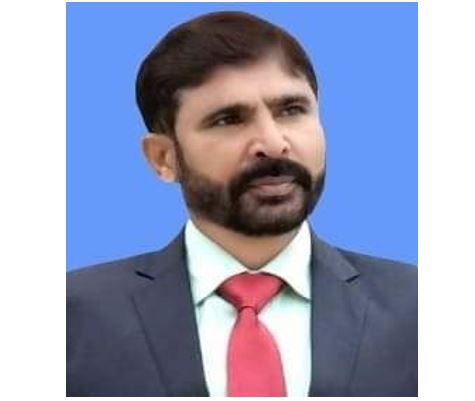
Dr, Muhammad Akram Zaheer

As Russia enters 2026, attention is increasingly shifting away from the Kremlin’s grand narratives towards the country’s regions, republics and municipalities, where the long-term consequences of war, economic contraction and political centralisation are becoming harder to contain. From depleted regional budgets to simmering ethnic and social tensions, Russia’s internal landscape is marked less by stability than by accumulated strain. Experts observing domestic politics, social movements and regional security point to a year in which financial stress, administrative reforms and grassroots responses will interact in unpredictable ways, shaping both political management and the possibilities of future transformation.

According to András Tóth-Czifra, a specialist on Russia’s domestic politics and political economy, the most immediate fault line in 2026 will run through regional and municipal finances. Most regions are beginning the year with lean budgets and exhausted fiscal reserves, the result of years of war-related spending, declining revenues and growing dependence on federal transfers. Yet while resources are tightening, social obligations are not diminishing. On the contrary, pressure on social policy including benefits, housing support and services for war veterans and their families is likely to remain intense.

Early warning signs are already visible. In industrial regions such as Kemerovo and Irkutsk, authorities have been forced to juggle rising welfare commitments with weakening economic bases. Other territories dependent on extractive or declining industries may soon face similar crunches, as production slows, investment weakens and tax receipts fall. The political risk lies not only in unpaid bills, but in the erosion of governors’ capacity to absorb shocks through discretionary spending and informal fixes. Tóth-Czifra also highlights the importance of the ongoing municipal administration reform. Designed to streamline governance, it has instead generated resentment among citizens and lower-tier elites who see it as another step towards the hollowing-out of local self-government. This backlash may not immediately translate into open protest, but it threatens to weaken the informal coalitions that have traditionally underpinned regional stability. With the 2026 State Duma election approaching, even limited disaffection within administrative layers could complicate electoral management and increase the costs of control. The reform carries another sensitive implication. By reducing the number of lower-tier posts, it narrows the pool of positions into which returning war participants can be quietly absorbed. From the Kremlin’s perspective, these appointments have served as a means of social pacification. Their contraction risks intensifying competition over resources and status, injecting further tension into already strained local political environments.

While fiscal stress shapes the formal political arena, Iliuza Mukhamedianova, a Bashkir social researcher, argues that the deeper story of 2026 will unfold beyond official institutions. In the ethnic republics, she is paying closest attention to grassroots dynamics: local protests, cultural initiatives, educational projects and forms of low-visibility activism that rarely appear in national media but reveal the underlying condition of society. In Bashkortostan, this includes the aftershocks of the Baymak protests, which exposed the depth of resentment over environmental degradation, governance and cultural marginalisation. Environmental conflicts linked to resource extraction and land use remain particularly significant. In rural and Indigenous communities, disputes over quarries, forests and water systems often fuse economic grievances with questions of identity and dignity. These flashpoints are where social inequality, cultural survival and political resistance intersect most clearly. Mukhamedianova does not expect improvement at the institutional level. On the contrary, she anticipates a tightening of control, more repression and a narrowing of permissible public activity. Yet this does not imply social passivity. Across the republics, people are forming new informal networks, rediscovering mutual aid and experimenting with quieter forms of solidarity. These initiatives may lack the visibility of mass movements, but they cultivate skills, trust and narratives that could one day underpin broader change.

In the North Caucasus, the balance between containment and volatility remains particularly fragile. Harold Chambers, who studies nationalism, conflict and security in the region, identifies three sets of variables to watch in 2026: socioeconomic stress, extremist threats and the evolution of both peaceful and violent resistance. Economic pressures are likely to deepen. Infrastructure failures, inflation and unemployment continue to weigh heavily on republics already marked by demographic growth and limited opportunity. Against this backdrop, the risk of recruitment by extremist groups, including remnants of the Islamic State or more obscure violent networks, cannot be dismissed. Chambers also notes the symbolic and political importance of upcoming events, from Dagestan’s parliamentary elections to the marking of five years since the killing of Aslan Byutukayev, the alleged Islamic State leader in Chechnya. Such anniversaries can serve as triggers, either for insurgent activity or for demonstrative security operations by the authorities. Two broader dynamics could drive instability. The first is the return of the Ukraine war to the domestic sphere: through the social consequences of mobilisation, the presence of traumatised veterans, and the extension of the conflict into Russian territory via drone attacks or sabotage. The second is the intensifying succession question in Chechnya. As Ramzan Kadyrov promotes his son Adam more openly, resistance is likely not only from within the republic but also from federal actors wary of hereditary rule. Efforts to undermine or bypass this succession plan could unsettle the delicate equilibrium that has defined Chechnya’s post-war order.

For Lana Pylaeva, a Komi human rights activist and analyst, 2026 will be shaped by a contradiction at the heart of state policy. On the surface, Moscow is paying unprecedented attention to Indigenous communities. Vladimir Putin’s declaration of 2026 as the “Year of the Unity of the Peoples of Russia” and the introduction of new official holidays project an image of cultural inclusion. Internationally, Indigenous themes are increasingly woven into Russia’s efforts to present itself as a decolonial alternative to Western powers. Yet this symbolic recognition is accompanied by intensifying repression. Indigenous activists were targeted in a new wave of arrests in December, and Pylaeva expects pressure to grow. Expressions of Indigenous identity are likely to be channelled into tightly managed festivals and exhibitions, while independent advocacy over land rights, language and self-determination faces shrinking space. At the same time, infrastructural and extractive projects in the Arctic and northern regions are accelerating. Pylaeva is closely monitoring plans ranging from open-air nature reserves and year-round resorts in the Northern Urals to prospective gold mining at the Chudnoe deposit. Particularly controversial are proposals to divert water from the Pechora and Northern Dvina rivers towards occupied Donbas projects that carry profound environmental and social risks. Against this backdrop, local activism in Komi, though constrained, remains a source of cautious optimism, sustaining the idea that resistance has not been extinguished.

Dr Maria Ochir-Goryaeva, an Oirat (Kalmyk) historian and human rights defender, situates 2026 within a longer arc of erosion. Over the past year, she has watched a succession of laws further strip the republics of what remained of their autonomy. In schools, the teaching of Indigenous languages and literature is being steadily reduced, while militarised curricula spread ever deeper into both school and preschool education. The juxtaposition is stark: as families mourn relatives lost in a distant war, the next generation is prepared to continue it. Yet even here, the picture is not one of unbroken decline. New grassroots initiatives devoted to reviving language, culture and historical memory are emerging, often beyond formal institutions. These projects seek not merely to preserve heritage, but to live it, embedding identity in everyday practice. Ochir-Goryaeva frames 2026 as a moment of existential uncertainty. The global environment, she argues, seems poised between radically divergent outcomes: a possible peace settlement or a dangerous escalation. For Kalmyks and other Indigenous peoples, the stakes are immediate. The question of whether their communities retain a future, she insists, depends increasingly on ordinary citizens rather than political elites, who show little concern for cultural survival.

Taken together, these perspectives suggest that 2026 will not be defined by dramatic rupture so much as by accumulation. Financial stress, administrative centralisation, environmental conflict, cultural suppression and the aftershocks of war are converging across Russia’s regions. The state’s response — tighter control, symbolic inclusion and selective repression — may succeed in postponing open crisis. But it also narrows the channels through which grievances can be mediated. At the same time, beneath the surface of formal politics, new social fabrics are being woven: local networks, cultural initiatives, quiet acts of solidarity. They do not yet amount to a political alternative, but they are shaping mentalities and relationships that could outlast the present configuration of power.

Russia in 2026, viewed from its regions, is less a monolith than a mosaic of pressures and possibilities. The budgets may be thin, and the administrative space increasingly cramped, but the social terrain remains active. Whether these undercurrents will one day translate into broader change remains uncertain. What is clear is that the future of the country is being negotiated not only in Moscow, but in its towns, villages and republics, where the costs of the present are felt most directly and where the seeds of whatever comes next are quietly being sown.

Stay Connected

64FansLike
60FollowersFollow

Latest Reviews

Exchange Rates

USD - United States Dollar
EUR
1.14
GBP
1.34
AUD
0.70
CAD
0.71