Home Blog Page 2768

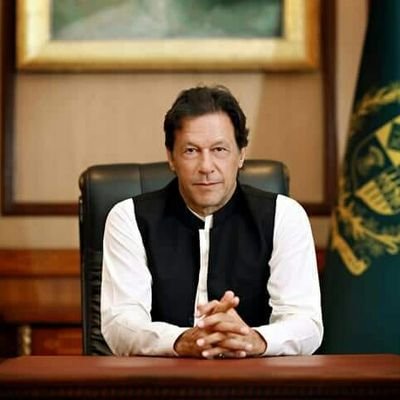
PM unfurls hefty package for GB

“I have made many mistakes in giving tickets in the past, but the CM [Khalid Khurshid] is the right choice,” says the Premier

GILGIT: Prime Minister Imran Khan on Friday announced a five-year mega development package of Rs370 billion for Gilgit-Baltistan during his day-long visit to the region.

Announcing the main features of the development package at a ceremony in Gilgit on Friday, the prime minister said it is the first time that such a huge amount will be used for the development of this picturesque and strategically located region.

The uplift package consisted of hydel projects, new roads and Babusar Tunnel, scholarships and skills training for the youth of the region, upgradation of health and education facilities, water and sanitation schemes, promotion of SMEs and expansion of airports, particularly the Skardu Airport, to cater to international flights.

He said the PTI-led government will also support the development of small and medium enterprises in the area besides focusing on the expansion of its infrastructure.

He said efforts will also be made to enable Gilgit Airport to host international flights.

Highlighting the immense and diverse tourism potential of Gilgit-Baltistan, the prime minister said this development package will prepare the region to attract tourists which will benefit not only the locals but the whole country.

“By exploiting GB’s tourism potential we will make it self-reliant.”

PM Imran, however, emphasised the need for the promotion of tourism in a planned manner to cultivate its true benefits. “The tourism in the region should not affect the forests and mountains.”

Taking a jibe at the Opposition, the prime minister said previously, Pakistan’s rulers went to London for holidays as they are unaware of the true potential of this area.

While reaffirming his commitment to transform the country by waging a successful struggle against the corrupt mafia, PM Imran said it is the first time that this mafia is being brought under the ambit of the law.

The prime minister said that being a democrat, he could support any dictator.

“Some people come to power to benefit their families and after achieving that, these people transfer money out of the country. Those who steal money and send it abroad, do double harm to Pakistan,” he said. 

The prime minister admitted that he had also made many mistakes in the past when it came to awarding tickets for elections. 

“I have made many mistakes in giving tickets in the past and often think about these. But the CM [Khalid Khurshid] is the right choice.”

He said NAB has been around for the past 20 years, but the anti-graft institution initiated operations against the powerful during the PTI-led government and has laid hands on the powerful in the country. “Whenever we win, we will bring the powerful under the law,” he said. 

EU parliament wants Pak GSP+ status reviewed

BRUSSELS: The European Parliament adopted on Thursday a resolution against Pakistan which asks for a review of the country’s GSP Plus (GSP+) status, citing an increase in laws that it sees as discriminatory towards minorities and fundamental rights.

The resolution was presented by Renew Europe, a liberal, pro-European political group of the European Parliament. It was adopted with a majority of 681 votes against six.

The resolution says Pakistan has violated the conditions of its Generalised Scheme of Preferences Plus status.

The GSP+ is a special component of the GSP scheme that provides additional trade incentives to developing countries already benefitting from GSP.

The GSP+ status granted to Pakistan requires the country to demonstrate progress on the implementation of 27 international core conventions. This condition constitutes a strong leverage for the European Union in terms of monitoring any direct advocacy with Pakistan, said the European Commission.

The EU Parliament session discussed the situation of religious freedoms in Pakistan under its “human rights and democracy resolutions” manifesto.

Sajjad Karim, a former negotiator on GSP plus and part of the EU Parliament trade committee says the adoption of this resolution is “serious.” 

Pakistan disappointed at EU resolution

The unwarranted commentary about Pakistan’s judicial system and domestic laws are regrettable, says FO

ISLAMABAD: Pakistan has rejected the adaptation of a resolution in EU parliament regarding rights of minorities in Pakistan. In a statement on Friday, the Foreign Office spokesperson said that Pakistan is disappointed at the adoption of a resolution at the European Parliament on blasphemy laws in the country. The discourse in the European Parliament reflects a lack of understanding in the context of blasphemy laws and associated religious sensitivities in Pakistan – and in the wider Muslim world. The unwarranted commentary about Pakistan’s judicial system and domestic laws are regrettable.

The spokesperson further added that Pakistan is a parliamentary democracy with a vibrant civil society, free media and independent judiciary, which remains fully committed to the promotion and protection of human rights for all its citizens without discrimination.

We are proud of our minorities who enjoy equal rights and complete protection of fundamental freedoms as enshrined in the Constitution. Judicial and administrative mechanisms and remedies are in place to guard against any human rights violations.

Pakistan has played an active role in promoting freedom of religion or belief, tolerance and inter-faith harmony. At a time of rising Islamophobia and populism, the international community must exhibit a common resolve to fight xenophobia, intolerance and incitement to violence based on religion or belief and work together to strengthen peaceful co-existence.

Pakistan and the EU have multiple mechanisms in place to discuss entire spectrum of bilateral relations, including a dedicated Dialogue on Democracy, Rule of Law, Governance and Human Rights. We would continue to remain positively engaged with the EU on all issues of mutual interest.

Qureshi holds wide-ranging talks with his counterpart of Hungary

ISLAMABAD: Foreign Minister Makhdoom Shah Mahmood Qureshi held wide-ranging talks with Minister of Foreign Affairs and Trade of Hungary, Mr. Peter Szijjarto, today. The talks covered bilateral relations and exchange of views on regional and international issues.

Foreign Minister Szijjarto is visiting Pakistan accompanied by a high-level official delegation as well as 17 businessmen. The Foreign Minister fondly recalled his earlier interaction with Foreign Minister Szijjarto during the inauguration of Hungary-Pakistan Trade and Economic Window (HPTEW).

The two Foreign Ministers held one-on-one meeting, which was followed by delegation-level talks. The Foreign Ministers reviewed the entire gamut of bilateral relations and explored ways to deepen existing cooperation across diverse areas such as trade, economic, agriculture research, food industry, aviation, energy, water resource management, science & technology, and higher education. It was agreed to work together to forge a strong bilateral economic partnership.

Foreign Minister Qureshi apprised Foreign Minister Szijjarto of Pakistan’s steadfast support for a peaceful and stable Afghanistan and positive contributions to the Afghan peace process. The Foreign Minister underlined the importance of reduction in violence leading to ceasefire. He also underlined the imperative of responsible withdrawal of troops from Afghanistan and continued engagement of the international community to help Afghanistan’s reconstruction and economic development. The Foreign Minister stressed that the Afghan stakeholders must seize this historic opportunity and engage constructively to work out an inclusive, broad-based and comprehensive political solution, through an Afghan-owned and Afghan-led process.

Regarding Indian Illegally Occupied Jammu & Kashmir (IIOJK), the Foreign Minister highlighted the serious human rights situation. Foreign Minister Qureshi added that the recent reaffirmation of ceasefire understanding on the Line of Control (LoC) was in line with Pakistan’s consistent position on maintaining regional peace and security. The Foreign Minister underscored the importance of peaceful resolution of Jammu and Kashmir dispute, stressing that the onus was on India to create an enabling environment for dialogue. He also mentioned that as a gesture of solidarity with the people of India in the wake of the current wave of Covid-19, Pakistan had offered to provide relief support to India.

Earlier, the two Foreign Ministers jointly addressed the Pakistan-Hungary Economic Diplomacy event and encouraged business community of both countries to enhance mutual collaboration. Foreign Minister Qureshi highlighted Pakistan’s economic security paradigm and underlined the shifting focus from geo-politics to geo-economics. He invited Hungarian companies to take advantage of the business friendly environment in Pakistan.

The two Foreign Ministers witnessed signing of business agreements between Pakistani and Hungarian companies in the fields of dairy, pharmaceuticals and cyber security.

The Hungarian Government has announced an exclusive credit-line of $ 84 million for Hungarian companies to do business with Pakistan. A Loan facility of $ 50 million for projects in fisheries and food processing was announced by the Hungarian government. The two sides will also work towards establishing direct air links.

An MoU on Cooperation within the Framework of the Stipendium Hungaricum Program 2020-22 was signed between the two sides, under which the Hungarian Government will provide 200 scholarships annually to Pakistani students to study in Hungary.

Pakistan and Hungary enjoy friendly relations and close cooperation at bilateral and multilateral fora. The visit of Foreign Minister Szijjarto will contribute to reinforcing bilateral economic partnership and enhancing mutual understanding on regional and international issues.

Sri Lanka’s embassy in Moscow receives Mufti of Moscow and delegation from Muslim community for Iftar

MOSCOW: Prof. M.D. Lamawansa, Deputy Head of Mission Mr. Mohamed Anas organized Iftar ceremony for the Chief Imam of Moscow Cathedral Mosque and the Muslim delegation comprised of Imams and representatives of business community. The event took place in the official Residence of Ambassador of Sri Lanka in Moscow. 
In his opening remarks, Mr. Anas underlined the historically established friendly relations between Sri Lanka and the Russian Federation, and close ties between the Embassy of Sri Lanka and Moscow Cathedral Mosque, which stand too close to each other. The Minister – Counsellor highlighted that Sri Lanka is a multiethnic and multi-religious country, in which citizens belonging to different confessions live in peace and harmony, and are treated equally with the guarantee of the Constitution.
Ildar-hazrat Alyautdinov, the Chief Imam, who chairs the Spiritual Administration of the Muslims of Moscow, thanked for the invitation extended to the Muslim community represented by different nationalities to share Iftar with the diplomatic corp. The Imam quoted in his speech the importance of taking care of neighbours in Islam and mentioned that he witnessed today with the Sri Lankan friends and extended an invitation to Ambassador and the Embassy staff to pay a visit to the Mosque. 
Both sides expressed readiness to enhance interaction based on spiritual ground and expanding the areas of common interest including Social sphere, education, charity, business and many others for collaboration.   
The official ceremony was followed by Iftar and prayer. Further guests were invited to enjoy Sri Lankan cuisine and a culinary show.

KAZAKHSTAN IS EAGER TO SHARE ITS MODEL FOR INTERETHNIC ACCORD

The experience and policy of Kazakhstan in the field of maintaining interethnic peace and harmony is of genuine interest to international organizations and states, writes Aiman Zhussupova.

By Aiman Zhussupova, Institute of World Economics and Politics.

Aiman Zhussupova is an expert of the Institute of World Economics and Politics (IWEP) under the Nursultan Nazarbayev Foundation (Kazakhstan)

When Kazakhstan became an independent state in 1991, the risk of interethnic conflicts was one of the most critical problems for the post-Soviet nation that inherited the world’s fourth largest nuclear arsenal.

This was exacerbated by forecasts of large-scale armed conflicts and the risk of loss of statehood. The predictions were not unfounded.

Kazakhstan’s population was split along ethnic and linguistic lines. It was classified as a particularly diverse society in the Index of Ethnolinguistic Fractionalization, calculated in 2001 by US researcher Philip G. Roeder, which analyzed the degree of ethnic and linguistic diversity in various countries. The situation looked even more complicated when applying the theory of overlapping lines of division, according to which the probability of a violent conflict multiplies if two such lines, for instance ethnic and social, overlap.

Clearly aware of these risks, in the early 1990s, Kazakhstan’s first President Nursultan Nazarbayev outlined the key ideas of a new policy in the field of nation-building – the preservation of interethnic harmony, ethnic diversity, and the equality of citizens, regardless of their ethnic and religious affiliations. To strengthen and support interethnic harmony in the country, the Assembly of the People of Kazakhstan, a unique civil society organization, bringing together representatives of 130 ethnic groups, was created in 1995.

The Assembly of the People of Kazakhstan has undergone substantial development over the years and its authority is now recognized internationally. Several public structures of the Assembly have been created: councils of public accord, councils of mediation, a club of journalists, a scientific expert council, a youth movement, an association of entrepreneurs, among others. Furthermore, since 2007, the Assembly has been given power to delegate nine of its representatives to the Mazhilis (lower house of the Kazakh Parliament).

The experience and policy of Kazakhstan in the field of maintaining interethnic peace and harmony is of genuine interest to international organizations and states. Of course, in practice, each country’s situation is unique. Nevertheless, the Kazakh model, which has demonstrated its viability, is studied closely by many, with some countries developing somewhat similar structures.

The United Nations and the OSCE have previously commended Kazakhstan’s model of encouraging interethnic relations based on respect, and its efforts to strengthen the unity of the nation. The Assembly itself has established formal links with the OSCE High Commissioner on National Minorities, the Center for Global Dialogue and Cooperation, and state and non-state structures of numerous countries.

One example of an entity created to pursue similar goals, albeit in a different environment, is the European Council on Tolerance and Reconciliation (ECTR), an NGO that was established in France in 2008 to monitor tolerance in Europe. The ECTR prepares practical recommendations for governments and international organizations to improve interreligious and interethnic relations on the continent. It focuses on combating xenophobia, anti-Semitism and racial discrimination in the modern world. In 2012, the ECTR proposed to the European Parliament a Model National Statute for the Promotion of Tolerance, defining the basic principles and concepts of tolerance, and the principles of relations between various social groups. As part of ECTR’s work, the European Medal of Tolerance was established to honor and reward achievements in the promotion of tolerance in Europe and countering intolerance.

It is clear that the preservation of interethnic harmony is a basic condition for the development of any multi-ethnic country. Today, ethnic Kazakhs account for approximately 68.5% of Kazakhstan’s population, meaning that other ethnic groups make up 31.5%. Nearly 30 years after Kazakhstan gained independence, Nursultan Nazarbayev, who is the chairman of the Assembly of the People of Kazakhstan, reaffirmed his adherence to the principle of unity in diversity, stating in 2020: “Peace, harmony and unity remain the key priorities of state policy. This is a principled position in the field of interethnic relations, and it will not change.” He noted the existing demand for a new inclusive policy in the field of interethnic relations, pointing out the importance of developing measures aimed at deepening the integration processes of society. He also pointed out that the Assembly should put particular effort into consolidating tolerance and preventing xenophobia among the younger generations.

Interethnic accord and a society’s “zero tolerance” policy to any expressions of xenophobia is never always guaranteed. These processes require constant attention. Various factors, such as evolving ethnic composition of a society, socioeconomic conditions and, to a certain extent, external policy factors play a role.

The policy of interethnic relations and strengthening peace and harmony is being continued and developed by the country’s current President, Kassym-Jomart Tokayev. The Assembly of the People of Kazakhstan is there to play an important role in this. Over the last 25 years, the Assembly has evolved from a consultative advisory body to a legitimate advocate of the interests of Kazakhstan’s society, including through parliamentary representation.

The Assembly of the People of Kazakhstan continues to face new tasks to this day. But there is no doubt that over the past quarter of a century it has contributed to interethnic and interreligious harmony in the country. Kazakhstan managed not only to preserve, but also significantly strengthen its socio-political stability. In the conditions of a multi-ethnic and multi-confessional Kazakhstan, this policy became a guarantee of peace, which is the foundation for the successful development of any state.

JI chief slams Israeli aggression

JI chief slams Israeli aggression

Staff Report

Half col

ISLAMABAD: Jamaat-e-Islami chief Siraj-ul-Haq has appealed to the nation and religious scholars to remember Palestinians in their prayers in the Muslim holy month of Ramadan.

“I appeal to Pakistani clerics to highlight Zionist brutalities against the innocent Palestinian Muslims in Friday sermons in mosques and create awareness among the people about the first Qibla of Islam,” he said.

Haq also condemned the Israeli forces for not allowing Palestinians to perform prayers in Al-Aqsa Mosque. “The main entrance to Al-Aqsa Mosque has been closed for the past several days by Israeli occupying forces restricting the movement of Palestinians,” he said.

The JI chief expressed grave concern that one of the main gates of Masjid al Aqsa baab al amood, has been barricaded by the occupying Israeli forces thereby restricting access of Palestinians to Masjid al Aqsa.

ECP rejects allegations of slow vote count in NA-249 by-polls

KARACHI: The Election Commission of Pakistan (ECP) on Friday rejected allegations of the slow vote count in the NA-249 by-poll that saw PPP candidate Qadir Mandokhel securing the seat.

“All presiding officers timely reached the office of returning officer and submitted the form 45 of each polling station,” the election body said adding that the results were compiled using the form 45.

The ECP said that speculations regarding a delay in vote count were not true. “Chief Election Commissioner Sikander Sultan Raja was supervising the by-poll from the central control room,” the ECP spokesman said adding that Form-47, comprising of a consolidated result, would soon be issued after the final compilation of results as per Form-45.

Pakistan People’s Party (PPP) won the by-poll in the National Assembly constituency in Karachi NA-249 with its candidate Qadir Mandokhel bagging  16,156 votes, followed by PML-N candidate Miftah Ismail who got 15,473 votes.

Nazir Ahmed bagged 11,126 votes and came third. Pak Sarzameen Party (PSP) chief Mustafa Kamal received 9,227 votes. Pakistan Tehreek-e-Insaf (PTI) candidate Amjad Afridi secured fifth position by obtaining 8,922 votes.

PML-N Vice President Maryam Nawaz said the election had been “stolen” from her party. “The Election Commission should have withheld the results of this controversial election,” she said.

“Even if it doesn’t withhold the result, this win will be temporary. This seat will return to PML-N soon,” Maryam claimed.

Pakistan Tehreek-e-Insaf (PTI) on Friday rejected NA-249 by-election unofficial and unconfirmed results.

The polls were rigged with the alleged help of the Election Commission of Pakistan (ECP) and Sindh police, said Pakistan Tehreek-e-Insaf Karachi chapter leader MPA, Khurram Sher Zaman.

ECP utterly failed to conduct transparent by-polls in Karachi and played a partial role during the process, the PTI leader accused.

Romanian envoy thanks Pakistan

Pakistan allowed Romanian plane to overfly and reach India

Staff Report

ISLAMABAD: Ambassador of Romania to Pakistan Nicolae Goia has thanked the Pakistani authorities for allowing a Romanian plane permission to overfly to India. The plane carried relief goods for India.

The Ambassador told that a Romanian plane took off from Bucharest carrying humanitarian aid to India. It was remarkable how Pakistani authorities mobilized and gave the clearance for overflying Pakistan in just a few hours.

‘I express my gratitude for Pakistani prompt positive reaction to our Embassy and EU Delegation request for overflying approval. The plane was loaded with Romanian, European Union and other countries’ emergency supplies’, the ambassador added.

It may also be mentioned here that the Ambassador of European Union Androulla Kaminara in her Tweet on Thursday had also thanked the Pakistani authorities.

COVID-19- AGLOBAL PSYCHOLOGICAL CATASTROPHE

Hani Zarbaft Ali

The long hauling novel corona virus disease has emerged as the deadliest and most unprecedented pandemics in the annals of global crisis, causing worldwide unrest, fear, and expiration of countless human lives. As per the present reports, as of 30th April 2021 Corona virus is affecting more than 219 countries, with a total of150million confirmed cases, including3.16 million reported deaths across the globe, these may not include unreported cases due to mild symptomatology.

The wide spread morbidity and fatalities associated with the recurrent waves have led to a mass economic recession, exhaustion of medical equipment and resources, occupational pressure alongside educational distress, and a myriad of psychological implications due to unmet needs and agonizing National and International measures that infringe on personal freedoms to combat the disease are among the key stressors that undeniably augment the widespread emotional distress and run the risk of psychiatric illness associated with Covid-19.

Thereof, the deadly virus marks an unmanageable public health crisis and declared as a Public Health Emergency of International Concern, unfamiliar in the last century, the corona virus pandemic has reported to impact the psychological resilience of an overwhelming majority of individuals across the globe besides being catastrophic for physical health.

The 2019 pandemic has to ppled the natural course of existence for practically all the nations in the world.The resultant strategic instructions of social isolation, nationwide lockdowns and stay-in place (mass home confinement) directives have instigated significant effects in terms of mental health including loneliness, stress, anxiety, depression, frustration and uncertainty. The current statistics of COVID-19 show that the psychological effects of contagion and quarantine is not restricted merely to the fear of contracting the virus. Factors such as separation from loved ones, loss of opportunity, vulnerability with regards to the progression of the disease, and pervasive feelings of helplessness have surfaced to cause collective hysteria, panic, and elevated anxiety amongst the populations ranging from mild to severe mental health problems.

Public health emergencies impinge on the health, safety, and welfare of both individuals (causing insecurity, confusion, emotional turmoil, and stigma)and communities (owing to monetary losses, work and school closures, shortage of resources for testing and treatment, and lacking conveyance of necessities). These impacts decipher into a scope of emotional retorts, unhealthy behaviors (such as excessive substance use), and resistance to public health mandates (such as home confinement and vaccination) in individuals who acquire the illness and in the overall population. Broad research in disaster mental health has established that emotional turmoil is omnipresent in affected populations — an inference certain to be reverberating in populations affected by the Covid-19 pandemic.

Certain groups have been reported to be more vulnerable than others to the psychosocial effects of the pandemic. Particularly, individuals who contract the disease, those are more prone to it(including the elderly, people who are immuno-compromised, and those living or receiving care in foster homes), and individuals with prior history of medical, or psychiatric complications are at heightened risk for unpleasant mental health consequences.

Children and young adults are especially at risk of psychological sequalae as that of difficulty concentrating, boredom, irritability, insomnia, restlessness, nervousness, sense of loneliness, uneasiness, and worries. Health care providers, who are in close contact with COVID-19 positive patients are also predominantly vulnerable to emotional distress in the current pandemic, given their heightened risk of exposure to the virus, constant fear of infecting their loved ones, shortage of personal protective equipment (PPE), extended workload, unbearable stress, helplessness and grief seeing infected patients die alone.

Henceforth, emphasis on psychological resilience is imperative during the COVID-19 pandemic. Mutual support from family, friends, and a special caring loved one encourage wellness and enhance coping mechanisms in the midst of dire circumstances. During such a time of globally imposed lockdown and stay-in orders, it is vital to nurture these relationships and to find ways to stay connected with those we care about.

Day-to-day activities are also crucial. Exposure to the sunlight and outdoors for a few minutes each day and a tad bitof exercise can help improve focus and general feelings of well-being. Taking out a few minutes to reflect what we are grateful for also improves theattitude to cope with stress. Individuals who foster a sense of gratitude have better mental strength and physical well-being. Moreover, one should let alone thoughts of “what if and what not?” as they are fuel to the fire of stress and worry. It will only take us to a place we do not want or need to go.

Another coping mechanism entail discontinuing negative self-talk. The more we ruminate on negative thoughts, the more they have power over us. Most of our negative thoughts are just thoughts, not facts, that are our own skewed perceptions. Recognizing and labeling thoughts as thoughts helps evade the cycle of negativity and turning towards a positive mindset. Likewise, it is utterly futile, to try to deal with everything on our own. To be calm we ought to understand our weaknesses and call for help when gets too much to struggle alone. This means reaching out to our support system when we feel too overwhelmed. Everyone has someone who is by their side, rooting for them and willing to help them through a difficult situation. Recognize these individuals and tryto seek their insight and support when needed. Something as simple as talking about our worries mitigates anxiety and stress and strengthens our relationships with those we rely upon.

The power to manage emotions and remain calm under a barrage of stressful events has an obvious connection with psychic resilience. It is crucial to keep stress under control in times of crisis.

Lastly, spiritual health is another aspect of well-being to acknowledge, more steadfastness in prayers and fait his a prominent hallmark of bolstering resilience and inner peace.It is observed that those who dynamically engaged in these strategies and withstood their relationships managed to overcome the challenges to mental health imposed by the COVID-19 pandemic.  Meanwhile media headlines can be emotionally disturbing, contact with pandemic-related news should be limited and monitored. Because parents usually underrate their children’s distress, receptive discussions should be persuaded to tackle children’s reactions and concerns.

Health education related to Covid-19ought to be enhanced utilizing online platforms.Telemedicine should be implemented in areas where mental health services are inadequately represented. Government officials and medical professionals should provide appropriate information to mitigate the impact of anxiety, frustration, and negative emotions which signify barriers to the appropriate management of social crisis and psychological consequences related to pandemic.

Executing community-based reforms to sustain resilience during the COVID-19 crisis is the need of the hour. The psychosomatic effect of fear and anxiety needs to be clearly identified as a public health priority for both authorities and policy makers who should implement behavioral strategies to ease the burden of disease and the dramatic mental health concerns of this outbreak.

The author is a 3rd year Medical student, an aspiring Doctor, and a member of Students Research Society. Her research interests revolve around Interventional Medicine and Public Health.

Stay Connected

64FansLike
60FollowersFollow

Latest Reviews

Exchange Rates

USD - United States Dollar
EUR
1.14
GBP
1.34
AUD
0.70
CAD
0.71