Home Blog Page 2766

4th Virtual Khuli Katchery with Pakistani Community in Belgium and Luxembourg

BRUSSELS/DNA

The Ambassador of Pakistan to Belgium, Luxembourg and the European Union, Zaheer A. Janjua, held the 4th monthly Khuli Katchery in virtual format with Pakistani diaspora in Belgium and Luxembourg. The Ambassador congratulated the community members on the occasion of Holy Ramadan and prayed for their prosperity and wellbeing.


Ambassador Janjua informed the participants that the Embassy would remain closely engaged with the community and continue to extend all possible services and assistance. In this regard, the Ambassador had assigned dedicated staff to facilitate the applicants with documentation and submission of forms. 


Appreciating Pakistani diaspora, the Ambassador highlighted that remittances from Belgium had reached US $ 176.9 million, witnessing an unprecedented increase of 275%, year on year basis. He also informed that a webinar on Riba Free Shariah Compliant Banking under Roshan Digital Account would be organized in collaboration with Meezan Bank. He encouraged the community to participate in the event. 


During the interaction, the diaspora members conveyed their suggestions regarding visas, NICOPs and passports. The Ambassador welcomed the input of the community and assured implementation of their suggestions. The community members appreciated the Embassy’s outreach efforts and provision of efficient consular services.


The virtual interaction was attended by diaspora members from different walks of life, including academia, business, social services and media. The Embassy of Pakistan, Brussels regularly reaches out to the Pakistani community, in line with the vision of Prime Minister Imran Khan to maintain close engagement with Pakistani diaspora and to provide seamless services delivery.

Pakistani merchant hails online entrepreneurial culture in China

BEIJING, May 2 : Pakistani merchant hails online entrepreneurial culture in China, according to report carried by China Economic Net (CEN) on Sunday.

“I’ve seen many Chinese in their early 30s start their own business online. It’s a very good entrepreneurial culture and so I started my own e-business here,” noted Usman Ashraf, a Pakistani entrepreneur living in Beijing, China, with his wife.

This past 4 years had seen his accomplishment of education and career in China.

While Usman was still a graduate student in BLCU, he attended many conferences, business seminars and exhibitions, and these activities, as he put it, empowered him to live in China and start his career with the Chinese people.

Usman appreciates the “startup culture” in China very much. In China, there are many individual business people.

“The entrepreneurial culture is very good for the youths, as they have the opportunity to develop themselves, even if they may not be successful,” he added.

As per Usman, China is a major exporter that exports all kinds of goods to every corner of the world and Pakistan is set to be a main hub of export due to China-Pakistan Economic Corridor (CPEC) and Belt and Road Initiative (BRI).

“Ten years ago, there was no online marketing or online shopping in Pakistan, but now it’s growing very fast, so it’s a great opportunity for me to enter this market,” he explained.

Usman graduated from Beijing Language and Culture University (BLCU) and launched a footwear brand called Hawks in December 2019, to export footwear products from China to Pakistan on Daraz, Pakistan’s biggest online shopping application that connects sellers and buyers virtually.

In 2020, many industries have been affected by the COVID-19 pandemic. However, Usman’s business has been boosted instead since he shifted to online business. “Due to the pandemic, many offline shops suffered but my online businesses didn’t,” he said.

“All the transactions can be done through WeChat and other online payment systems,” Usman’s wife Qurrat ul Ain came to China 5 months ago, and she has been impressed by many advanced and convenient technology in China, too.

“Technology makes everything easy here,” she mentioned that she’s still in the learning stage, but she likes to use WeChat and other online payment systems.

“Chinese people call me ‘Batie’ (iron-clad brothers). We don’t feel that we are working in a foreign country and this is our second home. The online entrepreneurial culture is quite attractive here,” Usman further mentioned.

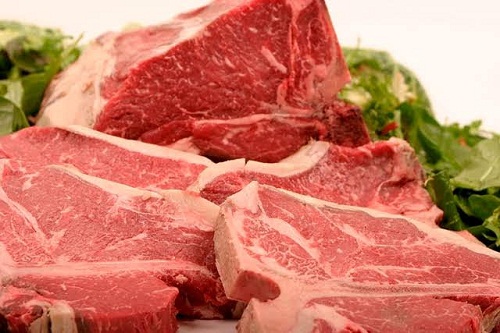
Pakistani beef gets sufficient opportunity to enter Chinese market: Report

BEIJING, May 2 : As China has a supply gap of beef and Pakistan has sufficient capacity, it was hoped that Pakistani beef will soon enter the Chinese market, says a report published by China Economic Net (CEN).

According to the Pakistan Economic Survey 2019-20, more than 8 million rural households in Pakistan engage in livestock production which contributes to 35% to 40% of their total income.

Over the years, animal husbandry has surpassed farm production and become the biggest contributor to value-added agriculture.

Pakistan has 208 million food animals, with a milk output of over 60 million tons and an annual production of 20 billion eggs, Khurshid Ahmad, Animal Husbandry Commissioner, Ministry of National Food Security and Research, said.

Compared with Pakistan, China is a large meat importer. In 2020, China’s beef production reached 6.72 million tons, and the import volume reached 2.1183 million tons with an increase of 27.65%, setting the beef import record.

China’s annual output of beef and mutton adds up to 10 million tons, said Li Jinghui, Deputy Secretary General of China Animal Agriculture Association and President of White-feathered Broiler Alliance, adding that “China’s per capita output is a few kilograms, which fails to meet domestic needs. That’s why there are millions of tons of imports.”

The report says, China is a major meat importer while animal husbandry plays an important role in the economy of Pakistan, yet annual meat trade between the two countries is very small.

So far, China has not opened the door of Pakistani beef import, as Pakistan is still on China’s “List of Animals and Their Products in the Countries and Regions with A Prevalent Animal Epidemic Situation Banned for Entry”.

Chinese research institutions are providing Pakistan with state-of-the-art technology, said He Cheng, a professor at China Agricultural University’s College of Veterinary Medicine, adding that “with vaccines and training personnel, Pakistan can produce certified and FMD free meat and dairy products, which is our goal.”

On the site selection of FMD free zone, Shen Jing, Deputy General Manager of QYH Biotech, with China Animal Husbandry Industry as its shareholder, revealed that they plan to build the FMD free area in either Balochistan province or Punjab province, and carry out the construction with the support of Chinese customs and quarantine agencies.

There is a long history of animal husbandry cooperation between China and Pakistan. As early as 1974, Guangxi province, China, imported 50 Nili-Ravi buffaloes, popularly known as “black gold” of Pakistan, initiating the bilateral scientific and technological cooperation.

Chen Yiyi, President of Royal Group, a leading buffalo milk production and processing enterprise in China, led a Chinese business delegation to Pakistan, the hinterland of buffalo milk production around the world, in April.

Touching upon his visit to Pakistan, Chen said that Pakistan lacks products with high added value and deep processing, while China needs to import high-quality products.

As Pakistan has such resources, if the two countries can cooperate, it will definitely be mutual beneficial. He divided the cooperation into two stages. “In the initial stage, we can carry out technical exchange and cooperation. In the second stage, we hope to set up a factory in Punjab province to produce products for export to China.”

In order to facilitate Chinese enterprises’ investment, the China-Pakistan Agricultural and Industrial Cooperation Information Exchange Platform was officially launched in January 2021.

To provide more exchange and cooperation opportunities for enterprises of the two countries, the platform plans to hold several online seminars in different fields be held this year.

The report added that Karachi is the traditional fishing hub of the eastern fisheries of Pakistan. Li Bijian, Chinese Consul General in Karachi, said Chinese enterprises are welcome to invest in Pakistan’s fishery industry. He also put forward five requirements.

Firstly, partners of Chinese and Pakistani should strictly abide by each other’s laws and regulations. Secondly, the two sides should conduct training and capacity building on an equal and mutually beneficial basis. Thirdly, technology transfer should be based on commercial terms, i.e. strict protection of intellectual property rights.

Fourthly, partners should work together to ensure that their investments are protected and guaranteed. Banks in both countries should lend as much as possible to small and micro businesses so that they can successfully set up and operate their businesses.

Fifthly, Pakistan should create a favorable investment environment and welcome and accept the relocation of manufacturers and manufacturing industries. 

From the point of view of China and other countries, Pakistan should introduce relevant policies to encourage foreign investment and strengthen policy continuity.


Punjab CM visits different parts of Lahore, examines implementation of COVID SOPs

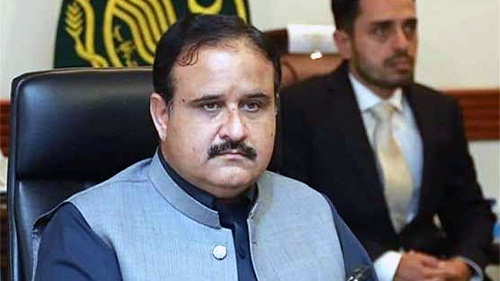
Lahore : Punjab Chief Minister Sardar Usman Ahmed Buzdar visited different parts of Lahore today (Sunday) to examine the implementation of restrictions and adherence to Standard Operating Procedures by the people against COVID-19.

He appreciated the administration, Pakistan Army and business community for observing SOPs and strict implementation to prevent the spread of deadly virus in the city.

Hasan helps Pakistan restrict Zimbabwe, win first Test by an innings and 16 runs

HARARE: Hasan Ali bagged his fourth Test fifer and helped Pakistan outclass Zimbabwe by an innings and 116 runs in the opening Test here at Harare Sports Club. 

Pakistan gained a strong lead of 250-runs and let Zimbabwe suffer in the batting. The home side kept on losing wickets after regular intervals.

Zimbabwe survived before lunch after Imran Butt dropped a catch at slips off Shaheen Shah Afridi. Imran got puzzled when the ball came to him in the second slip and Pakistan missed a chance to remove Kevin Kasuza in the seventh over.

Zimbabwean openers then went on scoring 36/0 before walking out for lunch. Kasuzu was not out for 21 whereas Tarisai Musakanda remained not out for 14.

Returning from lunch, Zimbabwe started losing wickets with Hasan taking the charge. The proceedings started with Hasan bagging Kevin Kasuza at 48. Tarisai Musakanda scored 48 before being run out.

Brendan Taylor tried hard to rescue his team but he managed to score just 29 runs. Regis Chakabva made 14.

Earlier, Fawad Alam got out for an unbeaten 140 that led Pakistan to gain the 250-runs lead against hosts.

Resuming Day 3 at 374-6, Pakistan lost Hasan Ali and Nauman Ali in quick succession to suffer at 395-8. Hasan scored 30 runs off 26 balls with the help of three boundaries and two sixes.

Sajid Khan got out after scoring 7 runs whereas Fawad ended his long run at 140 off 204 balls laced with 20 boundaries. Pakistan added 48 runs on Day 3 finishing their turn at 426-10.

Blessing Muzarabani bagged four wickets while Donald Tiripano took three wickets for Zimbabwe. Richard Ngarava took two wickets while Tendai Chisoro managed to take a wicket.

India: People hire agents to stand in queue for Covid-19 drug Remdesivir

As the COVID-19 cases are spiraling at an alarming rate, the demand for COVID-19 essential drug Remdesivir has increased manifold.

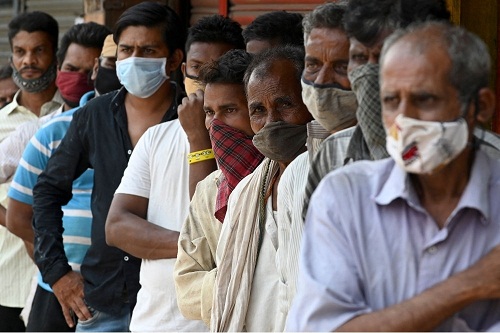
In Tamil Nadu’s Chennai, long queues have been witnessed at Remdesivir counters at Kilpauk Medical College and Hospital (KMCH). Owing to long queues, people are paying agents and locals ₹500 -₹1,500 to stand in for them in the drug queue.

V Rama Rao, a social activist, said he got about five calls on Friday alone from elderly people who wanted the drug but couldn’t get it. “So, we are seeking the help of some volunteers and known persons to stand in queue for us in return for some money.”

The KMCH counter is witnessing a huge crowd as at least 2,000 people are gathering up daily in order to get the anti-viral drug. However, only 500 people are able to get the drug. The counter opens at 9 am, however, people start lining up from 5 am.

A public health official said, “Every day at 5 pm, there is a struggle to close the counters as public are enraged; many threaten road rokos.”

A directorate of medical services official said hospitals were told to only to prescribe the drug based on WHO guidelines. “As panic has been created due to shortage of supply. The government has placed an order for about 4.5 lakh vials. Many doctors are prescribing it out of fear so that patients don’t question them,” said the official.

Senior health officials said that the drug is being used judiciously at government hospitals. “We have instructed private hospitals to use it only when required.”

131 more die to coronavirus as death toll crosses 18,000 in Pakistan

ISLAMABAD : The novel coronavirus has claimed 113 more lives across Pakistan over the last 24 hours, pushing the death toll from the disease to 18,070.

According to the National Command and Operation Centre (NCOC) data, 4,414 new infections were detected when 45,275 samples were tested during this period. The positivity rate of new cases was recorded at 9.74%, the NCOC said.

The countrywide tally of confirmed cases climbed to 829,933 with the addition of 4, 414 new cases. Thus far, 722,202 patients have recuperated from the disease.

The number of Covid-19 patients in critical care across the country has climbed to 5,448.

On Saturday, a spokesperson for the National Institute of Health (NIC) had confirmed that the Brazilian and South African variants of Covid-19 had been detected in Pakistan.

He had said both strains were found in samples the NIH received for testing, raising fears that these variants with a higher mortality rate could put a strain on the country’s already overwhelmed health facilities.

NIGERIA UNIVERSITY SHUTS HOSTELS OVER SECURITY THREATS

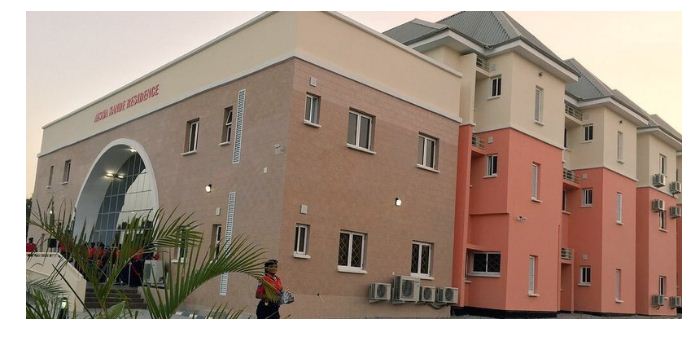
A university in central Nigeria has closed all its students’ hostels over security threats, an official said. Abdullahi Abdullahi, the deputy registrar of the University of Jos in the Plateau state, said the decision was taken following reports of security threats to the university staff, students, and properties.

He urged students and staff to comply with the directive and remain cautious.

Nigeria has witnessed increasing terror attacks on schools, the kidnapping of students, and banditry in recent months.

On Friday, President Mohammadu Buhari held an emergency security meeting with service chiefs and security advisors as many Nigerians called for urgent action.

India’s daily COVID-19 cases pass 400,000 for first time as second wave worsens

NEW DELHI – India posted a record daily rise of 401,993 new coronavirus cases on Saturday as the country opened up its massive vaccination drive to all adults, although several states warned of acute shortages.

It was the first time India’s daily case count had topped 400,000 after 10 consecutive days over 300,000. Deaths from COVID-19 jumped by 3,523 over the past 24 hours, taking the total toll in India to 211,853, according to official data.

The world’s biggest producer of COVID-19 vaccines has a limited number of shots available, worsening a grim second wave of infections that has overwhelmed hospitals and morgues while families scramble for scarce medicines and oxygen.

Hundreds of people were seen queuing to be vaccinated across Ahmedabad, the main commercial city in Prime Minister Narendra Modi‘s home state of Gujarat, on Saturday.

The chief minister of the hard-hit state of Delhi on Friday implored people not to queue at vaccination centres, promising more vaccines would arrive “tomorrow or the day after”.

India’s eastern Odisha state said on Friday it had received a consignment of 150,000 shots but would only allow a few people to get shots due to lockdown restrictions preventing movement.

A fire in a hospital about 190 km (115 miles) south of Ahmedabad killed 16 coronavirus patients and two staff, the latest in a series of deadly accidents at hospitals.

Modi offered his condolences to the families of the hospital fire victims on Twitter, hours after he posted pictures of himself praying at a Sikh temple in capital New Delhi.

Some experts blame mass religious gatherings and political rallies for the severity of India’s second wave, which caught the government unprepared.

A forum of scientific advisers set up by the Modi administration warned Indian officials in early March of a new and more contagious variant of the coronavirus taking hold in the country, five scientists who are part of the forum told Reuters.

Despite the warning, four of the scientists said the federal government did not seek to impose major restrictions to contain the spread of the virus. Millions, largely unmasked, attended religious gatherings and election rallies that were held by Modi, leaders of the ruling Bharatiya Janata Party and opposition politicians.

The total number of COVID cases in India has topped 19 million. As the second wave has picked up steam, India has added about 7.7 million cases since the end of February, according to a Reuters tally. In contrast, it took India nearly six months to add the previous 7.7 million cases.

The surge in cases led U.S. President Joe Biden to impose new travel restrictions on India on Friday, barring most non-U.S. citizens from entering the United States.

Australian officials said residents and citizens who have been in India within 14 days of the date they plan to return home will be banned from entering Australia as of Monday, and those who disobey will face fines and jail.

Other countries and territories have also imposed similar travel restrictions on India, including Britain, Germany, Italy and Singapore, while Canada, Hong Kong and New Zealand have suspended all commercial travel with India.

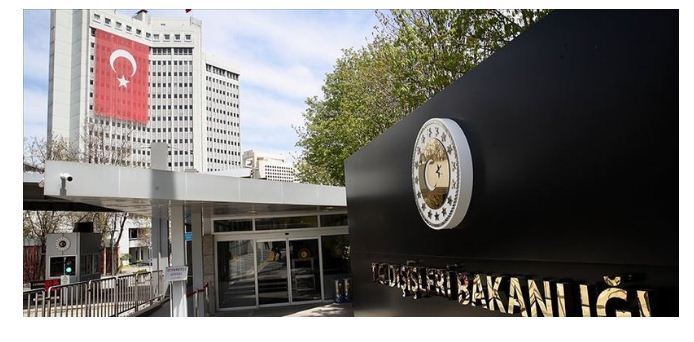
Turkey voices support for Kyrgyz-Tajik truce

Turkey’s foreign minister expressed the country’s support for a cease-fire deal between Tajikistan and Kyrgyzstan on Saturday in separate phone calls to his counterparts in the two Central Asian nations.

Following two days of border clashes, Mevlut Cavusoglu told Sirojiddin Muhriddin and Ruslan Kazakbayev that Turkey would provide the support needed to peacefully settle the two countries’ disputes, according to diplomatic sources,
Cavusoglu also voiced his satisfaction with the truce inked between the two sides earlier on Saturday.

The violence that started on Wednesday between Tajikistan and Kyrgyzstan was centered on control over the local water distribution network, Kyrgyz media reported on Thursday.

Surveillance equipment was installed by Tajik officials at the Golovnoi water distribution center, which Kyrgyzstan says is located in an area where sovereignty is yet to be defined, according to the Radio Free Europe news website.

Clashes broke out with the intervention of the border troops from the two countries, and soldiers were sent to the region with armored vehicles from both sides.

Tensions on control of the water supply continued on Thursday, however, with residents throwing stones at each other.

At least 39 people were killed — including a 13-year-old girl — and 134 wounded along the disputed segment of the Kyrgyz-Tajik border, according to the Kyrgyz Health Ministry.

Stay Connected

64FansLike
60FollowersFollow

Latest Reviews

Exchange Rates

USD - United States Dollar
EUR
1.14
GBP
1.34
AUD
0.70
CAD
0.71