Home Blog Page 276

Pak, Ghana hold first formal bilateral talks

Pak, Ghana hold first formal bilateral talks

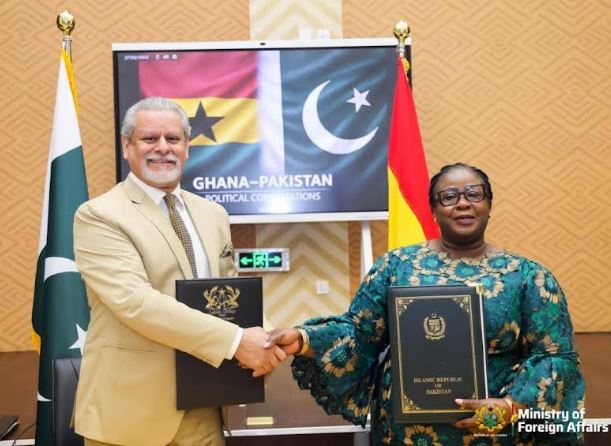
The Pakistani delegation was led by Ambassador Hamid Asghar Khan, additional foreign secretary, while the Ghanaian side was headed by Ambassador Khadija Iddrisu, chief director (of the) ministry of foreign affairs,”

DNA

ISLAMABAD: Pakistan and Ghana held their first formal bilateral talks and signed two Memoranda of Understanding (MoUs), the Foreign Office (FO) said on Tuesday.

A press release by the FO, initially released said that the two countries convened their first Bilateral Political Consultations (BPC) on Monday, “marking an important milestone in the development of bilateral relations between the two countries”.

“The Pakistani delegation was led by Ambassador Hamid Asghar Khan, additional foreign secretary, while the Ghanaian side was headed by Ambassador Khadija Iddrisu, chief director (of the) ministry of foreign affairs,” it said.

During the talks, it added, two Memoranda of Understanding (MoUs) were signed: an MoU on BPCs and an MoU between Islamabad’s Foreign Service Academy and the Ghana Foreign Service Institute.

“Both sides reaffirmed their commitment to further strengthening bilateral relations and agreed to enhance cooperation across a broad range of areas, including political, economic, defence, tourism, cultural, health, education, information technology, and other mutually beneficial sectors,” the statement said.

Pakistan to Host South Asian Games in March 2027

Pakistan to Host South Asian Games in March 2027

AFZAL JAVED

ISLAMABAD: In a major boost for regional sports and Pakistan’s international sporting profile, the South Asian Olympic Council (SAOC) has again unanimously confirmed Pakistan as the host of the 14th South Asian Games, scheduled to be held from 23 to 31 March 2027.

The landmark decision was taken during a high-level meeting of South Asian Olympic countries on the sidelines of the 46th General Assembly of the Olympic Council of Asia (OCA) in Tashkent.

The meeting was chaired by HRH Prince Jigyel Ugyen Wangchuck, OCA Vice President for South Asia, and attended by Presidents and Secretaries General of the National Olympic Committees of Bangladesh, Bhutan, India, Maldives, Nepal, Pakistan, and Sri Lanka.

President of the Pakistan Olympic Association (POA) and SAOC, Arif Saeed, represented Pakistan at the meeting, alongside Mohyuddin Ahmad Wani, Federal Secretary, Ministry of Inter-Provincial Coordination (IPC), who officially conveyed the Government of Pakistan’s firm commitment to successfully host the Games.

Following detailed deliberations, the South Asian Olympic family authorized the Pakistan Olympic Association / NOC Pakistan to finalize operational arrangements, including the flexibility to adjust the event schedule within a one-week window, if required for logistical or technical reasons.

It was further unanimously agreed that the sports disciplines and events will remain unchanged, as finalized during the SAOC Executive Committee Meeting held in Lahore on 25 February 2025.

During the session, Federal Secretary Mohyuddin Ahmad Wani assured full government support, stating that all participating athletes and officials will be provided maximum facilities, security, and logistical assistance. He also extended an invitation to South Asian countries to visit Pakistan in May 2026 to review preparations and strengthen regional sports cooperation.

It is pertinent to note that the South Asian Games, originally scheduled for January 2026 in Pakistan, were postponed earlier. The latest decision now firmly places Pakistan back on the regional sporting map, reinforcing its role as a capable and committed host for major international multi-sport events.

KFSHRC achieves global first with fully robotic living-donor liver transplant

KFSHRC achieves global first with fully robotic living-donor liver transplant

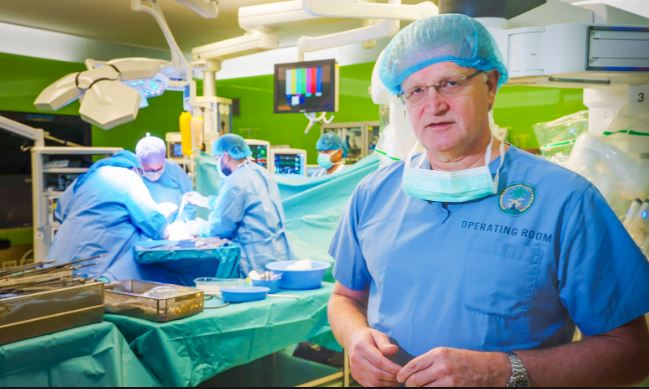
RIYADH, JAN 27: The King Faisal Specialist Hospital and Research Centre (KFSHRC) has achieved a global medical milestone by successfully performing a fully robotic liver transplant using organs from living donors, with robotic surgery applied throughout both donor liver removal and transplantation into the recipient.

According to a press release issued by the KFSHRC on Tuesday, the procedure is part of the hospital’s advanced robotic liver transplant program, which has now exceeded 100 robotic liver transplant surgeries. This case marks a world first, as the patient required two left liver lobes from two related living donors to ensure sufficient liver volume for the recipient, while maintaining safe residual liver volume for each donor.

The achievement demonstrates KFSHRC’s ability to deliver highly personalized treatment through a fully robotic pathway that includes both donor surgeries and the transplant itself. This approach expands the scope of what can be safely achieved in living-donor liver transplantation, while maintaining the highest standards of donor safety.

The release added that the surgery was completed successfully with no complications reported for either the donors or the recipient. Both donors were discharged from the hospital on the third day after surgery. The patient was transferred out of intensive care after seven days and completed the required inpatient recovery under medical supervision.

Executive Director of Organ Transplantation Professor Dieter Broering said that the procedure reflects the gradual expansion of robotic surgery in liver transplantation, supported by years of accumulated expertise. He noted that advanced technologies are used to enhance surgical safety, accelerate recovery, and improve long-term quality of life, while ensuring strict protection of donor safety at every stage of care.

KFSHRC ranks first in the Middle East and Africa and fifteenth globally among the world’s top 250 academic medical centers for 2025. It also holds the highest valued healthcare brand in Saudi Arabia and the region, according to Brand Finance 2024, and is listed by Newsweek among the World’s Best Hospitals 2025, the World’s Best Smart Hospitals 2026, and the World’s Best Specialized Hospitals 2026.

Uzbekistan, Pakistan poise to deepen ties as President Mirziyoyev plans February visit

Uzbekistan, Pakistan poise to deepen ties as President Mirziyoyev plans February visit

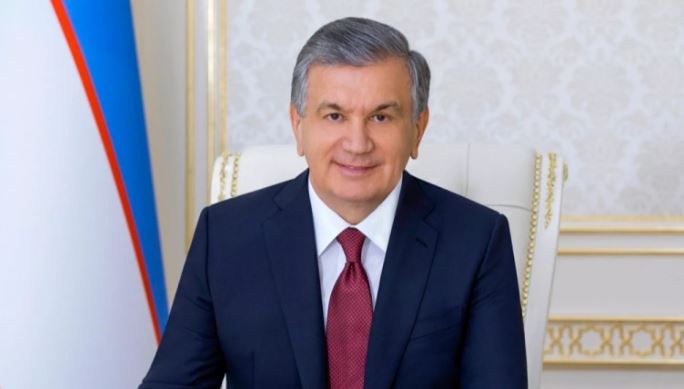
ISLAMABAD, JAN 27 /DNA/ – President Shavkat Mirziyoyev’s upcoming visit to Islamabad in February 2026 is set to mark a major step forward in Uzbek–Pakistani relations, with both sides preparing a slate of initiatives spanning trade, transport, energy, and digital technologies.

Experts and business leaders expect the trip to inject fresh momentum into a partnership that has gained speed in recent years and now aspires to regional impact across Central and South Asia.

Uzbekistan and Pakistan say the visit will not only advance large-scale, strategic projects but also broaden cooperation at the regional and local levels, bringing small and medium-sized enterprises, academia, youth, and civil society more directly into the bilateral agenda, Nigora Sultanova, Chief Research Fellow at the Institute for Strategic and Regional Studies under the President of the Republic of Uzbekistan said in a article.

The aim, according to planners on both sides, is to convert longstanding goodwill and cultural affinity into practical, long-term mechanisms that drive investment, jobs, and innovation.

Strategic Connectivity, trans-Afghan railway in main focus, the transport infrastructure remains a centerpiece and the proposed Trans-Afghan Railway, linking Central and South Asia has emerged as a flagship project, with the potential to reshape regional trade routes.

Stakeholders say the corridor could cut delivery times to 3–5 days and reduce transport costs by 40% or more, dramatically improving competitiveness for exporters across the region.

In 2025, key feasibility components were prepared and intergovernmental talks on routing and financing advanced, underscoring growing confidence in the project’s practical implementation.

For landlocked Central Asian economies, reliable access to ports and markets is viewed as indispensable to long-term growth and integration.

In trade targets and tools the economic cooperation has become the most visible indicator of progress and in 2025, bilateral trade exceeded $440 million is a 12 times higher than in 2016 with Uzbek exports topping $320 million.

The both sides leadership have outlined steps to lift trade to $2 billion “in the near future,” supported by the Preferential Trade Agreement (PTA) that grants customs benefits for 17 categories of goods from each side.

Business links are expanding rapidly, as of October 1, 2025, around 180 companies with Pakistani capital were operating in Uzbekistan, spanning textiles, food processing, construction materials, electrical equipment, and logistics.

At both sides trade facilitation is also accelerating and Uzbekistan opened trade houses in Lahore and Karachi in 2025, while Pakistan plans to set up trade missions in Tashkent and Samarkand practical platforms intended to ease market entry and build business trust. On the investment side, upswing and industrial Partnerships, flows are strengthening in 2024, Pakistani investments of $33 million were utilized in joint projects; from January to July 2025, that figure nearly doubled to around $70 million.

Joint ventures and feasibility studies are underway across textiles, pharmaceuticals, perfumery, and agriculture, with Uzbek companies also exploring production of household appliances, tractors, smart meters, and gas blocks in Pakistan, opening channels for technology transfer and advanced manufacturing.

High-level engagement is reinforcing these trends, following, Prime Minister, Muhammad Shehbaz Sharif’s official visit to Uzbekistan in February 2025, both sides established a High-Level Strategic Partnership Council to institutionalize cooperation.

Praising Uzbekistan’s reform momentum, Sharif said, “miracles are possible only through a clear vision, high dynamism, hard work, and a resolute pursuit of a common goal.”

The energy and digital and the dual engines of growth and the energy cooperation is emerging as a strategic pillar, with potential in geological exploration, oil and gas development, and modernization of processing infrastructure.

The objective is to diversify energy sources, bolster energy security, and underpin industrial growth in both countries.

In the digital sphere, new initiatives are taking shape in software development, public-service IT solutions, and startup ecosystems.

Stakeholders see digital collaboration as a fast-moving frontier that can accelerate modernization, enhance competitiveness, and embed technology across key sectors.

The business forums, exhibitions are deal flow, both sides’ regular meetings of the intergovernmental commission, business forums, and sector-specific exhibitions have become effective deal-making venues and Tashkent hosted the first “Made in Pakistan” International Exhibition and a joint Logistics Forum in 2024, featuring more than 80 leading Pakistani firms.

 A national “Made in Uzbekistan” exhibition in Lahore in February 2025 resulted in 181 bilateral trade agreements worth $500 million and these agreements concluded at such platforms already amount to hundreds of millions of dollars, producing tangible returns and laying groundwork for further expansion.

If current momentum holds, on trade targets, transport corridors, and technology partnerships, the Uzbek, Pakistani relationship is positioned to become a central connector in the emerging architecture of regional integration between Central and South Asia.

Experts urge new counterterrorism strategy

Experts urge new counterterrorism strategy

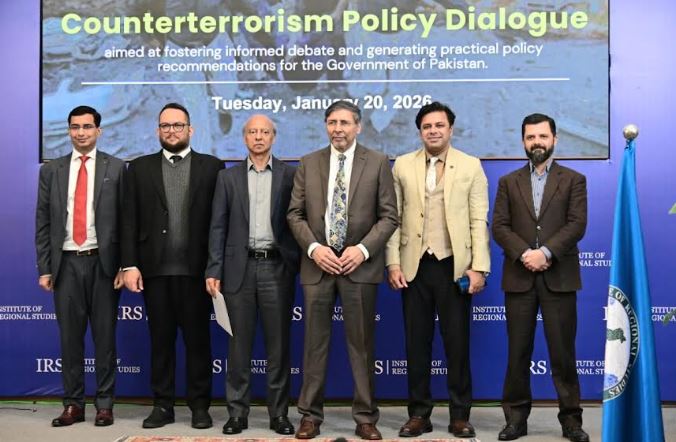
ISLAMABAD, JAN 27 /DNA/ – A Counterterrorism Policy Dialogue aimed at fostering informed debate and generating practical policy recommendations for the Government of Pakistan was held at Islamabad. The dialogue was jointly organized by the Institute of Regional Studies (IRS), Islamabad, in collaboration with the BNU Centre for Policy Studies. The event brought together security experts, academics, and journalists, to assess Pakistan’s counterterrorism landscape and identify actionable pathways forward.

In his opening remarks, Ambassador Jauhar Saleem, President of IRS, emphasized the importance of engaging Afghanistan through peaceful means to address shared security challenges. He underscored that the purpose of the dialogue was to move beyond rhetoric and develop practical, implementable policy recommendations. Ambassador Saleem highlighted the need for Pakistan to invest in long-term societal resilience by prioritizing literacy, promoting tourism, fostering tolerance, and strengthening cultural values as essential components of countering extremism.

Ambassador Mansoor Khan(Pakistan’s former ambassador to Afghanistan) provided a historical overview of terrorism in Pakistan, identifying three major waves since 2001, 2006, and 2021. He pointed out critical gaps in Pakistan’s counterterrorism policy, stressing that an effective strategy must combine kinetic operations, sustained dialogue, and social and economic integration. Maintaining balance among these three pillars, he noted, remains a key challenge. Ambassador Khan linked regional connectivity projects such as CASA-1000 and TAPI with security, arguing that cross-border challenges must be addressed for such initiatives to succeed. He also highlighted the lack of coordination among institutions and called for trilateral cooperation between Pakistan, Afghanistan, and China, especially in light of terrorist attacks targeting Chinese interests in the region. He stressed that NACTA must play a central coordinating role in the fight against terrorism.

Dr. Rizwan Naseer, (Director of the Centre for Countering Terrorism and Violent Extremism Studies-IRS) emphasized the growing threat of violent extremism and the need for evidence-based and community-focused responses. Mr.Imtiaz Gul (Executive Director CRSS) highlighted the economic cost of insecurity, noting that farmers in both Pakistan and Afghanistan have collectively suffered losses of nearly USD 800 million. He criticized the absence of civilian ownership of counterterrorism policy, observing that no single entity has effectively occupied this critical space.

Professor Samina Yasmeen(Professor Emerita and Director, Centre for Muslim States and Societies, University of Western Australia) challenged traditional narratives about Balochistan, stating that the province is no longer entirely dominated by sardars. She emphasized the crucial role of women in addressing social divisions and countering extremism.

Mr. Amir Rana (Director PIPS) traced the evolution of NACTA since 2009, noting its ambitious beginnings under its founder, Tariq Pervez. He criticized the stagnation of policy development, pointing out that Pakistan’s counterterrorism policy has largely remained unchanged since 2014 and has failed to evolve meaningfully.

Dr. Rakesh Parkash (Director at NACTA) highlighted NACTA’s engagement with 49 stakeholder agencies and drew attention to emerging challenges, including the proliferation of leftover NATO weaponry and the growing use of cryptocurrencies in terror financing. While acknowledging NACTA’s reliance on kinetic approaches, he stressed that non-kinetic strategies are equally vital. Mr.Iftikhar Firdous (Founder & Executive Editor, The Khorasan Diary) called for indigenous mechanisms to counter extremism and referenced regional examples, including China’s handling of tribal dynamics, while questioning how NACTA is addressing the evolving threat of IS-K.

Mr. Aarish Ullah Khan(Editor Publications & Head of Afghanistan Program at IRS) outlined NACTA’s strengths, such as its efficient control rooms, but emphasized the urgent need for a more effective diplomatic approach toward Afghanistan.

The dialogue concluded with a consensus on the need for an inclusive, indigenous, and coordinated counterterrorism framework that balances security operations with socio-economic and diplomatic initiatives.

FCC declares govt can impose Super Tax

FCC declares govt can impose Super Tax

ISLAMABAD, JAN 27 /DNA/ – The apex court has revived Sector 4 b of the tax law, whereby the govt is allowed to impose super tax. The Constitutional Court announced long awaited verdict on Tuesday.

WHAT IS SECTION B

Section 4B of the Income Tax Ordinance, 2001 (Pakistan), introduced through the Finance Act, 2015, mandates the payment of a Super Tax for the rehabilitation of temporarily displaced persons (TDPs).

Key aspects of Section 4B include:

Applicability: The tax applies to high-earning individuals, association of persons, and companies.

Threshold: It is imposed on persons earning an annual income of Rs. 500 million or above (for tax year 2015 and onwards).

Banking Companies: Super tax is levied on banking companies regardless of the quantum of income.

Rates: Initially introduced at 4% for banking companies and 3% for others.

Definition of Income: Under Section 4B(2), “income” is defined as the sum of all sources, including profit on debt, dividend, capital gains, brokerage, commission, and taxable income under all heads (salary, property, business, etc.).

Legal Standing: Although initially introduced as a one-time tax, it was extended in subsequent years. It has faced numerous legal challenges regarding its constitutionality and nature as “double taxation,” but has generally been upheld by high courts.

Diplomatic Ryder Cup Islamabad 2026 at EIGHTEEN

Diplomatic Ryder Cup Islamabad 2026 at EIGHTEEN

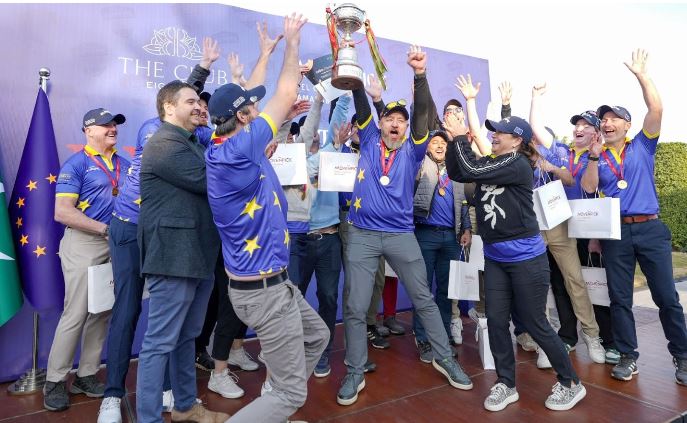
The tournament witnessed enthusiastic participation from several distinguished Heads of Mission, including Ms. Natalie Baker, Chargé d’Affaires of the United States; H.E. Mr. Maciej Pisarski, Ambassador of Poland; and H.E. Mr. Idesbald van der Gracht, Ambassador of Belgium, along with diplomats and members of the international community

ISLAMABAD, JAN 27 /DNA/ – The Club at Eighteen, in collaboration with Mövenpick Hotel Centaurus Islamabad, successfully hosted the Diplomatic Ryder Cup Islamabad 2026 at the prestigious Eighteen Golf Course. The much-anticipated event brought together diplomatic missions from the United States and Europe for a spirited 18-hole golf competition, celebrating sportsmanship, friendship, and international engagement.

The tournament witnessed enthusiastic participation from several distinguished Heads of Mission, including Ms. Natalie Baker, Chargé d’Affaires of the United States; H.E. Mr. Maciej Pisarski, Ambassador of Poland; and H.E. Mr. Idesbald van der Gracht, Ambassador of Belgium, along with diplomats and members of the international community.

Competition remained intense throughout the day, with both teams demonstrating exceptional skill and determination. In a closely contested finish, team Europe emerged victorious, clinching the coveted Diplomatic Ryder Cup with a narrow three-point lead.

Adding to the day’s excitement were on-course challenges with Brendan Kallander claimed the longest drive (Men) title, Michaela Chrtova won longest drive (Women) and Gilles Hachez secured the closest to the Pin (Men) award.

The event concluded with brunch providing an opportunity for diplomats, golfers, and guests to connect. Participants highly appreciated the world-class golf facilities and the exemplary event management by The Club at Eighteen, making the Diplomatic Ryder Cup Islamabad 2026 a memorable success.

HEC, British Council begin week-long deliberations on national research excellence framework  

HEC, British Council begin week-long deliberations on national research excellence framework  

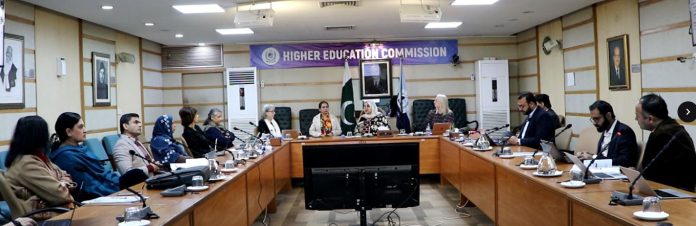
ISLAMABAD, JAN 27 /DNA/ – The Higher Education Commission (HEC), Pakistan, in close partnership with the British Council Pakistan, has formally commenced five-day deliberations on the development of Research Excellence Framework (REF) under Pak-UK Education Gateway programme. Once finalised, the framework is expected to strengthen the research evaluation, benchmarking, and performance assessment ecosystem in Pakistan.      

During the course of the consultations, organised by Research & Innovation Division (R&ID) of HEC, a four-member expert delegation from the University of Sussex, UK – the lead consultant providing technical expertise for the initiative – will remain engaged in in-depth discussions with the HEC and British Council leadership, academic leaders and policymakers, and stakeholders to finalise the proposed policy framework.

The flagship bilateral initiative – the proposed REF – is envisioned to serve as a formula to evaluate the quality, impact and integrity of research to drive evidence-based funding and global competitiveness. It envisages deepened academic collaboration, strengthened quality assurance, consistency, and international competitiveness of Pakistan’s research environment. Being tailored to national needs and policy goals, the framework will serve as a unified model with transparent scoring, standardised evidence requirements, and quality assurance processes in higher education.

On the opening day, the participants were briefed on the planned week-long activities, their expected outcomes, and key decision points. The discussions emphasised that REF must be a robust, fair and transparent mechanism to evaluate research quality, research environment, and societal impact, while supporting institutional improvement and national research priorities.

The UK experts – comprising Prof. Jeremy Kenthall, Director, Science Policy Research Unit, University of Sussex; Prof. Paul Nightingale, Professor of Strategy, University of Sussex; Ms. Mandy Samantha Crawford Lee, Chief Executive, University Vocational Awards Council (UVAC), UK; and Ms. Breda Maria Mostret, Associate Consultant, University Vocational Awards Council (UVAC), UK – shared an overview of the work completed to date and outlined the proposed roadmap ahead.

Through a comprehensive presentation, the experts underlined the vision behind the initiative, the work completed so far, and the future strategy. They said the REF aligns with the global research excellence systems, particularly the UK Research Excellence Framework. They revealed that a Steering Group and REF Project Team have been constituted under the partners’ oversight. The framework is at present in the pilot phase with selected HEIs to stress-test the criteria, they highlighted.

Senior officials from different HEC’s Divisions actively engaged in the day-one discussions and highlighted the necessity of development of a Pakistan-specific REF. They said the initiative reflects HEC’s commitment to international best practices while keeping in view the national context.

The session focused on reaching consensus, in principle, on the ethics framework, including a governance model suitable for piloting, oversight mechanisms, accountability structures, and safeguards to ensure integrity and credibility of evaluation process. The conversations concluded with a debrief to synthesise key messages and refine narratives ahead of subsequent stakeholder engagements during the week ahead.

Over the course of the week-long discussions, the HEC, British Council, and the UK REF teams will hold detailed technical sessions to reach the finalisation of the REF policy and the design of pilot phase. The engagement represents a major step forward in HEC’s efforts to align Pakistan’s research system with global standards, enhance accountability, and maximise the societal and economic impact of publicly funded research.

Gender equality in Azerbaijan: Constitutional foundations and recent state initiatives

Gender equality in Azerbaijan: constitutional foundations and recent state initiatives

By Ansar M Bhatti

Azerbaijan has made notable strides in promoting gender equality, anchored in its legal framework and reinforced by ongoing policy efforts. The country’s Constitution serves as the cornerstone of these commitments.

Adopted in 1995 and amended several times, the Constitution explicitly guarantees equal rights for men and women and prohibits any form of discrimination based on gender. Article 25 declares that everyone is equal before the law and the courts, regardless of sex, race, ethnicity, religion, or other characteristics.

In 1918, the Azerbaijan Democratic Republic granted women equal political rights, including the right to vote and stand for election, making it the first Muslim-majority country and one of the earliest in the world to do so.

Article 25 declares this provision ensures that gender-based discrimination is unconstitutional, providing a strong legal basis for equality in political, economic, social, and cultural spheres.

Complementing the Constitution, Azerbaijan enacted the Law on Guarantees of Equal Rights for Women and Men in 2006. This legislation further prohibits all forms of gender-based discrimination and outlines measures to ensure equal opportunities in employment, education, healthcare, and public life. It defines discrimination broadly, covering direct and indirect forms, and allows for temporary special measures to accelerate de facto equality where gaps persist.

These laws align with Azerbaijan’s international obligations, including its ratification of the Convention on the Elimination of All Forms of Discrimination Against Women (CEDAW) in 1995. Despite these robust legal protections, challenges remain in translating constitutional guarantees into full societal equality. Women in Azerbaijan participate actively in the workforce and education.

Recent data indicates that women comprised about 48.4% of the employed population as of early 2025, highlighting gradual progress but also room for improvement in economic parity. Cultural norms and structural barriers sometimes hinder women’s full advancement, particularly in rural areas or certain sectors.

In a significant development underscoring the government’s renewed focus, President Ilham Aliyev approved the National Action Plan on Gender Equality for 2026–2028 in late December 2025. This plan, officially titled the “National Action Plan on Gender (Equality of Women and Men) in the Republic of Azerbaijan for 2026-2028,” signals a continued state commitment to closing gender parity gaps.

 It builds on previous strategies and incorporates targeted measures across multiple domains. Key elements of the plan include establishing coordination groups on gender equality within state agencies at central and local levels. These voluntary groups, composed of representatives from various bodies, aim to mainstream gender perspectives in policy-making and implementation. The plan also emphasizes boosting women’s social and civic engagement, including support for non-governmental organizations focused on gender issues.

It addresses emerging concerns, such as demographic trends noting a slight decline in the proportion of women in certain statistics, and promotes initiatives to enhance women’s access to justice, education in STEM (Science, Technology, Engineering, and Mathematics) fields, and economic opportunities.

The approval of this action plan reflects Azerbaijan’s alignment with global agendas, such as the UN Sustainable Development Goals, particularly Goal 5 on gender equality. It comes amid regional efforts, including collaborations in Central Asia to advance women’s rights ahead of international forums like the Commission on the Status of Women.

While the constitutional prohibition on gender discrimination provides a solid foundation, the effectiveness of these efforts depends on consistent implementation, monitoring, and public awareness. The 2026–2028 National Action Plan represents an optimistic step forward, demonstrating political will to bridge remaining gaps.

By fostering inclusive policies and institutional mechanisms, Azerbaijan continues to advance toward a society where men and women enjoy truly equal rights and opportunities.

UK holds off joining Gaza Peace Board

UK holds off joining Gaza Peace Board

News Desk

LONDON: Foreign Secretary Yvette Cooper has said the UK will not yet be signing up to US President Donald Trump’s Board of Peace over concerns about Russian leader Vladimir Putin’s possible participation.

Cooper told the BBC the UK had been invited to join the board but “won’t be one of the signatories today” at a ceremony at the World Economic Forum in Davos.

The board, which gives Trump wide decision-making powers as chairman, is being billed by the US as a new international organisation for resolving conflicts.

Cooper described the board as a “legal treaty that raises much broader issues” than the initiative’s initial focus on ending the Israel-Hamas war in Gaza.

The charter proposed by the White House does not mention the Palestinian territory and critics say the board appears to be designed to replace some functions of the United Nations.

Some of the US’s traditional allies have not agreed to join the board and notably, none of the other permanent members of the UN Security Council – China, France, Russia, and the UK – have committed to participation so far.

The UN Security Council has been the main international platform for global diplomacy and conflict resolution since the end of World War Two.

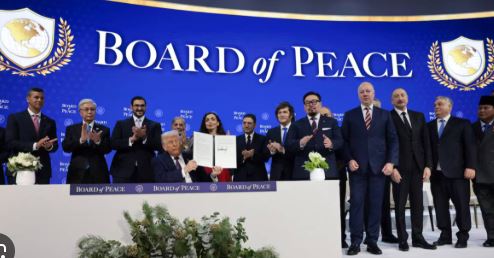
But launching the board at a signing ceremony alongside world leaders in Davos, Trump said he did not intend it as a replacement for the UN and expressed his belief that it would help forge an “everlasting” peace in the Middle East.

Trump said the board had the chance to be “one of the most consequential bodies ever created”.

“We’re committed to ensuring Gaza is demilitarised, properly governed and beautifully rebuilt,” Trump said. “It’s going to be a great plan and this is where the board of peace started.”

Trump said once the board had been completely formed, “we can do pretty much whatever we want to do”.

“But we’ll do it in conjunction with the United Nations,” he added.

President Trump was joined by the leaders and representatives of 19 countries for the Board of Peace signing ceremony, including Argentina, Hungary, Morocco, Saudi Arabia and Turkey.

Stay Connected

64FansLike
60FollowersFollow

Latest Reviews

Exchange Rates

USD - United States Dollar
EUR
1.14
GBP
1.34
AUD
0.70
CAD
0.71