Home Blog Page 2759

TURKEY VALUES LIBYA’S SOVEREIGNTY, POLITICAL UNITY

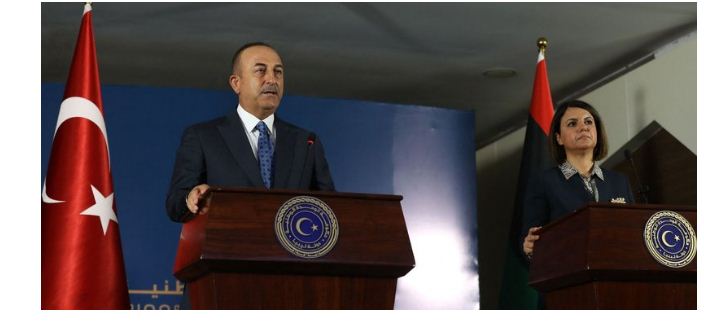
ANKARA – Turkey considers it important that Libya‘s integrity, sovereignty, independence, and political unity are protected, the county’s foreign minister said on Monday.

“We attach importance to preservation of Libya’s integrity, sovereignty, independence, and political unity,” Mevlüt Çavuşoğlu said at a news conference alongside his Libyan counterpart Najla Mangouch in Tripoli.

He reiterated that Turkey has always stood by Libyan people and their legitimate governments during their difficult times.

“In the face of the attacks on Tripoli, the legitimate government of Libya invited some countries, including us. Only Turkey replied in the affirmative to this call,” Çavuşoğlu said.

He also stated that Turkey‘s support for Libya under the deal on security and military cooperation prevented a civil war and human tragedy.

The two top diplomats, Çavuşoğlu said, addressed economic cooperation, investments in Libya and bilateral trade relations, and discussed the return of the Turkish private sector to Libya.

Earlier in the day, the Turkish Foreign Ministry said in a statement that high-level Turkish officials including foreign and national defense ministers along with the director of the Turkish intelligence agency paid an official visit to Libya on Monday with bilateral and regional issues on their agenda.

Çavuşoğlu stated that they were happy to be in Libya with a large Turkish delegation including National Defense Minister Hulusi Akar and Hakan Fidan, head of the National Intelligence Organization.

He said Turkey will continue to stand by the Libyan brothers they will intensify the contacts in the coming days.

Çavuşoğlu invited his Libyan counterpart to the Antalya Diplomacy Forum to be held in the second week of June.

FPCCI QUESTIONS NEW POWER PLANT BASED ON IMPORTED RLNG

KARACHI (DNA): Mian Nasser Hyatt Maggo, President of the Federation of Pakistan Chambers of Commerce & Industry (FPCCI) has demanded that the Federal Government should explain the rationale behind approving the installation of a new 1263MW power plant being set up by Punjab Thermal Power Ltd in Jhang; which is based on imported RNLG. This new plant will cost 6 cents USD/Kwh, when producing electricity on imported RLNG and as high as 11 cents USD/Kwh, when producing on HSD. On the other hand, the government is not allowing setting up of environment-friendly renewable energy power plants based on Wind and Solar; which will cost merely 3.5 cents USD/Kwh.

This step will further add to the already unmanageable circular debt; increase import bill; and will result in production of expensive energy – and, the resultant increase in cost of doing business. It is pertinent to note that wind and solar plants require no imported fuel and cause no burden on import bill or exchange rate.

Mian Nasser Hyatt Maggo was referring to purposely blocking and discouraging the wind and solar projects, which were recently awarded Pakistan’s lowest power tariff by NEPRA at an average of 3.5 cents USD/Kwh to 12 projects totaling 670 MWs and also result in up to $470 million FDI.

Moreover, President FPCCI has cautioned the government – under present circumstances – that installation of this new power plant will lead to a new scandal just like the other IPPs that are now facing the music. He also condemned the role of vested interests in this project.

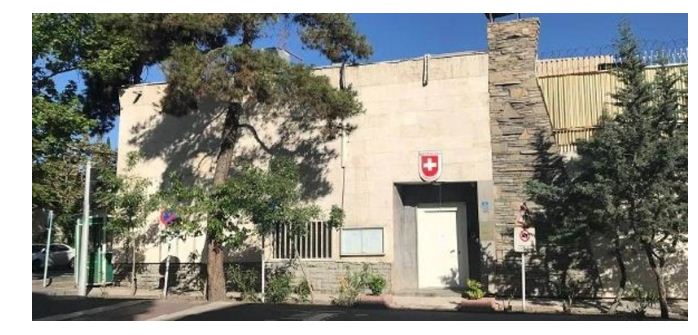
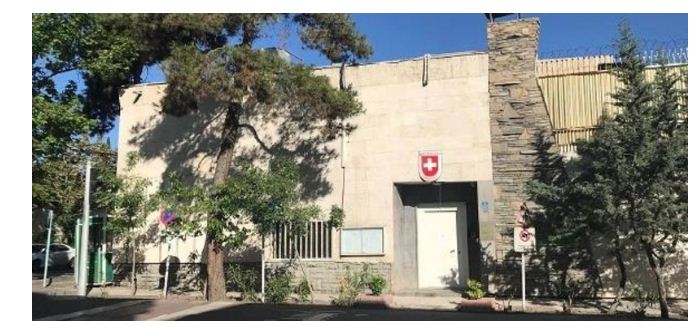
SENIOR SWISS DIPLOMAT IN IRAN FOUND DEAD AFTER FALL FROM HIGH-RISE

TEHRAN – The first secretary at the Swiss embassy in Tehran was found dead on Tuesday after falling from a high-rise building where she lived in the north of the city, a spokesman for emergency services was quoted as saying by Iranian news agencies.

The Swiss foreign ministry (FDFA) said an employee at its embassy in Iran had died of an accident, without identifying the victim. “The FDFA and its head Federal Councillor Ignazio Cassis are shocked by the tragic death and express their deepest condolences to the family,” it said.

Iranian emergency services spokesman Mojtaba Khaledi said the diplomat’s body was found by a gardener after an employee who arrived at her apartment early on Tuesday noticed she was missing, the news agency Fars reported.

“This person was the first secretary of the Swiss embassy,” Khaledi told Mehr news agency. “The cause of her fall has yet to be determined,” he told Fars.

The diplomat was 51, the semi-official news agency ISNA reported. Other reports put her age at 52.

Switzerland has represented U.S. diplomatic interests in Iran since Washington and Tehran cut ties shortly after the 1979 Islamic Revolution.

MEXICO CITY METRO OVERPASS COLLAPSES ONTO ROAD; OVER 20 DEAD

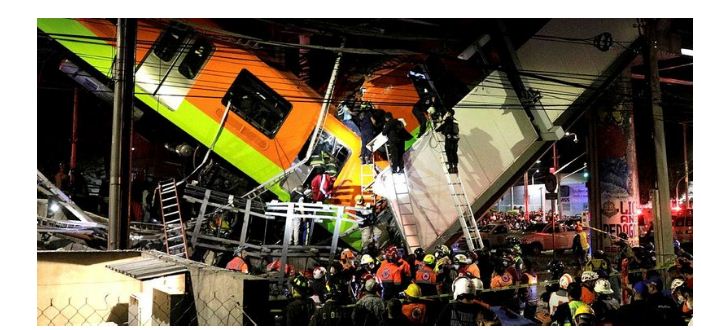
An elevated section of the Mexico City metro collapsed and sent a subway car plunging toward a busy boulevard late Monday, killing more than 20 people and injuring dozens of others, city officials said.

A crane was working to hold up one subway car left dangling on the collapsed section so that emergency workers could enter to check the car to see if anyone was still trapped. Mayor Claudia Sheinbaum said 49 of the injured were hospitalized, and that seven were in serious condition and undergoing surgery.

Sheinbaum said a motorist had been pulled alive from a car that was trapped on the roadway below. Dozens of rescuers continued searching through wreckage from the collapsed, preformed concrete structure.

“There are unfortunately children among the dead,” Sheinbaum said, without specifying how many. ,

The overpass was about 5 meters (16 feet) above the road in the southside borough of Tlahuac, but the train ran above a concrete median strip, which apparently lessened the casualties among motorists on the roadway below.

“A support beam gave way,” Sheinbaum said, adding that the beam collapsed just as the train passed over it.

Rescue efforts were briefly interrupted at midnight because the partially dangling train was “very weak.”

“We don’t know if they are alive,” Sheinbaum said of the people possibly trapped inside the subway car.

Hundreds of police officers and firefighters cordoned off the scene as desperate friends and relatives of people believed to be on the trains gathered outside the security perimeter.

Oscar López, 26, was searching for his friend, Adriana Salas, 26. Six months pregnant, she was riding the subway home from her work as a dentist when her phone stopped answering around the time the accident occurred.

“We lost contact with her, at 10:50 p.m., there was literally no more contact,” López said. With little information and a still serious coronavirus situation in Mexico City, López said “they are not telling us anything, and people are just crowding together.”

The collapse occurred on the newest of the Mexico City subway’s lines, Line 12, which stretches far into the city’s southside. Like many of the city’s dozen subway lines, it runs underground through more central areas of the city of 9 million, but then runs on elevated, pre-formed concrete structures on the city’s outskirts.

The collapse could represent a major blow for Mexican Foreign Relations Secretary Marcelo Ebrard, who was Mexico City’s mayor from 2006 to 2012, when Line 12 was built. Allegations about poor design and construction on the subway line emerged soon after Ebrard left office as mayor. The line had to be partly closed in 2013 so tracks could be repaired.

Ebrard wrote on Twitter: “What happened today on the Metro is a terrible tragedy.”

“Of course, the causes should be investigated and those responsible should be identified,” he wrote. “I repeat that I am entirely at the disposition of authorities to contribute in whatever way is necessary.”

It was not clear whether a 7.1-magnitude earthquake in 2017 could have affected the subway line.

The Mexico City Metro, one of the largest and busiest in the world, has had at least two serious accidents since its inauguration half a century ago.

In March of last year, a collision between two trains at the Tacubaya station left one passenger dead and injured 41 people. In 2015, a train that did not stop on time crashed into another at the Oceania station, injuring 12 people.

PM’S VISION FOR DEVELOPMENT OF GILGIT BALTISTAN HIGHLY APPRECIATED

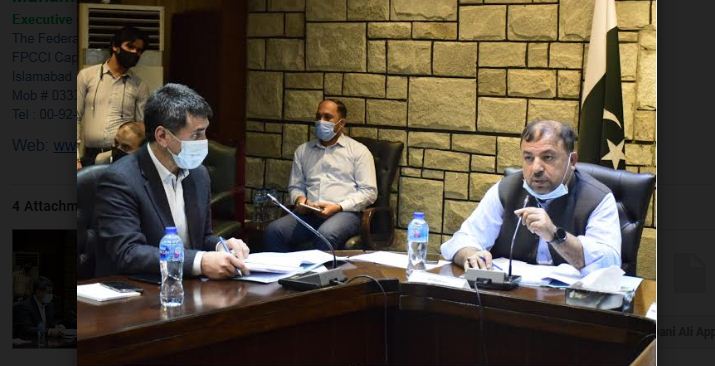
ISLAMABAD, MAY 4 (DNA) – Qurban Ali,Head, FPCCI Capital Office, Islamabad, applauded the vision and endeavor of the Prime Minister of Pakistan for development of Gilgit Baltistan. He appreciatedthe announcement of the development package of Rs. 370 million aiming to promote tourism through development of infrastructure and networking.

Qurban Ali, while expressing his gratitudehave said that the development package of Rs 370 billion will beginnew era of prosperity in Gilgit-Baltistan. This area of Pakistan has been blessed with abundant resources and natural beauty, he added.Qurban Ali further said that the government should announce special reliefs and exemptions for domestic and foreign investors to boost investment in tourism sector in Gilgit-Baltistan as well as industrial and commercial activities. He suggested to combine the tourism with agriculture sectors and promote agri-tourism in Gilgit Baltistan.

Qurban Ali,Head, FPCCI Capital Office, Islamabad, said that the business incubation Center in GB will not only benefit business community and investors but will also help in reducing unemployment.He further said that besides expanding Skardu Airport and giving it the status of an international airport, some more airports are also required in other areas for the promotion of tourism. He pointed out that the Hydel Power generation projects, Integrated Tourism System, Babusar Tunnel, Youth Skills Scholarships are very important programs to uplift the economy of Gilgit Baltistan and the country as well.

He further said that electricity generated from water and wind is very cheap and Gilgit-Baltistan is a suitable area for its production. Most of the foreign investors are very interested in this sector. Hydropower projects in Gilgit-Baltistan will go a long way in overcoming the power crisis in the country, he added.=DNA

===========

CHINA PAKISTAN STUDY CENTER SIGNED MOU WITH RINSTRA

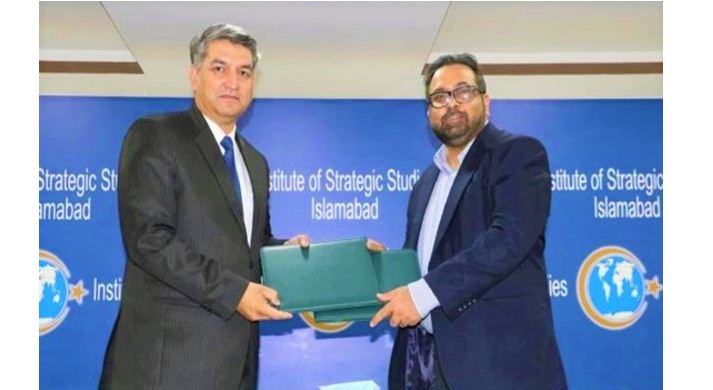
ISLAMABAD, May 4 (DNA): China Pakistan Study Center (CPSC) at Institute of Strategic Studies Islamabad (ISSI) and RINSTRA Technologies signed a memorandum of understanding (MoU) to increase cultural understanding between businesses and people of China and Pakistan.

According to Gwadar Pro, this partnership is being signed to build better understanding among the masses and the business community in both China and Pakistan.

The partnership will also facilitate content development in Mandarin, Urdu and English.

Director General of ISSI Ambassador (retired) Azaz Ahmad Chaudhary said that the ISSI provided a platform for quality policy input through informed research, objective analysis and dialogue on regional and international issues affecting peace, security and development of Pakistan.

“We are confident that this partnership will create knowledge resources among the youth and the business community alike while providing strategic direction for policy makers,” he said.

Amir Jahangir CEO RINSTRA Technologies said that in this new era of information engagement it is important to build the vocabulary and understanding around the partnerships that both Pakistan and China are striving for.

“This cooperation between CPSC and RINSTRA will set “new benchmark for understanding around the future challenges for our international partnerships,” he added.

ISSI Director Dr. Talat Shabir Director said that the MOU underlined to build cultural, business and economic cooperation and understanding.

partnership will also highlight China and Pakistan’s cooperation and implication for the region and the world “This partnership will help build people to people relationships, Government relations in defense cooperation and societal collaboration for building knowledge ecosystems,” he said.

CPSC is a leading think-tank in Pakistan, focusing on public policy, diplomacy and building cultural understanding between China and Pakistan.

The center is also engaged in national and international outreach to promote better understanding of Pakistan-China relations, develop linkages with think-tanks in China and advance people-to-people contacts.

WEBINAR HELD TO PROMOTE SINO-PAK COOPERATION IN ANIMAL HUSBANDRY SECTOR

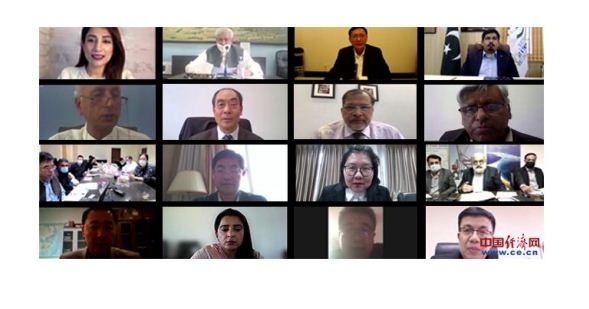
BEIJING, May 4 (DNA): A webinar on Chinese and Pakistani animal husbandry and fishery cooperation was held to achieve future targets in this sector, according to a report published by Gwadar Pro.

Leading experts and companies in livestock and fishery sectors from both countries discussed bilateral cooperation in the educational and industrial programmes in this regard, and possible measures to enact such cooperation.

Syed Fakhar Imam, Federal Minister for National Food Security and Research, pointed out “multiple challenges” in tapping the rich repertoire of livestock and fishery resources in Pakistan.

He urged Pakistan to modernise its livestock and fishery industries by upgrading infrastructure and building a substantial supply chain through joint enterprises with China, technology transfer and talent cultivation.

The challenges are echoed by Dr Muhammad Akram, President, Fisheries Development Board, Ministry of Pakistan National Food Security and Research (MNFSR), and Dr Khurshid Ahmad, Animal Husbandry Commissioner, MNFSR.

According to Dr Ahmad, Pakistan is home to 208 million food animals with an annual milk yield exceeding 60 million tons and an annual production of 20 billion poultry eggs.

He said, the quality and yields of such livestock and fishery products can be further improved with Chinese technologies to build capacity, and with joint research efforts in genetic improvement and other animal and fishery sciences.

Experts and businesses discussed current and future cooperation in the research, industry, and trade developments in the two sectors.

In terms of the livestock sector, Li Jinhui, Deputy Secretary General of China Animal Agriculture Association and President of China Broiler Alliance, said, “China is the largest importer of beef and a major importer of mutton and chicken. This presents enormous opportunities to Pakistan to enhance its beef and mutton exports.”

Despite huge potential of exports, Pakistan’s livestock division is plagued by animal diseases, notably the Foot-and-Mouth Disease (FMD), an infectious and sometimes fatal viral disease that affects cattle and goats etc., according to Zhang Baozhong, Chairman of China Overseas Ports Holding Company.

The concern of FMD was shared by Chen Yiyi, CEO of China’s Royal Group. Mr Chen displayed strong interest in working with Pakistani universities and companies to develop the buffalo industry through semen and embryo cooperation. But FMD poses a serious threat to the effort.

Shen Jin, Deputy General Manager of QYH Biotech Co., Ltd., cited FMD-free zones as an effective countermeasure against FMD. Under the MoU on combatting FMD signed between China and Pakistan in 2019, China will help Pakistan establish FMD-free zones in Punjab and Balochistan to ensure the health of the food animals.

Further measures include building animal vaccine plants and establishing a certification system. According to Dr He Cheng, Professor at College of Veterinary Medicine, China Agricultural University, said that the FMD free zones will boost Pakistan’s meat exports up to $12-15 billion.

In addition to FMD-free zones, Dr Masood Rabbani, Professor at University of Veterinary and Animal Sciences, sees great potential in academic and research cooperation such as genetic research in buffaloes and talents cultivation.

“Now we have (some) expertise available in the university, which can facilitate the private sector in adopting new technologies,” said Dr Masood Rabbani. Dr Ahrar Khan, Ex-dean at Faculty of Veterinary Science of University of Agriculture, Faisalabad, introduced several MoUs and programmes between Chinese and Pakistani universities to cultivate animal sciences talents and collaborate on the pharmaceutical industry.

Cooperation in the fishery sector is also promising. Ma Zhuojun, Director of International Cooperation at Chinese Academy of Fishery Sciences showed how China has achieved the sustainable aquaculture through the Aquaculture Improvement Projects (AIP). Mr Ma emphasised that the AIP project should be adapted locally and that it has great potential of application in Pakistan.

Huang Tianqing, Representative of Salmon Farming Innovation team at Heilongjiang River Fisheries Research Institute, Chinese Academy of Fishery Sciences, introduced how Pakistan can develop its salmon sector with Chinese breeding and cultivation technologies.

Dr Rehana Kauser, Director of Animal Sciences Institute at Pakistan Agriculture Research Council, elaborated on current cooperation projects with Chinese research institutes in fishing breeding and cultivation techniques, and expected broader collaboration with Chinses institutes in freshwater products processing and storage.

To facilitate bilateral cooperation in the animal husbandry and fishery sectors, Li Bijian, Consul General of China to Karachi, advised Chinese companies to conduct training and capacity building “on equal footing” with Pakistan, and he also urged Pakistan to ensure a safe and favourable business environment to attract more Chinese investments.

Farman Ullah Zarkoon, CEO of Balochistan Board of Investment and Trade (BBoLT), introduced the favourable business conditions including its highway network, three major international airports, and a very well-spread railway network.

He also pointed out the investment regime and incentives including tax reduction or exemption and licensing facilitation in the SZEs “which allows any kind of cooperation between the government and the private investors from other countries.”

Baboo Gulab, Former Chairman of Gwadar City Council, and Sadar Shoukat, President of Balochistan Economic Forum, also participated in the event.

G-7 FMs to meet in London today to discuss int’l issues

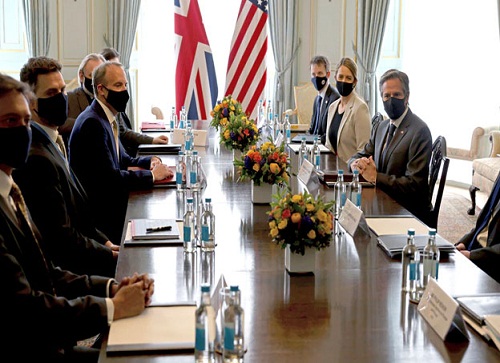
Foreign Ministers of G-7 countries meet in London today to discuss a range of international issues including relations with China and Russia, the coup in Myanmar, the Syrian conflict, and the situation in Afghanistan.      

British Foreign Secretary Dominic Rabb is expected to urge G-7 members to sanction individuals and entities connected to Myanmar’s military junta, to support arms embargoes and to boost humanitarian aid to the people of Myanmar.  

On the sidelines of the G-7 meetings, US Secretary of State Antony Blinken met Dominic Rabb and agreed that their goal is not to contain or hold China down but to uphold the international rules for mutual benefits. 

Western world has linked radicalism, extremism with Islam and Muslims: PM

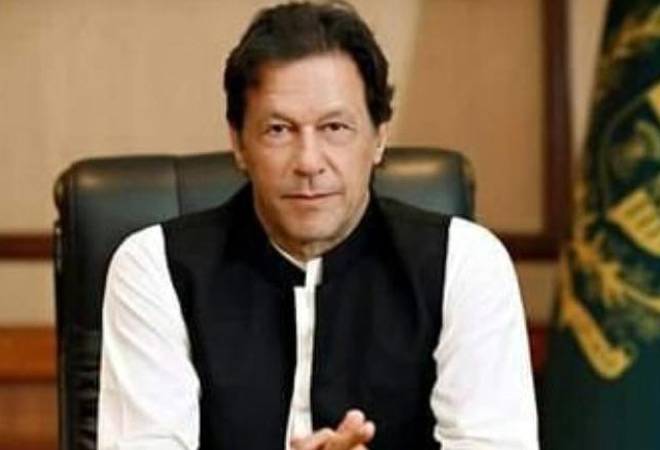
ISLAMABAD : “The level of Islamophobia has increased all over the world,” Prime Minister Imran Khan said while speaking to Islamabad-based ambassadors of Organisation of Islamic Cooperation (OIC) member countries.

“When I became the prime minister I decided that I would try my best to bridge the gulf which was widening between the Muslim world and Western world,” Prime Minister said.

He said the Muslim countries never made a concerted effort to try and make Western countries understand what we feel for Holy Prophet (PBUH).

“The term ‘radical Islam’ should never be used because it in itself means the religion has something to do with radicalism, which is not the case,” PM Imran pointed out. “Terms like these are what cause Islamophobia, and only us the representatives of the Muslim World can do something about it,” he added.

“Ordinary people in Western countries cannot distinguish between a moderate Muslim and a radical Muslim. So all Muslims become suspect. They need to understand that in all human communities there are radicals, liberals and moderate. If you will judge any human community by its extremes you will vilify it.”

“No society in the world should be judged based on extremes,” the prime minister stressed, lamenting that the Western world has linked radicalism and extremism with Islam and Muslims.

“They link every blast or suicide attack with Islam without realising that it has nothing to do with the religion,” he said.

85,000 hoarded wheat sacks recovered in Punjab

DASKA/PHALIA :  The Punjab government on Tuesday continued its crackdown on hoarding of wheat in the province and recovered as many as 85,000 hoarded wheat sacks in separate actions.

In line with the government’s efforts to tighten the noose against smugglers and hoarders, the local administration of Sialkot’s Daska tehsil seized 77 thousand wheat bags that were hoarded in four rice mills. The mills were sealed by the district administration.

In a separate action carried out by AC Phalia, a city in Mandi Bahauddin district of Punjab 8,000 wheat bags were recovered.

The recovered wheat sacks were handed over to the provincial food department.

It is pertinent to mention here that the federal government in a letter to Chief Minister of Sindh recently demanded removing obstacles in the inter-provincial movement of wheat.

Federal Minister for Food Security Fakhar Imam in his letter to the chief minister demanded hurdle-free arrangements for the movement of fresh stocks of wheat.

The restrictions over free movement and transportation of wheat from Sindh to Punjab, directly affect the prices of wheat and its flour, according to the letter.

Stay Connected

64FansLike
60FollowersFollow

Latest Reviews

Exchange Rates

USD - United States Dollar
EUR
1.14
GBP
1.34
AUD
0.70
CAD
0.71