Home Blog Page 275

US-Europe rift

US-Europe rift

Yossi Mekelberg

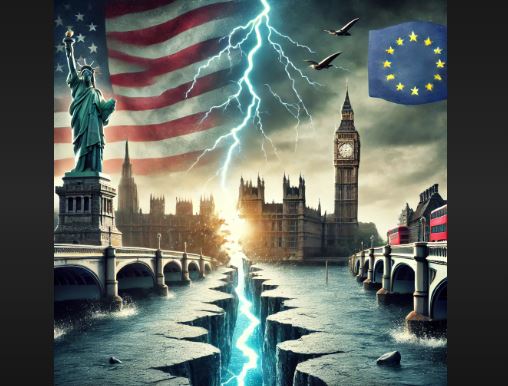
A rift between the US and Europe is quickly brewing. However, neither side can afford it or will benefit from it. Worse, this long-standing alliance now faces its severest test yet, which is bound to remain for the next three years. It is already leaving deep scars.

The security and prosperity of what is known as the West depend on close transatlantic relationships. When this alliance weakens, it only serves those the US and Europe perceive as their main rivals: China and Russia. One would not be surprised if the leaderships in Beijing and Moscow were rubbing their hands with glee at every spat between the Trump administration and America’s NATO allies.

The American administration’s insistence on acquiring Greenland has proven to be, for the EU, the UK and Canada, the final straw. For them, this was a red line they could not afford to let Washington cross without mounting a challenge, as they did.

The strategic importance of Greenland — the world’s largest island — is indisputable and it will only increase because of the unfortunate impact of climate change. Its strategic position between the US and Russia makes it a front-line area of growing importance as the ice sheets melt.

Global warming is causing Greenland’s ice sheet and the rest of the Arctic’s sea ice to melt, opening new sea routes that will serve as an alternative to traditional, costly navigation through the Suez and Panama canals. Add to this Greenland’s rich mineral and hydrocarbon deposits and the attraction of this massive island, despite its harsh weather, lack of infrastructure and remoteness, is turning it into the US’ latest frontier.

The administration’s insistence on acquiring Greenland has proven to be, for the EU, the UK and Canada, the final straw

Alas, the way President Donald Trump is going about it alienates his country’s closest allies and does so needlessly. The idea of the American frontier underpins the country’s historical westward expansion, with European settlers moving from the original settlements along the Atlantic Coast toward the Pacific Coast. This was a combination of ideology and utilitarianism, eventually resulting, for instance, in the purchase of Alaska in 1867 for the modest sum of $7.2 million (about $150 million today).

Acquiring territories reflected the “manifest destiny” notion, coined by John L. O’Sullivan in 1845, that America had a special destiny to stretch across the continent. However, it was another US president, Woodrow Wilson, with his notable 14 points during the First World War, who made his country the champion of the right to self-determination — a position that now seems reversed by the current US administration.

Greenland, in Trump’s thinking, epitomizes this. And it is no longer a fight between the so-called new world and the old world of colonial Europe, but a confrontation that undermines the closest of allies, which share similar security concerns and, at least until recently, similar values and respect for the norms of a rules-based world order.

Before Trump’s arrival at the World Economic Forum in Davos, the fear was that the issue of Greenland was going to cause irreparable damage to the US’ relationship with most of the other members of NATO, which believed that Trump would not climb down from his demand for American sovereignty over the island.

The day before Trump addressed the forum, Canadian Prime Minister Mark Carney urged his fellow “middle powers” to form new alliances, accusing the great powers of abandoning the post-Second World War system of freer trade and international norms, which required an adequate response. “We understand that this rupture calls for more than adaptation,” he said, as “the old order is not coming back. We should not mourn it. Nostalgia is not a strategy. But from the fracture, we can build something better, stronger and more just.”

The response from Europe was very similar, rejecting any attempts to intimidate Denmark, the sovereign power in Greenland, or the 57,000 Greenlanders to hand the island to the US.

Trump might not have given up on his aspirations to own Greenland, but he took notice of his allies’ firm position, making a very public commitment that he would not order a military operation to achieve this objective. Later, he announced that he and NATO had agreed a compromise with which both sides were happy, though they are yet to share it with the rest of us. To ease tensions with European allies, he also withdrew the threat of additional tariffs on them for their resistance to the US annexing Greenland.

To be sure, it is almost impossible to know whether Trump just enjoys pushing the envelope, and with it testing both the zones of possible agreement and the patience of his interlocutors, or if there is a serious and definite plan. In the case of Greenland, while there is curiosity about the agreement reached, a deal could have been achieved without straining America’s relations with its close allies.

Trump might not have given up on his aspirations to own Greenland, but he took notice of his allies’ firm position

Greenland, by virtue of being part of the Kingdom of Denmark, is protected by NATO, under Article 5 of its charter, from any hostile foreign forces. And if the US or any other member believes there is an imminent threat, they could work together to fortify the defenses of the island, on and offshore, to avert such a hostile development.

Moreover, the US already has more than 100 military personnel permanently stationed at its Pituffik base at the northwestern tip of the territory, operating under a 1951 agreement with Denmark. This agreement does not limit the number of troops the US is allowed to station there. This could serve as a basis for negotiations on an increased American presence without claiming sovereignty over land that is, anyway, public.

This base, in coordination with Denmark and other NATO allies, or even additional bases, could be accorded long leases that guarantee an almost permanent American presence without violating the sovereignty of another country or deciding the future of the Greenlanders, which must be done by them alone.

One complication with Trump’s announcement is that neither the US nor NATO has legal standing in Danish territory and their leaders have not been mandated to negotiate on Denmark’s behalf. Yet, reaching an amicable agreement with Denmark on the future security of Greenland, in the spirit of the NATO family, could create goodwill for the territory’s commercial development, particularly regarding its natural resources.

Significantly, Europe has drawn a line in the sand, which seems to have been understood in Washington: deliberations, negotiations and compromises are possible, but attempts to force an entire continent that wields its own levers of power to concede territory are mutually harmful and will be strongly rejected.
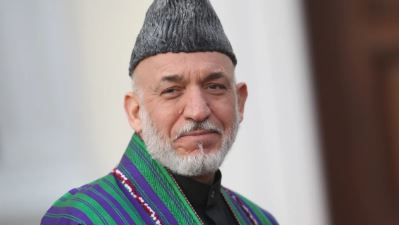
Ali Farid Khwaja appointed as SECP commissioner

Ali Farid Khwaja appointed as SECP commissioner

DNA

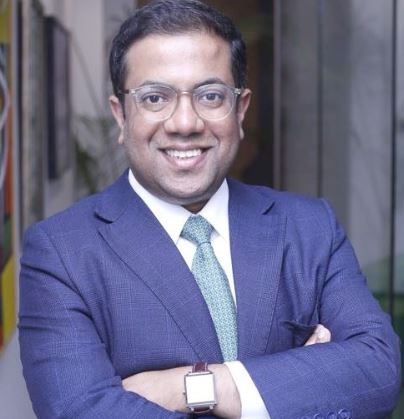
ISLAMABAD: The Federal Government of Pakistan has appointed Mr. Muhammad Ali Farid Khwaja as Commissioner of the Securities and Exchange Commission of Pakistan (SECP) for a three-year term, effective immediately.

The announcement comes via a notice from the Finance Division’s Investment Wing. His remuneration and allowances will be governed by the relevant provisions of the SECP Act.

This appointment brings a seasoned private-sector leader to one of Pakistan’s key financial regulatory bodies. Mr. Khwaja, a prominent Pakistani-British financier, investor, and entrepreneur, specializes in fintech, capital markets, and investment strategy.

He is best known as the Co-founder and Chairman of KTrade Securities (formerly associated with KASB Securities), widely regarded as Pakistan’s largest retail investment and trading platform. Under his leadership, KTrade has driven innovation in accessible stock trading, digital onboarding, and partnerships that have expanded financial inclusion, including collaborations with fintech players like JazzCash.

With over 15 years of experience in equity research and investments, Mr. Khwaja previously served as a Partner at Autonomous Research in London (now part of AllianceBernstein), focusing on European fintech equities.

He also held roles as CFO and Board Director at Safe Charge Group (a London-listed payments firm) and was a top-ranked technology analyst at firms like Berenberg and UBS.

An alumnus of the University of Oxford (as a Rhodes Scholar) and Georgetown Leadership Seminar, he has been recognized for his contributions to Pakistan’s financial sector, including receiving the Pride of Pakistan award.

The move is seen as timely amid efforts to modernize Pakistan’s capital markets. Recent SECP developments include the appointment of Dr. Kabir Ahmed Sidhu as Chairman earlier in January 2026, signaling a push toward stronger governance, market supervision, and reforms in areas like digitalization and investor protection.

Industry observers, including former regulators and market participants, have welcomed Mr. Khwaja’s entry, noting his “real market experience” and “fresh ideas” could accelerate overdue changes in the Pakistan Stock Exchange (PSX) ecosystem, boost investor confidence, and align regulation with global fintech trends.

This appointment underscores the government’s intent to infuse regulatory leadership with private-sector expertise, potentially fostering a more dynamic and transparent securities environment in Pakistan.

Karzai seen as key figure for political reconciliation in Afghanistan

Karzai seen as key figure for political reconciliation in Afghanistan

Shamim shahid

PESHAWAR: Tensions between Pakistan and Afghanistan continue to deepen, with analysts warning that prolonged hostility between Pakistan’s powerful military establishment and Afghanistan’s ruling Taliban could prove damaging for both sides.

Observers note that while future strategies on either side remain unclear, escalating friction has already halted political dialogue, bilateral trade and cross-border movement, further destabilising the fragile economies of both neighbouring countries.

 Afghanistan’s infrastructure, weakened by decades of conflict, remains in ruins, while Pakistan faces increasing security and economic pressures.

Analysts argue that the Taliban leadership lacks experience in political dialogue, reconciliation and diplomacy.

 The group returned to power following the 2020 Doha Agreement, brokered by the United States, despite having failed to capture a single district militarily during years of insurgency against elected Afghan governments between 2002 and August 2021. Critics maintain that international backing, coupled with regional support, enabled the Taliban’s return to power.

Since assuming control, the Taliban’s relationship with Pakistan has deteriorated sharply. Once considered an ally, Pakistan is now viewed by Kabul as hostile, with both sides showing reluctance to engage in talks. Afghan experts dismiss expectations of leadership change within the Taliban, saying internal revolt against supreme leader Mullah Haibatullah Akhundzada is unlikely due to his uncontested authority within the movement.

According to Afghan analysts, even senior Taliban leaders based in Kabul and Kandahar remain largely silent before the supreme leader. Former deputy foreign minister Abbas Stanikzai was among the few who openly criticised leadership decisions in the past, but dissent has since faded. Experts warn that any internal rebellion would risk plunging Afghanistan and the wider region into renewed conflict.

In this context, political observers suggest that dialogue, rather than confrontation, remains the only viable option.

 Among Afghanistan’s political figures, former president Hamid Karzai is widely regarded as a consensus candidate capable of engaging diverse ethnic, political and ideological groups. Despite criticism from some quarters, analysts credit Karzai with restoring central authority after years of war and integrating fragmented Afghan leadership during his tenure.

Karzai is also believed to maintain working relations with several Taliban leaders, positioning him as a potential bridge for reconciliation efforts. Analysts argue that the international community bears responsibility for helping Afghanistan regain regional trust, particularly with neighbouring countries.

Concerns persist over Afghanistan becoming a sanctuary for militant groups, including foreign extremists. Critics also point to changes in the education system, restrictions on women’s rights and reports of forced marriages, warning that these policies risk fostering extremism with regional and global consequences.

Regional experts stress that countries with stakes in Afghanistan should move away from past approaches and collectively pursue political solutions. They argue that sustained regional dialogue is essential to prevent Afghanistan from sliding further into isolation and instability, which could threaten peace beyond its borders.

Russia’s military chief visits troops in east Ukraine: defence ministry

Russia's military chief visits troops in east Ukraine: defence ministry

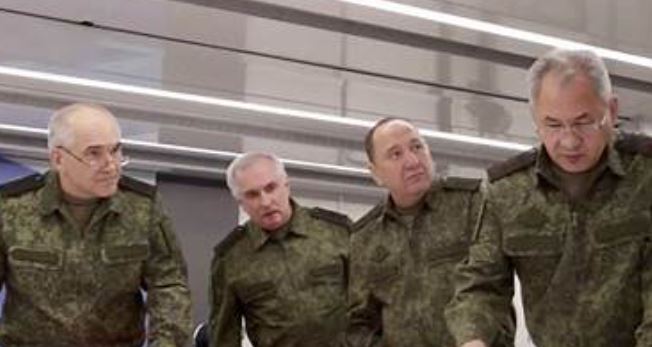
MOSCOW, JAN 27: The Russian army’s chief of staff, Valery Gerasimov, has visited troops fighting in eastern Ukraine, Russia’s defence ministry said on Tuesday.

Gerasimov “inspected the progress of combat missions conducted by formations and units of the Zapad (West) force group,” the ministry wrote on Telegram, without providing details on when or where the visit took place.

The announcement of his visit came days after US-brokered trilateral talks in the United Arab Emirates between Russian and Ukrainian negotiators, aimed at ending the nearly four-year conflict.

The next round is expected to take place on February 1, according to Ukrainian President Volodymyr Zelensky.

In a video of Gerasimov’s visit aired by the defence ministry, he said that Russian troops “continue their offensive along all lines”.

                  He said that since the start of the year, the Russian army had taken control of 17 localities and “more than 500 square kilometres” of Ukrainian territory and was making its way towards the city of Zaporizhzhia.

National essay writing competition 2025 concludes with prize distribution ceremony

National essay writing competition 2025 concludes with prize distribution ceremony

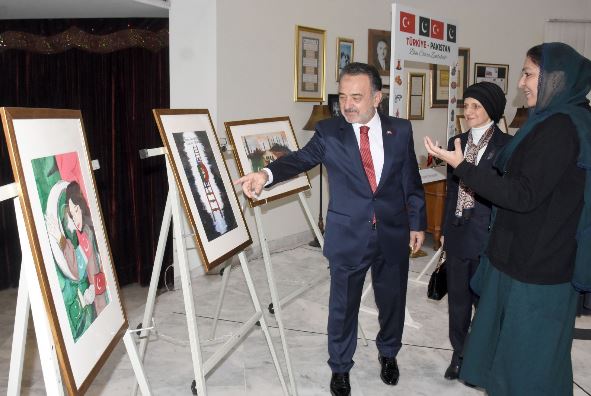
ISLAMABAD, JAN 27 /DNA/ – The Embassy of the Republic of Türkiye, in collaboration with the National Book Foundation (NBF) of Pakistan and the Yunus Emre Turkish Cultural Center, successfully organized the Prize Distribution Ceremony of the National Essay Writing Competition 2025, aimed at university students across Pakistan.

The ceremony was attended by Her Excellency Wajiha Qamar, Minister of State for Federal Education and Professional Training, H.E. Dr. Irfan Neziroglu, Ambassador of the Republic of Türkiye to Pakistan, Dr. Kamran Jahangir, Managing Director of the National Book Foundation, senior officials, representatives of academic and cultural institutions, teachers, parents, and students.

Speaking on the occasion, Ambassador Dr. Irfan Neziroglu highlighted that the essay competition was initiated for two key reasons: to celebrate and honor the centuries-old fraternal bond between Türkiye and Pakistan, and to commemorate the sacrifice of two Turkish engineers, Cenk Yakın and Ufuk Arslan, who were martyred during a relief mission in Balakot following the devastating 2005 earthquake.

The Ambassador recalled that during the historic visit of H.E. President Recep Tayyip Erdoğan to Islamabad last year, both countries agreed to establish a “Shura of Fraternity” to strengthen cooperation in social, cultural, and academic fields. He stated that this competition stands as a practical example of that vision in action.

Ambassador Neziroglu paid tribute to the shared heroes and historical figures of both nations, including Quaid-e-Azam Muhammad Ali Jinnah, Allama Muhammad Iqbal, the Ali Brothers of the Khilafat Movement, and Abdurrahman Peshawari, emphasizing the importance of transferring this shared legacy to future generations through education and awareness. He congratulated all participating students and prize winners for their dedication, creativity, and commitment.

He also expressed appreciation for Anatolia Travel Services for facilitating visa-related services and acknowledged the contributions of Mr. Halil Toker, Country Director of the Yunus Emre Turkish Cultural Center, for his role in strengthening bilateral cultural relations.

Addressing the ceremony, Minister of State Wajiha Qamar warmly welcomed the distinguished guests and congratulated the organizers for arranging a meaningful initiative under the auspices of the Embassy of Türkiye. She emphasized that Pakistan–Türkiye relations are rooted in shared history, faith, values, and mutual respect, and represent a unique example of people-to-people brotherhood.

The Minister highlighted the role of youth and writing in shaping narratives and strengthening international relationships. She encouraged students to view themselves as future diplomats, scholars, and leaders who will further deepen Pakistan–Türkiye ties. She also expressed admiration for Türkiye’s scholarship opportunities and academic exposure for Pakistani students, noting that such exchanges broaden horizons and foster lifelong bonds.

Reaffirming the Government of Pakistan’s commitment to international academic collaboration, the Minister stressed that education remains the strongest bridge between societies. She encouraged students to continue reading, writing, learning foreign languages—particularly Turkish—and exploring global cultures with confidence.

At the conclusion of the ceremony, prizes were awarded to the winning students:

First Prize: Maryam Batool, Akhuwat College for Women, Chakwal

Second Prize: Izza Naeem, University of Management & Technology, Lahore

Third Prize: Muhammad Aariz Zafar, Pakistan Institute of Management Sciences, Peshawar

The ceremony concluded with a renewed commitment to strengthening Pakistan–Türkiye friendship through education, culture, and youth engagement, reaffirming that the relationship between the two nations remains a timeless bond.

U19 World Cup: Sameer Minhas powers Pakistan to victory over New Zealand

U19 World Cup: Sameer Minhas powers Pakistan to victory over New Zealand

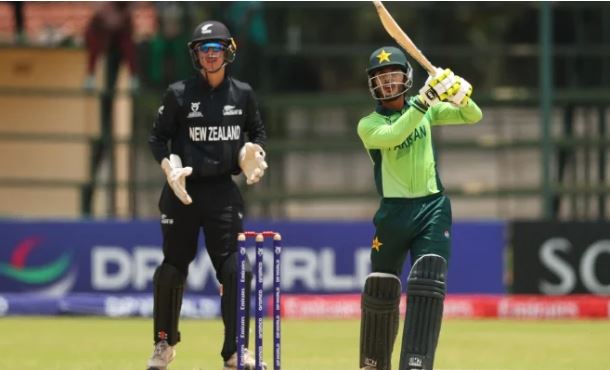
HARARE, JAN 27: Sameer Minhas scored unbeaten 76-run knock as Pakistan beat New Zealand by eight wickets in the Super Sixes fixture of the ICC Men’s U19 World Cup 2026 at Harare Sports Club on Tuesday.

The Green Shirts chased down the 111-run target for the loss of two wickets in 17.1 overs.

Openers Hamza Zahoor and Minhas set the tone early, as the duo dealt in boundaries to put pressure on the New Zealand bowling attack with a solid partnership to launch the chase.

The partnership was broken when Zahoor was dismissed for eight off 11 balls, including two fours, by Mason Clarke, leaving the team at 18-1 after 2.5 overs.

Minhas was in top form with the bat, continuing to score freely and helping his side surpass the 50-run mark in the eighth over.

Usman Khan and Minhas batted sensibly, with the opener scoring the bulk of the runs in their partnership, while Minhas raised his bat for his fourth fifty in Youth ODIs.

However, the 67-run partnership was eventually broken when Luke Harrison claimed the prized wicket of Khan, who scored 15 off 24 balls, including one four, leaving the team at 85-2 in 14.1 overs.

Skipper Farhan Yousaf then came to the crease and added valuable runs, but it was Minhas who struck the winning runs, remaining unbeaten on 76 off 59 balls, featuring 10 fours and two sixes, while Yousaf contributed 11 off nine deliveries.

Batting first, New Zealand got off to a poor start as opener Marco William Alpe was dismissed in the third over by pacer Ali Raza for two runs off seven balls.

The duo of Hugo Bogue and skipper Tom Jones then joined forces to stabilise the innings, aiming to push Pakistan onto the back foot.

However, their 48-run stand was broken when Bogue was dismissed by Mohammad Sayyam, who finished with 39 off 27 balls, including six boundaries and two sixes, leaving New Zealand at 59-2 in 7.5 overs.

In the next over, Jones was dismissed by Abdul Subhan after scoring 15 off 16 deliveries, which included two fours and one six.

The Blackcaps’ struggle continued as they lost two more wickets — Snehith Reddy and Jacob Cotter — for six and two runs respectively, dismissed by Raza and Subhan.

Subhan was in top form with the ball, picking up his third wicket by dismissing Jaskaran Sandhu for a second-ball duck, leaving the team at 67-6 in 12.3 overs.

New Zealand were soon seven down as Brandon Matzopoulos fell for a duck, courtesy of Raza, who claimed his third wicket of the game.

The Blackcaps kept losing wickets at regular intervals as spinner Momin Qamar entered the attack, claiming his first wicket by dismissing Callum Samson for 10 off 22 balls, which included one four, leaving the team struggling at 84 for 8 in 20.5 overs.

Mason Clarke and Hunter Shore batted together, steadily adding crucial runs and taking their team past the 100-run mark in the 25th over.

Subhan returned to the attack and broke a solid partnership by dismissing Mason Clarke for 17 off 48 balls, which included one four, while Hunter Shore was the last batter to be run out after scoring 13.

Subhan was the standout bowler, taking 4/11 in 6.3 overs. Raza claimed three wickets, while Sayyam and Qamar took one each.

ISSI discusses new reality of power politics in Europe

ISSI discusses new reality of power politics in Europe

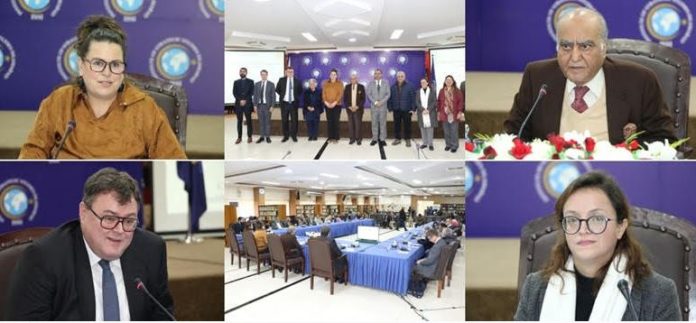
ISLAMABAD, JAN 27 /DNA/ – The Institute of Strategic Studies Islamabad (ISSI) hosted a Public Talk titled “Europe, the Nordics, and the New Reality of Power Politics” on January 27, 2026, organised by the Centre for Strategic Perspectives (CSP) at ISSI. The talk featured Ms. Hedda Langemyr, Founder of UTSYN – Centre for Security and Resilience, Norway, as the Guest Speaker.

In her introductory remarks, Dr. Neelum Nigar, Director, CSP, ISSI, welcomed the distinguished guest speaker and the participants. She highlighted the growing significance of European security dynamics and the relevance of Nordic strategic thinking in the evolving international environment. Dr. Neelum appreciated Ms. Hedda Langemyr for visiting ISSI and sharing her expertise on a timely and critical subject, noting that such engagements contribute meaningfully to informed policy discourse and broader understanding of emerging geopolitical realities.

In his welcome remarks, the Chairman, Board of Governors (BoG), ISSI, Ambassador Khalid Mahmood, warmly welcomed Ms. Langemyr and the participants, and appreciated CSP for convening a timely and thought-provoking discussion. He noted that global politics is witnessing an intensified return of power-based competition, strategic uncertainty, and evolving security challenges. Ambassador Khalid Mahmood underlined that Europe’s assumptions regarding stability and institutional security have been increasingly tested in recent years, prompting European states to reassess long-standing approaches to deterrence, sovereignty, and strategic autonomy.

He further observed that the Nordic region has assumed greater strategic relevance in the contemporary security landscape. Historically known for diplomacy, social stability, and rules-based cooperation, the Nordics are now adapting to a transformed environment marked by renewed concerns relating to territorial defence, crisis preparedness, resilience, and non-traditional threats such as hybrid warfare, cyber operations, and information threats. He noted that developments in Europe, the Arctic, the Baltic, and the North Atlantic are increasingly consequential for wider global stability, with important implications beyond Europe, including for South Asia.

Delivering her keynote address, Ms. Hedda Langemyr thanked ISSI for hosting her and expressed her appreciation for the opportunity to engage with scholars and practitioners in Pakistan. She observed that international politics is shifting away from a system largely shaped by diplomatic reassurance and institutional routines, toward an environment in which actions, leverage, and power are increasingly determining outcomes.

Ms. Langemyr discussed how geography and history continue to shape Nordic security thinking, particularly for Norway as a small state located in close proximity to Russia and strategically sensitive northern waters. She recalled Norway’s early role in NATO and explained how its Cold War security posture combined deterrence with reassurance through strategic self-restraint and calibrated defence planning. She also highlighted how the Arctic, previously peripheral in political terms, has now acquired major geopolitical significance due to climate-driven transformation, economic competition, and the growing strategic interest of major powers.

Highlighting the rapidly changing security landscape, Ms. Langemyr pointed to emerging challenges involving critical infrastructure, undersea cables, hybrid pressure, cyber threats, and disinformation, noting that ambiguity and uncertainty often remain central features of such pressure. She emphasized the increasing relevance of “total defence” approaches, which focus on whole-of-society preparedness and robust coordination among civilian authorities, industries, and defence institutions, an approach that has gained renewed urgency across the Nordics and Europe.

She concluded by stressing that while Europe possesses significant economic and technological strength, its key challenge lies in cohesion and strategic coordination. She underscored the importance of greater cooperation among small and medium-sized states and called for deeper engagement, research collaboration, and sustained dialogue between Europe and other regions, including South Asia.

The session concluded with an interactive question-and-answer discussion, reflecting strong audience interest in the topic. In the end, Ms. Hedda Langemyr was presented with ISSI memento by Chairman BoG ISSI Ambassador Khalid Mahmood.

Saudia, Air India sign codeshare agreement

Saudia, Air India sign codeshare agreement

Providing guests with expanded travel and flight options

RIYADH, JAN 27 /DNA/ – Saudia, the national flag carrier of Saudi Arabia, and Air India, India’s leading global airline, have signed a codeshare agreement that will take effect in February. The agreement introduces a range of benefits for Saudia’s and Air India’s guests, boosting connectivity, enhancing travel experience, strengthening network access, maximizing flight options, and supporting growing demand across tourism, business travel, and wider guest segments.

Through the new partnership, guests will enjoy streamlined booking and ticketing, smooth connections using a single itinerary, and baggage check-through to their final destination.

The codeshare will provide Saudia’s guests access to major cities across India via Mumbai and Delhi, including Ahmedabad, Bengaluru, Kolkata, Kochi, Hyderabad, Chennai, Lucknow, and Jaipur and more than 15 other destinations as interline.

Air India guests travelling to Jeddah or Riyadh with Air India can take seamless onward connections on Saudi-operated flights to Dammam, Abha, Gassim, Gizan, Madinah, and Taif. The addition of codeshare flights on the Jeddah-Riyadh route now allows guests more flexibility to arrive in one city and depart from another. Connections to select complementary international destinations will be added later this year.

H.E. Engr. Ibrahim Al-Omar, Director General of Saudia Group, said: “The codeshare agreement with Air India marks a strategic step forward, given both airlines’ long histories and their shared commitment to increasing connectivity within their home markets and between their countries, while offering guests broader access to more destinations through simplified travel procedures that elevate the overall travel experience.”

He added: “Saudia’s presence in India spans over 60 years, during which we’ve proudly served a wide range of guests and helped foster stronger ties between our two nations. Saudia Arabia is a great place to visit, and with seamless e-visas, stopover visas, and also visa-on-arrival for eligible Indian passport holders, it has never been easier to visit the Kingdom.”

Campbell Wilson, Chief Executive Officer & Managing Director, Air India, said: “Saudi Arabia is amongst our most important markets in the Middle East, with the country fast transforming into a major international gateway to the region. We are happy to be partnering with Saudia to provide greater access to the large Indian diaspora spread across Saudi Arabia as well as to open up the Kingdom’s rapidly evolving and diverse tourism offerings and remarkable destinations to holidaymakers from India.”

Saudia currently has 25 active codeshare agreements, enabling its guests to access more than 100 additional international destinations. These agreements also allow travelers on partner airlines to reach a wide range of domestic destinations in the Kingdom, reinforcing Saudia’s role in expanding global connectivity and bringing the world to Saudi Arabia.

Pakistan’s history & heritage exhibited in Hong Kong

Pakistan's history & heritage exhibited in Hong Kong

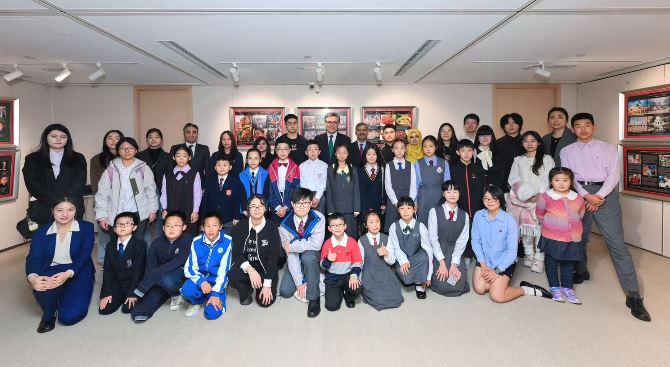
HONG KONG, JAN 27 /DNA/ – Khalil Hashmi, Ambassador of Pakistan to the People’s Republic of China, inaugurated the exhibition titled “A Pictorial Depiction of History, Heritage and Diversity of Pakistan” in Hong Kong SAR, held in celebration of the 75th Anniversary of the Establishment of Diplomatic Relations between Pakistan and China. The event was co-hosted with JDB Group and Harvest Epoch Strategic International Investment Group in Hong Kong. A large number of Chinese children, including those in primary school formed a part of the audience. The event also saw active participation by China International Cultural Communication Center.

The project was originally conceived in 2020 and further developed over the last two years, resulting in eighty original collages, arranged chronologically across various themes and accompanied by Chinese translations. The collection was donated to JDB Hong Kong as a lasting cultural contribution.

Speaking on the occasion, the Ambassador underscored the enduring strength of Pakistan-China relations, noting that the 75th anniversary commemorations began in Beijing earlier this month with the joint inauguration of the anniversary logo by Pakistan’s Deputy Prime Minister and Foreign Minister alongside China’s Foreign Minister Mr. Wang Yi. The Ambassador noted that the collages offer a visual journey through Pakistan’s ancient roots, Muslim heritage, freedom movement, geography and landscapes, historic monuments, religious architecture, arts and sciences, sports, languages, and the diversity of its people, presenting Pakistan as a layered and evolving civilization. He also pointed to cultural convergences between Pakistan and China, including shared heritage such as Gandhara art.

Ambassador Hashmi expressed sincere appreciation to JDB Hong Kong, Harvest Epoch Strategic (International) Investment Limited, the China International Cultural Communication Center, and partners in Hong Kong for hosting and supporting the exhibition.

During his visit to Hong Kong, the Ambassador also engaged with Mr. Cui Jianchun, Commissioner of Chinese Foreign Ministry in Hong Kong. He also had engagements on the business side, including with Hong Kong Trade Development Council. He also paid a visit to Cyberport. All these meetings focused on further fortifying Pakistan-Hong Kong ties under the overall rubric of Pakistan-China strategic partnership.

Pakistan-Myanmar ties gain momentum

Pakistan-Myanmar ties gain momentum

Ansar Mahmood Bhatti

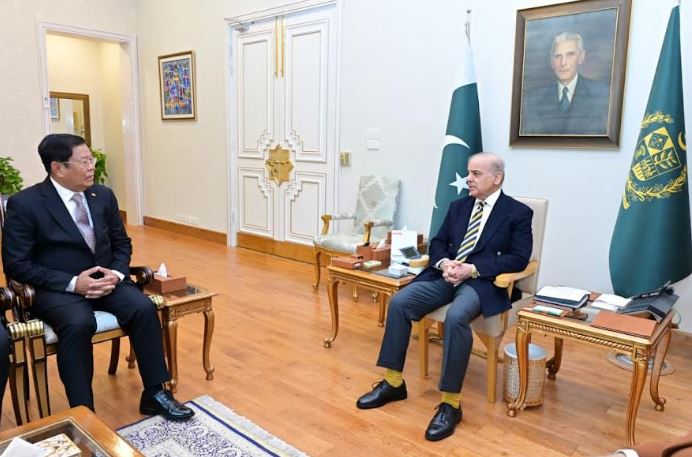
ISLAMABAD, JAN 27 /DNA/ – In a significant diplomatic engagement underscoring Pakistan’s outreach to Southeast Asia, Union Minister for Foreign Affairs of the Republic of the Union of Myanmar, H.E. U Than Swe, paid a courtesy call on Prime Minister Muhammad Shehbaz Sharif this morning at the Prime Minister’s Office. The meeting, held on January 27, 2026, came amid the Myanmar Foreign Minister’s ongoing official visit to Pakistan, which has already seen high-level bilateral talks and the signing of key institutional mechanisms.

Welcoming the visiting dignitary warmly, Prime Minister Shehbaz Sharif reaffirmed Pakistan’s longstanding commitment to deepening relations with Myanmar. He highlighted the potential for expanded cooperation across diverse sectors, including trade and economic engagement, education, culture, capacity-building, and enhanced people-to-people exchanges.

The Prime Minister particularly appreciated Myanmar’s constructive role in combating human trafficking and its consistent support for Pakistan’s growing engagement with ASEAN, reflecting shared interests in regional stability and connectivity.

The Myanmar Foreign Minister conveyed heartfelt greetings and good wishes from Myanmar’s leadership to the Prime Minister and the people of Pakistan. Expressing gratitude for the gracious hospitality extended to him and his delegation, U Than Swe reiterated Myanmar’s keen desire to broaden bilateral ties in areas of mutual benefit.

He specifically thanked Pakistan for its prompt and generous assistance following the devastating March 28, 2025, earthquake in central Myanmar—a 7.7-magnitude tremor that struck near Mandalay, claiming thousands of lives, destroying tens of thousands of homes, and causing widespread devastation across Sagaing, Mandalay, and other regions. Pakistan’s timely humanitarian aid, including relief supplies and support through international channels, was warmly acknowledged as a testament to enduring friendship.

The meeting was attended by Deputy Prime Minister and Foreign Minister Senator Mohammad Ishaq Dar, along with Special Assistant to the Prime Minister on Foreign Affairs Tariq Fatemi, underscoring the high priority accorded to this engagement.

The courtesy call builds on productive discussions held a day earlier between Foreign Minister Dar and Union Minister U Than Swe at the Ministry of Foreign Affairs. Those talks covered the full spectrum of bilateral relations, with both sides pledging to bolster cooperation in economy, agriculture, livestock, manufacturing, trade, technology, healthcare, and culture.

A key outcome was the signing of an Arrangement for the Establishment of Foreign Office Consultations, creating a structured mechanism for regular dialogue on bilateral, regional, and international issues. Pakistan also reaffirmed its support for a peaceful, stable, and prosperous Myanmar, expressing confidence in the country’s potential role in fostering regional reconciliation and shared development.

This visit—the first high-level Myanmar engagement in Islamabad in recent years—signals Islamabad’s strategic push to strengthen links with ASEAN nations amid evolving regional dynamics. With Myanmar marking 77 years of diplomatic relations with Pakistan in 2026, both sides appear poised to translate goodwill into tangible outcomes, including increased trade volumes, investment flows, religious tourism, and closer coordination in multilateral forums such as the United Nations, ASEAN, and the Shanghai Cooperation Organization.

Observers note that the renewed momentum could open avenues for Pakistani businesses to explore opportunities in Myanmar’s recovering economy, while Myanmar benefits from Pakistan’s expertise in agriculture, pharmaceuticals, and textiles. As Prime Minister Sharif emphasized broader people-to-people and academic ties, the visit lays a foundation for sustained, multifaceted partnership that contributes to peace and prosperity in South and Southeast Asia.=DNA

=================

Stay Connected

64FansLike
60FollowersFollow

Latest Reviews

Exchange Rates

USD - United States Dollar
EUR
1.14
GBP
1.34
AUD
0.70
CAD
0.71