Home Blog Page 274

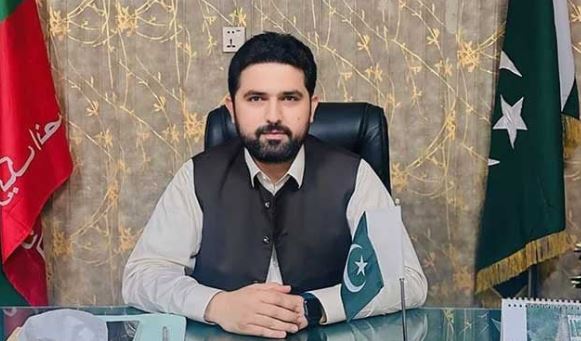
Islamabad court issues non-bailable arrest warrant for CM Afridi in cybercrime case

Islamabad court issues non-bailable arrest warrant for CM Afridi in cybercrime case

ISLAMABAD: An Islamabad district and sessions court on Wednesday issued a non-bailable arrest warrant for Khyber Pakhtunkhwa (KP) Chief Minister (CM) Sohail Afridi over his repeated failure to appear in a case involving alleged misleading statements against state institutions.

Senior Civil Judge Abbas Shah issued the warrant after Afridi did not attend the hearing despite being summoned by the court. Taking notice of his continuous non-appearance, the court ordered his arrest and production before the court.

The court adjourned further proceedings in the case until February 10.

The National Cyber Crime Investigation Agency (NCCIA) had registered a case against the KP chief minister under the Prevention of Electronic Crimes Act (Peca), accusing him of making statements that allegedly harmed the reputation of state institutions.

In addition to the cybercrime case, CM Afridi is facing proceedings in an anti-terrorism court over his alleged role in the November 26 protest in Islamabad.

KP chief minister is also facing a case before the Election Commission of Pakistan (ECP) over an alleged violation of the code of conduct during a recent by-election for a National Assembly seat in Khyber Pakhtunkhwa.

A day earlier, the Peshawar High Court (PHC) restrained the ECP from taking any action or issuing a final order against the CM Afridi in a case related to a notice served over alleged threats to government officials during the Haripur by-election.

A two-member bench comprising Justice Syed Arshad Ali and Justice Faheem Wali heard the writ petition filed by Chief Minister Sohail Afridi. His counsel Bashir Khan Wazir appeared before the court and argued that the ECP had taken notice of a speech delivered by the chief minister during a public gathering, alleging that he had threatened government officials, The News reported on Wednesday.

The counsel maintained that the speech in question was delivered outside the constituency where the National Assembly by-election was being held, and that the chief minister was on a province-wide tour announcing development projects. Despite this, the ECP issued a notice and initiated proceedings against him.

During the hearing, Justice Arshad Ali asked the petitioner’s counsel whether the ECP’s decision had been received. The lawyer responded that the decision had just been received and was available with a supplementary application. The court summoned the record of the ECP decision and briefly adjourned the hearing.

Pakistan Navy promotes two officers to rank of Rear Admiral

Pakistan Navy promotes two officers to rank of Rear Admiral

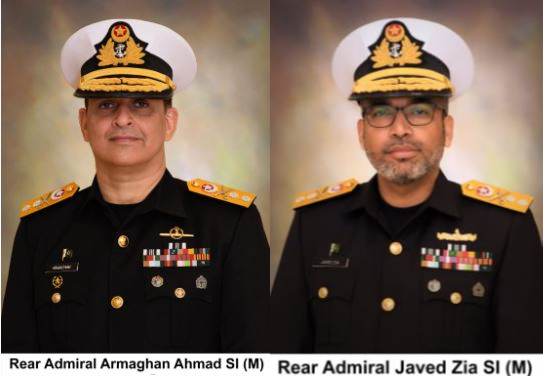
ISLAMABAD, JAN 28 /DNA/ – Two senior officers of the Pakistan Navy have been promoted to the rank of Rear Admiral.

Rear Admiral Javed Zia joined the Pakistan Navy in 1994 as part of its Weapon Engineering Branch. He is a graduate of the Pakistan Navy War College in Lahore and the National Defence University in Islamabad. He also holds a Master of Science degree in Electrical Engineering from the National University of Sciences and Technology (NUST). Throughout his distinguished career, he has served in several key positions. Currently, Rear Admiral Javed Zia is serving as the Deputy Chief of Naval Staff (Material) at the Naval Headquarters in Islamabad.

Rear Admiral Armghan Ahmad also joined the Pakistan Navy in 1994, entering the Marine Engineering Branch. He is a graduate of the Pakistan Navy War College in Lahore and the National Defence University in Islamabad. He too holds a Master of Science degree, his in Manufacturing Systems Engineering and Management from NUST. He has extensive experience from various important appointments during his career. Currently, Rear Admiral Armghan Ahmad is serving as the Managing Director of the Pakistan Navy Dockyard in Karachi.

In recognition of their exceptional services, both officers have been awarded the Sitara-i-Imtiaz (Military), a high state honor.

HEC launches national taskforce to reform PhD education

HEC

ISLAMABAD, JAN 28 /DNA/ – The Higher Education Commission (HEC), Pakistan has constituted a National Strategic Taskforce on Doctoral Education Reforms (NST-DER) to undertake a comprehensive review of the country’s doctoral education system and recommend forward-looking reforms.

The Taskforce will assess the quality, relevance, sustainability, equity, and global competitiveness of doctoral education in Pakistan, and propose strategic, regulatory, and implementation-oriented reforms aligned with national development priorities. Its work will cover the full doctoral lifecycle, including admissions, supervision, research environment, funding, quality assurance, and post-PhD career pathways.

Comprising senior academics, policymakers, quality assurance experts, international scholars, industry representation, and doctoral student input, the taskforce will adopt an inclusive and evidence-based approach, supported by advanced data analytics and international benchmarking, while ensuring full academic judgment and oversight.

The Taskforce is mandated to submit a phased reform blueprint and implementation roadmap to strengthen doctoral education outcomes over the medium to long term.

The initiative, taken under the leadership of Executive Director HEC Dr. Zia Ul Haq, reflects HEC’s continued commitment to enhancing research quality, human capital development, and Pakistan’s global standing in higher education. Emphasising a collective national effort, Dr. Zia Ul Haq has encouraged higher education institutions to contribute meaningful inputs, in the spirit of HEC’s quality assurance campaign, “Together for Excellence.”

20-member squad for FIH Pro League and World Cup Qualifiers

20-member squad for FIH Pro League and World Cup Qualifiers

These matches form part of Pakistan’s debut season in the elite FIH Pro League, following their promotion after finishing runners-up in the Nations Cup. The series will be a tough test against higher-ranked opponents, but it marks a significant step in Pakistan hockey’s revival on the global stage

DNA

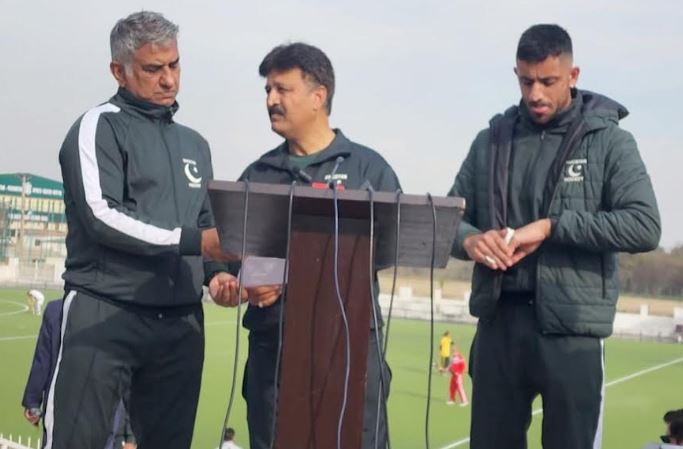
Islamabad — The Pakistan Hockey Federation (PHF) has officially announced the national men’s hockey team squad for the second phase of the FIH Hockey Pro League 2025-26 and the upcoming World Cup qualifying round. The 20-player squad, along with six officials, will depart for Australia on February 2, 2026.The announcement was made at the Naseer Bunda Hockey Stadium by PHF Secretary Rana Mujahid and Head Coach Tahir Zaman.

The same squad will represent Pakistan in both the Pro League matches in Australia and the FIH Hockey Men’s World Cup Qualifiers (scheduled for early 2026, including events in Egypt and other venues).Mohammad Emmad Butt (also referred to as Imad Butt) will captain the Green Shirts.Squad Changes for Pro LeagueTwo changes have been made to the squad compared to the earlier phase (played in Argentina in December 2025):Goalkeeper Abdullah Ishtiaq has been replaced by Ali Raza.

Manan Raza (or Abdul Manan) has been replaced by Umeer Sattar (Umir Sattar).

Full Squad (Players)Muneeb ur Rehman

Ali Raza

Arshad Liaquat

Mohammad Abdullah

Sufyan Khan

Arbaz Ahmad

Hamad Anjum

Moeed Shakeel (Moeen Shail)

Ghazanfar Ali

Zakaria Liaquat (Zakrya Liaqat)

Umeer Sattar

Hanan Shahid (Abdul Hanan Shahid)

Rana Waheed

Nadeem Ahmad (Ahmed Nadeem)

Abdul Rehman

Rana Waleed (Rana Mohammad Walid)

Afraz

Abu Bakar

(The squad comprises 18 named players in the announcement, with two additional spots likely reserved or to be confirmed.)OfficialsHead Coach: Tahir Zaman

Mohammad Usman

Zeeshan Ashraf

Nadeem Lodhi

Mohammad Aslam

Adeel

Key StatementsPHF Secretary Rana Mujahid confirmed that players’ outstanding dues have been raised with the government, and all payments are expected to be cleared by Friday.

Head Coach Tahir Zaman noted that facing strong teams like Australia and Germany will be challenging, but the Pro League provides a valuable opportunity. Pakistan will play 16 matches in the league overall, offering excellent preparation ahead of the World Cup qualifiers.

He emphasized that this is a rare chance after a long time to compete against top-ranked nations, ensuring solid practice for the team.Captain Mohammad Emmad Butt said the players’ morale is high, things are improving, and he hopes the Prime Minister will provide further support to the national sport.Match Schedule (Hobart, Australia – Second Phase)February 10, 2026: Pakistan vs Australia

February 11, 2026: Pakistan vs Germany

February 13, 2026: Pakistan vs Australia

February 14, 2026: Pakistan vs Germany

These matches form part of Pakistan’s debut season in the elite FIH Pro League, following their promotion after finishing runners-up in the Nations Cup. The series will be a tough test against higher-ranked opponents, but it marks a significant step in Pakistan hockey’s revival on the global stage. Pakistan hockey fans will be watching closely as the Green Shirts aim to build momentum for the World Cup qualification campaign.

SIAL welcomes Russian Ambassador

SIAL welcomes Russian Ambassador

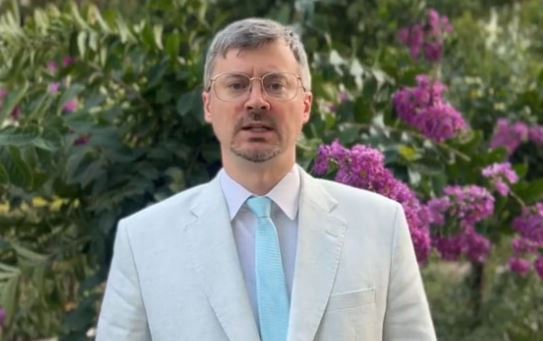
SIALKOT, JAN 28 (DNA): Sialkot International Airport (SIAL) on Wednesday hosted Russian Ambassador to Pakistan Albert P.Khorev during his official visit.

According to a spokesperson,the ambassador was received by Chairman SIAL Hassan Ali Bhatti,Vice Chairman(VC) Waqas Afzal,board members including former chairmen and CEO AVM Tanweer Ashraf Bhatti (R). He was accompanied by Russian Trade Representative Denis Nevzorov.

During the visit,Chairman Bhatti briefed the ambassador on SIAL’s origins,operational achievements and its distinction as Pakistan’s first privately built and operated international airport.

Ambassador Khorev praised the Sialkot business community for turning a bold vision into a leading institution and highlighted Sialkot’s reputation in Russia for high-quality products.

He expressed interest in strengthening trade ties,exploring free trade opportunities and initiating direct passenger and cargo flights between Sialkot and Russia.

Chairman Bhatti welcomed the ambassador’s visit and reaffirmed SIAL’s commitment to future cooperation and collaboration.

Board of Peace welcomes Belarus as founding member

Board of Peace welcomes Belarus as founding member

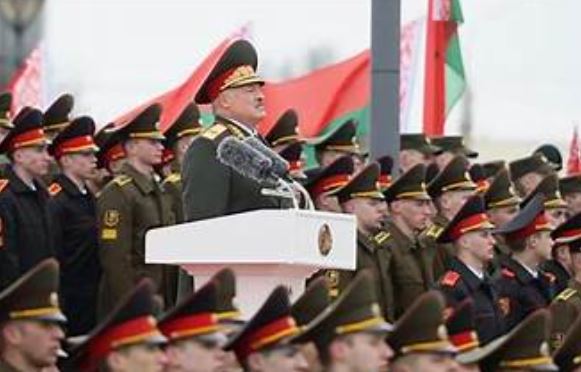
MINSK, JAN 28: The Board of Peace has welcomed Belarus as one of the founding members of the organization. The corresponding statement was published on the board’s official social media account on X.

“The Board of Peace welcomes Belarus as one of the founding members of our growing international organization,” the statement reads.

Cambodia, Thailand trade veiled barbs at UNSC debate

Cambodia, Thailand trade veiled barbs at UNSC debate

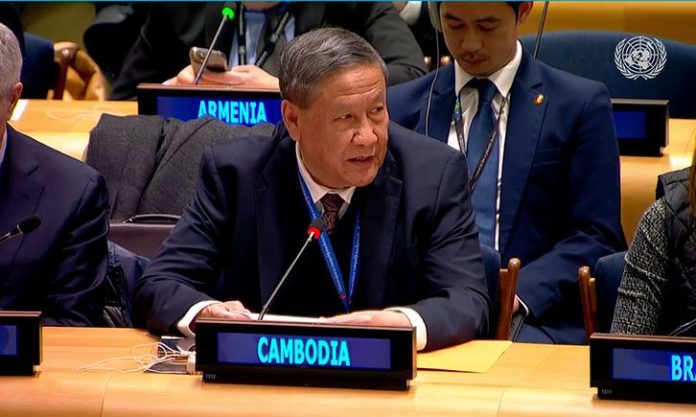
SYNPOSIS, JAN 28: Cambodia’s Permanent Representative to the UN Keo Chhea says Kingdom’s sovereignty is preserved by the international rule of law.

At an open debate at the UN Security Council (UNSC), estranged neighbours Cambodia and Thailand avowed compliance with international law—a principle also championed by regional bloc ASEAN—but did not forget to indirectly target one another over a festering border dispute.

The UNSC debate on Monday was organised under the agenda, “The promotion and strengthening of the rule of law in the maintenance of international peace and security.” Led by Somalia as the president, the forum aimed to “reaffirm the importance of the international rule of law for the maintenance of peace and security in the world and to identify ways and means of fortifying it and preventing its gradual erosion through breaches and violations.”

Earlier during the debate, the Philippines’ UN Permanent Representative, Enrique Manalo, delivered his statement on behalf of his country in its capacity as the current rotating ASEAN Chair.

“We affirm our commitment to the declaration and principles of international law concerning friendly relations and cooperation among states in accordance with the UN Charter,” he said.

“We also continue to promote the rule of law in all its aspects and affirm our commitment to peace and security, good governance and the promotion and protection of human rights enshrined in the ASEAN Charter.”

Thai Ambassador to the United Nations Cherdchai Chaivaivid speaks at the debate. UNSC
“In this regard, ASEAN reaffirms the importance of upholding international law, including the UN Charter and the 1982 UNCLOS, as well as ASEAN’s shared values and norms enshrined in the ASEAN Charter and the Treaty of Amity and Cooperation in Southeast Asia, among others.”

He added that ASEAN remained committed to strengthening its community and the peaceful resolution of disputes, including through the respect for legal and diplomatic processes, without resorting to the threat or use of force, in accordance with the universally recognised principles of international law.

In his remark, Cambodia’s Permanent Representative to the United Nations Keo Chhea expressed the Kingdom’s alignment with the notion presented by the ASEAN Chair. He highlighted that strict adherence to international legislation is more important than ever, given that its authority is being “tested” in the contemporary global setting.

Chhea also noted that the international rule of law for Cambodia is the very condition upon which sovereignty, territorial integrity, and equality of state are preserved. He also cited and called for absolute compliance with Article 2.4 of the UN Charter, which entails the prohibition of the threat or use of force against the territorial integrity of any state.

“Actions that seek to alter the status quo on the ground constitute a clear violation of international law and the risk of escalating tensions,” he said. “Cambodia emphasises that the peaceful settlement of disputes, as required by Article 2.3 of the Charter, is a binding legal obligation.”

The Cambodian PR also stressed that border and territorial disputes demand resolutions exclusively through peaceful and lawful means.

“Judicial settlement, including recourse to the International Court of Justice (ICJ), is a credible and principled pathway available to states,” Chhea added. “Cambodia calls for the effective and strengthened implementation of the Security Council Resolution 2788 of 2025, which reaffirms the mechanism for the peaceful settlement of disputes and preventive diplomacy.”

Prevention, according to Chhea, remains the most humane, cost-effective and legally sound investment an international community can make. Based on this principle, he explained that a visible and capable UN presence on the ground politically, financially, and operationally is essential not only for the de-escalation but also for the prevention of disputes.

Chhea also addressed the international humanitarian law, describing the legislature as an “essential and inseparable component of the international rule of law.”

“Civilian life must be protected in all circumstances,” he added. “Acts of aggression involving the targeting of civilians, the destruction and pillaging of civilian property, the obstruction of civilian return, the illegal occupation of territory, and the damage or destruction of cultural heritage constitute a breach of international humanitarian law.”

Speaking later in the same venue, Chhea’s Thai counterpart at the UN, Cherdchai Chaivaivid, also gave a similar statement. He said Thailand is deeply concerned by the growing reliance on power projection and unilateral actions for the undermining of the already weakened international order.

“At this difficult time, redoubling our collective efforts to uphold and protect the international rule of law is imperative,” he said.

Thailand underscored that the international rule of law is fundamental to maintaining global peace and security by enabling peaceful dispute resolution and restraining the use of power; that accountability is essential to prevent impunity and ensure international law is applied impartially without exceptions; and that upholding the rule of law is a shared global responsibility requiring collective commitment across regions and political divides.

“Only through genuine multilateral cooperation, mutual accountability and good faith engagement can we preserve the credibility of the international rule of law and ensure that rules rather than might govern international relations,” Cherdchai added.

Without the adherence and upholding of international rule of law, the Thai PR said, peace cannot endure, international justice becomes selective and multilateralism loses its credibility.

“The principles of sovereign equality, territorial integrity and the political independence of any state must be upheld in practice, not merely invoked in rhetoric,” he added. “Those who consistently call on others to respect international law must themselves adhere to it fully and in good faith.”

While both the Cambodian and Thai representatives appeared to support the principle mentioned by the Philippines during the debate, it was clear that the two of them were attacking one another directly. Cambodia’s remarks allude to Thailand’s actions along Cambodian territory, while Thailand’s statement responded accordingly.

Youk Chhang, Director of the Documentation Centre of Cambodia, described Thailand’s statement at the UNSC debate as a hypocrisy, considering its multiple illegal encroachments into Cambodia in the past seven months as well as the Thai military’s illegitimate occupation of Cambodia’s territory.

“Thailand militarily occupies 14 different areas of Cambodia, which is inconsistent with these US-brokered ceasefire agreements,” he said. “This issue is Thailand’s indifference and even violations of the US-brokered ceasefire agreement.

Iran denies requesting negotiations with US amid tensions

Iran denies requesting negotiations with US amid tensions

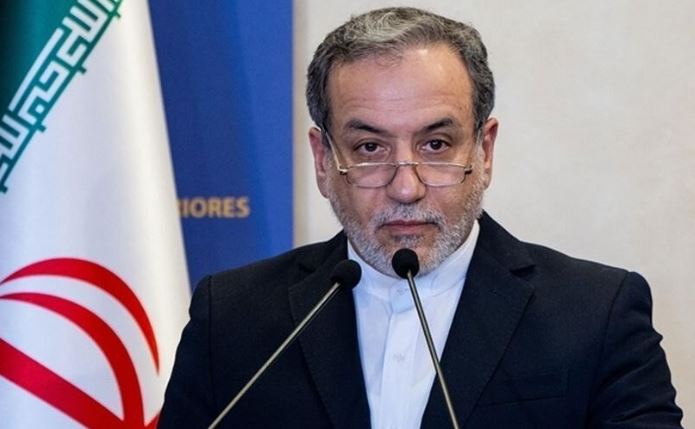
TEHRAN, JAN 28: Iran on Wednesday rejected claims that it had sought negotiations with the United States, with Foreign Minister Abbas Araqchi firmly denying any recent contact with Washington amid rising regional tensions.

Iran’s Foreign Minister Abbas Araqchi said he had not been in contact with US special envoy Steve Witkoff in recent days. He also dismissed reports suggesting Tehran had requested negotiations with Washington.

“There was no contact between me and Witkoff in recent days and no request for negotiations was made from us,” Araqchi told Iranian state media.

Intermediaries remain in touch
While denying direct engagement, Araqchi acknowledged that indirect channels remain active. He said various intermediaries were “holding consultations” and were in contact with Tehran.

However, he made clear that these contacts should not be interpreted as a move toward formal talks with the United States.

Iran rejects talks under threats
Araqchi reiterated Iran’s long-standing position that negotiations cannot proceed under pressure. He said talks are only possible when threats and what he described as “excessive demands” are removed.

“Our stance is clear,” he said, adding that negotiations do not go along with menaces.

The remarks came a day after US President Donald Trump said another “armada” was moving toward Iran. Trump also expressed hope that Tehran would eventually make a deal with Washington.

The United States has recently deployed additional military assets to the Gulf region following nationwide protests in Iran. The unrest led to the country’s deadliest crackdown since the 1979 Islamic Revolution.

Marsh calls Pakistan series crucial preparation for T20 World Cup

Marsh calls Pakistan series crucial preparation for T20 World Cup

Australian captain Mitchell Marsh has heaped praise on Pakistan star Babar Azam, calling him the best player, as both teams gear up for a high-stakes T20I series ahead of the ICC Men’s T20 World Cup.

Speaking during the unveiling of the Pakistan-Australia T20 series trophy, Mitchell Marsh said he has immense respect for Babar Azam. The Australian captain described Babar as the best player and acknowledged his consistency and impact at the international level.

“I respect Babar Azam as a player a lot,” Marsh said, highlighting the mutual admiration between players from both sides.

Marsh emphasized the importance of the series, calling it a vital opportunity for preparation ahead of the T20 World Cup. He said competitive matches against Pakistan would help Australia fine-tune their combinations and strategies.

“The series is very important for preparing for the World Cup,” the Australian captain said.

Happy to be in Pakistan

Expressing his excitement about touring Pakistan, Marsh said he was pleased to arrive in Lahore. He also shared a light-hearted moment, admitting he did not expect the weather to be so cold.

“I am happy to come to Pakistan. I did not think it would be cold here, so I did not wear very warm clothes,” he said with a smile.

Marsh acknowledged Pakistan’s strong bowling tradition, especially its fast bowlers. He said Australian players are well aware of Pakistan’s history of producing world-class pacers and are prepared for the challenge.

“Pakistan’s fast bowlers have a memorable history,” he noted.

Australia ready despite absentees
The Australian captain said his team is ready for the series despite several key players missing. A 17-member Australian squad arrived in Lahore on Wednesday ahead of the three-match T20I series, which begins on Thursday at the Gaddafi Stadium.

The team will take a day’s rest before the opening match. Reports suggest that Mitchell Marsh and wicketkeeper-batter Josh Inglis may miss the first T20I, with Travis Head expected to lead the side as stand-in captain.

The second and third T20Is will be played at the Gaddafi Stadium on January 31 and February 1. The toss for each match is scheduled for 5:30 pm PKT, with the first ball to be bowled at 6:00 pm PKT.

The series will serve as crucial match practice for both sides ahead of the T20 World Cup, which will be held in India and Sri Lanka from February 7 to March 8.

Bangladesh industrial shift is blueprint for South Asia: Expert

Bangladesh industrial shift is blueprint for South Asia: Expert

ISLAMABAD, JAN 28 /DNA/ – Renowned Japanese development economist and a former visiting fellow at the Bangladesh Institute of Development Studies, from Ritsumeikan Asia Pacific University, Japan, Prof. Yamagata Tatsufumi on Monday at the special guest lecture on Bangladesh’s development trajectory highlighted that the country has effectively transitioned from a typical South Asian economy to an East Asian powerhouse by adopting a high-intensity industrial development model that offers important lessons for Pakistan and other South Asian countries.

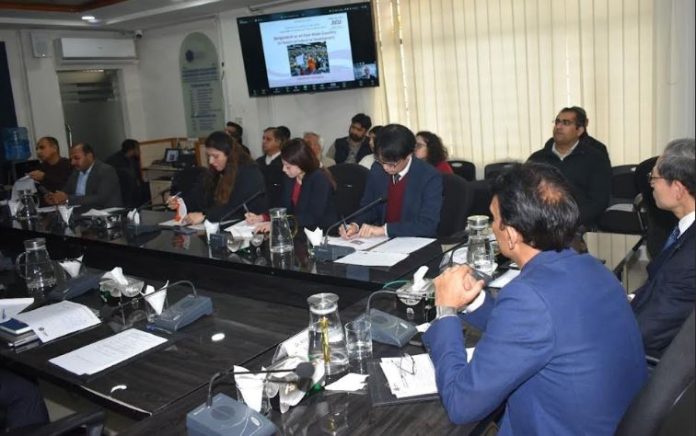
The distinguished guest lecture titled “Bangladesh as an East Asian Country: Its Pattern of Industrial Development”, co-hosted by the Sustainable Development Policy Institute (SDPI) and the Embassy of Japan, was attended by participants online and brought together policymakers, researchers and development practitioners to discuss regional industrialization, export competitiveness and labor-intensive growth.

Opening the session, Dr. Abid Qaiyum Suleri, Executive Director SDPI, said that Bangladesh’s development experience is particularly relevant for Pakistan due to strong similarities in natural resource endowments and economic structure. He noted that Bangladesh’s strategic shift towards an East Asian development model helped expand its export share and significantly increase women’s participation in the workforce.

Dr. Suleri observed that Pakistan and Bangladesh were once competitors in sectors such as bicycle exports, but Bangladesh has since captured a substantial share of that market. He described the Japanese expert’s perspective on Bangladesh’s economic transformation as eye-opening for South Asian countries and in line with SDPI’s mandate to promote evidence-based policymaking.

In his lecture, Prof. Yamagata argued that while Bangladesh is geographically a South Asian country, its development pattern increasingly resembles that of East Asia. He amid drawing on his experience as a visiting fellow at the Bangladesh Institute of Development Studies, challenged the race to the bottom argument that attributes the growth of Bangladesh’s apparel exports solely to labor exploitation. Instead, he described the ready-made garments sector as a window for diversification and a foundation for broader industrial development.

He said Bangladesh serves as a natural reference point for Pakistan, noting historical complementarities along the textile value chain, where Pakistan has strength in upstream segments while Bangladesh has built competitiveness in downstream manufacturing. According to Prof. Yamagata, Bangladesh is comparable to Pakistan across several economic indicators and is gradually catching up with India, while also narrowing the gap with China in apparel exports to the European Union.

He also noted that garments account for nearly 80 percent of Bangladesh’s total exports, with the country now emerging as the third-largest textile exporter to the United States after China and Vietnam. He highlighted that minimum wages in the apparel industry, after declining between 1985 and 2005, have shown a consistent upward trend since 2005, with real wages rising through 2023.

Prof. Yamagata explained that Bangladesh’s competitiveness stems from being a labor-abundant and land-scarce economy, a characteristic closer to East Asia than South Asia. This, he said, has enabled Bangladesh to excel in labor-intensive industries and gradually move toward diversification. He cited the growing assembly of electrical appliances, exports of refrigerator and air-conditioner compressors to Europe, and expansion into transport equipment, including bicycles, shipbuilding and drone manufacturing. Bangladesh is now the fourth-largest exporter of bicycles to Europe, he added.

He also shared data on Bangladesh’s exports to the EU, which include garments, jute and other fibers, tea and spices, pharmaceuticals, bicycles and prepared unrecorded media such as USBs and memory cards. Emerging sectors like pharmaceuticals and electronics, he added, signal gradual industrial diversification beyond garments.

During the question-and-answer session, Prof. Yamagata discussed challenges linked to Bangladesh’s upcoming graduation from Least Developed Country (LDC) status, particularly for the pharmaceutical sector, which will face changes in regulatory and trade conditions. He also reflected on the 2013 Rana Plaza collapse, which brought global attention to labor safety and led to stronger compliance with environmental and labor standards due to pressure from international brands.

He noted that Bangladesh is preparing for LDC graduation and that recent agreements with Japan, including discussions on tariff reductions under an Economic Partnership Agreement, indicate confidence in the economy’s readiness. He also pointed to growing foreign investment interest, particularly from China, while noting that Bangladesh’s export base remains heavily concentrated in textiles, accounting for about 81 percent of exports.

Speaking on the occasion, Ambassador of Japan to Pakistan, Akamatsu Shuichi, said Bangladesh’s industrial development provides an interesting reference for Pakistan, especially given shared challenges such as labor abundance and the need for diversification. He stressed that South Asian countries must create opportunities to productively absorb their growing labor force and translate demographic trends into sustained economic growth.

Stay Connected

64FansLike
60FollowersFollow

Latest Reviews

Exchange Rates

USD - United States Dollar
EUR
1.14
GBP
1.34
AUD
0.70
CAD
0.71