Home Blog Page 2725

PAK NAVY DELEGATION VISITS RCCI

RAWALPINDI, MAY 24 (DNA) – A delegation of Pakistan Navy paid a visit to the Rawalpindi Chamber of Commerce and Industry (RCCI) here on Monday. The delegation includes Capt. Asif Maqsood Director Technical Development, Cdr. Tasneem Ahmad Director Indigenous Technical Development and Lt. Cdr. Amir Bin Hamid Staff Officer Indigenous Technical Development.

The Meeting was attended by President RCCI Mohammad Nasir Mirza, Former Presidents Manzar Khurshid Shaikh, Asad Mashadi, Osman Ashraf – Senior Vice President RCCI, Shahraiz A. Malik – Vice President and  members.

Capt. Asif Maqsood said that the Pakistan Navy wanted complete indigenous production of frigates and its other systems that would also be beneficial for the local industry. He said that the local firms with good capability and expertise in electrical and mechanical fields having the potential will be collaborated with Pakistan Navy to meet its defence needs and achieve better growth.

RCCI President Nasir Mirza assured all kind of support and assistance in this regard. He said RCCI already collobrating with DEPO and will dissiminate the said information among the members. He gave a short summary of RCCI current and upcoming events.=DNA

==========

HEC, PASTIC SIGN MOU FOR ENHANCED COOPERATION

ISLAMABAD, MAY 24 (DNA) – A Memorandum of Understanding (MoU) was signed between the Higher Education Commission (HEC) and Pakistan Scientific and Technological Information Centre (PASTIC) via a virtual signing ceremony at HEC Secretariat and PASTIC National Centre.

Prof. Dr. Muhammad Akram Sheikh, Director General PASTIC and Dr. Shaista Sohail, Executive Director HEC, signed the MoU. Prof. Dr. Shahid Mehmood Baig, Chairman Pakistan Science Foundation (PSF), also graced the ceremony by his virtual presence. The ceremony was also attended by senior officials of both the organizations.

PASTIC is engaged in serving researchers and professionals, with an objective to develop information repositories and disseminating them to scientists and researchers of Pakistan. In order to benefit the academic fraternity of Pakistani HEIs, the MoU will help to establish a strategic partnership for enhanced cooperation through outreach, policy engagement activities and effective information sharing.

The major areas of collaboration include synergizing data repositories and technical services available with both organizations, creating awareness among research community through workshops, seminars and capacity building activities, and other activities to harness new opportunities for the uplift of S&T within academia.

Dr. Akram Sheikh briefed the audience that the cooperation will reduce the duplication of efforts being exercised by both organizations through effective information dissemination.

Dr. Shaista Sohail, in her remarks reiterated the fact that the cooperation will enable to use the scarce resources judiciously.

Dr. Zain-ul-Abdin, Director General R&I Wing, HEC said that the cooperation will complement the efforts of both organizations in their respective areas of expertise. Dr. Shahid Mahmood Baig, Chairman PSF, appreciated the initiative for the mutual benefit of the academic and scientific community of Pakistan.=DNA

==========

REGIONAL COOPERATION ON PANDEMIC RESPONSE URGED

DNA

ISLAMABAD: Experts from various countries of South Asia urged greater regional cooperation in response to the Covid-19 pandemic. They were speaking at a webinar titled ‘response to challenges of pandemic in South Asia’ organized by the Institute of Regional Studies (IRS) here on Monday. 

Ambassador Riyaz cited staggered attendance in offices, closing down of indoor diners and gathering halls, initiation of online classes in educational institutions, and imposition of a timetable for opening and closing of markets of non-essential items as examples of the government’s smart approach. The results of the policy, he maintained, were evident from the lower infection rates and casualty figures in Pakistan as compared to other regional countries. 

Professor Swaran Singh of the Jawaharlal Nehru University, New Delhi, was of the view that the democratic and demographic dividend of South Asia was under threat from the virus. He supported the idea of introducing a global treaty for fighting pandemics, which, he shared, was already under discussion. Professor Singh cautioned against knee-jerk reactions to the pandemic without keeping in mind the domestic social realities of the South Asian countries. He called for evolving long-term SAARC-level responses to the pandemic as he believed that it was not likely to disappear any time soon. 

Professor Singh highlighted greater understanding of the scientific nuances with regard to the spread and control of Covid-19. He further stated that humans were social beings and it was highly stressful for them to endure social distancing. He even suggested to call it physical distancing instead of social distancing. 

Dr Prakash Bhattarai, Director of the Centre for Social Change, Nepal, blamed the government’s response to the pandemic for the high casualty figures in his country. He was of the view that the Nepalese government politicized this important subject resulting in misplaced priorities. He argued that the Government of Nepal was not adequately prepared for the second wave of the pandemic despite warnings issued by various international health agencies. He shared that non-scientific immunity-boosting methods were propagated by the Prime Minister of Nepal himself and that the management of vaccine procurement and distribution was also politicized. 

Dr Bhattarai regretted that critical opportunities for regional cooperation were missed in terms of initiating a dialogue on the pandemic in South Asia and commencing joint research on vaccine production and distribution.  He added that there was a lack of consolidated regional data on the pandemic resulting in adequacies related to damage assessment and a comprehensive regional response.=DNA

==========

ICCI CALLS FOR LIFTING ALL RESTRICTIONS ON BUSINESSES

ISLAMABAD, MAY 24 (DNA) – Achieving a GDP growth of around 4 percent in the first nine months of the current fiscal year from negative GDP growth of 0.47 percent last year seems to be a remarkable claim of the government for turning around the economy, however, the government should consider lifting all restrictions on businesses that would help in achieving further higher economic growth of the country. This was stressed by Sardar Yasir Ilyas Khan, President, Islamabad Chamber of Commerce & Industry (ICCI).

He said that the supernatural duties on the import of goods, services, machinery and equipment of many sectors including tourism and healthcare were the major hurdles towards the growth and investment in new projects, therefore, the government should withdraw high import duties in the coming budget to facilitate the growth of tourism and other sectors.

He said that the cost of lending is still very high in Pakistan, which is also a major hindrance in the better growth of investment and businesses and the government should reduce policy interest rate to 3 percent. He said that the government should also reduce the utility charges in the next budget to bring down the input cost of businesses and make them more competitive in the international market.

The ICCI President said that Pakistan achieved best ever GDP growth of over 10 percent in the fiscal year 1953-54, but after that our economy could not repeat such performance as yet, which was unfortunate. He said that Pakistan has tremendous potential to achieve far higher economic growth and the only requirement was that the government should focus on formulating conducive and consistent economic policies in consultation with the business leaders to unleash the actual growth potential of various sectors of the economy.

He said that the next budget is around the corner and the Finance Minister should consult Presidents of all major chambers of commerce & industry to get the input of the business community for finalizing a growth-oriented budget. He was of the view that constant liaison and regular interaction between the business community and the business-related government departments like finance, commerce, FBR etc. should be the way forward to achieve sustainable economic growth of Pakistan.

Sardar Yasir Ilyas Khan that the SMEs were the backbone of the economy as they have 40 percent share in the annual GDP and are making significant contribution towards exports, however, the Covid-19 pandemic related lockdowns and restrictions have badly affected the business of SMEs due to which many of them were facing great problems.

He said that according to a survey conducted by SMEDA in collaboration with Asian Development Bank Institute and Asian Productivity Organization, over 81% SMEs reported lower sales revenue in first half of 2020, over 66% decrease in permanent employees, over 33% reduction in production, over 82% cash flow shortage and over 76 percent were expecting decrease in total sales revenue in 2020. He said that another survey of SMEDA showed that 59 percent of SMEs reported an increase in operating cost and 57 percent increase in raw material cost in the range of 10 to 30 %, which showed that SMEs were facing great challenges in doing business in Pakistan.

Therefore, he urged that the government should come up with some special relief measures for the SMEs in the forthcoming budget so that these businesses could recover some of their losses and play a more effective role in the economic development of the country.=DNA

=============

GLOBAL AND REGIONAL STUDIES CENTER-IOBM ORGANIZES WEBINAR ON THE ISRAELI INVASION OF GAZA

The Global and Regional Studies Center organized a seminar on “The Israeli invasion of Gaza, the unfolding humanitarian catastrophe, its ramifications for the Peace and Security in the Middle east and policy options for Pakistan ” on Saturday, May 22 2021. Eminent foreign policy experts which included Ambassadors Najmuddin A. Sheikh, and Mustafa Kamal Qazi were the panelists while Ambassador G Rasool Baluch was the moderator.

In his opening remarks Ambassador Baluch stated that, since the current crises is connected to complex Middle East Question which has many dimensions, however during discussions an attempt will be made to understand the following five dimensions of the issue. The causes of the latest Israeli invasion.

Why the recently concluded Abraham Accords did not achieve the objective of finding solutions for the lasting peace between Israel and Palestinians. Reasons of continued US inability to device a balanced policy regarding Palestinian question. The response of the world in general and of Muslim/Arab world in particular to the Israeli aggression. Policy options for Pakistan.

There was a consensus that the present escalation of violence sparked by forced eviction by Israeli authorities, of Palestinians from the Sheikh Jarrah neighborhood in East Jerusalem and some other Israeli towns where Palestinians have been living for decades is a reminder to the world community that the Palestine issue remains a tinderbox for peace in the Middle East.  The intense firing by Israel has resulted in 240 civilian casualties   including over 60 children and destruction of thousands of homes, several hospitals and schools.

The Israeli aggression and forced evictions have been termed an apartheid and persecution by Amnesty International. The mob attacks on Arab residents of the mixed Israeli neighborhoods is a new brutal dimension of Israeli oppressive policies against Palestinians the experts further opined.  It was underlined that the military jets pounding civilian compounds cannot be justified by any stretch of imagination to be in “self-defense” by the Israeli state. The travesty of the Israeli judicial system is disappointing as they have issued orders of eviction for decades old residents violating internationally recognized legal dictum of historical claim.

The International Community in general and the Muslim/ Arab countries in particular did not demonstrate sufficient exigency to bring an early end to the crisis so that precious lives could be saved and hundreds of millions of material loss could be prevented. However, the panelists appreciated the constructive role played by the Turkish President Recep Tayyip Erdogan and Prime Minister Imran Khan for bringing about a ceasefire and finding a just solution based on Two states solution. In the conclusion the panelists emphasized the need to find a just and sustainable solution to the Israeli-Palestinian problem so that the two communities can live in peace and prosperity.

STRENGTHENING BILATERAL TRADE AMONG SAARC COUNTRIES WILL REQUIRE HARD WORK: GHULAM ALI

ISLAMABAD, MAY 24 (DNA) – Haji Ghulam Ali, Vice President SAARC CCI (Pakistan) said “While COVID-19 has impacted the whole world it has also effected trade and commercial relations of Pakistan with the neighboring SAARC countries”.

He said that revival of commercial cooperation of Pakistan with the regional bloc has become indispensable and the business community need to work hard to strengthen commercial cooperation and trade and between the SAARC countries.

“To host the Headquarter of SAARC Chamber of Commerce and Industry in the Capital city of Islamabad is an honor for Pakistan and the Pakistani business community” he added. Haji Ghulam Ali expressed these views while addressing a meeting of SAARC Chamber of Commerce and Industry held in the conference room of FPCCI Capital Office yesterday.

The Meeting was attended by Kanwar Qutbuddin, Former Executive Committee Member SAARC CCI, Mr. Zulfiqar Ali Butt, Secretary General SAARC CCI and other executive Committee Members. During the meeting  Brigadier( R) Ahsan Yousaf, Consultant Headquarter Building SAARC CCI made a detailed briefing on the construction, cost and completion of the building and apprised that the construction of the SAARC CCI HQ building was initiated in 2009 and is in the final stage of completion now.

While addressing the meeting Haji Ghulam Ali said that the Building is a masterpiece of Pakistan’s commitment toward “Integrated prosperous SAARC”. Completion of the SAARC CCI HQ Building needs more funds for which the Ministry of Commerce, Government of Islamic Republic of Pakistan has setup a committee, and we expect that the government extend its fullest support to complete the iconic SAARC CCI HQ building reiterating its commitment to the stable, prosper and integration South Asia.

Haji Ghulam Ali further added that both government and the business community of Pakistan has strived for the enhanced ties and cordial relation with SAARC countries.

The President SAARC CCI Mr. Iftikahr Ali Malik, Vice President Senator Haji Ghulam Ali and the Executive Members thanked the Government of Islamic Republic of Pakistan for its significant contribution in the construction of the SAARC CCI Headquarter Building.

He further added that the business community of Pakistan expect the government of Islamic Republic of Pakistan to continues its cooperation with the SAARC countries to strengthen friendship and promote trade.=DNA

===========

SURPLUS IN CURRENT ACCOUNT AND GROWTH IN LSM SECTORS HAVE ENDORSED THE GOVT ECONOMIC VISION; JAMALI

DNA

Quetta, MAY 24 – Pakistan Tehreek-e-Insaf (PTI) Central Vice President, Fehmida Kausar Jamali on Monday said consistent economic polices of the incumbent government have been given dividends now, as the Federal government is targeting a 4% economic growth for ongoing fiscal year which reflects that the upcoming fiscal target will be near to 6%.

“The surplus in current account, increase in foreign remittances, unprecedented response through Roshan digital accounts and growth in Large Scale Manufactures (LSM) have shown that PTI government economic vision goes on in right direction” and it was needed too for the country for the right track, said a press release.

Fehmida Jamali further told that until and unless rupee cannot be stable the shocks of inflation may be witnessed time to time, however soon masses will be witness more correction in exchange rate.”The weakening Currency has impacted the consumers’ purchasing power as devaluation fueled inflation. With devaluation, there is inflation, when there is inflation, your disposable income goes down, which affects consumption behavior and spending power”.

Jamali asserted that the government was also trying to overcome the ongoing inflation as the aim of its measures was to provide relief to the poor and the salaried class and to ensure provision of essential commodities to the people at reduced rates.

The nation should rest assured that all cartels will be held accountable in the light of Imran Khan’s vision” However, she also suggested that all provincial governments would also place an independent price monitoring mechanism. “The prices and supplies of daily-use commodities may be verified through sources other than government officials.

All deputy commissioner’s should prepare a weekly report on any violation of official price list for essentials and that report may be reviewed by chief ministers,””such measures may strengthen social accountability and help elected leadership to better respond to the hardships faced by citizens during times of inflation”. the PTI leader said.

She also urged Competition Commission of Pakistan (CCP) to increase their efficiency so that common man could get relief from corporate sector prices as Dollar is almost 17 rupees down from the last year but there was no reduction in prices seen especially in pharmaceutical and automobile sectors.; while those prices must have come down considerably by now ranging from 20% to 25% percent.

KYRGYZ AMBASSADOR HANDS OVER APPOINTMENT LETTER TO YEMENI ENVOY AS AMBASSADOR EXTRAORDINARY TO KYRGYZ REPUBLIC WITH RESIDENCE IN ISLAMABAD

DNA

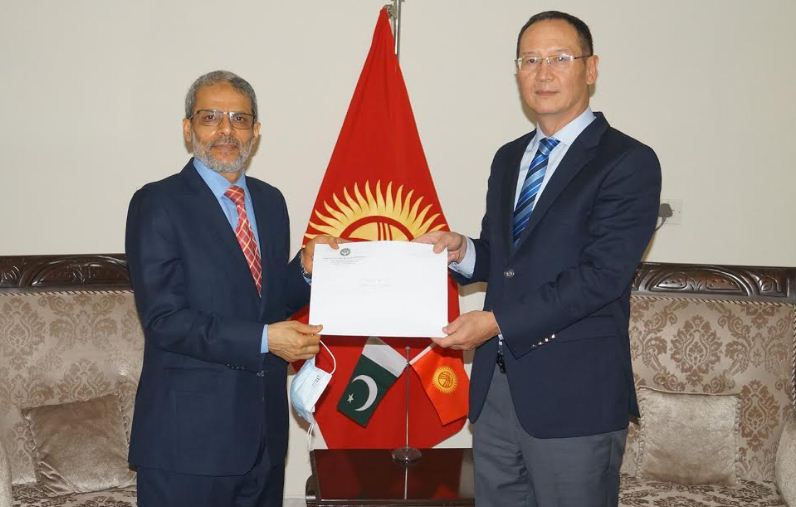
ISLAMABAD, MAY 24 – Erik Beishembiev, Ambassador of the Kyrgyz Republic to the Islamic Republic of Pakistan handed over the copy of the Note of the Ministry of Foreign Affairs of the Kyrgyz Republic on the appointment of Mohammed Motahar Alashabi as Ambassador Extraordinary and Plenipotentiary of the Republic of Yemen to the Kyrgyz Republic with residence in Islamabad.

Erik Beishembiev wished Ambassador of Yemen to the Kyrgyz Republic success in the implementation of all the goals and objectives in Kyrgyzstan.=DNA

ANDERSEN GLOBAL EXPANDS INTO PAKISTAN WITH TAX, LEGAL FIRM

The firm enhanced its capabilities by intergrating a tax practice, led by Rashid Ibrahim, and establishing an International Centre for Appropriate Dispute Resolution and Prevention, led by Dr. Nudrat E. Piracha

ISLAMABAD: Anderson Global enters Pakistan through a Collaboration Agreement with tax and legal firm Septentrio Global Consulting (SGC), adding coverage to the organization’s global platform in South Asia.

“At the core of our business we are relationship driven and aim to set the standard for tax and legal services in Pakistan” founded in 1985 by Managing Director Farrukh Karim Qureshi, SgC (formerly Samdani & Qureshi) began as a full-service law firm, and recently, enhanced their capabilities by integrating a tax practice, led by Rashid Ibrahim, and establishing an International Centre for Appropriate Dispute Resolution and Prevention, led by Dr. Nudrat E. Piracha.

The Islamabad-based firm offers a vast range of services in tax, legal, management and financial consultancy, human resource management, risk management and appropriate dispute resolution & prevention solutions, working with clients in the public, private and social sectors, both at a national and international level.

“We are transparent and commited to providing best in class solutions to our clients, which aligns with Andersen Global’s values and vision. This collaboration strengthens the quality of resources we offer and builds upon our ability to provide seamless service around the globe.”

“Farrukh and his team have built a strong practice in Pakistan, and our shared vision provides a solid foundation for a synergistic, working relationship,” Andersen Global Chairman and Andersen CEO Mark Vorsatz said.

“We are truly impressed with thier dedication to stewardship and independence.Thier comprehensive service offerings provide exceptional coverage and position us for further expansion in this region.”

Andersen Global is an international association of legally separate, independent member firms comprised of tax and legal professionals around the world.

Established in 2013 by U.S. member firm Andersen Tax LLC, Andersen Global now has more than 7,000 professionals worldwide and a presence in over 247 locations through its member firms and collaborating firms.

Asad Umar says PM Imran Khan wants to uplift Sindh

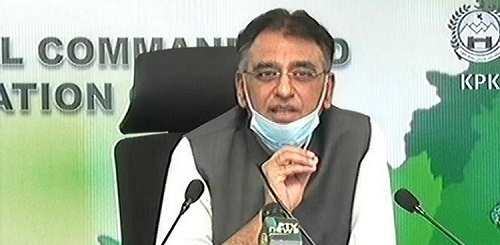
SUKKUR : Federal Minister for Planning and Development Asad Umar on Monday said Prime Minister (PM) Imran Khan wants to see development in Sindh.

Addressing a press conference in Sukkur, Asad Umar said that the provincial government of the Pakistan People’s Party (PPP) is not performing and neither allowing others to work for the development of the province.

“Development in Sindh is Imran Khan’s vision,” the minister said and added that the premier announced a development package of Rs14,000billion for Sindh.

Taking a jibe at Bilawal, Umar said the current PPP chairman was not even born when PPP came into power in Sindh.

He said that the people of Ghotki enjoy rights on the resources of the district first. Responding to a query related to inquiry against Pakistan Tehreek-e-Insaf (PTI) leader Jahangir Tareen, Umar said PM Khan does not believe victimizing people.

Yesterday, Asad Umar had said that former prime minister Nawaz Sharif should return homeland immediately if he feels threatened in London.

Talking to journalists, Asad Umar had offered the best security to Pakistan Muslim League-Nawaz (PML-N) supremo Nawaz Sharif in Pakistan. He said that he did not know what happen to the former prime minister in London.

Stay Connected

64FansLike
60FollowersFollow

Latest Reviews

Exchange Rates

USD - United States Dollar
EUR
1.14
GBP
1.34
AUD
0.70
CAD
0.71