Home Blog Page 271

Pakistan thump Australia to clinch T20I series after seven years

Pakistan thump Australia to clinch T20I series after seven years

LAHORE, JAN 31: Pakistan beat Australia by 90 runs in second T20I to win three-match series after seven years at Lahore’s Gaddafi Stadium on Saturday.

Home side Pakistan spun a web after blistering half-centuries from captain Salman Ali Agha and Usman Khan to hand Australia a crushing 90-run defeat in the second T20I.

The victory gave Pakistan an unassailable 2-0 lead in the series, with the final fixture scheduled to be played at the same venue on Sunday.

Set to chase a daunting 199-run target, Australia’s batting unit could accumulate 108 before being bowled out in 15.4 overs.

All-rounder Cameron Green remained the top-scorer for the visitors with a 20-ball 35, followed by Matthew Short, who made 27 off 23 deliveries. Besides them, only captain Mitchell Marsh (18) and Xavier Bartlett (10) could amass double figures.

Abrar Ahmed and Shadab Khan jointly spearheaded Pakistan’s bowling charge with three wickets each, followed by Usman Tariq with two, while Saim Ayub and Mohammad Nawaz chipped in with one apiece.

Pakistan captain Agha’s decision to bat first after winning the coin toss paid dividends as his team accumulated a formidable total of 198/5 in their 20 overs.

The Green Shirts, however, had a contrasting start to their innings as they lost Sahibzada Farhan (five) in the second over with 17 runs on the board.

Following the early setback, skipper Agha joined Saim Ayub in the middle and put Pakistan into a commanding position with belligerent hitting.

Agha dominated his 55-run partnership for the second wicket with Ayub, who fell victim to Cooper Connolly on the penultimate delivery of the batting powerplay and walked back after scoring 23 off 11 deliveries with the help of four fours.

Pakistan then suffered another blow to their batting charge as Adam Zampa trapped star batter Babar Azam (two) for lbw an over later, bringing the total down to 76/3 in 7.1 overs.

But Agha continued his onslaught and brought up his sixth T20I half-century off just 25 deliveries during his 49-run partnership for the fourth wicket with all-rounder Shadab Khan, which recovered Pakistan after back-to-back dismissals.

Sean Abbott eventually broke the threatening stand in the 13th over by claiming the prized scalp of Pakistan captain Agha, who remained their top-scorer with a blazing 76 off 40 deliveries, studded with eight fours and four sixes.

Wicketkeeper batter Usman then walked out to bat at No.5 and ensured Pakistan retain their momentum at the backend of the innings by registering his second T20I half-century, scoring a brisk 52 off 35 deliveries, smashing four fours and two sixes.

He also shared a vital 63-run partnership for the fifth wicket with Shadab, who made a 20-ball 28, while Mohammad Nawaz played a handy 10-run cameo from four balls.

For Australia, Xavier Bartlett, Matthew Kuhnemann, Zampa, Connolly and Abbott could claim one wicket apiece.
Experts urge empowering local governments for climate finance access

Experts urge empowering local governments for climate finance access

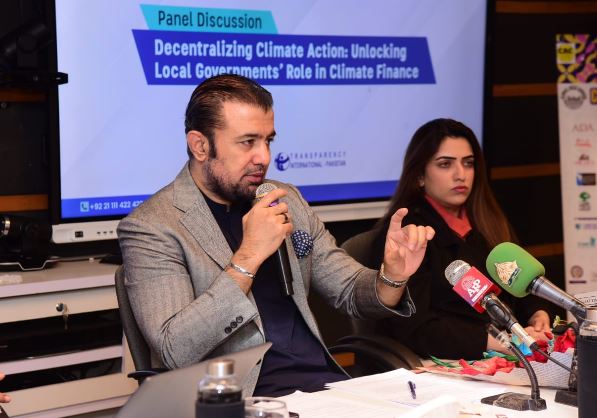
KARACHI, JAN 31 /DNA/ – A high-level panel session titled “Decentralizing Climate Action: Unlocking Local Governments’ Role in Climate Finance” was held on Saturday at the Institute of Business Administration (IBA), Karachi, as part of Day 3 of Climate Week Karachi (CWK). The session was jointly organized by the Centre for Business and Economic Research (CBER), IBA and Transparency International Pakistan, with support from the Climate Action Center (CAC).

The discussion brought together leading policymakers, economists, governance experts, academics, and climate finance specialists to examine how climate action can be strengthened by empowering local governments and improving access to climate finance at the city and district levels.

Distinguished panelists included:

  • Khurram Schehzad, Advisor to the Finance Minister
  • Khalid Waleed, Sustainable Development Policy Institute
  • Kashif Ali, Transparency International Pakistan
  • Zubair Channa, Secretary, Sindh Environment
  • Ali Tauqeer Sheikh, Climate Finance Expert
  • Imtiaz Bhatti, Director General, Provincial Ombudsman’s Secretariat, Karachi
  • Prof. Lubna Naz, Director, Centre for Business and Economic Research, IBA
  • Sahar Arshad, Assistant Professor, IBA
  • Shahid Javed, Economist, State Bank of Pakistan
  • Naveed Bhutto, Maternal & Child Nutrition Expert, Technical Lead Public Health (NUSP, Sindh), supported by the World Bank

Khurram Schehzad, Advisor to the Finance Minister, emphasized the urgency of shifting climate governance and climate finance closer to the communities most exposed to climate risks. He noted that while global climate discourse often focuses on pledges and frameworks, climate resilience is ultimately built through execution, access to finance, and delivery at the local level.

He highlighted that Pakistan’s climate response must move beyond strategy documents toward practical, scalable financing mechanisms that enable households, farmers, MSMEs, and local governments to invest in resilience.

Drawing on recent federal initiatives, he pointed to five critical access-to-finance pathways for climate resilience:
(i) climate-smart agricultural finance for smallholders through digital, collateral-free lending;

(ii) household and MSME energy transition finance, including electric mobility, energy-efficient appliances, and distributed solarization;
(iii) affordable, climate-resilient housing finance to reduce vulnerability to floods and heat stress;

(iv) outcomes-linked and results-based financing instruments, such as social and skills impact bonds, to crowd in private capital; and

(v) risk-sharing and digital public infrastructure to de-risk banks and accelerate last-mile climate investment.

The panel highlighted a clear and unified message: local governments are not peripheral to climate action – they are central to it. Climate impacts are experienced locally, and resilience must be built within cities, districts, and communities.

Three key priorities emerged from the discussion:

Empowering Local Administrations:

Panelists stressed the need for institutional frameworks that enable capable local governments to directly access climate finance. This includes piloting decentralized approval mechanisms and strengthening the use of localized climate vulnerability data to ensure evidence-based project design.

Bridging Governance and Planning Gaps:

The session addressed structural disconnects between local needs, provincial planning, and national climate commitments. Participants emphasized reforming planning tools – particularly simplifying the PC-1 process for small-scale climate adaptation projects – to ensure community-focused initiatives can be implemented efficiently.

Transforming Governance Reform into Bankable Action:

Speakers discussed the importance of innovative financing instruments, including the National Climate Resilience Fund, blended finance windows, and Nature-Based Solutions such as the Sindh Coastal Resilience Bond and mangrove-linked carbon credits. De-risking private investment was highlighted as essential to mobilizing commercial finance at the community level.

The discussion also underscored two pressing challenges that must be integrated into Pakistan’s climate finance roadmap. First, the rapid, organic shift toward solarization requires structured de-risking mechanisms so local governments can support community solar grids and ensure equitable access to clean energy. Second, climate finance frameworks must include rapid-response liquidity to enable local administrations to access emergency funds during floods, heatwaves, and other extreme weather events.

The role of academia was recognized as critical in advancing this agenda. IBA Karachi, through the Centre for Business and Economic Research (CBER), reaffirmed its commitment to supporting evidence-based policymaking by translating dialogue into actionable research, refined concept notes, and policy-relevant outputs.

The session concluded with a call for continued collaboration among government institutions, academia, civil society, and development partners to advance locally driven, execution-focused, and finance-enabled climate action in Pakistan.

Iran’s army chief warns US, Israel against attack, says forces on ‘high alert’

Iran's army chief warns US, Israel against attack, says forces on 'high alert'

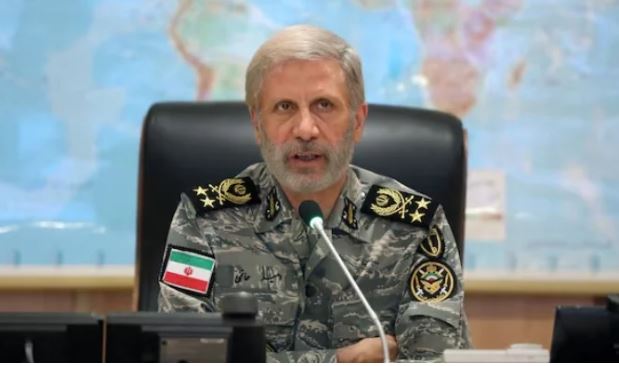
TEHRAN, JAN 31: Iranian army chief Amir Hatami on Saturday warned the United States and Israel against an attack, saying his country’s forces were on high alert following Washington’s heavy military deployments in the Gulf.

He also insisted the Tehran’s nuclear expertise could not be eliminated, after Trump said he expected Tehran to seek a deal to avoid US strikes.

“If the enemy makes a mistake, without a doubt it will endanger its own security, the security of the region, and the security of the Zionist regime,” Hatami said, according to the official IRNA news agency.

He noted that Iran’s armed forces were “at full defensive and military readiness”.

Washington sent a naval strike group to the Middle East led by the USS Abraham Lincoln aircraft carrier, with Trump threatening to intervene militarily in the two weeks of anti-government protests.

The deployment has raised fears of a possible direct confrontation with Iran, which has warned it would respond with missile strikes on US bases, ships and allies — notably Israel — in the event of an attack.

On Friday, Trump said he predicted that Iran would seek to negotiate a deal over its nuclear and missile programmes rather than face American military action.

Iranian Foreign Minister Abbas Araghchi had said earlier that Tehran was ready for nuclear talks, but its missiles and defence “will never be negotiated”.

‘Nuclear technology cannot be eliminated’
The US carried out strikes on key Iranian nuclear sites in June when it briefly joined Israel’s 12-day war against its regional foe.

Israeli attacks also hit military sites across the country and killed senior officers and top nuclear scientists.

But Hatami on Saturday insisted that Iran’s nuclear technology “cannot be eliminated, even if scientists and sons of this nation are martyred”.

On Friday, US Central Command (Centcom) said Iran’s Islamic Revolutionary Guard Corps (IRGC) would conduct “a two-day live-fire naval exercise” in the Strait of Hormuz, a key transit hub for global energy supplies.

In a statement, Centcom warned the IRGC against “any unsafe and unprofessional behaviour near US forces”.

The United States designated the IRGC a terrorist organisation in 2019, a move the European Union followed on Thursday.

The EU decision drew angry reactions from Tehran, which vowed to reciprocate.

Protests
Nationwide protests against the rising cost of living erupted in Iran on December 28, before turning into a broader anti-government movement that peaked on January 8 and 9.

Iranian authorities have said the protests began peacefully before turning into “riots” involving killings and vandalism, blaming the United States and Israel for fomenting the unrest in a “terrorist operation”.

The official death toll from the authorities stands at 3,117.

The protests have since subsided.

On Saturday, Iran’s President Masoud Pezeshkian urged his government to heed public grievances after the demonstrations.

“We must work with the people and for the people and serve the people as much as possible,” Pezeshkian said in a speech broadcast on state TV.

“If we act justly, the people will see it and will accept it, and under such conditions, no power can cripple a government, a society, or a nation that acts justly, fairly, and on the basis of rights.”

On Saturday, Iran’s supreme leader Ayatollah Ali Khamenei visited the shrine of Ruhollah Khomeini, the founder of the Islamic Republic, in southern Tehran.

In a video carried by his official website, Khamenei offered prayers at the shrine on the occasion of 10-day celebrations marking the 47th anniversary of the 1979 Revolution.

FPCCI hails PM’s economic package for export-led growth

FPCCI hails PM's economic package for export-led growth

ISLAMABAD, JAN 31 /DNA/ – Atif Ikram Sheikh, President of the Federation of Pakistan Chambers of Commerce and Industry (FPCCI), stated today that the business community wholeheartedly welcomes the Prime Minister’s historic economic package. He described the announcement as a pivotal turning point in the “Maarka-e-Maishat” (Economic Battle), placing Pakistan firmly on the path toward export-led growth.

Addressing a press conference at the FPCCI Capital Office, Mr. Sheikh emphasized the necessity of promoting a “District Economy.” He declared, “Our resolve is to transform ‘Made in Pakistan’ into an exemplary global brand and turn the country into an export-led powerhouse.”

KEY HIGHLIGHTS OF THE PRESS CONFERENCE:

Policy Support & Cooperation: The FPCCI President clarified that the federation’s philosophy is based on cooperation rather than opposition. “We acknowledge the constraints imposed by the IMF and the government’s limitations, yet we strive for meaningful partnerships,” he added.

Energy Relief: The business community welcomed the Rs. 4.04 per unit reduction in electricity prices, expressing hope for further cuts in the coming days.

Wheeling Mechanism: Mr. Sheikh noted that an active wheeling mechanism, a long-standing FPCCI demand, will provide industries access to cheaper energy, helping exporters meet global market requirements.

Monetary Policy: He urged a further reduction in the policy rate, suggesting a gradual decrease to 7% to stimulate investment and alleviate poverty.

The Blue Passport Initiative: The announcement of the Blue Passport facility for exporters was lauded as a significant step in boosting the prestige and morale of the business community.

CONCERNS AND CHALLENGES:

Despite the positive outlook, Atif Ikram Sheikh warned that the immediate recovery of Rs. 300 billion in Super Tax could “break the back” of the industry. He cautioned that this move would trigger a severe liquidity crisis and disrupt the business ecosystem, urging the government to find a more reasonable and balanced solution.

PROPOSAL FOR DISTRICT ECONOMIC COMMISSIONERS:

To solve economic issues permanently, the FPCCI proposed appointing a District Economic Commissioner in every district, modeled after the Deputy Commissioner (DC) and DPO. This official would be responsible for:

•           Industrial research and SME development at the local level.

•           Human resource development and women’s economic inclusion.

•           Providing employment opportunities at the doorstep of citizens.

Appeals to the Government:

The FPCCI leadership, including Vice President Tariq Jadoon, Chairman Malik Sohail Hussain, and various Chamber Presidents, requested the Prime Minister to take immediate notice of the suspension of flour supply from Rawalpindi and Islamabad to Khyber Pakhtunkhwa.

Furthermore, they demanded that the upcoming federal budget focus on reducing the tax burden and transitioning toward digital enforcement rather than coercive measures. The leadership concluded that this package is essential for reviving closed industries and supporting SMEs, which remain the backbone of Pakistan’s economy.

Addressing the press conference, FPCCI Vice President Tariq Jadoon, Chairman Coordination Malik Sohail Hussain, Former President FPCCI Ghazanfar Bilour, Chairman Founder Group (ICCI) Tahir Sadiq, President Rawalpindi Chamber Usman Shaukat, Former Vice President FPCCI Mian Akram Farid, and Advisor to President FPCCI Sheikh Muzammil Saleem collectively welcomed the government’s economic package and the reduction in electricity prices.

The leaders highlighted the following key points:

•           Blue Passport Initiative: They lauded the Prime Minister’s decision to issue Blue Passports to the business community, noting that it restores the prestige of exporters and will significantly drive export-led growth.

•           Operational Relief: The reduction in power tariffs is expected to drastically lower production costs, helping to revive closed industrial units across the country.

•           SME Development: They emphasized that Small and Medium Enterprises (SMEs) are the backbone of the economy, and their promotion is indispensable for national development.

•           Inter-Provincial Trade Issue: The leadership made a special request to the Prime Minister to take immediate notice of the suspension of flour supply from Rawalpindi and Islamabad to Khyber Pakhtunkhwa, urging for a swift resolution to ensure food security.=DNA

================

History awaits as Djokovic, Alcaraz meet in Australian Open final

History awaits as Djokovic, Alcaraz meet in Australian Open final

MELBOURNE, JAN 31: Novak Djokovic and Carlos Alcaraz meet in Sunday’s Australian Open final with history in the balance, as the Serbian great chases a record 25th Grand Slam title and the Spanish dynamo bids to become the youngest man to win all four majors.

Modern men’s tennis has not lacked for champions pushing for the next frontier of greatness but the stakes have rarely been higher in a single match.

With 24 major trophies and a record 10 at Melbourne Park, Djokovic’s legacy is already secure.

Few can argue there have been better players to grace the men’s game.

And yet Djokovic’s record remains bracketed with Australian icon Margaret Court, who also won 24 titles in the women’s game, including 13 in the amateur era.

With different eras, opponents and technology, their records are as comparable as apples and oranges — but fourth seed Djokovic has long craved the elusive 25th title to take top spot alone.

Clinching it at Melbourne Park, where he claimed his first major trophy in 2008, would be a fitting coup de grace for a 20-year career at the top.

Having taken Ken Rosewall’s record as the oldest man to reach the final by beating defending champion Jannik Sinner, Djokovic can top the Australian again as the oldest to win any Grand Slam title.

Serbian fanatics
No other man has dominated Melbourne like Djokovic, who has hoisted the trophy four times more than the next-best duo of Roy Emerson and Roger Federer.

The success has spoilt the city’s strong Serbian community who reliably turn up in droves and bring football-like fanaticism to centre court and its surrounds.

Djokovic’s dominance has not meant universal adulation from all at Melbourne Park in a country which, incredibly, once detained and deported him for not being vaccinated for COVID-19.

But judging by the deafening cheers at Rod Laver Arena on Friday when he knocked out Italian Sinner in a five-set classic, plenty of fans will be in the fourth-seeded Serb’s corner.

He may need all their support as he looks to scale another Everest against world number one Alcaraz.

The 22-year-old Spaniard has had Melbourne on his mind since winning his second US Open title last year.

He said he would gladly trade winning the three other majors this year if it meant hoisting the Norman Brookes Challenge Cup alone at the end of Sunday’s final.

With two trophies at each of the French Open, Wimbledon and Flushing Meadows, victory over Djokovic would make Alcaraz the youngest man to complete the career Grand Slam, eclipsing Don Budge, who wrapped up his at the 1938 French Open two days before his 23rd birthday.

He would also become the first men’s player under 23 to win seven Grand Slam titles, a tally that eluded Djokovic until he was 27.

Remarkably for such a young career, Alcaraz has already racked up a slew of classic matches against Djokovic, who holds a 5-4 record against him.

They have both inflicted bruising defeats, with Alcaraz denying Djokovic in back-to-back Wimbledon finals in 2023-24 and the Serb snatching the gold medal in the Paris Olympic final.

While Djokovic knocked Alcaraz out of last year’s Australian Open quarter-finals, he was well-beaten the last time they faced on a Grand Slam hardcourt, losing 6-4 7-6(4) 6-2 in the US Open semis.

Both enter Sunday’s final after taxing, five-setters.

Alcaraz struggled with a cramp before edging third seed Alexander Zverev in five hours and 27 minutes, the tournament’s longest-ever semi-final.

Djokovic needed a bit over four hours to see off Sinner.

Facing a man who will turn 39 in a few months, Alcaraz should be better equipped to handle a long slog.

With 18 fewer Grand Slam titles than Djokovic, he should be more hungry than the Serb.

Boasting incredible athleticism and arguably the game’s purest shot-making, he should have faith that his talents will get the job done.

But try telling that to 24-year-old Sinner, whose hopes of a fifth Grand Slam title were crushed in the fifth set on Friday as Djokovic gave him a pummeling from the baseline.

Like Rafa Nadal at the French Open, there is something magical beneath Rod Laver Arena’s blue centre court that only Djokovic can mine.

In all 10 of his previous finals, he has never exited without the trophy.

Alcaraz will fight to avoid joining the ranks of forlorn challengers who leave Melbourne Park feeling that destiny and Djokovic have conspired against them.

10 security personnel martyred, 58 terrorists killed in India-backed Balochistan attacks

10 security personnel martyred, 58 terrorists killed in India-backed Balochistan attacks

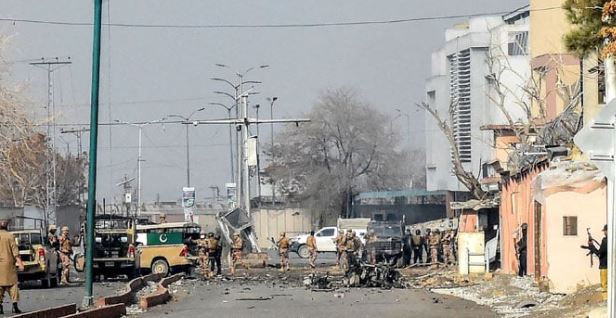
RAWALPINDI, JAN 31: At least 10 police and security personnel embraced martyrdom in Balochistan as India-sponsored terrorists launched attacks at 12 locations, with forces eliminating 58 militants, security sources said on Saturday.

The security forces are still pursuing terrorists at different locations, and there are reports of more deaths and losses of terrorists, the sources added.

They further noted that the attacks carried out by Fitna al-Hindustan (FAH) last night have been foiled via timely and effective action by the security forces and other law enforcement agencies (LEAs).

During the attacks, five members of a Baloch labour family, who hailed from Khuzdar, were also martyred in Gwadar.

Among those martyred in the family are a woman and three children.

Prime Minister Shehbaz Sharif, while praising the security forces for foiling the terrorist attacks, paid homage to the 10 martyred personnel, saying the entire nation is proud of them.

“We will continue the fight against the menace of terrorism until it is completely eradicated,” the premier remarked.

He stressed that the entire nation stands shoulder to shoulder with Pakistan’s armed forces in their determination to protect the homeland.

While condemning the deadly attacks, Interior Minister Mohsin Naqvi paid tribute to the security forces and LEAs for foiling the attacks.

“I salute the brave sons who thwarted the evil intentions of the terrorists,” he said.

Paying homage to the 10 martyrs who sacrificed their lives while foiling the attacks, the security czar said that the nation is proud of its brave sons, and the soldiers who sacrificed their lives are its heroes.

“The great sacrifices of the martyrs will always be remembered,” he added.

Meanwhile, Balochistan Chief Minister Sarfraz Bugti that the attacks have been foiled via a joint effort by the police and FC and said: “These attacks cannot end our resolve against terrorism”.

The provincial chief executive also visited a blast site in Quetta and reviewed the security situation, and also met the paramilitary forces and police personnel.

CM Bugti was also briefed on the security situation by Inspector General Police (IGP) Muhammad Tahir.

“Anti-state elements will not be forgiven under any circumstances. There will be no compromise on peace in Balochistan,” the CM stressed while commending the police and the counter-terrorism department (CTD) for effective and timely action against the terrorists.

‘Desperate move’
Speaking to Geo News, Federal Information Minister Attaullah Tarar said that the attacks were FAH’s “desperate move”.

“The security forces were alert at all locations and not taken by surprise […] and this is why such a large-scale attack was repelled,” he added.

Lamenting the martyrdoms of Baloch labour families at the hands of the Balochistan Liberation Army (BLA) terrorists, the federal minister said that the terrorists are being pursued, coupled with aerial monitoring.

“The PM is fully aware of the situation and is in continuous contact [with relevant authorities],” he added.

The development comes a day after 41 Indian-backed militants were killed in two separate operations in Balochistan, the country’s largest province by land area.

Revealing details of the intelligence-based operations (IBO), the Inter-Services Public Relations (ISPR) on Friday said that the engagements were carried out on January 29, where 30 India- sponsored terrorists were gunned down on the outskirts of Harnai district.

Meanwhile, 11 more were eliminated in Panjgur district.

Besides weapons and ammunition, looted money from the bank robbery in Panjgur on December 15 last year was also recovered from the killed terrorists, said the military’s media wing.

The anti-terror operations are to be taken against the backdrop of a rise in cross-border terrorist incidents since the Taliban regained control of Afghanistan in 2021

ISPR Director General Lieutenant General Ahmed Sharif Chaudhry, in his presser on January 6, said that law enforcement agencies carried out 75,175 IBOs across the country in 2025.

Giving a breakdown, he said 14,658 IBOs were conducted in KP, 58,778 in Balochistan, while 1,739 operations took place in the rest of the country.

The army’s top spokesperson said that 5,397 terrorism incidents were reported nationwide during the last year. Of these, 3,811 incidents, he said, occurred in KP, 1,557 in Balochistan, and 29 incidents were reported in other parts of the country.

He said that 2,597 terrorists were killed during counterterror operations last year. While providing details of 10 major terror attacks across the country, he said that civilians and soft targets had been deliberately targeted, and Afghan militants were involved in all attacks.

ICCI welcomes PM’s industrial relief package

ICCI welcomes PM's industrial relief package

ISLAMABAD, JAN 31 /DNA/ – The President of the Islamabad Chamber of Commerce and Industry (ICCI), Sardar Tahir Mehmood, along with Senior Vice President Tahir Ayub and Vice President Irfan Chaudhry, has welcomed Prime Minister Muhammad Shehbaz Sharif’s announcement of major relief measures for the industrial and export sectors, including a reduction in electricity tariffs by Rs. 4.04 per unit, lowering of wheeling charges to below Rs. 9, and the introduction of targeted incentives to promote exports.

The ICCI leadership described these initiatives as timely, pragmatic, and growth-oriented, noting that persistently high energy costs had significantly constrained industrial productivity, eroded competitiveness, and discouraged capacity expansion. They stated that the reduction in power tariffs, coupled with the lowering of the export refinance rate, would substantially ease cost pressures on industries, improve cash flows, enhance export capacity, and stimulate both domestic and foreign investment.

The ICCI office-bearers also appreciated the government’s clear emphasis on export-led growth, facilitation of leading exporters, and measures aimed at strengthening foreign exchange earnings. They observed that such confidence-building steps would help stabilize industrial operations, generate employment opportunities, and reinforce Pakistan’s standing in regional and global markets.

However, the ICCI leadership emphasized that to create a comprehensive and broad-based enabling business environment, further critical reforms are required. They urged the Prime Minister to move towards a single-digit KIBOR, rationalize the tax regime, and further reduce the cost of doing business to sustain industrial momentum. They stressed that these measures are essential to unlock the economy’s full potential and place Pakistan firmly on the path toward realizing the trillion-dollar economy vision.

The ICCI office-bearers expressed confidence that continued consultation and engagement between the government and the business community would result in balanced, forward-looking policies, ensuring long-term economic stability, industrial revival and sustainable growth.

CDA launches Islamabad safety drive

CDA launches Islamabad safety drive

ISLAMABAD, Jan 30: The Capital Development Authority on Friday launched an extensive campaign to cover open manholes, repair damaged footpaths and restore kerb stones across the federal capital, following directives issued by CDA Chairman and Chief Commissioner Islamabad Muhammad Ali Randhawa.

According to a press release, the campaign aims to enhance public safety—particularly for children—and improve civic facilities in both urban and rural areas of Islamabad.

Instructions have been issued to all relevant departments of the Capital Development Authority, the Metropolitan Corporation Islamabad (MCI) and the ICT administration to ensure immediate implementation.

Under the initiative, all open gutters and manholes within the limits of the federal capital will be fitted with standard and secure covers, regardless of whether they fall under the jurisdiction of the CDA, PTCL, Wapda, SNGPL or any other organisation.

The campaign will continue until all uncovered or unsafe manholes are addressed, the chairman said.

Randhawa emphasised that ensuring the safety of Islamabad’s residents was the administration’s top priority, adding that no negligence would be tolerated in this regard.

Teams from the CDA, MCI and district administration have been active in the field since Wednesday.

Citizens have also been urged to report any open or unsafe manholes or gutters to the authorities for prompt action.

In addition to the manhole-covering drive, work has also begun on restoring damaged footpaths and replacing broken kerb stones on roads and walkways, particularly in older sectors and commercial centres (markazs).

The initiative aims to improve pedestrian convenience while enhancing the city’s overall appearance.

The CDA chairman directed field teams to remain present on the ground to address public concerns and ensure timely delivery of municipal services, noting that the measures would contribute to a safer, cleaner and more organised urban environment.

Direct air links to further expedite bilateral trade, says Japanese envoy

Direct air links to further expedite bilateral trade, says Japanese envoy

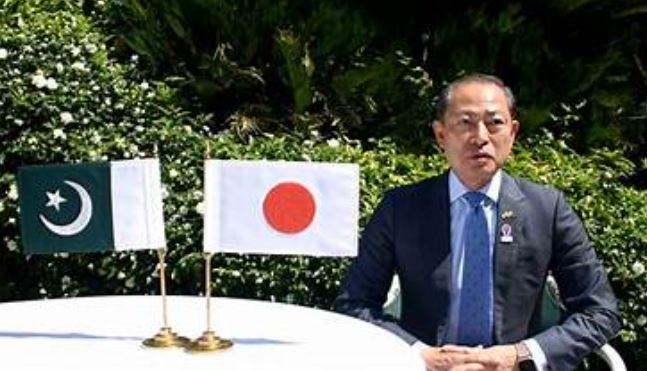
FAISALABAD, Jan 30 (DNA): Ambassador of Japan Akamatsu Shuichi has said that direct air links between Pakistan and Japan in near future would further expedite the process of bilateral trade between the two countries.

He was talking to Engr. Asim Munir, Vice President Faisalabad Chamber of Commerce & Industry (FCCI), during his visit to FCCI Complex.

He appreciated the role of Faisalabad in the overall economy of Pakistan and said that he had visited this industrial hub many times because of its socioeconomic importance. He said that currently there are no direct links between Pakistan and Japan but hopefully it would be started very soon.

He said that a delegation of FCCI had visited Japan last year and this process should continue to ensure direct interaction between the business communities of the two countries.

He also quoted his meeting with Punjab Chief Minister (CM) Maryam Nawaz and said that various proposals were discussed to enhance bilateral trade and cooperation in technology transfer.

Earlier, Engr. Asim Munir welcomed the Japanese Ambassador and said that Faisalabad with a population of 10 million people is contributing a key role in the overall growth of Pakistan.

He thanked Japan for its generous help in provision of health, technical and vocational training in addition to water supply and sewerage facilities in Faisalabad.

He hoped that Japan would also take measures for the expeditious growth of the SME sector in Faisalabad. 

He suggested that JICA should promote relations between the SME sectors of two countries through technology transfer and joint ventures.

He said that Faisalabad’s share in total textile export of Pakistan is around 57% and Japan should trim duties on textile products from Pakistan.

Engr. Asim Munir said that he along with President FCCI Farooq Yousaf Sheikh would visit the Japanese embassy very soon while he also invited the Japanese Ambassador to again visit FCCI for a detailed and comprehensive meeting with its members.

Later, Engr. Asim Munir presented FCCI shield to Mr. Akamatsu Shuichi while he also recorded his impression in the FCCI Visitor’s Book.

FCCI Executive Member Muhammad Ali was also present during this meeting.

Azerbaijan Envoy meets PM Shahbaz

Azerbaijan Envoy meets PM Shahbaz

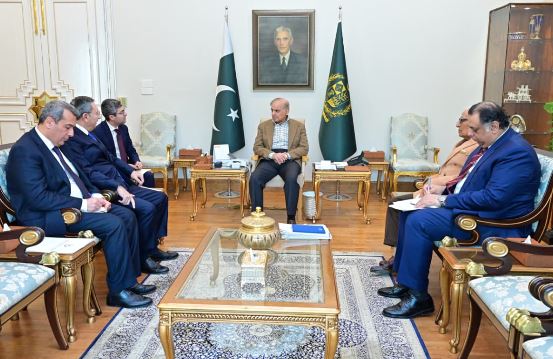
ISLAMABAD, JAN 30 /DNA/ – Representative of the President of the Republic of Azerbaijan on Special Assignments, H.E. Mr. Khalaf Khalafov, called on Prime Minister Muhammad Shahbaz Sharif, at the Prime Minister House today.

Welcoming the Azerbaijani dignitary, the Prime Minister recalled the warm fraternal bonds between Pakistan and Azerbaijan and reaffirmed Pakistan’s resolve to further strengthen bilateral relations with Azerbaijan, in all areas of mutual interest.

He conveyed his warm greetings for H.E. President Ilham Aliyev, and praised him for his wise and sagacious leadership that had raised Azerbaijan’s global profile. He fondly recalled his numerous important meetings with President Aliyev, including at the Victory Parade in Baku last November.

While noting that both sides were close to finalizing the agreement for USD 2 billion investment by Azerbaijan in Pakistan, the Prime Minister reiterated his invitation to President Aliyev to undertake an official visit to Pakistan, at his earliest convenience.

During the meeting, regional developments were also discussed. The Prime Minister stressed upon the need for Pakistan and Azerbaijan to coordinate regularly and closely, to ensure the realization of the shared objective of maintaining regional peace and security.

The Representative of the President of Azerbaijan conveyed President Aliyev’s warm greetings to the Prime Minister and lauded the Prime Minister’s vision and leadership that had brought Pakistan many successes, not only on the economic front but also in security and the diplomatic arena. He thanked Pakistan for standing solidly with Azerbaijan during the second Karabakh war and reaffirmed Azerbaijan’s longstanding position on Jammu & Kashmir.
The Representative also handed over a letter from President Aliyev to the Prime Minister, acknowledging the Prime Minister’s message of appreciation on the support provided by Azerbaijan for the establishment of Asaan Khidmat Markaz in Islamabad, inaugurated earlier this month.

Stay Connected

64FansLike
60FollowersFollow

Latest Reviews

Exchange Rates

USD - United States Dollar
EUR
1.14
GBP
1.34
AUD
0.70
CAD
0.71