Home Blog Page 2707

WON’T LET ANYONE SABOTAGE PEACE IN BALOCHISTAN: PM IMRAN KHAN

DNA

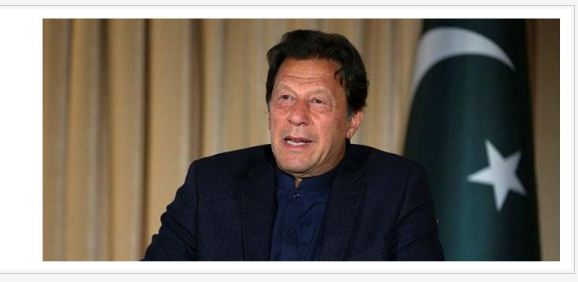
QUETTA – Prime Minister, Imran Khan visited Quetta today and addressed participants of staff course at Command and Staff College, Quetta.

Addressing the officers, PM said that Pakistan Army has produced unmatched results when pitched against its adversaries and successfully deterred the nefarious designs of Pakistan’s enemies. He added that country’s defence is impregnable due to professionalism and battle hardened Armed Forces of Pakistan.

PM deliberated at length upon his vision of future of Pakistan where Rule of law,  across the board accountability and justice are order of the day. Establishment of a prosperous state in line with Islamic principles and ideology of our great leaders like Allama Iqbal and Quaid e Azam can be achieved only if we work hard consistently as a nation, the PM stated .

 PM  said that Govt has made all out efforts for progress  in various sectors like agriculture, industry, technology and automation. PM advised participant officers to pursue their dreams without fear of failure to achieve their objectives.

On his arrival at Command & Staff College Quetta, the Prime Minister was received by General Qamar Javed Bajwa – COAS, Lieutenant General Sarfraz Ali – Commander Quetta Corps.

Qatar ready to mediate between regional powers

DOHA – Qatar is ready to play a mediating role between regional powers to achieve peace and stability, according to the country’s foreign ministry.

Al-Khater was responding to a question about the possibility of Doha mediating between Palestinian resistance movement Hamas and the US.

As regards the possibility of mediating between regional rivals Iran and Saudi Arabia, Al-Khater said the matter “was not raised” yet, but noted that Qatar “welcomes” the possibility while stressing the importance of “dialogue” with Iran for “peaceful coexistence in the region that takes into account the concerns of the Gulf and Arab countries”.

She also highlighted that the invitation Qatar extended to Egyptian President Abdel Fattah Al-Sisi to visit Doha was still “open”, adding that the date will be set in cooperation with the Egyptian side.

Asked about the Turkish-Egyptian relations, Al-Khater said Qatar welcomes any honest and constructive dialogue as effective in resolving outstanding issues.

She also called on the international players to review their “unconditional support” for Israel.

Qatar recently pledged $500 million in reconstruction aid for Gaza following destructive raids in the latest fighting between Israel and Hamas that was brought to a halt under an Egyptian-brokered cease-fire on May 21.

APNS, PBA, CPNE, PFUJ, AEMEND rejects proposed PMDA ordinance

ISLAMABAD: A joint meeting of the representative media organizations including All Pakistan Newspapers Society (APNS), Pakistan Broadcasters Association (PBA), Council of Pakistan Newspaper Editors (CPNE), Pakistan Federal Union of Journalists (PFUJ, Barna Group), PFUJ (Dastoor Group) and Association of Electronic Media Editors and News Directors (AEMEND) have totally rejected the proposed Pakistan Media Development Authority Ordinance (PMDAO) and termed the concept as an unconstitutional and draconian law aimed against Freedom of Press and Expression  and step towards imposing the state control to regulate the establishment as well as operation of all segments of media.

The joint meeting was of the unanimous opinion that the proposed PMDA is intended to hinder media freedoms and take control over the media by the top information bureaucracy. The concept is an attempt to tighten Federal Government hold over the media through one draconian authority ignoring the fact that print, digital and electronic media are separate entities each with their own defined features and respective regulatory laws. The move appears as an extension of now defunct Press and Publications Ordinance 1963 (PPO) of Ayub Khan era to all media platforms with regimental provisions to take over the independent and free media. This has no place in a democratically elected dispensation, stated the joint declaration.  

The joint meeting decided to resist the establishment of PMDA at all levels including legal recourse, protest measures and advertising campaigns to educate the public against this blatant attempt to subjugate and control the media and curtail peoples’ right to know. The meeting decided to form a Joint Action Committee of APNS, PBA, CPNE, PFUJ & AEMEND to decide further actions and seek support from political parties, bar associations, human right organizations and other segments of the civil society to oppose the proposed attack on media and urge upon the Federal Government to immediately withdraw the proposal.

APNS, OTHER MEDIA HOUSES REJECT PROPOSED PAKISTAN MEDIA DEVELOPMENT AUTHORITY ORDINANCE

KARACHI, JUN 1 /DNA/ – “A joint meeting of the representative media organizations including All Pakistan Newspapers Society (APNS), Pakistan Broadcasters Association (PBA), Council of Pakistan Newspaper Editors (CPNE), Pakistan Federal Union of Journalists (PFUJ, Barna Group), PFUJ (Dastoor Group) and Association of Electronic Media Editors and News Directors (AEMEND) have totally rejected the proposed Pakistan Media Development Authority Ordinance and termed the concept as an unconstitutional and draconian law aimed against Freedom of Press and Expression  and step towards imposing the state control to regulate the establishment as well as operation of all segments of media.

The joint meeting was of the unanimous opinion that the proposed PMDA is intended tohinder media freedoms and take control over the media by the top information bureaucracy. The concept is an attempt to tighten Federal Government hold over the media through one draconian authority ignoring the fact that print, digital and electronic media are separate entities each with their own defined features and respective regulatory laws. The move appears as an extension of now defunct Press and Publications Ordinance 1963 (PPO) of Ayub Khan era to all media platforms with regimental provisions to take over the independent and free media. This has no place in a democratically elected dispensation, stated the joint declaration.

The joint meeting decided to resist the establishment of PMDA at all levels including legal recourse, protest measures and advertising campaigns to educate the public against thisblatant attempt to subjugate and control the media and curtail peoples’ right to know. The meeting decided to form a Joint Action Committee of APNS, PBA, CPNE, PFUJ & AEMEND to decide further actions and seek support from political parties, bar associations, human right organizations and other segments of the civil society to oppose the proposed attack on media and urge upon the Federal Government to immediately withdraw the proposal.

DESPITE CHALLENGES GOVERNMENT ENSURED FOOD SECURITY IN COUNTRY: FAKHAR IMAM

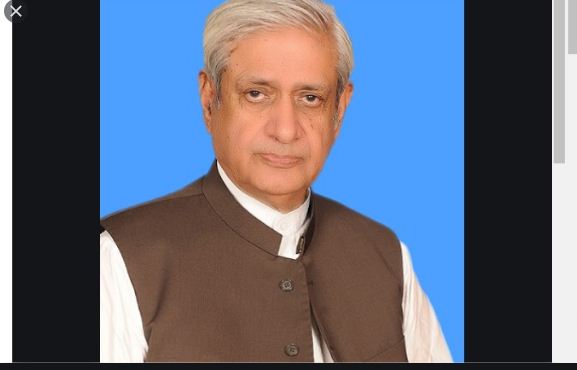
ISLAMABAD, JUN 1 /DNA/ – The Federal Minister for National Food Security and Research, Syed Fakhar Imam, despite unprecedented challenges Pakistan has faced during the last two years, the threats to food security were responded with robust actions by the government at every level.

During the time of Covid-19, locust attack was another major challenge. However, through collaborative efforts, we reduced the threat to minimum damage and are better prepared for future threats now. He said this while speaking at the webinar‘Ensuring food security amid Covid-19 through ecosystem restoration’ held by Sustainable Development Policy Institute (SDPI) in collaboration with UK’s Foreign, Commonwealth & Development Office (FCDO).

Fakhar Imam added further that failure in correctly monitoring food pricing leads to inaccurate predictions market price trends. Therefore, the government had purchased more wheat to mitigate any shortage.

“Despite Covid-19 and its impacts, we are having 6 bumper crops this year including wheat, rice and maize,” he  said and added further that the focus of the future efforts of the government would be on improving livestock sector, becoming self-reliant on edible oils andorganic farming. The challenges of climate change and expanding biodiversity, Pakistan needs to build up institutional mechanisms and make full use of its human resources. Therefore, the education to improve the agricultural sector and engage in more high-tech methods and set up our own silicon valleys is the need of hour, he concluded.

Special Assistant to Prime Minister on Food Security, MrJamshed Iqbal Cheema, while highlighting various problems in livestock sector, said that the government was shifting its focus to new areas in Balochistan and Thar desert areas, especially for crops such as cotton which have higher chances of success in such areas.

Mr Cheema added further that encouraging fruit tree plantation in urban areas through youth engagement, cultivation of medicinal plants and increasing production of crops such as ginger, cardamon, avocados, coffee is being focused. These super foods will be grown locally and given upscale production with the help of nurseries, scientists. and farmers to enhance exports of these crops in future. He highlighted that the government plans to provide loans to farmers, food processing plants across the country and commercial activities to rural sector to stop rural to urban migration. 

Senior Economist and Team Lead, FCDO, Pakistan, Mr Richard Ough, explained that how the subject of the ecosystem, food security and diversity are linked. He was of view that that food pricing and its monitoring provides valuable data that is important to ensure food security. He opined that the digital innovation could support the ambition of Pak’s government. Besides, initiatives to transform arid dessert lands to arable with smart water irrigation could be explored, he added.

DrAbid QaiyumSuleri, Executive Director, SDPI,earlier presented a brief overview of the topic and highlighted the importance of ecosystem restoration. It is important not only to protect global flora and fauna, but also in terms of ensuring food security, he emphasized.

Kashif Majeed Salik, Associate Research Fellow, SDPI, with the help of his detailed presentation, highlighted the Covid-19’s impact on agriculture and food system and explained that how transport restrictions, shortage of labour and machinery, increase in farm input prices and farmers’ limited access to market, caused major disruptions in food supply chain in Pakistan.

He informed the participants that the the most affected crops during the pandemic were perishable items such as fruits and vegetables and dairy products. Covid-19 coupled with climate change factors and locust attack disturbed the supply chain and demand.  He emphasized on the importance of data collection and said that a lot of important statistics were still missing.

MrSalik added further that the pandemic has highlighted the importance of cold storage, the dynamics of farm labour markets, importance of small-scale food processing for value addition, particularly partible commodities.  He said that the ability of public departments and institutions to secure food supply chains during pandemic was particularly low.  with a lack of data and information as most data collected based on self-reported assessments of a few distributors. His key   recommendations were as follows:

He highlighted that the risk assessments for local supply chain, digital innovations for efficient food system and agriculture, improved access to farm inputs and credit through agro-cooperatives, improved role of private sector, improved cold storage facilities and logistics system and informal labour registration and support programmes are the some of key areas for the consideration of the government in terms of future policies and administrative measures. Besides, identify changes in agroecological zones and endangered regional ecosystems of Pakistan,focus on climate smart agricultural and green growth and water conservation and management should be the key priorities, he concluded.

USA, UK, CHINA TOP THREE DESTINATIONS OF PAKISTANI EXPORTS IN 10 MONTHS

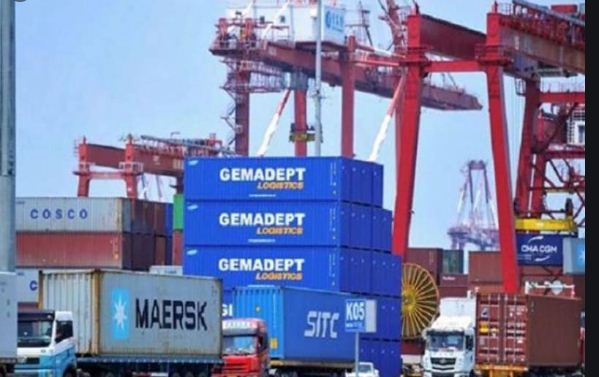
ISLAMABAD, JUN 01 (DNA) – United States of America (USA) remained the top export destinations of the Pakistani products during the first ten months of financial year (2020-21), followed by United Kingdom (UK) and China.

Total exports to the USA during July-April (2020-21) were recorded at US $ 4019.722 million against the exports of US $ 3368.090 million during July-April (2019-20), showing growth of 19.34 percent, according to State Bank of Pakistan (SBP).

This was followed by UK, wherein Pakistan exported goods worth US $ 1691.314 million against the exports of US $ 1386.999 million last year, showing an increase of 21.94 percent.

China was the at third top export destination, where Pakistan exported goods worth US $ 1640.629 million during the months under review against the exports of US $1411.004 million during last year, showing growth of 16.27 percent, SBP data revealed.

Among other countries, Pakistani exports to Germany stood at US $ 1245.122 million against US $1116.232 million during last year, showing increase of 11.54 percent while the exports to UAE were recorded at US $ 1215.939 million against US $ 1377.287 million last year, the data revealed.

During July-April (2020-21), the exports to Holland were recorded at US $922.819 million against US $850.421 million whereas the exports to Afghanistan stood at US $ 828.727 million against US $809.685 million.

Pakistan’s exports to Italy were recorded at $629.917 million against the exports of US $ 642.617 million while the exports to Spain were recorded at US $ 668.773 million against US $751.606 million last year.

The exports to Bangladesh stood at US $497.396 million against US $ 599.658 million. Similarly, the exports to France during the months under review were recorded at US $ 361.699 million against US $ 358.620 million while the exports to Saudi Arabia stood at US $ 401.643 million against US $ 388.610 million.

Pakistan’s exports to Turkey were recorded at US $218.069 million during the current year compared to US $240.196 million last year whereas the exports to Canada stood at US $253.928 million against US $ 231.242 million, to Poland US $ 247.839 million against US $ 218.654 million whereas the exports to Australia stood at US $ 216.939 million during the current year against US $ 170.321 million during last year.

Overall Pakistan’s exports to other countries witnessed growth of 6.54 percent in ten months, from $19.703 billion to $20.992 billion, the SBP data showed. = DNA

=======================

COMSTECH ADVANCED TRAINING ON ESTABLISHMENT OF HALAL PRODUCTS TESTING LAB IN JUNE

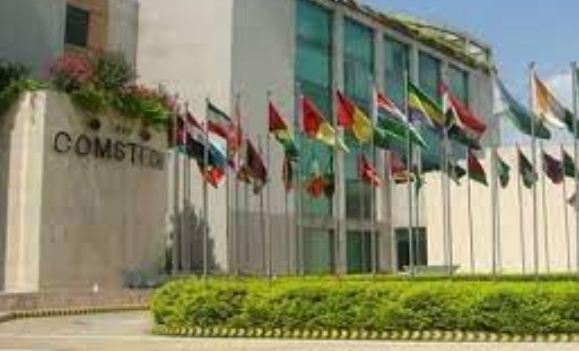
ISLAMABAD, JUN 1 (DNA) – COMSTECH is organizing a 3-day advanced training course on “how to establish halal products testing laboratory”, in collaboration with International Center for Chemical and Biological Sciences (ICCBS) Karachi, and Pakistan National Accreditation Council (PNAC) during June 8 – 10, 2021, at COMSTECH Secretariat, Islamabad.

Federal Minister for Science & Technology, Mr. Shibli Faraz, will grace the occasion as the chief guest and Mr. İhsan ÖVÜT, Secretary General, The Standards and Metrology Institute for Islamic Countries (SMIIC), Turkey, will address the inaugural session.

According to the global Islamic finance report, the global halal industry is estimated to be worth around USD2.3 trillion growing at an estimated annual rate of 20%, the industry is valued at about USD560 billion a year.

In view of the diversity of several products, including processed food and other items of daily use in the present day, authentication and confirmation of their Halal nature is a growing challenge globally.

Beside the environmental contaminants, both biological and chemical, addition of non-halal ingredients, which is prohibited for Muslims, is a matter of concern.  In recent years, awareness about Halal food and other products has increased due to the cross contamination of several industrial products in our daily life.

However, with increasing globalization, many Islamic countries import these products or ingredients from places where Islamic injunctions are not observed. It is therefore, imperative for the Muslim countries to establish Halal testing laboratories which will ensure the Halal status of the consumer products.

The objectives of the training are to impart knowledge on how to establish a research and development laboratory for the investigation / analysis of non-halal ingredients in food, cosmetics and pharmaceuticals by providing hands-on training on instruments involved in non-halal ingredients testing.

To explain the procedure for the testing of most common non-halal ingredients such as detection of alcohol, pork meet, and pork fat (Lard) and genetically modified organisms (GMOs), along with learning the procedure for the laboratory accreditation for ISO 17025 and OIC/SMIIC 35:2020, and to have understanding of how to successfully participate in international proficiency testing.

The course is designed for scientists and research scholars and technicians from OIC member states, involved in food testing and research to participate and acquire state-of-the-art knowledge to establish halal products testing laboratories in their countries.=DNA

==========

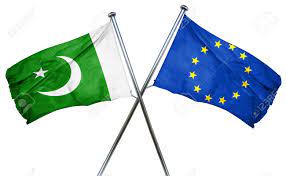
EU, Pak discuss democracy, governance, rule of law and human rights

ISLAMABAD: As part of their regular annual meetings, the EU and Pakistan discussed a range of issues related to the rule of law and human rights. The EU-Pakistan Sub-Group on Democracy, Governance, Rule of Law and Human Rights meeting was held, through a video conference, on 1 June 2021. During the meeting, participants discussed cooperation on human rights at international fora, Pakistan’s National Action Plan on Human Rights, gender equality, women’s and children’s rights, freedom of expression and media, civil society space, freedom of religion or belief and rights of persons belonging to minorities. They also jointly reviewed the progress in Pakistan’s implementation of the EU’s Generalized Scheme of Preferences (GSP+) and related commitments. The EU and Pakistan also addressed issues concerning the rule of law and access to justice, including the review of the crimes that can lead to death penalty, as well as legal and institutional developments. Pakistan provided an update on labour rights, including the Child Labour Survey. The EU presented the assessment regarding the implementation of the EU’s Human Rights Programme. The EU-Pakistan Sub-Group on Democracy, Governance, Rule of Law and Human Rights will present its conclusions to the EU-Pakistan Joint Commission later this month. The meeting was co-chaired by Ms. Paola Pampaloni, Deputy Managing Director for Asia and the Pacific of the European External Action Service (EEAS), and Mr. Nabeel Munir, Additional Secretary of the Ministry of Foreign Affairs of the Islamic Republic of Pakistan. For more details about the EU-Pakistan Strategic Engagement Plan: https://eeas.europa.eu/regions/asia/64586/eu-pakistan-strategic-engagement-plan_en

More information on the European Union’s cooperation with Pakistan can be found here: https://eeas.europa.eu/delegations/pakistan/area/projects_en

THE WORLD PEACE COMES FROM SHUSHA

Asif ASGARLI

While for an indifferent foreigner, Shusha is just one of the cities on the world map, one of the settlements of Azerbaijan and the Karabakh region, for us, Shusha is exceptional and sacred, as well as unique (special) in the true sense of the word.

Unique (special) Shusha

Six years ago, when we launched the international public support campaign “Freedom for Shusha” with our partners from more than 30 foreign countries through the NGO I lead, this question was often addressed in both local and foreign arenas: “What is the importance and uniqueness of this city that you are conducting a separate large international campaign in its name; shouldn’t you carry out this work within the framework of the Karabakh events?”

Of course, we were ready to answer this question coherently and reasonably and in a way that aroused great interest, really attracting foreigners’ attention to Shusha, its culture, cultural heritage, peace, tolerance and multicultural genetics.

As a result, on the eve of May 8, the day of the occupation, the heads of NGOs from 30 European countries issued an official statement on behalf of their organizations, condemning the occupation of Shusha by the Armenian armed forces.

They attended an important international meeting in Baku, announcing on the social media of their countries that Armenians vandalized the rich culture, cultural heritage and peaceful nature of this city.

Many, including ourselves, thought that this love of foreigners for Shusha would be a step taken to come to Baku, see here, and walk, and after a while, this interest would vanish.

But to be honest, the name of Shusha, the activity of Shusha, the specificity of Shusha justified itself and made it sustainable.

Seriously, our foreign partners, who participated in the international event without any financial compensation, organized the “Freedom to Shusha” campaign in 11 European countries and called to protect the uniqueness of Shusha, its cultural values, and heritage.

Another interesting point was that the winner of the logo contest organized by us as part of the international campaign “Freedom to Shusha” was the head of a Georgian NGO, and this altruist really described the culture, cultural heritage and beautiful “Kharibulbul” and this unique Shusha in general, as if he was Azerbaijani and from Karabakh.

This is the specialty of Shusha that this eternal specialty of ours has already passed to the universal scale.

Peaceful, coexistent and tolerant Shusha

Along with the beautiful and unique nature of Shusha, which was founded 270 years ago by Panahali Khan, the founder of the ancient Azerbaijani Karabakh Khanate, as a city-fortress in a high geographical area, cultural and peaceful genetics have left deep imprints on the Caucasus and the whole region.

As early as the beginning of the 19th century, during the Qajar Iran-Tsarist Russia war, Shusha called for peace, supported the immediate cessation of hostilities and the establishment of peaceful coexistence in the region.

Shusha embraced with its great kindness the tens of thousands of Armenian families displaced by the Qajar Iran and the Ottoman Empire in the 1920s and 1930s and focused on the tolerant and peaceful life of the aboriginal people of Karabakh (Azerbaijani Turks) with them.

Based on the guarantee of peace and coexistence, Shusha also recognized the right of the Armenian population to self-government (ownership) of small village and settlement communities in Karabakh, in the 19th century!

In the early 20th century, in 1919, during the Azerbaijan Democratic Republic, the first democratic and secular republic in the East, Shusha once again hosted a peaceful and nonviolent settlement of the Dashnak-incited uprising and separatist protests of the Armenian population in Karabakh.

In the early years of the Bolshevik (Soviet) occupation of Azerbaijan, Shusha demonstrated its commitment to a policy of peace, coexistence and consensus and granted high self-government autonomy to the Armenian and Azerbaijani populations in Karabakh, and, as a concession, passed its administrative center to Khankendi.

Cultural Shusha with cultural heritage

The fact that Shusha is a center of culture, music, and cultural heritage is not only a local issue for Azerbaijan but also a regional cultural system for the entire Caucasus.

Shusha is called the cradle of music in the Caucasus because the Azerbaijani Karabakh mugam and singing school, established and formed here, was the cultural ruler of the entire Caucasus region. Representatives of this school promoted the cultural heritage and values in all settlements of the Caucasus.

After the South Caucasus became part of the Russian Empire, any cultural innovation in the administrative center of Tbilisi manifested itself primarily in Shusha.

The establishment of the first classical theater in Shusha after Tbilisi was one of the factors that made it the cultural center of the Caucasus.

The opening in Shusha of the first modern secondary school in Azerbaijan is also assessed as a city benchmark in the Caucasus.

Ahmad Bey Agaoglu, who received his first higher education in law and political science in Europe in the 19th century, kept alive the Western values and was fluent in five foreign languages, is also a representative of the Shusha cultural school and the founder of the first library in Karabakh.

The manifestation of progressive European and Western values the 19th and 20th centuries in the activity of Shusha and its intellectuals showed that the city was incomparable as the cultural center of the Caucasus.

The centuries-old coexistence of mosques, Islamic monuments, Orthodox and Gregorian churches and monuments confirms that Shusha is a multicultural Azerbaijani city that preserves this multi-religious cultural heritage, along with being the center of the cultural heritage in the Caucasus.

Shusha, which embodied national and human cultural values, led Azerbaijan during the Soviet era despite communist ideological pressures, maintained the status of the Caucasian cultural heritage center with the outstanding services of National leader Heydar Aliyev, and even spread it throughout the post-Soviet space.

The music festival held in Shusha in 1990-1991 gained international status and became a cultural event globally, surpassing the Soviet Union.

Capital of cultures – Shusha

The people, the state, and the leadership of Azerbaijan, which has permanently attached great importance to culture, cultural heritage, and the preservation of cultural values, have reaffirmed this tradition in the example of liberated Shusha.

After the liberation of Shusha, the cradle of culture and music of the Caucasus, the President of Azerbaijan, Mr. Ilham Aliyev, called on the whole world to preserve and protect the national and human cultural values of this ancient city.

International organizations, which voted that Shusha and its cultural heritage do not belong only to the Azerbaijani people, immediately announced their decisions:

Shusha was declared the Capital of Islamic Culture.

Shusha was declared the Cultural Capital of the Turkic World.

Shusha was declared the Capital of Culture of Azerbaijan.

The list will probably expand. But at least Shusha, which will have the responsible and honorable status of the capital of these cultures, is already creating great cultural geography beyond the cultural center of Azerbaijan and the Caucasus.

Culture has always served peace, and cultural Shusha, which has been a component of this peace for years, has been deprived not only of this status but also of its role as a peace center.

Azerbaijan and its President have liberated Shusha, the capital of cultures, not only for our people but for the whole peace-loving humanity, so that this culture will continue to serve peace, security, peaceful and friendly coexistence for hundreds of years ahead.

Symbol of freedom, peace and culture “Kharibulbul”

The association of the endemic plant “Kharibulbul” which grows in the Caucasus with Shusha is not only a love of nature but its great spiritual, cultural and peaceful significance and value preserved by the Azerbaijani people for 100 years.

The legend said that according to the wish of the Karabakh khan’s daughter, who moved to a remote land with the Shusha languor, the flower “Kharibulbul” was brought and planted, but it did not grow in other lands, and both (khan’s daughter and flower) perished in a distant land.

Therefore, the people of Azerbaijan have always protected “Kharibulbul” as a symbol of free Shusha and the eternal owner of this land, and passed this tradition on to future generations.

For centuries, Azerbaijani people have accepted Shusha as “Kharibulbul” and “Kharibulbul” as Shusha – a cultural unit connected by a chain – and have not reconciled with the violation of this unwritten law.

That is why when the Armenian armed forces invaded Shusha on May 8, 1992, and the city had been under occupation for 28 years, the Azerbaijani people said: “Our “Kharibulbul” is in a cage, it is waiting for the real owner to release it, to liberate it, to return it to its cultural life.”

Thus, 28 years later, the people of Azerbaijan, under the leadership of their proud, victorious leader Ilham Aliyev, freed Shusha – “Kharibulbul” with a peacekeeping (peace-enforcment) operation against the Armenian occupation of our country.

“Kharibulbul” – Shusha is already freed, “Kharibulbul” grows freely, blossoms freely, breathes freely, and sleeps freely.

This is the significance of “Kharibulbul”; this is the cultural value of “Kharibulbul”.

“Kharibulbul” Shusha’s call for peace

Shusha, where all values of culture and cultural heritage  were destroyed and illegally changed during the occupation, began to restore its former and ancient cultural status with “Kharibulbul”.

The visit of the President of Azerbaijan Ilham Aliyev to Shusha three times in a short time and the restoration of the cultural image of Shusha in difficult climatic and geographical conditions are extraordinary heroism and historical assessment of culture and cultural heritage.

The highly professional restoration of all Islamic and Christian cultural monuments in Shusha, the cultural center of the Caucasus, is another indication of the city’s commitment to peace, coexistence, and multiculturalism.

Returning to Shusha with the “Kharibulbul” Music Festival, multicultural Azerbaijan once again sent a message of peace to the world from this city of peace.

The “Kharibulbul” Festival invited for the continuation of a peaceful, secure, and tolerant neighborhood in the region.

The active participation of various ethnic and cultural groups living in Azerbaijan in the “Kharibulbul” Music Festival, which promotes peace, coexistence and peaceful community, confirmed that the Armenian population of our country could also benefit from these opportunities.

The President of Azerbaijan, Mr. Ilham Aliyev, once again demonstrated the commitment of our state to this policy by calling for peace from Shusha – “Kharibulbul” to the world, to the Karabakh Armenians, who may be our worthy citizens, and to Armenia, which may be our good neighbor.

The writer hails from New Azerbaijan Party . He is the  Member of the Board, Head of the Democratic Student & Youth Organization of Azerbaijan

JAPANESE ENVOY STRESSES ENHANCED THINK-THANK ACTIVITY

Says by  accumulating online dialogues, workshops, lectures and etc., we can surely develop interactions between our experts beyond borders despite current COVID-19 circumstances

Mahnoor Ansar

ISLAMABAD: The Embassy of Japan has welcomed that the Institute of Developing Economies (IDE-JETRO) in Japan and the Sustainable Development Policy Institute (SDPI) in Pakistan held the first online workshop on May 26, 2021.

Starting from the opening remarks and mutual introductions by FUKAO Kyoji, the President of IDE-JETRO and Abid Q Suleri, the Executive Director of SDPI, experts from both sides made presentations and discussed about topics such as Labor Force Participation of Women, Geographical Simulation Model of IDE, Financial Inclusion in Pakistan, and Sustainable Recovery from COVID 19 and Pakistan’s Fiscal Policy.

The Embassy of Japan has always been committed to promoting think-tank cooperation between Japan and Pakistan, and we assume that this event symbolizes steady development of cooperation between leading institutions in both countries.

MATSUDA Kuninori, Ambassador of Japan believes this kind of events will contribute to enhancing intellectual network between Japan and Pakistan towards the 70th anniversary of the establishment of the diplomatic relationship between Japan and Pakistan in 2022.

“By accumulating online dialogues, workshops, lectures and etc., we can surely develop interactions between our experts beyond borders despite current COVID-19 circumstances. I’m really thankful for both organizations to take excellent initiative for development of think-tank cooperation, which we will continue to support in the future.”, he said.

Stay Connected

64FansLike
60FollowersFollow

Latest Reviews

Exchange Rates

USD - United States Dollar
EUR
1.14
GBP
1.34
AUD
0.70
CAD
0.71