Home Blog Page 270

CDA rolls out regulated community market to back local businesses

CDA rolls out regulated community market to back local businesses

ISLAMABAD, 01 FEB (DNA) — The Capital Development Authority (CDA) has rolled out a fully regulated Community Market in Islamabad to promote youth entrepreneurship and support local businesses, amid a growing trend of informal pop-up markets across the federal capital.

The initiative aims to provide a structured, transparent, and civic-compliant platform for students and small entrepreneurs while ensuring municipal oversight and public-interest standards. The latest Community Market was organised on Sunday at Fatima Jinnah Park (F-9 Park), in front of the Gandhara Citizen Club, and featured over 20 stalls run primarily by students, young entrepreneurs, and local artisans.

The stalls showcased handmade, organic, and homemade products and attracted hundreds of visitors, reflecting strong public interest in community-based and locally focused marketplaces. In line with the government’s vision of a digital and documented economy, the market is operating on a cashless payment system, with vendors facilitating digital transactions for customers.

Among the stallholders was Mahnoor, a college student selling indoor plants, who said the regulated platform had helped her reach a wider audience and establish credibility.  “As a student entrepreneur, it is difficult to find a proper place to sell without trust,” she told media “Being part of a CDA-managed market gives confidence to both sellers and buyers.”

CDA spokesperson said the Community Market is part of the authority’s broader efforts to encourage community engagement while formalising small-scale entrepreneurship under a clear regulatory framework. Mass-produced and imported items are strictly prohibited, and vendors are selected through a scrutiny process to ensure compliance with CDA rules.

Speaking to media, Director Municipal Administration (DMA) Islamabad Dr Syeda Anam Fatima said the initiative reflects CDA’s commitment to creating safe, inclusive, and well-regulated economic opportunities for young people.

 “The CDA Community Market is an official, community-oriented initiative designed to empower youth and local entrepreneurs while maintaining proper regulation, cleanliness, and public safety,” she said. “All applications are carefully reviewed, and stall allotment is made strictly on merit and eligibility criteria.”

She clarified that the market is being run entirely under CDA’s authority, with clear guidelines to prevent commercial exploitation or misrepresentation. Any collaboration with facilitation partners, she added, is limited to operational support only. Visitors welcomed the organised layout and family-friendly environment.

“This feels safe and well-managed,” said Rimsha Khan, who visited the market with her family. “You can see that vendors are genuine and the products are locally made.” Another visitor, Muhammad Kashif, described the market as a positive community initiative. “It’s encouraging to see students and small entrepreneurs getting a proper platform. Islamabad needs more such regulated spaces,” he said.

While contacted, Abdul Ghafoor Khan Assistant Director (DMA) said all vendors must comply with municipal regulations, cleanliness standards, and safety protocols, adding that allotments could be cancelled in case of violations or false information.He said the Community Market model is being replicated at other public spaces across Islamabad.

Under the schedule, Ghafoor said the market is held at F-6/3 Hill Park every Friday from 2pm to 6:30pm, while Gol Market Park F-7/3 hosts the market every Saturday from 11:30am to 4:30pm. He said public feedback would guide further expansion of the initiative, which has received a positive response from residents across the capital. — DNA
Climate change puts Norway’s love of skiing to the test

Climate change puts Norway's love of skiing to the test

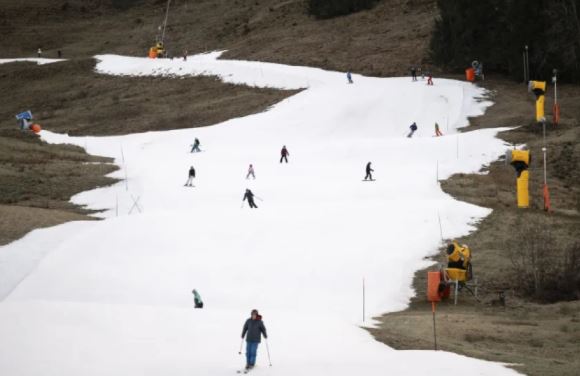
LORENSKOG, FEB 1: Skiers swish down the slope, no sun or sky in sight. It may be the middle of winter high up in the North, but lack of snow has Norwegians flocking to an indoor ski centre near Oslo.

In Norway, the saying goes that babies are born with skis on their feet. With opening ceremony of the Milan-Cortina Winter Olympics approaching Friday, the Scandinavian country has won the most Winter Olympic medals.

But how long can Norway’s success last?

With shorter winters and less snow, will Scandinavians be able to continue to practice their favourite pastime, and will their athletes continue to dominate?

By the end of this century, Norwegian winters are expected to be 2 to 3C warmer, and the ski season, defined by at least 25 centimetres (10 inches) of snow, between one and three months shorter depending on the location, according to a  published in October.

“Most of Norway’s habitation is in coastal areas and in these areas we are actually seeing that many of the towns will not have any winter as we know it in the future,” climatologist Hans Olav Hygen told AFP.

                  – Less interest in skiing –

                  In Oslo, the winter season already lasts a month less than 30 years ago.

                  There’s not always snow on the neighbourhood ski slopes, and school outings to teach kids the basics are becoming rarer.

                  “We already see the change from skiing being a mass sport in Norway to more and more people that are not used to skiing and don’t use skiing as a winter recreational activity,” Hygen said.

                  From 2014 to 2024, memberships in ski clubs tumbled by 37 percent, according to the national ski federation.

                  Other factors have also contributed to the decline, including people spending more time on screens, higher costs and youths drawn to other sports with famous Norwegian athletes, such as football (Erling Braut Haaland), tennis (Casper Ruud) and golf (Viktor Hovland).

                  “With the challenge posed by climate change, a lot of people are turning to other activities that are more predictable and accessible,” said Marit Gjerland of the ski federation.

                  Seeing the writing on the wall, Norway launched a “Snow for the Future” project nearly 10 years ago to explore sustainable solutions for producing artificial snow.

                  “In order to preserve the ski culture, it is essential to have access to snow where people live,” Gjerland said.

                  “There is of course always snow in the mountains, but that’s far for people. We want to bring it to the people.”

                  – Possible advantage? –

                  Current snowmaking machines typically require temperatures of -2 to -3C for water droplets to freeze.

                  In Trondheim, the Sintef research institute has worked on solutions that function in temperatures above freezing, similar to a refrigerator.

                  “The challenge with that type of technology is that it’s very energy-consuming,” said researcher Ole Marius Moen.

                  Researchers therefore focused on finding solutions “to make it more energy-efficient, like utilisation of excess heat from those types of equipment, which could be used for example for heating of indoor swimming pools, office locations.”

                  That’s what’s being done at the indoor ski centre in Lorenskog, near Oslo.

                  “It may seem a little crazy: who would have imagined a ski dome in Norway, when we have such winters?” admitted the facility’s director Ole Christian Mork.

                  “But the goal is also to offer a stable winter experience year-round.”

                  Do Norway’s top skiers worry that shorter winters with less snow will hurt their country’s dominance in winter sports?

                  “On the contrary, I think,” former biathlon star Johannes Thingnes Bo told AFP.

                  “Most of the preparation is done during the summer. And the cold autumn period when you can neither ski nor roller-ski is being shortened,” he said.

                  “When I was competing, I only started skiing in the first week of November, and only a small part of my training was on snow.”

Pakistan, Arab nations warn repeated Israeli violations threaten Gaza stability

Pakistan, Arab nations warn repeated Israeli violations threaten Gaza stability

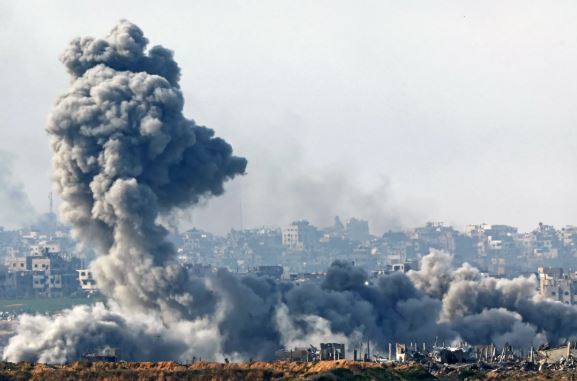
ISLAMABAD, FEB 1: Pakistan and several other Muslim-Arab nations have warned that Israel’s repeated violations of the ceasefire in Gaza pose a risk to the region’s peace and stability.

In a statement, the Foreign Office mentioned that Pakistan, Egypt, Jordan, the United Arab Emirates, Indonesia, Turkiye, Saudi Arabia, Qatar — all founding members of US President Donald Trump’s Board of Peace — condemn Israel’s repeated violations of the ceasefire, which have resulted in the killing and injuring of more than a thousand Palestinians.

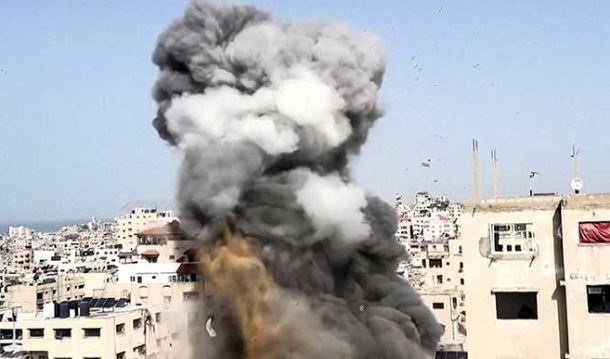
Israel pounded Gaza on Saturday with some of its most deadly airstrikes since the October ceasefire, killing more than 30 people, including three girls from one family, in attacks on houses, tents and a police station.

Hamas, which retains control of just under half of Gaza, where nearly all its more than 2 million residents live mainly in makeshift tents and damaged buildings, said Israel had violated the truce. It did not say whether any of its members or sites were struck in Saturday’s attacks.

“These actions risk escalating tensions and undermining efforts aimed at consolidating calm and restoring stability,” the Foreign Office said.

It further stated that the violations are taking place at a time when regional and international parties are working collectively to advance the second phase of Trump’s peace plan and to implement the United Nations Security Council Resolution 2803.

The foreign ministers of these nations consider, it said, that these repeated violations constitute a direct threat to the political process and hinder ongoing efforts to create appropriate conditions for transitioning to a more stable phase in the Gaza Strip, both in terms of security and humanitarian conditions, and stress the necessity of full commitment to ensuring the success of the second phase of President Trump’s peace plan.

The foreign ministers urged all parties to fully uphold their responsibilities during this critical period and exercise utmost restraint. They stressed the need to preserve the ceasefire, avoid actions that could undermine the current process, and create conditions for early recovery and reconstruction.

The statement emphasised advancing a just and lasting peace based on the Palestinian right to self-determination and statehood, in line with international law, relevant UN Security Council resolutions, and the Arab peace initiative.

Russia and the Gentle Weight of History

Russia and the Gentle Weight of History

Dr. Muhammad Akram Zaheer

For much of the early post-Soviet period, Russia occupied an uncertain space between authoritarian tradition and democratic aspiration. The collapse of the Soviet Union had opened political life, loosened censorship, and allowed a degree of pluralism that was unprecedented in modern Russian history. Yet, more than three decades later, those openings have narrowed to the point where they are barely visible. Under President Vladimir Putin, Russia has moved steadily away from even the limited competition and debate that once existed, towards a system defined by personal rule, repression, and the systematic removal of political alternatives.

This transformation did not occur overnight. It has been the product of gradual institutional erosion, selective crackdowns, and the steady expansion of executive power. Each phase was justified as a response to instability, terrorism, foreign pressure, or national decline. Together, they have reshaped the Russian state into one where authority flows from a small circle around the presidency, and where dissent is no longer treated as a legitimate feature of public life but as a threat to be neutralised.

When Putin came to power in 2000, he inherited a country exhausted by economic crisis and political fragmentation. His early promise was order. Regional governors were brought to heel, powerful businessmen were reminded that wealth depended on political obedience, and federal institutions were strengthened. For many Russians, these measures were welcomed. The chaos of the 1990s had discredited the language of reform, and stability appeared more valuable than abstract freedoms. Yet the price of that stability soon became clear. Independent television channels were placed under state control. Political parties that failed to align themselves with the Kremlin found their access to elections restricted. Courts increasingly ruled in favour of the executive. Over time, what emerged was not the restoration of a strong state governed by law, but a political system in which the law served the interests of those in power. Elections continued, but their meaning changed. Outcomes became predictable, opposition candidates were excluded on technical grounds, and media coverage overwhelmingly favoured the incumbent leadership. Political competition survived largely as performance, not as a mechanism for accountability. This shift marked the transition from managed politics to enforced loyalty.

The most visible sign of Russia’s political descent has been the narrowing of space for independent voices. Journalists, activists, academics, and cultural figures who once operated within defined limits have found those limits erased. New legislation has steadily expanded the definition of “extremism,” “foreign influence,” and “discrediting the state.” These elastic terms allow authorities to prosecute critics without needing to demonstrate genuine threats. Civil society organisations have been particularly vulnerable. Groups working on election monitoring, human rights, or historical memory have been labelled undesirable or forced to close. Their offices have been raided, accounts frozen, and staff harassed. What remains is a network of officially approved organisations that echo state narratives and avoid sensitive subjects. Ordinary citizens have also been drawn into this atmosphere. Public demonstrations are rare and swiftly broken up. Online expression is monitored. Employers, universities, and local administrations increasingly act as extensions of the security system, discouraging any behaviour that might attract unwanted attention. The result is not only political silence but social caution — a widespread habit of self-censorship that reaches into daily life.

Russia’s full-scale war against Ukraine marked a decisive stage in this political evolution. Conflict has always offered authoritarian systems an opportunity to consolidate power, and the Kremlin has used the war to entrench controls that might once have provoked broader resistance. New laws criminalised criticism of military operations. Independent media outlets were blocked or forced into exile. Thousands were detained for anti-war statements, some receiving lengthy prison sentences. Even the use of certain words became grounds for prosecution. In this environment, the line between political opposition and criminal behaviour effectively disappeared. The war also provided a powerful ideological tool. State media framed the conflict as a civilisational struggle, portraying Russia as besieged by hostile forces determined to weaken and humiliate it. This narrative served two purposes: it justified repression at home and diverted attention from domestic failures. Economic hardship, corruption, and demographic decline could be attributed to external enemies rather than internal policy. At the same time, the prolonged nature of the war has deepened the state’s reliance on coercion. Mobilisation, surveillance, and expanded security powers have become normalised. Emergency measures have hardened into permanent features of governance.

A striking feature of contemporary Russia is the emptiness of its institutions. Parliament, once noisy and fragmented, now functions largely as a rubber stamp. Legislation is drafted within the executive and approved with minimal debate. The judiciary, formally independent, rarely challenges the state in politically sensitive cases. Governors are selected less for local legitimacy than for personal loyalty. This hollowing out has long-term consequences. Institutions that lack autonomy also lack credibility. They cannot mediate conflict, channel social demands, or provide lawful remedies. Instead, grievances accumulate beneath the surface, while formal politics becomes detached from social reality. Such systems often appear stable until they are not. Their rigidity limits the state’s ability to adapt, to correct mistakes, or to incorporate new social forces. By concentrating authority at the top, they also concentrate responsibility. Success is claimed by the leadership; failure, when it comes, will be difficult to deflect.

It would be misleading to describe Russian society as uniformly terrorised or uniformly supportive. What exists instead is a complex mixture of accommodation, fatigue, indifference, and quiet unease. Many citizens have learned to navigate the system by keeping politics at a distance. They focus on family, work, and private life, avoiding public statements. For others, state media’s constant emphasis on external threat resonates, reinforcing feelings of national grievance and defensive pride. Yet beneath these layers lies a growing sense of stagnation. Economic opportunities are limited, especially outside major cities. Sanctions and isolation have narrowed horizons. Young people face restricted mobility and uncertain futures. The social contract that once traded rising living standards for political passivity has weakened. What replaces it is less a shared vision than a set of constraints. Even cultural life reflects this duality. Theatres, exhibitions, and publishing houses continue to operate, but boundaries are tightly policed. Art may flourish in form, but its themes are increasingly cautious. History is reinterpreted to serve present needs, and alternative readings are marginalised.

At the centre of this system stands a single figure whose authority overshadows all others. Over time, Russia’s political structure has been reshaped around the presidency. Decision-making is concentrated, succession is uncertain, and loyalty to the leader has become the primary criterion for advancement. Such systems possess a particular vulnerability. By weakening institutions, they also weaken mechanisms of renewal. Leadership becomes irreplaceable in rhetoric but irremovable in practice. Political life narrows to the maintenance of power rather than the management of society. The cultivation of traditional values, patriotic rituals, and selective historical memory plays an important role here. These narratives provide moral language for obedience and frame political loyalty as cultural authenticity. Yet they cannot resolve structural problems. They may postpone reckoning, but they cannot prevent it.

Russia’s internal transformation carries consequences beyond its borders. A state organised around personalised authority and sustained confrontation is less inclined towards compromise. Foreign policy becomes an extension of domestic legitimacy, and external conflict reinforces internal control. For neighbouring regions, this has meant heightened insecurity and diminished predictability. For the wider international system, it complicates engagement. Diplomacy with a government that equates dissent with betrayal and negotiation with weakness becomes inherently fragile. At the same time, Russia’s experience offers a broader lesson. The erosion of political freedoms rarely begins with dramatic rupture. It advances through incremental adjustments, justified as temporary or necessary. By the time repression becomes unmistakable, the institutions capable of resisting it have often already been neutralised.

Russia today stands as a case study in how a society can drift from imperfect openness to entrenched authoritarianism without a single decisive break. Each step along the way was presented as correction, defence, or consolidation. Together, they have produced a system where power is insulated from accountability, and where public life is organised around caution rather than participation. Whether this trajectory can be reversed remains an open question. History suggests that systems built on fear and loyalty rather than consent and law face inherent limits. Economic strain, generational change, and the unpredictable consequences of war all exert pressure. Yet pressure alone does not guarantee transformation.

For now, Russia’s political reality is defined less by the promise of reform than by the management of control. It is a condition shaped not only by the will of those at the top, but by the slow weakening of the structures that once offered society a voice. In that erosion lies the deeper story of Russia’s descent not merely into a harsher state, but into a political order where the future is increasingly confined by the present.

Pakistan win toss, elect to bat first in final T20I against Australia

Pakistan win toss, elect to bat first in final T20I against Australia

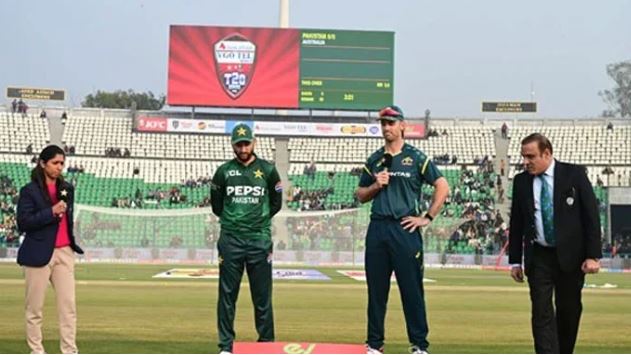
LAHORE, FEB 1: Pakistan on Sunday won the toss and elected to bat first against Australia in the third and final T20I of the three-match series being played at Lahore’s Gaddafi Stadium.

The national side lead the three-match series by 2-0 courtesy of their consecutive wins in the first two matches, both teams now share an equal head-to-head record with 14 wins each, while one match ended in a tie and another produced no result.

During the match, the Green Shirts will look to maintain their winning momentum after back-to-back victories against Australia as they prepare for the ICC Men’s T20 World Cup 2026.

Meanwhile, Australia will aim to avoid a whitewash following defeats in the first two matches and earlier consecutive losses in T20I series against India.

Playing XIs
Pakistan: Fakhar Zaman, Saim Ayub, Salman Ali Agha (c), Babar Azam, Khawaja Nafay (wk), Mohammad Nawaz, Shadab Khan, Faheem Ashraf, Abrar Ahmed, Naseem Shah and Shaheen Afridi.

Australia: Mitchell Marsh (c), Matthew Short, Cameron Green, Matt Renshaw, Marcus Stoinis, Josh Philippe (wk), Mitchell Owen, Cooper Connolly, Ben Dwarshuis, Matthew Kuhnemann and Adam Zampa.

Rape trial puts Norway’s royal family in unwelcome glare of public

Rape trial puts Norway's royal family in unwelcome glare of public

LISE ASERUD/NTB/AFP A young man with blond hair and a bow tie looks on as a woman in a yellow dress claps

DNA

OSLO, FEB 1: When Marius Borg Høiby stands up in room 250 at Oslo district court on Tuesday, at the start of Norway’s biggest trial in years, he will have no moral support from his closest relatives. His mother Crown Princess Mette-Marit will not be there, nor will the man she married when her son was four – the heir to the Norwegian throne, Crown Prince Haakon.

For the next seven weeks there will be no pictures of the blond 29-year-old either inside the court or outside – the court has banned them – but the world’s press is here in numbers and the palace is keeping well away.

Høiby is accused of 38 charges, including the rape of four women, assaulting and threatening a girlfriend and damaging her flat, as well as drugs charges and driving offences. If found guilty he could face more than 10 years in jail.

Rune Hellestad/Getty Images Two women, Princess Ingrid Alexandra in a white dress and Princess Mette-Marit in a yellow dress, appear with four me – including King Harald on the left and Marius Borg Høiby to the left of his sister Ingrid AlexandraRune Hellestad/Getty Images

The palace stresses that Marius Borg Høiby (here in 2022) is not a public figure and only appears with the royal family on special occasions

The palace stresses Høiby is not part of the royal family and that he is not a public figure. But he is considered a close member of the family, by his stepfather the crown prince who sees him as a son, and by Norway’s much loved King Harald V, 88, who he has known for much of his life as his grandfather.

“It’s a very dangerous moment, because the royal family should be role models,” says Ulf Andre Andersen, who broke the story for celebrity-focused magazine Se og Hør (See and Hear) in early August 2024 when police were called to a woman’s flat in Frogner on the west side of Oslo after reports of a violent incident.

Høiby has admitted some of the lesser offences, and after his arrest admitted physical abuse and destroying objects. The indictment alleges he tore down a chandelier, threw a knife at the wall and shattered a mirror, calling the woman words such as whore.

The four rape charges date from 2018, at his parents’ official residence on the Skaugum estate outside Oslo, to November 2024, after his initial arrest. One of the four, dating back to 2023, involves intercourse while the woman was asleep. The other three also involve sexual assault while the women were incapacitated, which also counts as rape in Norway.

Naqvi, Bugti visit injured police jawans

Naqvi, Bugti visit injured police jawans

Corps commander also accompanied them

‎Bureau Report

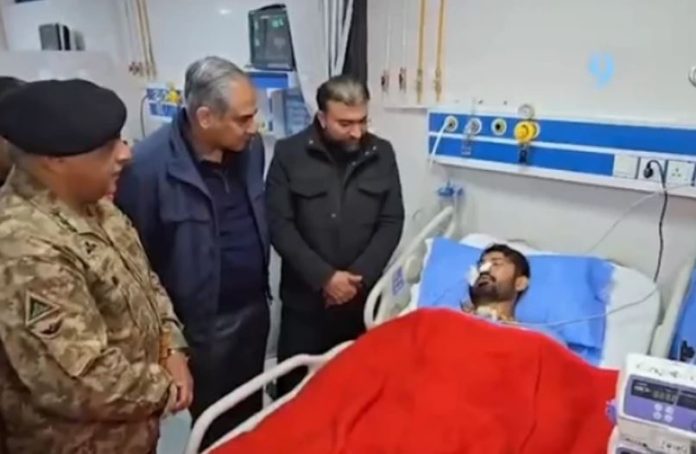
QUETTA, FEB 1 /DNA/ – Federal Minister for Interior Mohsin Naqvi, Chief Minister Balochistan Sarfraz Bugti, and the Corps Commander Balochistan visited injured police personnel at CMH Quetta.

‎The Interior Minister, Chief Minister Balochistan, and the Corps Commander Balochistan appreciated the high morale of the injured personnel.

‎Federal Minister for Interior Mohsin Naqvi said, “You confronted the terrorists’ attacks like lions and defeated them.”

‎The Chief Minister Balochistan said, “I salute your courage for foiling the conspiracy to create instability in Balochistan. You are our lions, and the nation is with you.”

‎The injured police personnel said that after recovery they would once again fight against this menace. “Our spirits are high and our resolve is firm. We will eliminate the terrorists of Fitna-e-Hindustan. For the eradication of this menace, our lives and even the lives of our children are at the disposal of the nation.”

Pakistan, Bangladesh discuss cooperation on overseas employment

Pakistan, Bangladesh discuss cooperation on overseas employment

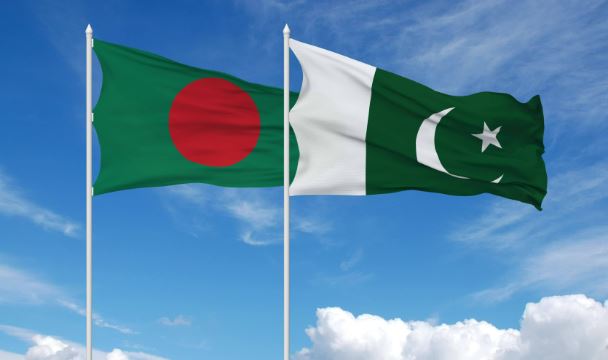
ISLAMABAD, Feb 1 (DNA) – Pakistan and Bangladesh exchanged views on shared challenges faced by their overseas labour force and discussed best practices in skills development and training for expatriate workers.

On the sidelines of the Abu Dhabi Dialogue, Federal Minister for Overseas Pakistanis and Human Resource Development Chaudhry Salik Hussain held a meeting with Dr. Asif Nazrul, Adviser to the Ministry of Expatriates’ Welfare and Overseas Employment of Bangladesh, a press release, on Sunday, said.

The Pakistani side briefed the meeting on the role and initiatives of the National Vocational and Technical Training Commission (NAVTTC), while the Bangladeshi side shared insights into the operational framework of its Technical Training Centers.

Both delegations also explored avenues for enhancing bilateral cooperation in the fields of education, health, tourism, and trade.

The Chairman, Employees’ Old-Age Benefits Institution (EOBI), Pakistan apprised the meeting of the institution’s mandate, functions, and role in providing social protection to workers.

“Emphasizing the importance of structured collaboration, both sides expressed keen interest in learning from each other’s experiences and best practices in human resource development and labour export, including recruitment processes, skills training, and reintegration mechanisms for returning workers,” it was added.

Both sides expressed their commitment to continued engagement and constructive dialogue to strengthen cooperation in areas of shared interest. Senior officials of the Pakistan and Bangladesh diplomatic missions in the UAE were also present during the meeting.

Pakistan, others condemn Israeli violations of ceasefire

Pakistan, others condemn Israeli violations of ceasefire

DNA

ISLAMABAD: The Foreign Ministers of Pakistan, Egypt, Indonesia, Jordan, Qatar, Saudi Arabia, Türkiye, and the United Arab Emirates issued a joint statement strongly condemning Israel’s repeated violations of the ceasefire in Gaza. These violations have reportedly resulted in the killing and injuring of more than a thousand Palestinians.

The ministers warned that such actions risk escalating regional tensions and undermining collective efforts to consolidate calm and restore stability. They highlighted this as occurring during a critical period when regional and international parties are advancing the second phase of President Donald Trump’s Comprehensive Plan to End the Gaza Conflict (often referred to as his peace plan), alongside the implementation of United Nations Security Council Resolution 2803 (adopted in November 2025, which endorses the plan, authorizes a transitional Board of Peace, and supports stabilization measures including humanitarian access and reconstruction in Gaza).

The statement describes the violations as a direct threat to the political process and an obstacle to creating suitable conditions for transitioning Gaza to a more stable phase in terms of security and humanitarian needs.

The ministers stressed the necessity of full commitment by all parties to ensure the success of the second phase of Trump’s plan.They called on all parties to uphold their responsibilities, exercise maximum restraint, preserve and sustain the ceasefire, avoid actions that could undermine the process, and foster conditions for early recovery, reconstruction, and progress toward a just and lasting peace.

This peace should be based on the Palestinian right to self-determination and statehood, in line with international law, relevant UN Security Council resolutions, and the Arab Peace Initiative.This joint statement aligns with ongoing diplomatic coordination among these countries in support of the U.S.-led plan and UN-backed efforts to achieve a sustainable ceasefire and regional stability, amid reports of challenges to the truce’s implementation as the second phase progresses.

 Full texts of similar recent joint statements from these ministers (e.g., on humanitarian concerns and support for the plan) are available on official foreign ministry websites such as those of Türkiye (mfa.gov.tr), Pakistan (mofa.gov.pk), and others.

Optimal Learning: How the Mind Thrives When Pressure Drops

Optimal Learning: How the Mind Thrives When Pressure Drops

Sabahat Ali

We often think learning requires relentless effort, strict deadlines, and high-pressure environments. The more stressed we are, the faster we believe we’ll master a skill or absorb knowledge. But modern psychology and neuroscience reveal a surprising truth: the best learning happens when pressure decreases and the mind feels safe and calm.

Why Pressure Can Block Learning

When we’re stressed, our brain switches into survival mode. Cortisol and adrenaline surge, triggering a fight-or-flight response. In this state, higher-order thinking—like problem-solving, memory, and creativity—takes a back seat.

As Carl Rogers, a pioneer of humanistic psychology, said:

“The only person who is educated is the one who has learned how to learn and change.”

Pressure may give short-term motivation, but it can hinder deep, lasting learning. When the mind feels safe, curiosity and exploration can flourish.

The Psychology of Calm Learning

Positive psychology shows that low-pressure environments enhance learning. Mihaly Csikszentmihalyi, the psychologist behind flow, explained:

“Flow is the state in which people are so involved in an activity that nothing else seems to matter.”

Flow happens when challenges match our skills. In these states, learners experience heightened creativity, deep focus, and better memory retention.

Consider this:

“A tense mind remembers less; a relaxed mind remembers more.” – Anonymous

Reducing pressure doesn’t mean lowering standards—it allows the brain to process, store, and retrieve knowledge efficiently.

What Neuroscience Tells Us

High stress activates the amygdala, our emotional center, and suppresses the prefrontal cortex, responsible for reasoning and complex problem-solving. This can lead to rigidity and poor adaptability.

On the other hand, low-pressure environments stimulate the parasympathetic nervous system, lower cortisol, and allow the hippocampus to consolidate memories effectively. Simply put: calm minds learn better.

Powerful Psychology Insights

Self-Determination Theory (Deci & Ryan): Autonomy, competence, and connection boost motivation. Pressure undermines autonomy, limiting engagement.

Growth Mindset (Carol Dweck): Mistakes are opportunities. Fear of failure blocks growth.

Flow Theory (Csikszentmihalyi): Optimal learning occurs when challenges match skill and stress is low.

William James wisely noted:

“The greatest discovery of my generation is that a human being can alter his life by altering his attitudes of mind.”

Creating safe, low-pressure learning spaces allows learners to harness their full potential.

Eye-Catching Quotes on Learning and Pressure

“Stress is the trash of modern life—let it go, and the mind learns freely.” – Dan Millman

“Learning thrives in calm waters, not stormy seas.” – Anonymous

“High pressure may produce diamonds, but it can also shatter minds.” – Anonymous

“Curiosity survives only in freedom, not under fear.” – Albert Einstein

“Flow is not forced; it is discovered when pressure fades.” – Mihaly Csikszentmihalyi

“Mistakes are proof that you are learning, not failing.” – Carol Dweck

“Pressure is the enemy of creativity; calm is its ally.” – Anonymous

“True learning is a gentle river, not a raging storm.” – Anonymous

“We learn best when the heart feels safe and the mind feels free.” – Anonymous

Practical Tips for Low-Pressure Learning

Encourage curiosity without fear of failure. Celebrate exploration and experimentation.

Give constructive feedback. Replace criticism with guidance.

Balance challenge with skill. Tasks should stretch learners but not overwhelm them.

Allow reflection time. Deep learning happens when the mind can pause and process.

Incorporate mindfulness. Simple stress-reduction practices before learning can enhance retention.

Learning is not a sprint under duress. It is a process that thrives in calm, supportive environments. By reducing unnecessary pressure, embracing mistakes as opportunities, and fostering curiosity, we allow learners to reach their highest potential.

“Learning is not about how hard you push—it’s about how safely and freely your mind can grow.” – Anonymous

Stay Connected

64FansLike
60FollowersFollow

Latest Reviews

Exchange Rates

USD - United States Dollar
EUR
1.14
GBP
1.34
AUD
0.70
CAD
0.71