Home Blog Page 27

Pakistan issues demarche to Taliban regime after Afghan soil used to martyr soldiers

Pakistan issues demarche to Taliban regime after Afghan soil used to martyr soldiers

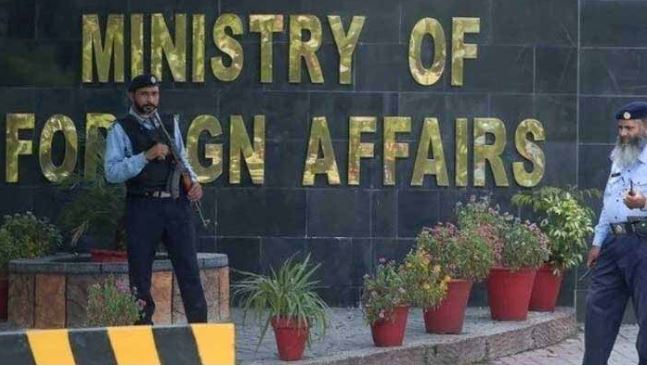
ISLAMABAD, DEC 19: The Foreign Office (FO) on Friday issued a demarche to the Afghan Taliban regime, conveying Pakistan’s grave concern over the continued support and facilitation provided to Tehreek-e-Taliban Pakistan (TTP) after four Pakistani soldiers embraced martyrdom during today’s terrorist attack in North Waziristan.

“Pakistan condemns, in the strongest possible terms, today’s terrorist attack carried out by Khwarij belonging to Kharji Gul Bahadur Group on a Pakistan Military camp in North Waziristan District,” the FO spokesperson said in a statement.

The FO said it summoned the Afghan deputy head of mission to convey Pakistan’s strong demarche over the continued support by the Taliban regime to TTP, enabling them to carry out terrorist attacks against the Pakistan military and the civilian population along the Pak-Afghan border and in adjoining areas.

“It was emphasised that the permissive environment enjoyed by the TTP in Afghanistan belies Afghanistan’s international commitments as well as to Pakistan, that it would not allow its soil to be used against any other country, including Pakistan,” it added.

Furthermore, the spokesperson said, Pakistan has demanded a full investigation and decisive action against the perpetrators and facilitators of the terrorist attacks launched against Pakistan from Afghan soil.

“The Afghan Taliban regime has been urged to take immediate, concrete and verifiable measures against all terror groups operating from its territory, including their leadership, and deny the continued use of Afghan soil for terrorism against Pakistan,” it added.

The Afghan Taliban regime has also been categorically informed that Pakistan reserves the right to defend its sovereignty and protect its citizens, and will take all necessary measures to respond to terrorism originating from Afghan soil, the statement concluded.

Attempt to breach camp perimeter foiled: ISPR
Separately, the Inter-Services Public Relations (ISPR), in a statement, confirmed the attack, saying that four Pakistani soldiers were martyred while thwarting a terrorist attack on a security forces camp in the general area of Boya, North Waziristan.

According to the military’s media wing, the attack took place on December 19 when khawarij terrorists belonging to the “Indian proxy group Fitna al Khawarij [TTP] attempted to breach the camp’s perimeter.”

The terrorists’ attempt was foiled by a swift and resolute response from troops. “In their desperation, the attackers rammed an explosive laden vehicle on the outer perimeter wall, resulting in its collapse and considerable damage to adjacent civilian infrastructure including a mosque,” it added.

The explosion also inflicted severe injuries on 15 local civilians, including women and children, and caused damage to nearby homes, the ISPR said, adding that troops engaged the attackers with precision and eliminated all four terrorists during the ensuing exchange of fire.

However, during the intense firefight, four soldiers — Havildar Muhammad Waqas (42) of Kotli, Naik Khanwaiz (38) of Mansehra, Sepoy Sufyan Haider (25) of Vehari, and Sepoy Riffat (32) of Layyah — embraced martyrdom after fighting gallantly.

The military’s media wing added that the attack was planned and orchestrated by Afghanistan-based terrorists, which it said contradicts claims by the Afghan Taliban regime that such groups do not operate from Afghan soil.

Pakistan, ISPR said, expects the Afghan Taliban regime to fulfil its obligations by preventing the use of its territory by khawarij against Pakistan. The statement added that Pakistan reserves the right to pursue and eliminate terrorists, along with their facilitators and affiliates, to ensure the safety and security of its people.

Cross-border terrorism
Islamabad has repeatedly urged the Afghan Taliban regime to curb militant groups operating from its soil and carrying out attacks on Pakistani military personnel and civilians.

However, instead of addressing Pakistan’s concerns, Kabul sided with militants in launching an attack on Pakistan’s border posts in October.

The attack, which took place on the night between October 11 and 12, received a befitting response from the Pakistani forces, leading to the killing of over 200 Taliban and affiliated militants.

However, 23 Pakistani soldiers were martyred defending the motherland.

Security forces also conducted “precision strikes” inside Afghanistan, targeting terrorists in Kandahar province and Kabul.

Since then, a Qatar- and Turkiye-mediated ceasefire has been in effect between the two sides.

Security forces foil major suicide attack on North Waziristan Camp

Security forces kill four terrorists in D.I.Khan

RAWALPINDI, DEC 19: /DNA/ – In a heinous and cowardly terrorist act, Khwarij belonging to Indian proxy Fitna al Khwarij attacked security forces camp, in general area Boya, North Waziristan District.

Khwarij attempted to breach the perimeter security, however, their nefarious designs were swiftly foiled by the vigilant and resolute response by own troops. In their desperation, the attackers rammed an explosive laden vehicle on outer perimeter wall, resulting in its collapse and considerable damage to adjacent civilian infrastructure including a mosque. Besides damaging their homes this blatant act of barbarism by khwarij inflicted severe injuries to fifteen local civilians including innocent children and women.

Displaying unwavering courage and professional excellence, own troops engaged the intruders with precision, resultantly all four khwarij belonging to Indian proxy, Fitna al Khwarij were sent to hell.

However, during the intense fire exchanges, four brave sons of soil Havildar Muhammad Waqas (age: 42 years, resident of District Kotli), Naik Khanwaiz (age: 38 years, resident of District Mansehra), Sepoy Sufyan Haider (age: 25 years, resident of District Vehari) and Sepoy Riffat (age: 32 years, resident of District Leyyah) having fought gallantly, paid the ultimate sacrifice and embraced Shahadat.

This hideous act of terrorism, planned and orchestrated by Afghanistan based Khwarij is in contrast to assertions made by Afghan Taliban Regime, claiming non presence of these terrorist groups operating from their soil.

Pakistan expects from Interim Afghan Government to fulfil its obligations and deny use of its soil by Khwarij against Pakistan as the safety and security of people of Pakistan comes first and foremost. Pak reserves the right to hunt these khwarij down and eliminate their facilitators and affiliates to ensure safety of own people.

Pakistan Study Centre inaugurated at China’s Shandong University

Pakistan Study Centre inaugurated at China's Shandong University

SHANDONG, DEC 19 /DNA/ – The Pakistan Study Centre at Shandong University was officially inaugurated today by Ambassador Khalil Hashmi, in the presence of Executive Vice President Wu Zhen and faculty members. The Centre marks a new avenue for academic engagement between Pakistan and China, with a focus on deepening mutual understanding through research, dialogue, and educational exchanges, particularly in agriculture and fisheries.

In his remarks, Ambassador Hashmi thanked the university leadership for their strong support in realizing this initiative. He highlighted the growing momentum in Pakistan-China relations across various sectors, particularly education and research. The Ambassador noted that Shandong, renowned worldwide for its innovation and reforms in the agriculture and fisheries sectors, was an ideal location for such an initiative. He emphasized the importance of academic platforms in building long-term people-to-people linkages.

The Centre aims to serve as a hub for promoting Pakistan-focused studies, collaborative research, B2B activities, and student engagement. Shandong University, known for its vibrant academic atmosphere and global perspective, provides a solid base for the Centre’s success.

Prior to the inauguration, Ambassador Hashmi met with the Executive Vice President Wu Zhen of Shandong University to discuss ways to utilize the new Centre for mutually beneficial pursuits in academia, research, particularly in the area of agriculture and fisheries. Ambassador Hashmi was also given a tour of the Shandong University Museum.

President Zardari meets UAE ambassador, reaffirms strong bilateral ties

President Zardari meets UAE ambassador, reaffirms strong bilateral ties

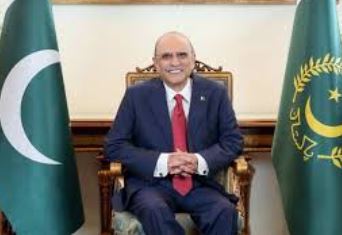
ISLAMABAD, DEC 19 /DNA/ – Ambassador of the United Arab Emirates to Pakistan, Mr Salem Mohammed Salem Al Bawab Al Zaabi, called on President Asif Ali Zardari at Aiwan-e-Sadr today.

The President welcomed the newly appointed Ambassador and conveyed best wishes for his tenure, while appreciating the services of his predecessor. He reaffirmed Pakistan’s gratitude for the UAE’s continued support, particularly in economic and infrastructure sectors, and expressed Pakistan’s readiness to host His Highness Sheikh Mohamed bin Zayed Al Nahyan on an official visit at mutually convenient dates.

The meeting reviewed the close brotherly relations between Pakistan and the UAE and discussed ways to expand cooperation in political, economic, defence and people-to-people domains.

The President said that the UAE has held a special place for his family since the very establishment of the Emirates, noting that the relationship spans generations, from Shaheed Zulfikar Ali Bhutto to Shaheed Mohtarma Benazir Bhutto, and continues today, with the UAE being home to his daughter. He said this personal bond reflects the depth of trust and affection that underpins Pakistan-UAE relations.

The President added that while the UAE is Pakistan’s largest trading partner in the Middle East and financial cooperation between the two countries remains strong, there is further scope to expand collaboration in investment, energy, the digital economy and infrastructure development.

He also paid tribute to the Pakistani community in the UAE, acknowledging its vital role in contributing to the UAE’s development while serving as a strong bridge between the two countries.

Parliamentary Leader of PPP in the Senate, Senator Sherry Rehman, and Senator Saleem Mandviwala also attended the meeting.

Pakistan set up U19 Asia Cup final clash with India after Bangladesh win

Pakistan set up U19 Asia Cup final clash with India after Bangladesh win

DUBAI, DEC 19: Pakistan downed Bangladesh in the second U19 Asia Cup semi-final at Dubai’s The Sevens Stadium on Friday, setting up a blockbuster final against India.

Earlier, pacer Abdul Subhan took four as Pakistan bowled out Bangladesh for 121 in 26.3 overs.

The Green Shirts had won the toss and opted to bowl in the high-stakes fixture, which was reduced to 27 overs per side due to a rain delay.

Bangladesh got off to a comparatively decent start as openers, Rifat Beg and Zawad Akbar, put together 24 runs before both perished in quick succession.

Following the back-to-back dismissals, captain Azizul Hakim led Bangladesh’s recovery with a 26-ball 20.

He eventually fell victim to Abdul Subhan in the 13th over, who struck twice more in quick succession to bring the total down to 65/5.

Ahmed Hussain added to Bangladesh’s woes in the next over, getting rid of Sheikh Parvez Jibon (nine), as the defending champions slipped further to 73/6.

Following the slump, all-rounder Samiun Basir took the reins of Bangladesh’s batting charge and added valuable runs at the backend.

He remained the top-scorer for Bangladesh with a 37-ball 33, featuring one six and a four.

Subhan was the standout bowler for Pakistan, taking four wickets for just 20 runs in his six overs, followed by Huzaifa Ahsan with two, while Ali Raza, Mohammad Sayyam and Ahmed Hussain chipped in with one scalp apiece.

Set to case 122, the Green Shirts made light work of the pursuit as they knocked the winning runs for the loss of two wickets and 69 balls to spare.

The Green Shirts, however, had a contrasting start to the pursuit as they lost their opener Hamza Zahoor (zero) in the first over with just one run on the board.

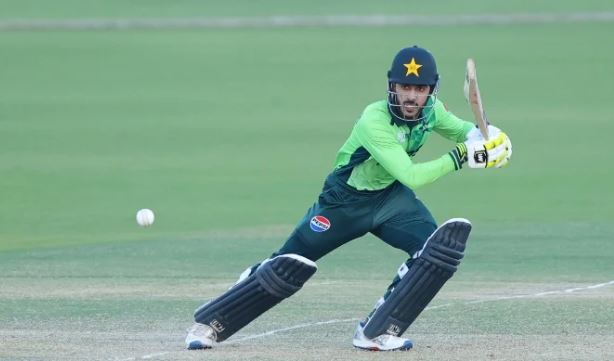
Following the early setback, Sameer Minhas and Usman Khan put Pakistan in a dominant position as they knitted a quickfire 85-run partnership for the second wicket off just 57 deliveries.

The match-defining partnership eventually culminated in the 11th over when Samiun Basir trapped Usman lbw, who made 27 off 26 deliveries, laced with two sixes and as many fours.

Sameer was then joined by Ahmed Hussain in the middle, and the duo batted dominantly to steer Pakistan over the line with an unbeaten 36-run partnership.

Sameer top-scored with an unbeaten 69 off 57 deliveries, studded with six fours and two sixes, while Ahmed Hussain made 11 not out from 14 balls.

The Green Shirts will face India in Sunday’s final, who qualified for the ultimate game following a comprehensive win over Sri Lanka in the first semi-final.

Trump’s Naval Gamble on Venezuela

Qamar Bashir

Qamar Bashir

Gunboats, Oil, and the Illusion of Control: Why Trump’s Naval Embargo on Venezuela Risks Repeating History

President Donald Trump’s decision to impose a naval embargo on sanctioned Venezuelan oil tankers marks one of the most dramatic escalations in U.S.–Latin America relations in decades. Framed as a national-security response to drug trafficking—after the administration classified fentanyl and its precursors as “weapons of mass destruction” through an executive order—the move signals a fundamental shift: from counter-narcotics cooperation to maritime coercion. While officially described as a limited action targeting sanctioned vessels, the practical effect resembles a partial blockade, carrying economic, geopolitical, and humanitarian consequences far beyond its stated purpose.

Had the United States extended this naval action to all Venezuelan shipping, it would have amounted to a de facto declaration of war. Even in its current form, the message is unmistakable: Washington is prepared to use sea power to choke Venezuela’s primary economic lifeline—oil exports—under the banner of law enforcement. Caracas, unsurprisingly, responded by ordering its navy to escort oil tankers through territorial and international waters, asserting sovereignty through symbolism rather than strength. The imbalance is stark. Venezuela’s modest naval capabilities—largely coastal patrol vessels and a handful of aging combatants—cannot be meaningfully compared to the global reach of the U.S. Navy, with its aircraft carriers, nuclear submarines, destroyers, and unmatched logistical infrastructure. The escort order is not about deterrence; it is about dignity and survival.

The real battlefield, however, is not the Caribbean Sea but the global energy market. In late 2025, Venezuela was exporting roughly 900,000 barrels of oil per day—its highest level in years after partial sanctions relief and creative logistics. Around 70 to 80 percent of this oil moved through a shadow fleet: aging tankers, opaque ownership structures, ship-to-ship transfers, and insurance arrangements designed to bypass sanctions. U.S. enforcement has now focused precisely on this network. More than 30 tankers operating around Venezuelan waters are already sanctioned, and the fear of seizure has caused many loaded vessels to remain anchored, unable—or unwilling—to sail.

This paralysis matters. If even two-thirds of Venezuela’s exports are disrupted, roughly 600,000 barrels per day could be removed from the global market. On paper, that represents less than one percent of global supply. In reality, oil prices are driven not by averages but by expectations and risk premiums. Markets respond sharply to uncertainty, especially when shipping routes become contested. Even modest disruptions can trigger disproportionate price movements, particularly for vulnerable import-dependent economies. A sustained squeeze could force Venezuela to shut in production due to storage constraints, turning a logistical problem into a structural collapse.

The consequences would not stop at oil prices. Venezuela’s economy remains overwhelmingly dependent on crude exports. Further strangulation of this sector would reduce state revenues, weaken the currency, worsen inflation, and deepen shortages of food and medicine. The burden would fall not on political elites but on ordinary citizens already exhausted by years of crisis. And history offers a grim forecast: economic collapse fuels migration. Venezuela has already produced one of the largest displacement crises in modern history, with nearly eight million people leaving the country over the past decade. Another severe shock could push hundreds of thousands more onto regional migration routes—first into neighboring states, then northward toward the United States.

Ironically, the very policy justified as a defense of American security may intensify pressures on U.S. borders. Colombia, already hosting millions of Venezuelan migrants, lacks the capacity to absorb another wave without destabilization. Other regional economies, strained by inflation and debt, would struggle as well. Migration does not occur in isolation; it cascades. When one country collapses, the shock ripples across continents.

Geopolitically, the naval embargo also accelerates Venezuela’s alignment with U.S. rivals. Russia and China have already condemned the move, framing it as a violation of sovereignty and maritime norms. While neither is likely to engage militarily, diplomatic, financial, and logistical support to Caracas could deepen, transforming Venezuela into another node in a growing network of states resisting U.S. pressure. Even traditional U.S. partners are uneasy. Canada and several Latin American countries, themselves affected by trade disputes and tariffs, see the normalization of gunboat diplomacy as a dangerous precedent. Rather than strengthening alliances, Washington risks reinforcing the perception that it creates more enemies than partners.

This raises a fundamental question: does maritime coercion actually reduce drug trafficking into the United States? Evidence suggests otherwise. The narcotics trade is demand-driven. As long as millions of Americans consume cocaine, fentanyl, and other drugs, suppliers will find routes—by sea, land, air, or digital networks. Interdiction may raise prices temporarily, but it rarely eliminates supply. Instead, it increases profitability, incentivizing smugglers to innovate and diversify. Destroy one corridor, and another emerges.

The United States has alternatives—more effective, less destructive, and more humane. The first is demand reduction. Large-scale investment in prevention, education, and treatment can shrink the market that fuels trafficking. Decades of research show that rehabilitation and public-health approaches are more cost-effective in reducing drug use than interdiction alone. Recent declines in overdose deaths, though fragile, demonstrate that progress is possible without militarization.

The second option is dismantling domestic trafficking infrastructure. Drugs do not distribute themselves. They rely on financial networks, logistics hubs, corrupt intermediaries, and money-laundering systems operating within U.S. borders. Aggressive enforcement against these networks—combined with financial transparency and asset seizures—would strike at the heart of the trade without destabilizing foreign societies.

The third is smarter border security integrated with humanitarian policy. Borders can be controlled without turning neighboring countries into failed states. Technology, intelligence sharing, and legal migration pathways reduce chaos far more effectively than economic strangulation abroad.

By contrast, collapsing Venezuela’s economy would likely increase, not decrease, drug flows over time. Unemployment and desperation are fertile ground for illicit activity. When formal economies implode, informal and criminal ones expand. Smuggling becomes not just profitable but necessary for survival. The result is a vicious cycle: sanctions breed collapse, collapse breeds crime, crime justifies further sanctions.

At its core, the naval embargo reflects an old reflex dressed in new language. The rhetoric has changed—from communism to drugs, from ideology to security—but the method remains coercion. History warns where this path leads. Iraq was once sanctioned into ruin in the name of global safety; the outcome was regional instability, humanitarian catastrophe, and long-term insecurity.

Sovereignty is not a privilege reserved for powerful states. Small and weak nations possess it as well, along with the right to economic survival. Using drug smuggling as a pretext to weaponize hunger, unemployment, and migration risks undermining the very international order the United States claims to defend.

If Washington’s objective is fewer drugs, fewer refugees, and a safer hemisphere, it must look inward as much as outward. Gunboats can seize tankers, but they cannot cure addiction. Blockades can choke economies, but they cannot build stability. Real security lies not in dominating seas, but in addressing the human systems—demand, inequality, governance—that drive crisis in the first place.

The choice before the United States is not between strength and weakness, but between wisdom and repetition. History is watching.

Qamar Bashir

Press Secretary to the President (Rtd)

Former Press Minister, Embassy of Pakistan to France

Former Press Attaché to Malaysia

Former MD, SRBC | Macomb, Michigan, USA

39 medals awarded to top graduates at PNEC’s Annual Convocation

39 medals awarded to top graduates at PNEC's Annual Convocation

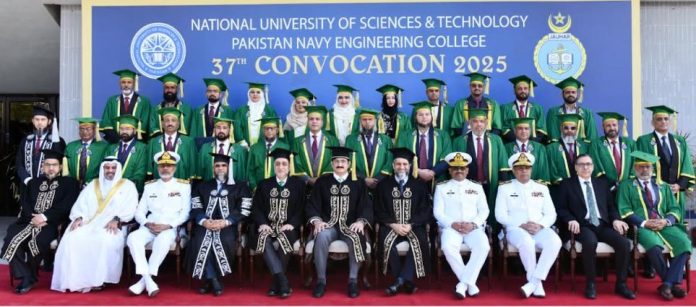
KARACHI, DEC 19 /DNA/ – 37th Convocation of Pakistan Navy Engineering College (PNEC) was held at Bahria Auditorium, Karachi. Chief Minister Sindh, Mr. Syed Murad Ali Shah was the Chief Guest for the occasion.

A total of 353 graduates were awarded degrees, including 4 PhD, 41 MS, and 308 Bachelor’s graduates. The Chief Guest also awarded 39 medals to outstanding position holders, comprising 7 President’s Gold Medals, 4 Chief of the Naval Staff Gold Medals, 8 Chancellor’s Silver Medals, 18 Rector’s Gold Medals and 2 Quaid-e-Azam Gold Medals.

Chief Guest, while extending his heartiest felicitations to the graduating students and parents, highlighted that NUST PNEC is providing quality engineers to Pakistan’s evolving industry. He also acknowledged that the foreign students are a testimony to the college’s credentials in the engineering sector.

The convocation was attended by a large number of civil and military dignitaries, as well as the parents of graduating students.

PAF Airmen Academy graduates 1,155 trainees in grand passing out parade

PAF Airmen Academy graduates 1,155 trainees in grand passing out parade

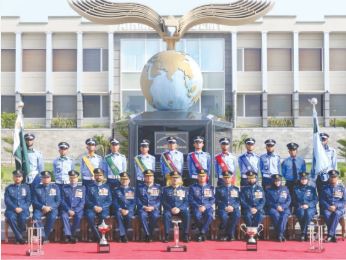
RAWALPINDI, DEC 19 /DNA/ – Passing Out Parade of Trainees Entries No 2306, 2406 and 2412 was held today at PAF Airmen Academy, Korangi. President NASTP Advisory Board was the Chief Guest and was received by Air Officer Commanding, PAF Airmen Academy. A total of 1155 trainees from Pakistan Air Force, Pakistan Navy and allied countries successfully completed their training.

Addressing the parade, the Chief Guest highlighted PAF’s professionalism, combat readiness and international recognition. He emphasized that the Academy is imparting modern, future-oriented training in line with the vision of Air Chief Marshal Zaheer Ahmed Baber Sidhu, NI (M), HJ, Chief of Air Staff, to meet emerging warfare challenges. He underscored PAF’s operational success and preparedness, including the effective conduct of multi-domain operations.

Trophies were awarded to outstanding performers. Aircraftman Sergeant Ahmed Hussain Arif won the Chief of Air Staff Trophy for Overall Best Performance, Aircraftman Hamza Ali secured the Asghar Khan Trophy, Aircraftman Ahmed Hussain Arif received the Nur Khan Trophy, Academy Sergeant Aircraftman Shafaat Noor clinched the Air Officer Commanding Trophy, while LAC THGND Herath of Sri Lanka was awarded Best Foreign Trainee Trophy.

The Chief Guest congratulated the graduating airmen and their parents and commended the Academy’s staff for their dedication and professionalism.

President Zardari to visit Iraq from Dec 20

President Zardari to visit Iraq from Dec 20

ISLAMABAD, DEC 19 /DNA/ – President Asif Ali Zardari will undertake an official visit to the Republic of Iraq from 20 to 24 December 2025, at the invitation of President Dr Abdul Latif Jamal Rashid.

The visit aims to further strengthen the longstanding, brotherly relations between Pakistan and Iraq and enhance cooperation across key sectors, including trade, energy and people-to-people exchanges.

Pakistan urges UN not to be ‘selective’ in implementing resolutions, citing Kashmir & Palestine

Pakistan urges UN not to be 'selective' in implementing resolutions, citing Kashmir & Palestine

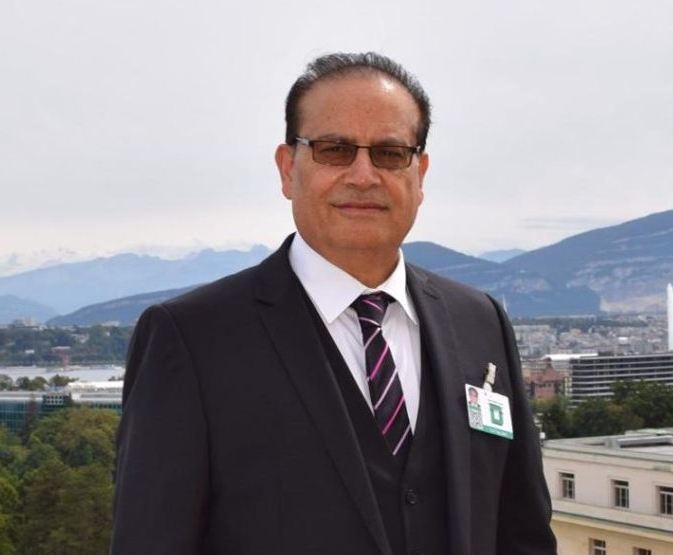
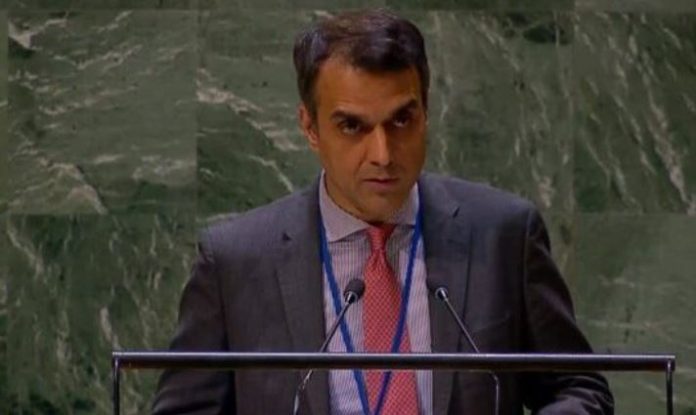
UITED NATIONS, Dec 19 (APP/DNA):The United Nations must ensure “non-selective” implementation of its resolutions and uphold international law without exception, a senior Pakistani diplomat said Thursday, as he highlighted Kashmir and Palestine where people have been denied their UN-promised right to self-determination.

“The realization of self-determination is not merely a historical aspiration; it is an enduring obligation,” Ambassador Usman Jadoon, deputy permanent representative of Pakistan to the UN, told the General Assembly marking the International Day Against Colonialism in All its Forms and Manifestations.

Implementation of the 1960 ‘Declaration on the Granting of Independence to Colonial Countries and Peoples’ and the decolonization agenda , he said, was not confined to Non-Self-Governing Territories alone, It also encompasses peoples living under alien occupation and foreign domination.

“The overarching objective, therefore, remains to ensure that all such peoples are enabled to exercise their inalienable right to self-determination,” Ambassador Jadoon added.

Referring to recent developments in the Middle East, the Pakistani envoy said that lasting peace cannot be achieved through the continued denial and suppression of the legitimate right to self-determination of the Palestinian people.

Similarly, he said, the UN Security Council has, through several resolutions, recognized the legitimate right of self-determination of the people of Jammu and Kashmir.

“A just resolution of the Jammu and Kashmir dispute remains central to the establishment of durable peace in South Asia”.

In conclusion, Ambassador Jadoon called for renewed international resolve to fully and unconditionally eradicate colonialism in all its forms and manifestations.

Stay Connected

64FansLike
60FollowersFollow

Latest Reviews

Exchange Rates

USD - United States Dollar
EUR
1.17
GBP
1.34
AUD
0.67
CAD
0.73