Home Blog Page 268

Pakistan, Libya discuss maritime security, defence cooperation

Pakistan, Libya discuss maritime security, defence cooperation

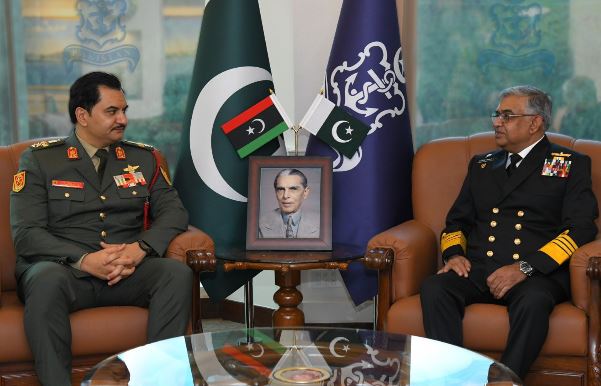
RAWALPINDI, FEB 3 /DNA/ – Deputy Commander-in-Chief of the Libyan Arab Armed Forces, Lieutenant General Saddam Khalifa Haftar, called on Admiral Naveed Ashraf, NI, NI (M), T Bt, Chief of the Naval Staff, at Naval Headquarters, Islamabad.

Upon arrival at Naval Headquarters, Deputy Commander-in-Chief of the Libyan Arab Armed Forces was received by Chief of the Naval Staff. During meeting both the leaders deliberated on matters of mutual interest, evolving regional maritime security landscape, and ways to further bolster cooperation in defence and training.

Lieutenant General Saddam Khalifa Haftar commended Pakistan Navy as a pivotal force for regional peace and maritime security. Both leaders reaffirmed their resolve to further diversify and strengthen the scope of existing bilateral defence relationship.

Japan funds healthcare, road projects in Chakwal & Mansehra

Japan funds healthcare, road projects in Chakwal & Mansehra

ISLAMABAD, FEB 3 /DNA/ – The Government of Japan, under its Grant Assistance for Grassroots Human Security Projects (GGP) Program, has decided to provide grant assistance of USD 85,429 (equivalent PKR 23.9 million) to two local NGOs for development projects in District Chakwal, Punjab, and District Mansehra, Khyber Pakhtunkhwa.

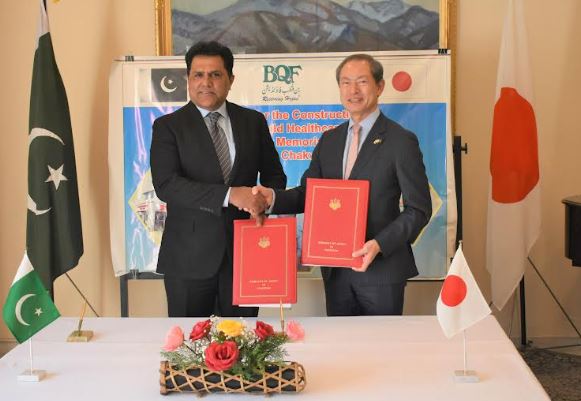
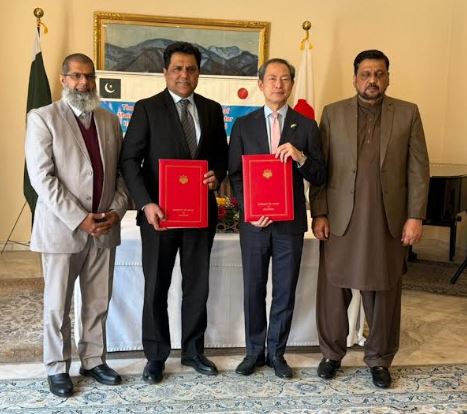
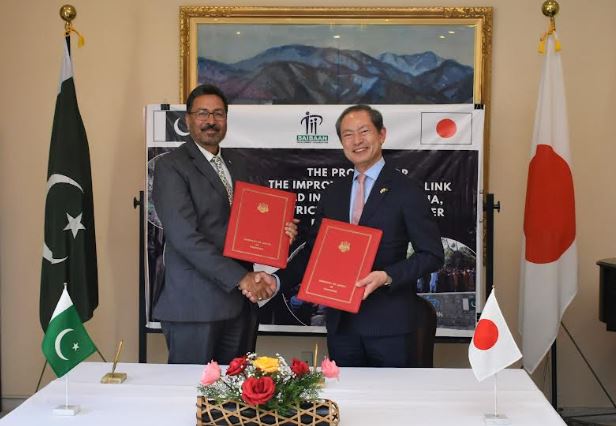
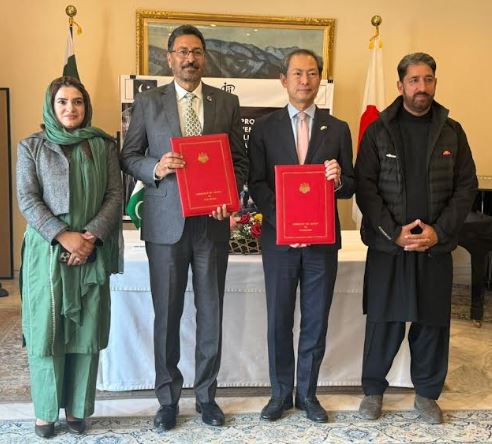
The grant contracts were signed between His Excellency, Mr. AKAMATSU Shuichi, Ambassador of Japan to the Islamic Republic of Pakistan and representatives of the two NGOs at the Embassy of Japan in Islamabad on February 3, 2026. The two NGOs that will implement the projects are Bin Qutab Foundation and Saibaan Development Organization.

Bin Qutab Foundation will receive USD 55,230 (equivalent PKR 15.5 million) for the construction of a Maternal and Child Healthcare Center at Begum Noor Memorial Hospital in the rural side of District Chakwal. The new center, installed with essential medical equipment, will provide 24-hour safe delivery services, emergency obstetric care, and neonatal services under one roof and providing subsidized service to needy. The project is expected to benefit more than 10,000 patients annually and will also promote family planning awareness, contributing significantly to improved maternal and child health.

Saibaan Development Organization will receive USD 30,199 (equivalent to PKR 8.4 million) for the improvement of a link road in Village Makrriha, District Mansehra, Khyber Pakhtunkhwa. The project includes pavement of the road and construction of protection walls, which will enhance mobility and safety for local residents. The project is expected to benefit more than 2,400 direct beneficiaries, as well as thousands of indirect beneficiaries in nearby areas, by improving access to healthcare, education, and markets.

At the signing ceremony, His Excellency, Mr. AKAMATSU Shuichi emphasized that Japan has worked closely with Pakistan for decades to address basic human needs, including health, education, and infrastructure development. Ambassador Akamatsu highlighted that the GGP Program focuses on face-to-face assistance through partnerships with local NGOs to respond directly to community needs.

Ambassador Akamatsu further noted that basic services and infrastructure form the foundation of sustainable development and human security, reflecting Japan’s own development experience. As an enduring friend of Pakistan, the Government of Japan will continue to support for capable local NGOs through grant assistance, with the aim of improving the daily lives and wellbeing of people at the grassroots level throughout the country.

Over 73,000 passengers offloaded in 2025

Over 73,000 passengers offloaded in 2025

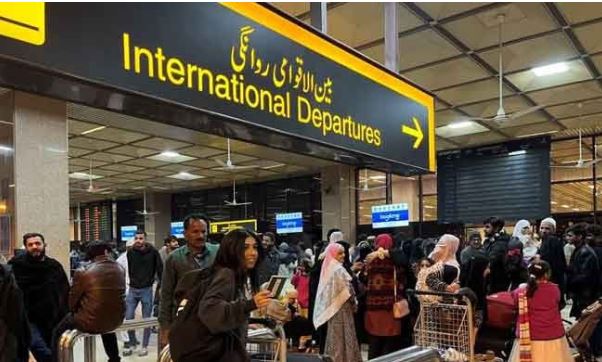
ISLAMABAD, FEB 3 /DNA/ – In the wake of tightened screening measures at airports and growing reports of passengers being offloaded, the Ministry of Interior has revealed that more than 73,000 passengers were offloaded during 2025.

“A total of 35,270 passengers were offloaded in 2023, 39,214 in 2024 and 73,358 in 2025,” read the Ministry of Interior’s reply to a question in the Senate, adding that 147,842 passengers were offloaded during the three-year period.

The ministry’s submission comes against the backdrop of thousands of Pakistanis being deported from various countries for begging, while tens of thousands were also offloaded at airports over suspected illegal travel attempts, a National Assembly committee was informed in December 2025.

Last month, Interior Minister Mohsin Naqvi directed the relevant authorities to enforce strict screening of passengers’ travel documents at all airports across the country to curb illegal immigration.

Directing the Federal Investigation Agency (FIA) to continue strict and impartial action against the mafia involved in illegal immigration, he ordered the agency to ensure the effective implementation of immigration laws and strengthen airport immigration systems.

He also called for rigorous scrutiny of travellers’ documents at all airports to prevent illegal activities.

Meanwhile, explaining the reasons for passengers being offloaded, the interior ministry informed the Senate that only those passengers are offloaded whose behaviour indicates possible illegal intentions.

Out of the total 73,358 passengers offloaded in 2025, 45,356 were offloaded for technical reasons, including flight cancellations, passengers’ refusal to travel, technical faults in aircraft, bad weather, flight delays and offloading by airlines.

US Special Envoy for South and Central Asia to visit Kyrgyzstan

US Special Envoy for South and Central Asia to visit Kyrgyzstan

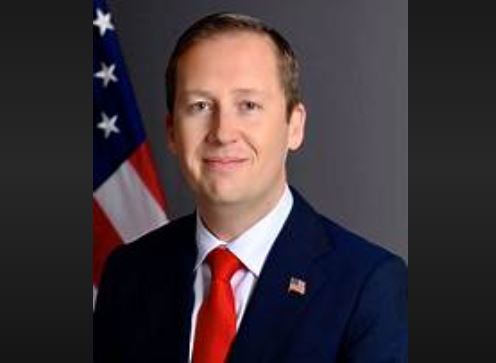
Bishkek, Feb 3: US Special Representative for South and Central Asia – Ambassador Sergio Gor will visit Kyrgyzstan. This was reported by the presidential press secretary Askat Alagozov on his social media page.

“Sergio Gor will visit Kyrgyzstan from February 3 to February 6 at the invitation of the by Kyrgyz side. As part of the visit, Ambassador Sergio Gor will meet President Sadyr Zhaparov.

Special Envoy will also participate in the second “B5+1” dialogue forum on the topic “Promoting Economic Cooperation between Central Asia and the United States”, which will be held in Bishkek on February 4-5 of this year,” Alagozov wrote.

HEC announces national skill competency test for IT Graduates

HEC

Universities asked to nominate focal persons before 6th February

ISLAMABAD, FEB 3 /DNA/ – The Higher Education Commission (HEC) of Pakistan has notified the commencement of the National Skill Competency Test for IT graduates, a landmark initiative designed to align academic outcomes with the rapidly evolving demands of the global technology sector.

Developed pursuant to Prime Minister’s directives and in close collaboration with the Ministry of Information Technology & Telecommunication (MoITT), the Pakistan Software Export Board (PSEB), and the Pakistan Software Houses Association (P@SHA), this standardized assessment aims to enhance the employability and market readiness of the nation’s burgeoning IT workforce.

For students currently enrolled in their 7th and 8th semesters of computing programs – including Computer Science, Software Engineering, Artificial Intelligence, Data Science and related fields – the test offers a transformative opportunity.

Participation is entirely free of charge and provides high-achieving students with a joint certificate from HEC, PSEB, and P@SHA, alongside inclusion in a national talent pool accessible to both local and international employers.

Furthermore, qualifying students will receive one academic credit from their respective institutions and gain prioritized access to internships, apprenticeships, and international certification pathways.

The significance of this initiative extends deeply into the academic landscape. Higher Education Institutions (HEIs) have been asked to ensure full student participation, as the results will form a critical component of national benchmarking.

Universities will be categorized into performance tiers based on their students’ success, reflecting their alignment with industry competencies. Conversely, institutions that fail to facilitate the registration process or nominate a focal person by the February 6, 2026, deadline face placement below the lowest performance category in national rankings.

The Test will be computer based to be conducted simultaneously across Pakistan on April 4-5, 2026. Eligible candidates may contact focal person of their respective university for timely completion of their registration.

Azerbaijan’s Rear Admiral Mammadov visits Naval Headquarters

Azerbaijan's Rear Admiral Mammadov visits Naval Headquarters

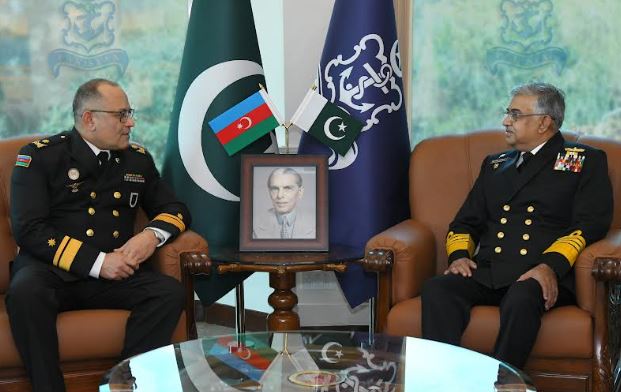
ISLAMABAD, FEB 3 /DNA/ – Commander Azerbaijan Naval Forces (ANF), Rear Admiral Shahin Mammadov called on Chief of the Naval Staff, Admiral Naveed Ashraf at Naval Headquarters, Islamabad.

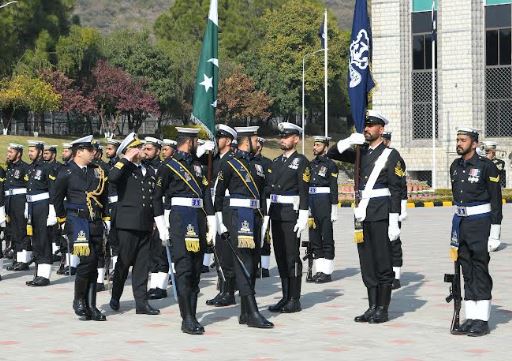
Upon arrival, Commander Azerbaijan Naval Forces was received by Chief of the Naval Staff. A smartly turned out contingent of Pakistan Navy presented Guard of Honour. Thereafter, the dignitary laid floral wreath at the Shuhada’s Monument and was introduced to the Principal Staff Officers at Naval Headquarters.

Later, Commander Azerbaijan Naval Forces called on Chief of the Naval Staff. During the meeting, both leaders discussed matters of mutual interest, regional maritime security situation, and avenues for enhanced cooperation in training and Defence.

Both leaders pledged to further strengthen and diversify the scope of existing bilateral defence relationship. Later, a briefing was also given to the visiting dignitary on Pakistan Navy’s ongoing projects.

Pakistan and Azerbaijan share longstanding brotherly relations marked by close naval cooperation. The visit of Commander Azerbaijan Naval Forces will further enhance bilateral collaboration between the two countries in general and navies in particular.

No Permanent Friends

No Permanent Friends

By Muhammad Mohsin Iqbal

Positive thinking and optimism are among the noblest ways to approach life, for they inspire resilience and hope. Yet optimism, when detached from ground realities, can become a dangerous illusion. Nations, like individuals, suffer when emotions replace judgment and wishful thinking substitutes for strategy. In this context, certain memories frequently return to my mind—memories shaped not merely by personal observation but by Pakistan’s long and often painful engagement with global power politics.

When the renowned American intellectual and analyst Noam Chomsky visited Pakistan, he was asked a question that has troubled this country since its earliest years; how should Pakistan understand its relationship with the United States? Chomsky responded with disarming honesty. America, he said, has always pursued its own interests, irrespective of who sits in the White House. Where its interests lie, it cooperates generously; where they do not, it withdraws without hesitation. To support his argument, he recalled several historical examples and, with a touch of sarcasm, remarked that the much-promised “Enterprise” fleet sent to “help” Pakistan had yet to arrive. Smiling, he added that Pakistanis are an emotional nation; say a few affectionate words to them and they become elated, a vulnerability that has led to repeated betrayals.

I was present on that occasion and was struck by the frankness with which an American described American policy. It was unsettling because it rang true. We are, indeed, a deeply emotional people. If a foreign leader laughs with our rulers or speaks to them in an unusually warm tone, we are quick to imagine a relationship of kinship, as though he were a close relative rather than the head of a powerful state guided by hard interests. Sentiment often clouds our judgment, and we mistake courtesy for commitment.

History, faith, and experience all counsel caution. The Qur’an clearly warns that Jews and Christians will not be friends in the sense of guardianship or unconditional loyalty. Yet the Holy Prophet (peace be upon him) entered into diplomatic and necessary agreements with them on the basis of equality and mutual obligation. He safeguarded the interests of the Muslim community, dealt with others fairly, but did not harbour illusions about their intentions. This balance between realism and principle offers a timeless lesson for statecraft: cooperation without naïveté, engagement without surrender.

Recent history provides painful confirmation. When the United States abruptly withdrew from Afghanistan, it did so with little regard for the consequences borne by neighbouring states, particularly Pakistan. Vast quantities of advanced military equipment—arms, night-vision devices, sophisticated communication tools, and heavy weaponry—were left behind. Instead of stabilising the region, these weapons seeped into the black market, empowering militant groups and criminal networks. Pakistan, already struggling with internal security challenges, has paid a heavy price. Cross-border terrorism intensified, arms flowed freely into volatile areas, and hard-won gains against extremism were undermined. Once again, America exited when its interests shifted, leaving others to manage the fallout.

This behaviour echoed an earlier episode, candidly acknowledged years later by former US Secretary of State Hillary Clinton. She admitted that after the Soviet Union withdrew its forces from Afghanistan, the United States simply walked away, abandoning the region and Pakistan alike. Having used Pakistan as a frontline ally, Washington disengaged without assisting in reconstruction or stabilisation. The resulting vacuum plunged Afghanistan into chaos, nurtured extremism, and eventually produced consequences that haunted the entire world. Clinton conceded that this abandonment was a grave mistake—an admission that confirmed what Pakistan had long experienced: partnerships are often transactional, not enduring.

Contemporary American politics further illustrates this pattern. The current US President is known for rapid shifts in tone and policy. Statements made during the day are frequently contradicted by actions taken at night. Policies toward China, Iran, and other countries oscillate according to immediate calculations. Not long ago, he appeared visibly displeased with the Indian Prime Minister; yet when strategic interests aligned, displeasure melted into public warmth. In international affairs, affection is rarely personal; it is dictated by advantage.

The events of May 2025 stand as a sobering reminder. At that critical juncture, divine help was with us and our military leadership remained vigilant. By the grace of Almighty Allah, Pakistan emerged successful. Had circumstances been otherwise, it is unlikely that today’s diplomatic posture toward Pakistan would be what it is. International respect follows strength and preparedness, not expectations or appeals.

The lesson is unmistakable. Pakistan must place Pakistan first. Relations between states inevitably fluctuate, shaped by interests rather than emotions. There is nothing immoral in this; it is the essence of global politics. What matters is that Pakistan safeguard its dignity, sovereignty, and integrity while engaging others on equal terms.

Above all, Pakistan should avoid the urge to put all its eggs in one basket. Overdependence on any single power has repeatedly constrained our options and weakened our negotiating position. A diversified foreign policy, rooted in realism and national consensus, is not a luxury but a necessity. Nations are ultimately remembered not for their hopes or sentiments, but for the decisions they make—and those decisions determine the path of their future.

Govt launches coordinated initiatives to counter terrorism, extremism: Senate told

Govt launches coordinated initiatives to counter terrorism, extremism: Senate told

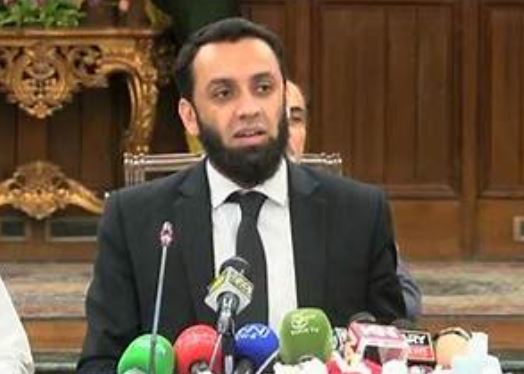
ISLAMABAD, Feb 03 (DNA): Minister for Information and Broadcasting Attaullah Tarar on Tuesday told the Senate that the federal government had launched coordinated initiatives to counter extremism and terrorism through religious harmony, narrative-building, and strict implementation of the National Action Plan (NAP).

Replying to a question during Question Hour, the minister said that a Paigham-e-Aman Committee had been constituted without discrimination on the basis of sect or political affiliation.

He said scholars from all schools of thought and representatives of different religions from across Pakistan had been included in the committee, which was actively touring the country to promote a counter-narrative against extremism, violence, and terrorism.

He said the committee included religious scholars, senior government officials, and minority representatives. The members of the committee are Maulana Abdul Karim, Mufti Rahim, Allama Arif Wahidi, Pir Naqeebur Rehman, Allama Hussain Akbar, Dr Raghib Naeemi, Maulana Tahir Ashrafi, Maulana Tayyab Panjpiri, Allama Ziaullah Bukhari, Bishop Azad Marshall, Rajesh Kumar Hardasani, and Sardar Ramesh Singh Arora.

Attaullah Tarar said building a credible counter-narrative against violent extremism was primarily the responsibility of religious scholars, adding that the government had also established a Counter Violent Extremism (CVE) Cell in the Information Ministry.

He said a third-party audit mechanism had been put in place to assess the reach and impact of the narratives produced by the CVE Cell, particularly through digital platforms.

The minister informed the House that a fully functional digital communication department was disseminating the counter-extremism narrative nationwide. Referring to recent political engagement, he said the visit of the Khyber Pakhtunkhwa chief minister to the Prime Minister was a positive development and would help improve coordination between the federal government and KP, especially on law and order and counter-terrorism.

Meanwhile, later, Talal Chaudhry also briefed the Senate on the government’s broader strategy to counter extremism, telling senators that both kinetic and non-kinetic measures were being pursued simultaneously.

He said the most recent meeting on counter-extremism had been held under the leadership of the Information Minister, while the Paigham-e-Aman Committee, chaired by the Prime Minister, had formulated a comprehensive outreach programme spanning universities, madaris, mosques, and other segments of society.

Talal Chaudhry stressed the need for a full parliamentary debate on the 14-point National Action Plan-II (NAP-II), noting that the original NAP had been formulated after the Army Public School tragedy during the PML-N government and later revised during the PTI government with the consensus of all provinces.

He informed the House that a high-level coordination committee on counter-terrorism, chaired by the Prime Minister and attended by all chief ministers and heads of security institutions, met regularly to review progress, while the Interior Minister chaired meetings twice a month. A separate “hardening of the state” committee, he added, was also monitoring implementation of all 14 NAP points.

The minister said past success against terrorism had only been achieved when all political forces stood united behind the
security forces, emphasizing that similar unity was required once again to defeat extremism and terrorism.

He said the government was ready to present a detailed briefing on the implementation of all NAP-II points, including provincial and federal performance, if the House decided to allocate time for an in-depth discussion.

Malaysian court acquits French man on drug charges

Malaysian court acquits French man on drug charges

Alor Setar, Feb 3: A French national facing a possible death penalty in Malaysia on eight drug-related charges was acquitted Tuesday, freeing him after nearly two and a half years in detention.
                  The High Court in the northern city of Alor Setar ruled that prosecutors failed to prove that Tom Felix, 34, had control, custody or possession of the drugs in the case.
                  “The accused is, therefore, released and acquitted,” Alor Setar High Court judge Evawani Farisyta Mohammad said.
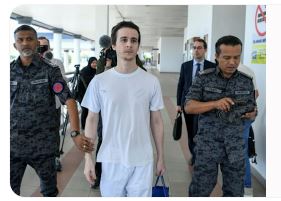
                  Felix, in court wearing a white shirt and trousers, his hands cuffed, looked visibly pleased as the judge delivered the decision.
                  The former Veolia executive appeared to have lost a considerable amount of weight since his arrest, his parents said.
                  Jean Luc and Sylvie Felix were seen embracing after the ruling.
                  Felix and his Malaysian business partner were detained in 2023 after police discovered 1.86 kilograms of cannabis in the common area of a home they shared.
                  Authorities later said Felix was also found in possession of 11.7 grams of the drug.
                  He denied all the charges.
                  If convicted, Felix faced the death penalty or a cumulative sentence of 104 years in prison, 54 strokes of the cane and a 27,000 euro ($31,000) fine, his mother previously told AFP.
                  Drug trafficking and possession are serious offences in Malaysia, which still allows capital punishment for cases involving large quantities of narcotics.
                  However, death sentences are no longer mandatory, and no executions have been carried out since 2018.

IMCTC Chief meets Army Chief at GHQ

IMCTC Chief meets Army Chief at GHQ

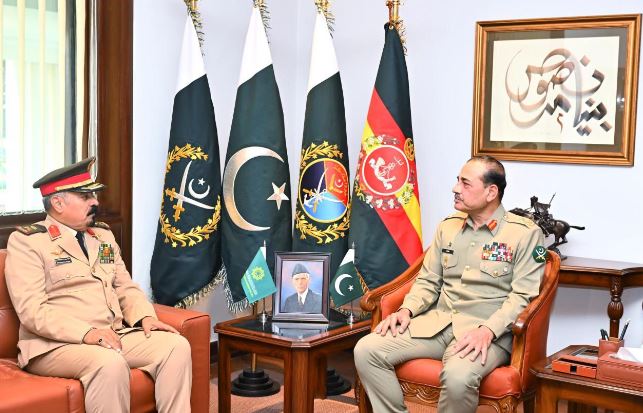
RAWALPINDI, FEB 2 /DNA/ – Major General Mohammed Bin Saeed Al-Moghedi, Secretary General of the Islamic Military Counter Terrorism Coalition (IMCTC), called on Field Marshal Syed Asim Munir, NI (M), HJ, COAS & CDF, at General Headquarters (GHQ), Rawalpindi.

During the meeting, matters of mutual interest were discussed, with particular emphasis on regional security dynamics and enhanced cooperation in counter-terrorism efforts. Both sides reaffirmed their shared commitment to combating terrorism and extremism through collaborative strategies, intelligence sharing, and capacity building among member states.

Field Marshal Syed Asim Munir appreciated the role of IMCTC in fostering stability and promoting coordinated counter-terrorism initiatives across the Islamic world.

Major General Mohammed Bin Saeed Al-Moghedi acknowledged Pakistan’s significant contributions and sacrifices in the fight against terrorism and lauded the professionalism of Pakistan’s Armed Forces.

The meeting underscored the resolve of both sides to further strengthen institutional collaboration for peace, stability, and security in the region.

IMCTC team is visiting Pakistan from 2-6 Feb 26 to conduct one week training at National University of Sciences and Technology on “Re-integration and rehabilitation of extremist elements“.

Stay Connected

64FansLike
60FollowersFollow

Latest Reviews

Exchange Rates

USD - United States Dollar
EUR
1.14
GBP
1.34
AUD
0.70
CAD
0.71