Islamabad : Foreign Minister Shah Mahmood Qureshi says Pakistan will continue to play a constructive role to make Afghan peace process successful.
In a statement on Monday, he said peace in Afghanistan is one of the priorities of regional countries.
The Foreign Minister said he presented Pakistan’s position on the Afghan issue at the recently held Antalya Diplomacy Forum in Turkey.
He said the world acknowledges Pakistan’s role for peace and stability.
The Foreign Minister said that Pakistan has effectively highlighted Kashmir dispute at the international fora. He said the Kashmiris have rejected the Indian illegal steps of 5th August 2019.
Islamabad : Speaker National Assembly Asad Qaiser has urged the opposition to cooperate with the government in making legislation in the Parliament on important national issues.
Talking to a private news channel, he said maintaining decorum in the House is the collective responsibility of both treasury and opposition benches.
The Speaker said a parliamentary committee has been constituted to evolve a permanent solution to avoid disruption of parliamentary proceedings in future.
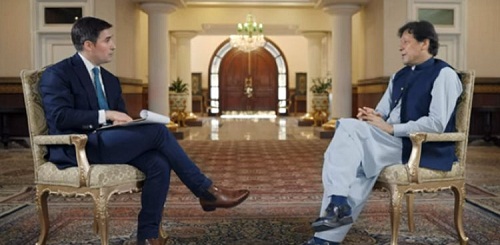
ISLAMABAD: Prime Minister (PM) Imran Khan has said Pakistan would not allow the United States (US) to use its bases for cross-border military actions after American forces’ withdrawal from Afghanistan.
In an interview with a US TV HBO Axios, Imran Khan said Pakistan suffered a lot due to war in Afghanistan.
When asked if Islamabad would allow the Central Intelligence Agency (CIA) to conduct cross-border counter-terrorism missions in Afghanistan, he replied: “Absolutely not.”
“There’s no way we are ever going to allow,” the premier stated in clear terms. “Any bases, any sort of action from Pakistani territory into Afghanistan, absolutely not.”
The United States has said it will withdraw all its troops from Afghanistan on Sept. 11 after a two-decade presence.
He said more than 70,000 Pakistanis were martyred during the war against terror after 9/11 attacks. “Islamabad is not interested to become part of any other conflict.”
The premier said Pakistan’s nuclear program is for defense purposes only and we do not have hostile designs against any of the countries including India.
Replying to a question, PM said China has been one of the greatest friends to us in our most difficult times. When we were really struggling, our economy was struggling, China came to our rescue.
On COVID-19, Prime Minister Imran Khan said partial lockdown coupled with comprehensive data analysis helped Pakistan to keep the Covid-19 pandemic under control.
He said there were more than seventy per cent informal economy workers and daily wagers and the government could not make the decision to force a complete clampdown in the country.
He said National Command and Operation Centre performed actively and coordinated with all institutions for the implementation of Standard Operating Procedures.
ISLAMABAD: Pakistan continues to record a decline in COVID-19-related deaths and new cases, as the country registered 30 deaths over the past 24 hours, data released by the National Command and Operation Centre (NCOC) showed on Monday.
According to the national dashboard, 30 more people succumbed to the disease during this period, taking the nationwide death toll to 22,007.
Pakistan recorded a coronavirus positivity rate of 2.60 per cent as of the total 34,754 samples tested for the presence of the infection, 907 were declared positive. This brings the total number of confirmed cases in the country to 949,175.
With 829 people getting their health back during the past 24 hours, the overall number of the recovered stands at 893,148. Since the outbreak of the pandemic, the country has carried out 14,148,424 tests to diagnose the deadly disease.
Yesterday, a special flight of PIA carrying 1.55 million doses of vaccine from China landed at Islamabad airport, said the National Command and Operation Centre (NCOC).
The shipment of Sinovac corona vaccine arrived in Islamabad on board a special Pakistan International Airlines (PIA) flight.
The NCOC had said that Pakistan has purchased the vaccine from China’s Sinovac and another two to three million doses of vaccine will reach Pakistan in the next week.
“China has been a time-tested friend and it is taking measures to ensure an uninterrupted vaccine supply to Pakistan,” the NCOC said.
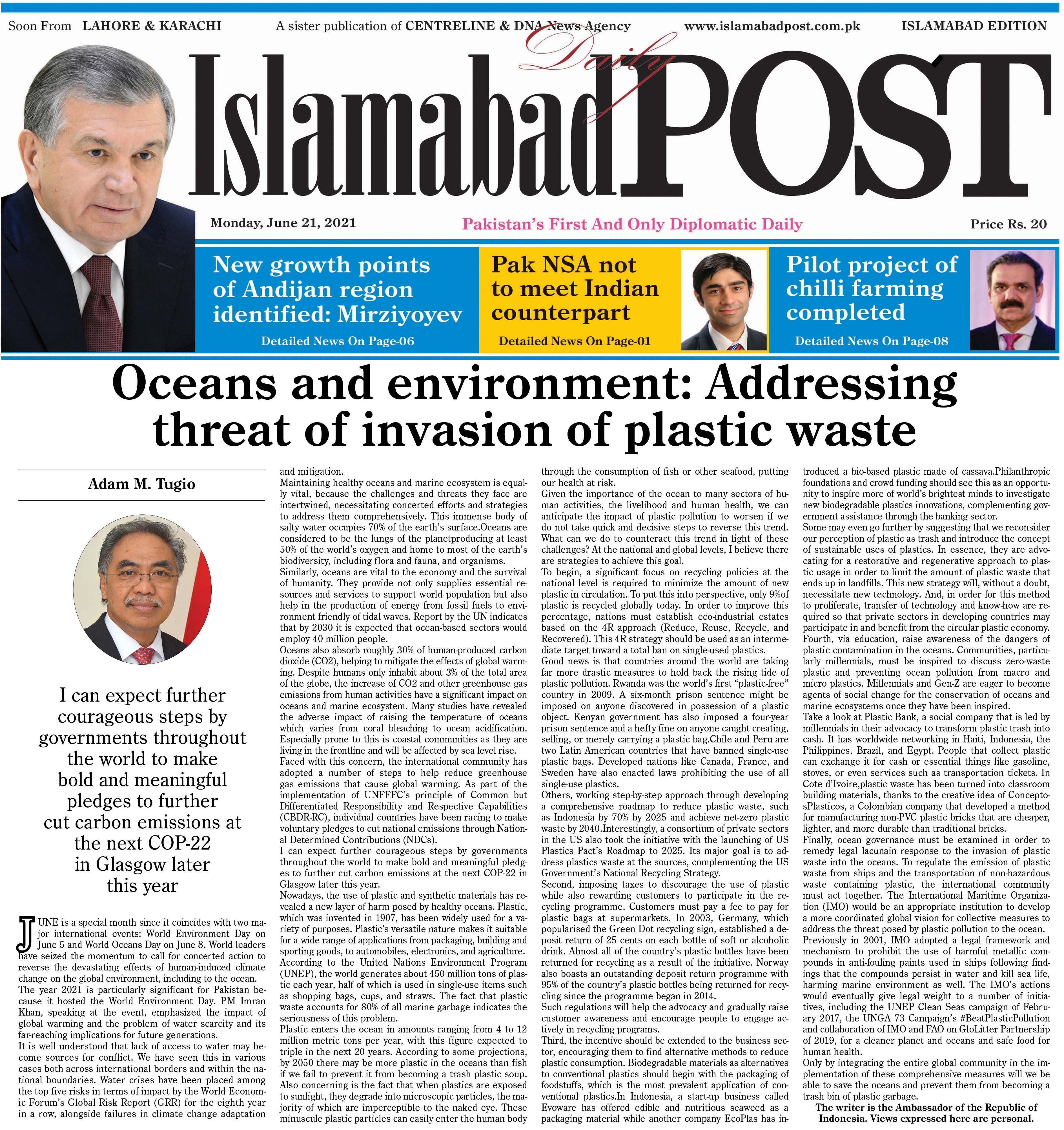
June is a special month since it coincides with two major international events: World Environment Day on June 5 and World Oceans Day on June 8. World leaders have seized the momentum to call for concerted action to reverse the devastating effects of human-induced climate change on the global environment, including to the ocean.
The year 2021 is particularly significant for Pakistan because it is hosting World Environment Day. PM Imran Khan, speaking at the event, emphasized the impact of global warming and the problem of water scarcity and its far-reaching implications for future generations.
It is well understood that lack of access to water may become sources for conflict. We have seen this in various cases both across international border and within the national boundaries.Water crises have been placed among the top five risks in terms of impact by the World Economic Forum’s Global Risk Report (GRR) for the eighth year in a row, alongside failures in climate change adaptation and mitigation.
Maintaining healthy oceans and marine ecosystem is equally vital, because the challenges and threats they face are intertwined, necessitating concerted efforts and strategies to address them comprehensively.This immense body of salty water occupies 70% of the earth’s surface.Oceans are considered to be the lungs of the planetproducing at least 50% of the world’s oxygen and home to most of the earth’s biodiversity, including flora and fauna, and organisms.
Similarly, oceansare vital to the economy and the survival of humanity. They provide not only supplies essential resources and services to support world population but also help in the production of energy from fossil fuels to environment friendly of tidal waves. Report by the UN indicates that by 2030 it is expected that ocean-based sectors would employ 40 million people.
Oceans also absorb roughly 30% of human-produced carbon dioxide (CO2), helping to mitigate the effects of global warming.Despite humans only inhabit about 3% of total area of the globe, the increased of CO2 and other greenhouse gas emissions from human activities have a significant impact on oceans and marine ecosystem. Many studies have revealed the adverse impact of raising temperature of oceanswhich varies from coral bleaching to ocean acidification. Especially prone to this is coastal community as they are living in the frontline and will be affected by sea level rise.
Faced with this concern, the international community has adopted a number of steps to help reduce greenhouse gas emissions that cause global warming. As part of the implementation of UNFFFC’s principle of Common but Differentiated Responsibility and Respective Capabilities(CBDR-RC), individual countries have been racing to make voluntary pledges to cut national emissions through National Determined Contributions (NDCs).
I can expect further courageous steps by governments throughout the world to make bold and meaningful pledges to further cut carbon emissions at the next COP-22 in Glasgow later this year.
Nowadays, the use of plastic and synthetic materials has revealed a new layer of harm posed by healthy oceans. Plastic, which was invented in 1907, has been widely used for a variety of purposes. Plastic’s versatile nature makes it suitable for a wide range of applications from packaging, buildingand sporting goods, to automobiles, electronics, and agriculture.
According to the United Nations Environment Program (UNEP), the world generates about 450 million tons of plastic each year, half of which is used in single-use items such as shopping bags, cups, and straws. The fact that plastic waste accounts for 80% of all marine garbage indicates the seriousness of this problem.
Plastic enters the ocean in amounts ranging from 4 to 12 million metric tons per year, with this figure expected to triple in the next 20 years. According to some projections, by 2050 there may be more plastic in the oceans than fish if we fail to prevent it from becoming a trash plastic soup.Also concerning is the fact that when plastics are exposed to sunlight, they degrade into microscopic particles, the majority of which are imperceptible to the naked eye. These minuscule plastic particles can easily enter the human body through the consumption of fish or other seafoods, putting our health at risk.
Given the importance of the ocean to many sectors of human activities, the livelihood and human health, we can anticipate the impact of plastic pollution to worsen if we do not take quick and decisive steps to reverse this trend. What can we do to counteract this trend in light of these challenges? At the national and global levels, I believe there are strategies to achieve this goal.
To begin, a significant focus on recycling policies at the national level is required to minimize the amount of new plastic in circulation. To put this into perspective, only 9%of plastic is recycled globally today. In order to improve this percentage, nations must establish eco-industrial estates based on the 4R approach (Reduce, Reuse, Recycle, and Recovered). This 4R strategy should be used as intermediate target toward a total ban on single-used plastics.
Good news is that countries around the worldare taking far more drastic measures to hold back the rising tide of plastic pollution.Rwanda was the world’s first “plastic-free” country in 2009. A six-month prison sentence might be imposed on anyone discovered in possession of a plastic object.Kenyan government has also imposed a four-year prison sentence and a hefty fine on anyone caught creating, selling, or merely carrying a plastic bag.Chile and Peru are two Latin American countries that have banned single-use plastic bags. Developed nations like as Canada, France, and Sweden have also enacted laws prohibiting the use of all single-use plastics.
Others, working step-by-step approach through developing a comprehensive roadmap to reduce plastic waste, such as Indonesia by 70% by 2025 and achieve net-zero plastic waste by 2040.Interestingly, a consortium of private sectors in the US also took the initiative with the launching of US Plastics Pact’s Roadmap to 2025. Its major goal is to address plastics waste at the sources, complementing US Government’s National Recycling Strategy.
Second, imposing taxes to discourage the use of plastic while also rewarding customers to participate in the recycling programme. Customers must pay a fee to pay for plastic bags at supermarkets. In 2003, Germany, which popularised the Green Dot recycling sign, established a deposit return of 25 cents on each bottle of soft or alcoholic drink.Almost all of the country’s plastic bottles have been returned for recycling as a result of the initiative. Norway also boasts an outstanding deposit return programme with 95% of the country’s plastic bottles being returned for recycling since the programme began in 2014.
Such regulations will help the advocacy and gradually raise customer awareness and encourage people to engage actively in recycling programs.
Third, the incentive should be extended to the business sector, encouraging them to find alternative methods to reduce plastic consumption. Biodegradable materials as alternatives to conventional plastics should begin with the packaging of foodstuffs, which is the most prevalent application of conventional plastics.In Indonesia, a start-up business called Evoware has offered edible and nutritious seaweed as a packaging materialwhile another companyEcoPlas has introduced a bio-based plastic made of cassava.Philanthropic foundations and crowd funding should see this as an opportunity to inspire more of world’sbrightest minds to investigate new biodegradable plastics innovations, complementing government assistance through the banking sector.
Some may even go furtherby suggesting that we reconsider our perception of plastic as trash and introduce the concept of sustainable uses of plastics. In essence, they are advocating for a restorative and regenerative approach to plastic usage in order to limit the amount of plastic waste that ends up in landfills. This new strategy will, without a doubt, necessitate new technology. And, in order for this method to proliferate, transfer of technology and know-how are required so that private sectors in developing countries may participate in and benefit from the circular plastic economy.
Fourth, via education, raise awareness of the dangers of plastic contamination in the oceans. Communities, particularly millennials, must be inspired to discuss zero-waste plastic and preventing ocean pollution from macro and micro plastics. Millennials and Gen-Z are eager to become agents of social change for the conservation of oceans and marine ecosystems once they have been inspired.
Take a look at Plastic Bank, a social company that is led by millennials in their advocacy to transform plastic trash into cash. It has worldwide networking in Haiti, Indonesia, the Philippines, Brazil, and Egypt. People that collect plastic can exchange it for cash or essential things like gasoline, stoves, or even services such as transportation tickets. In Cote d’Ivoire,plastic waste has been turned into classroom building materials, thanks to the creative idea of ConceptosPlasticos, a Colombian company that developed a method for manufacturing non-PVC plastic bricks that are cheaper, lighter, and more durable than traditional bricks.
Finally, ocean governance must be examined in order to remedy legal lacunain response to the invasion of plastic waste into the oceans. To regulate the emission of plastic waste from ships and the transportation of non-hazardouswastecontaining plastic, the international community must act together. The International Maritime Organization (IMO) would be an appropriate institution to develop a more coordinated global vision for collective measures to address the threat posed by plastic pollution to the ocean.
Previously in 2001, IMO adopted legal framework and mechanism to prohibit the use of harmful metallic compounds in anti-fouling paints used in ships following findings that the compounds persist in water and killing sealife, harming marine environment as well. The IMO’s actions would eventually give legal weight to a number of initiatives, including the UNEP Clean Seas campaign of February 2017, the UNGA 73 Campaign’s #BeatPlasticPollution and collaboration of IMO and FAO on GloLitter Partnership of 2019, for a cleaner planet andoceans and safe food for human health.
Only by integrating the entire global community in the implementation of these comprehensive measures will we be able to save the oceans and prevent them a trash bin of plastic garbage.
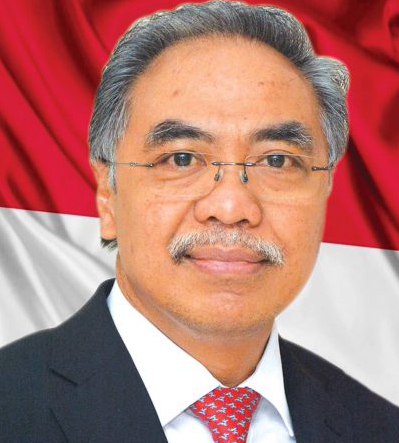
[1]Ambassador of the Republic of Indonesia. Views expressed here are personal.
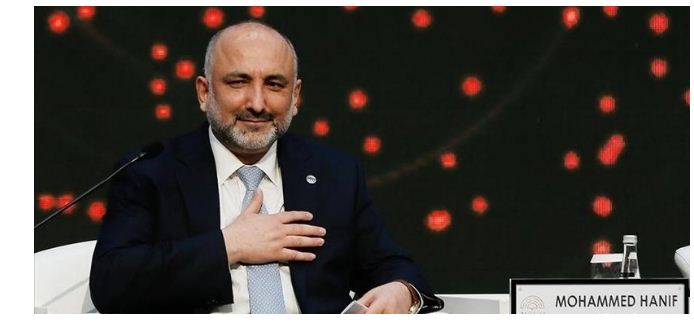
KABUL – The Afghan foreign minister on Sunday welcomed Turkey’s willingness to secure Kabul airport after the withdrawal of foreign forces from Afghanistan, saying it is necessary for the presence of the diplomatic community in the country.
“First of all, we very much welcome Turkey’s willingness to sustain the capabilities and the facilities as well as the high-level technological arrangements for the airport, which will be necessary for the continuous presence of diplomatic community, as well as the continued support of the international community to Afghanistan and our national security forces,” Haneef Atmar said in an exclusive interview with Anadolu Agency on the sidelines of Antalya Diplomacy Forum.
“Turkey has made a bold and very much commendable initiative,” he said, adding that they will support the move “fully.” “Turkey has an extremely important role both at a regional and global level.”
On a trilateral meeting between Turkey, Afghanistan and Iran, he said they have agreed to cooperate in three “important” areas: Afghan peace process, security, counterterrorism, preventing organized crimes and illegal migration, and economic cooperation.
Atmar met his Turkish counterpart Mevlut Cavusoglu and Iranian Foreign Minister Javad Zarif earlier in the day.
“We reiterated our commitment to the peace process and emphasized that we three work together, as well as with Pakistan,” the minister said.
He said that they resolved to take practical measures for counterterrorism and security, and agreed on a transit and trade corridor linking Afghanistan to Turkey through Iran.
Underlining that there will be other members of NATO supporting the initiative (security of Kabul airport), including the US, he said Hungary and Norway, which is interested in running a field hospital, will also be a part of the process.
He said Pakistan’s role in the broader peace and stabilization process in Afghanistan is “very important.”
“I’m glad how Turkey, a brotherly country, is so keen in seeking support from the entire region for this peace and stabilization effort, but especially from Pakistan,” said the top Afghan diplomat.
– Taliban met none of its commitments
The minister claimed that the US, NATO, and Afghanistan have honored their commitments made in the Doha peace deal, but the Taliban have not.
“So, it’s time for the world community, and especially our region, to call on the Taliban that they must honor their obligations,” he said. “They must stop violence, and they must in good faith join the Afghan government in peace negotiations.”
Under the February 2020 agreement, the US committed to withdraw all foreign forces from Afghanistan in return of a reduction in violence and intra-Afghan reconciliation through a dialogue process.
While President Joe Biden has announced a complete withdrawal from the war-torn country by Sept. 11, negotiations in Qatar have made little progress.
Regarding the surge in violence across Afghanistan since May, Atmar said: “International troops are leaving the country. So, now it is important for all of us to come together and put pressure on the Taliban to stop the violence and join the peace process.”
ANTALYA DIPLOMACY FORUM ‘VERY SUCCESSFUL’
Atmar congratulated the government of Turkey for holding the “very successful” Antalya Diplomacy Forum.
“I would like to particularly acknowledge, pay my respects to the efforts of my brother [Mevlut Cavusoglu],” he said, adding that the Turkish minister has done a “fantastic job to create this forum and bring together ministers, leaders of states and governments, and experts to discuss common challenges in this region and in the global community.”
RAWALPINDI: Shoaib Akhtar, who is a big name in Pakistan cricket, and famous for his real fast bowling in the world, has announced the launch of his NFT. As soon as the announcement was made, “Shoaib Akhtar NFT” became a top trend on Twitter. Shoaib Akhtar is the only Pakistani who has announced the launch of his NFT in Pakistan, through which he will be able to exchange his digital copyrights in the world of crypto currency. It may be recalled that the world’s most expensive NFT has been sold for 69 million US dollars which was bought by a South Indian. In addition, Shoaib Akhtar has decided to launch Pakistan’s first crypto exchange with the students of NED University through the platform www.tenup.IO. Shoaib Akhtar said that he would also support the crypto community of Pakistan and take Pakistan forward in technology.
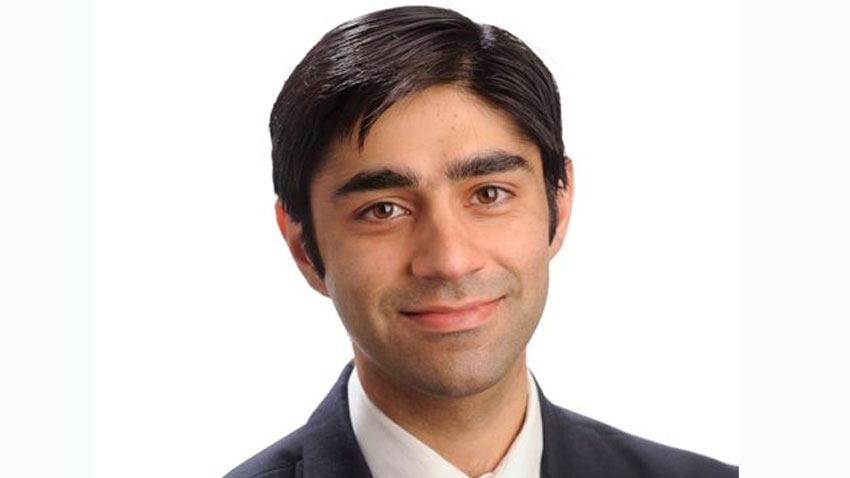
National Security Advisor, Dr. Moeed Yusuf left for Dushanbe today to participate in the two-day meeting of the Secretaries of the Security Council of the Shanghai Cooperation Organization being held from Tuesday.
During the visit, the National Security Advisor will participate in the joint session of the National Security Advisors of the member states and also sign the Protocol of the Sixteenth Meeting of the Security Council Secretaries.
During the visit, Dr. Yusuf will also meet with his counterparts from Russian Federation, Tajikistan, Uzbekistan, Kyrgyzstan, Kazakhstan and China to discuss matters of mutual interest.