Home Blog Page 2665

3 PAF officers promoted to rank of Air Vice Marshal

DNA

ISLAMABAD, JUN 22  – The government has promoted 03 PAF officers to the rank of Air Vice Marshal. The promoted Air officers include Air Vice Marshal Imran Saif, Air Vice Marshal Hussain Ahmed Siddiqui and Air Vice Marshal Zaeem Afzal.

Air Vice Marshal Imran Saif was commissioned in Air Defence Branch of Pakistan Air Force in June, 1990. During his career, he has commanded an air defence squadron and an operational wing. He has also served as Sector Commander, South Sector and Assistant Chief of the Air Staff (Air Defence) at Air Headquarters, Islamabad. He is a recipient of Sitara-i-Imtiaz (Military).

Air Vice Marshal Hussain Ahmed Siddiqui was commissioned in GD (P) Branch of Pakistan Air Force in December, 1991. During his career, he has commanded a fighter squadron, a flying wing and an air base. He has also served as Deputy Commandant Air War College Institute, Faisal. He is a recipient of Sitara-i-Imtiaz (Military).

Air Vice Marshal Zaeem Afzal was commissioned in GD (P) Branch of Pakistan Air Force in December, 1991. During his career, he has commanded a fighter squadron, Combat Commanders’ School and an operational air base. He has also served as Deputy Chief Project Director (Ops) of JF-17 Project at Air Headquarters, Islamabad. He is a recipient of Sitara-i-Imtiaz (Military).

Iran’s election unsettles Biden’s hope for a nuclear deal

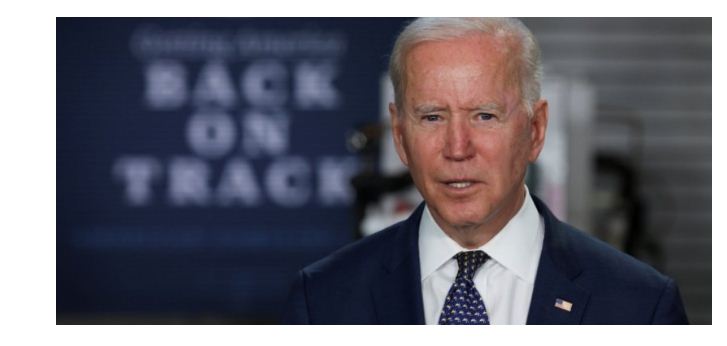
WASHINGTON, JUN 22- Biden administration officials are insisting that the election of a hard-liner as Iran‘s president won’t affect prospects for reviving the faltering 2015 nuclear deal with Tehran. But there are already signs that their goal of locking in a deal just got tougher.

Optimism that a deal was imminently faded as the latest talks ended Sunday without tangible indications of significant progress. And on Monday, in his first public comments since the vote, incoming Iranian President Ebrahim Raisi rejected a key Biden goal of expanding on the nuclear deal if negotiators are able to salvage the old one.

At the same time, Raisi is likely to raise Iran’s demands for sanctions relief in return for Iranian compliance with the deal, as he himself is already subject to U.S. human rights penalties.

“I don’t envy the Biden team,” said Karim Sadjapour, a senior fellow at the Carnegie Endowment for International Peace who has advised multiple U.S. administrations on Iran. “I think the administration now has a heightened sense of urgency to revise the deal before Raisi and a new hard-line team is inaugurated.”

President Joe Biden and his team have made a U.S. to return to the deal one of their top foreign policy priorities. The deal was one of President Barack Obama’s signature achievements, one that aides now serving in the Biden administration had helped negotiate and that Donald Trump repudiated and tried to dismantle as president.

Despite Raisi’s impending presidency, Biden administration officials insist prospects for reaching an agreement are unaltered. They argue that Iran’s Supreme Leader Ayatollah Ali Khamenei, who signed off on the 2015 deal known as the Joint Comprehensive Plan of Action, or JCPOA, will make any final decisions regardless of who is president.

“The president’s view and our view is that the decision leader is the supreme leader,” White House press secretary Jen Psaki said Monday. “That was the case before the election; it’s the case today; it will be the case probably moving forward.”

“Iran will have, we expect, the same supreme leader in August as it will have today, as it had before the elections, as it had in 2015 when the JCPOA was consummated for the first time,” State Department spokesman Ned Price said.

But hopes for substantial progress fizzled last week ahead of the Iranian election amid a flurry of speculation about the impact of the vote on the indirect talks between Iran and the U.S. in Vienna. Diplomats and others familiar with the talks had thought the last round, the sixth, could produce at least a tangible result even if it fell short of a full deal.

Now, that round has ended and a seventh-round has yet to be scheduled as Raisi, Iran’s conservative judiciary chief, brandished an absolute rejection of anything more than Iran’s bare minimum compliance with the 2015 agreement in exchange for a lifting all of U.S. sanctions.

In his public comments Monday, Raisi brushed aside U.S. calls for Iran to agree to follow-on discussions on expanding the initial nuclear deal to include its ballistic missile program and its support for regional groups that the U.S. designates terrorist organizations.

“It’s nonnegotiable,” Raisi said’

Iran experts agree it will be a tough, if not impossible, for Biden to get Iran to go beyond the nuclear agreement.

“I’m very skeptical that once we’ve lifted the sanctions to get them to return they’ll feel any incentive to come back and negotiate more concessions,” Sadjapour said. “And, if we coerce them with sanctions to come back to the table, they’ll argue that we’ve abrogated our end of the nuclear deal. Again.”

Critics of the nuclear deal maintain that the administration has already given away too much in exchange for too little by signaling its desire to repudiate Trump’s repudiation of the nuclear deal. And, they say that even if Iran agrees to some sort of additional talks, the pledge will be meaningless.

“It was pretty obvious that the Iranians were never going to negotiate in good faith beyond the JCPOA,” said Rich Goldberg, a Trump administration National Security Council official who has espoused a hard line on Iran.

“But now, even if the administration gets some sort of face-saving language from the Iranians about future talks, Raisi has already said they’re not interested. The jig is up,” he said. “You can’t come back to a skeptical Congress, allies and deal opponents and say the promise means anything it means when Raisi has already said it doesn’t.”

But administration officials are adamant that as good as the nuclear deal is, it is insufficient and must be improved on.

“We do see a return to compliance as necessary but insufficient, but we also do see a return to compliance as enabling us to take on those other issues diplomatically,” Price said, adding that the point had been made clear to the Iranians “in no uncertain terms.”

An additional complication is that Raisi will become the first serving Iranian president sanctioned by the U.S. government even before entering office, in part over his time as the head of Iran’s internationally criticized judiciary — a situation that could complicate state visits and speeches at international forums such as the United Nations.

Psaki and Price both said that the U.S. will continue to hold Raisi accountable for human rights violations for which he was sanctioned by the Trump administration.

Trump withdrew from the nuclear deal in 2018 and set about a “maximum pressure” campaign on Iran that included re-instating all the sanctions eased under the agreement along with adding a host of new ones.

STATE OF THE ART “PAK ANTI-CORRUPTION ACADEMY” ESTABLISHED: CHAIRMAN NAB

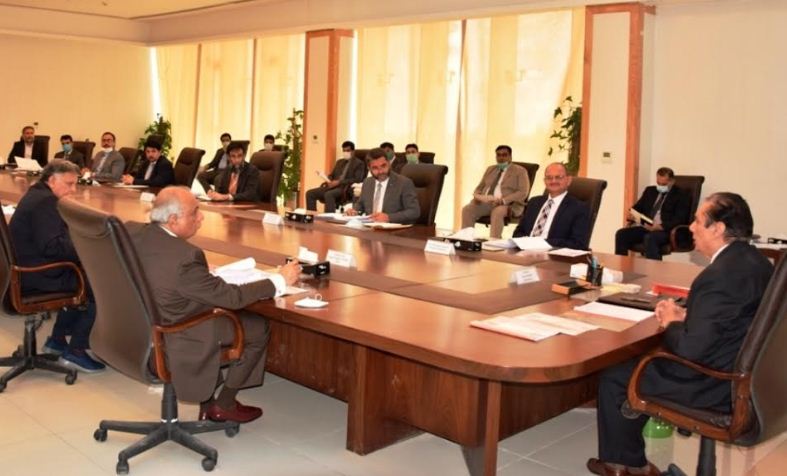
ISLAMABAD,  JUN 22 (DNA) – Justice ® Javed Iqbal, Chairman NAB chaired a meeting to review performance of Training and Research Division of NAB at NAB Headquarters.

During the meeting,  it was informed by DG Training and Research that on the directions of Honorable Justice Mr. Javed Iqbal, Chairman NAB, NAB has established its own state of the art “Pakistan Anti-Corruption Academy (PACA)” at NAB Headquarters as NAB always accords high priority for capacity building of its Investigation Officers and Prosecutors on regular basis on modern lines as training is continuous process which is an effective tool for improvement and maintaining the quality of Investigation Officers and Prosecutors.

Justice Javed Iqbal, Chairman NAB said that NAB is an apex anti corruption organization of the country which has assigned a gigantic task of eradication of corruption from the country. He said that this requires an extremely dedicated and highly trained manpower to undertake this responsibility.

He said that NAB attaches great importance to its Human Resource Development. Accordingly, He Pakistan Anti Corruption Academy (PACA) was established which will act as a hub of disseminating and practicing the knowledge in the field of anti-corruption worldwide. The Academy will offer standardized and tailor-made training, seminars, conferences, opportunities for dialogue and networking, and will act as an anti-corruption think-tank to empower professionals for the future white collar crimes challenges.

It will provide a new, holistic approach to anti-corruption education and research, delivers and facilitates anti-corruption training for practitioners from all sectors of governance, and will provide technical support and assistance to a wide variety of stakeholders. PACA draws on an unwavering drive towards excellence, innovation, and a commitment to rendering itself accessible to sister institutions across the globe by using multi-faceted training methods, tools and techniques.

Corruption is a most significant roadblock in the process of governance improvement, development and progress. PACA will strive to develop a hallmark and culture and practice of integrity and accountability. He said that the mandate of “Pakistan Anti-Corruption Academy (PACA)” has been mandated with 5 core functions including Training & Capacity Building of officers of NAB and others in the field of Financial Crimes Investigation, Forensic Examination, and Prosecution; Carrying out research and reformation projects to highlight system weakness and propose improvement based on need assessment, system analysis research and latest good practices in fields of financial crimes and prevention of corruption reforms for good governance.; Training & Research in Collaboration with International and national Institutes; Forensic Examination Development and Curriculum Development & Accreditation of Investigators in the field of financial crimes and anti-corruption. 

Honorable Mr. Justice Javed Iqbal, Chairman NAB appreciated the performance of Training and Research Division and said that establishment of state of the art “Pakistan Anti-Corruption Academy (PACA)” of NAB is a milestone in the history of NAB which will be helpful a standardized syllabus for all investigation officers and capacity building of prosecutors on modern lines to ensure quality and uniformity.

The performance objectives of training programs will also be continuously evaluated so as to form a basis for subsequent review and improvements in future training needs. The Chairman NAB said that a state of the art Forensic Science LAB has also been established in NAB Rawalpindi which has capacity to undertake examination of forensic material; render expert opinion about the examination of forensic material conducted by it; operate and maintain scientific instruments for examination of forensic material; propose advancement in forensic techniques and suggest procurement of suitable scientific instruments for examination of forensic material; recommend the procedure for the collection, preservation, and handling of forensic material; seek clarification from the person involved in the collection or handling of forensic material in the prescribed manner; subject to the nature of the case.

He said that forensic examination facility is vital to every organization fighting white-collar crime, therefore, the PACA will offer intensive forensic training programs to investigation officers of NAB and others along with practical assistance in collaboration with other domestic and foreign Forensic Practitioners to enhance their expertise in analysis of latent fingerprints, computer forensic and audio-visual evidence, Questioned Documents, digital evidence analysis according to internationally established competency standards.

He said that as an integral part of its functional mandate, the PACA will also focus on forensic examination as per best practices and Quality Assurance Measures. To achieve its objective, the PACA will coordinate with all stakeholders to deliver advanced courses of forensic science. To facilitate investigators, the PACA shall arrange video lectures relating to digital document examination, engineering projects materials forensic examination.

US SHOULD RETURN TO JCPOA: RAISI

US officials have to reconsider their policies towards Iran.The foreign policy of the new Iranian government will neither begin with nor be limited to negotiations

News Desk

TEHRAN– Iran’s President-elect Ebrahim Raisi has said the US should return to the Joint Comprehensive Plan of Action (JCPOA) and carry out all its commitments to the international nuclear deal.

He made the remarks during his first press conference on Monday following his victory in the election. Answering the question “what do you have to say to the US and Europe?”,  the President-elect said he frankly advised the US to return to the JCPOA and fulfill its commitment because this is the demand of the Iranian nation.

He also said that the Iranian nation conveyed a message of unity and solidarity via their participation in the June 18 presidential elections. “We emphasize that the US government should be sincere towards its commitments while noting that the regional and missile issues are not negotiable,” Raisi added.

During the remarks, Raisi also said the massive turnout of the elections happened despite the heavy psychological warfare by the enemies who tried to discourage people.He said people queued to cast their votes in ballot boxes for hours despite their

The President-elect further stressed that people voted for change in this presidential election and said their presence sent out different messages. He said the votes conveyed a message of national unity and solidarity and also the need for a change in their economic situation and living conditions.

They also called for fighting corruption, poverty, discrimination, and, in one word, administering justice for all walks of life. Noting that the large turnout of people for the presidential elections has changed the scenario, President-elect Raisi said that the policy pursued by former US administration to exert “maximum pressure” on the Iranian people has failed to work.

The Iranian president-elect said that the US officials have to reconsider their policies towards Iran.The foreign policy of the new Iranian government will neither begin with nor be limited to negotiations over the revival of a 2015 Iran nuclear deal (known as JCPOA), Raisi said.

“We will pursue engagement with all countries of the world as a principle and a broad and balanced interaction in foreign policy,” he added.

He said that his government will support any negotiation which will ensure the interests of the Iranian nation.He, however, noted that he will not favor negotiations for the sake of negotiations and will not tie the economy and the living conditions of people to the negotiations.

 “Our priorities in this government will be to improve the business situation and improve the living conditions of the people,” the president-elect said.

He said that dealing with the issues of employment and housing will be the first steps that his government will take.

PAKISTAN ACKNOWLEDGES 100 GLORIOUS YEARS OF COMMUNIST PARTY OF CHINA

ISLAMABAD, JUN 22 (DNA) – Pakistan fully acknowledges the 100 glorious years of Communist Party of China (CPC) and wishes to participate in its celebrations.

On July 1 this year, the CPC will celebrate its 100 years of glorious presence ever since its founding in 1921. Born out of a meeting of a few young revolutionary leaders on a small boat, CPC has led the nation towards a road for peace, prosperity, independence, liberation and a strong stable country, says an article carried by China Economic Net (CEN).

Muhammad Asif Noor, Director of Institute of Peace and Diplomatic Studies, Pakistan in his article stated that this year is also important for Pakistan and China. This year marks the 70th anniversary of the establishment of diplomatic ties between both Iron brother countries. Prime Minister Imran Khan has praised China’s fight against poverty and recalled the need to learn from the experience of China.

The China-Pakistan Economic Corridor (CPEC) as an important active pillar of BRI is focusing on building industries, revamping the agricultural outlook and helping Pakistan to gradually come out of its socio-economic challenges.

The article added: “ History has shown that CPC is truly deserved to be called the glorious political party representing the true wishes and aspiration of the Chinese people.

Over the past 100 years, CPC has made remarkable efforts with patience and continues hard work coupled with the wisdom of leaders, and made achievements in reforms, development and revolution.

CPC has contributed towards strengthening China’s political stability, health, education, socio-economic development and in all diverse sectors. This day while CPC and Chinese people will celebrate the founding day, more than 1.4 billion people are moving ahead with full strength, wisdom and confidence towards a new beginning of the rejuvenation of the Chinese people. CPC has remained at the front, from poverty alleviation to national rejuvenation and modernization.

Since the opium war in 1840, Chinese people have passed through tremendous challenges and devastation. However, Chinese people stood firm against all odds. There were threats from foreign powers and internal turbulence at that time but with revolutionary mindset and perseverance, they took destiny into their own hands to change the course of their history. In those challenges and difficult times, a few young and strong men of wisdom pursued their dreams for their nation and followed their heart for the destiny of freedom.

To achieve the goal, these brave hearts led many change movements till the time of the great revolution of 1911 that further later led to the founding of CPC. This was a time when communism was rising with Chinese characteristics.

The founding of CPC in 1921 made the change in Chinese destiny in the right direction. Since then CPC has created an epic story of the modern history of mankind where millions of people have been lifted out of poverty, and global outreach has been achieved through the Belt and Road Initiative. Over the 100 Years, CPC has united the Chinese people into one whole and help them to stand together and enter a progressive era of progress and development.

CPC has also immensely contributed to providing visionary leadership to the country, where we have seen towering figures like Mao Zedong, Zhou Enlai, Deng Xiaoping, Liu Shaoqi, Zhu De, and currently President Xi Jinping who have led and steered the nation to the new heights.

We remember that as where Mao established the basics, the second generation led by Deng Xiaoping established the reform and opening-up process resulting in what China is today.

While we remember these towering figures, we also remember the martyrs of revolutions and long struggles who have sacrificed their lives for helping build, new, modern and great China. Today’s generation of leadership led by President Xi Jinping has brilliantly built on further what the great leaders of the past have transferred to the new generation. With eyes on the future, having strong political and personal, President Xi Jinping is a confident leader building a strong space for China on the global stage.

CPC core strength is based on the presence of young people with great revolutionary ideas especially ideas about the future. Currently, there are more than 90 million members and most of them are young people believing the vision and mission of the party and contributing towards the wellbeing of the country.

Young people have always remained in the heart of the party even in history CPC begins its journey when young people dedicated their lives to the theoretical insights, actionable ideals and future strategies of both the party and the country. CPC is truly young and youthful. Young people of China are the future of the country, while they appreciate the glorious history and are marching forward with pride.

Based on five principles of peaceful coexistence, CPC has also adhered to the ideals of mutual respect, independence, equality, non-interference in other’s internal affairs and mutual ways to learn the experience of the political parties and organizations across the world. Through Belt and Road Initiative (BRI), COVID-19 vaccine support, development projects and initiatives in the developing countries. With the vision and ideals of creating a community of shared future, China and the visionary leadership of CPC has made all-important development and peaceful steps.

History has shown that CPC is truly deserved to be called the glorious political party representing the true wishes and aspiration of the Chinese people.=DNA

=========

UK MINISTER FOR SOUTH ASIA LORD AHMAD ARRIVES IN PAKISTAN

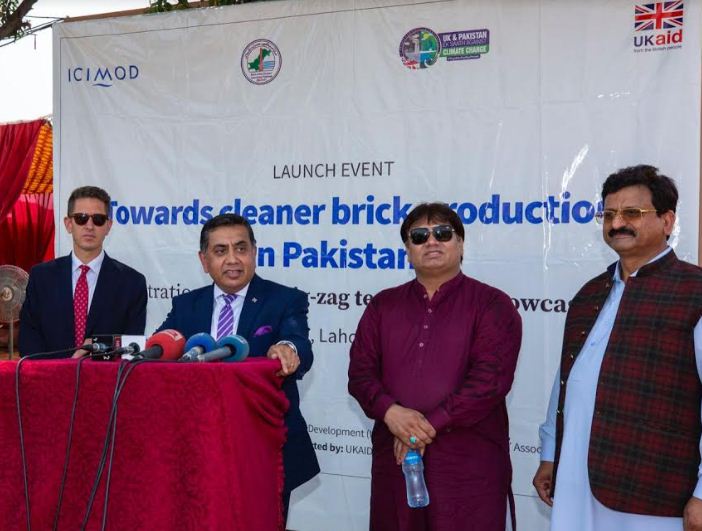
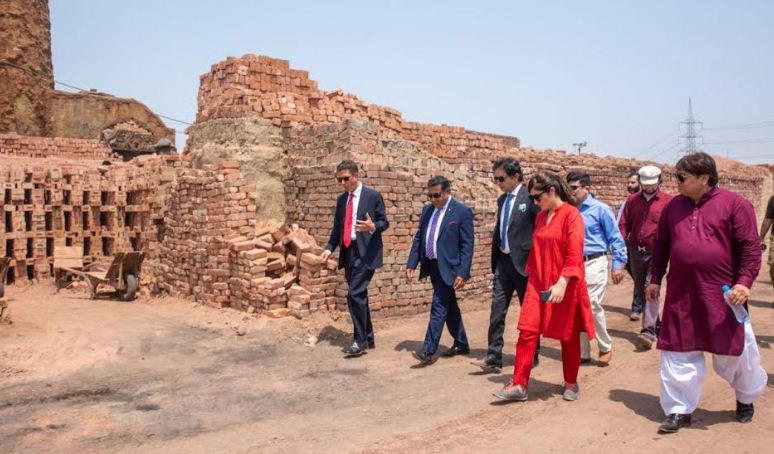
ISLAMABAD, JUN 22 (DNA) – The Minister of State for South Asia and the Commonwealth and the Prime Minister’s Special Representative on Preventing Sexual Violence in Conflict, Lord (Tariq) Ahmad of Wimbledon, has arrived in Pakistan for a two day visit. His visit, covering two cities, will further enhance the friendship between the UK and Pakistan.

During his stay in Pakistan, Lord Ahmad is expected to meet a number of government Ministers and Provincial leaders, including the Human Rights Minister Shireen Mazari, Foreign Minister Shah Mahmood Qureshi, Chief Minister Punjab Usman Buzdar and Governor Punjab Chaudhry Sarwar.

Lord Ahmad will discuss the importance of maximising our unique bilateral partnerships to tackle global challenges including climate change (with the UK hosting COP26 later this year) and the response to COVID-19; and how we can boost the trading potential between the UK and Pakistan. 

The Minister will also promote the UK’s role as a force for good by meeting faith leaders (including from minority groups).

Lord Ahmad’s visit is the first in-person visit by a UK Minister to Pakistan since the start of the pandemic, and follows the recent video message from Prime Minister Boris Johnson for World Environment Day and the recent phone call between Prime Minister Imran Khan and Prime Minister Boris Johnson.

Lord Ahmad said: “The world has changed a great deal since I last visited Pakistan, a country close to my heart and roots.

 Loss and separation due to COVID-19 has impacted us all. But the pandemic has brought us closer too.  More than ever before must stand shoulder to shoulder as we tackle global challenges.

Which is why during my visit I look forward to discussing how we can work together using the best of our international dosti to build back greener to protect our world against climate change, build back better with more prosperity for both our great nations, build back safer to protect all our people from COVID-19, and build back for all ensuring that girls get the education they deserve and by making a stand against hate and prejudice.”=DNA

===============

ICCI CALLS FOR 10-YEAR NEW INDUSTRIAL POLICY TO BOOST INDUSTRIALIZATION

ISLAMABAD, JUN 22 (DNA) – The government should focus on formulating a 10-year new industrial policy in consultation with all stakeholders in order to boost industrialization, create plenty of new jobs, increase exports of value added products, promote import substitution and improve tax revenue of the country.

This was urged by Sardar Yasir Ilyas Khan, President, Islamabad Chamber of Commerce & Industry (ICCI) while delivering a lecture at Bahria University, Islamabad on the topic of an “Analysis of Pakistani Industry”.

He presented a comprehensive analysis of Pakistani industry to the students and informed them that Pakistan had inherited only 34 industries at the time of its independence, but now it has developed a fairly broad industrial base that accounted for 13-14 percent of the country’s GDP.

Sardar Yasir Ilyas Khan stressed that the fresh industrial policy should be framed with a futuristic mind set to build stronger linkages between services and manufacturing sectors with the ultimate aim of transforming Pakistan into a knowledge-based economy.

He said that the new industrial policy should incentivize the industrial sector to shift from producing low-value to more value-added products such as machinery and auto parts, which were in greater demand in the global market.

He said that the share of engineering goods in global exports was around 50 percent, but the share of Pakistan’s engineering goods in global exports was quite negligible due to which our exports were struggling around USD 22 billion during the first eleven months of this fiscal year. He emphasized that the new industry policy should be finalized in a way that it should be instrumental in increasing the share of engineering goods up to at least 25 percent in our total exports during the next 3 years.

ICCI President said that the world was moving towards embracing more and more applications of artificial intelligence and the new industrial policy should focus on educating our existing and future industrial workforce in AI and increasing exports of IT products and services.

He said that many countries including China, Japan, South Korea, Hong Kong, Singapore, Taiwan, Veitnam, Thailand and Malaysia have emerged as leading exporters in Asia by focusing on industrialization and Pakistan should learn from their experience to promote its industrial sector.

Sardar Yasir Ilyas Khan said that an export-driven and growth-oriented fresh industrial policy was the need of the hour to make Pakistan a hub of industrial activities and put the country on the path of sustainable economic growth that would ultimately lead Pakistan to emerge as a strong economy of the region.

Dr. Muhammad Ali Saeed, Principal, Bahria Business School received Sardar Yasir Ilyas Khan, President ICCI with warm welcome and thanked him for delivering an insightful lecture to the students.=DNA

===============

PIA announces SOPs for Canada-bound travelers

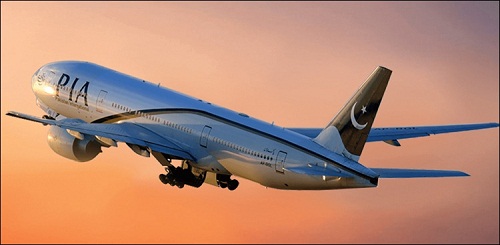
KARACHI: Pakistan International Airlines (PIA) on Tuesday issued a set of standard operating procedures (SOPs) for passengers travelling to Canada on its flights.

According to details, the airline has made a Covid-19 test mandatory for all the passengers aged five years and above at least 72 hours before the commencement of the journey. Besides, they are required to have a Covid vaccination certificate.

Canada-bound travelers will also have to provide all necessary data, including a plan on how will they quarantine themselves upon arrival in Canada, via the airline’s mobile phone app.

PIA doctors will examine all the passengers before they are allowed to board a plane.

On Monday, Canadian authorities allowed Pakistan International Airlines (PIA) to resume its flight operations to Toronto that was earlier suspended due to a surge in Covid-19 cases.

According to a PIA spokesperson, the Canadian officials allowed PIA to resume its flights to Toronto, which were restricted to cargo flights only, due to the surge in coronavirus cases. However, other travel-related advisories pertaining to Canada will remain in place, said the national flag carrier spokesperson.

In the first phase, the airline will start with three direct flights per week from Pakistan to Toronto. The approval was given after the PIA CEO assured the Canadian government that the airline will be following strict standard operating procedures.

Governor Punjab suggests reserve seats for overseas Pakistanis in assemblies

LAHORE: Governor Punjab Chaudhry Mohammad Sarwar on Tuesday suggested reserving separate seats in the assemblies for the representation of overseas Pakistanis.

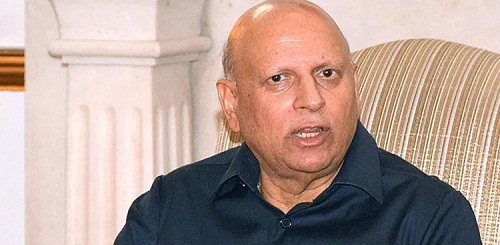
He said this while meeting PTI leader Nadeem Afzal Chan and other party delegations on Tuesday.

The governor said that the opposition’s denial to give voting rights to overseas Pakistanis is a negation of democratic norms.

“Opposition could not force the prime minister to reverse his decision through pressure tactics,”  Governor Punjab Sarwar said adding that they should sit with the treasury on electoral reforms so that no one could raise a finger on the next electoral process.

While lamenting the opposition’s decision to convene a multi-party conference to discuss electoral reforms rather than discussing it in the Parliament, he said that such decisions could not delay the next general elections.

On May 8, President Dr. Arif Alvi had promulgated the Election (second amendment) ordinance 2021, allowing voting rights to overseas Pakistanis.

According to the ordinance issued by the president, changes were made to section 94 (1) and section 103 of the Election Act 2017. The amendments would help in ensuring that overseas Pakistanis vote during the next general election.

The bill has also been tabled in the Parliament for approval and Adviser to Prime Minister on Parliamentary Affairs Babar Awan had said that the government has made its intent clear on electronic voting machines (EVMs) and bill pertaining to it will sail through the National Assembly and Senate.

Babar Awan said that they have already given the Election Commission of Pakistan (ECP) authority to hold elections using the EVMs. “We have introduced a bill on EVMs in the National Assembly and Senate,” he said adding that opposition has been conveyed that the bill could not be withdrawn.

New Uzbekistan: On the Verge of the Third Renaissance

Uzbekistan has been following business friendly policies since 2016 which has now drastically changed its status. Uzbekistan moved up to 69th position on the World Bank Ease of Doing business from 166th place in 2012, lowering taxes and the abundance of youthful labour should allow the country to become a powerhouse in textiles.

Dr. Mehmood Ul Hassan Khan

We live in the era of “Globalization 2” in which greater regional connectivity and socio-economic prosperity is the real essence of the humanity, prosperity, security and survival.

We are mow passing through industrial “revolution 4” during which the Republic of Uzbekistan under the visionary leadership of H.E. Shavkat Mirziyoyev has successfully started its journey of immense socio-economic prosperity, economic sustainability, political stability, regional connectivity, reconciliation, innovation, qualitative education, human capital and last but not the least, “commercial diplomacy” towards its  third renaissance.

From the time “immortal” Uzbekistan has been “mesmerizing” the world from its holistic human spirits, unmatched hospitality, rich traditions, immaculate civilization, valuable and befitting propositions of intellect, knowledge, spiritualism, trade & commerce and above all unblemished bravery and human survival which played an important role in its Ist & 2nd renaissance in the past.

It has been home of “rare” human combinations like Timur, one of the greatest warriors and conquer of all time and man of literature too (Zafar Nama), and Babur the pioneer of Mughal dynasty in Sub Continent, the “inspirational” war strategist and man of books (Babur Nama), Ulugh Beg who ratified many “misconceptions” about universe, earth, planets its unlimited galaxies, Abu Rayhan al-Biruni the pioneer of “VLOG”, al-Khwarizmi the pioneer of “mathematics” and many scientific disciplines, and many prominent dignified figures have been “enlightening” the world for centuries.

Thus Uzbekistan’s Ist & 2nd renaissance was the total “sum” of superior human knowledge, wisdom, science & arts, spirits of survival, prosperity, infrastructural development, strategic expansion, statesmanship, good governance, logistic connectivity, trade & commerce, sharing & caring and last but not least, friendship, peace and harmony.        

Uzbekistan’s third renaissance “comprises” of immense structural reforms, Massive Drive of Diversification of Economy (MDDE)”, “Pragmatic & Friendly Foreign Policy Module (PFPM)” and last but not least, “Holistic Model of Connectivity (HMC)” based on “shared prosperity. Its third renaissance has now been getting “momentum” and new “heights” since the start of presidency of Shavkat Mirziyoyev 2017.            

According to Uzbekistan official statistics (January 2021) due to constant structural reforms the average annual investment growth rate was 22 percent during the last four years. The total volume of foreign investment reached $26.6 billion, including direct investments of $17.5 billion.

Critical analysis indicates that the total volume of investments over the past 4 years has increased by more than 2.1 times, including foreign investments by 2.7 times. The share of investment of GDP in 2019 exceeded 38 percent for the first time, which created a solid foundation for ensuring economic growth in the coming years.

At the same time, the GDP of Uzbekistan in 2019 increased by 5.6 percent. Despite the complex and complicated economic conditions and ongoing COVID-19 pandemic the World Bank has predicted the country’s GDP growth in 2021 by 4.8 percent, which is one of the best indicators among developing countries.

Moreover, Uzbekistan’s foreign trade turnover is growing much faster than GDP and in 2019 increased by 26.2 percent, amounting to $42.2 billion. While in just 9 months of 2020, despite the pandemic, the country’s foreign trade reached $27.5 billion.

Uzbekistan friendly foreign policy is achieving miracles. It has been instrumental to resolve the Afghan conflict. While addressing the United Nations General Assembly (UNGA) he proposed a new body under the UN’s auspices specifically to help Afghanistan recover from its many years in isolation and war.

Tashkent has already signed a 10 year contract to supply power to Afghanistan and Uzbek Railways are helping to re-build the Afghan rail link from Termez to Hairaton, which is one of the few transport connections Afghanistan has to the outside world.

To achieve the direct connectivity and further enhancing of trust between the state and the people, the “President’s Receptions Doctrine (PRDs)” was initiated in which common people could voice their concerns, raise issues and describe their problems directly to the government which was consequently, converted into a Ministry of Civil Services, which further led to the opening of “Single Window Operation (SWO)” that “diminished” all “bureaucratic hurdles” and provided all possible necessities of life at door steps. Even financial utilities were completely overhauled and transformed. Rights of ownership, transfer of property, SMEs registrations, facilities of micro financing were revolutionized which created unlimited miracles.

Furthermore, flexible visa regime was patronized and 2 year exit visa regime was abolished and converted into 10 year international passports, simplifying travel for Uzbek citizens. In this context, the visa regime with 100 countries was further softened and introduced 5 day visa free transit rules as well as a 30 day no visa regime to encourage tourism.

On education front, 43 universities or branches of foreign universities have opened in Uzbekistan during the last three years. The South Korean Inha University has been focusing on the IT sector and other universities are moving in. The budgetary allocations to education, housing, drinking water and strategic development goals have been further increased.  

The banking sector has now been further structured and developed. A comprehensive Banking Sector Reform Road Map (BSRRM) was adopted with a concrete road map, containing definite steps that are the distinct responsibility of named individuals.

Uzbekistan has 31 banks, 13 of which have state participation. According to the Road Map, the state will only retain four major banks and all the others will be fully privatized. A massive transformation process has already been started with the assistance of International Financial Corporation (IFC), European Bank for Reconstruction and Development (EBRD), Asian Development Bank (ADB), the Big Four international consultancies and others.

Banking system assets to GDP currently stand at 52.1 percent and domestic loans to GDP at 40.4 percent. Formation of Credit Bureaus (CBs) is the need of the hour. A Domestic Debt Market (DDM) should be established. A corporate governance institute should be created to certify independent directors.

Presence and participation of foreign banks is on the rise in Uzbekistan. Two foreign banks TBC bank of Georgia and Halyk Bank of Kazakhstan have already operationalized in the domestic banking industry of Uzbekistan. Bank Anor the icon of digitalization has also received a license. Other banks, such as OTP Bank of Hungary, are also reportedly planning to open branches in Uzbekistan.

Financial market has already been transformed. Full convertibility for of national currency, the SOM has been allowed and in 2019 all profit repatriation restrictions have been removed. Tashkent Stock Exchange (TSE) has been further financial consolidated. New IPOs have brightened the chances of privatization in Uzbekistan.

Uzbekistan has obtained an international credit rating of BB and successfully issued $1bn Eurobonds with tenors of 5 and 10 years, which were followed up by a $300mn bond issue by a leading Uzbek bank SQB last year. Even Navoi Mining the largest gold and uranium producer and Uzbek Hydro Power have also announced their plans to issue international bonds.

Uzbekistan has already started its journey towards further economic liberalization, privatization, service orientation, digitalization and investments. In Uzbekistan there are approximately 3,000 state owned companies which hold more than 55 percent of the macro-economy. The government plans to decrease its stakes massively in companies by 81 percent by encouraging private sector in the country. Banks, telecoms companies, transport, insurance companies and beverages companies will be privatized very soon. The state agency “UzAssets” Company has been set up to manage the process of privatization.

Uzbekistan has introduced progressive tax regime, which has further reduced the number of taxes from 13 to 9, as well as introducing deferment and tax payments in installments. A new VAT excess return process has been introduced. The corporate tax rate has been reduced up to 15 percent.

Agriculture has been the cornerstone of the Uzbek economy since ancient times. New befitting propositions, policies and plans have been announced and implemented which has revolutionized its overall contribution to GDP. Shifting from raw commodities to export of finished goods is a “paradigm shift” in Uzbekistan.  Moreover new cashable corps have further enhanced its “yield production” and of course “profitability”.

Uzbekistan has been following business friendly policies since 2016 which has now drastically changed its status. Uzbekistan moved up to 69th position on the World Bank Ease of Doing business from 166th place in 2012, lowering taxes and the abundance of youthful labour should allow the country to become a powerhouse in textiles.

Energy sector is the “cornerstone” of Uzbekistan massive drive of green industrialization. Investments in energy sector have been on the rise. A new petrochemical project has been started in the Jizzakh Oil complex in 2020. The Surhan Gas complex project has also been started.

Being prominent regional expert of Uzbekistan & CIS I predict a politically stable, economically sustainable, socially articulated, regionally connected, geopolitically secured and geo-strategically powered-house Uzbekistan in the days to come. Various reports of IMF, WB, ADB and many other international regulatory bodies have already labeled Uzbekistan, the emerging economy which is now progressing at a fast pace.      

Uzbekistan’s President H.E. Shavkat Mirziyoyev has rightly noted that Uzbekistan is on the “threshold” of a new era the “Third Renaissance”. He termed independence a decisive factor in the socio-economic prosperity of the country.  Economic independence, self-reliance, optimal utilization of domestic human capital, resources, provision of basic human rights, protection of constitution, civil liberties, further politicization and democratization, women empowerment,  nurturing of qualitative human capital, business & investment friendly policies, conflict resolution through diplomacy, dialogue and development has further “brightened” future of Uzbekistan which is the “jewel” of Central Asia. To conclude, NEW UZBEKISTAN has now been internationally recognized, projected and patronized. Thus Uzbekistan is now on the threshold of its third renaissance.      

Stay Connected

64FansLike
60FollowersFollow

Latest Reviews

Exchange Rates

USD - United States Dollar
EUR
1.14
GBP
1.34
AUD
0.70
CAD
0.71