Home Blog Page 2662

CDA Chairman directs to utilize all available resources to make F-9 park, a model park of the city

DNA

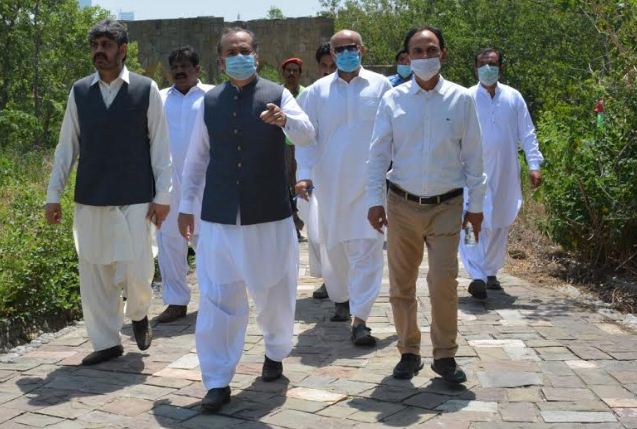
ISLAMABAD, JUN 22 – Chairman Capital Development Authority (CDA)  Amir Ali Ahmed on Wednesday visited Fatimah Jinnah (F-9) and directed for improved facilities in the park to facilitate the residents.

Park would be made a state-of-the-art facility by providing more recreational facilities and completing residual development work at the earliest, he directed.

He said that all available resources would be utilized to make F-9 park, a model park of the city, which is spread over an area of 750 acres.

He directed to authorities concerned to upgrade and uplift the development work of Park before upcoming monsoon season and removed all wild bushes and grass from walking tracks as well. He conveyed his displeasure to the DG  environment and park manager over the incompletion of work They were instructed to esnure that no developed area remained unattended with in next 48 hours failing which disciplinary action would be taken against the responsibles

Chairman CDA also directed the concerned formation to ensure proper lighting system in the park particularly along the jogging and walking tracks.

He directed to install more light poles, plantation of more shady and fruit trees in the park.

He further directed to carry out trimming of existing trees and removal of wild bushes to improve the general look of the park.

He also directed to make the green restaurant of Park functional and tender should be issued soon adding that civic body is committed to provide all basic facilities to its citizens.

COUNTERING ISLAMOPHOBIA THROUGH SCIENCE COMMUNICATION

Dr M Ali Hamza

Islamophobia is the fear and hatred of, or prejudice against the religion of Islam or Muslims in general. Especially when seen as a geopolitical force or the source of terrorism.Firstly groups comprise of Christain-Jewish-Hindu-Budhists and white supremacists, who propagate Islamophobia are themselves meeting non-sense extremity. But this is what they are supposed to do, and blaming them will do no good to Islam.

We have to openly admit that some Islamic factions are damaging the reputation of the entire religion i.e. ISIS and other violent Muslim groups. It is pretty obvious that these violent entities that are camouflaged in Islamic fabric have been funded with a purpose to mislead the Muslim masses and the world. Therefore besides reiterating that ‘Islam is a religion of Peace’ we need to figure out ways to rebuild the entire image of Islam. Here is a way.

Rationally speaking, religious terrorism is an outcome of religious extremism, and religious extremism is a direct product of anti-scientific mind. Let us ground this thought. A scientific mind is one that carries inductive or deductive scientific reasoning.  Scientific reasoning is an ability to think about many variables or dimensions at the same time oranability to think in terms of probabilities and proportions. Such way to approach life and all its tentacles bring profundity. This consolation of scientific reasoning can never let such a person gonarrow-minded and turn into extremist or terrorist.

This rationale fits to entire history. Wherever and whenever scientific struggles are rendered, the clerics call upon such inquisitive exploration a devilish and satanic act, and instigated masses, flared them up and terror prevailed. The example of Italian scientific philosopher Giordano Bruno is undeniable fact. When Bruno shared a possibility of Sun being in the center of our solar system and earth might not be a pivotal point in the universe;by the order of church, he was burnt alive.

The people of that time were OK with the barbarianism of the church because masses were kept away from scientific reasoning. Nicolaus Copernicus avoided publishing his great work due to the pressure of non-scientific society. He formulated a ‘Heliocentric’ model of the universe that placed the Sun rather than Earth at its center. Over his death bed he raised his master piece book ‘De revolutionists’ that opened up possibilities for the birth of today’s satellite networks.

Galileo Galileiproved through his first ever long range telescope that the moon is not all that sweet. It was again a proof againstthe church, who bragged about heavenly bodies a lot. ThusGalileo was kept in house-prison and died there. Masses kept quiet: though the church was harvesting fear and hatred of, or prejudice against the Christianity but it was acceptable by the followers because they were blind folded with the prejudice against scientific reasoning.

Yes, this is reference from the dark ages in Europe.

During those dark ages in Europe, a popular region for scientificdevelopment was Arab and Persia dominated by Muslims. Those scientific developments were occurring almost in every field, from mathematics, chemistry, physics, engineering, medicine, neuroscience, to psychology, economics, sociology, geography, earth sciences, astronomy, and philosophy.

Some great minds of those times include Al-Battani who improved existing values for the length of the year and of the seasons, IbnSinawho significantly contributed to Aristotelian philosophy and medicine, Ibn Battuta;a scholarly traveler who wrote one of the most famous travel books in history‘the Rihlah’, IbnRushdwho produced a series of summaries and commentaries on most of Aristotle’s works and on Plato’s Republic, Musa Al-Khwarizmi; one who  introduced Hindu-Arabic numerals and the concepts of algebra into European mathematics, Omar Khayyam; aPersian mathematician, astronomer, and poet, ThabitIbnQurra; the founder of statics, Abu Bakr Al-Razi ;one of the greatest physicians in history, Jabir IbnHaiyanknown for his highly influential works on alchemy and metallurgy, IbnIshaq Al-Kindi who stands among thefirst muslim‘peripatetic philosophers’, IbnAl-Haythem contributed to principles of optics and the use of scientific experiments, IbnZuhr is known for his immense work onTherapeutics and Diet,IbnKhuldunwho developed one of the earliest nonreligious philosophies of history and the list goes on and on.Those all wonderful people are considered as one of the forerunners of modern way of thinking in science and technology.

 Those were Muslims belonged to the same religion Islam, but were respected and honored due to their diligence of wisdom. Todays’ Islam is distorted by anti-scientific minds, and we have to admit that we are in dark ages. Our global impression is no more spelled out by our scientific work rather something else.

The above premises builds up the need to connect Muslim societies with science, and that is what science communication does. Science communication must be on the top agenda for rebuilding image of Islam. We have to invest our resources; will, energies, finances, to encourage our masses toward scientific reasoning. Only uttering out words won’t make a difference.

Therefore  Besides relying on developing alliances with Christians, Buddhists, atheists, Hindus, Jews and others who believe in the sanctity of life and who are willing to confront their owns to seek dignity for every human being. There is another way and that is of Science Communication.

The writer is a columnist and broadcast journalist. He can be reached at  [email protected]

ICCI SLAMS UNPRECEDENTED HIKE IN TAXES ON FLOUR MILLERS

DNA

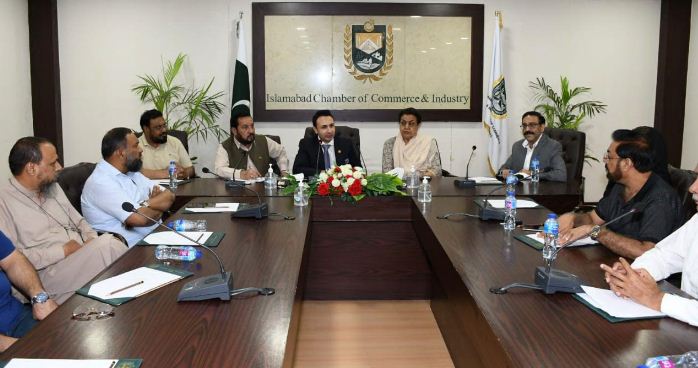
ISLAMABAD, JUN 23 – The business community in a meeting at Islamabad Chamber of Commerce & Industry (ICCI) has expressed great concerns over the 400 percent hike in tax rates on the turnover of flour mills and called upon the government to immediately withdraw this unprecedented hike to save the common man from a new wave of food inflation and flour shortage.

 Addressing the meeting, Sardar Yasir Ilyas Khan, President, Islamabad Chamber of Commerce & Industry said that wheat flour was the staple food for majority of population in Pakistan and an essential part of their daily diet, but exorbitant in the income tax rate on the turnover of flour mills from 0.25 percent to 1.25 percent in one go would make significant increase in the price of flour and push it out of the reach of common man making his life more miserable. He feared the unprecedented increase in tax on flour mills would make the flour more expensive for the common man consuming a larger share of his income due to which it would become very difficult for him to meet the basic needs of his life.

 Sardar Yasir Ilyas Khan said that the Covid-19 pandemic has already rendered many workers jobless, reducing income of many families and in these circumstances raising tax rates on flour sector would create multiple problems, especially for the low income segments of the society. He demanded that the government should immediately withdraw the unjustified hike in tax rates on flour mills, otherwise, the people would face food insecurity leading to unpredicted consequences for them. He also slammed the decision of imposing 17 percent sales tax on bran through the new budget, which was abolished four years ago and added that it would also give rise to inflation resulting in restlessness among the masses.

Fatma Azim Senior Vice President and Abdul Rehman Khan Vice President ICCI said that flour was a basic need of the majority of people in Pakistan and increasing taxes on flour millers would naturally make flour costlier that would put extra burden on the low income people making it more difficult for them to bring food on the table for their family members. Therefore, they urged that the government should reconsider this unwise decision to save the people from the harmful consequences of this increase. They further said that flour millers have also threatened to go on strike against the 17 percent GST on choker and 400 percent hike in income tax on their turnover, therefore, they urged that the government should immediately withdraw 17 percent GST and restore tax to previous level of 0.25 percent to save the country from exorbitant food inflation and social unrest.

——————————

The visit of CoDF Kenya to further promote bilateral cooperation with Pakistan: Naval Chief

DNA

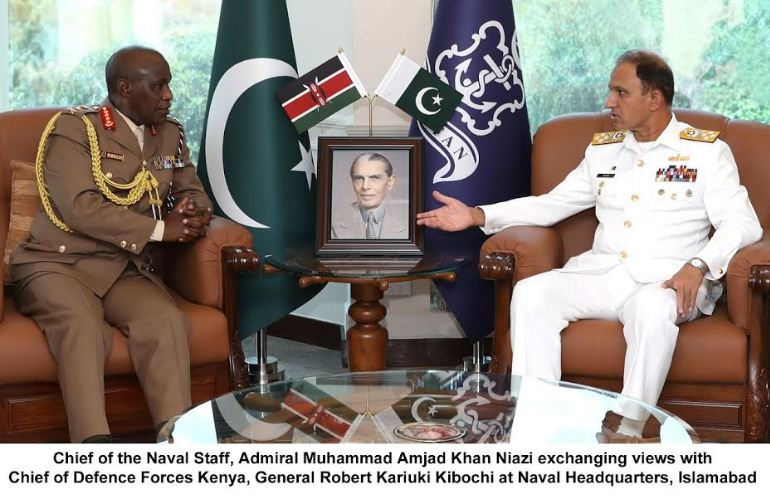
ISLAMABAD, JUN 23 – Chief of Defence Forces Kenya, General Robert Kariuki Kibochi visited Naval Headquarters, Islamabad and called on Chief of the Naval Staff, Admiral Muhammad Amjad Khan Niazi.

Upon arrival at Naval Headquarters, the visiting dignitary was received by Chief of the Naval Staff. A smartly turned out contingent of Pakistan Navy presented the Guard of Honour. Thereafter, the dignitary was introduced to the Principal Staff Officers at Naval Headquarters.

Later, General Robert Kariuki Kibochi called on Chief of the Naval Staff in his office. During the meeting, various matters of maritime security, stability and mutual interest including bilateral collaboration were discussed. Chief of the Naval Staff highlighted Pakistan’s commitment in fight against terrorism and Pakistan Navy’s contributions for ensuring maritime security and peace in the region.

The Naval Chief thanked the visiting dignitary for the hospitality afforded to Pakistan Navy Ship NASR on its recent goodwill visit to Mombasa. Both the dignitaries agreed on further enhancing mutual interactions in diversified military domains.

It is expected that the visit of Chief of Defence Forces Kenya shall further promote the existing bilateral cooperation between the two countries in general and the navies in particular.

—————

ISLAMABAD POST GETS MEMBERSHIP OF APNS

Daily Islamabad POST completed its one successful year of publication in May this year.  The newspapers got the APNS membership in minimum possible period

Staff Report

ISLAMABAD:  Daily Islamabad POST has got membership of All Pakistan Newspapers Society (DNA), which is the sole body of newspaper owners of Pakistan. The APNS is currently headed by DAWN and The News group.

Daily Islamabad POST completed its one successful year of publication in May this year.  The newspapers got the APNS membership in minimum possible period.

The newspaper management owes a great deal to the leadership of APNS and especially the readers, who have been a great source of inspiration and encouragement.

The newspaper plans to expand its network by starting editions from Lahore and Karachi as well besides increasing the number of pages. It may be mentioned here that CENTRELINE magazine, the largest circulated diplomatic magazine, is already member of the APNS and member of the APNS central executive committee as well.

Assessing the Level of Functionality of Gwadar Port till the End of the First Phase of CPEC in 2020

Dr. Maliha Zeba Khan  &  Naufil Shahrukh

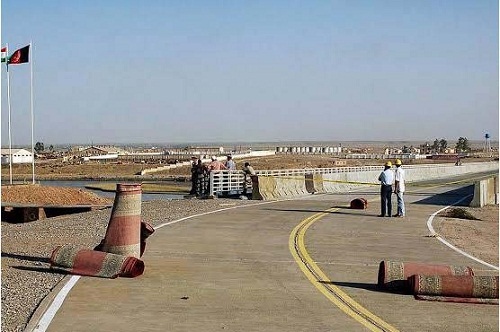
Gwadar Port, once a small fishermen village has gained much attention worldwide since 2002 when Gwadar Port was inaugurated by Wu Bangguo, the Chinese Vice-Premier. Soon after that, the port went through metamorphic development work. Especially since formal inauguration of CPEC, there have been proposed and started several development projects for Gwadar Port. But unfortunately, despite all tall claims of changing the destiny of Balochistan in particular and Pakistan in general through transforming Gwadar Port, many development projects related with the port have actually been halted at certain stages or slowed down largely causing a stir in provincial leadership and the people of Balochistan. Gwadar Port as the starting point of CPEC has emerged as the most questioned part of the project due to it coming up as not fully-functional till the end of the year 2020 which is the concluding time of phase one of CPEC.

Commercial seaports are the core resource of not only national economy; but defense and territorial security, inter and multi-model transportation conjunctions, and last but not the least by any means, the commercial diplomacy of littoral countries or island-states. Fully functional seaports are the key to extensive and sustainable economic development. Even in the modern world of technological advancements and evolving economic strategies, the port industry is a substantial national resource which can act as an employment provider/facilitator at different levels, and is trusted to run the national economy unrestricted. It is the most significant seam that abuts different transportation modes too.

Pakistan is a country blessed with a naturally deep sea across its coastline by and large. The country has three ports currently, Karachi Port and Port Qasim which are fully functional, though not as per their full capacity individually, mainly as feeder ports but have been used as transit ports too; whereas Gwadar Port is the third deep sea port of Pakistan which is considered a transit port that has not yet been able to function fully. The partial operational capacity is believed to be mere ceremonial due to some serious flaws in the policy making and preferences, and value chain which need to be identified for determining the reasons of poor or slow functioning of Gwadar Port.

Gwadar Port is the one which is key port to CPEC. Since April 2015 when CPEC was inaugurated, there have been surfacing many questions regarding pace and success or failure of CPEC and its related projects by political parties, provincial governments, and the people of Balochistan and other provinces from where these routes have to pass through as part of the main corridor. If the reasons for Gwadar Port’s poor operational capabilities are to be discussed, the argument can be established in the four aspects as per substantive analysis, i.e., technical, political, socioeconomic, and security.

The technical aspect includes a number of reasons like inadequate value chain due to lack of visionary approach; tunnel vision about intermodal and multimodal transportation and its link with port structure and related infrastructure; lack of advanced mechanized setup for customs clearance of the cargo particularly due to no or slow internet; and no spending on the port development under CPEC. Therefore, the fundamental requirements for basic port structure like construction of more berths and another breakwater as per plan, and even dredging of the previously constructed berths could not be done in these years. Now the draft has decreased significantly by 11 meters from 14 meters and if dredging would further be delayed, that could harm the ships reaching at the berths. The tender/bid for both projects was processed in September 2020 but the project has not been started as yet. Likewise, Gwadar Port is yet to see active liquid and dry terminals. This is affecting the value chain badly as even after many years the port has not become fully functional. Another issue affecting the value chain is a lack of modern-day transportation based on intermodal/multimodal connectivity, i.e., containerized shipping, port terminals, road and railroad links for connectivity with hinterland terminals which are important for transit trade, and airports. So far, Gwadar city has one airport with limited operational capability, but the road and rail infrastructure supporting intermodal transport has not yet been established fully. On the other hand, the project of Eastbay Expressway has not yet been completed leaving a big question mark at the infrastructure building of Gwadar Port. Other connecting roads like the one connecting Turbat to the coastal highway is still far behind from completion, and due to being late start, it could not be fetching the benefits of early harvest of CPEC.

The political reasons behind stalled progress of Gwadar Port are complex. There seems a lack of political will to work on development plans under CPEC for which Gwadar Port carries the status of gateway. Notwithstanding the vociferous political statements by the previous government/s, Gwadar port in particular and Balochistan in general have not been given their rightful share of the projects. Despite Gwadar being the initiating point of CPEC which is a development project worth billions of dollars, no project has been designed for it even after five years. The financial volume of CPEC is more than $50 billion but Balochsitan’s share in this is merely 1%, which depicts the behavior of the quarters concerned towards Gwadar and Balochsitan. The first phase (2015-2020) of CPEC was based on development of road infrastructure and other communication networks that work as enablers for later phases of the project, but Gwadar remained deprived of such projects as well. Even political input from Balochistan was not included till 2018. The issue of polarization too seems getting strong significantly, and the divide and political differences present within the society are making things grave; whereas the bureaucracies there too are making things difficult to handle. There are issues of inefficient working of some of the bureaucratic offices which is a major discouraging factor for smooth running of development projects. Even the officials about whom that had been decided mutually by federal and provincial governments to be sitting in sub-offices at Gwadar for four months to facilitate the smooth execution of CPEC projects including Gwadar Port and its ancillary facilities are not found sitting in these sub-offices showing nonseriousness towards the commitment. Politically motivated priorities of the previous government have directed/influenced CPEC’s first phase mainly towards energy projects to overcome power shortages in the industrial zones of other regions instead of Gwadar Port.

The socioeconomic reasons are one of the most ignored areas which have been causing mutual distrust and polarization within society. Despite the fact that people are the core focus of all policies, planning for Gwadar Port as well as CPEC appears to have not been focused on the local population and their concerns, and ground realities due to which Balochistan felt ignored in the policy making. The people of Balochistan, especially from the coastline, find themselves in disconnect from the process of policy decision-making. Intrinsically, these areas have been underdeveloped. The communities living in Balochistan belong to different ethnicities with certain mindsets, ideologies and customs. The policies meant for these areas need to be structured by keeping their grievances and concerns in view, and to make them feel part of the decision making process, thus giving them a sense of inclusiveness. It was for the first time in 2019 when the federal government made the provincial government a direct part of policymaking and valued their feedback and input, but it will take time to repair the damage done to the mutual trust levels. The socioeconomic grievance which later transform into political extremes can be mitigated through speedy work on SEZs and establishing industries to make them direct beneficiary as well as stakeholder to the development projects.

Last but not least are the security reasons which have hindered functioning of Gwadar Port since its establishment in the year 2002; and then inauguration of CPEC in 2015 has brought a new wave of security challenges to the region. The threats and even attempts to attack these development projects by declaring them unjust for Baloch people have become a serious concern for the state agencies. There has been a number of reasons behind these increased security concerns including involvement of other regional actors with certain agendas like destabilizing Balochistan to halt the progress under different political or socioeconomic plans. In some of the cases, the external actors do utilize natives with certain inclinations and fund them to create law and order situation in the region. This is resulting in precarious conditions for the development projects undergoing in different areas of Balochistan. The security concerns are the most discouraging factor to deter potential international investors and need to be resolved as primary requirement along with provision of utilities like electricity, potable water, gas, and stable high speed internet connectivity, and social services like health, education, and waste management.

A multipronged coherent approach to deal with the delays in the development work is the only key to get benefits from Gwadar Port and CPEC and to enter into the second phase of CPEC which will start focusing on business to business and people to people contacts and establishment of businesses and entrepreneurships.

[1]Dr. Maliha Zeba Khan is working as assistant professor at Department of International Relations of National University of Modern Languages (NUML), Islamabad. Her areas of expertise are maritime affairs and politics, and Blue Economy. She is also a Non-Resident Research Fellow (NRF) for maritime policy studies at the Institute of Policy Studies (IPS), Islamabad.

[2] Naufil Shahrukh is general manager (operations) at the Institute of Policy Studies (IPS) and secretary-general of Maritime Study Forum (MSF), Islamabad. He is a published researcher on the perceptions of coastal communities of Balochistan vis-à-vis CPEC. Shahrukh is also a former journalist and communications professional.

Terrorism has no religion

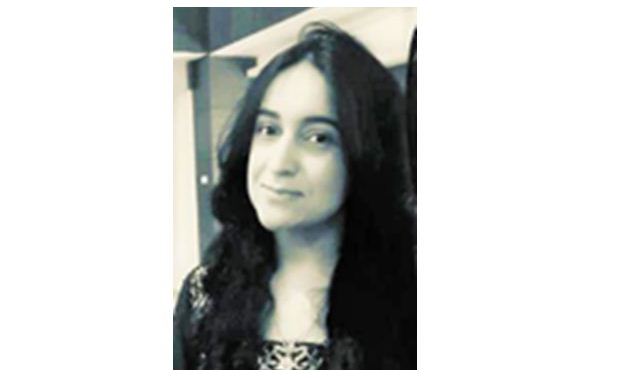
Wajeeha Bilal

Growing up and high with the passage of time, we develop a powerful sense of who we are and where we have come from. Our memories are built with impressionable stories from childhood, that huff and puff in our brains and are never forgotten.The human mind has an incredible and voracious desire to understand one’s ideology through its past. History of religion and culture have long played a role in understanding our individual differences and collective similarities. At the same time, our existence with other cultures and religions, challenges pretty much every preconceived notion of our cultural and religious superiority. The world is a canvas of different religions and their influences, which is big enough for everyone, yet some people feel threatened by the idea of coexisting with those whom they do not understand. This can lead to a sense of fear amongst a few that goes on to develop the basis of excluding others and an extremist attitude in any society.

People are not born extremists; humans are just people who all want to be valued and respected. There are many reasons that could be causing an excuse for a hateful outlet. The biggest reason for an extremist attitude cultivates through an extremist ideology that spurs the idea of us AGAINST others. It develops between two races or religions either because one feels superior to or victimized by the other. This type of emotion breeds fear and insecurities that results in an offensive behavior. Another major reason that develops an extremist attitude is politics and poverty when people are frustrated by injustice and discrimination. Biases develop due to fraudulent governments and inequal rights of citizens. Whatever the reason, extremist minds are tuned by frustrated messages that look for excuses to develop hate.

In an exclusive interview with CBC’s political correspondent Rosemary Barton, our Prime Minister, discussed Islamophobia and called on the Western countries to take strict actions against hate crimes towards the Muslim community. He had stressed that terrorism has no religionas extremists are found in every society. The prime minister said the use of the term “Islamic radicals” indicates there is something wrong with the religion which makes people radical, and the Muslims have suffered due to Islamophobia, he called for closing the gap by improving understanding; ‘Islamophobia needs to be countered holistically’.

In fact, terrorism and extremism have no religion, race, or culture. Humanity is one race that descended from the same ancestors so what is it that has turned them against each other over time. All the atrocious developments make us wonder if we could ever go back in time and erase the moment or the events that lead to the rising of hate in humanity. Despite its global connection and advancement in technology there is a global platform for the execution of extremist ideology. The whole world is connected virtually through the network of technology bridging the physical gaps through planes yet there is a vast emptiness and loneliness that people experience around others. This strange, isolated existence marks the reality of the present world, people feel helpless and angry with life in general and others in particular. The message of hate that was found in cultural and historical teachings of the societies is now visible on social media and global platforms. Everyone feels the need to do something, but they are not able to understand what. This gap between emotional and perceived differences can only be solved through a change in education.  This does not mean the compromise of education rather a change of its message. What does it mean to live with so many people in this world- we all need to look back on the historical idea of why so many races have come to exist here?  You have come to follow a tradition or religion merely because you were born into it. The miracle of human birth is more than just an accident when this life is used to make a difference. You are the most advanced species and being in a position of power you have the duty to elevate your fellow beings. Respect for others is that one bridge that serves strangers in foreign lands; this is the kind of education that is bound to leave a deep impact in one’s life.

The essence of life is not that one race survives on the ashes of the other, but its essence is that we are all together here. Our history has always revealed the differences of human culture, religion, and behavior, yet each human is individually unique. What it genuinely wants us to understand is the gift of life, that we have come to share here in our own way. Each of our experiences of life is unique in its own way.

 Our ideology serves the purpose of dignifying our unique entity and our co-existence teaches us to value this uniqueness. With this message we learn where our place in this world is, which is in alliance with the lives of others. It is our center of the world that we choose to share with others through our words and actions. In the end we all have come to inherit this fabulous legacy of unique behavior and identity. It is embedded in our very existence that we call humanity, despite all differences. We may not be able to wipe out all the hateful differences but what we can do is give our own message of hope and unity in our own unique way so that no one cares how many racial and religious differences have developed over time.

(Wajeeha is the author of “The Conscious Ego”, “The Beautiful Present”)

Country’s exports witnessing growth as result of incentives given by Govt, NA told

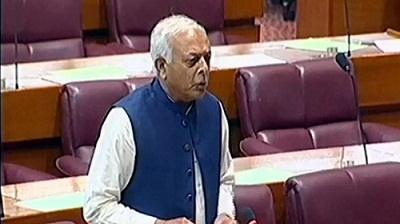
Islamabad : Minister for Aviation Ghulam Sarwar Khan has said the country’s exports are witnessing growth as a result of incentives given by the government to the export oriented industries.

Participating in the budget debate in the National Assembly on Wednesday, he said our remittances are also touching twenty eight billion dollars. He said as the country is heading towards economic growth, its benefit will ultimately reach all the people.

The Minister for Aviation said the agriculture sector was neglected by the previous governments. He said we enhanced the wheat support price to eighteen hundred rupees per forty kilogram which will benefit the farmers.

Ghulam Sarwar Khan said the Ring Road project was the need of Rawalpindi but the previous governments did not pay any attention to its construction. He said the PTI government will complete this important project in its tenure. 

The Minister for Aviation also criticized the confrontation politics of the opposition parties saying they are responsible for pandemonium and hooliganism in the house.

Participating in the debate, Mehar Ghulam Muhammad Lali emphasized the need for research in the agriculture sector in order to bolster its productivity. He said subsidy should be given to the farmers to install solar tube wells. He said tax exemption should be given for import of agri related machinery.

Shahid Khaqan Abbasi said the budget carries no relief for the poor people. He said given the current price hike, ten percent ad hoc relief announced in the budget for public sector employees is not sufficient.

PSL 2021 Eliminator 2: Peshawar Zalmi reach final after beating Islamabad United by 8 wickets

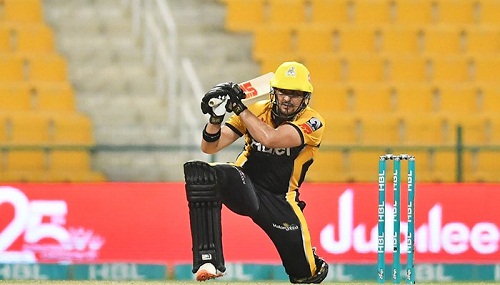
Peshawar Zalmi on Tuesday successfully chased the 175-run target set by Islamabad United, beating them by 8 wickets to reach the final of the Pakistan Super League’s sixth edition, courtesy of the impressive batting by Hazratullah Zazai (66) and Jono Wells (55).

The Zalmi — who have reached the final for the fourth time — will now face Multan Sultans on June 24 at Abu Dhabi’s Sheikh Zayed Cricket Stadium.

Zalmi put the United to bat first, who scored 174 for the loss of nine wickets and set a 175-run target for the Wahab Riaz-led side.

Hasan Ali’s start with the ball was not as effective as his batting in the first innings — where he hit 45 off 16 balls. The pacer gave away a total of 15 runs, including six extras, in the first over. However, he wrapped it up on a positive note by dismissing Kamran Akmal (8) in the last ball.

Mohammad Wasim was finally able to give a breakthrough to the United as he dismissed Zazai (66) in the 15th over, breaking the 126-run partnership between the Afghan batter and Wells (55).

Shoaib Malik (32), who came to the crease after Zazai was dismissed, hit three consecutive fours in the 17th over to end the match on a high and take his team to the finals.

Islamabad United’s innings

Islamabad United handed a 175-run target to the Peshawar Zalmi.

Usman Khawaja went for a duck, Colin Munro scored 44, Muhammad Akhlaq 7, Brandon King 18, Iftikhar Ahmed 10, Shadab Khan 15, Asif Ali 8, Faheem Ashraf 1, Hasan Ali 45, and Mohammad Wasim remained not out for 17 not out.

Skipper Riaz and Umaid Asif got two wickets each, while Amad Butt, Mohammad Irfan, and Mohammad Imran were able to pick up one wicket each.

Shoaib Malik’s delivery in the first over to Colin Munro saw in the unfortunate dismissal of Khawaja (0) who was run out when the batsman smashed it down to Malik and the veteran all-rounder’s shoelace touched the ball and hit the non-striker’s end, helping his team get the first, and important breakthrough.

In the second over, pacer Imran had Akhlaq (7) caught behind, as the batsman attempted to hit it over fine leg, giving wicketkeeper Kamran Akmal an easy catch.

To end the powerplay in style, Munro (44), in the sixth over, hit 19 runs — three fours, one six, and a run — to Asif to bring his team back in the game and shift the pressure back on to Zalmi.

In the eighth over, Malik dropped the catch of Brandon King, but Butt did not give up and dismissed the West Indies batsman for 18 in the last ball of the over, with a comfortable catch by Asif.

Akmal dropped an important catch of Munro in the ninth over — which according to commentator Ramiz Raja was tantamount to dropping half of the match — but three balls after, he took the much-needed catch, and Irfan had New Zealand batter caught behind for 44 runs.

Pacer Irfan started struggling due to what appeared to be an injury on his foot after completing four overs for 21. The umpires seemed unsatisfied with the explanation, and the Zalmi were a fielder down.

Iftikhar (10) was dismissed in the 13th over after he nicked the ball and got caught behind — giving the Zalmi captain Riaz his first wicket.

Asif, in the 15th over, bowled a short ball with extra bounce to Shadab Khan (15), who nicked the ball and sent it safely into the wicketkeeper’s hands.

In the same over, Asif was able to get an important wicket of Ali (8), with an impressive catch by the Sherfane Rutherford, just yards away from the ropes.

The umpires, in the 15th over, allowed Zalmi to replace Irfan with a substitute after they were satisfied that he was injured.

Riaz took the eighth wicket for his team after he dismissed Ashraf (1).

To take some pressure off the United, Ali smashed 21 runs — two fours, two sixes, and a run — to Asif in the 17th over. The over raked in 22 runs.

Ali was able to turn things around for the United, as he took Zalmi’s skipper to the sweepers by hitting 18 runs in the 19th over.

Despite 16 runs coming from the last over of the match, the Zalmi were able to dismiss Ali for 45 runs.

Playing XI:

Peshawar Zalmi: Kamran Akmal (wk), Hazratullah Zazai, Jono Wells, Shoaib Malik, Rovman Powell, Sherfane Rutherford, Ahmad Butt, Wahab Riaz (captain), Umaid Asif, Mohammad Irfan, Mohammad Imran

Islamabad United: Usman Khawaja, Colin Munro, Muhammad Akhlaq (wk), Shadab Khan (captain), Brandon King, Asif Ali, Iftikhar Ahmed, Faheem Ashraf, Hasan Ali, Muhammad Wasim Jnr, Akif Javed

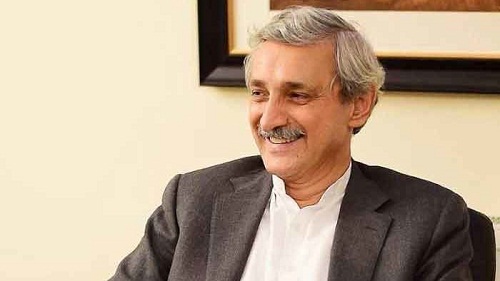
FBR refrained from taking action against sugar mills of Jahangir Tareen

LAHORE : Lahore High Court (LHC) on Wednesday issued notice to the FBR in a plea filed from sugar mills of PTI leader Jahangir Tareen and directed the tax body to refrain from taking any action against them.

The case filed before the LHC was heard by Justice Shams Mehmood Mirza as the applicant pleaded before the court that the FBR had sent illegal notices to them, violating article 10-A.

The counsel representing the sugar mills of Jahangir Tareen asked the court to annul the FBR notices.

The LHC sent the matter to the FBR and directed them to take any decision after considering the response from the mills. “No action should be taken against the applicant until a decision is reached,” the court remarked.

It is pertinent to mention here that PM Imran Khan clearly conveyed that Jahangir Tareen would have to face inquires after a group of lawmakers called on him on April 27.

The meeting between the two sides held at the Prime Minister Office (PMO), where the Tareen-led group of lawmakers conveyed their reservations regarding cases against Jahangir Tareen.

According to sources, PM told lawmakers that he will not come under any pressure and cleared Tareen has to face trial if found guilty in the sugar scandal.

“I assure you that justice will be served, PM told Tareen-led group of lawmakers.

The sources further claimed that PTI leaders of Jahangir Tareen’s like-minded group also demanded of the prime minister to remove SAPM on Accountability Shahzad Akbar from the post, which PM rejected.

“I am satisfied with the performance of Shahzad Akbar,” said PM in the meeting and asked lawmakers to bring evidence against Akbar if they have.

Stay Connected

64FansLike
60FollowersFollow

Latest Reviews

Exchange Rates

USD - United States Dollar
EUR
1.14
GBP
1.34
AUD
0.70
CAD
0.71