BAKU, Feb 4 – On February 3, a roundtable on “Assessment of hearing in newborns and its clinical significance” was co-organized by the Scientific-Practical and Educational Center of the Medical Service Department of the State Customs Committee, the Central Customs Hospital, and the British-Azerbaijani Association of Doctors and Dentists.
The event brought together highly qualified otorhinolaryngologists, pediatricians, and residents from various public and private medical institutions. Opening remarks were delivered by the Deputy Head of the Medical Service Department of the State Customs Committee, PhD in Medicine, Associate Professor Ismayil Afandiyev; the Head and Chief Physician of the Central Customs Hospital, Bakhtiyar Musayev; and the obstetrician-gynecologist of Birmingham Women’s and Children’s Hospital, Chair of the British-Azerbaijani Association of Doctors and Dentists, PhD in Medicine Fidan Israfil-Bayli.
In his welcoming speech, Associate Professor Ismayil Afandiyev emphasized that interdisciplinary discussions conducted within the framework of international cooperation play a crucial role in the professional development of healthcare specialists. He also informed participants about the continuing medical education activities implemented by the Medical Service Department and outlined future goals in this area.
During the official opening session, Bakhtiyar Musayev highlighted the relevance of the topic and spoke about the importance of studying and applying international best practices in the field. He also noted that the memorandum of understanding signed between the parties provides a solid foundation for future cooperation and joint initiatives.
Joining the event online via the Zoom platform, Fidan Israfil-Bayli spoke about the significance of the memorandum signed between the British-Azerbaijani Association of Doctors and Dentists and the Central Customs Hospital, stressing that the document creates new opportunities for international collaboration and exchange of experience. She particularly emphasized that this roundtable was the first event held within the framework of the memorandum and encouraged participants to take an active part in the discussions.
The roundtable continued under the moderation of the Deputy Head of the Central Customs Hospital, Nahida Mahmudova, and otorhinolaryngologist Elvin Azizov. A comprehensive presentation on “Assessment of Hearing in Newborns and Its Clinical Significance” was delivered by Natavan Ramazanzade, an otorhinolaryngologist at Lister Hospital of the East & North Hertfordshire Teaching NHS Trust.
The presentation highlighted that hearing assessment in newborns is of great importance for the early detection of various pathologies and for ensuring healthy child development. It was noted that hearing screening conducted in the first days of life enables the timely identification of possible disorders and, through early medical intervention, supports the normal development of speech and communication skills. The implementation of systematic screening programs was also emphasized as a key factor in preventing future social and developmental problems.
For more information about our services call 012 404 08 08 or visit our Facebook or
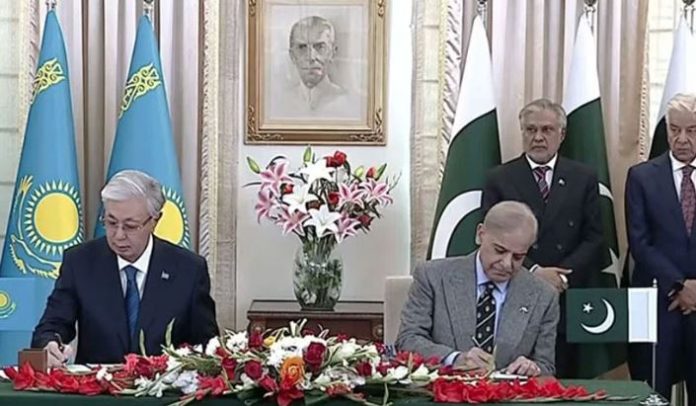
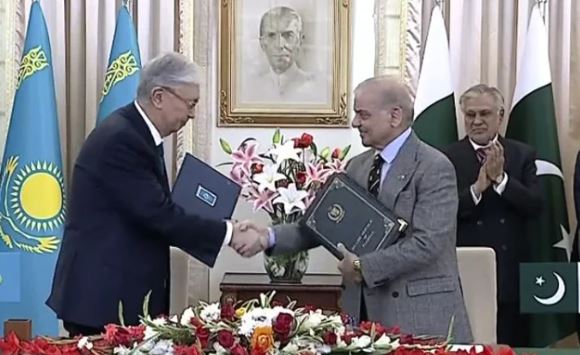
ISLAMABAD, FEB 4: Pakistan and Kazakhstan have taken a major step to strengthen bilateral relations, signing 37 memorandums of understanding (MoUs) and agreements covering trade, investment, infrastructure, and cultural cooperation.
The historic event marked the first visit to Pakistan by a Kazakh president in 23 years.Kazakhstan’s President Kassym-Jomart Tokayev was warmly received at the Prime Minister’s House in Islamabad by Prime Minister Shehbaz Sharif.
The national anthems of both countries were played, and a decorated contingent presented a guard of honor to the distinguished guest. The leaders exchanged pleasantries before beginning official talks and the signing ceremony.
Focus on trade, investment, and connectivity
Addressing the ceremony, Prime Minister Shehbaz Sharif said President Tokayev’s visit is a source of joy for the nation and government. He congratulated the Kazakh leader on being awarded the Nishan-e-Pakistan, noting it reflects Pakistan’s appreciation for his leadership.
The Prime Minister highlighted that although Kazakhstan is rich in mineral resources, bilateral trade with Pakistan remains low. He expressed his determination to increase trade between the two countries to $1 billion by next year. “Pakistan considers Kazakhstan its strategic partner, and we are keen to enhance cooperation in trade, culture, education, and regional connectivity,” he added.
President Tokayev emphasized that Pakistan is a reliable and important partner in South Asia, praising the centuries-old relations between the two countries and the shared vision for future cooperation. He lauded Prime Minister Shehbaz Sharif as a visionary leader who has strengthened Pakistan’s regional and international influence.
Agreements signed across key sectors
The two leaders signed a joint declaration and exchanged agreements covering multiple sectors. These included:
Transit trade and port utilization agreements
MoU on railway sector cooperation
Agreements on plant protection and veterinary sectors
Mining and petroleum cooperation
UN peacekeeping collaboration
Exchange of prisoners
Maritime sector cooperation
The Prime Minister stressed that the implementation of these MoUs will boost economic, cultural, and strategic cooperation between Pakistan and Kazakhstan. Both leaders reaffirmed their commitment to achieving shared goals through joint efforts.During his speech, President Tokayev acknowledged Pakistan’s efforts to promote peace and stability in the region. He highlighted the countries’ shared values and traditions and praised Pakistan’s progress in defense and regional diplomacy. Prime Minister Shehbaz Sharif also reiterated Pakistan’s commitment to peace, particularly in Gaza, expressing hopes for lasting stability and reconstruction.
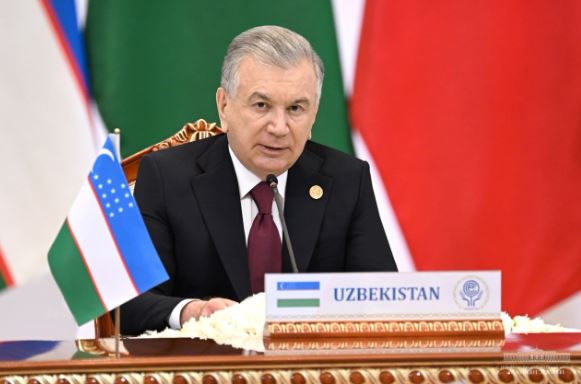
ISLAMABAD, FEB 4 /DNA/ – At the invitation of Prime Minister Muhammad Shehbaz Sharif, President of the Republic of Uzbekistan H.E. Shavkat Mirziyoyev will lead a high-level delegation, comprising senior Cabinet Ministers and business leaders, for his State visit to Pakistan on 05-06 February 2026.
During his stay, the Uzbek President would meet the President, hold delegation-level talks with Prime Minister, and address the Pakistan-Uzbekistan Business Forum.
Discussions will focus on reviewing the entire gamut of bilateral relations and identifying new avenues to further deepen cooperation in diverse sectors including trade, energy, defence, education, people-to-people exchange and regional connectivity.
This is the second visit of H.E. Shavkat Mirziyoyev to Pakistan which reflects the upward trajectory in Pak-Uzbek bilateral relations and the brotherly ties between the two brotherly countries, rooted in common history, faith and common aspirations for peace and prosperity in Central and South Asia.
Future of any country lies in the destiny of its youth. There are few nations which have youngest population. Uzbekistan also has on the youngest populations in the world. Out of total 38 million, one million people enters into the adulthood every year, bringing with them new hopes, creativity, and ideas. Uzbekistan is on the right path to transform this strength into the powerful engine of national progress. On the directives of the President of Uzbekistan, Mr. Shavkat Mirzioyev, a substantial chunk of annual budget is spent on the youth development. For this purpose, education and sports have been given immense importance in state’s policy.
These policies have resulted in the global recognition of Uzbek players particularly in the fields of soccer, athletics, chess, wrestling, and many more. Uzbekistan’s soccer team has qualified for the FIFA World Cup for the first time. This is a marvelous achievement, which other Central Asian counterparts are still awaiting. Another important area which has been given prime importance in state’s policy is the digitilisation and technological innovations in an age of Artificial Intelligence.
Uzbekistan is constantly increasing its annual budget for educational reforms. Modernization of school infrastructure, with availability of state of the art modern laboratories alongwith availability of high tech computers and fast internet connectivity, has been prioritized. To achieve the ultimate objective of economically productive and socially responsible students, a new educational architecture is being materialised at all the levels. It has integrated the schools, colleges, and universities into a single eco system.
Students at 9th grade are assessed and according to their aptitude and interests, they are either sent to the traditional educational system or modernized technical education. In order to facilitate students in technical colleges and universities, a process of upgradation has been started. From 2026, every year, around one hundred technical and vocational institutes will be renovated and modernized with the help of international partners especially, European states, USA, and China.
Under the new youth policy, students and young people are encouraged for startups and entrepreneurship. For the startups and incubation, they are provided interest free loans in this regard as well. The Policy also integrates theory with practice by providing the students with paid internship opportunities. Besides teaching in the classes, the students have to complete internships in the relevant industry for practical knowledge and gaining skills.
Recently, Uzbek government has permitted to open the private universities. It has resulted into the establishment of few good private universities. Moreover, under the educational policy, foreign universities from selected countries have also been allowed to open their campuses in Uzbekistan. Currently there are few British and Russian universities educating the young people of Uzbekistan. In order to equip Uzbek youth with international learning, dedicated foreign languages universities have been established.
Besides education, promotion of sports and culture are other domains where state is investing a lot. Reading and research culture is being enhanced through multiple methods. Mahallah (neighborhood) structure is vital for the preservation and promotion of culture and sports activities. Young people are provided with space in this structure to learn solidarity, mutual respect, and civic engagement.
As a frequent visitor to Uzbekistan, I personally have seen dreams, hope, and urge for a brighter future in the eyes of Uzbek youth. Their social behavior is matchless. Under state initiatives, they have been groomed in a way where will not only be productive citizens but good human beings as well. Whenever, visitors pass through mahallahs, young people will greet you with Assalam-o-Alykum, and elders will offer you chai (tea) and Plov. This friendly behavior reflects the great Uzbek hospitality.
Investing in youth and education is not an expense; it is the most reliable investment in national security, economic growth, and social stability. A country that educates its youth well does not fear the future—it shapes it.
Adam Saud, Professor of International Relations at Bahria University, Islamabad, Pakistan.
LAHORE, FEB 4 (DNA) – The Embassy of France in Pakistan, the Alliance Française de Lahore, and the Honorary Consulate of France in Lahore are pleased to announce a distinguished French delegation at the 14th Lahore Literary Festival (LLF). The delegation brings together voices from literature, human rights, and cultural heritage.
It includes Irène Frain, the famous best-selling novelist and historian; Isabelle Rome, France’s Ambassador for Human Rights; and Nicolas Engel, Head Curator for Pakistan and Afghanistan collections at the National Museum of Asian Arts – Guimet in Paris, one of France’s foremost institutions for Asian art.
Since 2013, France has maintained a long-standing and active engagement with the Lahore Literary Festival, reflecting a shared commitment to intellectual dialogue, cultural diversity, and freedom of expression. Each year, the Embassy of France, the Alliance Française, and their partners have invited French authors, thinkers, scholars, and cultural figures to participate in the festival, contributing perspectives rooted in literature, history, philosophy, and the social sciences.
This sustained presence is driven by a conviction that dialogue between cultures and languages is essential to understanding the contemporary world.
Through the LLF, France seeks to foster exchanges that offer alternative intellectual traditions and critical approaches, enriching global conversations, promoting cultural diversity, and reaffirming the value of plural, nuanced, and human-centred ways of thinking.
These engagements underscore France’s constant commitment to dialogue, cultural exchange, human rights, gender equality, and shared heritage.
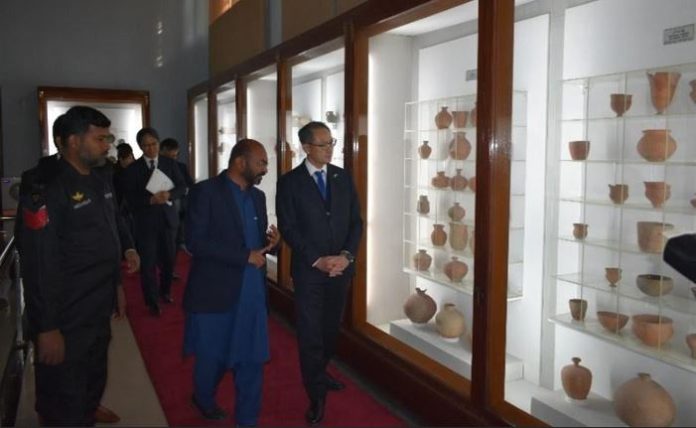
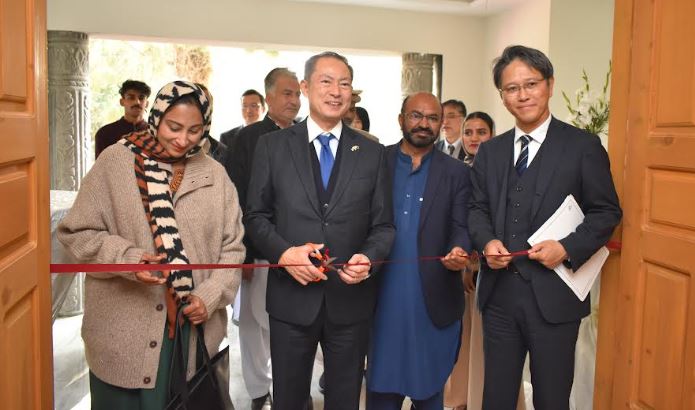
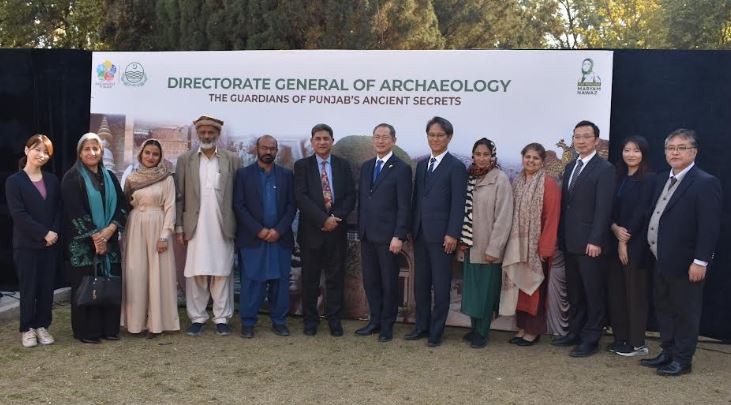
ISLAMABAD, FEB 4 /DNA/ – The Government of Japan, through the Japan International Cooperation Agency (JICA), has successfully completed the provision of exhibition and conservation equipment to the Taxila Museum under the Grant Assistance project titled “Improvement of Equipment for Exhibition and Conservation of the Taxila Museum.” The assistance, amounting to 48.8 million Japanese Yen, reflects Japan’s continued commitment to the preservation of cultural heritage in Pakistan.
On this occasion, Ambassador Akamatsu Shuichi underscored the historical and spiritual importance of Taxila as the centre of Gandhara civilization and highlighted its close cultural connection with Japan. He expressed hope that this initiative will open doors for further collaboration, including archaeological projects, and emphasised that Japan would like to continue efforts in line with the vision of Dr. Satoshi Naiki, a professor at Aichi Prefectural University and an expert on Gandhara civilization, to revive archaeological missions in Pakistan to discover, preserve, and promote Gandhara heritage.
On behalf of Mr. Zaheer, Director General of Archaeology, Government of Punjab, Mr. Maqsood Ahmed Malik Chief Conservationist Punjab Archaeology, conveyed sincere appreciation to the Government of Japan and JICA for their generous assistance. He stated that the newly provided equipment will enhance the museum’s capacity for modern exhibition, scientific conservation, and long-term preservation of valuable artefacts, while also supporting academic research and public education.
Mr. Miyata, Chief of JICA Pakistan Office, emphasized that museums play a vital role in preserving cultural heritage and promoting mutual understanding among nations. He expressed confidence that the project will contribute to improved conservation standards, cultural tourism, and sustainable heritage management.
The handover ceremony reaffirmed the strong and enduring partnership between Japan and Pakistan and their shared commitment to promoting cultural cooperation, heritage conservation, and people-to-people exchange.
Conflicts among human societies are as old as civilisation itself. Differences of belief, territory, power, and perception have repeatedly pushed nations and communities into confrontation. History shows that such disputes are resolved in only a few recognised ways: through the imposition of force, through reconciliation by mutual consent, or through impartial mediation supported by law and moral authority. Where none of these paths is followed with sincerity, conflicts harden with time, embedding themselves into collective memory and passing unresolved from one generation to the next. Since the middle of the twentieth century, the world has witnessed only a few disputes of such longevity, notably the division of the Korean Peninsula, the Arab-Israeli conflict, and the unresolved dispute over Jammu and Kashmir between Pakistan and India. Among these, Kashmir remains one of the most morally troubling, for it is anchored in clear international commitments that have remained unfulfilled for more than seven decades.
The legal and moral foundation of the Kashmir dispute lies in the resolutions adopted by the United Nations Commission for India and Pakistan in 1948 and 1949. These resolutions affirmed a simple yet powerful democratic principle: the future of the State of Jammu and Kashmir was to be determined by the free and impartial will of its people, expressed through a plebiscite conducted under United Nations supervision. Both Pakistan and India accepted these resolutions, which laid down detailed safeguards to ensure fairness, including demilitarisation, the withdrawal or neutralisation of armed forces, the appointment of an internationally respected Plebiscite Administrator, the release of political prisoners, the protection of minorities, freedom of expression and assembly, and the complete absence of coercion or intimidation. A ceasefire came into effect on 1 January 1949, raising hopes that a just settlement was within reach. Yet the plebiscite was never held. Disagreements over procedure, coupled with political reluctance and shifting strategic calculations, froze the process, while the promise itself remained outstanding.
Despite the passage of time, Kashmir continues to figure on the agenda of the United Nations Security Council, a rare acknowledgment that the dispute has neither been resolved nor rendered obsolete. Meanwhile, realities on the ground have steadily deteriorated. In Indian-administered Kashmir, generations have grown up amid heavy militarisation, prolonged states of emergency, restrictions on political activity, and recurring cycles of unrest and repression. The revocation of the region’s special status in 2019 further deepened Kashmiri anxieties, particularly fears of demographic engineering and the erosion of cultural and political identity. Allegations of human rights violations, curbs on religious practices, and restrictions on communication have reinforced the sense of collective grievance and alienation.
For Pakistan, Kashmir has never been merely a territorial dispute. It occupies a central place in the country’s ideological, historical, and strategic consciousness. Quaid-e-Azam Muhammad Ali Jinnah’s description of Kashmir as the “jugular vein of Pakistan” was not a rhetorical flourish but an articulation of an existential reality. The Muslim majority of Kashmir, its cultural and religious affinities with Pakistan, and the logic underpinning the Partition of 1947 made its unresolved status a profound anomaly. The Two-Nation Theory, which formed the basis of Pakistan’s creation, rested on the recognition of distinct religious, cultural, and political identities. The continued denial of self-determination to the people of Kashmir stands in stark contradiction to that principle and remains a source of enduring instability in South Asia.
Beyond ideology and history, Kashmir’s importance is inseparable from Pakistan’s economic and environmental security. The great rivers that sustain Pakistan’s agriculture and economy—the Indus, Jhelum, and Chenab—originate in the Himalayan region of Kashmir. These waters irrigate fields, generate electricity, and provide drinking water to millions. Control over their sources, therefore, carries implications far beyond cartography. Repeated disputes over water management and challenges to the Indus Waters Treaty have heightened fears that water, one of the most vital resources of life, could become a tool of political pressure. In this sense, Kashmir is not simply a contested territory; it is a lifeline whose stability directly affects Pakistan’s survival and prosperity.
The strategic dimension of Kashmir further complicates the dispute. Its geography places it at the crossroads of South and Central Asia, making it vital for regional trade, security, and defence. The Line of Control remains one of the most militarised and volatile borders in the world, where even minor incidents carry the risk of escalation between two nuclear-armed states. The continued instability of the region not only threatens bilateral relations but also undermines broader regional peace.
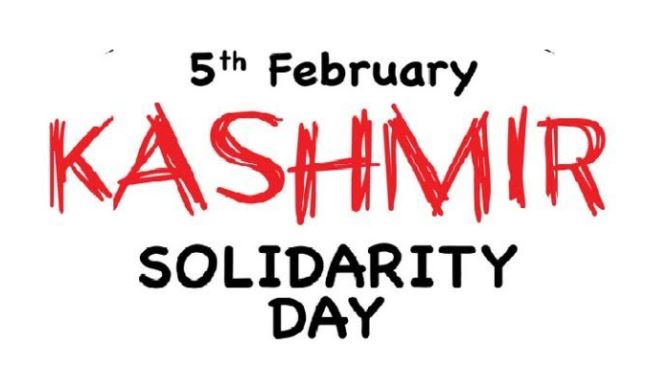
Every year on 5 February, observed in Pakistan as Kashmir Solidarity Day, the people of Pakistan, Kashmiris on both sides of the Line of Control, and members of the global diaspora reaffirm their support for the Kashmiri right to self-determination. Rallies, seminars, and official statements recall the unfulfilled United Nations resolutions and call upon the international community to honour its commitments. These expressions are peaceful and lawful, rooted in international norms. Yet a sobering question persists: can a people be expected to commemorate an unkept promise indefinitely, carrying the weight of unfulfilled justice from one generation to another?
India maintains that Jammu and Kashmir is an integral part of its territory and that the matter is purely bilateral. Pakistan, supported by international law and United Nations resolutions, maintains that the dispute is international in character and that the right to self-determination is inalienable and cannot be nullified by the passage of time or unilateral actions. So long as this fundamental contradiction remains unresolved, peace in South Asia will continue to rest on fragile ground.
Recent regional developments have subtly altered diplomatic perceptions. Pakistan’s conduct during periods of heightened tension, particularly in 2025, demonstrated restraint and responsibility, reinforcing its image as a mature and credible state. Acknowledgements by major international actors regarding ceasefire facilitation underscored this shift. Emerging from internal challenges, Pakistan today speaks with greater confidence and dignity on the world stage. This renewed standing places an added responsibility upon its leadership to move beyond symbolic remembrance and to pursue a principled, sustained, and effective diplomatic campaign for Kashmir.
Kashmir is not merely a political dispute, nor solely a strategic concern. It is a question of justice for a people denied the right to choose their destiny, a test of moral credibility for the international community, and an unfinished chapter of history that continues to shape the future of South Asia. Justice delayed for more than seventy-five years is not only justice denied; it is a continuing indictment of an international order that pledged fairness but failed to deliver it. Until the voices of the Kashmiri people are finally heard, the promise of peace in the region will remain incomplete, and the conscience of the world will remain unsettled.
KARACHI, FEB 4: /DNA/ – Atif Ikram Sheikh, President FPCCI, has announced that the Pakistan-EU Business Forum at the Federation of Pakistan Chambers of Commerce and Industry (FPCCI) is now inviting applications for new membership and renewal of existing membership for the year 2026, with the last date for submission set as 16 February 2026.
Mr. Atif Ikram Sheikh highlighted that Pakistan’s trade with the European Union – a key export destination and economic partner – showed positive momentum in FY 2025, with exports to the EU rising to approximately $8.86 billion; marking a notable recovery and growth compared with the previous year’s performance.
Mr. Atif Ikram Sheikh said that the EU continues to be among Pakistan’s most significant markets; particularly for textiles and apparel, leather goods, agro and food products, surgical instruments, and light engineering products – which form a substantial share of Pakistan’s export portfolio to Europe. The rebound in exports reflects improved demand in western, eastern, and northern European markets,
In view of these opportunities, FPCCI has strengthened its engagement with EU markets by establishing the Pakistan-EU Business Forum as a dedicated platform to support Pakistani businesses, exporters, and SMEs. The Forum will also expand outreach to Eastern European countries where emerging demand for Pakistani goods has been observed.
President FPCCI further stated that the Forum will maintain structured interaction with Pakistan’s Missions in European Capitals, as well as European Missions in Pakistan, to facilitate enhanced business networking, policy coordination, market access support, and trade promotion initiatives.
FPCCI emphasized that the Forum’s activities will also focus on SME capacity-building, export diversification, trade facilitation awareness, and leveraging the EU’s GSP+ preferential access arrangements to unlock new opportunities for Pakistani exporters.
Membership of the Pakistan-EU Business Forum is open to CEOs, Managing Directors, Directors, General Managers, and Proprietors, as well as members of FPCCI Trade Bodies and Business Councils with EU countries, including women entrepreneurs and exporters.
Mr. Atif Ikram Sheikh invited existing members to renew their membership and encouraged professionals and business leaders interested in new membership to submit the prescribed application form along with required documents by 16 February 2026.
Mr. Atif Ikram Sheikh reaffirmed FPCCI’s commitment to deepening Pakistan-EU trade and economic relations and urged the business community to actively participate in the Forum’s activities to benefit from expanding opportunities in European markets.
KARACHI, FEB 4 /DNA/ – Infectious Disease experts at the Aga Khan University Hospital (AKUH) have stated that recent developments related to the Nipah virus (NiV) in Eastern India and Bangladesh do not currently pose a direct threat to Pakistan. While geographical factors and known transmission patterns keep the risk low, experts noted that the situation presents an important opportunity to reflect on national pandemic preparedness.
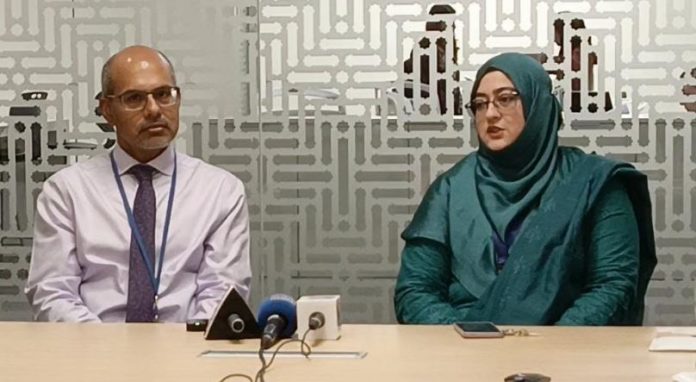
Speaking at a media roundtable with journalists, AKUH’s Infectious Disease specialists shared that since 2025, only 10 cases of the Nipah virus have been reported globally. Of these, just two involved human-to-human transmission, which remains an exceptionally rare occurrence.
“The risk of international spread is considered low,” said Dr Faisal Mahmood, Professor of Infectious Diseases and Associate Chief Medical Officer at AKUH. “While Nipah is a serious infection, it is not an immediate concern for Pakistan at this time. Our healthcare focus remains on addressing pressing domestic challenges, including the current rise in measles cases.”
Experts explained that the primary mode of Nipah virus transmission is zoonotic, occurring through direct contact with infected bats or the consumption of food contaminated by them, such as raw tree sap or fruit. They clarified that the virus is not transmitted through casual exposure to bats, such as bats flying nearby.
“Geographically, the recent cases are concentrated in West Bengal and Kerala in India, as well as in Bangladesh,” said Dr Nosheen Nasir, Section Head of Infectious Diseases at AKUH. “Importantly, no cases have been reported from western regions of India that border Pakistan. However, because early symptoms such as fever and headache can resemble influenza and may progress to severe brain inflammation, continued clinical vigilance is essential.”
The panel acknowledged the government’s proactive screening of travellers at international entry points as a positive step in safeguarding public health. Drawing on lessons from the COVID-19 pandemic nearly six years ago, AKUH experts emphasised that strong health resilience is built through early preparedness, effective coordination, and sustained community awareness, rather than reactive containment alone.
By prioritising healthcare readiness today, Pakistan can strengthen its capacity to respond to future public health emergencies, ensuring the safety and confidence of its population.
ISLAMABAD: Prime Minister Shehbaz Sharif on Wednesday urged an increase in trade volume between Pakistan and Kazakhstan to $1 billion as both countries signed over 30 memoranda of understanding (MoUs) in several sectors, including petroleum, mining, and maritime affairs.
Addressing a joint press conference after the signing ceremony, the prime minister said the existing level of trade between Islamabad and Astana did not reflect the true strength of relations or the economic potential of the two sides.
“Unfortunately, our trade volume is a meagre $250 million, which does not reflect the strength of our friendship and the potential of both countries. Let us commit to raising our trade volume to $1 billion within the next one year,” he said.
Earlier, Kazak President Kassym-Jomart Tokayev was accorded a warm reception and a guard of honour as he arrived at the Prime Minister’s House to hold one-on-one meeting with PM Shehbaz.
Accompanied by a high-level delegation, comprising senior cabinet ministers and other high-ranking officials, the Kazakhstan president arrived in Islamabad for his first two-day state visit, at the invitation of Prime Minister Shehbaz.
As the visiting dignitary arrived, the prime minister received him at the entrance of the PM House, where the formal reception took place.
The national anthems of Kazakhstan and Pakistan were played while both leaders stood on the saluting dais.
A smartly attired contingent of the three services of the Pakistan armed forces presented the guard of honour, which President Tokayev reviewed.
The two leaders introduced their respective delegations to each other before proceeding for one-on-one meeting, followed by talks at the delegation level.
During the talks, the two sides will review the full spectrum of bilateral relations and explore new avenues to further deepen cooperation across diverse sectors. Both sides will also sign Memoranda of Understanding (MoUs) and agreements to boost bilateral ties.
Later, the Kazakh president also planted a commemorative sapling in the lawn of the Prime Minister’s House.
The route of the Kazakhstan leader’s motorcade and main avenues of the federal capital were decorated with Pakistani and Kazakhstan flags as well as the large portraits of President Tokayev.
Separately, Deputy Prime Minister and Foreign Minister Ishaq Dar held a one-on-one meeting with Kazakhstan president, the Foreign Office said on X.
Welcoming President Tokayev to Pakistan, the deputy premier extended warm greetings from President Asif Ali Zardari, PM Shehbaz, government, and people of Pakistan.
He underscored Pakistan’s appreciation for the growing momentum of high-level political exchanges.
Dar also reaffirmed the shared commitment to expand bilateral cooperation across political, economic, and people-to-people domains, and to work together for durable peace, stability, and development in the region.