Home Blog Page 2654

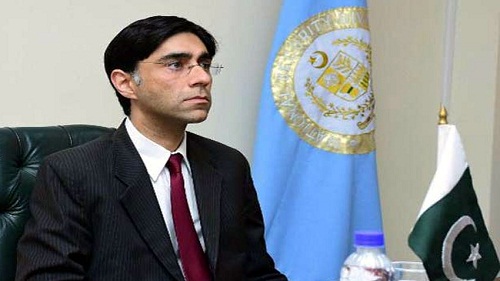
Pakistan will not allow use of its soil for subversive activities: Moeed

Islamabad : Adviser to Prime Minister on National Security Dr. Moeed Yusuf says Pakistan would not allow any country to use its soil for terrorism and subversive activities.

Talking to a private news channel, he said Pakistan is playing an important role in maintaining peace in the entire region.

The National Security Adviser said the prevailing situation of Afghanistan is perturbed for the entire region as it is facing worst kind of internal disturbance.

A failure to achieve peace in Afghanistan is the most immediate challenge facing by the Shanghai Cooperation Organization.

Moeed Yusuf said Pakistan has always wanted an Afghan-led and Afghan-owned negotiated political settlement of the Afghanistan, which is the only way forward to achieve peace in the region.

Central Asian ambassadors visit picturesque Swat Valley

 Staff Report

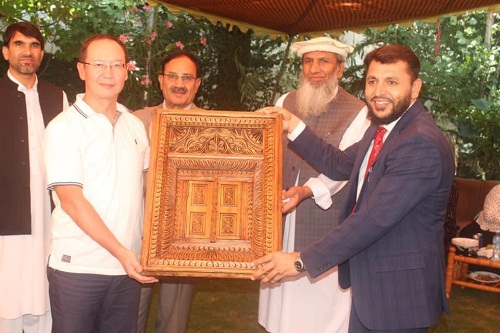
SWAT: Five ambassadors from Central Asian Republics visited Swat and attended a luncheon hosted by National Commissioner for Boys Scouts Association, Sardar Waqar Shahzad Advocate, at his residence at Kanju.

The Ambassadors included the Dean of diplomatic corps, Ali Alizada, Ambassador of Azerbaijan. Yerzhan Kistadin Ambassador of Kazakhstan, Erik Beishembiev Ambassador of Kyrgyz Republic, Ismatolu Naseruddin Ambassador of Tajikistan.

Speaking on the occasion, Sardar Waqar said that it was a great honour for him to host such a distinguished group, representatives of the many governments from many parts of  the world with which Pakistan has strong ties, including in the area of development cooperation. Today I am indeed honoured and privileged to receive you here at my home .

On behalf of the loving & hospitable people of Swat , I welcome Your Excellencies .

Swat was described as Udyana (the garden) in ancient Hindu epics. Alexander the Great crossed the Swat River with part of his army in 327BC. He fought and won some of his major battles at Barikot and Udegram and stormed their battlements, before crossing over the plains of the five rivers. In Greek accounts these towns have been identified as Ora and Bazira. We are one the most peaceful, religious, peace loving and hospitable people who spread nothing but love.

I therefore look forward to working closely with you and your governments in addressing both challenges and opportunities in the future for the people of Pakistan and people in general of Swat specifically.

Thank you for your presence and honoring me and my family to provide us an opportunity to have you here, Shahzad added.

New action plan by FATF will be implemented soon: Hammad

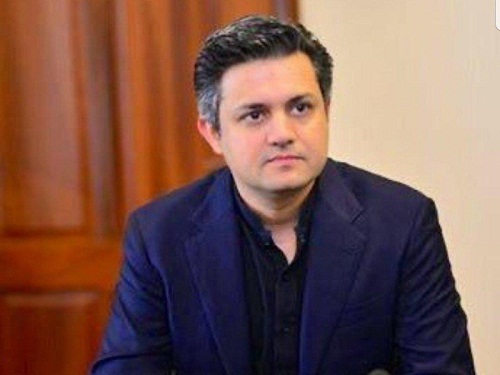
Islamabad : Minister for Energy Hammad Azhar says new action plan by FATF will be implemented soon.

Addressing a presser in Islamabad on Saturday, the Minister said that anti-money laundering plan is much easier to tackle than the previous counter-terrorism one because we have already introduced laws in this regard.

The Minister said Pakistan’s progress was appreciated by the FATF.

Hammaz Azhar condemned the statements of opposition pertaining to the FATF.

Digitalization of state media would be initiated by August 2021: Fawad

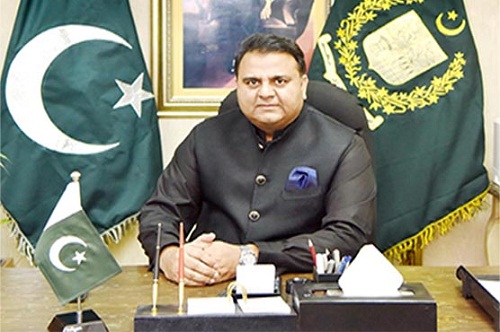
Islamabad : Minister for Information and Broadcasting, Chaudhry Fawad Hussain says the digitalization of the state media including Radio Pakistan, Pakistan Television and Associated Press of Pakistan would be initiated by August this year. 

Speaking at National Immature Short Film Festival organised by the Ministry of Information and ISPR in Islamabad, he said reforms are being introduced in the Ministry of Information and Broadcasting to enable it to meet contemporary challenges.

Fawad Chaudhry regretted that Pakistan offered numerous sacrifices in the war against terrorism, but failed to articulate its narrative in an effective way.

He said media is an important tool with the states around the globe to help shaping public opinion and promoting the narrative of the states.

The Information Minister said journey of a “Naya Pakistan” has already begun under the leadership of Prime Minister Imran Khan.

He also lauded Inter Services Public Relations for giving a new dimension to short films in Pakistan.

Pakistan not diplomatically isolated, engaged with different parts of world: FM

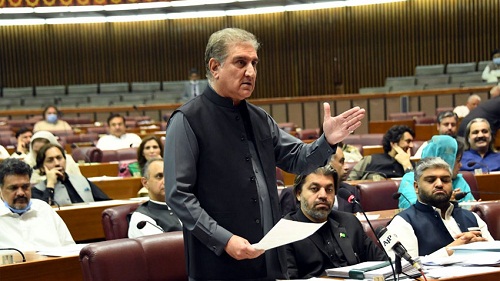
Islamabad : Foreign Minister Shah Mahmood Qureshi has said that Pakistan is not diplomatically isolated rather engaged with different parts of the world including Europe, the Muslim world, the US, Russia and the African continent to strengthen its relations.

Responding to the points of the opposition members in the National Assembly, he said India’s designs to push Pakistan into diplomatic isolation have failed.

The Foreign Minister said the relations with China are strong like never before. He said the present government has signed Free Trade Agreement phase two with China and collaboration is continuing in different sectors. He said Chinese President Xi Jinping will also visit Pakistan.

Highlighting the cordiality in relations with Saudi Arabia, he said an institutionalized mechanism has been established with Saudi Arabia to fast track the decision making. Similarly, our relations with other Gulf countries including the UAE, Bahrain and Kuwait are strong.

About Kashmir dispute, Shah Mahmood Qureshi said Prime Minister Imran Khan internationalized the Kashmir dispute and forcefully pleaded the case of oppressed Kashmiri people at all forums including UN General Assembly. 

He said it is Imran Khan who exposed the real face of Modi and Hindutva philosophy.

The Foreign Minister said the way Pakistan supported Palestinian people in difficult times in recent time is also being appreciated by the Palestinian leadership.

He said Pakistan should not be in the grey list as the country has fully complied with twenty six out of twenty seven action items of the FATF.

Covid-19 Claims 23 More Lives In Pakistan During Last 24 Hours

ISLAMABAD: The COVID-19 pandemic claimed 23 more lives in Pakistan during the last 24 hours, lifting the nationwide death toll to 22,211, quoting the National Command and Operation Centre (NCOC).

A total of 901 new cases of the virus emerged when 44,544 samples were tested during this period, taking the country’s caseload to 954,743.

The National Command and Operation Centre (NCOC) said the Covid-19 infection rate was recorded at 2.02.

The number of people who have recovered from the disease since the first case of the pandemic was reported in the country climbed to 900,291 after 1,347 more people recuperated in the last 24 hours.

As of June 26, as many as 11,978,339 people have been partially vaccinated against the deadly infection while 2,815,454 fully vaccinated, the NCOC said.

A total of 14,793,793 doses of COVID-19 vaccine have been administered across Pakistan thus far.

Pakistan has primarily used Chinese vaccines – Sinopharm, CanSinoBio and Sinovac- in its inoculation drive and, earlier this month began allowing those under 40 to receive AstraZeneca, of which it has a limited supply meant for people traveling to countries that require it.

Pakistan has so far granted emergency use authorization to six different vaccines, including China’s Cansino, Sinopharm, Sinovac, Russian Sputnik V, European AstraZeneca and US Pfizer vaccines against COVID-19.

HOW MUCH WILL A FIVE-MINUTE PHONE CALL COST NOW?

ISLAMABAD – There will be 75 paisas charged on phone calls exceeding five minutes starting July 1, Finance Minister Shaukat Tarin announced Friday.

These 75 paisas will be charged for every minute if a phone call continued for more than five minutes.

On the average, 33 paisas are charged on every mobile phone call in Pakistan. Telecom operators receive Rs1.65 on every five-minute call.

The government charges 19.5% Federal Excise Duty on these calls. Mobile phone users will now be paying these 75 paisas in addition to the 19.5% FED.

From July 1, the overall tax on mobile phone calls lasting more than five minutes will reach Rs2.72 or 65%.

The government hasn’t imposed any new tax on internet and SMS services, according to Tarin.

Telecom sector has emerged as a prominent contributor to Pakistan’s economy. Its contribution to the national exchequer increased by 129% in 2020, compared to 2019, despite the COVID-19 pandemic.

The sector contributed Rs278 billion in FY 2020 as compared to Rs121 billion in FY 2019, the Pakistan Telecommunication Authority said in its annual report in January 2021.

The use of data stands at 4,498 Peta Bytes that shows a growth of over 77%, according to the PTA.

The country has international bandwidth connectivity of 3.1 Tera Bytes and around 47,000 cell sites, of which 90% are 4G-enabled sites.

Telecom networks are currently available to 87% of the population, according to the PTA. It is working with operators to increase their network coverage for the remaining 13% people of the country.

Local manufacturing of handsets has enlivened the telecom ecosystem, with growth in local 4G device manufacturing crossing 34%, the report said.

Pakistan experienced trials of 5G services that were one of the few firsts in South Asia.

Some powers desire to keep sword of FATF hanging over Pakistan: Qureshi

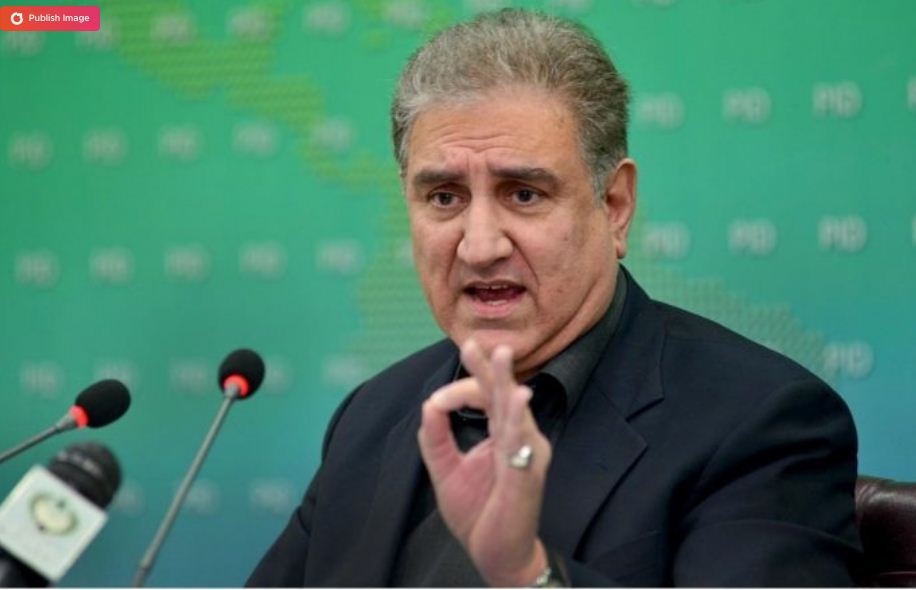
ISLAMABAD – Foreign Minister Shah Mahmood Qureshi on Saturday questioned the Financial Action Task Force’s (FATF) decision to continue to keep Pakistan on the watchdog’s “increased monitoring list”, also known as the grey list, despite implementation on 26 out of 27 points included in the original action plan.

In a statement, Qureshi said there was “no room” to keep Pakistan on the grey list after it had implemented nearly the entire action plan, according to a report by Radio Pakistan.

The foreign minister said it needed to be looked into whether FATF was “being used for political purposes”, adding “some powers desire to keep the sword of FATF hanging over Pakistan.”

It was yet to be determined whether the FATF was a technical forum or a political one, the statement quoted him as saying.

Qureshi said whatever steps Pakistan took were in its own interests, emphasising that it was in Pakistan’s interest to stop money laundering and terror financing.

A day earlier, FATF President Dr Marcus Pleyer said Pakistan would remain on the grey list till it addresses the single remaining item on the original action plan agreed to in June 2018 as well as all items on a parallel action plan handed out by the watchdog’s regional partner — the Asia Pacific Group (APG) — in 2019.

“Pakistan has made significant progress and it has largely addressed 26 out of 27 items on the action plan it first committed to in June 2018,” he said at a virtual press conference after the financial watchdog’s five-day plenary meeting.

Pleyer, however, added that the item on financial terrorism still needed to be addressed which concerned the “investigation and prosecution of senior leaders and commanders of UN-designated terror groups”.

He said Pakistan was still “failing to effectively implement the global FATF standards” across a number of areas.

When asked about the new action plan after the APG evaluation, Pleyer said the plan had “six action items including enhancing international cooperation and demonstrating that assistance is being sought from foreign countries in implementing UN Security Council designations”.

Pleyer said even after the last remaining item on the original action plan was addressed, delisting would not occur as there was a parallel action plan that was also given.

UNODC World Drug Report: pandemic effects ramp up drug risks, as youth underestimate cannabis dangers

VIENNA, 24 June 2021 — Around 275 million people used drugs worldwide in the last year, while over 36 million people suffered from drug use disorders, according to the 2021 World Drug Report, released today by the United Nations Office on Drugs and Crime (UNODC).

The Report further noted that in the last 24 years cannabis potency had increased by as much as four times in parts of the world, even as the percentage of adolescents who perceived the drug as harmful fell by as much as 40 per cent, despite evidence that cannabis use is associated with a variety of health and other harms, especially among regular long-term users.

“Lower perception of drug use risks has been linked to higher rates of drug use, and the findings of UNODC’s 2021 World Drug Report highlight the need to close the gap between perception and reality to educate young people and safeguard public health,” said UNODC Executive Director Ghada Waly.

“The theme of this year’s International Day against Drug Abuse and Illicit Trafficking is “Share facts on drugs. Save lives”, emphasizing the importance of strengthening the evidence base and raising public awareness, so that the international community, governments, civil society, families and youth can make informed decisions, better target efforts to prevent and treat drug use, and tackle world drug challenges.”

According to the Report, the percentage of Δ9-THC —the main psychoactive component in cannabis— has risen from around six per cent to more than 11 per cent in Europe between 2002-2019, and around four per cent to 16 per cent in the United States between 1995-2019, while the percentage of adolescents that perceived cannabis as harmful declined by 40 per cent in the United States and by 25 per cent in Europe.

Moreover, most countries have reported a rise in the use of cannabis during the pandemic. In surveys of health professionals across 77 countries, 42 per cent asserted that cannabis use had increased. A rise in the non-medical use of pharmaceutical drugs has also been observed in the same period. 

Drug Use Rising, but Science-Based Treatment More Available

Between 2010-2019 the number of people using drugs increased by 22 per cent, owing in part to global population growth. Based on demographic changes alone, current projections suggest an 11 per cent rise in the number of people who use drugs globally by 2030 — and a marked increase of 40 per cent in Africa, due to its rapidly growing and young population.

According to the latest global estimates, about 5.5 per cent of the population aged between 15 and 64 years have used drugs at least once in the past year, while 36.3 million people, or 13 per cent of the total number of persons who use drugs, suffer from drug use disorders.

Globally, over 11 million people are estimated to inject drugs, half of whom are living with Hepatitis C. Opioids continue to account for the largest burden of disease attributed to drug use.

The two pharmaceutical opioids most commonly used to treat people with opioid use disorders, methadone and buprenorphine, have become increasingly accessible over the past two decades. The amount available for medical use has increased six-fold since 1999, from 557 million daily doses to 3,317 million by 2019, indicating that science-based pharmacological treatment is more available now than in the past.

The Dark Web

Drug markets on the dark web only emerged a decade ago but major ones are now worth at least US$ 315 million in annual sales. Although this is just a fraction of overall drug sales, the trend is upwards with a fourfold increase between 2011 to mid-2017 and mid-2017 to 2020.

Rapid technological innovation, combined with the agility and adaptability of those using new platforms to sell drugs and other substances, is likely to usher in a globalized market where all drugs are more available and accessible everywhere. This, in turn, could trigger accelerated changes in patterns of drug use and entail public health implications, according to the Report.

The Drug Market Rebounds and Shifts

The new report shows that drug markets have swiftly resumed operations after the initial disruption at the onset of the pandemic; a burst that has triggered or accelerated certain pre-existing trafficking dynamics across the global drug market. Among these are: increasingly larger shipments of illicit drugs, a rise in the frequency of overland and water-way routes used for trafficking, greater use of private planes for the purpose of drug trafficking, and an upsurge in the use of contactless methods to deliver drugs to end-consumers.

The resilience of drug markets during the pandemic has demonstrated once again traffickers’ ability to adapt quickly to changed environments and circumstances.

The Report also noted that cocaine supply chains to Europe are diversifying, pushing prices down and quality up and thereby threatening Europe with a further expansion of the cocaine market. This is likely to widen the potential harm caused by the drug in the region.

The number of new psychoactive substances (NPS) emerging on the global market fell from 163 in 2013 to 71 in 2019. This reflects trends in North America, Europe and Asia. The findings suggest national and international control systems have succeeded in limiting the spread of NPS in high income countries, where NPS first emerged a decade ago.

Drug Risks, New Developments Spurred by Pandemic

COVID-19 has triggered innovation and adaptation in drug prevention and treatment services through more flexible models of service delivery. Many countries have introduced or expanded telemedicine services due to the pandemic, which for drug users means that healthcare workers can now offer counselling or initial assessments over the telephone and use electronic systems to prescribe controlled substances.

While the impact of COVID-19 on drug challenges is not yet fully known, the analysis suggests that the pandemic has brought increasing economic hardship that is likely to make illicit drug cultivation more appealing to fragile rural communities. The social impact of the pandemic –driving a rise in inequality, poverty, and mental health conditions particularly among already vulnerable populations– represent factors that could push more people into drug use. 

PM urges youth to project real image of Pakistan

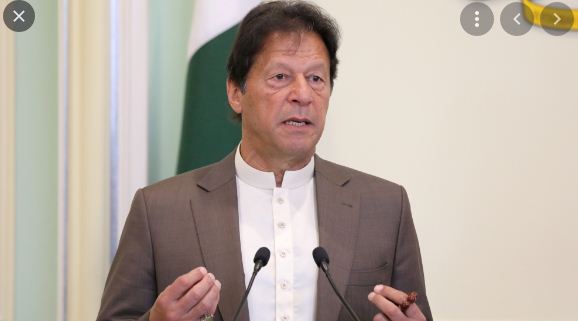
ISLAMABAD, June 26 (DNA): Prime Minister Imran Khan Saturday expressing
his confidence in the innate potential of country’s youth urged them to
present true and real image of Pakistan, a country gifted with huge
variety and diversity.

Addressing the first National Amateur Short Film Festival Awards (NASFF)
ceremony here at the Pak-China Friendship Center, the prime minister
stressed upon the young film makers to concentrate upon production of
original stuff as the world always bought the contents based upon
reality.

“Those following the downtrodden path never excel in their fields,” he
said, adding the new starters in the film making must explore the vast
variety and diversity of climate, culture and civilization of the
motherland.

The event was held under the patronage of Ministry of Information and
Broadcasting in association with Inter Services Public Relations (ISPR)
to give awards to three winners each in different categories of short
films. The jury consisted famed artists and international experts who
had made nominations for the best films. Fifteen winners would get
scholarships for studying in advance media techniques in the University
of California, US.

The prime minister observed that over 60 per cent of the country’s
population comprised of talented youth who could achieve marvels in
different fields. He said the soft image of the country came with
self-esteem and self-belief as the world respected those who had faith
in themselves.

He further said that they did not need to copy what the others had done
in the world. “We don’t need to look like others to improve our
perception.” “You cannot achieve anything if you have fears of failure,”
he maintained.

The ceremony was attended by Minister for Information and Broadcasting
Chaudhry Fawad Hussain, Minister of State for Information and
Broadcasting Farrukh Habib, Director General ISPR Major General Babar
Iftikhar and other federal ministers and parliamentarians.

The prime minister laid emphasis upon following the thoughts of
country’s founding fathers including Quaid-e-Azam and Allama Muhammad
Iqbal.

The prime minister noted that during 70s, the country was producing
quality pictures but it went on to copy Indian films which resulted in
the downfall of this industry.

Through this ‘copy and adoption of alien culture’ the films industry
lost the originality, he regretted.

The prime minister sharing his experiences in the cricket career said
that they had introduced to the world, the technique of reverse swing
and opening of bowling with the spinners, the ideas which were later
copied by the whole world.

Previously, there was mindset which thought that they could not win from
the UK cricket team due to serious impacts of colonialism and they were
contended in their defeats, he added.

The prime minister said, things started changing when they started in
self belief with new playing techniques. He further said that he had
brought Ertugrul drama serial which was widely watched by the people in
Pakistan.

The prime minster said late Nusrat Fateh Ali Khan, who participated in
the fund-raising of Shaukat Khanum Memorial Cancer Hosptial, was adorned
by the Western pop groups.

The prime minister said that tourism industry of the country possessed
huge potential which remained unexplored in the past and cited the
mountains and religious tourism which were being explored.

The prime minister also lauded efforts of the ministry of information
and ISPR for providing a platform to the young gifted new starters in
the genre of short film making.

====

Stay Connected

64FansLike
60FollowersFollow

Latest Reviews

Exchange Rates

USD - United States Dollar
EUR
1.14
GBP
1.34
AUD
0.70
CAD
0.71