Home Blog Page 2631

People in commodity-exporting nations face poverty trap, UN says

Despite often living in some of the world’s most resource-rich lands, people in many developing countries face continued poverty due to reliance on commodity exports, according to the UN.

In a report published on Wednesday, the United Nations Conference on Trade and Development (UNCTAD) said many of the world’s poorer nations depend too much on exporting natural resources and are seemingly “locked into this undesirable state.”

A “commodity-dependent” economy gets 60 per cent of merchandise export revenues from sales of goods such as coffee, gas, metals and oil, according to UNCTAD – trade which is “strongly associated with low levels of technology” and “low levels of labour productivity, low productivity growth.”

In 2019, two-thirds of developing countries were commodity-dependent, compared to 13 per cent of wealthy or developed economies.

UNCTAD gave “only a 7-per-cent chance” that commodity-dependent developing nations could emulate Costa Rica, Indonesia and Malaysia by breaking the so-called “resource curse” and growing productive manufacturing sectors.

Countries “more reliant on agriculture exports usually have a lower technological level, followed by countries dependent on mining and then those dependent on fuels,” UNCTAD said.

Using revenues to boost productivity and technology is a must, according to UNCTAD, if commodity-dependent economies are “to escape the trap that leaves most of their populations poor and vulnerable.”

The International Monetary Fund (IMF) earlier said developing economies could struggle to recover from the coronavirus pandemic’s impact, even if the global economy grows by an expected 5 to 6 per cent this year.

Many developing countries have also been hit hard by the collapse of tourism in the wake of the pandemic. The UN’s World Tourism Organization said on Monday that almost 30 per cent of borders worldwide remained “completely closed” as of June, many of them in the Asia-Pacific region.

UN agencies said last month that the rising food prices are squeezing residents of poorer nations.

A surge in food prices around the time of the 2007-09 global financial crisis spurred demonstrations in many developing countries.

The Organisation for Economic Cooperation and Development (OECD) warned on Tuesday that protests are likely in many nations once the coronavirus pandemic fades and related restrictions are eased.

“The number of protests doubled across the world in the decade after the global financial crisis of 2008-09,” the Paris-based OECD said, warning that the “pandemic cleared the streets in 2020, but only temporarily.”

“Making ends meet was the main concern for many people,” the OECD said.

Shahzain Bugti appointed as SAPM on Reconciliation and Harmony in Balochistan

ISLAMABAD: The Prime Minister has appointed Chief Jamhoori Watan Party and MNA Nawabzada Shahzain Bugti as Special Assistant on Reconciliation and Harmony in Balochistan.

The notification to this effect was issued by the cabinet division today (Wednesday).

Haitian President shot dead at his home: Interim PM

In Haiti, President Jovenel Moise was shot dead in his home on Wednesday.

In separate statements, the President House and the interim Prime Minister Claude Joseph announced that the first lady was also wounded in the attack and is currently hospitalized.

UK PM Johnson outlines end to England’s virus restrictions

LONDON: Britain has set out plans to end the COVID-19restrictions having social and economic impact in two weeks

Prime Minister Boris Johnson confirmed that the government aims to end restrictive measures on 19th of this month, with a final decision to be taken next week.

He said the step would eliminate formal limits on social contact, the instruction to work from home, and mandates to wear face masks. The social distancing guidelines will also be scrapped. 

Govt transforming traditional techniques in minerals, gems sector: PM

ISLAMABAD: Prime Minister Imran Khan has said that for the first time in the 74 years of history of the country, the minerals and gems sector is being restructured into an export industry.

Chairing a meeting of gems, jewellery, and minerals task force in Islamabad today (Wednesday) Imran Khan said the government is transforming the traditional techniques in the minerals and gems sector by introducing the latest technology.

The Prime Minister was apprised of the restructuring of the gems, jewellery and minerals sector and the recommendations over the proposed mineral city.

The meeting was informed that Pakistan has the capacity to export precious gems worth 5 billion dollars annually. 

The transformation of the sector will have positive effect on the country’s economy, besides generating huge employment opportunities.

The meeting was also informed that Pakistan has around 99 different precious gems reserves, making the country the eighth biggest country in the world in terms of its production.

The Prime Minister directed that all these resources should be tapped and effectively utilized through a mechanism by removing the bottlenecks for the investors.

PM appoints Shahzain Bugti as Special Assistant

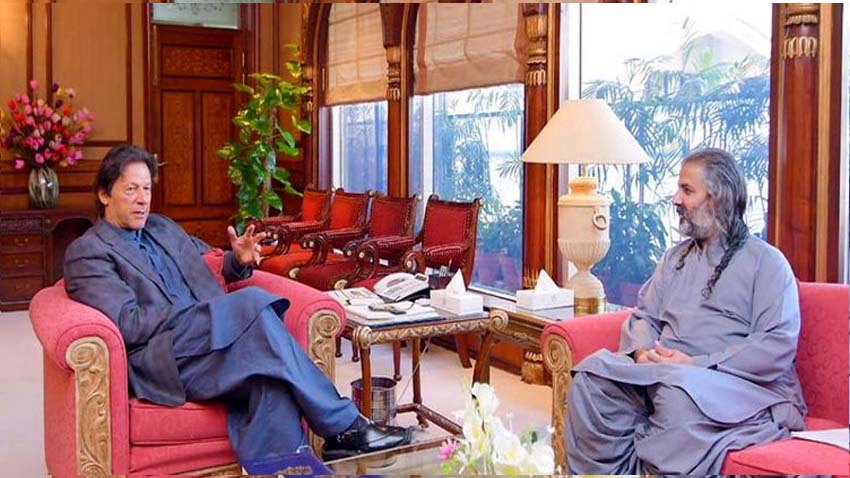
ISLAMABAD, JUL 07 (DNA) – In yet another step towards holding talks with estranged Baloch leaders, Prime Minister Imran Khan has appointed Jamhori Wattan Party (JWP) chairman Shahzain Bugti as his special assistant.

According to sources, the JWP chief will hold talks with angry Baloch leaders on political and national harmony. Shahzain Bugti has been given the status of Federal Minister.

The Cabinet Division has issued notification of appointment of Shahzain Bugti. He has been posted as Special Assistant to Prime Minister on Reconciliation and Harmony in Balochistan.

On Monday, PM Imran Khan while addressing an even in Gwadar had said government was planning to reach out to the estranged Baloch youth for the sake of peace in Balochistan. He said foes of Pakistan had used these elements in the past, but now the situation has entirely changed.

 He said the development of Balochistan is the top priority of the government and it has announced historical package for the area. The prime minister regretted that the past rulers had prioritized their political objectives, always treating the development and progress of the backward Balochistan province as their backburner.

Imran Khan while regretting past rulers’ continuous negligence towards Balochistan province, assured that the federal government would increase its contribution for the development of the province every year.

“They did not pay attention to Balochistan province and focused solely to become prime minister of the country. They preferred to live in London and spend time during summer season,” the prime minister said in apparent reference to former prime minister Mian Muhammad Nawaz Sharif.

Kingdom out of which 23 were private trips. He did not bother to come to Balochsitan whereas Zardari had been to Dubai for 51 times. The prime minister further said that the one who thought of Pakistan would always think of its backward areas and Balochistan province.

Instead, the previous ruling elite focused on winning elections and preferred to contest from Faisalabad with multiple constituencies instead coming to Balochistan, he said, adding that due to their personal objectives, different areas like the merged tribal areas and Balochistan lagged behind in terms of progress and prosperity.

“It was our great misfortune. If they had paid attention to the whole country, they might continue as rulers of the country,” he observed. The prime minister said the country could achieve progress when there was simultaneous and uniform progress throughout the country. The residents of Balochistan province felt a sense of deprivation due to continuous neglect.

The incumbent federal government, the prime minister said, had announced the biggest uplift package to the province because they felt that injustice was done with the people of Balochistan. Moreover, neither the center nor the political leadership of the province, in the past, paid attention to the plight of people, leading to widespread sense of deprivation.

He said that the government was focusing on Gwadar uplift with string of development projects, including setting up of desalination plant and construction of 300 bed teaching hospital. To fully protect the fishermen and improve their conditions, Rs10 billion was allocated under Kamyab Jawan programme and out of which so far, Rs5 billion had been spent.

About the construction of low-cost housing units, the prime minister said, they had received a total of 4,000 applications from the area and had identified 200 acres of land over which initially 2,500 houses would be constructed.

The prime minister further said that Ehsaas scholarships would be given to 4,698 young people of the province. Moreover, the government was committed to provide 3G and 4G internet connectivity throughout the province which would create huge jobs opportunity to all, especially to the womenfolk.

He said China Pakistan Economic Corridor (CPEC) would bring biggest benefits to the people of Balochistan and inhabitants of Gwadar. The prime minister said there was complete ban on illegal fishing through big trawlers. = DNA

=======================

PAK, QATAR DISCUSS MATTERS OF MUTUAL INTEREST, SECURITY COOPERATION

DNA

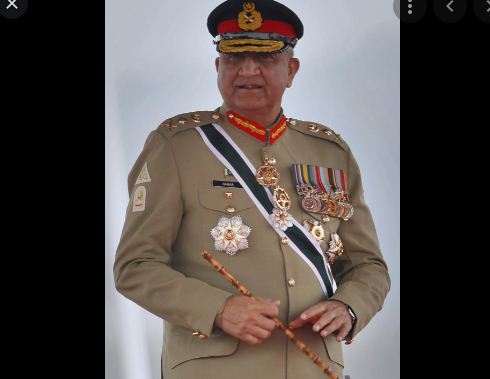
DOHA – General Qamar Javed Bajwa, Chief of Army Staff (COAS) on a two day official visit to Qatar called on Doctor Khalid Bin Mohammed Al Attiyah, Deputy Prime Minister & Minister of State for Defence Affairs and Lieutenant General (Pilot) Ghanim Bin Shaheen Al-Ghanim, Chief of Staff Qatar Armed Forces of the State of Qatar, today.

During the meetings, matters of mutual interest, defence & security cooperation and regional / geo-political environment were discussed.

COAS said that both countries share great history of cordial relations and deep spirit of brotherhood, which are being transformed into an enduring partnership. COAS also appreciated role of Qatar in Afghan Peace Process.

Dignitaries also appreciated Pakistan’s continuous efforts for peace and stability in the region and pledged to keep working for better relations between the two brotherly countries.

Both sides underscored the importance of further enhancing the cooperation in all fields.

RCCI TO HOLD CONDOLENCE MEETING FOR LATE SHEIKH MOHAMMAD SHABBIR

DNA

RAWALPINDI: A condolence meeting will be held at the Rawalpindi Chamber of Commerce and Industry (RCCI )on Thursday to express condolences over the death of group leader and former president Sheikh Mohammad Shabbir and pay homage to his life and services.

President Nasir Mirza said in a statement that the demise of the late Sheikh Shabbir was a great loss. His services to the Chamber will always be remembered.

THE CPC’S 100 YEARS OF HUMAN TRANSFORMATION

Munir Ahmed

Congratulations to the Communist Party of China (CPC) for completing a century of progressive leadership for successive growth on July 1, 2021. The CPC emerged in very crucial days of Chinese history to liberate the natives from the socio-economic sufferings.

The CPC slogan of social equality and economic parity well attracted the natives to fight a civil war against the Kuomintang – the Nationalist Party of China (NPC), and then the Japanese invasion during World War II. Before having complete control over China, the CPC has to fight once again the NPC.

The CPC’s role had become crucial after declaring China’s independence on October 1, 1949 while the civil war was still on. The CPC took up a war-trodden country to make it the second largest economy in the world in less than 70 years. China will beat the US once a fair ranking is done. The Chinese economy kept moving even last year despite the Covid-19 spread while many countries could not sustain the pressure.   

We shall objectively analyze the elements behind the success of a country that has been burdened by over-population. A half of its total population was under the poverty-line just a decade back. The US think tank Statista mentions that 49.8 percent of the China population was below the poverty-line in 2000 and there is no one by 2020.[1] It simply seems like a miracle. But, China has shown that an astounding vision by the political party, a phenomenal leadership, a consistent pro-people political regime and its policies can make it happen in a short span of time. The CPC is commendable for providing all three to China.      

‘One party – One vision’ has successfully transformed China from an undirected and idle mob to a globally techno-efficient nation and second largest economy on the map. We have seen China overshadow the “developed democratic countries” even on the diplomatic fronts and UN forums for affording capital and human resources to promote peace in the regions suffering from conflicts. We cannot undermine China’s role in voicing the needful right of peace and development for Palestine and Indian illegally Occupied Jammu and Kashmir (IIOJ&K).   

The brains in a political party can help the leadership develop and pursue an initiative of the century such as “One Belt – One Road” that has been renamed as Belt and Road Initiative (BRI). As of January 2021, some 140 countries have signed Memorandum of Understanding (MoU) with China.[2] It shows the world’s trust on China’s model of connectivity, infrastructure development and networking for economic growth.

The BRI is a brainchild of President Xi Jinping who is blamed for “consolidated control over the party” – the CPC since he assumed power in 2012. President Xi’s critics mention that he has created a path for his indefinite rule as China’s legislative body ended the limit of presidential term under his “authoritative control”.

It may be a bad practice in terms of present popularly defined democratic norms but his “authoritative control”, if so, has delivered the best to China and its global positioning in eight years. His only one achievement is fairly sufficient to defend his “authoritative control” and that is getting a half of the population of his country out of poverty.

Back in Pakistan, the dictatorial president Ayub Khan’s era is considered to be the best in terms of development and diplomacy. Even the three times prime minister, Mian Muhammad Nawaz Sharif was also blamed for directing his cabinet and colleagues to find out ways to complete certain tasks in the given time period. Many believed that he had “control” over the party. Even today, he is blamed for running party decisions from the UK.       

The CPC is blamed for “monopoly” in the Chinese politics since the Mao Zedong–led party defeated nationalist rivals and founded the People’s Republic in 1949. Far less people know that eight other political parties including Nationalists Party China (NPC) also exist in the country but their vote bank is negligible as compared to the ruling party. Only the CPC members are more than ninety million.[3]  

In its centennial celebrations, the CPC also faces a raft of challenges. The utmost is the “economic war” with the US that has taken it very seriously. President Biden’s launching of the Build Back Better World (B3W) at the G-7 summit recently shows the concerns and worries of the only superpower. It’s too late for him to do so. The CPC’s China has gone far ahead in the BRI initiative.

China has been blamed for environmental degradation and transboundary pollution by the developed industrial world – the world’s top polluters including the US. China has remained firm on its global commitments under the Paris Agreement 2015 to combat the challenges of climate change while the US backed out during the Trump’s administration. The CPC 90 million members are leading environmental campaigns within China.  

China being an all-weather friend has always supported Pakistan in the odd hours. Recent loans to sustain the IMF, and huge investments in Pakistan under the CPEC regime are a few in the long list of favours. We need to learn from the CPC that has stayed true to its original aspiration and mission of pursuing the wellbeing of the Chinese people and rejuvenation of the Chinese nation. And, the way it united the Chinese people and led them in an arduous and tireless struggle that brought about fundamental changes in the destiny and future of the Chinese people individually and as a nation.

The writer is a freelance journalist and broadcaster, Director Devcom-Pakistan, an Islamabad-based policy advocacy and outreach think tank. He can be reached at [email protected] and tweets @EmmayeSyed

PAKISTAN CHINA AT 70: FOREIGN MINISTERS OF PAK, CHINA ADDRESS CONFERENCE

DNA

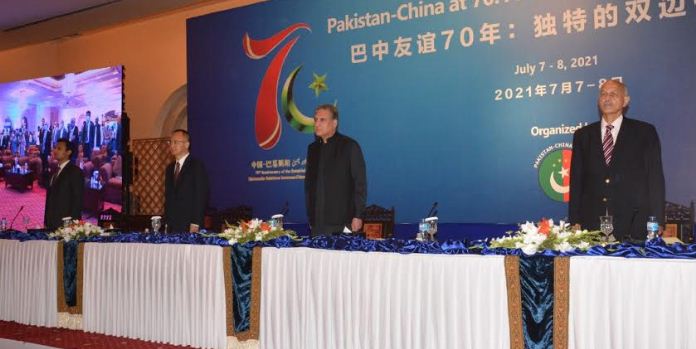
ISLAMABAD, JUL 7:  In commemoration of 70 years of Pakistan-China relations, the Pakistan- China Institute (PCI) arranged a conference titled, “Pakistan-China At 70: A Unique Bilateral Partnership”.

The conference brought together China and Pakistan’s key government officials, academicians, journalists, students, and civil society members under one roof. The conference featured 24 esteemed panelists from Pakistan and China talk with one voice about the importance of upholding Pakistan-China all-weather strategic partnership.

This conference was divided into four sessions, in addition to an opening session. At the start, an exclusive 10-minute documentary production of the PCI was played for the audience titled at “Pakistan-China at 70: A Unique Bilateral Relationship” along with national anthems of Pakistan and China.

During the opening session, Chairman of Pakistan-China Institute, Senator Mushahid Hussain Sayed extended his heartfelt felicitations to the people of Pakistan and China for being fraternal and time-tested brothers who have always enjoyed neighborly relations. He highlighted how China has changed the destiny of one-fifth of humanity by lifting 800 million people out of poverty.

He also highlighted how BRI has brought together 140 countries of different continents together through connectivity, ports, pipelines, economy and energy. He also said that Pakistan is fortunate that the pilot and flagship project of the BRI, CPEC, is at the centerpiece of this global initiative to promote Corridors, Culture and Connectivity. Senator Mushahid Hussain Sayed said that Pakistan and China relations are unique because they are not transactional, they are not tactical, and they are not against any third country.

This was followed by Keynote Addresses by Pakistan’s Foreign Minister, Makhdoom Shah Mahmood Qureshi, and Wang Yi, State Councillor and Foreign Minister of People’s Republic of China. Foreign Minister Qureshi talked about Pakistan-China friendship which he said is rooted in the heart of cooperation between the two countries.

He talked of the cooperation between both countries especially during the coronavirus pandemic as China has so far donated Pakistan 3.5 million doses of vaccine, and said that Pakistan has always supported Chinese core interests. Pakistan also stood with the Chinese stance on making vaccine a global public good. He apprised the audience that the shared future of Pakistan and China is to compile infrastructure, knowledge and make it about the people. He talked about the educational cooperation between the two countries which will also ensure cultural collaboration as well.

Foreign Minister Qureshi talked of Pakistanis’ aspirations for peace and stability, and how China is an integral part of enabling a prosperous Pakistan. He also highlighted numerous celebrations in commemoration of 70 years of bilateral relationship between Pakistan and China being held across both countries, and especially thanked PCI for arranging this event with a dedicated panel of experts.

In his video address Chinese Foreign Minister and State Counselor, Wang Yi highlighted that China and Pakistan are all weather friends who understand and respect each other despite social and cultural differences. He stressed the need for practicing multilateralism, and said that the zero-sum game emanating from the cold war mentality should be rejected, and all countries should work together. He also said that moving forward, Pakistan and China should join hands in safeguarding international peace, engage in dialogue with political parties of Pakistan, and encourage other countries to join against regional security threats.

While affirming commitment to Pakistan, Wang Yi said that no matter how the world changes, China will always stand firmly with Pakistan. He also thanked Senator Mushahid Hussain for promoting Pakistan-China friendship.

After the opening session, first session on A Model State to State Partnership- Historical context was held. Ambassador Sha Zukang expressed sincere gratitude to Pakistan. He apprised that China and Pakistan should focus on the CPEC and must focus that the job is well done. He said that CPEC is a two-way project of the BRI, which is inculcating new experience and expertise in both countries.

Lt General (Retd.) Talat Masood highlighted how in the aftermath of 1965 war, China gave military assistance to Pakistan. Trailing through history, he said that as the two countries celebrate 70 years of their relationship, their shared future is bright and rests primarily on Pakistan’s own domestic matters.

Mr. Muhammad Jehanzeb Khan, Deputy Chairman of Planning Commission talked about how China is a great friend that has given Pakistan the opportunity to develop. He said it is remarkable how two culturally-diverse countries are able to maintain such a close relationship.

The second Session, was themed “People to People Connectivity- The foundation of Pakistan- China friendship”. Mr. Shakeel Ramay, Advisor, Asian Institute of Eco civilization Research & Development moderated the discussion. Mr. Mustafa Hyder, Executive Director, PCI labeled people-to-people connectivity pivotal to Pakistan-China relations.

He highlighted the role of PCI in enabling youth exchanges, bilateral discussions, and opening up dialogue on the dynamic relationship shared by both countries. Moreover, he said that as a think tank, PCI has connected young people with China through targeted approach, and will continue to take Pakistan-China relations to new heights.

Professor Li Xiguang, Chair of the Pakistan Studies Center at Tsinghua University said that the origin of friendship between Pakistan and China started years ago. He traced the spread of Buddhism to Pakistan and labeled it an important country for a belief system that has a lot of significance for Chinese people. Mr. Jamal Shah, Chairman Hunerkada, College of visual and performing arts labeled Chinese cultural heritage an agent of change for the Chinese people. Moreover, he added that Pakistan needs to learn from China’s policy makers for investing in the country’s cultural heritage.

Ms. Ambreen Shah, Vice President Legal & Corporate Affairs, China Power Hub, Generation Company (Pvt) Limited said that in her experience, the Chinese people are very positive, progressive and humble. She said the Chinese value feedback and input, and do not carry out any gender discrimination, keeping respect and loyalty as the main ethos of their work. She also said that in China women hold key positions in companies as Chinese reward hard work.

The third session was themed “Pakistan-China’s Shared Interests in the Changing Regional Scenario” and was moderated by Ambassador Khalid Masood who highlighted the importance of understanding changing regional scenario in the post-pandemic world, as global alliances are being reshaped. His remarks were followed by Professor Dr. Atta-ur-Rehman, Chairman of PM Task Force on Science and Technology who said that Pakistan and China are collaborating on COVID research, and also working for educational exchanges. He also highlighted how the two will keep up their work in the field of medicine as well. Professor Wang Wen, Executive Dean, Chongyang Institute, Renmin University addressed the audience virtually and highlighted how the process of China’s development is an outcome of the Pakistan China relationship.

Ai Ping, Vice Chairmen of Chinese Government Association of Friendship with Foreign Countries said that friendship between people of China and Pakistan remains close as the two celebrate 70 years of bilateral relationship. He also said that CPEC is the flagship project of the BRI, and this corridor has helped Pakistani people build infrastructure and meet energy needs; adding that 46 projects have been completed with investment of around 30 billion dollars so far, while more are under way.

Lieutenant General (Retd) Yaseen Malik highlighted how China is the only country in the region which has no historic baggage for Afghans. Therefore, he said that the China-Afghan relationship is likely to flourish once things stabilize in Afghanistan.

 He also talked about China’s over-arching role in various Asian countries. Vice Chair, Foreign Affairs Committee of National People’s Congress, Former Minister of Population and Family Planning, Dr. Zhao Baige said that the BRI upholds the concept of a better future for all mankind. This project is a great example of the shared destiny of the two countries- Pakistan and China. Pakistan China friendship has always been so strong that no international issue has been able to alter it. He highlighted that Pakistan and China should play their role in developing proper energy plans, working towards developing science and technology innovation and actively trying to develop new corporate technology.

During the fourth session, China-Pakistan Economic Corridor: The Way Forward, Mr. Mustafa Hyder Sayed moderated the discussion between Mr. Muhammad Aurangzeb, President & CEO, Habib Bank Limited, Mr. Abdul Razak Dawood, Advisor for Commerce, Textile, Industry and Production, and Investment of Pakistan to the Prime Minister of Pakistan.

Mr. Yang Jianduo, Chairman of All Pakistan Chinese Enterprises Association, and Chief Representative of Power China talked about how Pakistan and China have to work together for the promotion of Business to Business cooperation, and ensure a better connectivity between the two countries.

Muhammad Aurangzeb said that two branches of Habib Bank Limited are located in China with 15,000 Chinese accounts. He also mentioned that HBL is providing Chinese investors opportunities for trade and investment in Pakistan. Concluding, he said, “Now is the time to monetize on the success of CPEC.”

Mr. Abdul Razak Dawood, Advisor to Prime Minister for Commerce, Textile, Industry and Production, and Investment talked about how 8 new honorary investment counselors have expressed interest in investing in Pakistan and are also willing to work pro bono and help relationship between Pakistan business people and Chinese. He also talked about the incumbent government’s eagerness for promoting regional diversity under CPEC. Citing figures, Mr. Dawood said that during this fiscal year, Pakistan’s exports to China have risen by 30% to reach a value of 2.3 billion per annum, whereas Chinese work visas to Pakistan have increased by 42%.

The event lasted for 7 hours and had a full house of over 200 people from leading Pakistani and Chinese media, think tanks, governments, and civil society organizations. Students and faculty members of leading Pakistani universities also attended the conference.

Stay Connected

64FansLike
60FollowersFollow

Latest Reviews

Exchange Rates

USD - United States Dollar
EUR
1.14
GBP
1.34
AUD
0.70
CAD
0.71