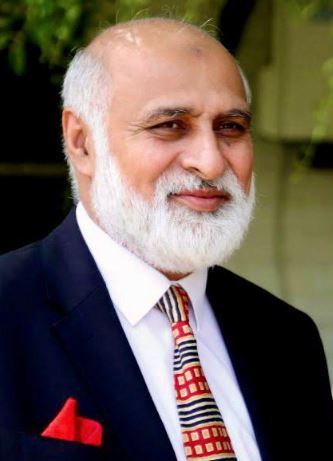
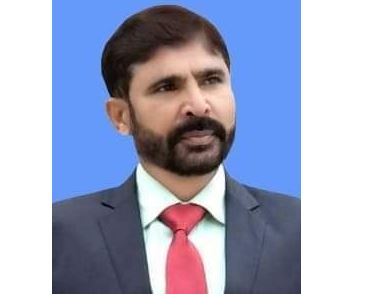
ISLAMABAD, FEB 6 /DNA/ – Renowned scholar and distinguished academic leader Prof. Dr. Niaz Ahmad Akhtar (Sitara-i-Imtiaz) assumed the office of Chairman of the Higher Education Commission (HEC) Pakistan here on Friday. Upon his arrival at the HEC Secretariat in Islamabad, he was received by the Executive Director HEC, Prof. Dr. Zia Ul Haq, alongside senior HEC officers.
With over 35 years of experience in higher education, research, and institutional development, Dr. Niaz is the most senior Vice Chancellor in the country, with a cumulative 16 years of experience leading six prestigious institutions, including Quaid-i-Azam University, University of the Punjab, UET Taxila, National Textile University (NTU), Faisalabad, University of Sahiwal, and Information Technology University, Lahore. He also served as Vice Chairman, Pakistan Engineering Council (PEC) for three terms.
A scholar of international standing, Dr. Niaz holds a PhD in Chemical Engineering from the University of Leeds, United Kingdom. He has published a number of peer-reviewed articles, authored/edited four books, supervised 12 Ph.D. students in Chemical Engineering and Total Quality Management (TQM). He remained the Chief Editor of the Journal of Quality and Technology Management, and International Journal of Quality & Innovation from 2005-2017.
Under his leadership, these institutions experienced significant advancements in academic programs, research productivity, infrastructure development, digitalization, and international collaboration.
In recognition of his services, Dr. Niaz was awarded Sitara-i-Imtiaz in 2015, PEC Gold Medal in 2017 and Gold Medal by NTU Board of Governors in 2015.
The new Chairman HEC’s vision focuses on strengthening quality assurance, fostering research through global partnerships, promoting industry-oriented academic programs, and enhancing faculty development for advancing Pakistan’s higher education with the aim of developing a knowledge-based economy.
The higher education community across Pakistan has expressed immense satisfaction with the government’s decision, noting that Dr. Niaz’s appointment comes at a critical juncture for the sector.
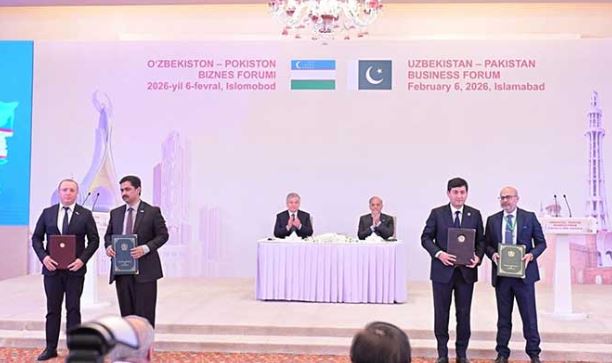
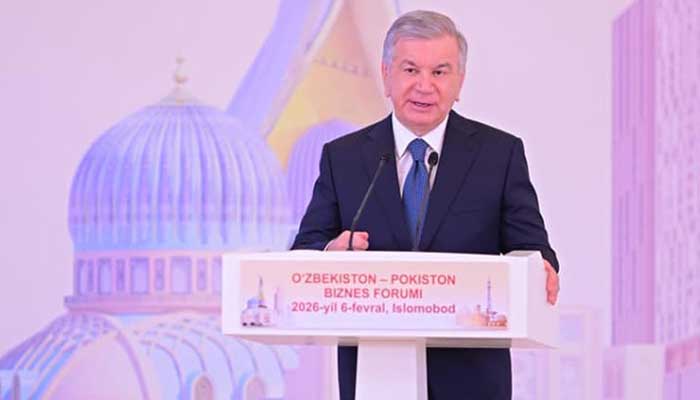
ISLAMABAD, FEB 6 – Prime Minister Shehbaz Sharif on Friday invited Uzbek business firms to explore investment opportunities in Pakistan’s textile, pharmaceutical, mining, agriculture, and tourism sectors, as private sector entities from both countries signed memoranda of understanding (MoUs) worth $3.4 billion for B2B cooperation.
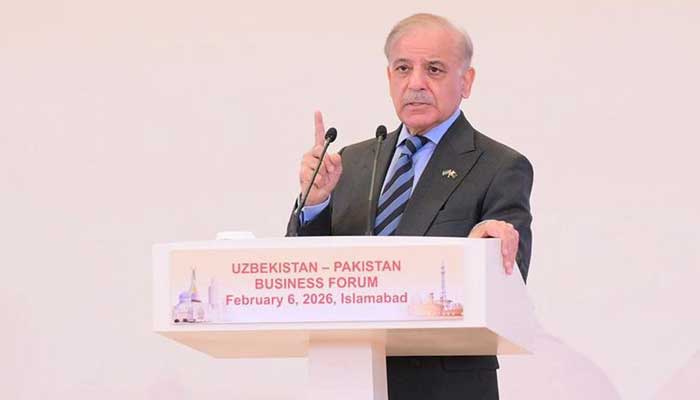
The prime minister, addressing the Pakistan-Uzbekistan Business Forum held along with Uzbek President Shavkat Mirziyoyev, who is on a two-day state visit to Islamabad, said that both sides had signed a protocol on Friday to achieve an “ambitious yet easily achievable” target of increasing bilateral trade to $2 billion in five years.
At the forum attended by the ministers and businessmen from both sides, the two leaders assured the investors to provide a conducive business environment with no room for systemic hurdles.
Both leaders welcomed the B2B deals with the Uzbek president, calling it “very much achievable” because both sides had a very good program already drafted and established.
“I am here, of course, as Prime Minister of Pakistan, but for this forum as the CEO of Pakistan. I am just a telephone call away. My colleagues are just a telephone call away. We will remove any bottleneck or impediment on the way. And I would like to assure you that bureaucracy and red tapism will not create any kind of hurdle in your business proposals,” Prime Minister Shehbaz committed.
Recalling his participation in a similar business forum last year in Tashkent, he said the deliberations there had led the bilateral trade to $450 million during the last year, which was still far below the potential.
He expressed the hope that President Mirziyoyev’s visit would go a long way to strengthen bilateral relations and convert them into a level of unprecedented economic cooperation.
Referring to the signing of $2 billion trade protocol, he said that Pakistan-Uzbekistan relations would now be measured by trade flows, investment projects, industrial partnerships and people-to-people exchanges.
PM Shehbaz said both countries would form a working group to come up with a roadmap of five years to promote trade, investment portfolio, and joint collaborations in research and development, IT, and agriculture.
Highlighting his government’s achievements on the economic front, he said the country had transitioned from a period of severe physical turbulence in 2023 to an improved economic conditions with the inflation rate down from over 30% to a single digit, banking policy rate from 22.5% to 10.5%, and IT sector exports are touching $3.8 billion.
Shehbaz Sharif said Pakistan and Uzbekistan stood to benefit immensely from each other’s strengths in key sectors.
He also appreciated the economic achievements of President Mirziyoyev’s government, including doubling of GDP in just 10 years, lifting 8.5 million people out of poverty and unemployment reduced by half.
The prime minister said 30 redundant textile plants in Uzbekistan could provide a win-win opportunity for investors from both sides and expressed the hope that PIA flights to Uzbekistan would boost people-to-people contact.
In his remarks, President Mirziyoyev said that the business forum reflected the long-standing shared intentions and deep mutual understanding.
He congratulated PM Shehbaz and the people of Pakistan on the remarkable economic progress with reduced inflation, single-digit interest rates, and strong recovery which he said provided excellent opportunities for deeper cooperation.
Calling the business community a “true bridge” between two nations, he said that through the $2 billion trade protocol, both sides had committed to zero corruption, no bottlenecks, and no obstacles.
He said Uzbekistan needed Pakistan’s expertise and high-quality in the pharmaceutical sector, affordable medicines and offered 10-year tax exemptions, support, and all conducive conditions.
He told the gathering that Uzbekistan had around 30 high-tech textile enterprises awaiting Pakistani management and expertise to access world markets, and also expressed his country’s strong interest in collaborations in leather goods.
Regarding mining cooperation, he said Uzbek relevant ministry was ready to finalize action plans and that his country had a growing demand for rice, potatoes, processed meat and was open to joint ventures, land allocation, and cooperation in seed production.
The Uzbek president said that four weekly flights were operating from Uzbekistan to Pakistan and more routes would boost people-to-people and business links.
He invited Pakistani businesspersons to visit Uzbekistan to study opportunities, develop plans, and start operations, assuring all necessary support.
Later, the two leaders also witnessed the exchange of the documents of pre-signed MoUs between the business entities from both sides.
President Asif Ali Zardari has said that Pakistan attaches great importance to its close and brotherly relations with Uzbekistan and views the partnership as a natural and enduring one rooted in shared history, culture and faith.
The president made these remarks during a meeting with his Uzbek counterpart Mirziyoyev, who called on him at Aiwan-e-Sadr, a press release issued by the Presidency said.
He said that Pakistan is committed to elevating bilateral relations to new heights through closer cooperation in connectivity, trade and people-to-people contacts.
Welcoming his Uzbek counterpart, President Zardari expressed confidence that the visit would prove productive and forward-looking.
He described President Mirziyoyev as a visionary statesman whose leadership has transformed Uzbekistan into a modern and prosperous country, and whose contributions to regional and international peace are widely recognised.
He also acknowledged President Mirziyoyev’s personal role in bringing Pakistan and Uzbekistan closer.
President Zardari said that Pakistan and Uzbekistan are natural partners with intertwined futures and expressed satisfaction over the positive trajectory of bilateral relations.
He reaffirmed Pakistan’s commitment to working closely with Uzbekistan to further strengthen cooperation in trade, connectivity, defence, security, culture and heritage.
He noted that direct air links between the two countries have brought their peoples closer and underscored the importance of regional connectivity initiatives, including the Uzbekistan-Afghanistan-Pakistan Railway Project, while highlighting the need to address remaining challenges through collective efforts.
The president highlighted the steady growth in bilateral trade in recent years and underscored the need to realise the true economic potential of the relationship, with the shared objective of expanding trade to $2 billion as agreed by the two sides.
He also stressed the importance of enhancing people-to-people contacts, tourism cooperation and cultural exchanges, drawing on the rich historical and spiritual links between the two nations.
President Zardari also expressed the need to extend collaboration and facilitation between the financial institutions, including banks, to support trade and investment flows.
President Mirziyoyev said that Uzbekistan attached great importance to strengthening friendship and the strategic partnership with Pakistan.
He noted with satisfaction the steady growth in bilateral contacts at various levels, including the expansion of trade, an increase in joint ventures, and the implementation of cooperation projects in priority sectors of the economy.
He directed his concerned minister to coordinate with the Pakistani counterpart in this regard.
The Uzbek president emphasised the need to further expand practical cooperation through closer political dialogue, stronger trade, economic and investment ties, and more active business exchanges.
He also invited President Zardari to pay an official visit to Uzbekistan.
He also said that two additional direct flights would be added between the two countries, taking the total number of weekly flights to six, to further facilitate people-to-people contacts, tourism and business exchanges.
During the meetings, the two presidents also discussed the regional situation, including matters affecting peace, stability and security.
They first held a tête-à-tête meeting, during which they exchanged views on key bilateral, regional and international issues.
This was followed by an extended meeting with their respective delegations.
The delegation-level talks were attended on the Pakistan side by Deputy Prime Minister and Foreign Minister Senator Ishaq Dar, Federal Minister for Commerce Jam Kamal Khan, Federal Minister for Railways Muhammad Hanif Abbasi, Balochistan Chief Minister Sarfraz Ahmed Bugti, SAPM on Industries and Production Haroon Akhtar, Senator Saleem Mandviwala, Raja Pervez Ashraf, Nayyar Bukhari, Pakistan’s ambassador to Uzbekistan, and secretary foreign affairs.
The Uzbek delegation included Advisor to the President Abdulaziz Kamilov, Minister of Defence Shukhrat Khalmukhamedov, Minister of Investment, Industry and Trade Laziz Kudratov, Minister of Transport Ilkham Makhkamov, Minister of Mining Industry and Geology Bobir Islamov, Minister of Agriculture Ibrokhim Abdurakhmonov, Minister of Culture Ozodbek Nazarbekov, First Deputy Minister of Foreign Affairs Bakhrom Aloev, and Ambassador of Uzbekistan to Pakistan Alisher Tukhtaev.
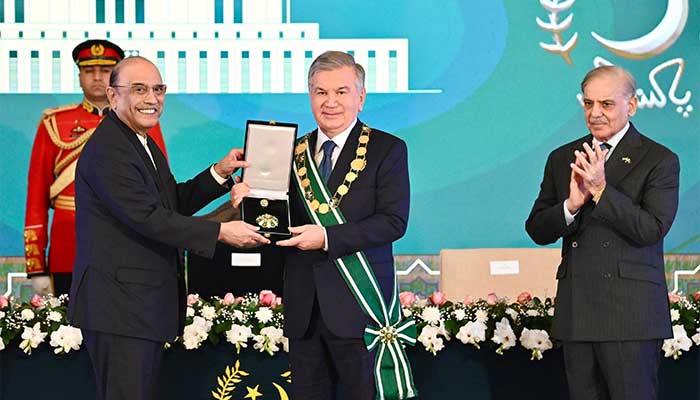
Later, during a Special Investiture Ceremony, President Zardari conferred the Nishan-e-Pakistan on President Mirziyoyev in recognition of his contribution to strengthening Pakistan-Uzbekistan relations.
The ceremony was attended by, among others, PM Shehbaz, members of the federal cabinet, Chief of the Air Staff Air Chief Marshal Zaheer Ahmed Baber Sidhu, members of the diplomatic corps and parliamentarians, and was followed by a state banquet hosted in honour of the visiting president.
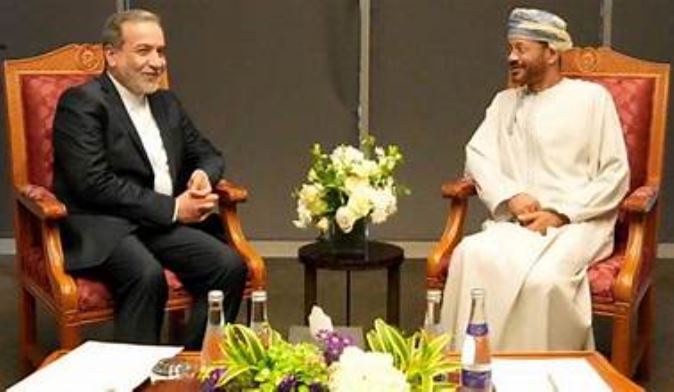
OMAN: Iran and the United States commenced high-stakes negotiations in Oman on Friday over Tehran’s nuclear programme, but a dispute over the agenda suggests progress will be hard won amid the threat of a regional Middle East war.
While both sides have signaled readiness to revive diplomacy over Tehran’s long-running nuclear dispute with the West, Washington wants the talks to cover Iran’s nuclear programme, its ballistic missiles, support for armed groups around the region and its “treatment of their own people”, US Secretary of State Marco Rubio said on Wednesday.
Iran has said it wants Iran’s Foreign Minister Abbas Araghchi and US Middle East envoy Steve Witkoff to discuss only nuclear issues in Muscat.
Iran’s foreign minister called on Friday for “mutual respect” ahead of talks with the United States on the Islamic republic’s nuclear programme and other issues.
“Iran enters diplomacy with open eyes and a steady memory of the past year. We engage in good faith and stand firm on our rights,” Abbas Araghchi wrote on X.
“Commitments need to be honored. Equal standing, mutual respect and mutual interest are not rhetoric – they are a must and the pillars of a durable agreement. “
Tehran said it will engage in the talks “with authority and with the aim of reaching a fair, mutually acceptable and dignified understanding on the nuclear issue”.
“We hope the American side will also participate in this process with responsibility, realism and seriousness,” Foreign Ministry spokesman Esmail Baghaei said on Thursday.
Tehran’s leadership remains deeply concerned that US President Donald Trump may still carry out his threats to strike Iran amid a buildup by the US Navy near Iran.
The US naval buildup, which Trump has called a massive “armada”, has followed a bloody government crackdown on nationwide protests in Iran last month, heightening tensions between Washington and Tehran.
White House Press Secretary Karoline Leavitt on Thursday told reporters that Trump was looking to determine whether a deal can be struck but also issued a warning.
“While these negotiations are taking place, I would remind the Iranian regime that the president has many options at his disposal, aside from diplomacy as the commander in chief of the most powerful military in the history of the world,” she added.
ISLAMABAD: In a significant move to assert parliamentary supremacy, a Senate rule was amended on Friday with the aim to curb judicial interference in parliamentary affairs.
The amendment to rule 166(5) of the Rules of Procedure and Conduct of Business in the Senate was approved by the upper House of Parliament as chair rejected the government’s request to defer the matter.
A motion seeking the amendment to the rule was moved by PPP, PML-N and Muttahida Qaumi Movement (MQM) senators.
However, during the session, PML-N’s Rana Sanaullah, who is special assistant to the prime minister on political affairs, conveyed Law Minister Azam Nazeer Tarar’s request that the motion may not be taken up before the matter was discussed with him.
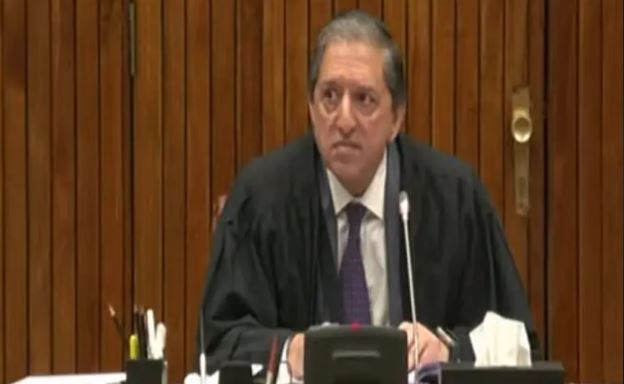
However, PPP Senator Saleem Mandviwala, who spearheaded the move to amend the rule and was also chairing the session today, highlighted that the “interference of courts” in House committees’ proceedings was the reason behind the need for the change in the rule.
“High courts granted stays on the cases and petitions admitted by the chairman,” he pointed out, adding that there had been “back and forth on the amendment for months”.
“We do not want to delay it any further.”
But, Sanaullah asked what the urgency was.
In response, Mandviwala said the functioning of the committees was getting affected. “The amendment is in the interest of Senate and its committees, and it has already been unanimously approved by the standing committee concerned,” he contended.
Stressing that it was desire of the House, Mandviwala said he had already discussed it with the law minister and the attorney general for Pakistan (AGP).
However, Sanaullah insisted that the matter be deferred till Monday.
But, Mandviwala did not budge, asking Sanaullah not to insist for the amendment’s deferment.
“I have to proceed [with the session],” he said, asking Senator Abdul Qadir to move the motion, which was passed by the House by a majority vote.
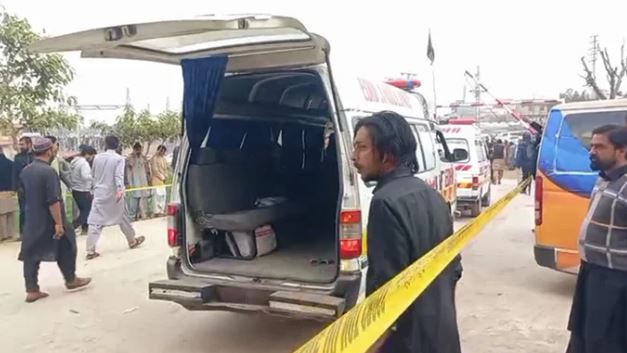
ISLAMABAD, FEB 6 /DNA/ – Prime Minister Shehbaz Sharif, in a strong statement, condemned the “heinous terrorist attack” and expressed his deep grief and solidarity with the victims’ families. He directed the authorities to provide the best possible medical care to the injured.
A devastating suicide bombing struck an imambargah in the federal capital during evening prayers on Wednesday, resulting in at least 31 fatalities and leaving dozens of worshippers wounded, many critically.
The powerful explosion ripped through the crowded place of worship, causing scenes of chaos and panic. Emergency services rushed to the site, with ambulances ferrying the injured to nearby hospitals. Rescue officials fear the death toll may rise as several of the injured are reported to be in critical condition.
Security forces have cordoned off the area and launched an investigation. While no group has immediately claimed responsibility for the attack, authorities have confirmed it was a suicide blast. Forensic teams are collecting evidence from the scene.
“The entire nation stands united against the menace of terrorism,” the PM stated. He issued immediate directives: “Those responsible for this barbaric act must be identified and brought to justice immediately.” He also ordered a comprehensive security review for all places of worship.
The attack has sent shockwaves across the country, drawing widespread condemnation from political leaders, religious scholars, and civil society. It marks one of the deadliest sectarian-targeted attacks in the capital in recent years, raising serious concerns about security.
A high-alert has been declared in the city, and security has been tightened at all sensitive locations. Investigations are ongoing.
Everyone seems to have a theory about artificial intelligence. Some imagine a future dominated by super intelligent machines, capable of transforming societies in ways unprecedented in history. Others envision a more incremental trajectory, where AI enhances productivity, accelerates scientific discovery and gradually reshapes economic and military landscapes without a sudden leap. The divergence in these expectations underscores the difficulty policymakers face: how does one prepare for a technology whose pace, impact and diffusion remain uncertain?
Central to any discussion of AI strategy are assumptions about the replicability of breakthroughs. Some analysts expect rapid imitation: rivals could soon catch up through reverse engineering, access to leaked models, or innovative use of existing infrastructure. Others argue that the complexity of AI, particularly its reliance on proprietary hardware, vast datasets and specialised expertise, creates durable advantages for those who reach the frontier first. Similar disagreements surround China’s ambitions. Some contend Beijing is determined to surpass the United States in frontier innovation, while others suggest it prioritises deploying existing technologies and adapting American breakthroughs once they appear.
The stakes are high. Strategies built on incorrect assumptions risk wasting resources and losing technological leadership. For Washington, the challenge is not predicting a single future but building resilience across multiple possibilities. AI strategy must ensure that national security, economic competitiveness and democratic values are strengthened, even as the shape of the AI era remains uncertain. A useful framework for understanding the challenge involves three central questions: first, will AI progress accelerate toward superintelligence, or will it plateau in uneven and bounded ways? Second, will breakthroughs be easy to replicate, or will catching up remain difficult and costly? Third, is China racing aggressively toward frontier AI, or is it prioritising diffusion and adaptation? Each question has two plausible answers, yielding a three-dimensional matrix with eight potential scenarios, each with distinct strategic implications.
The first dimension AI progress spans a spectrum from superintelligence to bounded and jagged advancement. Superintelligent AI, capable of recursive self-improvement, would be a transformative force with far-reaching consequences for economics, science and military power. Even a narrow lead could prove decisive, justifying substantial investments in frontier research. In contrast, bounded and uneven AI delivers significant capabilities in areas such as mathematics, coding and logistics, yet remains constrained in creativity, judgment and physical application. In such a world, prioritising broad deployment and diffusion may be more effective than concentrating resources on a few moonshot projects. The second axis considers the ease of replication. In a world where catching up is straightforward, technological advantages are fleeting and strategy centres on rapid adoption and embedding systems across allied networks. Conversely, if replication is difficult, the focus shifts to safeguarding critical infrastructure, datasets and human capital. Here, the first mover retains a lasting edge and the ability to compound advances over time becomes a central concern. Strategy must then balance diffusion with the protection of core capabilities.
The third axis focuses on China’s intentions. At one extreme, Beijing races aggressively toward frontier innovation, funding major training runs and competing laboratories. At the other, it emphasises adoption and diffusion, occasionally producing frontier-scale models to signal capability but relying on replication and adaptation of foreign breakthroughs. While China’s internal strategy may vary across institutions, its overall behaviour determines whether Washington must prepare for direct competition at the frontier or a focus on global diffusion. Across these dimensions, eight worlds emerge, each demanding tailored policy responses. In the most extreme scenario—superintelligence, difficult replication and an aggressive China—the United States could face a contest akin to a technological arms race. Here, securing frontier breakthroughs becomes a matter of national survival. Policymakers may need to mobilise extraordinary resources, coordinate government and private sector efforts and strengthen security across the semiconductor supply chain, training infrastructure and model data. International risk management would be crucial, including potential restraint agreements with China to avoid unintended escalation and maintain human oversight of autonomous systems.
In a variation where superintelligence is achievable and replication remains difficult, but China does not race aggressively, the United States might enjoy a unipolar moment. The challenge here is less about competition and more about the responsible use of transformative capabilities. Securing critical infrastructure and talent, safeguarding intellectual property and pacing development to ensure safety would be priorities. Diffusion of technology would be selective, extending access to trusted allies and partners, while domestic policy could focus on harnessing productivity gains for broad-based prosperity and social resilience.
If breakthroughs are easily copied, the race shifts from frontier research to global diffusion. Here, the advantage lies in who deploys systems fastest, shapes standards and integrates technology into domestic and allied industries. In such a world, export controls and secrecy have limited effect; strategy must emphasise deployment, adoption and embedding systems aligned with democratic values. Cooperation with allies becomes indispensable, not only to extend technological influence but also to manage security risks arising from rapid proliferation.
Even if superintelligence remains out of reach, frontier competition remains significant. A scenario where replication is hard and China races toward the frontier presents a protracted innovation contest. The United States must sustain research and development, invest in industrial capacity and ensure early deployment of capable systems. Diffusion remains important, but the emphasis shifts toward building a durable advantage over time, rather than achieving immediate global dominance.
Across all scenarios, certain constants emerge. Computing power underpins AI capability. Control over chips, data centres and energy resources determines who can train and deploy advanced systems. Robotics and advanced manufacturing translate digital intelligence into tangible economic and military capacity. A strong industrial-scientific base, a robust talent pool and resilient infrastructure remain essential. Risk management—often seen as a constraint—is equally a source of stability, ensuring that technological progress does not outpace safety, oversight, or societal readiness.
Policymakers also shape the trajectory of AI indirectly. Through incentives, regulations, research funding, export controls and strategic signalling, Washington can influence where investment flows, which capabilities mature and how systems diffuse globally. Engaging with allies to offer trusted alternatives to Chinese technology and embedding safe and open systems abroad strengthens both security and global influence. Yet the private sector remains central and its priorities do not always align with national objectives. Managing this tension balancing frontier innovation, deployment and risk is among the United States’ greatest challenges.
The eight-world framework serves not to forecast a single outcome but to discipline thinking, expose hidden assumptions and test strategies against a range of possibilities. Policymakers must select a base case, hedge against adverse outcomes and identify policies resilient across multiple scenarios. Intelligence and national security agencies should monitor signals along each axis, updating strategic assumptions as evidence accumulates. This probabilistic approach allows for flexibility, adaptability and informed decision-making in a rapidly evolving technological landscape. Finally, this framework is instructive beyond the government. Debate over AI often degenerates into advocacy for opposing visions. By clarifying assumptions whether about the pace of progress, replicability of breakthroughs, or China’s intentions participants can engage more productively, distinguishing between differences in assumptions and differences in strategy.
Geopolitics in the AI era will not be simple. Yet, without a disciplined framework, hidden assumptions and untested narratives risk guiding policy, squandering advantage and undermining security. Mapping possible worlds and the decisions they entail enables both policymakers and citizens to navigate uncertainty. The task for the United States is clear: treat AI not as a single story but as a shifting landscape. Success will go to those who understand the multiplicity of futures and act strategically, rather than reacting to the illusion of certainty.
In an era defined by uncertainty, clarity comes not from predicting a single outcome but from preparing for all plausible ones. The AI age is already upon us and the choices made today will define the balance of technological power, economic influence and national security for decades to come.
ISLAMABAD: In a historic move, Pakistan Football Federation (PFF) President Syed Mohsen Gilani has confirmed Pakistan’s participation in the FIFAe 2026 Season, marking the country’s first-ever entry into the global FIFA esports arena.
The announcement reflects the PFF’s continued efforts to ensure Pakistan’s representation on the international stage across multiple platforms, including esports.
“We are committed to making the most of this opportunity,” said Mohsen Gilani. “It will provide a significant boost to esports talent in Pakistan, particularly those passionate about football gaming.”
Pakistan will compete in the eFootball™ Console category, one of the three official titles featured in the FIFAe competition. Gilani stated that the PFF is seeking top gaming talent through a nationwide activation and trials process.
“For the upcoming phases, the PFF will also be seeking a national partner,” he added. Prospective partners will be invited to submit an Expression of Interest (EOI) along with a comprehensive partnership plan.
According to the eligibility criteria, interested participants must be at least 16 years of age at the time of registration, possess a valid and registered FIFAe Player Account on FIFA.GG, and must not be subject to any active sanctions under the Rocket League Championship Series (RLCS), any KONAMI-sanctioned tournaments, or any FIFAe competitions.
The trials will pave the way for the selection of players who will go on to represent Pakistan in the 2026 FIFAe Season, which will culminate in the FIFAe World Cup 2026, scheduled to be held in Saudi Arabia later in the year.
Pakistan’s education policy today suffers from a quiet but troubling contradiction. On paper, official curriculum documents speak confidently of preparing students for the future. They invoke ideas of active citizenship, sustainable development and global awareness, suggesting a system that encourages informed, responsible participation in society. Inside classrooms, however, the reality tells a different story. Teaching remains dominated by rote learning, examinations reward memorisation, and students are rarely encouraged to question, debate or reflect. The result is a widening gap between what education policy promises and what it actually delivers.
This gap becomes particularly visible when one looks closely at Pakistan Studies, a subject that should lie at the heart of civic education. Instead of helping young people understand society, power, rights and responsibilities, the subject increasingly functions as an exercise in recalling approved facts. A review of the Sindh Curriculum (revised 2020) and the National Curriculum of Pakistan (2023) reveals that despite differences in structure and presentation, both documents fall short of their stated ambitions. The true priorities of any curriculum are not found in its opening statements or guiding principles. They are embedded in Student Learning Outcomes, which determine what teachers teach, what textbooks include and what examiners test. In Sindh’s secondary-level Pakistan Studies curriculum for Grades IX and X, a majority of learning outcomes ask students to define terms, list events or describe developments. These tasks may be easy to measure, but they demand little intellectual engagement. They do not ask students to weigh evidence, make judgments or connect historical knowledge to present realities.
The national curriculum, introduced as part of a broader effort to promote conceptual learning, appears more progressive in language but not substantially different in substance. While it refers to themes and competencies, many of its learning outcomes still stop short of encouraging deeper thinking. Students are told what conclusions to reach rather than being guided through the process of reaching them. Knowledge flows in one direction, from textbook to student, leaving little space for inquiry or interpretation. This reflects a deeper structural problem. Provincial and federal authorities may use different frameworks, one emphasising historical progression and the other thematic organisation, but both ultimately reproduce the same classroom culture. Textbooks remain predictable, teachers feel constrained by examination demands, and students learn quickly that success depends on reproducing authorised answers. Reform, in this sense, becomes more about relabelling than transformation.
The treatment of global citizenship and sustainable development offers a clear example. In the Sindh curriculum, students are typically asked to identify environmental problems or name their effects. The national curriculum sometimes goes a step further, asking for general solutions. Yet international educational standards expect students to analyse underlying causes, consider competing priorities and propose realistic interventions within their own communities. The difference is not merely technical. One approach trains students to repeat information; the other prepares them to engage with real-world challenges. Equally concerning are the silences within these curricula. Digital citizenship, online rights, ethical use of technology and basic economic or entrepreneurial skills receive little attention. Students are required to memorise long historical timelines, often inherited from colonial-era frameworks, but are given minimal guidance on how to navigate the political, social and economic pressures of contemporary life. In a society where public debate, activism and even livelihoods increasingly unfold online, this omission carries serious consequences.
The problem is not simply that content is outdated, but that complex ideas are reduced to checklists. Values such as patriotism, civic responsibility and empathy are presented as fixed statements rather than explored as lived experiences shaped by social context. Learning outcomes overlap excessively, creating crowded textbooks that prioritise quantity over coherence. In some grades, important conceptual threads disappear altogether, leaving gaps that teachers are ill-equipped to address. Assessment practices reinforce these weaknesses. When examination questions repeatedly ask students to “state”, “describe” or “discuss”, textbooks respond by offering ready-made paragraphs. Students quickly learn that questioning the material is risky, while reproducing it is safe. Critical engagement becomes not a skill to be rewarded, but a liability to be avoided.
Closing this vision gap requires more than cosmetic changes. Reprinting textbooks, adjusting headings or introducing new terminology will not be enough. What is needed is a shift in how learning outcomes are framed and how learning is assessed. The language of instruction must move beyond recall. Students should be asked to analyse policies, evaluate historical decisions and propose solutions to contemporary social problems. Such changes would naturally push classrooms away from memorisation and towards meaningful engagement. Citizenship education must also reflect the realities students already inhabit. Discussions of rights and responsibilities cannot remain confined to abstract constitutional ideals. They must include digital spaces, online behaviour, access to information and economic participation. Civic identity today is shaped as much by screens as by streets, and education must acknowledge that fact.
Similarly, global development goals should be linked to action rather than slogans. Instead of merely identifying problems, students should be encouraged to design small, practical initiatives within their communities. Even limited projects can teach responsibility, cooperation and problem-solving more effectively than abstract definitions. Assessment reform is equally critical. Examinations should test how democratic principles, social responsibilities and legal frameworks apply to current challenges, such as environmental stress, inequality and governance failures. This would signal to teachers and students alike that understanding matters more than memorisation.
Education does more than prepare individuals for employment; it shapes citizens. If Pakistan’s curricula continue to speak the language of the future while teaching the habits of the past, the gap between policy ambition and social reality will continue to widen. Bridging this gap is not merely a technical task. It is a political and moral choice about the kind of society Pakistan hopes to become.
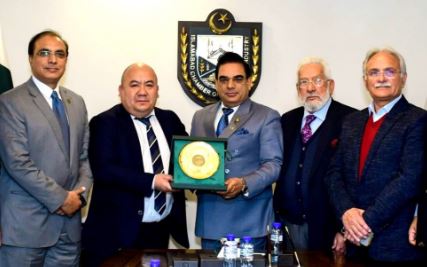
ISLAMABAD, FEB 6 /DNA/ – President Islamabad Chamber of Commerce and Industry (ICCI), Sardar Tahir Mehmood, has reaffirmed the Chamber’s strong commitment to facilitating the business community by fostering meaningful collaborations with overseas chambers to enhance trade, investment, and sectoral growth.
He expressed these views while welcoming Deputy Director General of the Agency of Plant Protection and Quarantine under the Cabinet of Ministry of Agriculture of Uzbekistan, Ulugbek Yunusov, who visited ICCI along with a three-member delegation to explore avenues of cooperation, particularly in the fruit and vegetable sector.
Highlighting the close historical and brotherly relations between Pakistan and Uzbekistan, Sardar Tahir Mehmood said that ICCI is actively working to strengthen international business linkages through B2B meetings, Business Opportunity Conferences, and recognition ceremonies to create tangible outcomes for the private sector. He further apprised the visiting delegation that ICCI is planning to convene an International Industrial Exhibition, in collaboration with embassies and foreign missions, to showcase the trade and investment potential of friendly countries by emphasizing that such initiatives would provide an effective platform for joint ventures, technology transfer, and market access, ultimately contributing to sustainable economic growth in both countries.
Speaking on the occasion, the visiting guest showcased Uzbekistan’s vast potential in the fruit sector and expressed keen interest in developing joint ventures with Pakistani stakeholders to boost bilateral fruit exports and enhance overall agricultural productivity. He also sought ICCI’s support in establishing strong linkages with key players of Pakistan’s fruit and vegetable sector.
Praising Pakistan’s youth, he said that the country’s young population is well equipped with IT and digital expertise, therefore e-commerce platforms could serve as an effective tool for expanding agricultural trade and accessing international markets.
Senior Vice President ICCI, Tahir Ayub, highlighted the fruit and vegetable potential of the region and informed the delegation about the various countries to which exports are currently being carried out. He also mentioned that security uncertainty in Afghanistan remains the most significant bottleneck for the Southern Corridor.
Those present on the occasion included Vice President Irfan Chaudhry, former ICCI Presidents Zubair Ahmed Malik, Mohammad Ejaz Abbasi, Executive Member Ishaq Sial, Naveed Akhtar Satti, and ICCI members.