Home Blog Page 2628

FOREIGN AFFAIRS COMMITTEE VOICES CONCERN OVER THE AFGHANISTAN CRISIS

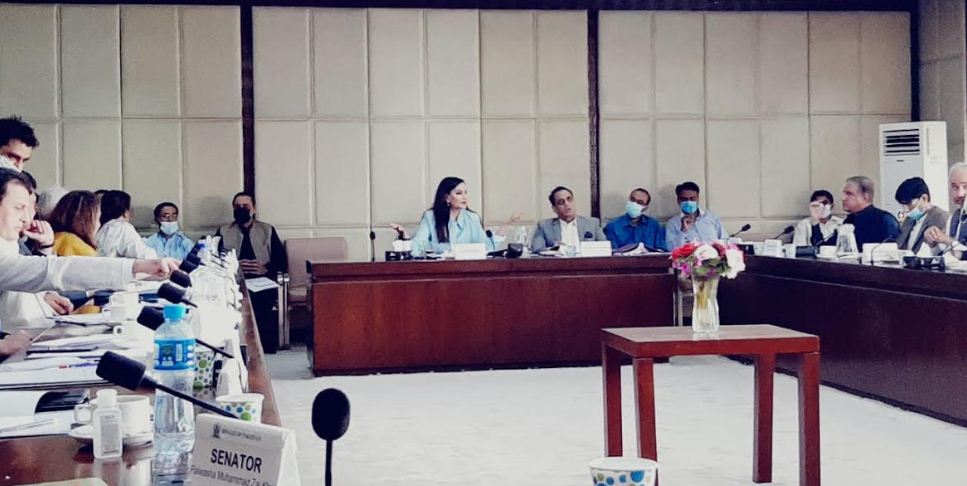
ISLAMABAD, JUL 9 (DNA) – Chairing the first Senate’s Foreign Affairs Standing Committee meeting, PPP Parliamentary Leader in the Senate, Senator Sherry Rehman said, “The Foreign Affairs Committee is an optimal parliamentary instrument for building consensus on key issues that beset the country at a difficult time in the region.

This is not a political jalsa, but an important venue for building stakes in inclusive policy-making, particularly when pressures from Afghanistan loom large, including the threat of civil war and escalating violence which could likely result in a spillover into Pakistan.

Since the task of any effective foreign policy is first to protect the country’s people, territory and state, it is crucial we have some meetings that are public in order to send a message to the world that Pakistan’s parliament speaks with a mature, self-confident voice about both our responsibilities in the region and limits on them.

 Peace both at home and abroad, connectivity, neutrality in Afghanistan and support for a negotiated political settlement that is Afghan-owned and led have been Pakistan’s stated policy since 2012, when strategic depth was officially jettisoned as both a plan and message to send to a sovereign Afghanistan. It is good to see that there is a multi party constant on these even today. Hence, it is important to discuss these issues in an open and constructive environment”.

“Members have voiced concerns about the impact of the accelerated United States’ exit, and the security vacuum that has ensued. We hope the security stalemate is resolved peacefully as talks continue in other regional countries, and we also hope that gains made in the last 20 years are not reversed.

There are natural questions based on a potential worsening of the crisis, and the fact remains that the Taliban are negotiating now from a position of unprecedented strength. Pakistan’s first priority must be to protect our population from a surge in violent extremism, as well as a constructed narrative from certain spoiler quarters that Pakistan has to bear the responsibility of both security and peace in Afghanistan. The burden must be shared by the region and international community in meaningful ways, and for this Pakistan must launch a diplomatic offensive for a big-tent conference that shares the task of negotiating peace, and shoring up a torn country driven by a war economy.”

 Rehman also said “It is not the best time to be making enemies in any geopolitical contest in the region or in the broader global context, given our exposure to the multilateral system. Pakistan should not get caught up in the crosshairs of any new great game, or at least manage a balance,” she added.

Vice President PPPP Senator Sherry Rehman concluded by saying, “The situation in Afghanistan needs to be carefully handled as Pakistan cannot afford any possibility which threatens our national interests and undermines our efforts for a peaceful solution to the Afghan crisis.

We have always supported a peaceful resolution of the Afghan conflict however, it is important to take into account the post-withdrawal situation and encourage a more inclusive system of governance to give peace a chance to flourish as this will help in the progress and prosperity of the region”.

The Committee was given a detailed briefing by the Foreign Minister, Shah Mehmood Qureshi who said that we want peace and stability in the region. Dr. Moeed Yusuf, National Security Advisor to PM attended the meeting as a special invitee, and briefed the committee on the options and security prospects Pakistan faces. The meeting was also attended by Leader of the House in the Senate, Senator Shahzad Waseem, who asked about the economic crisis facing Afghanistan, Senator Mushahid Hussain, Senator Saadia Abbasi, Senator Faisal Javed, Senator Dr. Zarqa Soharwardy, Senator Walid Iqbal, Senator Samina Mumtaz, Senator Sarfaraz Ahmed Bugti, Senator Palwasha Muhammad Zai Khan, Senator Muhammad Tahir Bizenjo, and Senator Anwar Ul Haq Kakar.

 Members were concerned about Pakistan’s responses in the event of more urban centres in Afghanistan falling, and agreed that there should be no sustainable military solution to Pakistan.

They also shared their views on potential risks to Pakistan in the event of a worsening crisis in Afghanistan. The Chair, Senator Sherry Rehman concluded by thanking all the members and the Ministry of Foreign Affairs and said that the next meeting will be called in-camera for a more detailed briefing and candid inputs from members, but the committee will continue to serve as a nodal point for open discussions and constructive debate as well.=DNA

==================
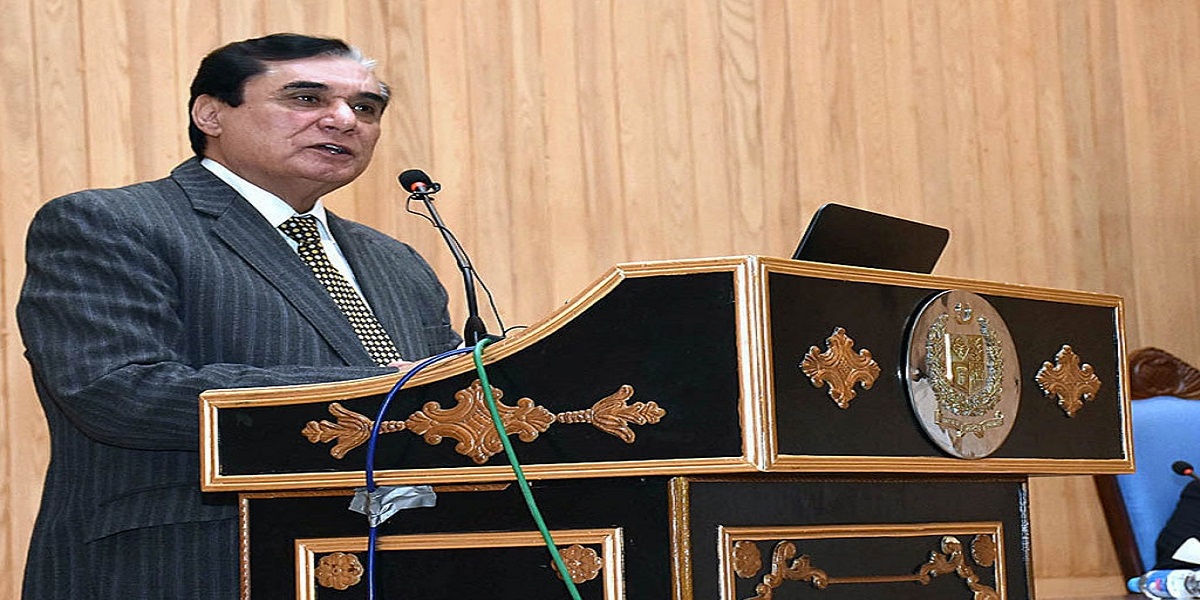
NAB’s Effective Anti-Corruption Strategy Started yielding Excellent Results: Chairman NAB

ISLAMABAD, July 09, 2021: Honorable Mr. Justice Javed Iqbal, Chairman NAB chaired a high level meeting to review overall performance of NAB at NAB Headquarters.

During the meeting, briefing was given on the overall progress of NAB, especially initiatives taken during the present management of NAB under the dynamic leadership of Honorable Mr. Justice Javed Iqbal, Chairman NAB. It was informed that NAB had been established in 1999 and assigned with the responsibility of eradication of corruption and recovery of looted money from corrupt elements. Since its inception, NAB has recovered Rs. 814 billion directly and indirectly. Presently, there are 1273 references under trial in respected Accountability Courts Throughout the court and their total worth is about Rs. 1305 billion. It was informed that Honorable Mr. Justice Javed Iqbal, Chairman NAB after assumption of his responsibilities as Chairman NAB had taken various measures in order to revamp NAB and had chalked out an effective Anti-Corruption Strategy comprising Awareness, Prevention and Enforcement. NAB’s Anti-Corruption Strategy for eradication of corruption has been acknowledged by national and international organizations like Transparency International, World Economic Forum, PILDAT and Mishal Pakistan. As per Gilani and Gallup survey, 59 percent people have shown trust in NAB.

The year 2017 was the year of rejuvenation of NAB in which many initiatives were taken on the direction of Honorable Mr. Justice Javed Iqbal, Chairman NAB in order to pursue corruption cases on merit without any fear and favor under the Enforcement Strategy. The Enforcement Strategy of NAB proved very successful in 2018, 2019 and 2020. Due to this reason, the present management of NAB has decided to continue NAB’s Enforcement Strategy in 2021. The salient features of NAB Enforcement Strategy are as under:

NAB operations start its functioning about an alleged act of corruption & corrupt practices as defined under section 9. The process initiated with verification of the contents of the complaint received and the applicability of the provisions of law. This process is called Complaint Verification (CV) wherein the complainant is called for confirming the status and evidence available with him. Once it is determined that the alleged offence falls under NAO and available material justifies for further process, the same is processed for subsequent action. In the second step, inquiry under section 18 of the NAO is authorized to confirm the committal of offence and collection of evidence to identify the alleged person(s) involved. The record / evidence collection process is supplemented with recording of statements of witnesses and accused persons. This whole process is completed after due deliberations at each level by giving consideration to the role of Combined Investigation Teams (CITs) and in the Regional Executive Board Meetings (RBMs).

NAB has itself devised to rationalize the workload and timelines have been prescribed for efficient, effective and expeditious disposal of cases putting a maximum limit of 10 months- from complaint verification-to-inquiry-to-investigation and finally to a reference in the Accountability Court. In order to ensure uniformity and standardization, the Standard Operating Procedures (SOPs) for investigation officers (IOs) in vogue were reviewed and revised in order to benefit from the experience and collective wisdom of senior supervisory officers, a system of CIT comprising of Director, Additional Director, Investigation Officer and a Senior Legal Counsel has been put in place. This is not only lending quality to the work but also ensures that no single individual can influence the proceedings. The implementation of enforcement measures and prosecution matters are being monitored in NAB through daily, weekly and monthly reports and inspections.

WHO concerned about worsening access in Afghanistan

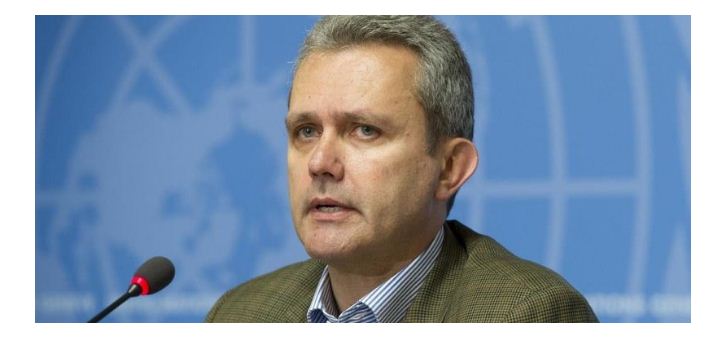
The World Health Organization is concerned about worsening access to provide life-saving medicines and supplies in Afghanistan and attacks on health care facilities, as Afghan forces fight Taliban insurgents, a WHO official said on Friday.

Rick Brennan, WHO regional emergencies director for its Eastern Mediterranean regional office, said that aid supplies would arrive next week including 3.5 million COVID-19 vaccine doses and oxygen concentrators.

“It is a terribly concerning situation and it’s very fluid right now,” Brennan, speaking from Cairo, told a U.N. briefing in Geneva. “We are concerned about our lack of access to be able to provide essential medicines and supplies and we are concerned about attacks on health care.”

DISCUSSION ON “UNDERSTANDING THE LEGAL FRAMEWORK AND REGULATORY REGIMES OF CENTRAL ASIA” ORGANIZED

DNA

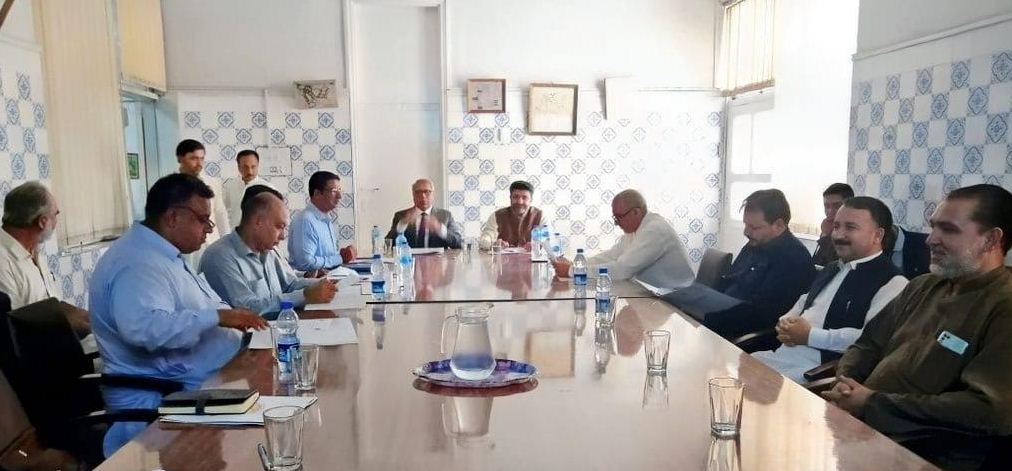
ISLAMABAD, JUL 9 – An In-House Discussion on the topic “Understanding the Legal Framework and Regulatory Regimes of Central Asia” was jointly organized by Area Study Center (Russia, China, and Central Asia), University of Peshawar, Peshawar and Center for Global& Strategic Studies, Islamabad at Peshawar to discuss the regional trade and investment legal framework.

This in-house discussion focused on examining the legal challenges, modalities, need for improvement in existing laws, and exploring new avenues of cooperation under revised legal framework.It was discussed that laws and regulatory Regimes of Central Asia will be studied by scholars and subject experts to get a better understanding and overview of their comparability with laws in Pakistan. Comparative analysis of these regulatory Regimes will also be ensured.

Mian Abdul Rauf Former Advocate-General Islamabad & Prosecutor-General of Pakistan under the Protection of Pakistan Act and Member Law and Justice Commission of Pakistanwas the Chief Guest at the occasion. He stated that modern day developments further exemplify the importance of effective legal frameworks in Pakistan and Central Asia. Highlighting the significance of the legal frameworks, he stated that, at present, the legal frameworks of states within Central Asia are variable. With the passage of time, uniformity must be deemed necessary in light of trade and commerce developments within the region. It is further imperative that inter-state commerce and trade be regulated by a coherent and comprehensive legal framework for the region in order to sustain economic development in the region. He stated that learning from the past and analyzing the future is important. He also stated that peace in Afghanistan is imperative which will open new gateways for Central Asia, Russia and other regional countries. Establishment of the Regional Anti-Terrorist Structure (RATs) of SCO is a step towards integration with elimination of radicalization. 

Prof. Dr. Shabir Ahmed, Director, Area Study Center, (Russia, China, and Central Asia), University of Peshawarwhile addressing the forum said that the Centre’s scholars have been conducting research on Alternative Dispute Resolutions (ADRs), refugees laws and Pak-Afghan Trade Agreement. However, it was emphasized to study the trade and investment laws of the CARs to find out the discrepancies with Pakistan’s legal framework and accordingly address these issues. It is important that soft component of the regional integration i.e. harmonization and coordination of laws and regulations has been developed within the region. It was suggested that national human resource shall be pooled to help in this regard. We must focus and study on Shanghai Cooperation Organization (SCO), Belt and Road Initiative (BRI) and China-Pakistan Economic Corridor (CPEC) and must analyze how Pakistan can benefit from these projects.

Mr. Khalid Taimur Akram, Executive Director, Centre for Global& Strategic Studies, Islamabad explained in detail the evolving regional dynamics. He highlighted the importance of academic linkages in the developing scenario and the significance of international projection of Pakistan’s academia and scholars.  He stated that the laws of Pakistan and Central Asia are different, therefore, a detailed study must be done to ensure enhanced trade and commerce activities for the better interestof the region. Mr. Akram stated that we must utilize the human resource of Pakistan for laws and regulatory regimes.

Prof. Inayatullah Khan, Dean, Law College, University of Peshawardiscussed the compatibility of laws between Pakistan and Eurasia and provided a comparative study on the trade laws of Pakistan and Central Asia. He suggested to invest in the human resource of the academic sector of Pakistan, so they may study the trade laws and regulatory regimes of Central Asia and construct a comparative analysis of these laws with Pakistan. He was of the view that we should work towards integrating our cultures and laws with the Central Asian Region.

The In-house discussion was attended by approximately 30 participants including the law experts, Faculty Members and PhD scholars ofLaw departments from various universities of Peshawar. 

Virus-hit Indonesia receives emergency medical supplies

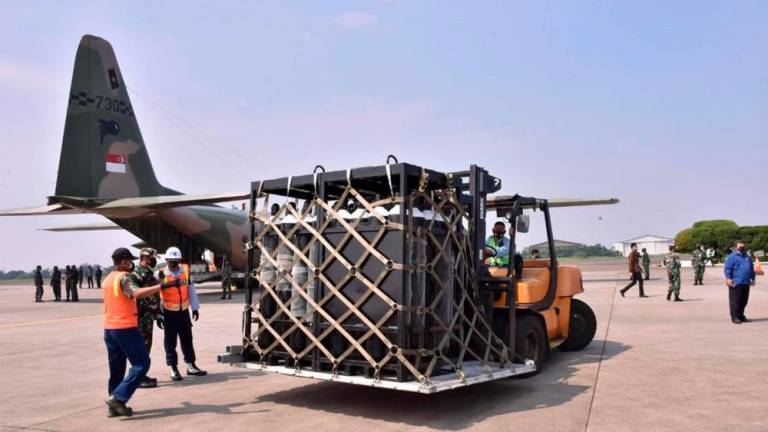
Jakarta, July 9):Indonesia received desperately needed supplies of oxygen and protective equipment from neighbouring Singapore on Friday to support its overwhelmed healthcare system, as the country battles its deadliest coronavirus wave yet.

The Southeast Asian archipelago is being hit by a major outbreak driven by the highly infectious Delta variant, which has led to authorities imposing new curbs nationwide.

Hospitals are struggling to cope, with many now refusing new patients, leaving scores to die at home, while desperate relatives hunt for oxygen tanks to treat the sick.

Singapore sent supplies including oxygen cylinders, ventilators, masks, gloves and gowns on two air force planes to Jakarta, the city-state’s foreign ministry said.

Another 1,000 ventilators were due to arrive from Australia later Friday, while Indonesian officials plan to buy more supplies of oxygen and other equipment.

The supplies are sorely needed as hospitals set up makeshift treatment tents in parking lots and doctors and other medical workers increasingly become infected.

 Nearly 1,000 Indonesian medical workers have died of Covid-19, including more than a dozen who were already fully inoculated, according to the country’s medical association.

At a hospital in Surabaya, on hard-hit Java island, virus patients were queuing for treatment as the facility struggled to cope with a shortage of medics.

“Many of our own medical workers are infected by Covid-19,” said hospital spokeswoman Redita Putri Iriani.

“When a patient is discharged, a new one immediately arrives. We all feel overwhelmed.”

The world’s fourth most populous nation is reporting tens of thousands of cases a day, and logged a record daily death toll of 1,040 earlier this week.

Indonesia, with a population of 270 million, has recorded a total caseload of over 2.4 million — but testing rates are low and experts believe the true figure is far higher.

New curbs that started at the weekend saw offices, mosques, parks, shopping malls and restaurants closed in the hard-hit capital Jakarta and Java as well as holiday hotspot Bali.

Restrictions have since been expanded nationwide as the Delta variant takes hold, and the government has warned the worst may be yet to come.

ENVOY CALLS FOR BOOSTING PAK-PALESTINE BILATERAL TRADE

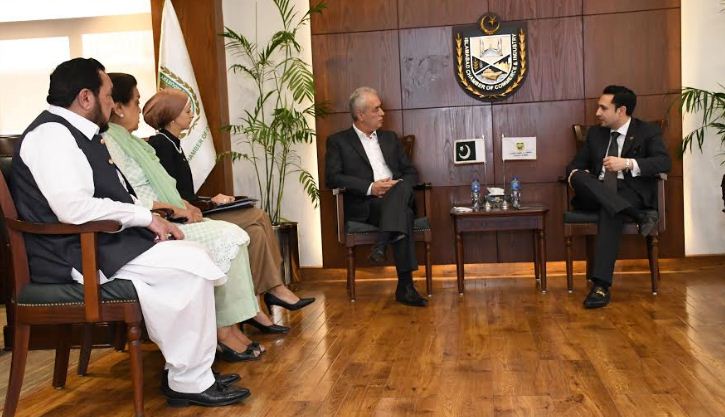
ISLAMABAD, JUL 9 (DNA) – Ahmed Ameen Rabaie, Ambassador of Palestine said that Pakistan and Palestine should focus on further improving bilateral trade to achieve mutually beneficial outcomes and create new opportunities of progress and prosperity for their people.

He said this in a meeting with Sardar Yasir Ilyas Khan, President, Islamabad Chamber of Commerce & Industry during his visit to ICCI. Fatma Azim Senior Vice President, Abdul Rehman Khan Vice President ICCI and Ms. Aya Arafat Advisor to Palestine Ambassador were also present in the meeting.

The Ambassador said that Pakistan and Palestine should promote business linkages between their private sectors to explore all untapped areas of mutual cooperation. He said that both countries should expand existing political cooperation to other areas including economy, agriculture, banking, health, education, social and cultural sectors.

He thanked the government and people of Pakistan for showing strong support to Palestine during Gaza crisis, which was a source of encouragement for Palestinian people. He also thanked ICCI for donating a significant amount for the Palestinian people affected by the recent aggression of Israel.

Speaking at the occasion, Sardar Yasir Ilyas Khan, President, Islamabad Chamber of Commerce & Industry said that Pakistani nation has special sentiments for Palestine and we want to see Palestine as a strong economy of the region.

He said that ICCI was already in touch with Palestinian Business Association (PBA) to encourage and promote direct contacts between the entrepreneurs of Pakistan and Palestine so as to develop strong commercial and industrial cooperation between the two brotherly countries. He said that ICCI and PBA intended to work jointly for promoting the exchange of trade delegations that would help in exploring new avenues of enhancing trade, JVs and investment between the two countries.

 He said that both trade bodies were interested in assisting each other for participation of private sectors in each other’s trade fairs and exhibitions. He said that ICCI and PBA would also try to hold roundtable conferences and seminars for business communities of both countries and encourage setting up of business partnerships in areas of interest. Both sides also discussed a wide range of topics to strengthen the trade and economic cooperation between Pakistan and Palestine.

Fatma Azim, Senior Vice President and Abdul Rehman Khan Vice President ICCI also stressed the need of further enhancing bilateral trade and economic relations between Pakistan and Palestine as they have good potential to cooperate with each other in many areas.  =DNA

===================

INVESTMENT FROM SINGAPORE IN CPEC

Muhammad Omar Iftikhar

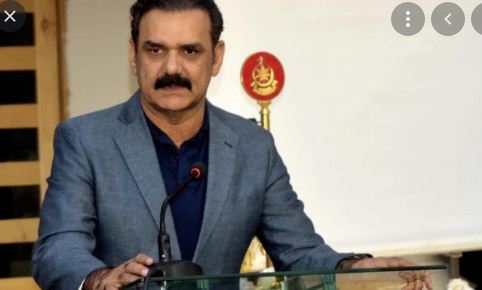
It is indeed a welcome step by the CPEC Chairman, Lt Gen (retd) Asim Saleem Bajwa to urge investors from Singapore to tap into the opportunities at the newly established Special Economic Zones (SEZs) under CPEC.

He was addressing as a Keynote Speaker at a webinar on “Investment Opportunities in CPEC related SEZs”. Indeed, such collaboration will be a win-win scenario for CPEC and all investors involved. The Chairman CPEC was confident that Pakistan is moving towards development and tapping into the potential of industrialization. Such aspects will be attractive for the investors in Singapore. During the webinar, Chairman CPEC shared that Singapore could be a role model for economic development in Pakistan.

 He added that the Pakistani government can use such expertise in industrialization as well as in science and technology.    In a broader context, Singapore and Pakistan can join hands through MoUs to exchange information, develop expertise in technology and assist each other in socio-economic projects.

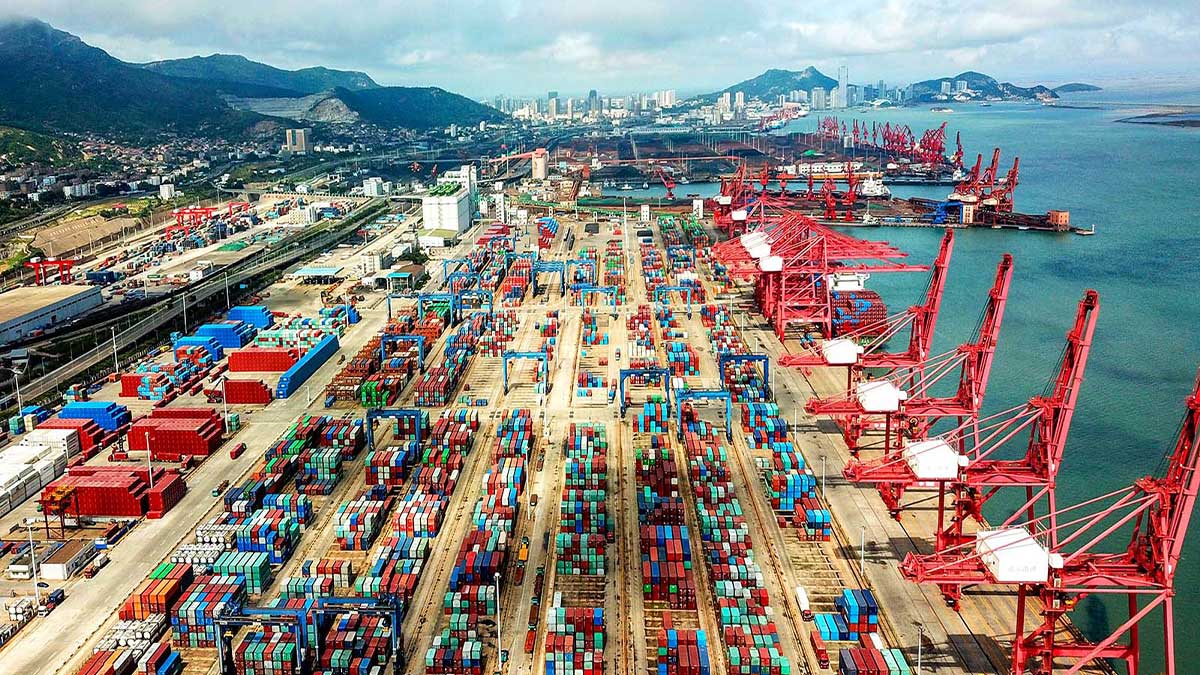
While Pakistan and China are moving together to complete CPEC, countries such as Singapore – having smooth relations with Pakistan and China – can add value to the project.  CPEC needs to be completed as per the schedule so it can provide benefits – social and economic – to the stakeholders. Pakistan and China – if their governments allow – can create a union of all stakeholders involved in the CPEC project so they can work towards regional development through collaboration, cooperation, and partnership.

While this is just a dream, the CPEC itself will create a harmonious union of all stakeholders who will pursue effective planning and implementation of their respective goals and projects.  Through CPEC, trade, and economy, industrialization, along with manufacturing will take a front seat in Pakistan and in countries where CPEC is making its mark. With a joint effort, the economic future of South and Southeast Asia looks bright.    

Pakistan’s exports to Afghanistan increase 8.29% in 11 months

ISLAMABAD,):Pakistan’s exports of goods and services to Afghanistan witnessed an increase of 8.29 percent during the first eleven months of financial year (2020-21) as compared to the corresponding period of last year, State Bank of Pakistan (SBP) reported.

The overall exports to Afghanistan were recorded at $895.380 million during July-May (2020-21) against exports of $826.802 million during July-May (2019-20), showing growth of 8.29 percent, the SBP data revealed.

Meanwhile, on year-to-year basis, the exports to Afghanistan during May 2021 also increased by 289.39 percent, from $17.117 million as against the exports of $66.653 million.

On month-on-month basis, the exports to Afghanistan however decline by 19.10 percent during May 2021 as compared to the exports of $82.399 million in April 2021, the SBP data revealed.

Overall Pakistan’s exports to other countries witnessed growth of 10.31 percent in 11 months, from $20.963 billion to $23.125 billion, the SBP data showed.

On the other hand, the imports from Afghanistan during the period under review were recorded at $163.728 million against $119.321 million last year, showing growth of 37.21 percent in eleven months of this year.

Meanwhile, on year-to-year basis, the imports from Afghanistan during May 2021 also rose by 356.77 percent, from $3.574 million last year to $16.325 million.

On month-on-month basis, the import from Afghanistan decreased by 18.16 percent during May 2021 when compared to the import of $19.948 million in April 2021, the SBP data revealed.

The overall imports into the country increased by 17.901 percent, from $40.085 billion to $47.262 billion, according to the data.

U.S. agricultural futures fall

CHICAGO, July 9 : Chicago Board of Trade (CBOT) agricultural futures fell across the board on Friday, led by corn.

   The most active corn contract for December delivery fell 7.25 cents, or 1.37 percent, to settle at 5.2375 dollars per bushel. September wheat shed 4.25 cents, or 0.68 percent, to settle at 6.18 dollars per bushel. November soybean lost 7.75 cents, or 0.58 percent, to settle at 13.195 dollars per bushel.    CONAB Brazilian corn production estimate of 93 million metric tons was above private estimates, and in line with expectations. But CONAB, Brazilian grain supplier, admitted that its Brazilian corn production estimate is from field data that is 20 or more days old. This means that none of the frost/ freeze damage of last week was in the total

German pharmacies to issue digital certificate to people recovered from COVID-19

BERLIN, July 9 : Pharmacies in Germany would start issuing digital certificate to people who have recovered from COVID-19 as of Friday, the Federal Union of German Associations of Pharmacists (ABDA) announced on Thursday.

   Since June 14, German pharmacies, physicians, and vaccination sites have been allowed to issue a digital vaccination passport for fully vaccinated people in accordance with the EU Digital COVID Certificate launched on July 1.

   “But for patients who have suffered from a SARS-CoV-2 infection and therefore received only one dose of vaccine, this has not been possible, yet, for technical reasons,” said Thomas Dittrich, head of the German Pharmacists Association (DAV), in a statement.

   In Germany, those who recovered from COVID-19 is only required to have a single dose of a vaccine six months after they have been diagnosed. Most of the recovered are already vaccinated, according to Dittrich.

   The digital vaccination certificate could now help this group “enjoy the summer and holiday season in a more carefree way,” he added.

Stay Connected

64FansLike
60FollowersFollow

Latest Reviews

Exchange Rates

USD - United States Dollar
EUR
1.14
GBP
1.34
AUD
0.70
CAD
0.71