Home Blog Page 2625

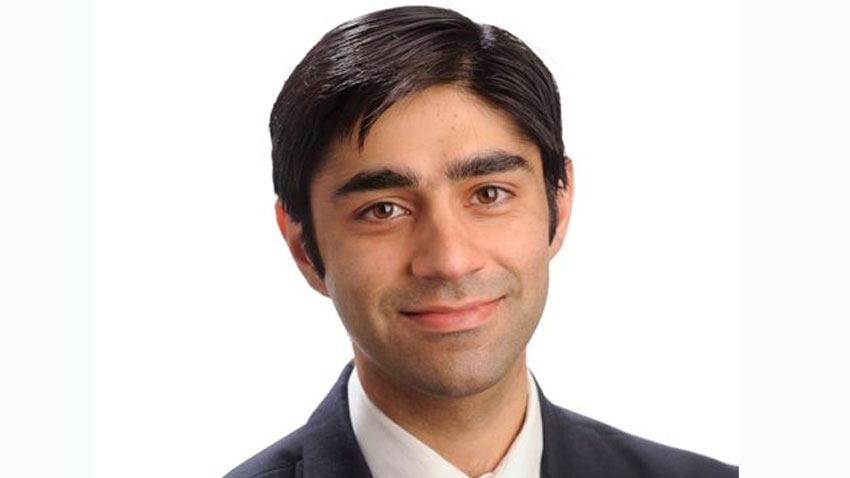
Pakistan cannot accept Afghan refugees: Moeed

Moeed Yusuf said, United States is repeating the mistake of 90’s in Afghanistan by leaving the country without power sharing agreement between Taliban and Kabul administration

ALI FURQAN / VOA

ISLAMABAD: Pakistan’s National Security Adviser Moeed Yusuf said that the United States withdrawal from Afghanistan without political settlement is a tragedy which might lead towards a civil war. 

In an exclusive interview with VOA’s special correspondent Ali Furqan he said that Pakistan had been urging U.S. and its allies that the withdrawal from Afghanistan should be responsible. 

Moeed Yusuf said, United States is repeating the mistake of 90’s in Afghanistan by leaving the country without power sharing agreement between Taliban and Kabul administration. 

Adviser to the Prime Minister on National Security Moeed Yousaf has said that Pakistan has been of the view that there should be a responsible withdrawal from Afghanistan but the United States has left Afghans to fend for themselves and spread unrest in the region. 

National Security Advisor said that Pakistan’s efforts in Afghanistan wouldn’t result because the Washington’s policy for the region was not based on ground realities. 

He said, it’s irony that world is asking us for do more in Afghanistan. 

He said that Pakistan convinced the Taliban for negotiations with U.S. which resulted in Doha peace agreement while on the other hand, no such pressure seems on Kabul administration by U.S. for political settlement. 

Moeed Yusuf further said that Afghanistan needed a political settlement for which Pakistan was looking for a regional approach.

Expressing concern over the worsening situation in Afghanistan, he said that this time Pakistan was not in a position to accept Afghan refugees. International forces will have to deal with them inside Afghanistan.

He said, Pakistan wants to work with US in the areas of mutual interests with equality including in Afghanistan but it seems that Washington has taken a policy shif.

Replying to a question that how Pakistan would balance its relations with US and China Moeed said Pakistan wouldn’t be part of block-politics and Washington shouldn’t ask us to choose either china’s or U.S side. 

He said if U.S. forces Pakistan to choose a side between Washington and Beijing the world knows which camp Pakistan will choose.

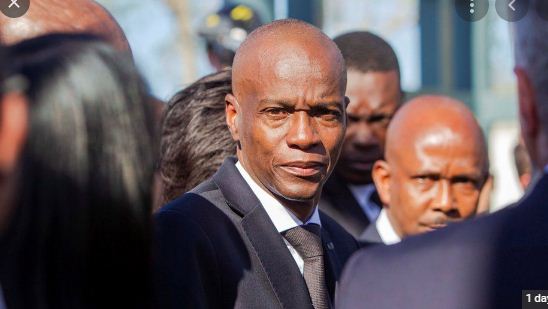
Foreign hit squad killed Haiti’s president

News Desk

LONDON: A group of 28 foreign mercenaries, including retired Colombian soldiers, assassinated Haiti’s President Jovenel Moïse earlier this week, police say.

After a gun battle in the capital Port-au-Prince, 17 were detained, some at the house they were using, others after entering Taiwan’s diplomatic compound.

Three suspects were killed by police and eight are still being sought.

Bloodied and bruised, arrested suspects were shown to the media on Thursday, along with a slew of seized weapons.

It is still unclear who organised the attack and with what motive.

The attack took place in the early hours of Wednesday, when gunmen broke into the president’s home in Port-au-Prince, shooting him dead and wounding his wife. Mr Moïse, 53, was found lying on his back with 12 bullet wounds and a gouged eye, according to authorities.

Martine Moïse, 47, was seriously wounded and is in a stable condition after being flown to Florida for treatment.

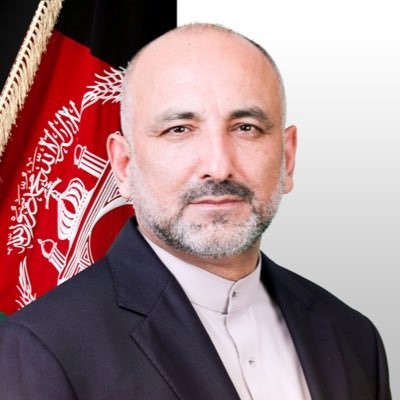
Afghan FM seeks Pak support for talks with Taliban

The situation in Afghanistan has taken a turn for the worse, with the Taliban launching a blistering campaign and capturing key districts of the country, drastically emboldened as US and other foreign forces gear up to leave the country

News Desk/DNA

KABUL: Afghanistan’s Minister of Foreign Affairs Mohammad Hanif Atmar has sought Pakistan’s help to end the raging conflict in Afghanistan, saying that he hoped Islamabad would persuade the Taliban to return to talks again.

The situation in Afghanistan has taken a turn for the worse, with the Taliban launching a blistering campaign and capturing key districts of the country, drastically emboldened as US and other foreign forces gear up to leave the country.

In an interview with a private TV channel, he said “We are hopeful Pakistan will help Afghanistan disrupt the Taliban’s supply and ‘brutal campaign’,” said the Afghan minister.

In response to a question about whether the Afghan government thinks the US betrayed it, Atmar said that Washington signed an agreement with the Taliban with honest intentions.

“The Taliban did not fulfil their part of the deal and deceived the whole world,” he said. “The Taliban are making a huge mistake. All of us have extended a hand of friendship towards them,” he added.

He said the Afghan government was telling the Taliban to honor the Doha peace deal, adding that Kabul had fulfilled its obligations of the deal when it came to the prisoners exchange and ensuring foreign troops leave the country.

The Tehreek-e-Taliban Pakistan (TTP) and Al-Qaeda have banded forces with other terrorist elements and are fighting alongside the Taliban against the government of Afghanistan, said Atmer.

“We are monitoring links between the TTP, Taliban and Al-Qaeda on a daily basis,” said Atmer. “These ties certainly exist.”

The Afghan foreign minister said these ‘elements’ were fighting against the “government and people of Afghanistan” alongside the Taliban, adding that these elements were fighting the Afghanistan government in Badakhshan, Kunduz, Faryab and other provinces of the war-torn country.

Speaking about the militants, Atmar said the Afghan government has divided these groups of foreign fighters into three categories.

“The first among them are the [militant groups] that are fighting for a global agenda, such as Al-Qaeda and Daesh,” he said. “Al-Qaeda and Daesh militants have been present in the region where Pakistan and Afghanistan are situated,” he added.

Atmer said his government was aware of the locations in Pakistan and Afghanistan where Al-Qaeda members were killed and arrested.

“Then, we have regional players,” the Afghan minister said. “[These include] the TTP, Lashkar-e-Tayyaba, Jaish-e-Mohammad, Islamic Movement of Uzbekistan, ITIM, the Ansarullah and Jundullah are also fighting with them [Taliban],” he added.

“The entire region, not Afghanistan alone, is at threat from these groups,” he stressed. “Pakistan, Afghanistan, China, India, Russia and the Middle East are in danger from these groups,” he said.

Atmer said the government of Afghanistan spoke about regional cooperation as “there are no good or bad terrorists and they all are the same”.

“Peace between Afghanistan and the Taliban will ensure these elements do not find a safe haven in Afghanistan,” he added. Taliban launch blistering campaign as US, other foreign forces prepare to leave Afghanistan

With the US pullout 90% complete, according to the Pentagon, the insurgents have launched a blistering campaign to capture new territory, and fears are mounting that Afghan forces will collapse without vital American air support. President Ashraf Ghani had said the government had the capacity to handle the situation, but admitted difficulties lay ahead.

“What we are witnessing is one of the most complicated stages of the transition,” he had said in a speech in Kabul. The withdrawal of US and NATO troops — after two decades in the country — has drastically emboldened the Taliban, who appear to be pressing for a full military victory.

Supposed peace talks between the insurgents and the government in Doha have largely fizzled out after months of a deadlock. Meanwhile, a meeting between an Afghan government delegation and Taliban representatives in Tehran ended Thursday, Iran’s state news agency said, with both sides urging an end to the fighting, and more talks.

He announced that these troops are now returning home and that most have already departed Afghanistan.  He reiterated that there is no military solution to the conflict in Afghanistan and that a sustainable, inclusive peace can only be achieved through a political settlement. 

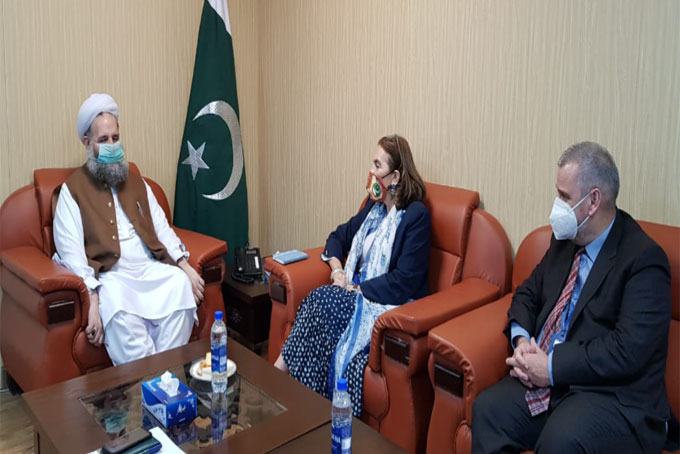
Qadri, Amb. Kaminara discuss ways to end Islamophobia

Shujaat Hamza

ISLAMABAD: Ambassador of European Union (EU) to Pakistan Androulla Kaminara, on Friday, has called on Minister for Religious Affairs Noorul Haq Qadri in Islamabad.

According to the details, both the leaders discussed about formulating mutually beneficial policies to facilitate the public of two countries in the matters pertaining to religious freedom and rights of minorities.

Moreover, a brief discussion on unifying the heads of Islamic countries to eradicate Islamophobia from the Western-world also took place.  

Earlier this week, Androulla Kaminara stressed Intrafaith and interfaith harmony is the need of the hour. Unity is a symbol of national solidarity. The environment and climate are our common heritage. Protecting it is our national responsibility. Women have an important role to play in the development and prosperity of Pakistan. Protecting the rights of children and women is our first responsibility. She was addressing the Intrafaith and Interfaith Roundtable Peace Conference at Lahore.

IMPACT OF WITHDRAWAL OF US TROOPS FROM AFGHANISTAN

Samra Athar Kakakhel

The impending withdrawal of American and NATO troops from the country, the question is what will the impact be on Afghanistan and Afghans?

It will be felt very deeply by everyone from humanitarian aspects, as far I see the three effects are most threatening and alarming for Afghanistan: a reduction in aid; devalue political and diplomatic interest and the increase of indirect involvement of other countries like proxy war in Afghanistan.

America holds power and also has assets that strengthen its impact. Afghanistan’s ground power is a combo of money and troops. Since a number of years, the US has spent approximately $144 billion in Afghanistan on “relief and rebuilding,” the overwhelming of which has gone toward infrastructure, the development of new security institutions, and the support of Afghan forces. Aside from this, America has spent more than $35 billion on state funding.

Loss of aid will be painful and tragic for the Afghan government. Afghan institutions remain heavily dependent on external aid. This will not change even if the Taliban take over or become part of a future government of Afghanistan.

It is not shocking that Afghans are fearful that the military drawdown would mean a reduction in US aid for Afghanistan, as it previously did in 2014 when the majority of US-led NATO forces departed the country. A massive cut in aid will be dangerous and traumatic for the fragile health, education, local governance, and other public sector programs, and will have a significant effect on ordinary Afghan lives.

Patronage system in Afghanistan has now become a key tool to manage different elite loyalties, ethnic – second thoughts and local interests. This patronage system is the shocking levels of corruption.

The Afghan government and its institutions are heavily dependent on external aid. An absence of aid will damage the patronage system where the anti-Taliban will be more effected. The consequences of all this could be result in competition and violence over remaining resources.

Secondly, the troop exit may also lead the disturbance and decrease in the political and diplomatic commitment by the US and other NATO countries to support a settlement between the Taliban and the Afghan government.

Third, a rapid military exit will smooth the ground for an Afghan regional war. Pakistan, India, Iran, China, Russia, and the Arab Gulf powers may all indulge in military conflict through their proxy country in Afghanistan.

The absence of American assistance will hinder the political process. The Taliban and the Afghan government may increase their attacks on each other, raising the possibility of bloodshed in which anti-Taliban civilians suffer. This would lead to civil war, and no Afghan government would be able to handle the situation. The exit of the US forces from Afghanistan would provide an avenue for extremists.

The military disturbance has left deeper marks on Afghanistan, but the seriousness of the wound will only become clear upon the withdrawal of international forces.

Maryam accuses PM Imran of ‘buying votes’

The PML-N leader said Pakistan was now again experiencing 12-hour load shedding

DNA

PATTAKA: PML-N Vice-President Maryam Nawaz on Friday alleged that Prime Minister Imran Khan was spending money to “buy votes” ahead of the July 25 general elections in Azad and Jammu Kashmir (AJK).

As many as 32 political and religious parties are vying in the polls — prominent among them PML-N, PPP and PTI — for the 45 direct seats of the assembly, 33 of which are located in AJK territory and 12 in Pakistan.

Addressing a rally in Pattaka, AJK, as part of her party’s election campaign, Maryam said Imran Khan was now again talking about approaching the International Monetary Fund (IMF), hinting “he doesn’t have money to provide people with food supplies, but he has enough resources and money to buy votes in the AJK elections,” she claimed.

She called upon people to rein in and “catch” Imran if he attempted to “rig” the AJK elections, like people caught ‘manipulators’ in the Daska by-election. Hitting out at the government, the PML-N leader said Pakistan was now again experiencing 12-hour load shedding, which, according to her, Nawaz Sharif had contained with his effective policies.

AJK CEC writes to PM Imran

Staff Report

ISLAMABAD: The Azad Jammu and Kashmir Chief Election Commissioner, retired Justice Abdul Rashid Sulehria, has written a letter to Prime Minister Imran Khan requesting him to ensure that ministers observe the code of conduct set for the July 25 elections to the AJK Legislative Assembly.

The development comes after a video began circulating on social media which shows Federal Minister for Kashmir Affairs and Gilgit Baltistan Ali Amin Gandapur handing over a thick bundle of cash to some supporters in AJK’s LA-1 Mirpur 1 constituency where he had gone to campaign this week. Some people had gathered around Gandapur to complain to him of a badly damaged road. They told him that they are looking to repair it with whatever meagre funds they can scrounge up on their own. At this, the minister immediately handed them a donation of Rs500, 000, which was recorded on video.

Goran Pin the Portraitist Showcases Arab Kings and Queens through Non-Fungible Token Revolution

By: Sher Zada

Cryptocurrencies are on one hand have been financially nudging every digitally conscious person for earning across the globe, have cascaded ways of advertisements and opened venues of   cultural and archaeological preservation on another hand as well. The aspirants of art and music hold a right track in the rush of crypto culture, that’s called Non-Fungible Tokens (NFT). The business hype created by the digitally run cryptocurrency planed ground for NFT.  However, the question would be squaring double in the minds of many digitally less aware readers like me that actually what is an NFT? An NFT is platform of   digital asset that represents real-world objects like art, music, in-game items and videos. They are showcased online and bought and sold virtually, frequently with cryptocurrency, and they are generally encoded with the same underlying softwares as many crypto currencies, means the same block mechanism is used as used for crypto transactions. Before the existence of Cryptocurrency, we never hear too really on a system that enables us to own something that was completely digitalized. We passed around videos and motion graphics, refurnishing and reposting them, but there wasn’t such trend like current opportunity to automatically assume complete, concrete ownership over a digital file or artwork. The rise of NFT’s changes this, allowing creators the authority to rent digital artworks out, to sell them or showcase them according to their well. Thought the concept of NFTs surfaced since December 2012 with the inception of “Colored Coins” a project Vitalik Buterin, the creator of Ethereum, had a lead role in building on the Bitcoin blockchain. But due to some script language technicality could not get proper pitch till 2014, the year that is associated with grand emergence of NFT. Counterparty was the first peer-to-peer financial platform/open-source to launch online protocol built on the Bitcoinblockchain. However that took a time gape of nearly six years to return the trend of Non-Fungible Tokens. In March 2021, Mike Winkelmann, the digital artist known as Beeple, sold an NFT of his work for $69 million at Christie’s, leading as a catalyst for booming crypto art technology. There exist immense potential in the NFT space, and we can see more quality crypto artists like Trevor Jones, Fewocious, Pak, Trevor Jones, Slimesunday, mostly the aforementioned artists have been working touching the historical artistic phantoms of west through NFT. While Goran Pin a European portraitist, seems to lead the Arab NFT revolution. Goran Pin  a European artist, but it’s quite interesting that he has been coining  his expertise in countries like Bahrain, Brunei, Jordan, Kuwait, Malaysia, Morocco, Oman, Qatar, United Arab Emirates, and Saudi Arabia ,according to Pin the mentioned countries are  historically significant for  NFT art pieces.  The work of Goran Pin is focused on  the first-ever portraits of 16 rulers from 10 Arab countries. Which he thinks would lead to Arab NFT revolution. Ping encircled half of the Kings and Queens Collection aimed bringing a significant historical impact in the field of NFT revolution from Arab world.   Goran Pin would be the first Portraitist who has minted following Arab royal rulers (Kings and Queens) portraits on crypto blockchain system.  From  Bahrain, King Hamad bin Isa Al Khalifa, from Brunei, Sultan Hassanal Bolkiah , from Jordan, King Abdullah II , from Kuwait, Sheikh Nawaf Al-Ahmad Al-Jaber Al-Sabah ,from Malaysia, Al-Sultan Abdullah of Pahang , from Morocco, King Mohammed VI , from Oman, Sultan Haitham bin Tariq Al Said ,and from Qatar, Sheikh Tamim bin Hamad al-Thani , from United Arab Emirates, Sheikh Hamad bin Mohammed Al Sharqi, Sheikh Humaid bin Rashid Al Nuaimi III , Sheikh Khalifa bin Zayed bin Sultan Al Nahyan, Sheikh Mohammed bin Rashid Al Maktoum, Sheikh Saud bin Rashid Al Mualla, Sheikh Saud bin Saqr Al Qasimi, Sultan bin Muhammad Al-Qasimi and from Saudi Arabia, King Salman Portraits.

 According to Pin, “in previous times, portrait paintings were mainly reserved for rich and powerful class in societies. But after the emergence of technological era of NFT and crypto world it seems, will not happen now, so a lot changed today; just the digital world takes over”.  Pin views that it is hard to establish digitally fixed values for antiques, artworks, and other collectible items, but it’s evident that some of them worth millions.  But he believes that the leading art appraisers estimate that Kings and Queens Collection might have a higher value than Mike Winkelmann’s record-smashing $69 million due to the historical landscape of Arab royalties who have not  been digitally  pin pointed in the past by any portraitist   .Interesting is that no portraits from the Kings and Queens Collection are not available for sale at the moment. Goran Pin started Connecting Digital and Traditional Art World Exhibition, which introduces and put crypto art into traditional art galleries worldwide. Pin argues many developments are happening in this decentralized blockchain technology. No matter what it looks like at first glance, NFT art is safer for investment than buying crypto curencies from an investment perspective, because it sustains for long as it not fungible and not rotting at all. NFTs will topple the traditional art system as much as Bitcoin and Ethereum are going to change the financial landscape. People have made a lot of money from Bitcoin. If one would invest $100 when the coin first launched in 2009, his/her Bitcoin could be worth millions of dollars today. It can be said that crypto art will be a much more transparent and direct type of market than what we are used to seeing in the traditional art world. Blockchain technology changed our lives and evolved slowly but constantly. It has also had a profound impact on almost all spheres of human activity. On one hand NFT would reduce the chances of theft and will be helpful in restricting illegal smuggles of antique and rare items in future, while another hand it will provide opportunities of earning for the portrait artists, who are being suffered due to the current Covid-19 pandemic since 2020. While the post-pandemic would be an era of NFT a hope of preservation our art culture from forging and stealing and prism of ownership for the painting portraitists.

Political and cultural realities of Central and South Asia : ISRS expert

The new political reality in the region, formed by the proactive, proactive and constructive diplomacy of the President of Uzbekistan Shavkat Mirziyoyev, had a positive impact on building up cooperation on a wide range of issues both between the countries of Central Asia and on an international scale.

The modern foreign policy of Uzbekistan has led Tashkent to take steps to find solutions to a long-overdue request – to intensify and expand the process of regional interconnectedness in the direction of Central and South Asia.

Such a prospect will give an additional impetus to the strengthening of trade, economic, scientific, technical, investment and humanitarian ties between Central and South Asia – two historically, culturally, civilizationally, economically and geographically close regions. 

It is noteworthy that on 15-16 July, Tashkent will host a high-level international conference “Central and South Asia: Regional Interconnectedness. Challenges and Opportunities”.

Taking this into account, on the eve of this high event, “Dunyo” IA correspondent turned for a comment to the head of the department of the Institute for Strategic and Interregional Studies under the President of the Republic of Uzbekistan Alisher Kadyrov.

– Alisher Kadyrovich, today the upcoming conference is widely discussed in the mass media. Its very name suggests the question: what is the history of the interconnection of these two regions?

– The political and cultural relationships of the vast sub-region of Central and South Asia are rooted deep in history. They date back to the period of such empires of antiquity as Bactria, Kushan, Eastern and Western Turkic Khaganates, as well as the later states of the Seleucids, Sassanids, which appeared in the period after the conquests of Alexander the Great. All of them were located on vast territories, including partially or completely modern territories of Central and South Asia. It was then that the foundations of trade routes, cultural ties and mutual influences between the peoples of the two regions were laid.

On this occasion, the ancient historian and geographer Strabo, referring to the notes of Greek travelers and other authors, reported that on the river Oaks (Amu Darya) goods were delivered across the Caspian Sea and the Black Sea to Europe. Due to its convenient geographic location, Central Asia has become an important mediator between the West and the East. Merchant caravans from India went to Central Asia, and from there Indian goods were distributed to European countries.

However, archaeological excavations of the Kushan era (1st-4th centuries) and later periods confirm that Central Asia was not only an intermediary, but also an active trading partner of India. An interesting fact is that the capital of the Kushan Empire was initially located in Dalvarzintepe, near Termez. Then it was moved to Purashapura – this is the current Pakistani city of Peshawar.

The spread of Buddhism became a milestone in the development of regional contacts. Vairochana, a Buddhist scholar from Kashmir, was the first missionary who brought Buddhism to Central Asia and further spread to China and other countries.

Cultural interaction gained new strength between regions during the period of Muslim rule. In Central Asia, Buddhist and Islamic ideas, together gave rise to a new, partially synchronized school of thought about a single cultural space, laid the foundations for tolerance and cultural diversity of the peoples of Central and South Asia. It is important to note that the Kushan, Greco-Bactrian empires were characterized by interfaith tolerance. This can be seen on the coins of that era, where various Deities were depicted – Greek, Eastern, Turkic. Historical facts of this kind testify to the existence of a single cultural and civilizational space, a common trade and economic zone based on dialogue, mutual understanding and mutual benefit. This was the foundation and key factor for sustainable development and shared prosperity in the subregion.

– It is known that the Great Silk Road had a great influence on the development of all-round ties between peoples. Trade was, in today’s language, the driver of the development of the economies of the countries. In this regard, how did the trade and economic relations develop between the two subregions?

– The rich cultural interaction between Central and South Asia was accompanied by extensive trade and economic ties.

From ancient times, even before the Great Silk Road began to function, large caravan routes were formed between Hindustan and Central Asia, which served the purpose of developing mutual trade.

Already in the III-II millennia BC an extensive network of land routes emerged that included access to India via Afghanistan. In turn, the ancient cities of Central Asia were the intersection of trade routes from China, Europe, India, where cultures, trade and religions converged.

The opening of the Great Silk Road served as an even greater impetus for the expansion of interregional trade and economic exchange.

At an early stage in the development of the Silk Road, the Kushan Empire (1st-4th centuries AD) established political and economic stability in most of Central Asia and extended its control to the Indian Ganges valley in the south. The trade-based Kushan economy provided a steady flow of goods, people and cultures across the two regions.

In the later development of the Silk Road and during the heyday of its trade (13th century and the first half of the 14th century), important secondary routes to the Indian subcontinent were part of the main southern route. During this period, Kashgar became a new crossroads in Asia, and from here the routes split again, heading through the Pamirs to Samarkand, and from there southward to the Indian subcontinent. Numerous goods were traded along the route, from gold, precious stones and ivory to exotic animals and plants.

The oases of Central Asia Bukhara and Samarkand were centers from which branches of the Great Silk Road departed. The southern direction of the Silk Road passed through northern India.

During the Mughal Empire (1526-1857), trade and cultural ties with Central Asia flourished in the Indian subcontinent, especially under Emperor Jahangir (1569-1627). The main caravan routes passed through the Khyber and Bolan pass to Kashmir, Afghanistan and the vast territory of Turkestan.

The Arab traveler Ibn Batuta also wrote about this in the Middle Ages. Central Asian merchants, according to Ibn Batuta, delivered horses, falcons, dry and fresh fruits, silk, furs, cotton and precious metals; from the Indian side – spices, tea, fabrics and precious stones, medicinal herbs.

Indian medical research was widely known in Central Asia. Medical texts such as Charaka and Susrat have been translated into Arabic and local languages. Travelers from India often brought medicines with them. The famous physician from Herat, Abu Mansur Mawafak, admitted that he adopted the Indian way of teaching, “because Indians are very shrewd in medical sciences and more accurate in their research.”

– You noted that there were quite wide and varied ties between the peoples of the two regions. Historical data show that there were large diasporas of South Asians in Central Asia and vice versa. Could you tell us a little more about this?

– Expansion of cultural and trade ties led to the emergence of a large Indian diaspora in the Central Asian region.

In 1832, according to archival data, about 300 Indians lived in Bukhara. They were mainly natives of Shikarpur in Sindh (Pakistan). A large number of them lived in Andijan, Ferghana, Namangan, as well as in small towns and villages of Central Asia.

The “Guide to Turkestan”, published in 1903 in St. Petersburg, mentions the names of 10 large trading firms in Andijan, 2 of which, Rambi Pasha and Ramsu Sufa, were Indian firms involved in the silk trade. In Khujand (Tajikistan), 6 Indians were engaged in a business related to the export of dried fruits. Near Tashkent lived about 40 Indians who were actively involved in trade.

In 1901, 52 Indians lived in Kokand, and 28 and 4 Indians, respectively, in Namangan and Osh. In the second half of the 19th century. About 8 thousand Indian settlers lived in this region.

Immigrants from Central Asia also lived in the Indian subcontinent, although their exact number is unknown. They lived in separate neighborhoods, or makhallas. Many of them arrived during the Mughal dynasty and were literary men who held high positions at the royal courts, artisans who made a significant contribution to architecture. A fine example of architectural excellence are «Badshahi Mosque», «Shalimar Bagh», «Shahi Kila» in Lahore and «Taj Mahal» in Agra.

Historically, between Central and South Asia, there have been wide and deep connections in all many spheres of life. There were also regular diplomatic missions to resolve economic and trade issues.

At present, the interests of the countries of the two great regions require expanding and deepening interconnection by reviving their rich heritage of historical and cultural contacts. The past of the countries of Central and South Asia in the modern period of history can be viewed as a bridge to the development of broad and meaningful interaction between regions.

No air travel sans Covid -19 vaccination

The NCOC has termed the Delta variant “extremely dangerous”

Special Correspondent

ISLAMABAD: The National Command and Operation Centre (NCOC) on Friday announced that unvaccinated people will not be allowed to travel by air starting August 1.

In its review of the measures put in place to curb the spread of the coronavirus, particularly in view of the impending spread of the Delta variant, which it termed “extremely dangerous”, the NCOC also declared it mandatory for adult students to get themselves vaccinated by August 31.

The latest instructions of the NCOC come in the wake of an uptick in Covid-19 cases in the country.

Earlier, the NCOC had confirmed the presence of different variants of coronavirus in Pakistan, including the Delta variant, believed to have originated in India, the Beta variant that was first detected in South Africa, and the Alpha variant that was discovered in the United Kingdom. The NCOC had said that these variants were detected in Pakistan in May and June.

The government’s Covid-19 portal indicates the number of daily Covid-19 cases dropped from four digits to three digits on June 25. The daily cases being reported remained close to the 900 mark till June 27 and further fell to 735 on June 28. However, the number of cases started going up again gradually and doubled in just one week. The positivity rate, which stood at less than 2 per cent in June, crossed 3pc after a gap of 20 days on Wednesday.

In its revised instructions, the forum also directed authorities to ensure people without vaccination certificates shouldn’t be able to book a room in hotels as they tour any part of the country.

While hinting at a ban on tourism, the NCOC stressed that all private sector employees, including corporate sector, media persons, lawyers, employees at private companies, factory workers, shopkeepers, hotel workers, mosque servants and imams, helpers at wedding halls, and those working in similar areas should get themselves vaccinated before July 31.

The NCOC said various proposals were under consideration to restrict unnecessary movement in view of an outbreak of the virus on the occasion of Eidul Azha, adding that a decision in this regard will be taken in next few days.

Stay Connected

64FansLike
60FollowersFollow

Latest Reviews

Exchange Rates

USD - United States Dollar
EUR
1.14
GBP
1.34
AUD
0.70
CAD
0.71