Home Blog Page 262

India-sponsored Daesh affiliate behind Islamabad attack in custody, confirms Naqvi

India-sponsored Daesh affiliate behind Islamabad attack in custody, confirms Naqvi

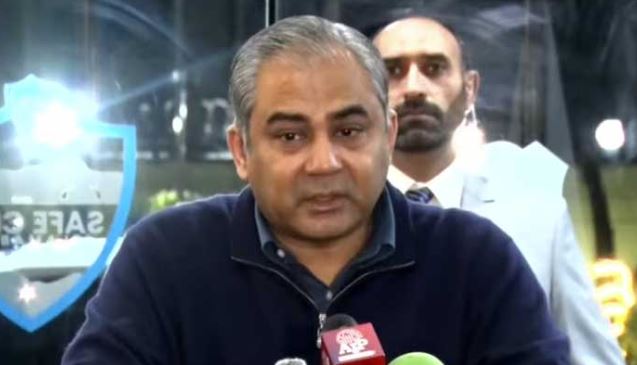
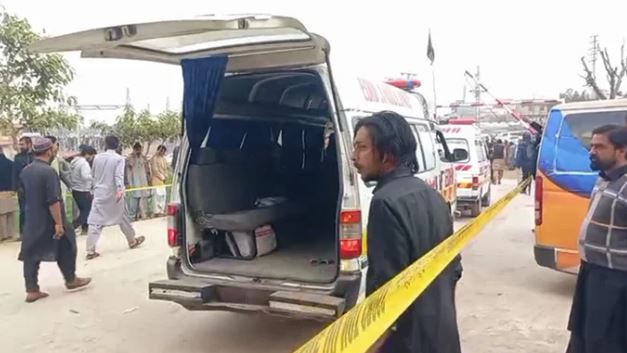
ISLAMABAD, FEB 7: Interior Minister Mohsin Naqvi on Saturday confirmed that the mastermind of the Islamabad suicide blast, associated with the banned Daesh, is in the custody of Pakistan along with the attacker’s facilitators.

Addressing a presser in Islamabad, he said that the mastermind and the facilitators of the deadly attack were arrested in raids conducted in Khyber Pakhtunkhwa’s Peshawar and Nowshera immediately after the blast.

T20 World Cup: Shepherd’s five-wicket haul seals West Indies win over Scotland

T20 World Cup: Shepherd's five-wicket haul seals West Indies win over Scotland

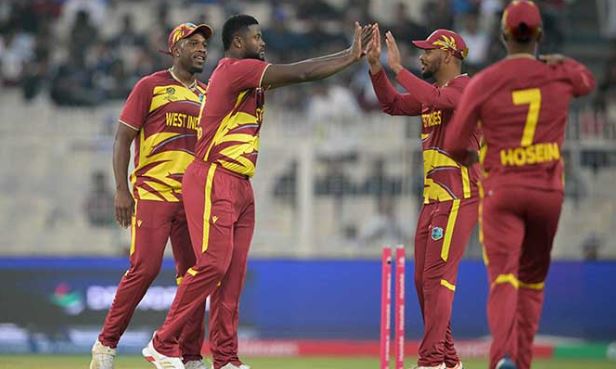
KOLKATA, FEB 7: Hat-trick star Romario Shepherd inspired West Indies to a convincing 35-run triumph over Scotland in the campaign opener of their ICC Men’s T20 World Cup 2026 campaign at Eden Gardens, Kolkata, on Saturday.

Scotland suffered an early blow when opener Michael Jones was dismissed for just one run off five deliveries by Jason Holder.

George Munsey and Brandon McMullen then attempted to steady the innings with a brief 30-run partnership, but their resistance was cut short when Shepherd removed McMullen for 14 off 12 balls, including a four and a six, leaving Scotland reeling at 31-2 in 4.3 overs.

Munsey followed soon after, departing for 19 off 15 balls, having struck three fours, with Shamar Joseph providing the breakthrough in the final over of the powerplay.

Skipper Richie Berrington and Tom Bruce revived Scotland’s hopes with a solid 78-run stand, guiding the side past the 100-run mark.

However, Holder broke the partnership by dismissing Berrington for a brisk 42 off 24 balls, featuring three fours and two sixes, reducing Scotland to 115-4 in 13.2 overs.

The momentum continued to swing West Indies’ way as Gudakesh Motie removed Bruce for 35 off 28 balls.

Shepherd then produced a sensational over, ripping through Scotland’s lower order with four wickets, including a hat-trick.

Matthew Cross, Michael Leask and Oliver Davidson fell in successive deliveries, while Safyaan Sharif was also dismissed as Shepherd completed a five-wicket haul.

Mark Watt was the final batter to fall, dismissed by Holder for 15 off 12 balls, which included two boundaries.

Batting first, West Indies got off to a strong start as openers Brandon King and skipper Shai Hope set the tone with a 50-run partnership, dominating Scotland’s bowling from the outset.

The stand was broken when Hope was dismissed for 19 off 22 balls, including two boundaries.

In the very next over, the Caribbean side lost their second wicket as King fell to Oliver Davidson after scoring 35 off 22 deliveries, featuring four fours and a six.

Shimron Hetmyer and Rovman Powell steadied the innings, but the momentum shifted when Powell was dismissed by Brad Currie after a quickfire 24 off 14 balls, including a four and two sixes, leaving the team at 139-3 in 15.3 overs.

Hetmyer continued in superb form, batting aggressively to reach his eighth T20I fifty, with support from Sherfane Rutherford at the other end.

However, Safyaan Sharif claimed the prized wicket of Hetmyer, who had scored a blistering 64 off 36 balls, hitting two fours and six sixes.

Rutherford followed soon after, dismissed for a crucial 26 off 13 deliveries, including four boundaries and a six.

West Indies wrapped up the innings with Romario Shepherd unbeaten on six off three followed by Matthew Forde with one off two deliveries as well.

Brad Currie spearheaded Scotland’s bowling attack, taking 2 wickets for 23 in 4 overs, while Safyaan Sharif, Oliver Davidson, and Michael Leask contributed with one wicket each.

Shepherd led the bowling attack with sheer pace, registering figures of 5/20 in three overs. Jason Holder claimed three wickets, while Shamar Joseph and Gudakesh Motie chipped in with one wicket each.

Pakistan beat spirited Netherlands in nerve-testing T20 World Cup opener

Pakistan beat spirited Netherlands in nerve-testing T20 World Cup opener

COLOMBO, FEB 7: Faheem Ashraf played an explosive late cameo as Pakistan defeated a spirited Netherlands side in a nerve-testing opening match of the ICC Men’s T20 World Cup 2026 at Colombo’s Sinhalese Sports Club (SSC) Ground on Saturday.

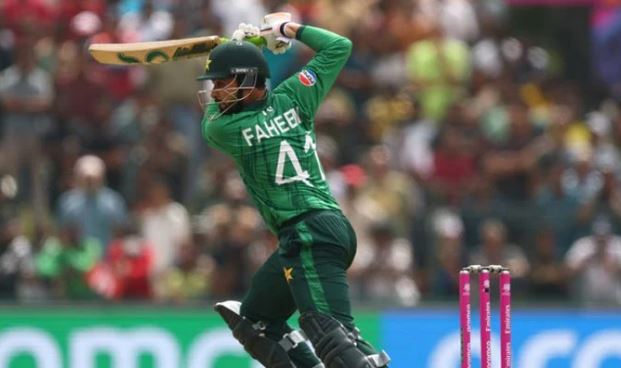
Chasing 148 for victory, the Green Shirts looked in serious trouble after a middle-order collapse despite a brisk start, at one stage needing 29 runs from the final two overs. Batting at No. 8, Faheem — relatively new at the crease — rose to the occasion, smashing 22 runs in the penultimate over against Logan van Beek.

The left-hander struck three sixes and a four in the second-last over. Requiring four runs off as many deliveries, Faheem sealed the win with a boundary, finishing unbeaten on 29 off 11 balls to guide Pakistan to a memorable victory.

Earlier, opener Saim Ayub set the tone with a quickfire 24 off 13 balls, including four fours and a six, before being dismissed by Aryan Dutt in the third over, leaving Pakistan at 27-1.

Skipper Salman Ali Agha then joined Sahibzada Farhan, and the pair maintained the brisk scoring rate. Pakistan crossed the 50-run mark in the fifth over, although Agha fell soon after for 12 off 8 deliveries.

Farhan, joined by Babar Azam, continued the momentum and scored 47 off 29 balls. At one stage, Pakistan were cruising at 98-2 in 11 overs with two set batters at the crease. However, the Netherlands staged a strong comeback, reducing the Green Shirts from 98-2 to 114-7 with a flurry of wickets.

Paul van Meekeren triggered the collapse in the 12th over, claiming two wickets without conceding a run. He first dismissed Farhan before removing Usman Khan for a duck. In the following over, Roelof van der Merwe dismissed Babar Azam (15), leaving Pakistan struggling at 100-5 in the 13th over.

Mohammad Nawaz and Shadab Khan also departed cheaply, pushing Pakistan further into trouble at 114-7 before Faheem’s late heroics carried the side over the line with three deliveries to spare.

In the first innings, Pakistan’s bowlers, particularly spinners, managed to pull things back and restrict the Netherlands to 147 runs in their 19.5 overs.

After being asked to bat first, the Dutch side were bundled out for 147 in 19.5 overs, setting 148-run target for the Green Shirts.

The Dutch side began positively, with opener Michael Levitt hitting a boundary off the very first delivery. The Netherlands continued their brisk start, scoring 28 runs in the first three overs without losing a wicket.

Pakistan struck back when Salman Mirza removed opener Max O’Dowd, who attempted a pull shot but became the first wicket of the tournament.

Levitt, who looked dangerous at the crease, was dismissed by Mohammad Nawaz after a brilliant reflex effort by Babar Azam, with Shaheen Afridi completing the catch near the boundary. Babar leaped to stop the ball on the boundary and quickly relayed it to Afridi, who held on to take the wicket.

Bas de Leede and Colin Ackermann steadied the innings, taking the Netherlands past the 50-run mark inside the powerplay. However, Abrar Ahmed struck in the eighth over, dismissing Ackermann for 20 off 14 balls to leave the Netherlands at 65-3.

The Dutch reached 100 in the 13th over, with skipper Scott Edwards hitting a six off Nawaz. But the spinner struck back, removing de Leede for 30 off 25 balls to make it 105-4. Abrar then claimed his second wicket, dismissing Edwards for 37 off 29 balls.

Saim Ayub tightened the screws in the next over, removing Logan van Beek for a first-ball duck and Zach Lion-Cachet for nine, reducing the Netherlands to 129-7.

Shaheen Afridi dismissed Roelof van der Merwe for four, while Salman Mirza wrapped up the innings in the final over by removing Aryan Dutt for 13 and Paul van Meekeren for a duck.

Salman Mirza led Pakistani bowling attack, finishing with 3 wickets for 24 runs in 3.5 overs. Mohammad Nawaz, Abrar Ahmed, and Saim Ayub took two wickets each, while Shaheen Afridi contributed with one wicket.

Dar, Iranian envoy reaffirm joint resolve to combat terrorism

Dar, Iranian envoy reaffirm joint resolve to combat terrorism

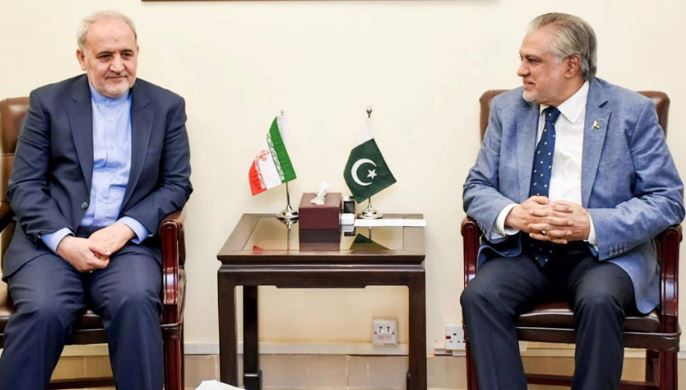
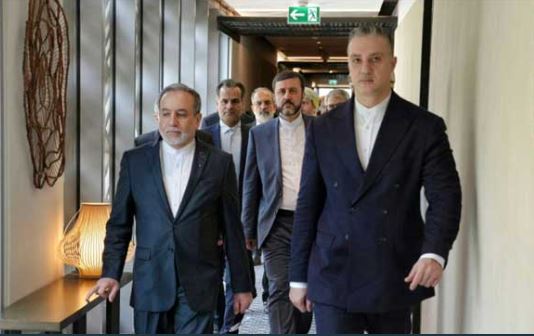
ISLAMABAD, FEB 7 (DNA): Deputy Prime Minister/Foreign Minister Senator Mohammad Ishaq Dar, Saturday, reiterated Pakistan’s commitment to further strengthening engagement with Iran in key priority sectors of mutual interest.

The DPM/FM received the Ambassador of Iran to Pakistan, Raza Amiri Moghaddam.

Ambassador Moghaddam conveyed condolences over the tragic blast at an Imambargah in Islamabad. 

The DPM/FM strongly condemned the terrorist attack and reaffirmed Pakistan’s firm resolve to combat terrorism in all its forms and manifestations, Foreign Office Spokesperson said in a press release.

The DPM/FM was briefed by the Iranian ambassador on progress achieved through various bilateral institutional mechanisms to enhance cooperation across diverse areas.

Kites of Hope Amid Shadows of Sorrow

Kites of Hope Amid Shadows of Sorrow

By Muhammad Mohsin Iqbal

After nearly a quarter of a century, Basant has returned to Lahore, not merely as a festival but as a long-suppressed emotion rediscovering its voice. For twenty-five years, the city carried the memory of spring like a faded photograph—cherished, yet distant. Past tragedies, when careless celebrations claimed innocent lives, had silenced rooftops and hushed laughter. This year, when kites once again rose above the Walled City, and families cautiously gathered on terraces, Lahore seemed to breathe differently. The revival was neither loud nor reckless; it was measured, regulated, and reflective, shaped by time, loss, and hard-earned lessons. Basant’s return symbolised not forgetfulness of past pain, but the nation’s capacity to reclaim joy without surrendering prudence.

In Lahore, the festival fills the air with a tenderness that only spring can offer. The mustard fields bloom in golden swathes, blending with the vibrancy of kite-filled skies. Children dart across rooftops with thread and spool, while parents watch with pride, apprehension, and hope. The city, long deprived of this cultural heartbeat, now dances cautiously with its heritage. Alongside the kites and laughter, the air carries the scent of traditional Basant delicacies; steaming platters of samosas, pakoras, jalebis, gajraila and phirni, alongside sweetmeats, roasted peanuts, and hot puri halwa sold from roadside stalls, evoking nostalgia for generations and adding a flavor to the celebration that is uniquely Lahori. Basant is not simply an event of colour and sound; it is a living memory of resilience, reminding Pakistanis that joy, even after decades of sorrow, remains possible.

Yet the celebration in Lahore exists alongside a national grief that cannot be ignored. In Balochistan, decades-long unrest has been inflamed by external forces, with India’s covert interference designed to destabilise Pakistan internally. The evidence is substantial: from the apprehension and confession of Commander Kulbhushan Jadhav to documented support for militant networks, the objective is clear—to weaken Pakistan by fostering fear, division, and disorder. Khyber Pakhtunkhwa, already scarred by years of conflict and displacement, remains vulnerable, as sporadic attacks continue to claim lives and devastate communities.

Even places of worship, traditionally sanctuaries of peace, have not been spared. Mosques have been targeted with chilling precision, and worshippers—men, women, and children—have been martyred mid-prayer. Such acts are not merely attacks on human life; they are assaults on society’s moral and spiritual foundation. They seek to replace devotion with fear and communal harmony with suspicion, yet Pakistan endures, demonstrating an unbroken will to defend both its people and its values.

The juxtaposition of Lahore’s revival with national grief is stark. While kites soar in the skies of the Punjab, coffins are lowered in Quetta and Peshawar. Yet, even in the face of these horrors, Pakistan refuses to let fear dictate its culture or its celebrations. The revival of Basant after twenty-five years becomes an act of courage, asserting that life, colour, and hope will persist despite adversity. Regulation, public awareness, and collective responsibility now shape the festival, ensuring that celebration does not repeat past tragedies.

The coexistence of joy and sorrow is not contradiction; it is the essence of resilience. Pakistan has learned to smile through tears, to celebrate while standing guard, and to hope even when circumstances conspire against hope. The laughter on Lahore’s rooftops does not mock the grief of Quetta or Peshawar; it affirms that terror will not monopolise the nation’s spirit. Basant, in this context, is not only a reclaiming of cultural heritage but a moral statement: that Pakistan will protect its traditions while defending its people.

The state’s responsibility is immense. Security measures must be intelligent, sustained, and rooted in justice rather than mere force. Counter-terrorism is not only about weapons or checkpoints; it is also about governance, inclusion, and narrative. Citizens must remain vigilant while celebrating. A society at war cannot afford indifference, yet it must resist being defined solely by conflict. Protecting life while preserving cultural identity is the delicate balance Pakistan strives to maintain.

History teaches that nations endure not only through military might but through moral clarity and cultural continuity. External actors, seeking to fracture Pakistan’s social, political, and spiritual fabric, understand this well. Basant’s revival is a testament to the nation’s resilience—a celebration that asserts life and joy even amid shadows of violence. As kites colour Lahore’s spring once more, they carry prayers for those who cannot celebrate, for those whose springs were stolen by terror. The scent of different delicacies of traditional foods related to Basant mingles with the spring breeze, reminding the nation that life’s simple pleasures—shared food, laughter, and colour—are also acts of resistance against despair.

Pakistan’s challenge is to guard both joy and grief with equal seriousness—to ensure that neither recklessness nor fear defines the nation. In holding sorrow and celebration together, in mourning martyrs while reclaiming cultural traditions, Pakistan affirms its endurance. The nation rises with dignity, proving that hope can soar as high as the kites above Lahore, even when shadows linger across the land.

U.S.–Iran Talks: Peace or a Path to War?

Qamar Bashir

Qamar Bashir

February 6, 2026 has the feel of a turning point — not because the United States and Iran suddenly became friends, but because two sworn rivals chose diplomacy at the very moment when the logic of escalation was gaining speed. In Muscat, Oman, with anxiety rising across capitals from Tel Aviv to Beijing, the world watched an extraordinary scene: U.S. and Iranian delegations meeting under Omani mediation to test whether a negotiated path still exists before the region is pushed into another cycle of strikes, retaliation, and economic shock.

Iran’s Foreign Minister Abbas Araqchi came out of the talks calling them a “good start,” and — crucially — confirming that the process will continue after consultations in both capitals. Oman’s foreign minister, Badr al-Busaidi, described the discussions as “very serious” and stressed that outcomes would be weighed carefully in Tehran and Washington before the next steps are set. That language matters. It signals that neither side wanted a theatrical meeting designed to fail; both treated it as a controlled opening whose survival depends on disciplined messaging and political authorization at home.

Araqchi’s public framing was unusually calm for this relationship. He insisted that “any dialogue requires refraining from threats and pressure” and drew a sharp boundary around the agenda: Iran will discuss its nuclear issue — and nothing else — with the United States. That insistence is not a negotiating flourish; it is Iran’s strategic doctrine in diplomatic form. Tehran wants a narrow, technical bargain that can translate into sanctions relief, without turning the table into a referendum on Iran’s missiles, its regional posture, or its internal politics.

Washington, by contrast, has signaled a broader ambition. Publicly, U.S. officials have voiced interest in a framework that reaches beyond the nuclear file to Iran’s ballistic missiles, support for armed groups in the region, and internal governance and human-rights issues. But the early reporting around Muscat suggests the first round did not become a missile negotiation. A diplomat briefed on Iran’s account of the talks said Tehran insisted on its “right to enrich uranium,” and that missile capabilities were not raised during the discussions themselves — a telling sign that the meeting’s primary purpose was to prevent collapse at the starting line.

This is where the real contest lies: enrichment versus zero-enrichment. For Washington, domestic enrichment is treated as a red line because enrichment can be a pathway — depending on level, stockpile, and monitoring — toward weapons capability. For Tehran, enrichment is framed as sovereign entitlement under international norms, coupled with repeated claims that it does not seek a bomb. The Muscat channel appears to be searching for a formula that neither humiliates Iran nor leaves the United States politically exposed: limits on enrichment “level and purity,” more intrusive oversight, or even alternative arrangements such as a regional consortium were discussed as possibilities in the reporting. In exchange, Iran’s demands were described as immediate and effective sanctions relief — especially in banking and oil — and a reduction in U.S. military pressure near Iran.

Yet, even as delegates spoke in Muscat, pressure politics continued in Washington. President Donald Trump signed an order tied to tariffs on countries that trade with Iran — described in reporting as a mechanism that could raise import costs by as much as 25% for countries purchasing Iranian goods, aimed at discouraging third-country trade ties with Iran in energy, metals, and petrochemicals. Some coverage emphasized that the order sets a process and authority rather than flipping an immediate universal switch — but either way, the message was unmistakable: diplomacy is being run alongside economic coercion, not instead of it.

The same dual-track approach showed up in sanctions. Reporting described new U.S. measures targeting Iranian petroleum-related networks, including entities and vessels linked to oil and petrochemical trade. That timing is not accidental; it is intended to signal negotiating leverage. But it also carries risk: Tehran can interpret such actions as proof that Washington negotiates with one hand while tightening the noose with the other — precisely the behavior Araqchi warned against when he demanded talks without “threats and pressure.”

Against this backdrop, the strategic psychology is as important as the technical details. Both sides now appear to recognize that war is not a clean option. The United States holds greater conventional military power and unmatched financial leverage. Iran, however, has built a layered deterrent: missile capability, regional influence, and the ability to impose costs in a conflict that would not remain limited or predictable. The development leading up to the talks underscored the scale and seriousness of Iran’s missile capability, tested during the June 2025 conflict, and the broader atmosphere of tension as talks were set.

Then there is the world’s most sensitive nerve: the Strait of Hormuz. Any confrontation that threatens energy shipping through that chokepoint would ricochet immediately through global markets. It would not be “a regional war”; it would become a global inflation event. China’s energy security, South Asia’s import bill, Europe’s fragile price stability — all become collateral. This is why even states that distrust Tehran fear a breakdown. The Muscat talks were not just about uranium; they were about preventing a chain reaction in trade, energy, and geopolitics.

The symbolism around the meeting also tells you how close the temperature is to boiling. Hours before talks, Iranian state media highlighted deployment of the Khorramshahr-4 ballistic missile at an underground Revolutionary Guard “missile city” — a calculated signal of readiness and deterrence, designed to shape the psychology of negotiation: talk if you want, but do not assume coercion will be cost-free.

This is why the “good start” language matters more than it seems. U.S.–Iran diplomacy often collapses not because the issues are unsolvable in principle, but because the political ecosystem around the talks punishes concession and rewards confrontation. In that environment, secrecy and restraint are not suspicious — they are essential. Oman’s emphasis that results must be considered carefully in both capitals is, in effect, an admission that the next phase will be decided not only by diplomats but by the domestic politics of power on both sides.

Your central argument stands: the implications radiate outward — to Israel’s security calculations, to Gulf state stability, to Pakistan and Afghanistan’s strategic environment, and to China’s energy-risk horizon. The Muscat channel is a narrow door. If it widens, a framework could emerge that limits nuclear escalation risk and reduces market fear, even if it leaves missiles and regional alliances unresolved. If it slams shut, the region returns to the most dangerous pattern: sanctions, deployments, threats, miscalculation — and the constant possibility that one strike produces an uncontrollable reply.

For now, the most important fact is simple: the talks did not collapse on day one. In a relationship where collapse is often the default expectation, that alone is the first measurable achievement — and possibly the only thing standing between the region and a new inferno.

Qamar Bashir

Press Secretary to the President (Rtd)

Former Press Minister, Embassy of Pakistan to France

Former Press Attaché to Malaysia

Former MD, SRBC | Macomb, Michigan

RCCI condemns blast at mosque in Islamabad

Suicide blast at Islamabad imambargah during Friday prayer martyrs 15, injures 80

RAWALPINDI, FEB 7 /DNA/ – The Rawalpindi Chamber of Commerce and Industry (RCCI) has strongly condemned the heinous blast targeting innocent worshippers at a mosque in Islamabad, calling it a cowardly and deplorable act against humanity.  In a statement, RCCI President Usman Shaukat expressed profound grief and sorrow over the tragic incident and said:

“We strongly condemn the barbaric attack on innocent citizens at a mosque in Islamabad. Our heartfelt condolences and prayers are with the families of the victims. Such cowardly acts are a direct assault on our peace, values, and national harmony.”

He stated that the business community is deeply concerned over the resurgence of blasts and terrorist incidents across the country, as such acts create fear and insecurity, adversely affecting economic activities. He emphasized that Pakistan urgently needs a peaceful and stable environment to promote business, attract investment, and steer the economy out of its current challenges.

Usman Shaukat further expressed deep sorrow over the loss of precious lives and extended RCCI’s heartfelt condolences to the bereaved families. He prayed for the highest ranks for the martyrs and a speedy and complete recovery for those injured in the tragic incident.

He expressed confidence that the government would leave no stone unturned in supporting the victims and ensuring that the perpetrators are brought to justice.

He also voiced grave concern over the recent surge in terrorist activities by outlawed groups, including Fitna-tul-Khawarij, stressing that the menace of terrorism and extremism must be eradicated once and for all to restore peace, stability, and prosperity.

Trade focused diplomacy essential to support exporters: ICCI President

Trade focused diplomacy essential to support exporters: ICCI President

ISLAMABAD, FEB 7 /DNA/ – President Islamabad Chamber of Commerce and Industry (ICCI), Sardar Tahir Mehmood, has stressed the need to further strengthen Pakistan’s diplomatic missions to play a proactive and results-oriented role in supporting Pakistani exporters in international markets.

In a statement issued here on Saturday, he said that in today’s competitive global environment, embassies and consulates must go beyond traditional diplomatic functions and actively facilitate trade promotion, market access, and business matchmaking for Pakistani products and services.

“Pakistani exporters face intense competition abroad. Our diplomatic missions can serve as effective bridges between local businesses and foreign markets by providing timely market intelligence, facilitating B2B connections, and addressing trade-related challenges,” Sardar Tahir Mehmood stated.

The ICCI President emphasized that commercial sections of embassies should be adequately staffed, professionally trained, and closely coordinated with chambers of commerce and trade bodies to ensure that exporters receive practical and targeted support.

He noted that enhanced engagement between diplomatic missions and the private sector would help diversify export destinations, promote value-added products, and strengthen Pakistan’s trade footprint globally.

Sardar Tahir Mehmood further said that sustained coordination between the Ministry of Foreign Affairs, Ministry of Commerce, and the business community is essential to translate diplomatic presence into tangible trade outcomes.

Reaffirming ICCI’s commitment, he said that the Chamber stands ready to collaborate with relevant government institutions to provide business input, exporter feedback, and market insights to Pakistan’s missions abroad. He expressed confidence that a more trade-focused diplomatic approach would contribute significantly to export-led growth, job creation, and overall economic stability.

Iranian FM calls nuclear talks with US in Oman ‘good start’

Iranian FM calls nuclear talks with US in Oman ‘good start'

TEHRAN, FEB 6: High-stakes nuclear talks between Iran and the United States held in Oman on Friday were a good beginning and will continue, Iranian Foreign Minister Abbas Aragchi said.

“It was a good start to the negotiations. And there is an understanding on continuing the talks. Coordination on how to proceed will be decided in the capitals,” Aragchi told Iranian state TV.

Officials from both sides will return home for consultations and “the wall of mistrust” should be overcome, he added.

While both sides have indicated readiness to revive diplomacy over Tehran’s long-running nuclear dispute with the West, Washington wanted to expand the talks to cover Iran’s ballistic missiles, support for armed groups around the region and “treatment of their own people”, U.S. Secretary of State Marco Rubio said on Wednesday.

Iranian officials have repeatedly said they will not discuss Iran’s missiles — one of the biggest such arsenals in the region — and have said Tehran wants recognition of its right to enrich uranium. For Washington, carrying out enrichment inside Iran is a red line.

Top Russian general shot several times

Top Russian general shot several times

DNA

MOSCOW: A high-profile general in Russia’s military has been shot several times and wounded in Moscow.

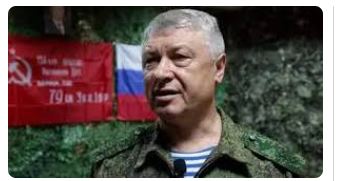
Lt Gen Vladimir Alexeyev was immediately taken to hospital after the attack in a residential block of flats on the north-western outskirts of the Russian capital and his condition is unknown.

Alexeyev is number two in the main directorate of Russia’s GRU military intelligence and the latest high-ranking military figure to have been targeted in the capital since the full-scale invasion of Ukraine began almost four years ago.

He was placed under European Union and UK sanctions after the GRU was accused of being behind the 2018 nerve agent attack in Salisbury in the UK.

“The victim has been hospitalised at one of the city’s hospitals,” said Svetlana Petrenko of Russia’s Investigations Committee, which said it opened a criminal case for attempted murder.

The gunman fled and investigators searched CCTV footage for clues and began interviewing witnesses.

Russian Defence Ministry Picture of man in uniformRussian Defence Ministry

Lt Gen Vladimir Alexeyev is number two in the main directorate of Russia’s GRU military intelligence

A neighbour of Alexeyev told the Reuters news agency she had been woken up by the sound of “several” shots and had then heard another neighbour screaming for help.

“This is all I heard. Other neighbours rushed out, too. They asked how they could help, should they call ambulance and police, but she had already called them.”

Alexeyev has played a significant role during the war in Ukraine, taking part in talks with Ukraine during the Russian siege of the city of Mariupol in 2022.

He was also sent to negotiate with the head of the Wagner mercenary group, Yevgeny Prigozhin, who led a short and bloody mutiny in June 2023.

His boss at the GRU, Igor Kostyukov, has been in charge of Russia’s negotiating team taking part in talks on security issues with the US and Ukraine in Abu Dhabi.

Kremlin spokesman Dmitry Peskov said President Vladimir Putin was being briefed on the shooting. “We wish first of all that the general survives and recovers. We hope that will be the case,” he told reporters.

It is not yet known who was behind the shooting on Friday morning in a residential block on Volokolamsk Highway in Moscow but Russian Foreign Minister Sergei Lavrov accused Ukraine.

Kyiv has not commented but has claimed some attacks on Russian military figures in the past. Russian intelligence officials claimed they had thwarted an attempted attack on a Russian soldier in St Petersburg at the end of last month.

An Uzbek man was jailed in January for the 2024 killing of another general, Igor Kirillov, in an explosion outside a block of flats in Moscow. Ukraine’s SBU intelligence had said it was behind the attack.

Lt Gen Kirillov had been in charge of Russia’s Nuclear, Biological and Chemical Protection troops.

In December 2025, another high-ranking officer in the GRU, Lt Gen Fanil Sarvarov, was killed when an explosive device detonated under a car in Moscow. He was in charge of the armed force’s operational training department, according to Russia’s Investigative Committee.

Stay Connected

64FansLike
60FollowersFollow

Latest Reviews

Exchange Rates

USD - United States Dollar
EUR
1.14
GBP
1.34
AUD
0.70
CAD
0.71