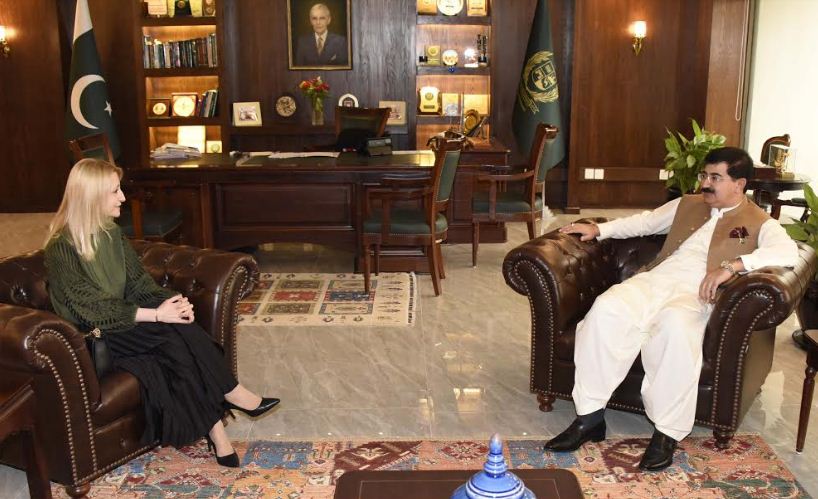
ISLAMABAD, JUL 19 (DNA) – There are opportunities for cooperation in the economic and trade sectors. Bulgarian investors can benefit from Pakistan’s investor-friendly policies, says Chairman Senate Sadiq Sanjrani in his meeting with Bulgarian Envoy, Irena Gancheva, who called on him at Parliament House.
During the call-on, matters of mutual interest, bilateral relations, and regional situations were discussed in detail. Views were also exchanged on regional and international issues.
“Pakistan and Bulgaria have traditionally enjoyed friendly and cooperative relations. Our Country adores and values its friendly relations with the Republic of Bulgaria”, Sadiq Sanjrani maintained.
Sanjrani underlined that both countries share the commonality of views on regional and international issues. Pakistan and Bulgaria are partners in counter-terrorism, he further added.
The Chairman also comprehended Bulgaria’s supportive role for Pakistan’s greater access to European Union (EU) market.” The two countries need to further cement ties at the parliamentary level. Exchanges of high-level delegations between the two countries will further bolster friendly relations”, Sanjrani stressed.
During the meeting, the Chairman of the Upper House also called for boosting the untapped areas for enhancing the cooperation between the two friendly countries, i.e. Agriculture, Information Technology (IT) and economics.
While hailing the economic potential of Gawadar, the Chairman underscored that Bulgarian investors should also benefit from investments in Gwadar. Furthermore, trade cooperation needs to be further enhanced, he said.
“Parliamentary diplomacy is substantial means of bringing nations closer together. Peace and stability are crucial for the development and prosperity of the region. Pakistan will continue to support and remain the partner of peace efforts in the region”, he underlined.
The Bulgarian Ambassador stressed the importance of bilateral cooperation with Pakistan. Pakistan is an important country for Bulgaria. She added. Bulgaria wants to strengthen its relations with Pakistan; further, H.E Irena Gancheva maintained.=DNA
ISLAMABAD, JUL 19 /DNA/: The Government of Japan has decided to implement 7 new Japanese technical cooperation programs in Pakistan to cater the social needs and assist capacity building for growing industries at the federal and provincial level.
Including these 7 programs, the Japanese Government will implement a total of 25 technical cooperation programs in Pakistan in fiscal year 2021.
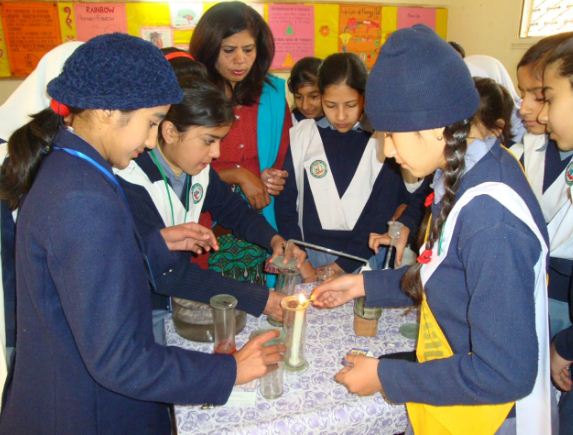
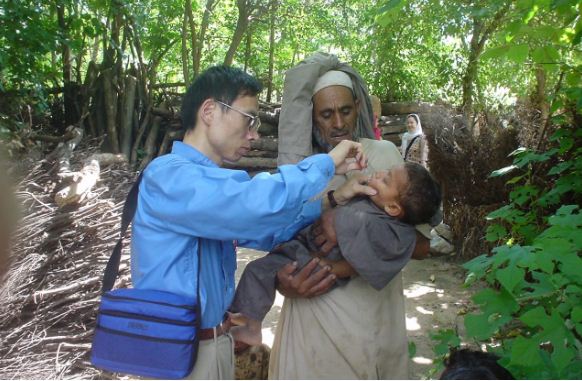
The new Japanese technical cooperation programs, starting in fiscal year 2021, include the projects and dispatch of experts for improvement in health, education, agriculture, gender and information technology sectors and would be implemented by the Japan International Cooperation Agency (JICA) over the period of around three years.
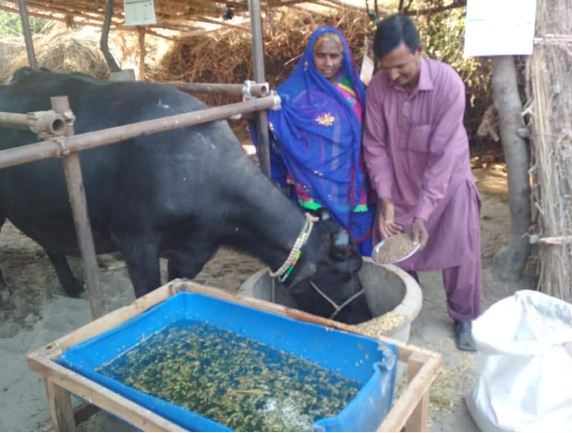
The programs cover areas such as (1) strengthening care for mothers, newborn and child health in KP, (2) dispatching Education Policy Advisor to Sindh, (3) strengthening of community engagement and educational practices for better retention in Sindh, (4) providing technical support for livestock genetic improvement in Sindh, (5) coaching trout farming technology in KP, (6) promoting survivor-centered approach in gender-based violence in Punjab and (7) dispatching Technical Advisor for ICT industry development in Pakistan.
For the effective implementation of these programs, JICA, besides dispatching of Japanese experts for capacity building of counterpart organizations, would conduct online trainings to share Japanese expertise and experience under the restrictions on overseas travel due to the COVID-19 pandemic.
H.E. Mr. MATSUDA Kuninori, the Ambassador of Japan to Pakistan, citing his optimism on the new Japanese technical cooperation programs, stated that these programs with their successful implementation would greatly benefit the Government and the people of Pakistan at the federal and provincial level.
“Capacity building in health, education, agriculture, gender and ICT sectors are some of the priority areas for Japanese assistance in Pakistan”, said the Ambassador.
The Ambassador hoped that these projects would contribute towards the bright future of Pakistan and further strengthening of Japan-Pakistan relations.
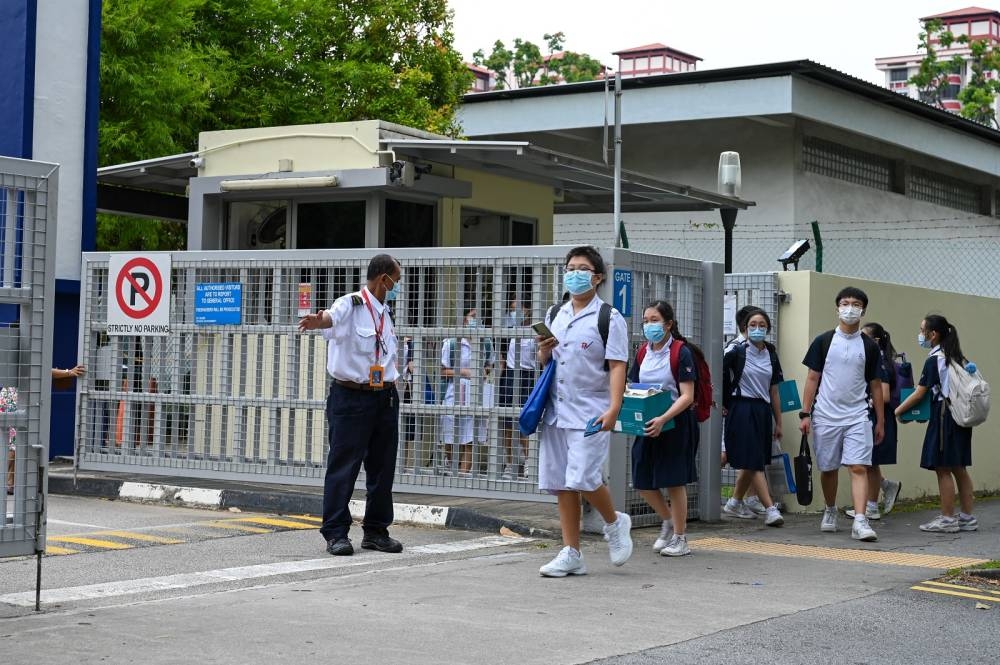
Singapore, July 19 :A 13-year-old boy was found dead Monday at a Singaporean high school, while a fellow student was arrested and an axe seized, police said.
It was a rare incident in the city-state, which is known for its zero-tolerance approach to wrongdoing and has one of the world’s lowest crime rates.
Police were called to the prestigious state high school in the west of Singapore, where they found the 13-year-old with many wounds.
He was pronounced dead at the scene.
A 16-year-old was arrested for suspected involvement, police said in a statement.
The teenagers did not know one another, according to preliminary investigations.
The suspect will be charged in court with murder on Tuesday, and police said they would ask him to undergo a psychiatric assessment.
Education Minister Chan Chun Sing said he was “shocked to receive news of the tragic incident”
“Our thoughts are with the families of the students concerned.”
Singapore has tough laws for even minor offences such as vandalism, which can be punished by caning.
It has a homicide rate of just 0.2 per 100,000 inhabitants, according to UN data — among the world’s lowest.
ISLAMABAD, JUL 19 /DNA/ – SM Munir, Patron-in-Chief United Business Group, has said that Pakistan’s Army is playing a great role in protecting the geographical borders of the country.
In addition, in the current economical conditions PM Imran Khan and General Qamar Javed Bajwa are striving hard to boost the economy of the country.
He said that the improvement of the economical condition of Pakistan has began to emerge significantly and in the next few years Pakistan will emerge as a strong economical and political power of the region . He expressed these views yesterday at dinner in his honor hosted by Zafar Bakhtawari Secretary General UBG.
Moreover, he said that Pakistan’s exports have started increasing and it would be a good sign for the development and prosperity of the country. He further said that he will use his all capabilities and efforts to solve the problems of the business Community .
Zubair Tufail, President, UBG in his address thanked SM Munir and the leadership of UBG for trusting him , Zafar Bakhtawari and Dr. Mirza Ikhtiar Baig as the new office bearer of UBG. He hope to fullfil the expectations of UBG.
He said that the Secretariat of United Business Group which is established in Islamabad would not be dedicated only for UBG members but also serve the business community across the country . It will play an effective role in resolving the problems with ministries ,FBR and other department of the Government.
He thanked the overseas Pakistani for sending 30 billion dollars in remittances last year and admired their contribution for Pakistan economy .
UBG Secretary General Zafar Bakhtawari in his address said that Islamabad is important place for the country’s economic, diplomatic and trade development and UBG’s office in Islamabad will play a vital role in country’s economical development and prosperity.
He said that the real development and prosperity could not be achieved without the respect and dignity of the businessman. We have to highlight once again the promotion of the Islamic Revolution in which the world’s greatest revolutionaries, Hazrat Muhammad (peace be upon him), Hazrat Khadijah Al-Kubra and the Rightly Guided Caliphs were traders and brought the examplry revolution in every sphere of life . Indeed we have to follow their policy and manifesto as a beacon of light.
Mian Akram Farid, Chairman, Founder Group (ICCI ) said in his address that the construction package given by the present government has resulted in economic growth of up to 4% and if extended for another two years the economic growth could reach 6%. He said that a similar special package should be issued for industrial revolution in the country. He further said that the loans and special package could start for SME’s for rapid development in the country. Former FPCCI President Ghazanfar Balour said in his address that during PM current visit to Uzbekistan, Kp Chamber of Commerce has signed special agreement with the Uzbek government, which will help to boost trade and economic ties between the two count.
Government employees in South Sudan are finding it very difficult to feed their families due to low salaries and skyrocketing food prices.
Garang Deng, a government worker, told Anadolu Agency that it has been difficult for him to make both ends meet for his family as he receives a monthly salary of just 4,000 South Sudanese pounds ($30) which cannot cater for all the family needs.
“I find it really difficult to meet all family requirements. When someone in the family falls sick either with malaria or typhoid, the medical bill at the private facility is usually above 10,000 South Sudanese pounds ($76),” Deng said.
“I am now engaged with a small private work in order to help meet some of the family needs. I do not even turn up for work daily because of the increasing cost of transport,” he said, adding his children do not go to school as he cannot afford school fees.
Martha Atoch, a 45-year-old civil servant and the mother of four, said that she is striving hard to meet the needs of her family.
“I am a civil servant working with a meager salary that is not enough to cater for the family needs … I am told that the salary is going to be increased by 100%. However, it will make no difference if the market prices are still very high,” Atoch said.
“Now I am also working in a restaurant where they pay me 1,500 South Sudanese pounds ($11) daily and I am using that money to help my family,” she said.
Manasseh Dol, the headmaster of a primary school, said he has decided to open a small retailer shop in order to “feed my family.”
“People’s livelihood in South Sudan is really getting tough, especially for the civil servants. I am headmaster in one of the government schools and my salary is 4,000 South Sudanese pounds and that money cannot buy for me a bag of maize flour, charcoal for cooking, medicines among other needs,” Dol said.
He said that the only advantage he got as a government employee is that all of his children are studying in the school for free.
Speaking at the nation’s 10th anniversary of independence earlier this month, President Salva Kiir Mayardit announced that his government is going to double the salaries of all civil servants.
Prof. Abraham Matoc, an economist and vice chancellor of Dr. John Garang Memorial University, said that the plan to raise the salaries is an indication that the government is concerned about the livelihood of the people in the country.
“Salaries are income of individuals and if incomes are very low, definitely, poverty will not be reduced. Reasonable income would improve the livelihood of the people because they have sufficient income which they can use now as a means of livelihood,” Matoc said.
ISLAMABAD, JUL 19 – /DNA/ – On the occasion of Eid ul-Adha, the Australian High Commissioner to Pakistan, Dr Geoffrey Shaw said: “I send my warm greetings to Muslims in Pakistan, Australia and all around the world who are celebrating Eid-ul-Adha.
During the Eid-ul-Adha holiday, Muslims of all ages and backgrounds engage in acts of charity and help those in need. These values have never been more important as we continue to fight the COVID-19 pandemic.
Whether it is keeping each other and our communities safe or helping those who are more vulnerable, Muslims in both our countries continue to show us what it means to serve our community.
Australia is one of the most successful and harmonious multicultural societies in the world. The Australian Muslim community plays an important role in strengthening our diverse social fabric.
On behalf of my wife, Gaynor and my colleagues at the Australian High Commission, I wish all those celebrating, Eid and Hajj Mubarak!”
Over the years, the tools of warfare may have changed but the trade remains the same. Swords, guns, gauntlets, and grenades have increasingly been replaced by economics. The tip of the economic spear has lately been oil and the influence over its pricing.
The drastic rise and fall of global prices because of fast paced changes in supply and demand often result ina shift in the balance of power among the cartels. Whether it is the natural series of events or man created that lead to the sky-rocketing prices, the political oil controllers depend on the public market and consumers who can do much to change the outcome but are not able to do much in this case. To counter the blow of energy politics, a robust and inclusive energy policy consistent with the needs of today is requiredat a global scale.
The strategic importance of power and fossil fuelsmakes energy the leading factor in geopolitics and international diplomacy. Although there have been significant developments in countering that component with alternative and renewable energy supplies, the influence of oil has still managed to withstand the test of time. Albeit focusing on alternative and renewable energy helps countries move past the geopolitical component of the fossil fuel industry, the technology’s reach has still not met its grasp and the overwhelming majority of global energy systems are still linked or dependent on fossil fuels.South Asia is one such example of a market caught in the crosshairs. Despite a move towards energy transition, the demand still outpaces the gait of alternative fuels. Currently, with its rapidly growing energy sector, the region is poised to play an expanding role as a global energy market and constitute a component of geopolitics where Pakistan, a significant developing countrygrapples with dailychallenges in meeting the rising energy demands and climate change issues.
The energy sector is a pivotal realm at present, where the United States, China, and the OPEC+ are the dominating power players.The United States’long-standing failure to bring peace in Afghanistan and its hasty withdrawal will leave Pakistan’s neighborhood vulnerable to external vectors. China in the meantime is expanding its control and has made Pakistan center of its OBOR and CPEC initiatives, with main contribution in infrastructure projects.China, India &Pakistan constitute a fast developing region that isavailing energy resources to provide for the growing energy and financial demands with much room fordiplomaticcooperation and regional development.
Presently, the demand of energy in Pakistan is greater than supply and the energy weave is based on expensive fuels. To resolve its energy problems, Pakistan is in dire need of implementation of various supply and demand side plans, through an allied energy policy anda proper operative system. Pakistan should be able to make use oflow-costdomestic energy resources with major usage of renewable energy.
As a large developing country, Pakistan is facing many problems, especially related to overcoming poverty and improving the health, education, and employment opportunities for low-income groups. Pakistan has pursued high-cost, short-term fixes while obtaining billions in infrastructure loans, mostly from China, for coal and nuclear plants that could cause financial adversity in the energy sector. The country’s energy problems are profound and deep rooted that have more to do with the inefficient government and its failure than with the supply of resources.
The energy sector is important for development in solvingPakistan’s problems, but corruptcontribution, weak governance, and poor budgetary control of the sector are major obstacles. Unlike India or China, Pakistan is a small contributor to the greenhouse effect, but it could escalate in the future owing to the poor investment and its choice of fuel. Rising energy demands from increasing urbanization, incomes, and population have placed pressure on domestic resources and eventuallyPakistan has increased its reliance on fossil fuel imports, though according to the US Geological Survey, it has petroleum resources of 164 million barrels of oil and 24.6 trillion cubic feet of natural gas.
United Nations (UN) Secretary-General António Guterres, in his closing remarks at the UN Climate Conference in 2019, called for countries to stop building coal plants after 2020. It might be overly ambitious for developing countries like Pakistan, but it would be more appropriate and helpful for its future to focus future projects on renewable energy by improving its policies for the energy sector. Pakistan is currently focusing on energy projects under its new renewable energy policy to enhance the exploration of domestic energy resources and engage foreign investment to uplift its economy.It is focusing on promoting oil and gas exploration opportunities aiming to attract investment from Saudi Arabia, the UAE and other Gulf countries, to provideviable energy supply, lower its energy imports and boost its economy.
In a meeting with the UAE Ambassador Hamad Obaid Ibrahim Salem Al-Zaabi, Pakistan’s Federal Minister for Energy Minister Omar Ayub Khan analyzedthe development on the current petroleum projects and discussed ways to promote the Pak-UAE cooperation in the energy sector. “The collaboration in the energy sector would provide a fresh impetus to economic ties between the two brotherly countries” the UAE envoy said.
Pakistan’s Finance Minister Shaukat Tarin has also stated in a press conference, that an understanding had been reached with Saudi Arabia for revival of its oil facility on deferred payments. He informed that Pakistan has also availed the defer oil payment facility from Saudi Arabia and Petroleum Levy would increase in next fiscal year. However, the government is expecting that oil prices in international market would decline after lifting the ban on Iran. The government will have the chance to consume the levy by retaining the impact of decline in international oil price.
Pakistan’s future could shape and elevate from successful investment by international financial institutions, in solar and wind projects along with its large hydro development projects, at the same time funding and enhancing its projects and future policies. It is crucial to improve the conditions and function of its present policies keeping with the dramatic climate change and global warming.However, the biggest hinderance towards the implementation of any measure comes from incompetent leadership. A long draft of hopeful policies can have no effect unless there is a clean ambition to implement them with honesty by the leaders, who desire to serve the interests of their country. Fundamental reforms and policies can always followan efficient governance.
(Wajeeha is the author of “The Conscious Ego”, “The Beautiful Present”)
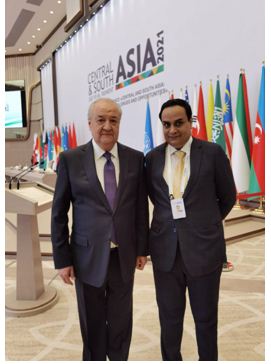
After the successful international conference titled “Central and South Asia: Regional Connectivity, Challenges and Opportunities” the Republic of Uzbekistan has now started its “third renaissance”. Moreover, Uzbekistan’s regional “connect policy” is also inching towards greater socio-economic dividends.
the Republic of Uzbekistan under the visionary leadership of H.E. Shavkat Mirziyoyev has already started its journey of immense socio-economic prosperity, economic sustainability, political stability, regional connectivity, reconciliation, innovation, qualitative education, human capital and last but not least, “commercial diplomacy” towards its third renaissance. Uzbekistan’s third renaissance “comprises” of greater regional connectivity, commercial diplomacy, trans-regional mega projects, continuation of structural reforms, diversification of macro-economy, “pragmatic & friendly foreign policy module” and last but not least, “holistic model of connectivity based on “shared prosperity. Its third renaissance has now been getting “momentum” and new “heights” since the start of the presidency of Shavkat Mirziyoyev 2017.
Its Ist & 2nd renaissance was the total “sum” of superior human knowledge, wisdom, science & arts, spirits of survival, prosperity, infrastructural development, strategic expansion, statesmanship, good governance, logistic connectivity, trade & commerce, sharing & caring and last but not least, friendship, peace and harmony and this international conference would gear-up Uzbekistan’s third renaissance.
During Pak-Uzbek Business Forum, the Prime Minister of Uzbekistan Abdulla Aripov mentioned the strong ties between Pakistan and Uzbekistan in multiple areas of cooperation. He welcomed PM Imran Khan on his official visit to Uzbekistan, which he said would usher in a new area of cooperation and joint ventures between the two brotherly countries.
While speaking to media Foreign Minister Shah Mehmood Qureshi said Pakistan and Uzbekistan had vast potential to explore the opportunities of bilateral trade and investment for their mutual interest.
He shared that the Pak-Uzbek Business Forum was attended by around 130 representatives of leading companies and business houses from Pakistan. During this forum various agreements worth of $500 million were signed which hopefully would further strengthening the pace and scope of bilateral trade.
Information Minister Chaudhry Fawad Hussain said two important objectives of the prime minister’s visit were to ensure travel facilities among Pakistan, Uzbekistan and Afghanistan and to deliberate upon ways to ensure peace in Afghanistan. He said Pakistan desired an effective trade linkage up to Uzbekistan and other Central Asian states.
He emphasized that an effective transportation infrastructure should be developed as soon as possible for loading goods loaded from Pakistan’s Karachi and Gwadar seaports to reach Uzbekistan’s Tashkent.
During the Pak-Uzbek Business Forum, both sides vowed to expand multifaceted bilateral cooperation to all areas of mutual interest and stressed the need for resolution of the Afghanistan conflict through internal political process imperative for peace and progress of the whole region.
Prime Minister Imran Khan while addressing the business forum, expressed the hope that Pakistan’s connectivity (through rail, road and aviation) with Uzbekistan in trade and bilateral spheres would open up new avenues of prosperity in the region.
He assured the businessmen and traders of Uzbekistan that Pakistan would extend them every possible facility in promotion of trade. He said the railway project between Pakistan, Uzbekistan and Afghanistan would prove to be a revolution of development, adding that peace and security in the neighbourhood was essential to exploit the region’s potential.
A joint declaration was issued at the conclusion of the business forum. Prime Minister Khan and Uzbek President Mirziyoyev agreed to strengthen their multifaceted ties in political, trade and economic, energy, communication, science and technology, education and cultural spheres, and fighting Covid-19. Both leaders announced the establishment of a strategic partnership for mutual benefit of the two countries.
They agreed on the regular exchange of parliamentary delegations to deepen bilateral ties. The Uzbek side confirmed the invitation to Senate Chairman Sadiq Sanjrani to pay a visit to Uzbekistan.
Both leaders expressed readiness to maintain a regular dialogue and build constructive cooperation in the field of security and defence and to expand cooperation between law enforcement agencies of the two countries, particularly in the fight against terrorism and drug trafficking.
The two leaders welcomed the signing of the agreement on transit trade as an important tool for expanding bilateral trade. They reiterated their support for the Termez-Mazar-i-Sharif-Kabul-Peshawar railway project as an important initiative to create a rail link from Central Asia to the Arabian Sea through Afghanistan and Pakistani seaports of Karachi, Gwadar and Bin Qasim.
The two leaders also recognised immense potential of the China-Pakistan Economic Corridor for the benefit of the entire Central Asian region and beyond entailing greater connectivity and trade linkages through a network of transport, fibre optic cable, energy pipelines, and investment opportunities in its SEZs.
The two leaders welcomed resumption of direct regular flights between Pakistan and Uzbekistan.
Pakistan and Uzbekistan agreed to finalise bilateral Preferential Trade Agreement (PTA) within three months to further boost bilateral trade volume.
At the 6th meeting of the Uzbek-Pakistani Intergovernmental Commission on Trade-Economic and Scientific-Technical Cooperation (IGC) held in Tashkent, both sides agreed to form joint working groups on agriculture, information technology, education and mineral sectors to boost cooperation, said a news release issued here.
They both agreed that trans-Afghan corridor which connected Uzbekistan and Pakistan would play an important role in enhancing bilateral trade between the two countries.
The parties agreed to deepen partnership in the field of industrial cooperation, including by organising joint ventures in the field of textile industry, assembly of agricultural machinery, processing and packaging of fruit and vegetable products.
It was settled to deepen cooperation in energy and mineral sector, agriculture, transportation and communication, labor, education, tourism, science and technology, technology parks, housing and communal services, intercity collaborations, standards, meteorology, culture and youth affairs.
They recognised the importance of closer collaboration for post-Covid recovery to sustainably recover through technology, innovation and economic partnership, aiming at increased economic diversification, sustainable growth, building supply chain resilience, and robust regulatory environments. It was also agreed to develop banking links to create favourable conditions for the further development of bilateral trade.
Meanwhile, two countries agreed to organise Uzbek-Pakistani specialised exhibitions (Made in Uzbekistan/Made in Pakistan) in Tashkent and Islamabad to promote a wide range of export goods and to facilitate attraction of leading companies in pharmaceuticals, textile, and leather, production of construction materials and agriculture industries and transport and logistics services of both countries.
Chinese State Councilor and Foreign Minister Wang Yi also attended this conference and termed connectivity as an unremitting pursuit of human society since ancient times. He labeled it as a key impetus to development and prosperity in today’s world.
He showcased President Xi Jinping’s the Belt and Road Initiative (BRI) as instrumental tool in bilateral relations and cooperation between China and Central and South Asian countries.
According to Uzbekistan official figures (June 2021) the average annual investment growth rate was 22 percent during the last four years. The total volume of foreign investment surpassed $26.6 billion, including direct investments of $17.5 billion.
Moreover, the total volume of investments over the past 4 years has increased by more than 2.1 times, including foreign investments by 2.7 times. The share of investment of GDP in 2019 exceeded 38 percent for the first time, which created a solid foundation for ensuring economic growth in the coming years.
The GDP of Uzbekistan in 2019 increased by 5.6 percent. Despite the complex and complicated economic conditions and ongoing COVID-19 pandemic the World Bank has predicted the country’s GDP growth in 2021 by 4.8 percent, which is one of the best indicators among developing countries.
Furthermore, Uzbekistan’s foreign trade turnover is growing much faster than GDP and in 2019 increased by 26.2 percent, amounting to $42.2 billion. While in just 9 months of 2020, despite the pandemic, the country’s foreign trade reached $27.5 billion.
Being prominent regional expert of Uzbekistan & CIS I submit that all the regional should promote “openness” and “inclusiveness” and uphold the spirit of partnership. All countries should start their journeys from “structural” reforms to structured “engagements”.
All sides should support concept of greater connectivity which helps them to go forward together. Geopolitical games should be discouraged and spirits of disintegration should also be discarded. The principles of extensive consultation, joint contribution, and shared benefits should be institutionalized to create a bright future of integrated development with all countries.
Central Asia and South Asia should pursue both hardware and software development in promoting infrastructure connectivity. In this case, Pakistan is ready to work with all regional countries to align their infrastructure development strategies, push forward “hard connectivity” and “soft connectivity” in parallel, and strive to build an all-dimensional, multi-faceted and sustainable connectivity network with the extended CPEC contributions through seaports of Gwadar.
Pakistan supports the building of a corridor connecting Central and South Asia, helping countries in the region transform from “land-locked” to “land-connected” nations, and jointly building a major international transport route connecting Europe with Asia and linking the north with the south in which BRI and CPEC would play very important role.
Regional countries should adhere to the principle of mutual benefit and win-win cooperation, and increase financing services because zero-sum game has no substance. Pakistan calls on the World Bank, the Asian Infrastructure Investment Bank, the Asian Development Bank, and the Silk Road Fund to invest in connectivity projects, broaden diverse financing channels, and widely attract investment from private and social sectors, so that these projects will receive stable, transparent and high-quality financial support.
Regional countries should stick to the principle of common security and overcome obstacles in the cooperation. Main stakeholders should honor their commitments, fulfill their obligations, and strive to prevent the deterioration of the security situation in Afghanistan.
The conference was hosted by Uzbekistan. Leaders of countries including Afghanistan and Pakistan, foreign ministers of countries including China, Russia, Kazakhstan, Tajikistan, Turkmenistan, India, Bangladesh, the Maldives, Saudi Arabia, Kuwait and Turkey, the United Nations Secretary-General, and the European Union High Representative for Foreign Affairs and Security Policy attended the conference in person or via video link.
Uzbekistan’s President H.E. Shavkat Mirziyoyev has rightly upheld that Uzbekistan is on the “threshold” of a new era the “Third Renaissance” and international conference titled “Central and South Asia: Regional Connectivity, Challenges and Opportunities has now opened new window of opportunity for achieving dreams of greater regional connectivity, immense socio-economic integration and energy & food cooperation.
DHAKA, Bangladesh – Pakistani High Commissioner in Dhaka Imran Ahmed Siddiqui was addressing on the occasion of Pakistan Independence Day in capital Dhaka on Aug. 14, 2020, Photo: Md. Kamruzzaman – Anadolu Agency
DHAKA, Bangladesh
The leaders of Bangladesh and Pakistan are committed to boosting ties, including through high-level visits.
In an exclusive interview with Anadolu Agency, Pakistani High Commissioner in Bangladesh, Imran Ahmed Siddiqui, said leaders of both countries have already invited each other and both sides need to work on materializing exchanges early.
Since his official inception in Bangladesh in February last year, Siddiqui has already met Bangladesh’s President Abdul Hamid, Prime Minister Sheikh Hasina, Foreign Minister A. K. Abdul Momen and other Cabinet ministers and dignitaries, including business leaders.
Amid the coronavirus pandemic, officials and top businessmen from both countries also held several international webinars on trade and political relations.
In one, “Pakistan – Bangladesh Economic Relations: Future of Cooperation,” on July 5, business leaders and experts highlighted the prospect of mutual benefits in agriculture, readymade garment and other sectors.
Siddiqui said during the interview he has also shared in detail the scope of trade and cooperation between Dhaka and Islamabad.
“There exists tremendous potential for both sides to cooperate in a mutually beneficial manner in the areas of trade and investment, culture, arts and literature, tourism, etcetera,” he said.
Referring to his frequent interactions with the trade and business community, academicians, and civil society representatives, he said he noticed “a strong willingness to take bilateral ties of both states forward.”
File Photo of Pakistani High Commissioner in Dhaka Imran Ahmed Siddiqui, Photo-Pakistani Embassy in Dhaka
Top export destination
Addressing Bangladesh as one of the top 10 export destinations for Pakistani products, the envoy said: “Bilateral trade between Pakistan and Bangladesh for the year 2020-21 was $721.67 million.”
Of which Pakistan’s exports to Bangladesh in that time were $650.21 million while imports stood at $71.45 million.
One of the top Pakistani businessmen, Ihtesham Javaid, however, during the webinar termed trade volume as “very little, considering the market and opportunities” and urged Bangladeshi investors to come to Pakistan and invest by establishing industries.
During the same platform, Bangladeshi businessman Nabeel Essa said 65% of the Bangladeshi population is involved in agriculture and the country has the potential to enhance and promote agriculture outside with the help of Pakistan.
“King of mangoes comes from Pakistan but Bangladesh has its own 500 types of mangoes,” he said, adding that 80% of the Bangladeshi population is young people and the youth on both sides can connect, not only nationally but regionally and globally.
Currently, the potential products that Pakistan is interested in exporting to Bangladesh on a larger scale include cotton, yarn, fabric, leather, inorganic chemicals, vegetables and electronics.
But Siddiqui would like to see that pool expand.
“Both sides can also work in promoting cooperation in the areas of science and technology, information technology, health care, digital cooperation, SME [Small and medium-sized enterprises] development, tourism, etcetera,” he said.
Underlining agriculture as another very potential sector of mutual benefit, he noted that Pakistan’s agricultural sector is well-integrated into the overall economy and Bangladesh is also a country where most of the population depends on agriculture.
“Joint research on agriculture can greatly benefit both countries,” he said.
“There is a need to address various NTBs [Non-tariff barriers] to trade, including restrictions on Bangladeshi visas for Pakistani businessmen that hamper the realization of true trade potential,” he pointed out.
Bilateral visits to warm ties
The two South Asian Muslim states gained independence from British-ruled India in 1947, based on religion, but they went through a bitter experience on different issues and ultimately Bangladesh separated from a united Pakistan in 1971 following a nine-month war.
“Bilateral relations even between the two closest countries are not always friction-free. There may be some problems between Pakistan and Bangladesh, too. But fortunately, the leaderships in both countries are committed to moving ahead and to promoting better relations,” said Siddiqui.
Pakistani Prime Minister Imran Khan wrote to Hasina in March about Bangladesh’s Golden Jubilee in which he “recalled the far-sighted vision of reconciliation and friendship between the two countries so dearly cherished by the leadership of the two countries.”
Referring to the invitation in the letter from Khan to Hasina, Siddiqui said: “We believe a visit by Honorable Prime Minister Hasina to Pakistan would provide an impetus to our bilateral ties.”
He added that the response of Hasina to Khan was also very cordial.
“Prime Minister Sheikh Hasina, while accepting the invitation, also invited premier Imran Khan to visit Bangladesh at a mutually convenient time,” he said. “Both sides need to work on materializing these exchanges early. On our part, we remain ready to extend any support towards this end.”
For bolstering bilateral ties he also emphasized revitalizing stalled consultative mechanisms as well as enhanced people-to-people contacts and added that in 2020 both premiers exchanged views on the evolving COVID-19 situation and shared strategies to address the pandemic.
“Our foreign ministries and foreign secretaries also discussed this and other issues last year on phone,” he said.
Both countries are also working on how to activate the long inactive Joint Economic Commission — a group exploring bilateral cooperation in business and trade — and are interested in moving together to achieving “all relevant Sustainable Development Goals (SDGs),” including poverty alleviation and ensuring good health, quality education, and gender equality, in a timely fashion.