Home Blog Page 2609

‘Pakistan being targeted through hybrid warfare,’ NSA Yusuf says in briefing on Afghan ‘abduction’ incident

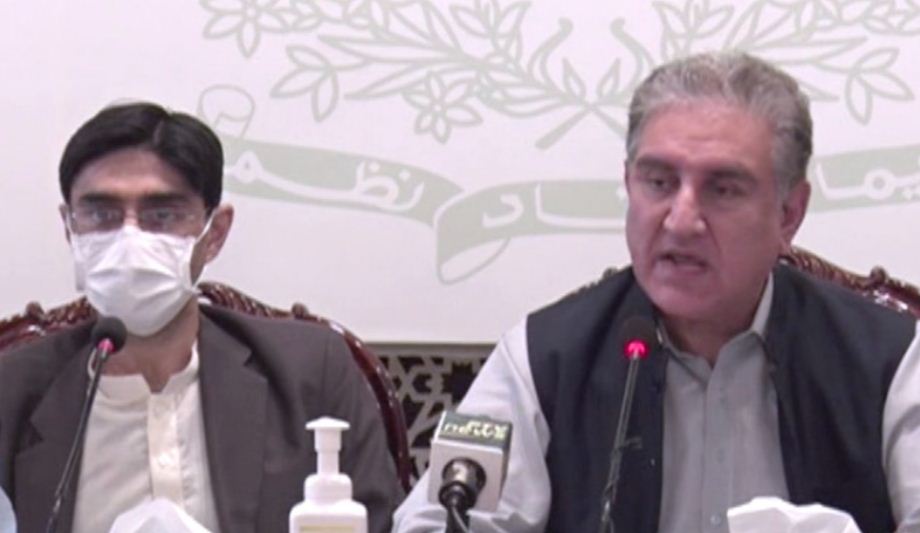
ISLAMABAD- National Security Adviser Dr Moeed Yusuf said on Monday that Pakistan was currently a target of “hybrid warfare” and an entire network of information warfare was being used against the country.

He made the remarks during a press briefing on the alleged abduction and release of the Afghan ambassador’s daughter in Islamabad last week.

Yusuf recalled that the EU DisinfoLab had exposed an India-based network of fake websites and media outlets doing propaganda against Pakistan.

He said fake accounts and bots were being used to create a “narrative” against Pakistan, including regarding the incident involving the Afghan envoy’s daughter.

Ambassador Najibullah Alikhil’s daughter, Silsila, was reportedly abducted on Friday from Islamabad’s commercial area by unidentified persons who also allegedly subjected her to torture.

According to her, she was returning home in the afternoon in a taxi after visiting a bakery in Islamabad’s Blue Area when the driver picked up another man who verbally abused and assaulted her. She was later dropped in an unconscious condition by the roadside. Her medical report said she had been physically assaulted.

Sharing slides on data gathered by the government, Yusuf said hashtags were being trended on a daily basis to create false impressions including that Pakistan “is doing something [wrong] in Afghanistan” and that the security situation in Pakistan was poor.

“This is part of an orchestrated campaign of which various fronts have been opened against Pakistan,” he said, adding that the same accounts that did “fake propaganda” regarding Balochistan or Kashmir were also doing propaganda ever since the alleged abduction incident took place. According to Yusuf, some of these accounts were operated from inside Pakistan, while the rest were controlled from Afghanistan, India and the West.

As an example, the NSA showed a tweet by a verified Indian Twitter account that contained a false picture of the Afghan envoy’s daughter showing her in an injured state.

He said the “spoilers” were trying to create rifts between Pakistan and Afghanistan, adding that this narrative reflected that Pakistan was being made a “scapegoat” in Afghanistan.

“Blaming us for the failures of someone else in Afghanistan will not be acceptable to us,” he stressed. He said the government monitored the coordinated activity being carried out through bots and reported the same, but new accounts kept emerging.

‘Abduction not corroborated’

Speaking alongside him, Islamabad Inspector General of Police (IGP) Qazi Jamilur Rehman said police had analysed all footage of the movement of the Afghan ambassador’s daughter. He added that the “impression given [about her abduction] is not corroborated by the evidence we have collected”.

He revealed that police interviewed more than 200 people in the case after examining the footage obtained through close circuit TV cameras. “The woman first leaves from her home on feet, then she hires a taxi from Rana Market and heads to Khadda Market. We subsequently identified the taxi and located its driver and interrogated him,” the IGP said.

He continued that Silsila then hired a second cab from Khadda Market that took her to Rawalpindi. “Similarly we traced the second taxi and its driver confirmed that he picked up the woman from the market and dropped her off at Saddar, Rawalpindi. We also obtained its footage,” he added.

The envoy’s daughter then hailed another cab from Rawalpindi to reach Daman-i-Koh. “Upon reaching there, she hired a fourth taxi for F-9, but made a brief stopover at F-6,” he said.

According to the IGP, the driver of this taxi told police that the woman asked him to stop the car at F-6, and made a phone call to someone, but it could not go through. She then asked to be taken to F-9, the police chief said.

After the cab finally reached F-9, he said, the woman called someone at the embassy and the staffer picked her up from there.

The IGP said Silsila had contended that she did not visit Rawalpindi, but her claim was disputed by the CCTV footage.

Police have sought further assistance from the Ministry of Foreign Affairs to address a few points in the case, Rehman added.
Afghan rivals agree to meet again after inconclusive Doha talks

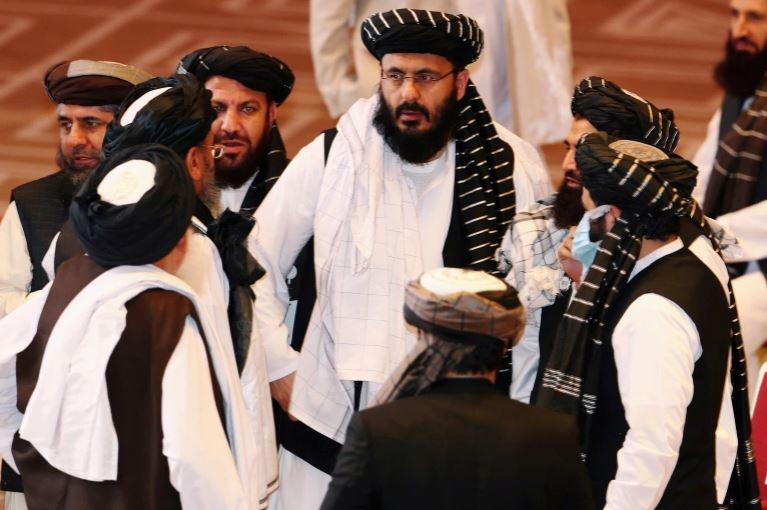
DOHA: Delegations from Afghan government and Taliban have agreed to meet again and to expedite peace negotiations after two days of inconclusive talks in Doha.

In a joint statement, both sides committed to continue negotiations at a high level until a settlement is reached”.

Ahead of second day of talks, Taliban’s Supreme Leader Haibatullah Akhundzada said they strenuously favour a political settlement despite their victories on the ground.

Qatari facilitator of the talks Mutlaq al-Qahtani said the two sides have agreed to work to prevent civilian casualties.       

South Africa’s ex-leader Zuma seeks further delay in corruption trial

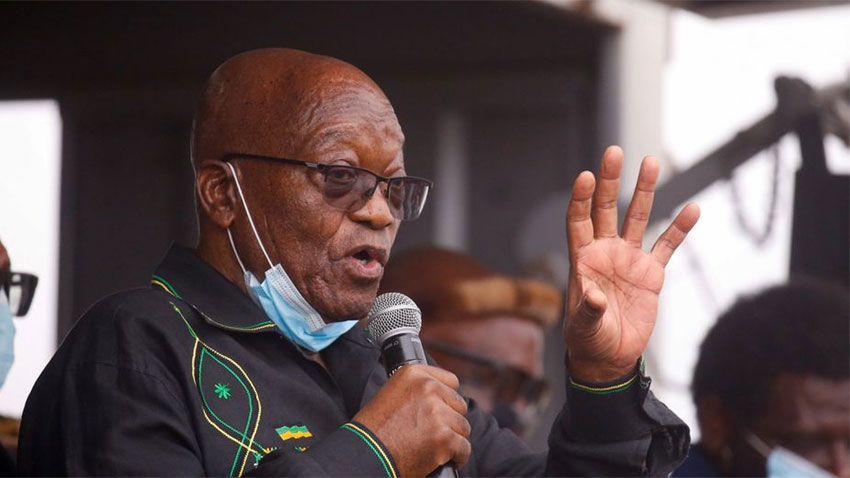
In South Africa, former president Jacob Zuma appeared in court today by video link to seek a further delay in his arms deal corruption trial.

Earlier this month, Zuma’s jailing triggered some of the worst unrest of the post-apartheid era in the country.

Russia to hold military drills near Afghanistan border next month

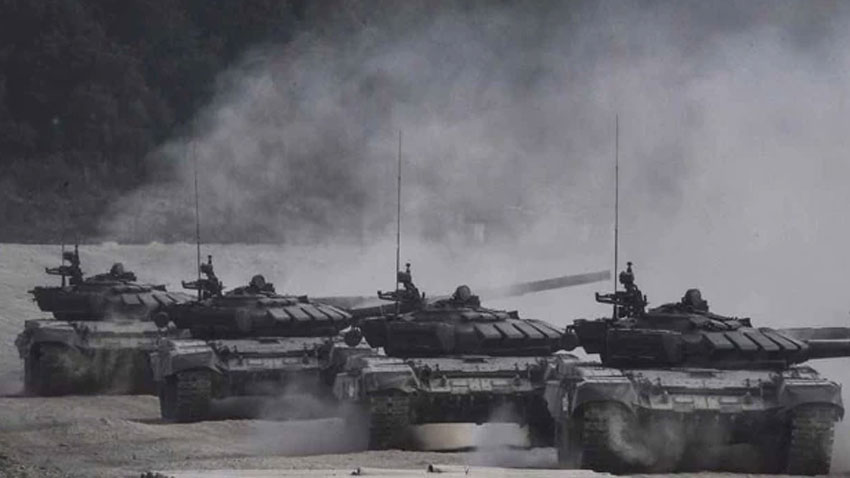
Russia says that it will stage military drills next month with Tajikistan and Uzbekistan near the border with Afghanistan.

In a statement today (Monday), the Russian defence ministry said that the joint drills will take place from 5th to 10th of August at the Kharbmaidon training ground in Tajikistan near the Afghan border.

Israeli spyware used to target journalists, activists: Report

An investigative report has revealed that rights activists, journalists and lawyers around the world have been targeted with phone malware sold to authoritarian governments by an Israeli surveillance firm.

According to the report published by The Guardian, the Washington Post and 15 other media outlets, authoritarian governments abused the Pegasus software for hacking smart phones.

Meanwhile, In India, congress leader Rahul Gandhi has criticized Prime Minister Narendra Modi after phone numbers of Indian ministers, leaders in the opposition, and journalists were also found in the hacking list.

Durable peace in Afghanistan to open avenues for regional economic connectivity: PM

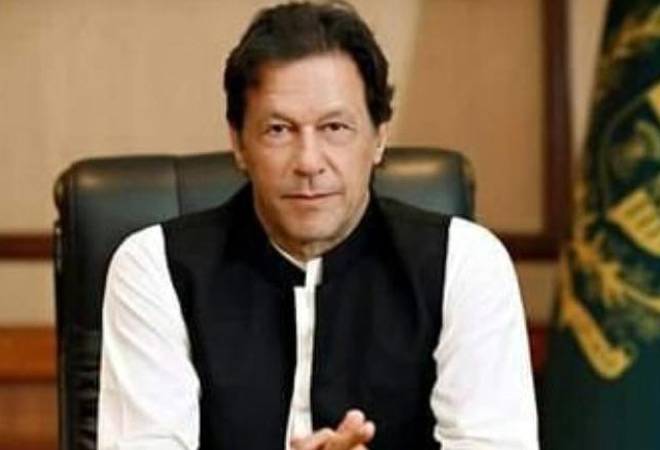
ISLAMABAD: Prime Minister Imran Khan says durable peace in Afghanistan would open avenues for regional economic connectivity.

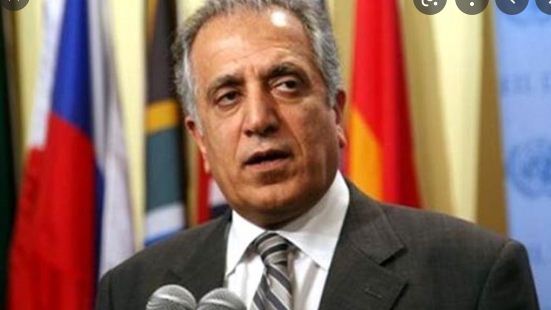
Talking to U.S. Special Envoy for Afghan Reconciliation Ambassador Zalmay Khalilzad in Islamabad today (Monday), he said the escalation of conflict and instability in Afghanistan is not in Pakistan’s interest and it would lead to serious challenges for Islamabad regarding security and influx of refugees.

He highlighted Pakistan’s constructive efforts for facilitating peace efforts for achieving an inclusive, broad-based and comprehensive political settlement to end over four decades long conflict in Afghanistan.

He recalled that he has consistently emphasized that there is no military solution to the conflict in Afghanistan. He said imposition of a government by force will not lead to the resolution of the conflict and that only a negotiated settlement will bring lasting peace and stability to Afghanistan.

Reaffirming Pakistan’s consistent support to a peaceful, stable and united Afghanistan, the Prime Minister underlined that a secure and safe Western border was in Pakistan’s own best interest and Pakistan would like to remain closely engaged with the U.S. and other relevant countries for peace efforts.

He emphasized the need for all Afghan sides to show flexibility and engage meaningfully with each other.

Imran Khan said that it is important for Afghanistan’s neighbours and regional countries to constructively work together for a lasting political settlement in Afghanistan.

The exchange of views covered the prevailing situation in Afghanistan and the need for expediting the Afghan peace process.

Ambassador Zalmay Khalilzad is on a one-day visit to Islamabad as part of a visit to the region.

PAKISTAN WELCOMES JOINT STATEMENT OF INTRA-AFGHAN NEGOTIATIONS (IAN) IN DOHA

ISLAMABAD, JUL 19 /DNA/ – Pakistan welcomed the ongoing engagement between the two Afghan sides in Doha. The joint statement issued at the conclusion of the two-day talks in Doha, is a positive development.

Pakistan believes that there is no military solution to the Afghan conflict and that a negotiated political settlement through Afghan-owned and Afghan-led Process is the only way forward.

Pakistan hopes that the Afghan sides would continue their engagement in future in a meaningful manner. This will help in reduction of violence, weaken the hands of spoilers and pave the way for establishment of lasting peace in Afghanistan.

AMBASSADOR KHALILZAD’S STATEMENT ON PAKISTAN VISIT

Islamabad, July 19 /DNA/ – U.S. Special Representative for Afghanistan Reconciliation Ambassador Zalmay Khalilzad visited Islamabad on July 19.  In meetings with Prime Minister Imran Khan and Chief of Army Staff General Qamar Javed Bajwa, Ambassador Khalilzad emphasized the urgency of a comprehensive political settlement between the Islamic Republic of Afghanistan and the Taliban, one that leads to a sustainable peace and preserves Afghanistan’s security, sovereignty, and territorial integrity.  

Continued war in Afghanistan poses a risk to the entire region and holds back its development. Peace, by contrast, will enable regional connectivity and increased trade and development. We commit to do our part to make this vision a reality. Tangible and material support for the Afghanistan peace process is vital for its ultimate success, as are positive long-term relations between Afghanistan and Pakistan.

We shed our blood and sweat together at KKH , says former Chinese Envoy to Pakistan

BEIJING, 19 (DNA): “More than 23 years of my life was tied with Pakistan, during which I buried friends for the Karakorum Highway, went through the 2005 Kashmir earthquake with the Pakistani people and dealt with many unexpected events.”

This was stated by Zhang Chunxiang, former Chinese ambassador to Pakistan in an interview to China Economic Net on the occasion of the 70th anniversary of the establishment of Sino-Pak diplomatic relations.

In a nearly 3-hour interview, Zhang shared his detailed memories and stories of his days in Pakistan as a liaison officer and a diplomat. The reporter believes that his 23-year experience bears testimony to the relationships between China and Pakistan.

“My stories about Pakistan begin at the construction site of the Karakoram Highway. This part of my life shaped my understanding of the relationship between Pakistan and China, and encouraged me to become a diplomat.” Zhang stated.

The Karakoram Highway, also known as the Friendship Highway between Pakistan and China, was built by the governments of Pakistan and China. Traversing mountains above the height of four thousand meters, KKH is often declared as a“road to paradise” which redefined trade activities among Hindukush, Karakoram, Pamir & Himalaya mountains.

To Zhang, KKH is a marvel of civil engineering filled with bittersweet memories.

“Initially, I worked as a liaison officer to help Chinese scientists conduct research on road hazards at Batura Glacier, and collect scientific data for the 2nd phase construction of KKH.

We nestled at an elevation of 5300 meters above sea level, even though the water will not boil at that altitude. Heard that we do not have access to vegetables, Pakistani villagers voluntarily sent us apricots.” Zhang said.

Facing stones, rockfall, floods and earthquakes, climbing the Batura Glacier and conducting research is not for the faint-hearted, Zhang remembered: “Pakistani people are the kindest.

On hearing that we needed to climb the peaks at Batura Glacier, elders who lived beneath the mountain worried deeply, they insisted on travelling with us… 1 time, they followed us for 2 hours.” From then on, the idea of “ironclad brothers” has deeply rooted in Zhang’s heart.

Owing largely to the brutal working condition, many Chinese and Pakistani workers and engineers rested forever between the mountains.

Zhang recalled the death of a Chinese senior officer, Wu Zhiye, “Wu was trying to stop the Pakistani villagers from entering the danger zone as the road section had just been blasted, he got hit by a rockfall and died.

The villagers who were saved were devastated. Their cries filled the mountains. Wu and I are from the same province in China. No words can express my sorrow for the loss of a diligent and brave young man, and I salute him for contributing his own life to others.”

The days spent at the KKH shaped Zhang’s character. He described himself as “not afraid of death, only fear of being incompetent.”, claimed that there were no other professions that he would rather choose, except for devoting his life to the Pakistan and China relationship.

“I have witnessed how the Pakistani and Chinese workers fought side by side against the cruel environment.

Based on mutual trust, they united regardless of their nationalities and beliefs, all to secure the well-being of the two people.”

Before Zhang went for his appointment at the embassy, he promised his Commissar that he would come back to visit the villagers, and pay tributes to those who had perished.

“The KKH brought tremendous changes to the people who live in northern Pakistan. When I visited the villagers who had helped us, I noticed that their children were able to play cricket nowadays—before the construction of the KKH, it took many days for a child to go to school, let alone purchase cricket equipment!”

In 2005, with Zhang’s efforts, a monument engraved in Chinese, English and Urdu was set up in the Gligit Chinese Memorial Cemetery, where Wu Zhiye and other martyrs lay.

“I promised, I would come back to northern Pakistan and pay my late friends visits. I fulfilled that promise…” The 73-year-old veteran burst into tears.

“Those days at the KKH construction site made me realize that the well-being of the 2 people is closely tied together. I have faith that we will support each other in the increasingly complex international environment.”

About Kashmir earthquake, he recalled, “I was reading the newspaper in my office in Islamabad when I felt the tremor, immediately, evacuation at the embassy started.” Zhang Chunxiang recalled the 2005 Kashmir earthquake.

On 8th October, 2005, a magnitude 7.6 earthquake occurred in Pakistani- administered Azad Kashmir, causing the death of more than 80,000 people, and is considered the deadliest earthquake to hit South Asia to date. It happened in the 3rd year of Zhang’s tenure as the Chinese ambassador to Pakistan.

“After the escape, staff at the Chinese embassy began to work in the front yard of the embassy and in cars. We have 2 urgent missions: to find out the casualties of Chinese citizens, and to apply for assistance.”

The Chinese government responded to this humanitarian crisis with lightning speed. A 49-member rescue squad with sniffer dogs were gathered before dinner time on October 8, 2005. Later, US$1 million in cash was sent out on October 10.

According to statistics, the government of the People’s Republic of China offered emergency aid worth US$6.2 million in total to help Pakistani earthquake victims.

“On October 9th, 2 hours before the arrival of the Chinese rescue squad, I met with the then Foreign Secretary of Pakistan, Riaz Mohammad Khan, and suggested that the Chinese squad should go straight to Balakot– because of the chilling fact that no news or information has got out of Balakot since the earthquake.”

The earthquake that occurred during Ramadan overwhelmed the Pakistani government. Zhang and his crew at the embassy had to recruit civilian trucks to transport aid and the rescue team sent by China.

“Time was running out! We went on the street to stop civilian trucks. Pakistani drivers heard that we were a Chinese rescue team trying to reach the epicenter, voluntarily joining us.

A lifeline consisted of 15 civilian trucks hastened to Balakot through the darkness of midnight.” Zhang said.

The Chinese rescue team arrived at Balakot on October 10, as the only rescue team in the village. “Once I set foot on Balakot, sorrow filled my chest. I just visited the close by area 1 year ago, almost an entire generation of Balakot’s citizens were wiped out”Zhang sunk in thoughts.

“Regardless of aftershocks and debris flow, as Iron brothers, Chinese rescue squad stepped forward bravely for the Pakistani people.” Zhang concluded.

About the 70 years,the past and the future, he said, “The future generation in Pakistan and China got to remember what the old guys had done.” Zhang laughed.He said that the friendship between China and Pakistan is unique in the world, and the growth of Pakistan-China relations in the long run will need the involvement and contribution of the younger generation.

“We shall not forget that our old friend had supported us countless times in the global arena. Through my experiences and memories, I wish to say to the world that the friendship between Pakistan and China was never empty words. We need each other, especially in today’s political environment”.

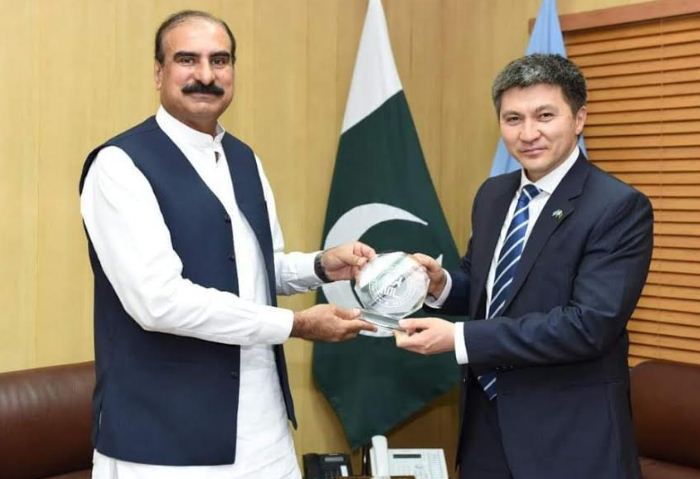
Ambassador of Kazakhstan visits NUML

Islamabad, JUL 19 – /DNA/ – The Ambassador Extraordinary and Plenipotentiary of the Republic of Kazakhstan to the Islamic Republic of Pakistan Yerzhan Kistafin visited National University of Modern Languages, Islamabad, where he met with Rector NUML Muhammad Jaffar.

The Rector spoke about the cooperation of the University with the Kazakh side and the established good relations with the Embassy.

Nonetheless, the sides stressed the existing significant potential for the development and strengthening of partnership between NUML and Kazakh universities, including in terms of student exchange, as well as interaction of teaching staff.During the meeting, the discussion was over possible projects for cooperation between the University and the Embassy of Kazakhstan on the eve of the 30th anniversary of the establishment of diplomatic relations between Kazakhstan and Pakistan.

Stay Connected

64FansLike
60FollowersFollow

Latest Reviews

Exchange Rates

USD - United States Dollar
EUR
1.14
GBP
1.34
AUD
0.70
CAD
0.71