Home Blog Page 26

Pakistan expands laptop scheme for students to boost education

A laptop in every youth’s hand government’s commitment, says Wajiha Qamar

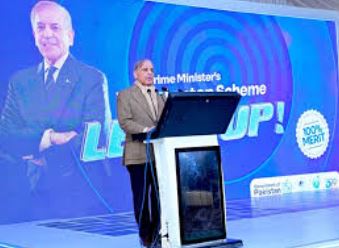
ISLAMABAD, Dec 22 (APP/DNA):Wajiha Qamar, Minister of State for Federal Education and Professional Training said that providing a laptop to every young person is an important mission of the government under which the Prime Minister’s Laptop Scheme is being further expanded.

She expressed these views while addressing a laptop distribution ceremony at Allama Iqbal Open University (AIOU) as the chief guest.

She said that the promotion of education and the empowerment of youth are among the top priorities of the government.

Wajiha Qamar added that Pakistan is now moving in the right direction and progressing toward economic stability, in which the role of the younger generation is extremely important.

Addressing the students, she remarked that the armed forces of Pakistan are the guardians of the country’s physical borders, while students are the guardians of its ideological frontiers.

Emphasizing national unity, she said that students are first and foremost Pakistanis and should use these laptops responsibly for educational and training purposes.

She encouraged them to take full advantage of modern technology to enhance their skills so they can secure a bright future for themselves and contribute effectively to the country’s development.

Vice Chancellor Professor Dr Nasir Mahmood said that through the efforts of the Higher Education Commission, the Government of Pakistan has provided laptops for 2,475 students of AIOU. Out of these, 300 laptops are being distributed today among students from Rawalpindi and Islamabad.

He added that the remaining students will receive laptops at ceremonies to be held in provincial capitals.

The Vice Chancellor highlighted that laptops are essential for students enrolled in distance learning and online education systems.

He expressed gratitude to the Higher Education Commission and the Government of Pakistan for including Allama Iqbal Open University in this important initiative.

Speaking on the occasion, Engineer Nazeer Hussain from the Higher Education Commission congratulated the university on the successful organization of the ceremony and the students on receiving their laptops.

He said that the objective of the Government of Pakistan and the Higher Education Commission is to equip students with modern technology so they can excel in education and research and represent Pakistan positively at the global level.

He urged students to use the laptops for positive and constructive purposes.

Registrar Raja Umar Raja also addressed the students and emphasized the importance of using the laptops for academic activities, online research, skills development, and acquiring modern knowledge.

He stated that responsible and effective use of technology would help students become skilled, informed, and productive citizens in the future.

Ambassador Khalil Hashmi holds meetings with Pakistan’s Honorary Investment Counsellors in China

Ambassador Khalil Hashmi holds meetings with Pakistan’s Honorary Investment Counsellors in China

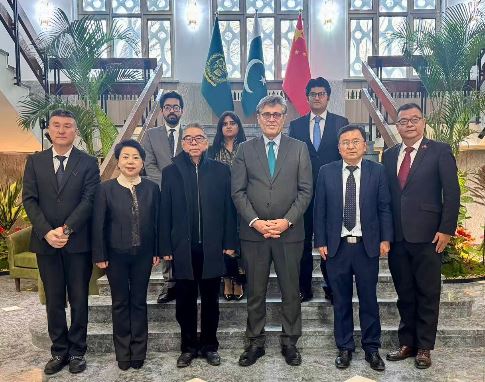
BEIJING, DEC 22 /DNA/ – Ambassador Khalil Hashmi, Pakistan’s Ambassador to China today held individual meetings with Pakistan’s Honorary Investment Counsellors (HICs) in China to take stock of their work, strengthen coordination, and set priorities for the year ahead. The meeting was attended by Ms. Ma Xiaoli, representing Mr. Yuan Jianming, Mr. Zhang Baozhong, Mr. Wang Zihai and Mr. Jian Peng. Besides individual meetings, the Ambassador also held a collective working luncheon with the HICs.

Ambassador Hashmi appreciated the HICs’ sustained efforts across a wide geographic spread, ranging from Hong Kong-Macao-Greater Bay Area, the region known for innovation and science and technology, Xinjiang which is a gateway to Pakistan, Shandong a major industrial base and Henan as an emerging agriculture hub. He underscored the HICs’ important role in advancing trade, investment and people-to-people linkages. He encouraged them to synergize their efforts with Pakistan’s national development priorities and mobilize Chinese investments in export-oriented sectors of Pakistan.

Highlighting progress made in the past two years to mobilize investment in priority sectors, the Ambassador briefed them on the context of identifying 21 priority sectors, channeling investments in these sectors through joint ventures to boost productive capacities and integrating investments with human capital development. The Ambassador expressed satisfaction over the unprecedented results achieved from the two B2B Investment Conferences held in Shenzhen and Beijing and six sectoral investment roadshows held since last year which cumulatively have yielded signing of over 300 MoUs and 25 Joint Ventures worth $11 billion so far. He shared with them the active follow up mechanism underway in Pakistan at high level to provide facilitation in implanting the MoUs. The Ambassador advised HICs to actively pursue implementation of MoUs falling within their respective jurisdictions to translate commitments into tangible outcomes.

Ambassador Hashmi also briefed the HICs on preparations made so far for the first sectoral, China focused Agriculture Investment Conference on 19 January 2026 in Islamabad and appreciated the role the HICs were playing to encourage participation by leading Chinese agricultural enterprises.

The HICs welcomed the initiative to convene focused annual review by the Ambassador, marking the beginning of an institutionalized engagement with the HICs. They shared their plans for 2026 and expressed resolve to lend their full support to the Embassy’s economic diplomacy agenda, especially enhancement of Chinese investments in Pakistan and increase in Pakistani exports to China, while boosting bilateral cooperation in these mutually beneficial areas.

Russia’s Expanding Shadow at Sea

Russia’s Expanding Shadow at Sea

Dr, Muahammad Akram Zaheer

For more than a decade, Russia has expanded its influence across regions far from its immediate borders. Much of this activity has unfolded quietly, through political patronage, private military networks, cyber operations and support for friendly regimes or factions in conflict zones. Although these undertakings rarely make headline news in the countries not directly affected, their consequences have rippled across continents, shaping security calculations from Africa to Europe and the Middle East. The phrase “offshore menace,” when applied to Moscow, captures an important reality: Russia today projects leverage not by formal territorial expansion but by cultivating pockets of influence abroad where state authority is weak, institutions are fragile, or political elites are seeking external support to secure their own rule. These settings offer openings for Russian operatives, intelligence networks and commercial enterprises that serve larger geopolitical interests. The result is a form of intervention that remains deniable yet effective, visible yet difficult to counter.

Unlike major Western powers that often frame their international involvement in terms of development or institution-building, Russia’s overseas engagements tend to follow a different logic. Moscow is not primarily concerned with improving governance or strengthening economies; instead, its focus often lies in ensuring that governments dependent on its favor remain loyal, or that rival powers find themselves constrained, distracted, or pushed out of strategic regions. This pattern is highly visible in parts of Africa. Countries such as Mali, the Central African Republic and Sudan have experienced deep political turbulence in recent years. In each case, local leaders military or civilian turned to Russia for military assistance, arms and political backing. Russia, in return, received mining concessions, intelligence access and a foothold in regions where Western influence had been waning.

The private military structure once known as Wagner and now reorganized under new leadership plays a central role in this expansion. While often described as a mercenary outfit, its tasks go well beyond battlefield engagement. Its operatives have been involved in guarding mines, training security forces and advising political leaders functions that blur the line between economic contract and geopolitical mission. The collapse of Wagner’s leadership after the mutiny in 2023 did not diminish these networks; they were swiftly absorbed under tighter Kremlin control, preserving Russia’s reach across the African continent.

Russia’s offshore presence is not confined to soldiers, mining specialists, or political advisors. A significant dimension lies at sea, where Moscow has adapted to international sanctions by assembling a vast network of aging tankers nicknamed the “shadow fleet.” These vessels, many operating under obscure flags and ownership structures, transport sanctioned oil across global waters while obscuring their movements. This maritime web allows Russia to sell oil at prices that fund its war effort in Ukraine while undermining Western sanctions meant to limit such revenue. Several countries some out of economic necessity, others out of political calculation have welcomed discounted Russian crude. The opaque routing, tactics such as ship-to-ship transfers and the use of non-transparent insurance schemes have raised concerns about environmental hazards as well as the erosion of international maritime norms. Beyond hydrocarbons, Russia has explored new maritime corridors to bypass naval chokepoints and Western monitoring. The opening of Arctic sea routes due to melting ice offers Moscow long-term ambitions. Although these corridors remain risky and seasonal, Russia’s investment in icebreakers and Arctic ports demonstrates a strategic intention to shape future global trade routes and secure military access across the northern flank.

Where Russian troops or contractors are not present, Moscow often deploys a different kind of force: information manipulation. State-run media networks, social media campaigns and covert online operations have been used to influence elections, deepen social fractures and amplify anti-Western sentiment in various regions. In Africa, for example, pro-Russian narratives frequently portray Moscow as a champion of sovereignty and stability, contrasting its image with that of Europe and the United States. These narratives resonate in countries where colonial histories remain central to political discourse. Russian operatives have refined their messaging to fit local grievances, turning online platforms into battlegrounds for hearts and minds. However, the reach is not limited to developing countries. In Europe and North America, Russian troll farms and affiliated groups have at times attempted to influence debates on immigration, public health and national security. The aim is not necessarily to persuade but to disrupt to weaken trust in institutions, encourage political fragmentation and sow confusion. The effectiveness of such tactics varies, but their persistence reveals a broader pattern: Moscow views information disorder as a cost-effective tool to challenge adversaries far from its borders.

In some of the regions where Russia has made gains, its support has helped local rulers consolidate their authority. Mali’s military rulers, for instance, have relied heavily on Russian backing to strengthen their position after severing ties with French forces. In the Central African Republic, Russia has provided security services and political advising to an extent that has given it considerable sway over government decisions. Such relationships benefit Moscow in several ways. They allow Russia to present itself as an alternative partner to Western democracies, one that does not lecture about human rights or governance. They also secure access to natural resources particularly gold, diamonds and rare minerals that help finance Russia’s global ambitions. Moreover, they guarantee political loyalty in international forums such as the United Nations, where even a few supportive votes can serve Russia’s larger diplomatic goals. The downside is that these relationships often deepen authoritarian tendencies, fuel internal conflicts and weaken the prospects for long-term stability. Yet for Moscow, instability in distant regions is not necessarily a liability. Disorder provides openings for influence and Russia has learned to operate effectively in environments where conventional diplomacy struggles to take hold.

While much attention has focused on Africa, Russia has been quietly reasserting its presence in Central Asia as well. The region’s states have attempted to diversify their foreign relations, particularly after the invasion of Ukraine raised alarm about Moscow’s intentions. China’s rising economic influence and Turkey’s increased diplomatic engagement have also offered these states alternatives. Nevertheless, Russia remains a pivotal actor in the region, particularly in security matters. Its military bases, intelligence networks and labor-market connections continue to tie Central Asian countries to Moscow. Even where governments seek greater autonomy, they remain cautious not to antagonize Russia, whose political influence still permeates the region’s elite circles.

Europe has faced Moscow’s offshore activities in more ways that are direct. From cyberattacks targeting government institutions to covert financing of political parties, Russia has sought to create cracks within the European Union and NATO. The full-scale invasion of Ukraine in 2022 was the most blatant form of aggression, but it also served as a catalyst for European unity. Still, Moscow has not abandoned its efforts to weaken cohesion among European states. Energy dependence remains another lever. Although Europe has significantly reduced its reliance on Russian gas, Moscow continues to explore ways to exploit vulnerabilities. The sabotage of undersea pipelines in the Baltic Sea a case still under investigation—illustrates how critical infrastructure has become entangled in geopolitical confrontation.

What makes Moscow’s offshore maneuvers particularly challenging is their fluidity. Russia seldom commits to a single method. It blends military presence with commercial ventures, mixes diplomacy with covert action and combines political patronage with information warfare. This adaptability enables Russia to shift strategies when confronted and to exploit openings wherever they appear. Unlike traditional great power rivalry defined by territorial control or formal alliances, Russia’s modern approach is dispersed and opportunistic. It thrives in ambiguity, making it difficult for rivals to respond without escalating tensions or overextending themselves.

India’s own UN submissions on Kashmir render its unilateral actions legally invalid: Experts

India’s own UN submissions on Kashmir render its unilateral actions legally invalid: Experts

The deaths of Kashmiris is the death of the UN’s commitment to the right to self-determination: Dr Gilani

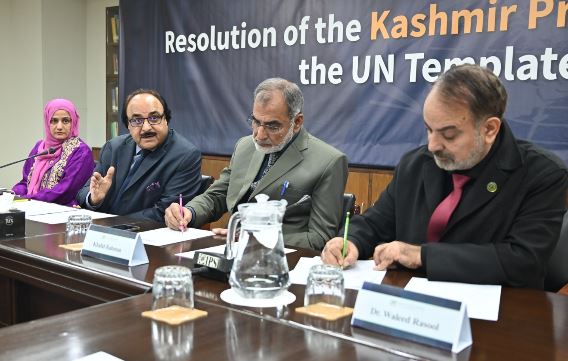
Islamabad, December 22: /DNA/ – India internationalized the Kashmir dispute by referring it to the UN in 1948. In its submissions, India itself endorsed the will of the people of Jammu and Kashmir to accede to Pakistan, or to opt for independence, thus unconditionally conceding the case’s jurisdiction under the UN Charter. This legally anchors the Kashmir issue within the UN framework of self-determination, rendering all of India’s unilateral actions, particularly those taken after August 5, 2019, legally untenable and contrary to the will of the Kashmiri people.

These observations were made during a public talk titled “Resolution of Kashmir Problem under the UN Template,” held at the Institute of Policy Studies (IPS), Islamabad. The participants included Dr Syed Nazir Gilani, president Jammu Kashmir Council on Human Rights, Khalid Rahman, chairman IPS, Farzana Yaqoob, former minister Azad Jammu and Kashmir (AJK), and Dr Waleed Rasool, executive director Institute of Dialogue, Development, and Diplomatic Studies.

During his discourse, Dr Gilani focused on the centrality of international law and UN mechanisms in understanding the Kashmir dispute. He noted that the ongoing sufferings in Kashmir represent not only a grave humanitarian tragedy but also a serious erosion of the UN’s fundamental principle of the right to self-determination. Citing Article 1(2) of the UN Charter, he stressed that the people of Jammu and Kashmir possess an equal and inalienable right to determine their political future through free and fair means. In this context, he emphasized that the “death of Kashmiris is the death of the UN’s commitment to self-determination”.

Dr Gilani further highlighted that both the UK and the US had historically been willing to offer third-party mediation to resolve the dispute, including proposals to refer the matter to the International Court of Justice. However, to realize such a course, Pakistan needs to cultivate institutional expertise and related political arrangements in AJK. Likewise, in addition to advancing development and good governance, the Government of Kashmir must proactively assert its legal and political mandate at international forums. One possible avenue is invoking the principle of restitution to challenge India’s illegal actions in Kashmir and its broader violations of the UN framework.

Stressing the need for greater initiative, Farzana Yaqoob underlined the need to adopt a proactive approach to the Kashmir issue. She suggested that the governments of both Pakistan and AJK must fully utilize the legal and political options available under their respective constitutional frameworks to advance the case of Kashmir at different forums.

In concluding remarks, Khalid Rahman underscored that Kashmir is neither a bilateral nor a territorial issue, nor merely a human rights concern. Rather, it is an international conflict recognized by the UN and reaffirmed through its resolutions. He emphasized that Pakistan must strengthen its narrative by grounding it in historical developments and facts. Moreover, in addition to building its case on human rights violations in Kashmir, Pakistan needs to build a strong legal case that can serve as the fundamental framework for resolving the dispute. This, he stressed, requires exposing weaknesses in India’s position while consistently reinforcing the legal merits of Pakistan’s case under international law.

From Chemical to Biological Control: Safer Pesticide Alternatives

From Chemical to Biological Control: Safer Pesticide Alternatives

By Azhar Jatoi

Agriculture has long been described as the backbone of Pakistan’s economy, employing nearly 42 per cent of the workforce and contributing about 24 per cent to the national GDP. Yet this backbone is under growing strain. With Pakistan’s population projected to reach over 400 million by 2050, the pressure on food systems is intensifying at a pace few sectors are prepared for. Low agricultural productivity, already compromised by climate stress, pests and diseases, threatens to widen the gap between food demand and supply.

For decades, the most common response to pest outbreaks has been the widespread use of chemical pesticides. While often effective in the short term, their long-term consequences are becoming increasingly visible. Excessive pesticide use has degraded soil fertility, increased production costs, harmed beneficial insects and raised serious concerns about human and livestock health. Despite heavy spraying, crop losses often persist.

“There is a misconception that more pesticides automatically mean better yields,” says one senior agriculture official. “In reality, farmers are spending more, damaging their land, and still losing crops.”

It is within this context that the Centre for Agriculture and Bioscience International (CABI), through its global programme PlantwisePlus, has been working closely with Pakistan’s government to promote safer and more sustainable plant protection practices. One of the most significant recent developments has been the government’s approval of new bio-pesticide registration guidelines, a move widely seen as a turning point for the country’s plant protection industry.

“This is a step change,” says Country Coordinator PlantwisePlus Dr. Naeem Aslam. “The approval of bio-pesticide guidelines opens the door for safer products that protect crops without compromising soil health, biodiversity or human safety.”

CABI’s support has gone beyond policy. Working through federal and provincial agriculture departments, the programme has helped establish rearing facilities for biological control agents, with full ownership transferred to government institutions. These facilities are creating new opportunities not only for safer crop protection, but also for job creation and the production of healthier food for local communities.

One of the most promising biological control interventions introduced under PlantwisePlus is the use of Trichogramma chilonis, a tiny parasitic wasp used to manage destructive pests such as the tomato fruit borer (Helicoverpa armigera). Though almost invisible to the naked eye, the wasp plays a powerful role in pest control by targeting the pest at its earliest stage.

Trichogramma chilonis acts as an egg parasitoid, laying its eggs inside the eggs of moth pests. This prevents the larvae from ever emerging, the stage responsible for the most severe crop damage. Within seven to fourteen days, a new generation of adult wasps emerges, ready to continue the cycle. A single female can parasitise up to 50 pest eggs during her short lifespan. “Stopping the pest before it hatches is the most effective control,” Dr Naeem explains. “It breaks the cycle without harming the environment.”

The first Trichogramma Rearing Facility (TRF) was established in 2022 in Madran, Khyber Pakhtunkhwa. Today, the facility is fully operational and supplying Trichogramma cards to farmers across the region. The work on the facility started in 2018, followed by training of the extension staff and the farmers. For farmers, the impact has been tangible. A farmer from Madran describes how the intervention changed his approach. “Yaseen bhai (Agriculture Extension Officer) brought these cards for us last year. They came to our fields and gave us the cards. There were eggs on them, and we placed them on the eastern side of our field. They stapled them under the leaves. Earlier, we used to spray pesticides, but these cards gave us very good results.”

PlantwisePlus has followed global protocols in rolling out the intervention, supporting not only the mass production of Trichogramma but also a comprehensive strategy to educate farmers on its correct use. Field demonstrations, follow-up visits and hands-on training have been central to building trust.

In 2023, the programme expanded southwards with the establishment of a second facility in Muzaffargarh, Punjab. The location was chosen to test the intervention across different ecological zones and crop systems. South Punjab, known for its fertile soils and diverse cropping patterns, also faces intense pest pressure.

A senior agriculture officers describes the facility as transformative. “This TRF is really impressive and has become a centre of excellence in all of South Punjab. We are producing extraordinary quantities of Trichogramma cards here.” Inside the facility, trained staff manage the delicate biological process with precision. They work on the Trichogramma host, which is Corsyra, a rice moth, collect its eggs and use them for parasitisation. Trichogramma’s life cycle is very short, about one week. Its eggs are pasted on cards and stored at temperatures between six and twelve degrees Celsius, before distribution to the farmers.

For farmers in Muzaffargarh, the shift away from chemical pesticides has brought both economic and psychological relief. “Earlier, pests like American Sundi, Lashkari Sundi and thrips would destroy our crops,” says one farmer. “We were worried all the time about arranging pesticide sprays. They were expensive, and sometimes we borrowed money. Then an agriculture officer told us about these cards and said they would produce friendly insects to kill harmful pests.”

Muhammad Farooq, an agriculture officer in Muzaffargarh, emphasises that proper training is essential. “When a farmer comes for the first time, we visit his field and train him how to use the cards. The side with eggs must face the leaf and be stapled underneath. Within three or four days, insects hatch and spread across the field. We distribute 50,000 cards every year free of cost. This method is low-cost and environmentally friendly.”

Encouraged by success in Khyber Pakhtunkhwa and Punjab, a Trichogramma Rearing Facility in Muzaffarabad, Azad Jammu and Kashmir, was set up, with the aim to offer biological control for long-term benefits. The Punjab government also allocated funds substantial in the 2024-25 provincial budget for setting up a Trichogramma Rearing Facility in Attock. 

At the national level, PlantwisePlus aims to empower smallholder farmers to increase incomes, improve food security and reduce biodiversity loss through sustainable crop production. Increasing the uptake of lower-risk plant protection products is now seen as urgent.

Dr Naeem Aslam, Country Coordinator for PlantwisePlus Pakistan, remains optimistic. “Keeping in view the progress of these Trichogramma rearing facilities, governments are now taking initiatives to develop such facilities through their own budgets.”

The establishment of these three facilities marks an important shift in Pakistan’s agricultural journey away from heavy chemical dependence and towards safer, science-based solutions rooted in local capacity. More than just buildings or laboratories, they represent a growing confidence that sustainable food production is achievable. For farmers, policymakers and researchers alike, the message is increasingly clear: protecting crops does not have to come at the cost of health, soil or the environment. With the right partnerships and sustained commitment, Pakistan’s fields can be both productive and safe for today’s communities and generations to come.

Japan prepares to restart world’s biggest nuclear plant, 15 years after Fukushima

Japan prepares to restart world’s biggest nuclear plant, 15 years after Fukushima

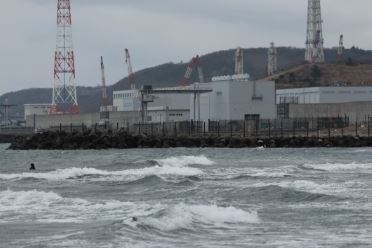
BAKU, Dec 22 (DNA):Japan took the final step to allow the restart of the world’s largest nuclear power plant on Monday as the Niigata Prefectural Assembly voted to resume operations, a watershed moment in the country’s return to nuclear energy nearly 15 years after the Fukushima disaster, according to the Japan Times.

Kashiwazaki-Kariwa, located about 220 km northwest of Tokyo, was among 54 reactors closed after the 2011 earthquake and tsunami crippled the Fukushima No. 1 plant in the worst nuclear disaster since Chernobyl. Since then, Japan has restarted 14 of the 33 that remain operable, as ?it tries ?to wean itself off imported fossil fuels.

Kashiwazaki-Kariwa will be the first operated by Tokyo Electric Power Company Holdings (Tepco), which ran ?the doomed Fukushima plant. On Monday, the prefectural assembly passed a vote of confidence on Niigata Gov. Hideyo Hanazumi, who backed the restart last month, effectively allowing for the plant to begin operations again.

Ahead of the vote, around 300 protesters, mostly older people, holding banners reading “No Nukes,” “We oppose the restart of Kashiwazaki-Kariwa” and “Support Fukushima” gathered in front of the Niigata prefecture assembly.

“Is Tepco qualified to run Kashiwazaki-Kariwa?” a protester asked into the microphone, with the crowd yelling: “No!”

Tepco is considering reactivating the first of seven reactors at the plant on Jan. 20, public broadcaster NHK reported.

“We remain firmly committed to never repeating such an accident and ensuring Niigata residents never experience anything similar,” ?said Tepco spokesperson Masakatsu Takata. He declined to comment on timing.

Tepco earlier this year pledged to inject ¥100 billion ($641 million) into the prefecture over the next 10 years as it sought to win the support of Niigata residents.

A survey published by the prefecture in October found 60% of residents did not think ?conditions for the restart had been met. Nearly 70% were worried about Tepco operating the plant. Ayako Oga, 52, settled in Niigata after fleeing the ?area around the Fukushima plant in 2011 with 160,000 other evacuees. Her old home was inside the 20 km irradiated exclusion zone. The farmer and anti-nuclear activist has now joined protests against what she sees as a new threat on her doorstep.

“We know firsthand the risk of a nuclear accident and cannot dismiss it,” said Oga, adding that she still struggles with post-traumatic stress-like symptoms from what happened at Fukushima.

Even Hanazumi, Niigata’s governor, hopes that Japan will eventually be able to reduce its reliance on nuclear power. “I want to see an era where we don’t have to rely on energy sources that cause anxiety,” he said.

The Monday vote was seen as the final hurdle before Tepco restarts the first reactor, which alone could boost electricity supply to the Tokyo area by 2%, the industry ministry has estimated. Prime Minister Sanae Takaichi, who took office two months ago, has backed nuclear restarts to strengthen energy security and to counter the ?cost ?of imported fossil fuels, which account for 60% to 70% of Japan’s electricity generation.

Japan spent ¥10.7 trillion last year on imported liquefied natural gas and coal, a tenth of its total import costs.

Despite its shrinking population, Japan expects energy demand to rise over the coming decade ?due to a boom in power-hungry AI data centers. To meet those needs, and its decarbonization commitments, it has set a target of doubling the share of nuclear power in its electricity mix to 20% by 2040.

Joshua Ngu, vice chairman for Asia Pacific at consultancy Wood Mackenzie, said public acceptance of the restart of Kashiwazaki-Kariwa would represent “a critical milestone” toward reaching those goals. In July, Kansai Electric Power, Japan’s top nuclear power operator, said it ?would begin conducting surveys for a reactor in western Japan, the first new unit since the Fukushima disaster.

But for Oga, who also joined Monday’s protests outside the assembly chanting “Never forget Fukushima’s lessons!” together with others, the nuclear revival is a terrifying reminder of the potential risks.

“As a victim of the Fukushima nuclear accident, I wish that no one, whether in Japan or anywhere in the world, ever again suffers the damage of a nuclear accident,” she said.

Azerbaijan, China explore tourism relations

Azerbaijan, China explore tourism relations

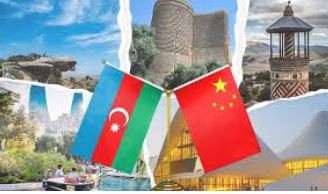
BAKU, Dec 22 (DNA): An Azerbaijani delegation led by Fuad Naghiyev, Chairman of Azerbaijan’s State Tourism Agency, visited China to attend the CITM 2025 (China International Travel Mart) international tourism exhibition.

As part of the visit to Beijing, the delegation met with China’s Minister of Culture and Tourism Sun Yeli to discuss the development of tourism relations between the two countries.

The sides noted that the recent establishment of a comprehensive strategic partnership between Azerbaijan and China, thanks to the efforts of President Ilham Aliyev and President Xi Jinping, has contributed to the expansion of cooperation in tourism, as well as in other fields.

In his remarks, Fuad Naghiyev highlighted the growth of tourism exchanges with China, driven in part by visa waiver arrangements. He emphasized that Azerbaijan will continue to market and promote its tourism potential in China and plans to open a tourism representative office there to further deepen bilateral ties. He also provided information on the China Ready program, describing it as ushering in a new stage of bilateral tourism cooperation.

Minister Sun Yeli, noting the strengthened bilateral relations, said that the expansion of economic and political cooperation between Azerbaijan and China in recent years has had a significant positive impact on tourism. He stressed the importance of joint activities in this sphere and the expansion of direct cooperation between representatives of the tourism industries of both countries.

Azerbaijan’s Ambassador to China Bunyad Huseynov also attended the meeting.

At the CITM 2025 exhibition, Azerbaijan actively promoted its tourism potential through a national stand featuring the Azerbaijan Tourism Bureau, Azerbaijan Airlines (AZAL), the Shahdag Tourism Center, and other local partners. As part of the exhibition, Azerbaijan’s national stand was awarded the Best Stand nomination.

On the sidelines of the exhibition in Haikou, Fuad Naghiyev also met with China’s Vice Minister of Culture and Tourism Gao Zheng, as well as Secretary-General of the UN Tourism Zurab Pololikashvili, who visited the Azerbaijani stand.

CITM 2025, held at the Hainan International Convention and Exhibition Centre, serves as a strategic platform for fostering international tourism partnerships.

Punjab starts work on seedless, pigmented kinnow varieties

Punjab starts work on seedless, pigmented kinnow varieties

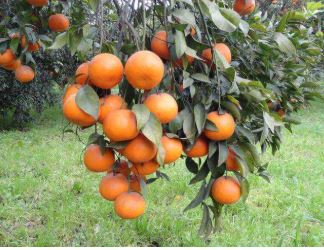
ISLAMABAD, Dec 22 (DNA): The Citrus Research Institute (CRI) Sargodha has begun developing seedless and pigmented kinnow varieties to better meet global market demand, marking a major shift in Punjab’s citrus improvement efforts.

Punjab has 358,000 acres under citrus cultivation, with expected production for the current season estimated at 3.3 million metric tons.

“The current varietal spectrum is not fully aligned with international market demand, as it remains heavily dependent on traditional seedy kinnow,” said Dr. Akbar Hayat Saggu, Director of CRI Sargodha.

Speaking to Wealth Pakistan, Dr. Saggu said the institute is currently working on pigmented and seedless kinnow varieties that enjoy strong global demand. He said international buyers prefer seedless, easy-peeling and high-quality mandarin types, whereas most citrus varieties grown in Pakistan lack these characteristics.

Pakistan’s citrus landscape is dominated by kinnow — a mandarin hybrid often containing around 20 seeds — along with other varieties including Musambi, Valencia Late oranges, Succri, Ruby Red, Eureka and Lisbon lemons, and Kaghzi limes, primarily cultivated across Punjab, particularly in Sargodha.

Dr. Saggu said climate change has placed substantial stress on kinnow production in Punjab, as rising temperatures, irregular rainfall and intensified pest and disease pressure have reduced yields. Heat stress during flowering and inconsistent winter patterns have affected fruit set and quality.

“We have to take care of both international trends and the climate-related issues presently affecting kinnow orchards,” he said.

He added that persistent smog in Punjab has also impacted kinnow production by reducing the sunlight required for photosynthesis, slowing tree growth and weakening fruit development. Smog traps pollutants that reduce plant vigor and increase susceptibility to diseases.

According to Dr. Saggu, around 100 citrus varieties are currently cultivated in Pakistan, with an additional 70 varieties being imported for research and development. However, imported varieties cannot be exported without breeder agreements due to intellectual property restrictions.

Citrus exporters believe Pakistan urgently needs new, competitive citrus varieties for the international market. “We can’t compete with countries like China, Turkey and Mediterranean countries with the existing decades-old kinnow varieties,” said Waheed Ahmad, Patron-in-Chief of the Pakistan Fruit and Vegetable Exporters Association.

He said Pakistani kinnow exports have declined to 250,000 tons from 550,000 tons over the last five years due to shorter shelf life and excessive seeds. “Shipments to Russia take at least one month. The current kinnow varieties do not have that much shelf life,” he said.

Ahmad noted that Pakistani scientists should have introduced at least three to four new citrus varieties by now to help the country remain competitive in the global market.

Oil: Wealth, Curse—and the Price of Defiance

Qamar Bashir

Qamar Bashir

For nations blessed with oil, the central question is never geological. It is political. Oil can finance schools, hospitals, roads, dignity, and independence—or it can finance coups, client rulers, sanctions, wars, and broken states. The difference is not the size of the reserves under the sand. The difference is whether the owners of that oil are allowed to own it in practice.

Before 1953, Iran’s petroleum was not simply an export commodity. It was an imperial system. Britain’s Anglo-Iranian Oil Company dominated production and refining, and Iran’s share of value was widely viewed inside Iran as humiliating—wealth extracted from Iranian soil, feeding foreign prosperity while ordinary Iranians remained poor. In 1951, Prime Minister Mohammad Mosaddegh took the step that shook the entire post-war order: he pushed legislation to nationalize Iran’s oil industry.

That single principle—“Iranian oil is for Iranian people”—was treated in London and Washington not as a commercial dispute but as a strategic revolt. In August 1953, Mosaddegh was removed in a coup funded by the United States and the United Kingdom, and the Shah’s rule was restored.  From the Iranian public’s perspective, this was not merely regime change; it was a message to every oil-producing nation: ownership is tolerated only until it threatens the architecture of Western control.

This is how the “oil curse” is manufactured. The curse is not oil itself. The curse is what happens when a nation tries to convert oil into sovereignty.

Look at the sheer scale of what is at stake. Venezuela sits on roughly 303 billion barrels of proven reserves; Saudi Arabia about 267 billion; Iran about 208.6 billion; Iraq about 145 billion; Kuwait about 101.5 billion; Libya about 48.4 billion; and even gas-rich Qatar holds about 25.2 billion barrels of proven crude reserves.  In today’s prices, this is not “resource wealth.” It is civilizational leverage—trillions upon trillions of dollars in potential value across generations.

So the key fight is not only over barrels in the ground, but over the entire chain that converts those barrels into money: drilling technology, service contracts, shipping insurance, tankers, refining capacity, trading houses, dollar clearing, and finally the security umbrella that protects friendly producers and suffocates defiant ones.

That chain is where American and British power has historically lived.

In the Gulf monarchies, the relationship evolved into a bargain: security and survival in exchange for strategic alignment. The U.S. became the guarantor of maritime routes and regime stability, and in return the Gulf became the world’s most important energy reservoir within an American-led order. The United States itself is also a giant producer—about 21.91 million barrels per day in 2023, the largest share of world production—so “control” is not only about imports; it’s also about shaping global pricing, shipping lanes, sanctions enforcement, and who can sell to whom.

But when a producer refuses alignment, the logic flips: oil stops being “their national asset” and becomes “the world’s problem”—a justification for pressure.

Iran is the classic case. After the Shah was imposed back into power with Western backing, Iran became a central pillar of Western strategy—until popular resistance exploded into the 1979 revolution. The hostage crisis was a symptom, not the root: the deeper driver was the belief among millions of Iranians that their wealth had been managed for outsiders and for a domestic elite seen as subordinate to foreign interests. The revolution survived because it was not merely a government; it became a public identity—built on defiance and sacrifice. That is why decades of pressure did not dissolve it.

Then came the region’s great furnace: the Iran-Iraq war. Saddam Hussein was treated as a counterweight to revolutionary Iran; the result was catastrophic human loss and the militarization of the entire Middle East. Even when that era ended, the template remained: defy the Western order and you face isolation, sanctions, and, if the moment suits, destruction.

Iraq’s later destruction was sold to the public with dramatic claims. But the deeper strategic obsession was always the same: who commands the oil state, and whose system the oil state finances.

And now, in December 2025, the pattern is unfolding—loudly—in Venezuela.

Reuters reports that on December 20, 2025, the United States intercepted an oil tanker near Venezuela. The vessel was reportedly carrying 1.8 million barrels of Venezuelan crude bound for China.  Reuters also reports that U.S. authorities are pursuing additional vessels, describing an expanding crackdown and blockade concept aimed at sanctioned flows.

This is not symbolic enforcement. It attacks the bloodstream of the Venezuelan economy, which relies heavily on oil revenue. Reuters notes exports falling sharply (from over 1 million bpd in September to an estimated ~702,000 bpd in December), implying severe fiscal strangulation.

And notice the exception that exposes the logic: even as “dark fleet” shipping is disrupted, Chevron continues operating under a U.S. license structure. The Wall Street Journal describes Venezuelan shipping largely stalling “except Chevron,” underscoring how sanctions enforcement can separate “illegal oil” from “licensed oil”—meaning the barrel is acceptable when it flows through approved channels.  Reuters similarly describes Chevron’s continued role under restricted authorization.

This is the modern oil empire: not necessarily ownership of the wells, but command over the rules of extraction, trade, and cashflow.

Across the region, Western majors remain embedded where states permit them—often through partnerships, service contracts, or joint ventures. Iraq, for instance, is again signing major deals with U.S. and European firms; Reuters reports ExxonMobil’s return via an agreement tied to the giant Majnoon field.  Libya’s National Oil Corporation is engaging BP and Shell to study major fields, a sign of how foreign expertise re-enters when political conditions allow.  Qatar’s North Field expansion, the backbone of future global gas supply, includes partnerships with ExxonMobil and other Western companies.  Even in the Saudi-Kuwait “Neutral Zone,” Chevron’s legacy role appears in joint operations alongside state entities.

So when the West “benefits,” it is not always by directly stealing national revenue in one crude transaction. It benefits by sitting at multiple toll booths: technology and services, project equity stakes, shipping and trading, refining margins, finance and insurance, and—most importantly—strategic power: the ability to punish a seller, freeze a buyer, choke a port, or seize a ship.

That is why oil becomes a curse precisely at the moment a nation tries to treat it as democratic wealth. The moment leaders say, “this belongs to our people,” the system asks: will you still obey? If yes, you are protected. If not, your “resource blessing” is recast as a reason you must be disciplined.

This is the real warning to oil nations—whether in the Gulf, in Africa, or in Latin America. Oil is wealth only if you are allowed to keep it wealth. If you attempt to convert it into independence against the priorities of great powers, oil becomes the trigger for destabilization, sanctions, and war.

And that is why the same barrel can build prosperity in one country and produce ruin in another. The difference is not the oil. The difference is who is permitted to command the oil.

Qamar Bashir

Press Secretary to the President (Rtd)

Former Press Minister, Embassy of Pakistan to France

Former Press Attaché to Malaysia

Former MD, SRBC | Macomb, Michigan, USA

LHC CJ suspends operation of Punjab land protection ordinance

LHC CJ suspends operation of Punjab land protection ordinance

Expressing her disapproval of the law, she remarked: “Someone should inform the government that if this law remains in force, even Jati Umra (the Sharif family residence) could be vacated within half an hour

Bureau Report

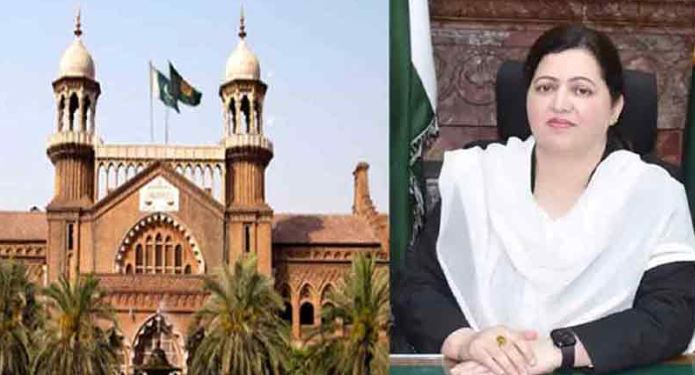
LAHORE: Lahore High Court (LHC) Chief Justice Aalia Neelum issued an interim order on Monday to suspend the operation of the newly enacted Punjab Protection of Ownership of Immovable Property Ordinance, 2025, which empowers deputy commissioner-led committees to decide property disputes.

Justice Neelum issued the ruling during a hearing of petitions by Abida Parveen and others that challenged decisions pertaining to property disputes taken under the ordinance. Through her interim order, she also suspended decisions taken under the new legislation to take away the possession of properties.

Expressing her disapproval of the law, she remarked: “Someone should inform the government that if this law remains in force, even Jati Umra (the Sharif family residence) could be vacated within half an hour.

“It appears that some people want to hold all powers.”

Questioning the purpose of the law, CJ Neelum asked how could a revenue officer hand over the possession of a property in a matter pending before a civil court.

The judge observed that the new law had dismantled the civil setup, civil rights and judicial supremacy.

“If it is up to the authorities, they would even suspend the Constitution,” she added.

Justice Neelum further pointed out that in case of a deputy commissioner handing over the possession of an individual’s house to someone else under the new law, the affected person did not have the right to appeal.

“The new law does not allow the high court to grant a stay in such matters,” she noted.

The Punjab chief secretary and other government officials were present at the hearing today, but the Punjab advocate general did not appear before the court. The court was told that the principal law officer was ill.

On this explanation, Justice Neelum remarked that she, too, was ill and had been advised bed rest, but was in the court presiding over proceedings.

The CJ then said that a full bench would be constituted to further proceed on the matter adjourned the hearing.

Separately, a Punjab law officer explained to Dawn that the Punjab government could challenge the LHC’s interim order before the Supreme Court under its appellate jurisdiction.

The officer, speaking on condition of anonymity, said that the provincial government could approach the Federal Constitutional Court as well, since that case involved a question of law.

“The government may also request the proposed full bench to review the stay order. However, its chances of obtaining relief through that route are relatively slim,” he added.

The ordinance in question was approved by Punjab Chief Minister Maryam Nawaz on October 31 and mandates the resolution of land disputes within 90 days.

It has been challenged before the LHC, and during a previous hearing on the matter, Justice Neelum had questioned the involvement of a newly-created force under the Punjab Enforcement Regulatory Authority (Pera) in such matters.

She had also commented that “patwaris (revenue officials) and ACs (assistant commissioners) seem to have developed a desire to become judges”, and questioned the jurisdiction of a patwari to take cognisance of a matter already pending before the Supreme Court.

Stay Connected

64FansLike
60FollowersFollow

Latest Reviews

Exchange Rates

USD - United States Dollar
EUR
1.17
GBP
1.36
AUD
0.67
CAD
0.73