Home Blog Page 2599

SPAIN’S 5TH COVID-19 WAVE TAKES TOLL ON HOSPITALS, TOURISM

OVIEDO, Spain,  -:Spain’s fifth wave of coronavirus infections took a devastating turn on Wednesday as more major countries warned against travel to the Mediterranean nation and COVID-19 deaths surged.

On Wednesday  reported 55 COVID-19 deaths, 26 more than the same day last week.

What many had originally shrugged off as a mild wave of infections among the younger population is beginning to have more serious consequences.

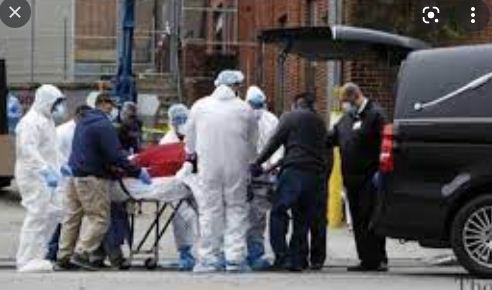
In Catalonia, home to Spain’s highest infection rate, COVID-19 patients are now taking up 44% of the intensive care units. Hospitalizations in the capital Madrid have also doubled in a week, with nearly 10% of all beds now being used to treat the infectious disease.

The country’s soaring infection rate has also begun to take an even heavier toll on the country’s tourism industry.

On Tuesday, the US issued a fresh travel warning to its citizens, advising them not to travel to Spain, Portugal, or Greek Cyprus due to rising rates and the surging Delta variant.

Spanish hotels have also seen a wave of cancellations by German visitors after Berlin decided to tighten restrictions on arrivals from Spain starting Tuesday. As of Friday, Israel is also moving Spain to its red list.

Tourism represents 12.4% of Spain’s GDP and could suffer “severe consequences” from the new wave, said Juan Molas, head of the Mesa de Turismo Association.

The repercussions are also increasingly affecting the lives of Spanish residents.

The Cantabria region announced Tuesday it was shutting down indoor dining in high-risk areas like its capital. The measures vary across Spain, but some regions have reinstated curfews, limited gatherings, or even begun to demand vaccine certificates to enter bars or restaurants.

All of this comes with 55% of the Spanish population fully vaccinated and 65% with at least one jab.

Most parts of the country have just started vaccinating people younger than 30, but Spain has pulled ahead of early frontrunners like the US and UK in terms of its vaccinated population.

POWER GAMES: THE U.S. AFGHAN POLICY AND CURRENT SCENARIO

Khalid Taimur Akram

Afghanistan, a land of breathtaking beauty, torn by ethnic, tribal and religious divisions, has been at the center of geopolitical contests for centuries. Almost two decades since America went to war in Afghanistan, it never provided a plausible explanation of its goals and how it planned to achieve them.

As the Americasought revenge for 9/11, what sentiment did they evoke? How many enemies did they spawn in the process of ‘trying to help’ Afghanistan? In retrospect, it is obvious that the invasion was an overreaction to the 9/11 terrorist attacks in which there was no direct involvement of the Taliban government or any Afghan national. Arguably, there were other ways in which Al-Qaeda could have been punished for its crimes.The Taliban leaders have famously said, ‘’Americans have all the clocks, but we have all the time.’’It has been clear that now it is too late for the U.S. to destroy its own created ‘’Frankenstein Monster’’completely. In the global war against terrorism, U.S. was successful in dismantling and obliterating many of terrorist’s offshoots and occupying Afghanistan, where the annihilation started.

In the present scenario, with the withdrawal of U.S troops from Afghanistan, the Taliban’s footholds have been increasing while capturing the territories with little resistance from Afghan troops. This can wave strong feelings for Afghanistan Déjà vu moment in the air amida surge of radicalization and extremist activities. The failure of the American military misadventure in Afghanistan despite the huge loss in blood and treasure raises significant questions about the rationale of the U.S. invasion of the country and the subsequent strategy pursued by it. Moreover, fundamental reasons contributing to the lack of progress in the intra-Afghan talks have been the myriad existing dichotomy among the Afghan factions and a reluctance to show flexibility to fulfill commitments. Both sides (the Afghan government and the Taliban), one who has to either give away authority or at least share it with others, and others who will likely to gain a foothold in the corridors of power with the chances of a complete take-over, have shown a high degree of intransigence in addressing the issues. Still, the two sides appear far apart on major issues such as future governance, women’s rights etc. There are fears on both sides which plague the prospect of a peaceful reconciliation among the warring groups.

Flawed U.S. Policies in Afghanistan:

Another important issue is the Afghan willingness to reach a consensus through intra-Afghan dialogue. Will that dialogue yieldany consensus about the Afghan interim government followed by an election?  But this will again not reflect the true interests of the Afghan people. America has failed to understand Afghanistan, and policies towards the country have not achieved positive results.  The puppet regime in Afghanistan,Ashraf Ghani and top leadership in Kabul have been failed to deliver true emancipation to the Afghan people. The Kabul leadership and representatives are non-resident Afghans. They are not aware of actual needs and cannot advocate thetrue rights of the Afghan people. The future must be decided by the Afghan natives who have suffered a lot from this decades-long war, human rights violation, and civil unrest in the country.

U.S.and NATO Troops Withdrawal:

Regional cooperation between Central and South Asia lies with peace in Afghanistan. The 21st century is an era of re-awakening and has many key determinants as it is the most revolutionary age in history.Countries are inclined towards cooperation and wider regional alignmentsthrough economic linkages in the multipolar worlds, pursuing their collective goals. Central Asian Republics (CARs) and Pakistan consider peace and stability in Afghanistan a pre-requisite for broader regional alignments.CARs and Pakistan have played a dynamic role in bringing peace to the region and resolving Afghan conflict. However, on the other side, the immorality of the U.S. invasion was aggravated by its flawedstrategy pursued in the wake of its invasion. U.S. decided to pull out its troops when China has been connecting countries all over the world through its new narratives and exceptional Belt & Road Initiative (BRI).U.S. has neglected all the regional partners in the Afghan peace process and has been trying to sabotage China’s rising influence in the regionthrough its belligerent moves.  U.S. has disturbed regional peace and stability as the Taliban are gaining potential grounds in Afghanistan with U.S. troops withdrawal.Now, this is a time that all regional players must be integrated, and the prerogative of plebiscite should be given to the Afghan people only. They have to decide their future and fate.

The Taliban Façade:

A resurgence of the Taliban insurgency could once again turn Afghanistan into a terrorist safe haven. Moreover, internal instability in Afghanistan could have larger regional security ramifications on Pakistan, Iran, CARs,Russia and adjacent countries. Afghanistan must stop blaming Pakistan for its civil unrest and appreciate Pakistan’s efforts and potential role in durable and inclusive peace negotiating process. On the flip side, the Taliban can come up as a political force in the power game. However, they must stop bloodshed and terrorism on Afghan soil. It can be anticipated that days for the Kabul regime are numbered as the Taliban are not asking for a piece of land but full control over the country. They consider that the US/NATO and Kabul regime intend to win a war on the table, which they have lost on grounds. Obviously, without reaching a consensus on a new political setup, there will be no end to the civil unrest in Afghanistan even after the troop’s withdrawal.

Despite the foreign invasion, the Taliban remained the de jure government in Afghanistan. They believe their de facto status will be revived and that it will only be a step away once the U.S. troops are gone. It has been anticipated that the Taliban take-over is no guarantee that peace would result. As a matter of fact, this could signal the advent of a fresh wave of hostility and radicalization. Warfare is still going on, and one cannot predict permanent circumstances. Afghanistan hovers between the two mindsets. The one in view of negotiated settlement exclusively on its terms, and the other asserting both its de jure and de facto legitimacy to rule the country. It is the fusion of clashes among the U.S., the Taliban and the Afghan government. It is the clash of ultimate power and resilience, clash of ego, and the quest for maintaining hegemony by the Taliban while achieving their vicious vested interests.The international community will not allow any terrorist group to operate from the Afghan territory against any other country. If the Talibangain their influence over Kabul, it will not be possiblefor the international community to recognize such a radical regime under the auspice of international law.Against this backdrop, the people of Afghanistan may continue to suffer and bear the horrific outcomes of this brutal conflict.

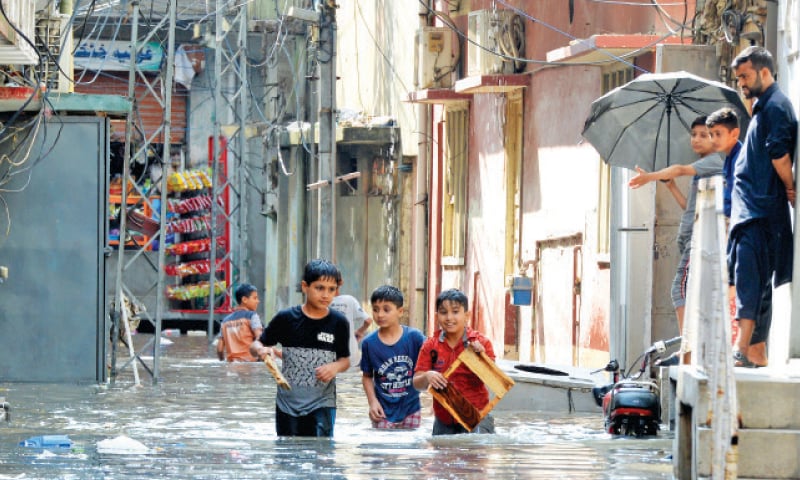
Pre-alert issued as water level rises in Nullah Lai after heavy rainfall

RAWALPINDI, Jul 28 Pre-alert was issued here on Wednesday morning as water level was rising in Nullah Lai after heavy rainfall.

            According to district administration spokesman, all the authorities concerned were directed to remain alert and later evacuation alert was also issued, advising the authorities to take all necessary action to cope with any emergency situation particularly in low lying areas of the city.

            He informed that pre-alert is issued when water level reaches 11.4 ft at Kattarian and 8.3 ft at Gawalmandi.

            Rainfall gauging stations at Saidpur Village recorded 126mm rain, Golra 103mm, Bokra 21mm, PMD, H-8- 68mm, Shamsabad 32mm, and Chaklala 17mm while water level sensor data at Kattarian Nullah Lai was 17ft and Gawalmandi 17ft at 9.30 AM on Wednesday morning. Earlier, water level at Kattarian was recorded 21ft at 8 AM today.

            WASA spokesman informed that the authority was on high alert after water level in Nullah Lai continued to increase.

            The downpour has caused rise in Nullah Lai water level.

            Keeping in view the alarming, the authorities had canceled the holidays of Water and Sanitation Agency (WASA) officials and alerted the people.

            The authority was put on high alert to deal with any emergency and flash flood in Nullah Lai during monsoon season.

            The spokesman said, under rain emergency enforced for the period of June 15 to Sept 15, WASA staff on the directives of Managing Director WASA, Raja Shoukat Mehmood, would remain alert and heavy machinery would also remain in the field during monsoon season.

            The authorities concerned had finalized a plan which included cleaning of sewerage lines, annual cleaning of Nullah Lai as well as inspection of WASA machinery and monitoring possibility of floods, he said adding, the agency had completed first phase of ‘Nullah Lai’ cleanliness project besides finalizing all the arrangements for monsoon season.

            He informed that the agency had completed the cleanliness project to protect the city areas particularly low-lying from flash flooding.

            The Nullah from ‘Katarian to Rialto’ Bridge Murree Road had been cleared and all critical points of the nullah were especially focused under the dredging and de-silting project, he said.

            The cleaning of small and big drains and nullahs of the city was completed by the Municipal Corporation and Rawalpindi Waste Management Company (RWMC).

            The agency on the directives of the MD WASA had completed the operational preparations for monsoon season, he said.

            WASA had finalised a monsoon plan and all necessary arrangements were completed to cope with flash flooding during monsoon season, he added.

            WASA had established the Field Offices as Flood Response Units which were made functional at five different places in Rawalpindi at Moti Mahal, Liquat Bagh, Bagh Sardaran, Commercial Market Satellite Town and Khyaban-e-Sir Syed.

            Heavy machinery of WASA including six sucker machines, five jetting machines, five sewer cleaning rodding machines, 28 dewatering sets and 24 water bouzers are in working condition and deployed at these Flood Response Units, he added.

COAS visits Anti-Narcotics Force Headquarters

ISLAMABAD: General Qamar Javed Bajwa, Chief of Army Staff visited HQ Anti-Narcotics Force (ANF) today. COAS was given a detailed operational brief regarding genesis of ANF and its contributions for controlling drug-trafficking in Pakistan. While interacting with the officers and staff, COAS said that drug peddlers and those involved in its production are a threat to national security and relentless enemies of humanity. Drug money is being used for promotion of terrorism and therefore, it is important that drug dealers are dealt with iron hands. COAS also lauded the efforts of ANF in controlling drug-trafficking in Pakistan. Earlier on arrival, COAS was received by Major General Muhammad Arif Malik, Director General ANF.

IMF revises up Pakistan’s GDP growth projection to 3.9%

ISLAMABAD, The International Monetary Fund (IMF) on Tuesday revised up its projection for Pakistan’s real Gross Domestic Product (GDP) growth rate to 3.9%.

In its World Economic Outlook report 2021 (Update), the IMF said “Projections are revised up for the Middle East and Central Asia due to robust activity in some countries (such as ..Pakistan).

Earlier in April this year, the IMF had projected Pakistan’s real GDP to grow at 1.5% in the year 2021 despite a higher projected rate of 3.0% by the State Bank of Pakistan (SBP).

Pakistan government had already released the provisional data of GDP growth rate (3.9%) for the year 2020-21 backed by robust industrial growth and higher than expected agriculture output.

The SBP on Tuesday forecast the GDP growth to rise from 3.9% in FY21 to 4- 5% this year, and average inflation to moderate to 7-9% from its recent higher out-turns.

Meanwhile the IMF in its statement said economic prospects have diverged further across countries since the April 2021 World Economic Outlook (WEO) forecast.

Vaccine access has emerged as the principal fault line along which the global recovery splits into two blocs: those that can look forward to further normalization of activity later this year (almost all advanced economies) and those that will still face resurgent infections and rising COVID death tolls, it added.

The recovery, however, is not assured even in countries where infections are currently very low so long as the virus circulates elsewhere.

The global economy is projected to grow 6.0 percent in 2021 and 4.9 percent in 2022.The 2021 global forecast is unchanged from the April 2021 WEO, but with offsetting revisions. Prospects for emerging market and developing economies have been marked down for 2021, especially for Emerging Asia. By contrast, the forecast for advanced economies is revised up. These revisions reflect pandemic developments and changes in policy support. The 0.5 percentage-point upgrade for 2022 derives largely from the forecast upgrade for advanced economies, particularly the United States, reflecting the anticipated legislation of additional fiscal support in the second half of 2021 and improved health metrics more broadly across the group.

 Recent price pressures for the most part reflect unusual pandemic-related developments and transitory supply-demand mismatches. Inflation is expected to return to its pre-pandemic ranges in most countries in 2022 once these disturbances work their way through prices, though uncertainty remains high. Elevated inflation is also expected in some emerging market and developing economies, related in part to high food prices. Central banks should generally look through transitory inflation pressures and avoid tightening until there is more clarity on underlying price dynamics. Clear communication from central banks on the outlook for monetary policy will be key to shaping inflation expectations and safeguarding against premature tightening of financial conditions. There is, however, a risk that transitory pressures could become more persistent and central banks may need to take preemptive action.

MOROCCAN BOXER TRIES TO BITE OPPONENT IN TOKYO OLYMPICS DEFEAT

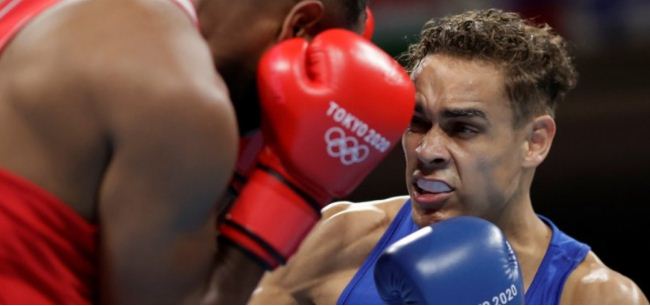
Moroccan heavyweight boxer Youness Baalla attempted to bite David Nyika’s ear during his defeat to the New Zealander at the Tokyo Olympics on Tuesday.

The 22-year-old was subsequently disqualified for unsportsmanlike behaviour, although he was already out of the Games anyway following his unanimous-points loss in the round-of-16 bout.

A Tokyo 2020 statement called Baalla’s actions “intolerable”, saying that he “very clearly intended to bite the ear/face of his opponent in the third round of the bout”.

Footage shows Baalla trying to bite Nyika’s right ear as the two boxers hold each other.

EU calls for resumption of parliamentary activity

Agencies

BRUSSELS: The European Union on Tuesday called for the restoration of democratic institutions, including parliamentary activity and the respect of human rights in Tunisia.

Tunisian President Kais Saied on July 25 ousted the government of Prime Minister Hichem Mechichi, froze parliament and assumed the executive authority.

EU foreign policy chief Josep Borrell issued a statement on behalf of the bloc, asserting that the EU is closely monitoring recent developments in Tunisia.

Borrell stressed the importance of “respecting the democratic roots of the country, respect for the rule of law, the Constitution, and the legislative framework,” and “listening to the will and aspirations of the Tunisian people.”

“We, therefore, call for the restoration of institutional stability as soon as possible, and in particular for the resumption of parliamentary activity, the respect for fundamental rights and the abstention from all forms of violence,” he said. “It is a priority to preserve the country’s democracy and stability.”

Cabinet approves National Cyber Security Policy 2021

ISLAMABAD: The federal cabinet has approved National Cyber Security Policy 2021 for data protection and prevention of cybercrimes.

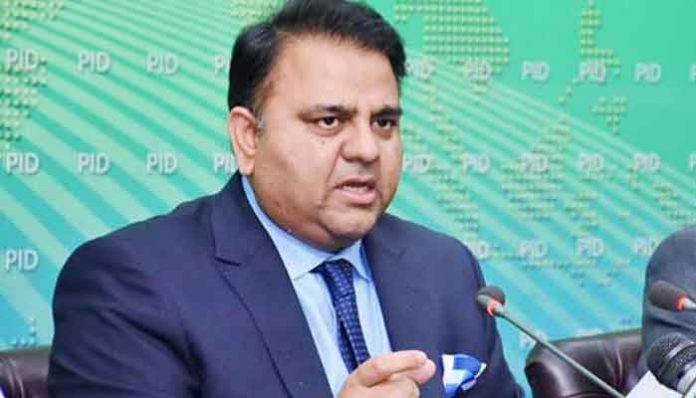
This was announced by Minister for Information and Broadcasting Chaudhry Fawad Hussain while addressing media persons about decisions taken in the federal cabinet that met in Islamabad today (Tuesday) with Prime Minister Imran Khan in the chair.

Chaudhry Fawad Hussain said the policy has been introduced keeping in view the enhanced significance of cyber regime.

He said approval was also given to dual nationality of Pakistan with Czech Republic and a new policy for foreign investment in the country. He said the new policy for foreign investment is aimed at providing security to international investors and reducing international litigation against Pakistan’s bilateral agreements.

Chaudhary Fawad Hussain said the cabinet members congratulated the Prime Minister over PTI’s victory in Azad Jammu and Kashmir elections. He appreciated the efforts of Federal Ministers Ali Amin Gandapur and Murad Saeed as well as Chairman Kashmir Committee Shehryar Khan Afridi for running a successful election campaign in AJK.

The cabinet offered Fateha over the martyrdom of four military soldiers during election duty and the people who died during elections.

Over opposition’s diatribes against PTI for rigging in elections, the Minister said our government is first in the history that did everything for the transparency in elections. He said due to our fair conduct in election, we accepted our defeat in by-elections.

The Minister said a comprehensive report regarding use of excessive protocol was presented in the cabinet. According to the report, federal government is utilizing minimum protocol facilities while judiciary is using maximum in terms of total expense.

The cabinet was informed that 762 police personnel, 14 Rangers and 50 FC officers are deployed by the Federal Capital Police on the security of the President, Prime Minister, Governors, Chief Ministers, Ministers of State, Advisors and Special Assistants with a total expenditure of 700.98 million rupees per annum.

The security of Judges is manned by 377 policemen, 24 Rangers and eight FC personnel with an annual expenditure of 287.368 million rupees. Similarly, a total of 106 policemen, four Rangers, 47 FC personnel are deployed on the security of government figures with an expenditure of 109.7 million rupees. Thus, the total expenditure is 1098.08 million rupees per annum.

It was told that the annual cost of providing security to the Prime Minister, Governor, Chief Minister by Punjab Police is 446.86 million rupees, while 105.87 million rupees are spent on providing security to former Chief Ministers, Federal and Provincial Ministers, Advisors and Special Assistants. Over 1.14 billion rupees were incurred for providing security to Judges and 833.616 million rupees per annum for providing security to government figures. The total expenditure on providing security to various people is over 2.5 billion rupees per annum.

The cabinet was also apprised that the annual expenditure of Khyber Pakhtunkhwa police in provision of security is about 998.34 million rupees.

Speaking on the occasion, Prime Minister Imran Khan said the government’s primary responsibility is to protect taxpayers’ money and it should be used properly.

The cabinet decided that security would be provided on the basis of valid reasons and not as a status symbol. In this regard, the cabinet approved the setting up of a high level Threat Assessment Committee.

The cabinet also gave approval to government’s Digital Advertisement Policy 2021. Under the policy, advertisements will be made digital, while ensuring transparency.

The Minister said for the first time in the history, zero payment is pending against government’s advertisements. He said we are working on the legislation to protect journalists against non-payments of salaries.

The cabinet gave approval to Red Crescent for importing five Ambulances from Japan. These ambulances have been gifted by Japan to Red Crescent.

FEDERAL MINISTER SHAFQAT MAHMOOD DISCUSSES EDUCATIONAL COOPERATION WITH BRITISH COUNCIL TEAM

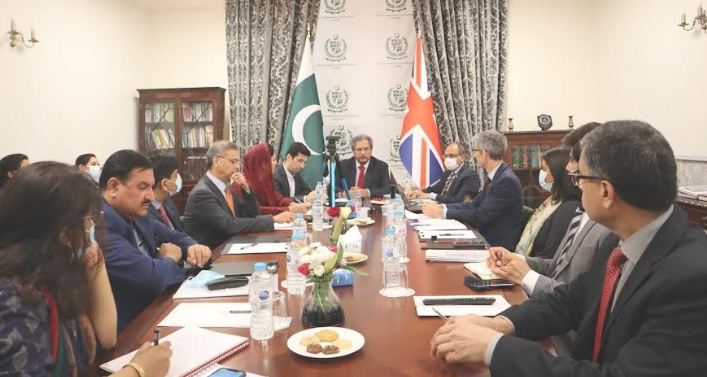
ISLAMABAD – Shafqat Mahmood, Federal Minister for Education, Professional Training, National Heritage and Culture met with the British Council Team in London today and discussed ongoing work of the Council in Pakistan’s education sector. The meeting was attended by Sindh Education Minister Mr Saeed Ghani, Khyber Pakhtunkhwa Education Minister Mr Shahram Khan Tarakai, Ms Wajiha Akram MNA, Federal Parliamentary Secretary for Education and other federal and provincial officials of Pakistan. Pakistan High Commissioner to the UK, Moazzam Ahmad Khan also accompanied the Federal Minister in the meeting.  
The two sides reviewed a host of areas of bilateral cooperation in Pakistan which British Council is currently working on. Main areas of discussion included teachers training, digital & blended learning during COVID-19 Pandemic, technical training for enhanced employability,  sharing global experiences in education sector, seamless conduct of exams during the ongoing Pandemic,  inclusiveness in education, quality assurance, bringing back out of school children and developing administrative and management skills in educational institutions of the country.
While appreciating the good work of British Council in Pakistan, Minister Shafqat Mahmood underlined the need for collaboration in digital learning and sharing best practices in the field of education with each other. The Minister apprised the participants that the Government of Prime Minister Imran Khan had a special focus on technical and vocational education and for this purpose had allocated Rs.10 Billion for training of 170,000 youth under National Vocational and Technical Training Commission (NAVTTC). He shared that despite the Pandemic, Pakistan was successfully able to conduct exams throughout the country, and offered to share Pakistan’s experiences with the UK.
The British Council representative Mr Mark Herbert said that Pakistan remains their priority and they would continue to build lasting partnership with the country through social sector development. The British Council officials from the UK and Pakistan participated in the meeting, some of them virtually, and briefed the participants about their respective areas of responsibility.

Stay Connected

64FansLike
60FollowersFollow

Latest Reviews

Exchange Rates

USD - United States Dollar
EUR
1.14
GBP
1.34
AUD
0.70
CAD
0.71