Home Blog Page 259

Pakistan to invest $1bn in artificial intelligence by 2030: PM Shehbaz

Pakistan to invest $1bn in artificial intelligence by 2030: PM Shehbaz

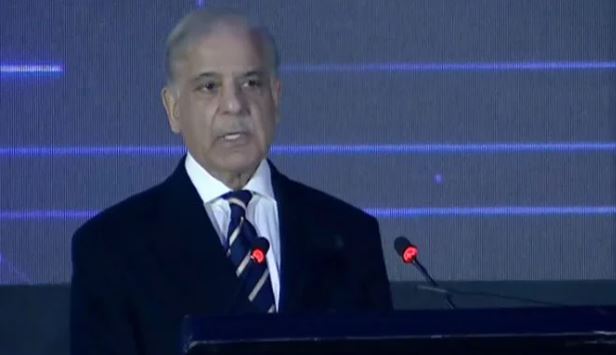
ISLAMABAD, FEB 9:Prime Minister Shehbaz Sharif on Monday announced that Pakistan will invest $1 billion in artificial intelligence by 2030 to build a national AI ecosystem, declaring the country fully prepared to join the world in the next wave of technological transformation.

The prime minister made these remarks while addressing the inauguration ceremony of Indus AI Week 2026, attended by federal ministers, delegations from countries including Saudi Arabia and Turkiye and others.

“The Government of Pakistan is committed to investing $1 billion in AI by 2030, which will go a long way in building an AI ecosystem in our country,” he announced.

Furthermore, he said that an AI curriculum would be introduced in all federally run schools as well as in educational institutions across Azad Jammu and Kashmir, Gilgit-Baltistan and remote parts of Balochistan to prepare young people for leadership roles in the digital economy.

He also announced that 1,000 fully funded PhD scholarships in artificial intelligence would be awarded to students from across the country by 2030 to develop world-class research capacity and fully equipped national research centres.

PM Shehbaz also said a nationwide programme would be launched to train one million non-IT professionals in AI skills, enabling them to improve productivity and livelihoods.

Highlighting sectoral priorities, Shehbaz said the main focus of AI deployment would be agriculture, mines and minerals, and youth empowerment. He said Pakistan’s population stands at around 240 million, and nearly 60% comprises young people who must be equipped with modern knowledge and techniques.

The prime minister said the gathering marked a turning point for Pakistan’s technological future and would prove to be a “game changer” through close collaboration with partner nations.

Recalling past reforms, the premier said that under the leadership of former prime minister Nawaz Sharif, successive initiatives were undertaken to align Pakistan with modern requirements and challenges, particularly during his tenure as chief minister of Punjab, with a focus on education, health, revenue reforms and youth empowerment.

He said that from 2010 onward, a large-scale laptop distribution programme was launched for high-achieving students in schools and colleges in Punjab, under which at least half a million laptops were provided during his time in the province as well as during the federal government led by Nawaz Sharif.

The prime minister said that e-libraries were introduced in schools, including in remote areas of Punjab — an initiative that was previously unimaginable. He added that e-stamp papers were introduced to curb collusion and revenue leakage, while the Punjab Land Digitisation Plan, implemented in partnership with the World Bank, eliminated manipulation of land records and corruption by revenue officials.

He further noted that Pakistan’s first Safe City project was established in Lahore and that the country’s first IT university was also set up in the same city, alongside several other technology-focused interventions.

PM Shehbaz said that, learning from past experiences, Pakistan is now ready to move decisively into artificial intelligence and formally announced a set of nationwide measures.

Addressing concerns within the IT industry, he said startups and IT professionals should not fear the rapid changes brought by artificial intelligence, assuring that government programmes would help transform IT technicians into AI experts.

He said these advances would significantly improve agricultural yield, quality and efficiency, and would extend to industry, commerce, trade, innovation by women and other economic sectors.

The prime minister assured international partners that Pakistan would be a reliable and committed collaborator in the AI domain.

Citing parallel digital reforms, he said the Federal Board of Revenue has been largely transformed through digitisation and is now performing effectively.

He added that smuggling has been curbed through modern initiatives, including scanners and digital instruments installed at ports across the country, while lost revenues and tax evasion facilitated through collusion are being recovered using technology platforms.

He said the government is also providing quality training to young men and women in agriculture, commerce, trade and other priority areas under Pakistan’s economic agenda.

Concluding his address, PM Shehbaz said Pakistan’s journey ahead would involve significant challenges, but the country’s resolve remains firm and unwavering. He said Pakistan would continue moving forward until it secures its rightful place among the community of nations.
German envoy backs apparel exports, urges shift and innovation

German envoy backs apparel exports, urges shift and innovation

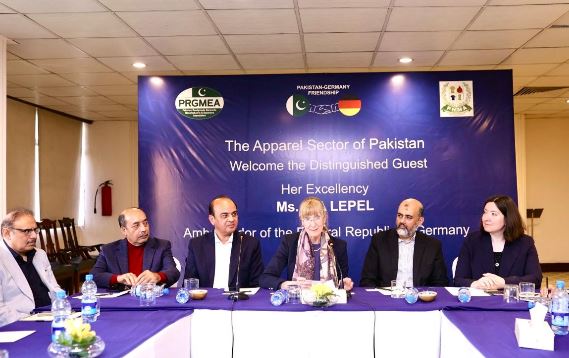
LAHORE, FEB 9 /DNA/ – German Ambassador Ina Lepel has expressed Germany’s strong commitment to supporting Pakistan’s apparel industry, stressing the need to deepen Pakistan–Germany collaboration to unlock the sector’s full export potential, as apparel exports have remained largely stagnant for more than a decade.

The Ambassador noted that Pakistan’s export figures have shown little progress over the last ten years, observing that the export volume today is nearly the same as when she last visited the country a decade ago. This stagnation, she said, underscores the urgent need for Pakistan to diversify its export portfolio, move up the value chain and embrace innovation to enhance competitiveness in global markets.

She was speaking at an interactive session with representatives of Pakistan’s value-added apparel export industry, currently valued at around $10 billion. The session focused on expanding bilateral trade, fostering private sector linkages, boosting women’s employment and addressing key challenges faced by the industry.

The session was attended by senior industry leaders including PRGMEA North Zone Chairman M Rizwan Zubair, PHMA North Zone Chairman Abdul Hameed and PRGMEA former Chairman Ijaz Khokhar.

Participants highlighted the immense potential of Pakistan’s apparel sector, which plays a vital role in economic growth, employment generation—particularly for women—and export diversification.

With more than 500 member firms and strong participation from small and medium enterprises, Pakistan’s garment and hosiery industry remains a major contributor to value-added exports aligned with international market demand.

Ambassador Lepel cautioned industry stakeholders against taking GSP Plus status for granted and urged strict compliance with international standards, particularly the implementation of International Labour Organization conventions.

She emphasized that strong adherence to labour rights, human rights and environmental standards is essential to ensure continued access to the European Union market and to enhance the global credibility of Pakistan’s apparel industry.

The Ambassador also stressed the importance of diversifying exports beyond textiles and adopting innovative and sustainable manufacturing practices. She reaffirmed Germany’s support for Pakistan in these areas, especially through technical and vocational training programmes aimed at developing a skilled workforce capable of meeting international standards.

PRGMEA Acting Chairman M Rizwan Zubair, in his address, highlighted the significant contribution of Pakistan’s apparel industry to the national export economy.

He emphasized the role of SMEs in driving innovation and creating employment opportunities, particularly for women in urban and rural areas.

He noted that Pakistan’s compliance with international labour standards, including ILO conventions, has played a key role in sustaining the sector’s growth and market access.

PHMA Chairman Abdul Hameed spoke about the resilience of the hosiery and knitwear sector despite persistent challenges such as high energy costs, taxation issues and bureaucratic hurdles.

He stressed the need for policy reforms to create a more business-friendly environment and called for stronger integration of Pakistan’s apparel industry into global supply chains to attract investment and expand collaboration.

PRGMEA former Chairman Ijaz Khokhar acknowledged the positive impact of GSP Plus on Pakistan’s textile exports, stating that it has enabled exporters to access European markets under preferential terms.

However, he urged all stakeholders to remain proactive in securing the renewal of GSP Plus by continuously improving quality standards, transparency and compliance across supply chains.

While offering the vote of thanks, Ashar Khurram highlighted persistent visa difficulties faced by Pakistani exporters, which hinder participation in international exhibitions and buyer meetings, and pointed to marketing constraints that limit the industry’s global outreach, stressing the need for stronger institutional support to promote Pakistan’s apparel brands abroad.

Participants at the meeting reaffirmed their commitment to strengthening Pakistan–Germany cooperation in the textile and apparel sector.

They emphasized expanding trade linkages, improving regulatory frameworks and increasing business delegation exchanges. By aligning efforts on quality enhancement, sustainability and regulatory reforms, both sides aim to further strengthen bilateral trade ties and unlock new growth opportunities in the apparel industry.

NHMP officers rewarded for exemplary service in snow duties

NHMP officers rewarded for exemplary service in snow duties

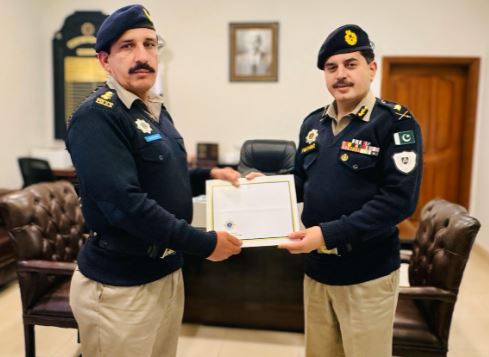
ISLAMABAD, FEB 9 /DNA/ – Additional Inspector General of Police, National Highways and Motorway Police (NHMP), Muhammad Wisal Fakhar Sultan Monday awarded Commendation Certificates and cash awards to NHMP officers in recognition of their exceptional performance and dedication towards official duties.

IP/SPO Abdul Nasir was awarded Commendation Certificate I (CC-I) along with a cash prize in acknowledgement of his exemplary passion while undertaking official duty during recent snowfall at Sector IMDC (Murree).

Meanwhile, IP/SPO Kashif Mehmoof was awarded CC-I along with suitable cash award in recognition of his active and cautious duty at weight station. IP Kashif, while deployed at weight station, showed extraordinary vigilance and alertness keeping in view the campaign against overloaded HTVs.

The Additional Inspector General of Police, Muhammad Wisal Fakhar Sultan lauded the officers on their dedicated approach towards official tasks.

He directed all ranks to maintain the spirit of public service and uphold the high working standards of National Highways and Motorway Police.

The Additional IGP further resolved that good performing officers will be rewarded in the future as well.

Tianjin Declaration and Eurasian Cooperation

Tianjin Declaration and Eurasian Cooperation

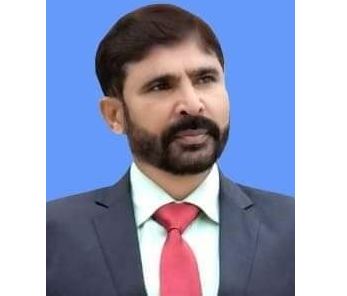
Dr. Muhammad Akram Zaheer

The Tianjin Declaration, adopted at the Shanghai Cooperation Organisation’s 25th summit in September 2025, passed without the dramatic headlines that often accompany global gatherings. Yet its significance lies precisely in its restraint. In an era marked by loud proclamations and performative diplomacy, the document reflects a quieter recalibration of Eurasian politics, one that privileges continuity over spectacle and gradual alignment over sudden rupture.

Held in the northern Chinese port city of Tianjin, the summit was the largest in the SCO’s history. Leaders from China, Russia, India, Pakistan, Iran and Central Asia gathered alongside observers and dialogue partners, marking a quarter-century since the organisation’s founding. Chaired by President Xi Jinping, the meeting reaffirmed what the SCO has consistently presented as its guiding philosophy: the so-called “Shanghai Spirit” of mutual trust, respect for sovereignty, equality among states and non-interference.

At first glance, the declaration reads like a familiar catalogue of principles. It reiterates support for a multipolar world order, stresses adherence to the United Nations Charter and renews commitments to combat terrorism, separatism and extremism. Economic cooperation, regional connectivity and sustainable development are highlighted as shared priorities. There are also nods to global challenges, from trade disruptions to technological governance, reflecting the concerns of a region that now accounts for a substantial share of the world’s population and economic output.

What makes the Tianjin Declaration noteworthy, however, is not the novelty of its language but the context in which it was issued. The international system remains deeply polarised, with major powers locked in strategic competition and multilateral institutions under strain. Against this backdrop, the SCO is positioning itself not as a challenger to existing structures but as an alternative forum where non-Western states can coordinate policies without the pressures of ideological conformity.

This aspiration is evident in the declaration’s emphasis on inclusivity and equality. Unlike alliances built around security guarantees or shared political values, the SCO continues to define itself as a platform for dialogue among diverse political systems. The presence of rivals such as India and Pakistan, alongside countries with varying relations with the West, underscores this point. The organisation’s strength lies in its ability to accommodate difference, even if that very diversity limits its capacity for swift collective action.

One of the more substantive outcomes linked to the Tianjin summit was the approval of the SCO Development Strategy through 2035. This long-term framework seeks to align economic cooperation with social and environmental considerations, echoing global discussions on development without explicitly adopting Western templates. It also provides the backdrop against which Russia’s proposal for a dedicated SCO Council on Sustainable Development should be understood.

Moscow’s initiative, first floated during its chairmanship activities in 2025, reflects both pragmatic and political calculations. By hosting the inaugural SCO Sustainable Development Forum in Omsk and later proposing a formal council at the Heads of Government meeting in Moscow, Russia signalled its intent to shape the organisation’s economic agenda. The focus on sustainable development, energy security and regional models of growth allows Russia to remain relevant within the SCO despite the economic pressures it faces elsewhere. The proposal has found a receptive audience. SCO Secretary-General Nurlan Yermekbayev described the idea as worthy of serious consideration and subsequent meetings have indicated gradual progress. By early 2026, references to sustainable development as a core SCO priority had become more frequent, including discussions held in Islamabad that linked the agenda to poverty reduction, food and energy security and environmental protection.

Importantly, the Tianjin Declaration itself endorsed closer cooperation on sustainability, particularly in industry and energy. While the document stops short of detailing institutional mechanisms, it provides political cover for initiatives such as Russia’s proposed council. In this sense, Tianjin can be seen as a moment of convergence, where broad principles were translated into a shared direction of travel rather than immediate commitments. For countries like Pakistan, the implications are both promising and cautionary. On the one hand, the SCO’s emphasis on development and connectivity aligns with Islamabad’s longstanding interest in regional trade, energy corridors and investment. Participation in sustainability-focused initiatives could offer access to expertise and financing tailored to regional conditions rather than externally imposed benchmarks.

On the other hand, the SCO’s consensus-driven nature means progress will be incremental. Competing national priorities, economic disparities and unresolved bilateral tensions continue to shape the organisation’s trajectory. The Tianjin Declaration does not resolve these contradictions; it merely manages them.The broader geopolitical message of the summit is equally measured. By reaffirming support for a multipolar world, the SCO signals dissatisfaction with existing power hierarchies without articulating a clear alternative order. This ambiguity is deliberate. It allows member states to express shared frustrations while preserving strategic autonomy. For China, hosting the summit reinforced its role as a convening power in Eurasia. For Russia, it offered a stage to demonstrate diplomatic relevance. For others, it provided reassurance that their voices remain part of a collective conversation.

In this light, the Tianjin Declaration should be read less as a manifesto and more as a barometer. It reflects a region seeking stability through cooperation rather than confrontation, aware of global uncertainties yet unwilling to be drawn into rigid blocs. The SCO’s gradual turn towards sustainable development, exemplified by Russia’s initiative, suggests an effort to anchor security concerns within a broader socio-economic framework. Whether this approach will yield tangible results remains an open question. Much will depend on implementation, resource allocation and the ability of member states to move beyond rhetoric. Yet the very fact that such issues are now central to SCO discussions indicates a maturation of the organisation’s agenda.

As global politics grows more fragmented, the Tianjin summit reminds us that not all recalibrations are dramatic. Some unfold through carefully worded declarations, incremental institutional changes and the steady accumulation of shared priorities. In a turbulent world, that quiet persistence may prove to be the SCO’s most enduring contribution.

Bid to embarrass Germany envoy: Controversy at Asma Jahangir Conference

Bid to embarrass Germany envoy: Controversy at Asma Jahangir Conference

Interestingly, in 2024 Asma Jehangir conference the then German Ambassador had to face similar situation when a pro-Palestine protester had interrupted his speech and chanted slogans

Bureau Report

LAHORE, FEB 9 /DNA/ – At the Asma Jahangir Conference in Lahore, a tense moment unfolded when Germany’s Ambassador to Pakistan, Ina Lepel, faced an unexpected interruption during a question-and-answer session. A participant accused Germany of being complicit in the “genocide of Gaza’s people” by supplying weapons to Israel. Before Ambassador Lepel could respond, the individual was swiftly escorted out of the hall by security personnel.

According to eyewitnesses, the man was later taken into custody by police, sparking a wave of mixed reactions both inside and outside the conference. Some attendees argued that the participant had every right to raise a question, especially in a forum dedicated to human rights and freedom of expression. Others criticized the manner in which the question was posed, calling it confrontational and inappropriate for the setting.

The incident has ignited debate on social media and among civil society circles. Supporters of the participant claim that silencing critical voices undermines the very spirit of the conference, which is known for encouraging open dialogue on sensitive issues. Critics, however, maintain that the tone and framing of the question crossed professional boundaries, turning a legitimate concern into a disruptive act.

Ambassador Lepel did not get the opportunity to address the allegation directly, leaving many to speculate on how Germany might have responded to the charge. The episode highlights the growing sensitivity around international involvement in the Gaza conflict and the challenges diplomats face in navigating public opinion during such discussions.

Interestingly, in 2024 Asma Jehangir conference the then German Ambassador had to face similar situation when a pro-Palestine protester had interrupted  his speech and chanted slogans .

The then Germany’s Ambassador to Pakistan Alfred Grannas was speaking at the 5th Asma Jahangir Conference titled ‘People’s Mandate: Safeguarding Civil Rights in South Asia’.

Just moments after the ambassador began his speech, the protester can be heard saying, “Excuse me, Mr Ambassador. I am shocked by the audacity that you are here to talk about civil rights while your country is brutally abusing the people speaking for the rights of the Palestinians.”=DNA

=====================

Russian names three suspects in shooting of general

Russian names three suspects in shooting of general

News Desk

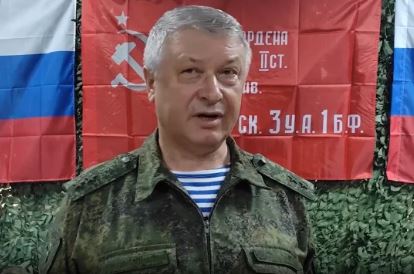
MOSCOW: Russia says it has identified three suspects involved in the shooting of high-profile military figure Lt Gen Vladimir Alexeyev.

They include the man accused of having carried out the attack, named as Ukrainian-born Russian citizen Lyubomir Korba.

Russia’s Investigations Committee (SK) said Korba arrived in the capital, Moscow, in late December “on assignment from Ukrainian intelligence services to commit a terrorist attack”. Kyiv has reportedly denied involvement.

Alexeyev, 64, was taken to hospital after the attack in a residential block of flats in the north-western outskirts of Moscow on Friday. He has since regained consciousness following surgery, according to Russian media reports.

Alexeyev is number two in the main directorate of GRU, Russia’s military intelligence agency, and the latest high-ranking military figure to have been targeted in or near Moscow since the full-scale invasion of Ukraine in February 2022.

Spokeswoman Svetlana Petrenko said on Sunday that his attacker had fired three shots before fleeing and that Korba had then travelled to the United Arab Emirates (UAE) in the hours after the shooting. He has since been arrested and extradited.

Russian state TV channel Ru-24 aired footage showing security agents escorting Korba off a plane at an unknown location.

“Investigators conducted a thorough inspection at the scene, during which they discovered the murder weapon – a Makarov pistol with a silencer and three rounds of ammunition,” Petrenko added. Forensic tests are being carried out on the gun.

Russian media, quoting Kremlin spokesman Dmitry Peskov, reported that President Vladimir Putin had thanked UAE President Sheikh Mohamed bin Zayed Al Nahyan on Saturday for his country’s help in catching Korba.

PCB, ICC officials meet over Pakistan’s boycott of India match in T20 World Cup

PCB, ICC officials meet over Pakistan's boycott of India match in T20 World Cup

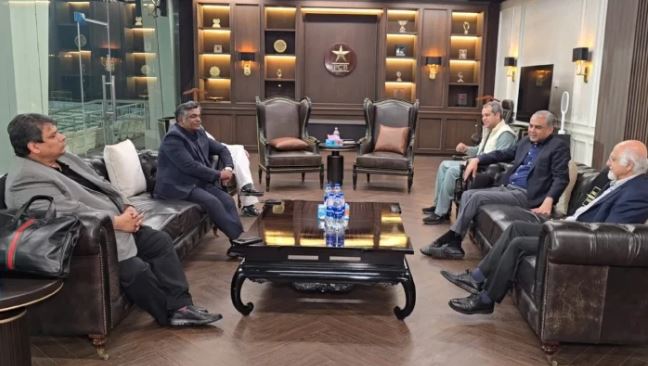
LAHORE: A meeting between the top officials of the Pakistan Cricket Board (PCB) and the International Cricket Council (ICC) is underway in Lahore to discuss Pakistan’s decision to skip its T20 World Cup 2026 match against India.

In a statement, the cricket board said that PCB chairman Mohsin Naqvi met ICC deputy chairman Imran Khwaja at Lahore’s Qaddafi Stadium.

Bangladesh Cricket Board (BCB) President Aminul Islam is also present in the meeting, it added.

Earlier, Khwaja reached Lahore for talks with the PCB chief, after Pakistan announced it would boycott its match against India, scheduled for February 15.

Prior to that, the BCB president arrived in the country and later held a separate meeting with Naqvi.

The BCB president thanked Pakistan for backing Bangladesh in its dispute with the ICC regarding the tournament.

During the meeting, Naqvi and Islam also exchanged views on the ongoing crisis.

Sources had said that the BCB chief would attend the ICC’s emergency meeting, with other board members also expected to participate.

The development comes against the backdrop of Pakistan’s decision to boycott its World Cup match against India, scheduled for February 15, amid what the PCB has described as the ICC’s biased approach, with Bangladesh playing a central role in the dispute.

Tensions flared between the cricket boards of Bangladesh and India after Bangladesh’s star pacer Mustafizur Rahman was dropped from the Indian Premier League (IPL) on the directions of the Board of Control for Cricket in India (BCCI), sparking outrage in Dhaka.

Later, the BCB requested the ICC to shift its matches outside India, but the international cricket body rejected the plea. Following the BCB’s firm stance, the ICC replaced Bangladesh with Scotland in the tournament, saying it was not feasible to change the schedule so close to the February 7 start of the event.

Furthermore, the PCB has dismissed reports by Indian media claiming that it had offered dialogue to the ICC to resolve the issue surrounding its decision to boycott the India match.

PCB spokesperson Amir Mir issued the rebuttal after Indian journalist Vikrant Gupta claimed that the PCB had reached out to the ICC for dialogue on the India-Pakistan World Cup game.

Any clash between arch-rivals India and Pakistan is one of the most lucrative fixtures in cricket, worth millions of dollars in broadcast, sponsorship and advertising revenue.

In commercial terms, the overall value of a single India-Pakistan T20 match is estimated at around $500 million, or approximately INR45,000 crore, when broadcast rights, advertising premiums, sponsorship activations, ticket sales and downstream commercial activity are taken into account.

According to a report, advertising slots during an India-Pakistan T20 match command between INR25 lakh and INR40 lakh for a 10-second spot, significantly higher than even knockout matches involving India against other top teams.

The most immediate financial impact would be felt by the official broadcast rights holder, as advertising revenue from the India-Pakistan match alone is estimated at around INR300 crore, the Indian publication cited industry projections as suggesting.

The BCB chief’s reported arrival in Pakistan is also being viewed in the context of earlier Indian media reports claiming that the ICC was seeking back-channel talks with the PCB and had tasked its deputy chairman Imran Khwaja, to engage with the Pakistani board on the issue.

Aurangzeb, Iranian counterpart discuss sector-specific investment opportunities

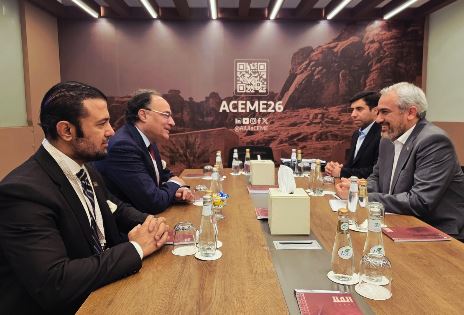
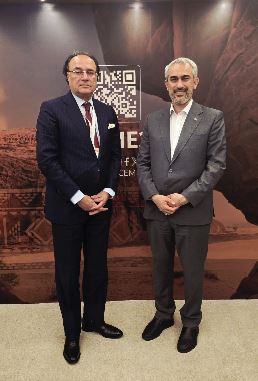
ALULA, FEB 8 /DNA/ – Federal Minister for Finance and Revenue, Senator Muhammad Aurangzeb, held a meeting with the Minister of Economic Affairs and Finance of the Islamic Republic of Iran, Dr. Seyed Ali Madanizadeh, on the sidelines of the AlUla Conference 2026 for Emerging Market Economies.

The meeting focused on strengthening bilateral trade and economic cooperation between Pakistan and Iran.

Both Ministers reaffirmed their shared commitment, in line with the vision and directives of the top leadership of the two countries, to enhance the volume of bilateral trade. They underscored the importance of sustained engagement, facilitation of trade, and removal of bottlenecks to achieve this objective.

During the discussion, the Iranian side highlighted several sector-specific opportunities for investment and market collaboration, aimed at deepening economic ties and generating mutually beneficial outcomes. Senator Muhammad Aurangzeb welcomed these proposals.

The Iranian Minister also extended an invitation to Senator Muhammad Aurangzeb to visit Iran, which the Finance Minister reciprocated by inviting him to visit Islamabad.

Bombing on Bowed Bodies: An intelligence failure?

Bombing on Bowed Bodies: An intelligence failure?

By Prof. Dr. Arshad Munir

Those who prostrated before God are dear to God. They are all martyrs and we are witnesses today and on the Day of Judgment. Satan started firing bullets, and the servants of God remained engrossed in praising God in love, and when they all prostrated themselves praising the beloved of God, Satan detonated an explosion, which killed more than 30 people and injured hundreds. Although there was blood everywhere, the world however, saw that the voices to say ‘God is most great’ are stronger than the wailing and screaming. People were eager to help by shifting the injured people and dead bodies to hospital and donate blood as if all these martyrs and wounded were their own sons and brothers. There is widespread shock and sorrow among ordinary citizens across Pakistan. Many communities are holding vigils and prayers in memory of the victims and offering support to families of the dead and wounded. Leading political figures strongly condemned the attack and labelled the attack on worshippers as a crime against humanity and a violation of religious values. Government leaders emphasized the need to identify those responsible and bring them to justice. Prime Minister Shehbaz Sharif expressed “deep grief” as he called for a thorough investigation and the immediate identification of those behind the attack. President Asif Ali Zardari said “targeting innocent civilians is a crime against humanity”. Religious figures and community members have stressed the importance of unity, not allowing the attack to fracture social harmony or fuel sectarian tensions. Several countries including China, the U.S., Britain, Russia, Saudi Arabia and Turkey expressed condolences and condemned the attack, highlighting international concern and called for collective effort against terrorism and reiterated respect for religious freedom. Some Pakistani officials linked the bombing to foreign-based militant networks and suggested possible involvement of external actors, which has shaped part of the broader political conversation. Many ordinary Pakistanis, including religious leaders and civil society actors, see the bombing as an assault on religious sanctity and safety.

An attacker opened fire at the gates of Imambargah Khadijah-tul-Kubra(a Shi’ite Muslim mosque) in the Tarlai area of the federal capital in Islamabad on Friday before setting off a suicide bomb and killing at least 31 people in the deadliest attack of its kind in Pakistan’s capital in more than a decade. Some emotional people were calling it a failure of intelligence, because according to them, the capital was already on high alert on Friday for visiting the president of Uzbekistan, Shavkat Mirziyoyev, with roads around the capital blocked by checkpoints and security forces posted across the city. Some people said that if the government cannot even take care of the capital, the most heavily secured city in Pakistan, how will it protect the entire Pakistan? Let’s remember that Intelligence agencies operate in an environment of uncertainty where preventing every attack is not realistically possible, particularly when threats are diffuse, low-cost, and rapidly executed. The absence of prior intelligence does not necessarily imply failure, but may reflect the inherent limits of intelligence gathering against low-visibility threats. Without evidence of ignored or mishandled intelligence, labeling the incident an intelligence failure remains speculative. Protecting all soft targets at all times would require levels of surveillance incompatible with normal civic and religious life. While the attack is deeply tragic, it is analytically misleading to label it an intelligence failure without evidence of ignored or actionable warnings. Intelligence agencies operate under significant constraints, particularly against low-profile actors targeting soft locations. The absence of prevention does not automatically imply negligence; rather, it highlights the inherent difficulty of translating broad threat awareness into precise, real-time intervention. What about the Munich massacre terrorist attack during Summer Olympics in Munich caused dozens death, Birmingham pub bombings, killing 21 with almost 200 injured, bombing of the Bologna Centrale railway station in Italy, which killed 85 people and wounded over 200, The Tokyo subway sarin attack, killing 15 with almost 1000 injured, Russian apartment bombings, killing more than 300, injuring more than 1,000,  Madrid train bombings which killed 193 people and injured around 2,500, 7/7 bombings, London resulted in 56 fatalities and more than 700 injuries, Norway attacks, killing 69 and injuring more than 300, Ankara bombings which caused 100+ death and 500+ injuries, Paris attacks which killed 138 people and injured 200+, Brussels bombings, killed 35 people and injured 300+, Pulse Nightclub, Orlando, USA attack, killing 50 people, Christchurch mosque shootings, killing 51 people and injuring 40+. Sri Lanka Easter bombings in which 258 people were killed, including at least 35 foreign nationals, and around 500 were injured, Crocus City Hall, Russia attack, killing around 150 and injured 500+ people. Were the intelligence services of all these mentioned countries unsuccessful? Critics may say that the occurrence of such incidents once or twice can be considered logical, but the occurrence of such incidents in general is a failure of intelligence. In this regard, I would like to tell them to first declare USA and India as failed states studying from “1993 World Trade Center bombing” to September 11 attacks (World Trade Centers) and Wall Street Bombing in Manhattan, New York City as well as from the Bombay bombings, resulted in 257 fatalities and 1,400 injuries, to 2006 Mumbai train bombings, killing 200+ with 700+ injured, and 2008 Mumbai attacks, killing 170+ with 300+ injured only in Mumbai.

However, it can be said that the attack points to potential gaps in intelligence collection, threat assessment, and on-ground security coordination, rather than a single, identifiable failure. While intelligence work cannot guarantee total prevention, the successful execution of an attack at a mosque during Friday prayers in the capital indicates a serious lapse in threat detection and preventive security planning. The incident underscores the need to reassess intelligence-sharing mechanisms, local surveillance, and protection of soft targets, particularly during high-risk timeframes. But for all of this, it is essential that the nation be united in thought, action, and purpose, that there be not only trust in institutions and the government, but also mutual relationships and cooperation.

The writer is the Chairperson of Islamic Studies department at Ghazi University, Dera Ghazi Khan and can be reached at [email protected]

Berlin’s crumbling ‘Russian houses’ trapped in bureaucratic limbo

Berlin's crumbling 'Russian houses' trapped in bureaucratic limbo

BERLIN, FEB 8: The thorny issue of what to do with Russian assets has not only stumped Western leaders but also officials in Berlin who are saddled with three crumbling buildings belonging to Moscow.

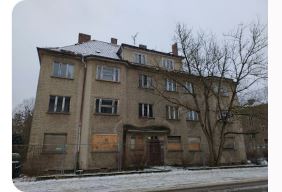
Known locally as the “Russian houses”, they sheltered Soviet soldiers and their families in the eastern neighbourhood of Karlshorst, the site of the Nazis’ final capitulation, which then housed the Soviet military’s headquarters in communist East Germany.

Since the last Russian soldiers left in 1994, the apartment blocks have stood empty and untouched, even after Moscow was hit with waves of European sanctions over its 2022 full-scale invasion of Ukraine.

  Germany has been Ukraine’s second-biggest backer, and diplomatic relations between Berlin and Moscow are in the freezer.

Other Russia-linked property in Germany, such as the subsidiaries of oil giant Rosneft, have also been in limbo, with the fear of retaliation hanging over any attempt to seize them.

Only raccoons are said to live in the Karlshorst buildings and birch saplings are sprouting out of a balcony.

                  Karlshorst’s representative in the assembly of the city-state of Berlin, Ukrainian-born Lilia Usik, has over the past two years been trying to ascertain if the buildings can be seized or possibly used to help Ukraine.

                  Usik says locals have “asked again and again: ‘What’s happening with the houses? Can you do something about them?'”

                  But tricky questions around property rights and multiple layers of bureaucracy mean there is no sign of a quick resolution.

                  – Pass the parcel –

                  Despite her energetic enquiries to several layers of officialdom within Germany and beyond, Usik says she “hasn’t been able to find a solution”.

                  It is not clear what German authorities want to do and any attempt to get clarity turns into a game of bureaucratic pass the parcel.

                  The foreign ministry says the buildings do not have protected diplomatic status and Russia has “the same rights and responsibilities as any other owner”.

                  Berlin’s city government says it can only use the houses if there is “a willingness on the part of Russia” to hand them over, telling AFP that “at the moment this is not in evidence”.

                  It approached the Russian embassy in 2020 to see if Moscow was willing to sell them but received no reply.

                  Some have asked why they cannot be seized under laws meant to prevent homes standing empty or becoming uninhabitable — particularly in a city with a housing shortage.

                  Berlin city’s government says confiscating the properties on these grounds would be the job of the Lichtenberg city district that takes in Karlshorst.

                  Further complicating matters, one of the buildings is listed as a heritage-protected monument.

                  Contacted by AFP, the Lichtenberg district council would only say it is “coordinating with the city authorities and the foreign ministry”.

                  Usik, a Russian speaker, says she has noted a “very aggressive” tone in the Russian press when the houses are discussed.

                  The Russian embassy in Berlin, when asked for its position on the houses by AFP, declined to comment.

Stay Connected

64FansLike
60FollowersFollow

Latest Reviews

Exchange Rates

USD - United States Dollar
EUR
1.14
GBP
1.34
AUD
0.70
CAD
0.71