Home Blog Page 257

Pakistan eyes Cambodia trade pact to boost export diversification

Pakistan eyes Cambodia trade pact to boost export diversification

ISLAMABAD, FEB 10 /DNA/ – Federal Minister for Commerce Jam Kamal Khan has highlighted Pakistan’s evolving export landscape, citing consistent growth in pharmaceuticals, strong performance in information and communication technology (ICT), and rising value addition in the food sector. He said that Pakistan, which had limited presence in value-added food exports a decade ago, is now witnessing significant progress across the entire food value chain.

The Minister also pointed to new and expanding export lines, including engineering goods, home and electrical appliances, water bikes, tractors, cosmetics, and perfumes, as clear evidence of Pakistan’s growing industrial diversification and export maturity.

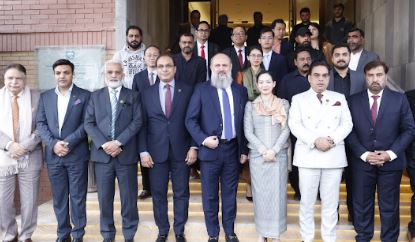
He was addressing a networking lunch ceremony held in honour of Ms. Cham Nimul, Minister of Commerce, Kingdom of Cambodia, and her delegation, hosted by the Islamabad Chamber of Commerce and Industry (ICCI) on Tuesday.

Jam Kamal Khan stated that Pakistan’s favourable climate, availability of raw materials, skilled workforce, vibrant life sciences sector, capable financial institutions, English-language proficiency, and predictable judicial framework together provide a solid foundation for sustainable economic growth.

Referring to the macroeconomic outlook, the Commerce Minister said that Pakistan has moved from economic turmoil toward stability and is now well-positioned for growth. While acknowledging challenges related to taxation, cost of production, and ease of doing business, he noted that these issues are receiving top priority under the leadership of Prime Minister Shehbaz Sharif. He expressed confidence that ongoing reforms would create space for sustained economic growth in the coming months.

Speaking on the occasion, Cambodian Minister of Commerce Ms. Cham Nimul emphasized the importance of stronger business-to-business (B2B) engagement, while welcoming greater participation of Pakistani companies in Cambodia and the wider ASEAN region. She highlighted broader opportunities for collaboration, joint ventures, and mutual investment, noting that 166 Pakistani companies are already registered in Cambodia.

She said the core objective of her visit was to explore trade and investment opportunities through structured B2B linkages, adding that efforts are underway to establish a Preferential Trade Agreement (PTA) between Pakistan and Cambodia. Such an agreement, she said, would help translate strong trade potential into actionable outcomes, ensure faster market access, streamline clearance procedures, and provide a viable pathway for Pakistani investment, particularly in support of Cambodia’s healthcare needs and regional competitiveness.

Inviting Pakistani entrepreneurs to invest in Cambodia, Ms. Cham Nimul highlighted the country’s Special Economic Zones (SEZs), which offer incentives including tax holidays, import duty exemptions, and streamlined administrative services under the Council for the Development of Cambodia. She also expressed keen interest in footwear, surgical instruments, and pharmaceutical sectors, where Pakistan has developed internationally recognized capabilities, export-ready manufacturing bases, and compliance with global quality standards.

Earlier, in his welcome address, ICCI President Sardar Tahir Mehmood said that there exists significant untapped potential to further expand bilateral trade and investment cooperation between Pakistan and Cambodia. He noted that Pakistan offers strong competitive advantages in several value-added sectors, and that enhanced interaction between the business communities of both countries could pave the way for mutually beneficial partnerships, supply-chain integration, and long-term commercial cooperation.

He expressed the hope that the interaction would serve as a catalyst for stronger Pakistan–Cambodia economic ties and open new avenues of cooperation for the respective business communities.

Chairman Founder Group Shaikh Tariq Sadiq, Senior Vice President Tahir Ayub, former Presidents Mian Akram Farid, Khalid Javaid, and Zafar Bakhtawari also shared their views on the vast potential of bilateral trade and investment.

Those present on the occasion included Parliamentary Secretary for Commerce Dr. Zulfiqar Ali Bhatti, Joint Secretary Ministry of Commerce Dr. Mohammad Adnan, former Presidents Mohammad Ejaz Abbasi and Zahid Maqbool, Vice President Irfan Chaudhry, and Executive Members Imran Minhas, Mirza Mohammad Ali, Chaudhry Nadeem Ahmed, Zulqurnain Abbasi, Aamir Rahim Qureshi, Raja Naveed Satti, Malik Mohsin Khalid, and Malik Abdul Aziz, among others.
Greek language, culture celebrated at Roots International Schools

Greek language, culture celebrated at Roots International Schools

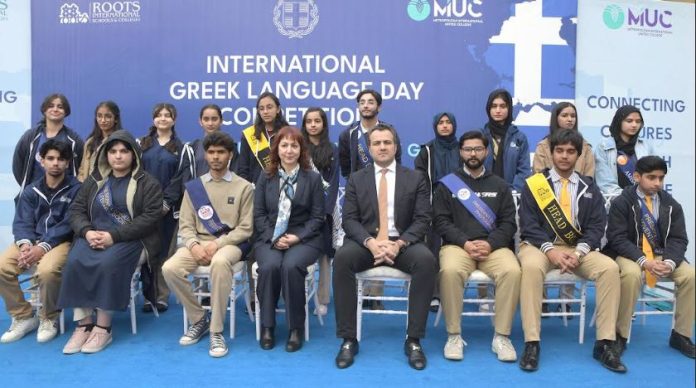
The ambassador of Greece praised the students for their research and creativity showcased during the event; The event also featured remarks by Mr. Walid Mushtaq, CEO of Roots International Schools, who commended the initiative

Ansar M Bhatti

ISLAMABAD, FEB 10 /DNA/ – The Roots International Schools Wellington Campus hosted a vibrant celebration of World Greek Language Day, marked by a special event highlighting the historical and cultural significance of the Greek language. The occasion was graced by the Ambassador of Greece to Pakistan, Ms. Eleni Porichi, who delivered an inspiring speech to students and faculty.

Ms. Porichi emphasized that the United Nations Educational, Scientific and Cultural Organization (UNESCO) has proclaimed February 9 as World Greek Language Day, recognizing the language’s immense contribution to global civilization. She noted that the day coincides with the commemoration of Greece’s national poet, Dionysios Solomos, whose works symbolize the spirit of Greek identity and culture.

The ambassador praised the students for their research and creativity showcased during the event. She highlighted that Greek is one of the oldest recorded living languages, with a continuous documented history spanning over 3,000 years. “From Homer’s epic poems to the philosophical works of Socrates, Aristotle, and Plato, the Greek language has shaped the intellectual foundations of humanity,” she remarked.

Ms. Porichi also underscored the influence of Greek terminology in modern science and academia. “Greek is the foundational language in disciplines such as astronomy, mathematics, logic, and philosophy. Words like democracydialoguelogos, and ethos enrich countless languages, including here in Pakistan, a country with deep-rooted historical exchanges with the Hellenistic world,” she said.

Encouraging students to further explore Greek culture, she expressed hope that many would take advantage of educational opportunities offered by Greek universities. As a gesture of appreciation, she distributed tablets sponsored by Airlink to the participants, acknowledging their enthusiasm and dedication.

The event also featured remarks by Mr. Walid Mushtaq, CEO of Roots International Schools, who commended the initiative. He described the celebration as a meaningful opportunity for students to connect with global heritage and broaden their academic horizons. Mr. Mushtaq appreciated the ambassador’s support in encouraging the Greek language quiz competition and assured that his students would be eager to utilize educational opportunities in Greece.

He further emphasized the importance of cultural exchange in strengthening ties between Pakistan and Greece, noting that such events foster mutual understanding and respect.

The school’s administration, including Walid Mushtaq and Ms. Sadia Batool, were acknowledged for their efforts in organizing the event. Ms. Porichi expressed her hope that the collaboration would continue and expand in the future, allowing more students to benefit from exposure to Greek language and culture.

The celebration concluded with a strong message of unity through language and culture, leaving students inspired to explore the beauty of Greek heritage and its lasting impact on world civilization.

IRS report records approx. 700 raids and over 4,000 detentions in IIOJK in 2025

IRS report records approx. 700 raids and over 4,000 detentions in IIOJK in 2025

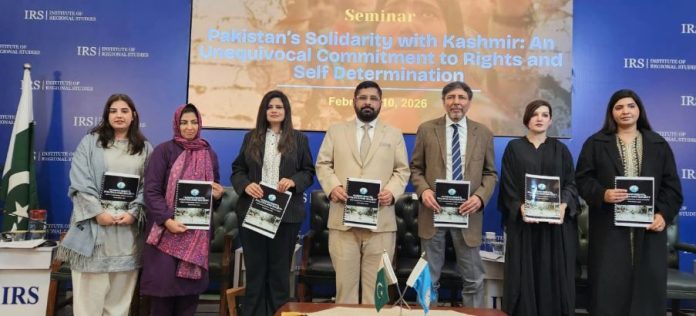
ISLAMABAD, FEB 10: /DNA/ – The Institute of Regional Studies (IRS), Islamabad, launched its Annual Report 2025 on “Indian Occupied Jammu, Kashmir and Ladakh” at a seminar held at its premises. Ms. Mushaal Hussein Mullick, Chairperson, Peace and Culture Organization, and former Advisor to the Prime Minister on Human Rights and Women Empowerment; Senator Asad Qasim, Chairman Senate Standing Committee on Kashmir Affairs, Gilgit-Baltistan & SAFRON; Professor Dr. Muhammad Khan; Dr. Sundas Mustaqeem; and Dr. Gul-i-Ayesha from NUST addressed the seminar.

In his welcome remarks, Ambassador Jauhar highlighted the historical and diplomatic dimensions of the Kashmir issue, stating that it has remained on the United Nations agenda for decades and continues to demand a just and lawful resolution. He emphasized the need to re-energize diplomatic outreach and global awareness efforts.

Senator Asad Qasim focused on the humanitarian costs of the prolonged conflict, drawing attention to detainees, divided families, and community-level trauma. He stated that regional peace and stability are closely linked to addressing the Kashmir dispute through credible international mechanisms.

While speaking at the seminar, Mushaal Hussein Mullick described the situation as a continuing human tragedy affecting everyday life. She warned that the dispute remains a serious nuclear flashpoint and urged the international community to seize the moment to arrange an impartial and free plebiscite.

All the panellists acknowledged that the report provides a comprehensive, evidence-based statistical and analytical overview of political developments, security practices, and human rights conditions in IIOJK during the year 2025.
The report notes that 2025 witnessed sustained large-scale security operations and extensive restrictions on civilian life across IIOJK. Preventive and mass detentions occurred in successive phases throughout the year. In February, more than 500 individuals were detained in Kulgam, Budgam, and Ganderbal following a security incident. After the Pahalgam incident in April, an estimated 1,500–2,000 detentions were reported across multiple districts. In November, a major crackdown led to approximately 1,500 detentions within two days, with over 100 additional detentions in Anantnag, Kathua, Ramban, Doda, and Rajouri. December operations added around 200 more detentions. In Ladakh, at least 75 protest-related detentions were recorded between late September and early October.

The report also documents widespread search and raid operations. Over 500 locations were raided across the Valley in November alone, including more than 200 in Kulgam, over 150 residences in Srinagar, and more than 50 in Sopore. Following the Pahalgam incident, raids were conducted at over 60 locations in Srinagar. The report further records at least nine residential demolitions across several districts in April, a two-month suspension of VPN services in Rajouri, enforcement actions against media offices, and during protest-related events in Ladakh, at least four civilian deaths and between 65 and nearly 100 injuries.

The seminar concluded with a joint call for a free and impartial plebiscite in IIOJK, as it is the only way to bring peace to South Asia.

Japan, Pakistan hold business seminar to strengthen future economic ties

Japan, Pakistan hold business seminar to strengthen future economic ties

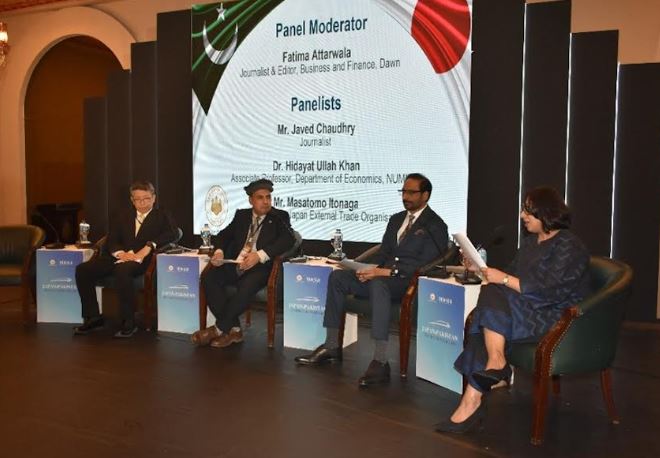
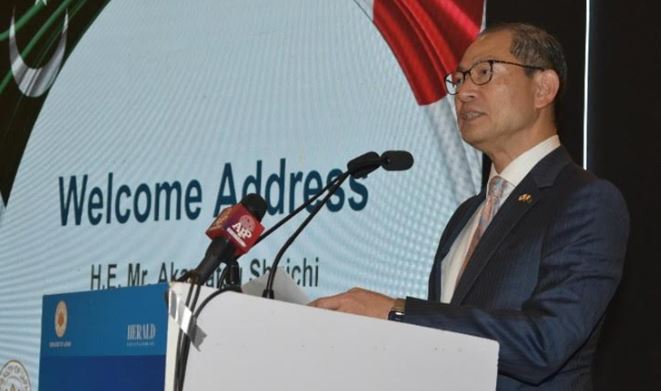
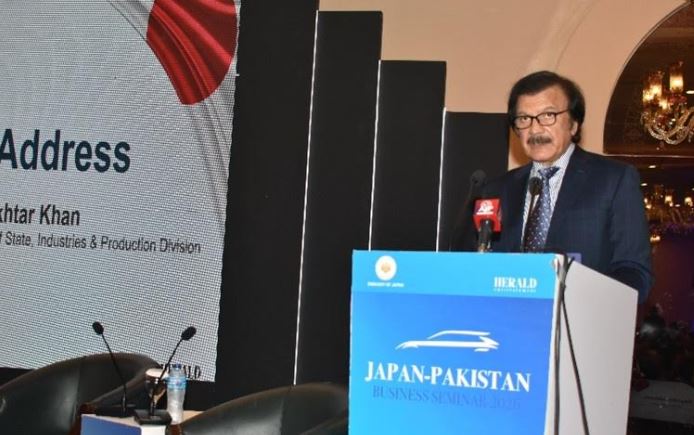
ISLAMABAD, FEB 10 /DNA/ – Akamatsu Shuichi, Ambassador Extraordinary and Plenipotentiary of Japan to Pakistan, hosted the “Japan-Pakistan Business Seminar 2026” at the Senena Hotel in Islamabad. Attended by approximately 100 individuals, including H.E. Mr. Haroon Akhtar Khan, Special Assistant to the Prime Minister for Industries & Production, Pakistani government officials, business representatives, relevant institutions and universities, Japanese companies such as members of the Japan Chamber of Commerce and Industry in Pakistan, the Japan International Cooperation Agency (JICA), and the Japan External Trade Organization (JETRO), the meeting featured fruitful discussions expected to promote future business between Japan and Pakistan.

Ambassador Akamatsu stated in his remarks as follows: “Japanese automotive companies have created more than 100,000 jobs in Pakistan and have established domestic supply chains to localize automotive components. All companies’ localization rate for parts by far exceeds 60%. Furthermore, they continue to invest in new technologies to advance industrial upgrading and reduce the negative impacts towards the environment. Indeed, those countries which can manufacture automobiles are quite limited in the world. Their contribution to Pakistan’s economy is substantial and will remain so in the future.”

The event witnessed the presence of distinguished figures including H.E. Mr. Haroon Akhtar Khan, Special Assistant to the Prime Minister for Industries & Production as Chief guest, and representatives from leading Japanese and Pakistani organizations. Mr. Haroon Akhtar Khan, Special Assistant to the Prime Minister emphasized his gratitude for Japan’s contributions to Pakistan’s economy to date and his hope for the continued strengthening of bilateral relations.

In Session 1, panelists from both countries discussed the secrets behind Japan’s economic growth to date and the history of business relations between the two nations. One panelist noted that Japan possesses a culture which priorities investing in educating people over chasing immediate profits, as this yields significant future benefits. The session featured lively debate on the path Pakistan should take for its own growth, learning from Japan’s experience.

In Session 2, Japanese automotive companies investing and continuing business in Pakistan, along with Pakistani automotive parts suppliers, participated as speakers. Representatives from Japanese companies addressed the key to achieving stable mass production of high-quality, durable products, highlighting Kaizen, 5S, and employee training. Furthermore, there was lively discussion on how Japanese automotive companies have long contributed not only to selling vehicles in Pakistan but also to developing Pakistani automotive industry suppliers. Additionally, there was discussion on future aims for promoting hybrid vehicles, investment in biogas fuel production to reduce petrol consumption, and further improvements in safety.

Azerbaijan’s Minister of Defense Industry holds several meetings at World Defense Show 2026

Azerbaijan’s Minister of Defense Industry holds several meetings at World Defense Show 2026

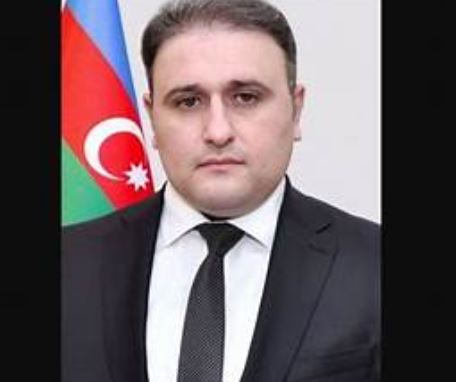
Baku, Feb 10: Azerbaijan’s Minister of Defense Industry Vugar Mustafayev held a series of meetings on February 9 on the sidelines of the World Defense Show 2026 held in Riyadh, the Kingdom of Saudi Arabia.

The Minister met with Gökhan Uçar, Deputy Chairman of Türkiye’s Defense Industry Committee; Mirghani Idris Suleiman, Director General of Sudan’s Defense Industry System; and executives from major defense companies, including Singapore’s ST Engineering, the Czech Republic’s Colt CZ, China’s ALIT and CETC, Türkiye’s BAYKAR, TUSAS, and HAVELSAN, as well as the U.S.-based Trillium.

The discussions focused on existing defense industry cooperation, the adoption of modern innovative technologies, emerging global trends, and the enhancement of industrial capabilities. The meetings highlighted the importance of expanding partnerships, leveraging international platforms to exchange experience, fostering professional dialogue, and promoting mutual understanding in the defense sector.

The meetings were held in a businesslike and constructive atmosphere, with productive discussions on strengthening international cooperation in defense industry.

A World in Disorder

A World in Disorder

For much of the post–Cold War era, the world was told it lived under a rules-based international order, one anchored in international law, multilateral institutions, and shared norms of restraint.

That claim now rings hollow. The question confronting the international community today is no longer whether this order is under strain, but whether it still exists at all. The evidence suggests a threshold has been crossed from global order into global disorder.

This is not an abstract debate. It is being answered daily through military interventions,

diplomatic breakdowns, and the open defiance of international legal frameworks. The fragility of this system was already visible during the Iraq crisis, particularly in efforts at the United Nations to build consensus. Even then, it was evident that the so-called international order lacked an impartial enforcement mechanism. There was law, but no universally binding authority to uphold it.

Fragility, however, is different from collapse. What is unfolding today is something far more profound. Over the past two years, the deterioration of the global system has accelerated dramatically.

What was once obscured by diplomatic language and procedural ambiguity is now openly declared. Major powers, led by the United States, no longer feel compelled to conceal their military, political, financial, or media backing of wars and conflicts. What was once deniable is now asserted openly. 

The human consequences have been catastrophic, including mass civilian suffering and actions that much of the world recognizes as genocide. In this context, the moral claims of those who once portrayed themselves as guardians of law and human rights stand exposed as selective and deeply hypocritical.

Even more striking is the erosion of the legal and normative framework itself. The rulings and proceedings of the International Court of Justice are ignored without embarrassment. The International Criminal Court is defunded, delegitimized, and its arrest warrants dismissed.  A point has been reached where the military abduction of a head of state can be defended publicly, while international law remains entirely impotent. When the President of the United States declares, “My own morality is international law. There is no international law,” it is not merely rhetorical excess. It reflects a worldview in which power supersedes law and force  replaces legitimacy.

This shift carries far-reaching consequences. The state that once claimed to underwrite global order has become a primary driver of disorder, and this confrontation is no longer limited to traditional adversaries. It increasingly encompasses allies, regions of influence, and even domestic society.

Three major shifts illustrate this transformation. First, confrontation has been brought home. For decades, U.S. conflicts were largely externalized in Eastern Europe, the Middle East, or East Asia. Today, coercive politics have returned to the Western Hemisphere. Venezuela is openly targeted. Military rhetoric now spans Latin America, and even Mexico is threatened under the language of security cooperation. This represents a revival of domination rather than diplomacy. Second, the treatment of allies has fundamentally changed. Longstanding partners in Europe, North America, and Asia are subjected to public pressure, humiliation, and transactional demands rather than consultation and mutual respect. India is told its leadership must personally satisfy the American president. Ukraine’s president is publicly mocked and instructed to return with mineral concessions. NATO commitments are treated as conditional, Greenland is discussed in military terms, and allies are coerced rather than engaged. This is not alliance management but raw power politics applied indiscriminately.

Third, while Western-led institutions weaken, alternative centers of power are consolidating influence. The G7 no longer reflects global economic realities. By contrast, BRICS and the Shanghai Cooperation Organization represent the majority of the world’s population and an increasing share of global growth. China is expanding its influence through technological and energy leadership, from renewable infrastructure to electric vehicles. Russia and China, aware that direct military confrontation would consolidate U.S. domestic unity, are instead allowing structural, economic, and institutional forces to erode American primacy.

The result is a United States facing pressure on multiple fronts: adversaries abroad, strained alliances, weakened global institutions, and an increasingly divided domestic society. Internally, political and economic fault lines are widening. Protests against concentrated executive and corporate power are growing. Courts and state governments are resisting federal overreach, including efforts to deploy military force domestically. This convergence of domestic resistance and global confrontation marks a uniquely vulnerable moment in U.S. history.

History offers a cautionary lesson. Declining empires often resort to coercive force in a final attempt to preserve dominance. Such actions rarely stabilize power; they accelerate decline. The last use of power is seldom a renewal. Today, military threats, legal defiance, and coercion of allies are not extending American hegemony. They are signaling its erosion and hastening the emergence of a multipolar world.

That multipolarity is already taking shape. Power will be distributed unevenly across regions, institutions, and economic networks. Some states will lead, others will form blocs, and many will seek influence through non-military means. The transition will be contested, unstable, and legally unmoored. One conclusion is unavoidable: the age of unilateral hegemony is over.

The challenge now facing the international community is stark. How can a world be navigated where norms are openly violated, alliances are transactional, and domestic fragility intersects with global confrontation? This period of disorder will not last forever, but its outcomes will define the next global system. One lesson stands clear: power without law does not produce order. It produces resistance, fragmentation, and ultimately decline.

Authority, Celebration and the Moral Challenge of Ramadan

Authority, Celebration and the Moral Challenge of Ramadan

by Muhammad Mohsin Iqbal

The state, in its ideal moral conception, resembles a mother—protective yet firm, generous yet disciplined. It provides security, creates opportunities, sets boundaries, and, when required, reprimands those who defy collective order. Authority, when exercised with purpose and balance, is not an intrusion into daily life but a fulfilment of responsibility. Recent developments of celebrating Basant in Lahore offered a timely reminder of this principle, demonstrating that when the state asserts its writ with seriousness and resolve, even long-suspended traditions can be revived without compromising public safety or social harmony.

Authority, Celebration and the Moral Challenge of Ramadan

Lahore—the heart of Pakistan and the city of living hearts—welcomed spring this year with a massive jubilation that had long been confined to memory. After nearly twenty-four years, Basant returned, not as a reckless indulgence but as a regulated cultural expression shaped by law, vigilance, and administrative presence. In the past, the festival had degenerated into chaos, with unskilled practices, criminal negligence, and weak enforcement turning joy into tragedy. This time, however, the state chose not withdrawal but engagement with watchfulness. Rules were framed and enforced, the administration remained visible, and the writ of the government was neither symbolic nor selective. Apart from a few occurrences, the city passed through the season without hefty heartbreaking incidents—a success that deserves acknowledgement.

Authority, Celebration and the Moral Challenge of Ramadan

The colours of Basant, the fluttering kites against a mild sky, the rooftops filled with cautious celebration, and the revival of traditional foods and shared laughter carried a deeper message. Joy, when guided and tailored by responsibility, becomes constructive rather than destructive. The presence of officials on the ground—alert, accountable, and prepared—demonstrated that celebration does not require the absence of law. On the contrary, it flourishes when boundaries are clear.

As the echoes of Basant fade, the nation now stands at the threshold of Ramadan, a month defined not by festivity but by restraint, reflection, compassion, and moral discipline. Ramadan reshapes daily life across the country: from pre-dawn meals and fasting hours to crowded bazaars before iftar and collective worship at night. Unlike Basant, which was confined largely to one city, Ramadan embraces the entire nation for a full month, touching every household regardless of class or geography.

Yet, even before the sacred month arrives, a familiar and troubling pattern has already begun to surface. Prices of vegetables, fruits, and essential food items have started climbing, shifting smoothly into the first gear of inflation, with higher gears expected as Ramadan begins. Quality goods quietly disappear from the market, while inferior substitutes reappear at inflated prices. This phenomenon, repeated annually, stands in stark contradiction to the spirit of Ramadan, which calls for ease, generosity, and sensitivity towards those who struggle.

Over the years, a peculiar and deeply flawed argument has often been offered in response to this problem. It is said that if fruit or other food items become expensive during Ramadan, people should simply stop consuming them and prices will fall on their own. This explanation, frequently presented as economic wisdom, raises a fundamental question: is it the responsibility of citizens to correct market distortions, or the duty of the state to prevent them? Expecting fasting families to abandon basic nutritional needs during a month of spiritual exertion is neither realistic nor just. Such reasoning, rather than reflecting policy insight, exposes administrative helplessness.

In many Western and Gulf countries, Ramadan is marked by special discounts, subsidised essentials, and strict monitoring to ensure affordability for all segments of society. The objective is not merely market stability but social solidarity. In contrast, when prices surge unchecked and the administration responds with advice rather than action, the burden of governance is unfairly shifted onto the public.

Here, the lesson of Basant becomes especially relevant. If the administration could demonstrate coordination, resolve, and presence for a cultural festival, it can and must do the same for a religious obligation that defines the nation’s moral rhythm. Officials who were visibly active during Basant should be equally present in markets and bazaars during Ramadan—monitoring prices, ensuring availability, and preventing exploitation. Authority must not retreat into silence at a time when vigilance is most required.

Accountability, too, must be clearly defined. Local administrations should be bound to their jurisdictions, with responsibility fixed and consequences enforced. If price manipulation occurs in a particular area, those entrusted with oversight must be questioned for their failure. Experience repeatedly shows that when the state intervenes decisively, markets respond. It is also telling that prices often return to pre-Ramadan levels once the month ends, revealing that much of the inflation is artificial rather than inevitable.

Ramadan is not only a spiritual test for individuals; it is also a test of governance. It examines whether leadership can rise above routine indifference and act in harmony with the ethical demands of the moment. Provincial leaderships must play their role, translating intent into visible action.

Between the disciplined joy of Basant and the solemn restraint of Ramadan lies a shared lesson: society flourishes when authority is exercised with sincerity and care. A state that can protect celebration can also protect devotion. A state that safeguarded lives amid flying kites can surely safeguard dignity at the fasting table. The nation now waits to see whether the resolve displayed in spring will endure through the sacred month—strengthening not only markets, but trust itself.

Australia edges Pakistan 3-2 in thrilling Pro League Hockey clash

Australia edges Pakistan 3-2 in thrilling Pro League Hockey clash

HOBART, FEB 10 /DNA/ – In a thrilling opening match of the second round in the Pro Hockey League in Hobart, Australia, Australia, the world’s 5th-ranked team, narrowly defeated Pakistan 3-2.

The first half saw Australia take control, with both their goals scored by Tim Brand. However, Pakistan fought back fiercely in the second half, scoring two consecutive goals to level the match. The game was decided in the final moments, when Australia’s Blake Govers scored from a penalty corner, securing the victory for his team.

For Pakistan, the first goal was a field goal by Nadeem Ahmed, while the second was a penalty corner converted by Mohammad Sufyan Khan.

Pakistan’s next matches are as follows:

  • February 11: vs Germany
  • February 13: vs Australia
  • February 14: vs Germany

Epstein Files and the Moral Crisis in the U.S.

Qamar Bashir

Qamar Bashir

When the U.S. Department of Justice released additional troves of documents connected to Jeffrey Epstein, the reaction was immediate and visceral. The shock was not about Epstein himself. His criminality had already been established in court. What unsettled the public was something else entirely: proximity. From former British royal Prince Andrew to former U.S. Presidents Bill Clinton and Donald Trump; from tech billionaire Elon Musk to Virgin Group founder Richard Branson; from former Israeli Prime Minister Ehud Barak to former U.S. Treasury Secretary Larry Summers, the newly released files, as summarized by the Associated Press, include correspondence, flight logs and social exchanges linking Epstein to an extraordinary roster of powerful figures.

None of these individuals have been charged with crimes related to Epstein’s trafficking operation, and all have denied wrongdoing. That legal reality is essential. Yet the appearance of such names within official investigative materials has triggered a deeper moral discomfort, one that extends beyond courtroom proceedings. The Associated Press described the files as a “who’s who of powerful men” appearing in emails, invitations, photographs or scheduling records tied to Epstein. Prince Andrew, long scrutinized over his relationship with Epstein, settled a civil lawsuit brought by Virginia Giuffre while continuing to deny any wrongdoing. Bill Clinton acknowledged flying on Epstein’s plane years before the financier’s final arrest but has denied knowledge of criminal behavior. Donald Trump has similarly acknowledged a past social relationship while denying awareness of abuse. Elon Musk has publicly stated that he declined invitations to Epstein’s island. Richard Branson’s company emphasized that interactions were limited to business or group settings.

Ehud Barak admitted visiting Epstein’s New York residence and flying on his plane, later expressing regret for the association. Larry Summers called his connection “a major error of judgment.” Sergey Brin, Steve Bannon, Steven Tisch, Howard Lutnick, Casey Wasserman and others appear in various correspondences but have not been accused of criminal conduct. Association, in legal terms, is not guilt. Yet the psychological impact of proximity is harder to dismiss.

When a convicted trafficker of minors successfully embedded himself within elite political, financial and academic networks, it forces uncomfortable questions. How did someone with known red flags retain access to such circles even after his 2008 plea agreement in Florida? Why did social contact continue after serious allegations were already public knowledge? The outrage many feel is not about bypassing due process. It is about moral symmetry. In ordinary life, association with a convicted sex offender can destroy reputations overnight. Within elite spaces, however, such association appears cushioned by status and influence. That perceived asymmetry fuels distrust.

The Epstein case has also revived speculation regarding intelligence connections. A 2020 FBI report cited a confidential source claiming that Epstein may have been “trained as a spy” and relayed information through intermediaries to Israeli intelligence. Israeli officials, including Prime Minister Benjamin Netanyahu, have publicly rejected any suggestion that Epstein worked for Mossad. Intelligence experts quoted in reporting have emphasized that no evidence has confirmed such claims. Nonetheless, the presence of these allegations in investigative files has intensified curiosity and suspicion. Epstein’s financial origins remain opaque. His international reach was vast. His access to elite networks was unusual.

Opacity invites speculation, but speculation is not proof. The responsible position is neither blind dismissal nor reckless accusation. It is rigorous transparency. The deeper issue is structural. Epstein’s crimes were not committed in isolation. Trafficking networks require recruitment, logistics, financial channels and silence. The public now asks whether every dimension of that network has been fully exposed and dismantled.

The Associated Press made an essential point: none of the individuals named have been charged in connection with Epstein’s crimes. That fact must anchor any serious discussion. Yet it is legitimate for citizens to ask whether investigations were comprehensive, whether institutional blind spots existed and whether systemic safeguards have been strengthened to prevent future exploitation. Trust in institutions depends on visible equality before the law. If powerful individuals were investigated and cleared, clarity strengthens legitimacy. If investigative gaps remain, transparency must close them. Silence feeds suspicion.

The Epstein scandal represents more than personal depravity. It represents a stress test for institutional credibility. When elites circulate within the orbit of a trafficker, even without criminal liability, the public demands explanation. The United States often positions itself as a defender of human rights globally. That moral posture requires internal consistency. Accountability cannot appear selective.

The solution is neither mob condemnation nor complacency. It is disciplined scrutiny. Congress retains oversight authority. The Department of Justice retains prosecutorial authority. Independent journalism retains investigative authority. Survivors retain the right to justice and protection. If additional wrongdoing is uncovered, it must be prosecuted without regard to status. If no additional crimes are established, the public deserves clear communication explaining investigative findings.

Democracies can survive scandal. They struggle to survive sustained distrust. The Epstein files have reopened old wounds not because they deliver new convictions but because they highlight enduring ambiguity. The presence of global elites in a trafficker’s social universe is enough to unsettle confidence. What follows now will determine whether that unease hardens into cynicism or evolves into reform.

The moral shock many feel reflects a basic human instinct: children must be protected, and power must never shield exploitation. That instinct is not partisan and not ideological. It is foundational. Institutions must demonstrate that the instinct aligns with enforcement. The names that appear in investigative documents may ultimately reflect poor judgment rather than criminal complicity, and that distinction matters. But it does not eliminate the need for vigilance.

The Epstein case has become a symbol of elite access, institutional failure and the fragility of trust. Rebuilding that trust requires sunlight, consistency and courage. Anything less will leave the convulsion unresolved, and a society that cannot resolve its convulsions risks allowing suspicion to replace confidence in the very structures meant to uphold justice.

Qamar Bashir

Press Secretary to the President (Rtd)

Former Press Minister, Embassy of Pakistan to France

Former Press Attaché to Malaysia

Former MD, SRBC | Macomb, Michigan

Pakistan to ‘play’ T20 World Cup match against India as per schedule

Pakistan to 'play' T20 World Cup match against India as per schedule

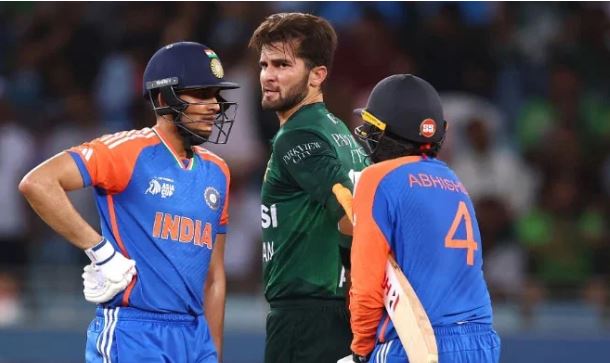
ISLAMABAD, FEB 9: Pakistan has decided to play its scheduled T20 World Cup match against India on February 15, revisiting its boycott decision, at the request of Sri Lanka, sources confirmed on Monday.

Sources privy to the matter revealed that the decision came during a telephonic contact between Prime Minister Shehbaz Sharif and Sri Lankan President Anura Kumara Dissanayake.

According to a statement from the Prime Minister’s Office, the two leaders discussed the T20 World Cup match between Pakistan and India during the telephone call.

The Sri Lankan president requested PM Shehbaz that Pakistani cricket team should play the Pakistan-India match in Sri Lanka.

Pakistan fully supported Sri Lankan cricket during the terrorism in Sri Lanka, the president said, adding Pakistan gave priority to its long-standing relations with Sri Lanka above all else and the Pakistani cricket team continued to tour Sri Lanka to play cricket despite terrorism.

PM Shehbaz welcomed the sentiments of the Sri Lankan president.

He said that Sri Lanka also provided full support in difficult times and cricket continued in Pakistan.

“Recently, the Sri Lankan team took an unforgettable step for the Pakistani nation and cricket fans by not cancelling the tour of Pakistan,” the PM added.

PM Shehbaz told the Sri Lankan president that he will inform him of the final decision after consultations regarding the Pakistan-India match of the T20 World Cup.

Stay Connected

64FansLike
60FollowersFollow

Latest Reviews

Exchange Rates

USD - United States Dollar
EUR
1.14
GBP
1.34
AUD
0.70
CAD
0.71