Home Blog Page 2564

Coca Cola Pakistan Gives Karachi Fans A Chance To Win PSL Passes

DNA

ISLAMABAD, MAR 3 – Coca Cola Pakistan recently collaborated with Easy Paisa which will give Karachi-based fans a chance to win PSL passes along with Coca Cola merchandise.

With the ‘Karachi is Love’ campaign, Coca Cola Pakistan has taken the step to celebrate the diversity in Karachi. The campaign appreciates the struggles, grit and stubborn optimism of the people of Karachi and how Coca Cola has always brought a smile to their faces with their delightful cold beverage. With this collaboration, Coca Cola has reiterated its commitment to  ‘Karachi is Love’ campaign by sharing the love they have for Karachi.

All fans have to do is to download the Easy Paisa app and pay any utility bill to qualify for the lucky draw. 20 lucky winners will be given the chance to watch the next PSL match live at the Karachi National Stadium along with the new Coca Cola merchandise.

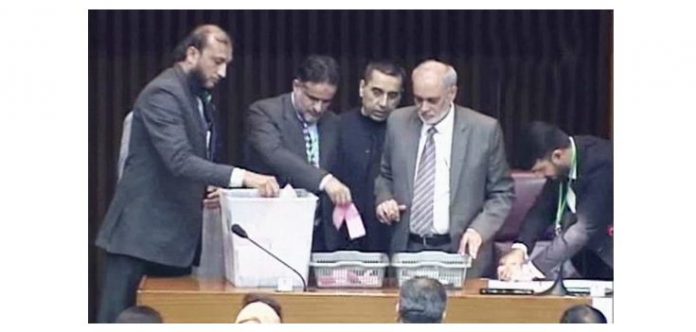
Counting underway as polling time for Senate elections comes to an end

First Senate seat goes to independent Abdul Qadir from Balochistan; JUI-F’s Haider and BNP candidate also win: unofficial results.

ISLAMABAD – The polling time for 37 seats of the Senate came to a close at 5pm after voting was held smoothly under the supervision of the Election Commission of Pakistan (ECP) with a total of 78 candidates contesting from Sindh, Khyber Pakhtunkhwa, Balochistan and Islamabad. The counting of votes is currently underway.

The first Senate hopeful to be declared a winner on a general seat was independent candidate Abdul Qadir from Balochistan, according to unofficial and unverified results.

Maulana Abdul Ghafoor Haideri of the JUI-F and Muhammad Qasim of the BNP were also declared winners on general seats from Balochistan.

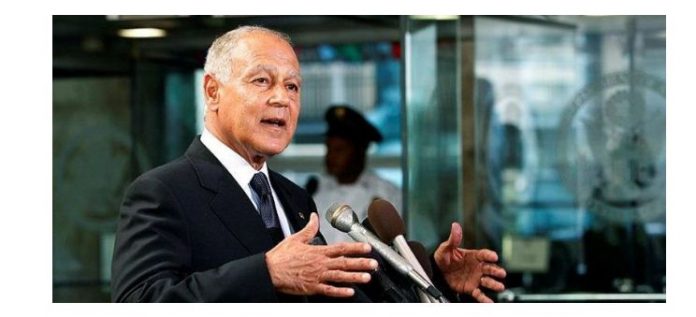
Egypt’s Aboul Gheit reappointed Arab League chief

CAIRO, MAR 3 – Arab foreign ministers on Wednesday reappointed veteran Egyptian diplomat as the secretary general of the Cairo-based Arab League.

Ahmed Aboul Gheit, a former ambassador to the United Nations and Egypt’s last foreign minister under ousted president Hosni Mubarak, won the backing of the Arab foreign ministers meeting in Cairo, MENA’s report said.

In January, Egypt’s President Abdel Fattah el-Sissi announced that Cairo would nominate Aboul Gheit for a second, five-year term as the chief of the 22-member bloc.

He was the only nominee for the post, as it is a long-held protocol that Egypt as host of the Arab League traditionally nominates the league chief. He was first appointed in 2016 as the secretary general of the Arab League.

The only time a non-Egyptian was appointed to the post was in 1979, after Egypt’s membership was suspended following its peace treaty with Israel. The membership was restored in 1989, with the headquarters of the Arab League returning to Cairo and a new Egyptian secretary general appointed in 1990.

Aboul Gheit, 78, has been known to be a pragmatic diplomat with strong enmity for political Islam factions like the Muslim Brotherhood.

He has been critical to the 2011 uprising that engulfed the region and led to the overthrow of four longtime autocratic rulers but also sparked three civil wars.

Speakers at RCCI VITF urge to revive SAARC

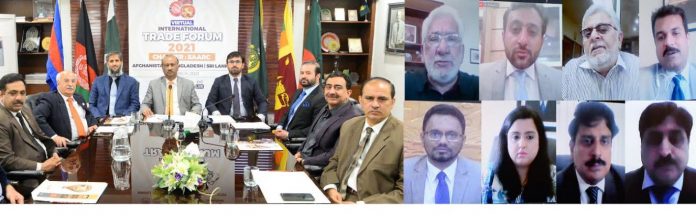
RAWALPINDI, MAR 3 (DNA) – The Rawalpindi Chamber of Commerce and Industry (RCCI) organized Virtual International Trade Forum (Chapter SAARC) here on Wednesday. The purpose of the trade forum was to make the business community aware of trade and export opportunities in SAARC countries.

The forum was attended by President Nasir Mirza, Senior Vice President Osman Ashraf, Vice President Shahraiz A Malik, Chairman regional trade Khurshid Berlas, Zubair Malik, Executive member SAARC Chamber,  Ahsan Ali Mangi, President Pak-Afghan Chamber Zubair Motiwala, Deputy Secretary Ministry of Commerce Fahad Raza, Ms. Assma Kamal , Trade and Investment Attache Sri Lanka, Suleman Khan, Trade and Investment Attache  Bangladesh and Asif Khan, Trade and Investment Counsellor Afghanistan.

President RCCI Nasir Mirza in his welcome address said that the South Asian Association of Regional Cooperation (SAARC) was founded in 1985 with the aim of promoting socio-economic development within the member states but unfortunately the member countries could not materialized the true potential of this forum

SAARC region with its significant economic power, vast natural resources, and dynamic workforce, has a huge development potential which needs exploration in the better interest of all member nations, he added.

RCCI chief said that regional cooperation has the potential to produce significant gains across all countries of South Asia. Intraregional trade now stands at just one-third of its potential with $23 billion annually.

Zubair Motiwala, Chairman Pakistan Afghanistan Joint Chamber of Commerce & Industry (PAJCCI), acknowledged initiatives of RCCI for organizing the SAARC trade forum and raising the voice of the business community with respect to regional trade.

He said SAARC should not be played in the hands of one country and the member countries should synergize their efforts for promoting trade ties excluding India.

Commercial Secretary Dhaka, Salman Khan said that there is a huge potential to increase bilateral trade between Pakistan and Bangladesh, adding that Business Visas relaxation traiff barriers and flight issues has been raised at the Government levels.

Ms. Assma Kamal , Trade and Investment Attache Sri Lanka said that the recent visit of Prime Minister Imran Khan to Sri Lanka has put a positive image and two countries have agreed to further strengthen bilateral relations in diverse areas, including trade, and tourism through enhanced connectivity.

The SAARC region is composed of Afghanistan, Bangladesh, Bhutan, India, Nepal, Pakistan, Sri Lanka, and the Maldives. Though it is home to around a quarter of the world’s population, the region accounts for just under seven per cent of the world’s GDP.=DNA

===================

PARC holds field demonstration of mechanical pruner at NARC

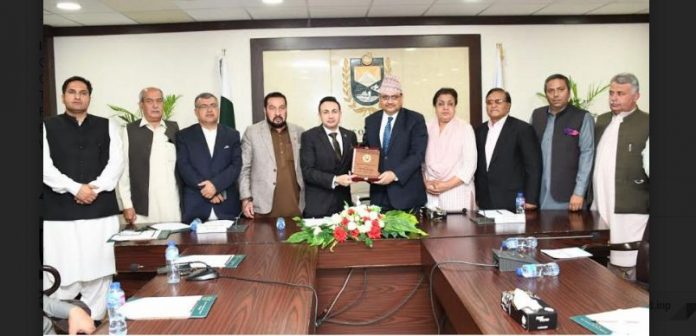
ISLAMABAD, MAR 3 (DNA) – Tapas Adhikari, Ambassador of Nepal has said that Pakistan and Nepal have great potential to enhance trade and economic cooperation and stressed that PIA should explore the possibility of starting direct flights with Nepal that would help in promoting two-way trade between the two countries.

He said that trade promotion would help both countries to reduce unemployment and improve living standards of their people. He said that Pakistan and Nepal have great scope to enhance cooperation in tourism sector as both countries possessed highest peaks in the world.

He said that Pakistani business community should visit Nepal while he would also try to bring a delegation of Nepalese businessmen to Pakistan for promoting business linkages between both countries.

He said that Nepalese people have great love for Pakistan and they wanted to further promote trade relations with Pakistan.

He was addressing the business community during his visit to Islamabad Chamber of Commerce and Industry. The delegation of the Chaman Chamber of Commerce & Industry led by President Jalal Khan was also present at the occasion.

Speaking at the occasion, Sardar Yasir Ilyas Khan, President, Islamabad Chamber of Commerce & Industry (ICCI) said that Pakistan and Nepal should focus on developing strong business linkages between their private sectors in order to explore all untapped areas of bilateral trade and economic relations as the current volume of trade was far less than the actual potential of both countries.

He said that Pakistan could provide many products to Nepal including machinery & parts, pharmaceuticals, electronic appliances, textiles products, leather goods, furniture products, fruits & vegetables, meat products and many others, therefore, both countries should find ways for direct trade to achieve mutually beneficial outcomes.

He said that Pakistan and Nepal have the potential to cooperate with each other in agriculture & livestock, industry, energy, tourism, IT, banking & finance, health & education, civil aviation and many other fields for which direct connectivity between private sectors was important.

He said that Pakistan and Nepal should encourage frequent exchange of trade delegations to promote mutual collaboration and strengthen trade relations.  He said that Pakistan and Nepal had signed a trade cooperation long time ago which should be fully exploited for two-way trade promotion.

Fatma Azim Senior Vice President, Abdul Rehman Khan Vice President ICCI, Jalal Khan President Chaman Chamber of Commerce & Industry, Zafar Bakhtawari former President ICCI and others also spoke at the occasion and called for restarting direct flights between Pakistan and Nepal to bride gap and promote trade relations between the two countries.

They said that direct flights took only 2 hours while currently indirect flight was taking around 22 hours between the two countries, which showed the importance of direct flights for promotion of B2B and people to people relations between Pakistan and Nepal.=DNA

==================

Qatari commander lauds efforts of Pak Army for regional peace

RAWALPINDI, MAR 3 (DNA) – Major General Saeed Hassen Mohammad Al-Khayareen, Commander Qatar Emiri Land Forces called on General Qamar Javed Bajwa, Chief of Army Staff (COAS) at GHQ.

During the meeting, matters of mutual & professional interest, regional security situation including Afghan Peace Process and enhanced bilateral defence & security cooperation were discussed.

Visiting dignitary appreciated Pakistan Army’s sincere efforts for regional peace and reiterated that Pakistan and Qatar share brotherly relations which over a period of time are transforming into  mutually beneficial ties.

COAS thanked the dignitary and said that Pakistan Army greatly values its brotherly relations with its time-tested friend.

Earlier on arrival at GHQ, Commander Qatar Emiri Land Forces, laid a floral wreath at Yadgar-e-Shuhada. A smartly turned out contingent of Pakistan Army presented the Guard of Honour to visiting dignitary.=DNA

============

PARC holds field demonstration of mechanical pruner at NARC

DNA

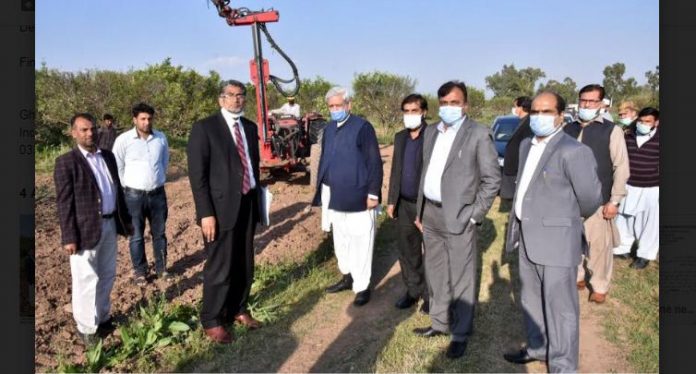
ISLAMABAD, MAR 3 – Conventional agricultural practice is not only a laborious and time consuming process but also cause low yield and post harvest losses. To cope the challenges in mechanization of agriculture, Chairman PARC Dr. Azeem Khan arranged a field demonstration of mechanical pruner in presence of honourable Federal Minister for M/o National Food Security and Research, Syed Fakhar Imam on March 1, 2021 at Citrus Orchard of NARC.


DG NARC, Engr. Shamimul Sibtain Shah and other high officials also joined the field demonstration.

This was a single arm pruner, having five saw disc cutters on it. The pruner machine mounted on an 85-hp tractor is delivered to Agricultural Engineering Institute (AEI), NARC by Agricultural Mechanization Research Institute (AMRI), Multan on the request of Chairman, PARC for demonstration purpose. The machine is tractor front-mounted and is operated by hydraulic pump and motors operated by tractor PTO shaft. It can prune all kinds of orchards like;apple, apricot, cherry, olives,mango, citrus, guava and peach up to 20 feet height with 120-150 trees per hour, depending upon the canopy load. The tractor consumes 7-8 liters diesel per hour while operating this machine.

At the occasion Fakhar Imam expressed his views “Like in socio-economic development sectors the most important factor for agronomists, agricultural scientists, researchers and farmers is to seek technological transformation in agriculture. How farmer can pace with the fast going and growing world is the key question for scientists. As compare to neighboring countries like China, Pakistani farmers are slow in technology adoption process. However, PARC interventions in technological transformation is laudable in this regards”.

Dr. Azeem while highlighting the importance of machine told, ‘this mechanical pruner is very useful for managing and training the orchard canopies. The unproductive branches are pruned so new branches start to grow on time, which will bring more fruit next season. Furthermore, aeration and sunlight in the inner canopy is another reason for obtaining maximum fruits from orchards. Suitable time for mechanical orchard pruning is December-January i.e. before flowering stage. He further told that the local fabrication of this machine has been started at Multan because the imported machine is very expensive.

AIOU establishes students facilitation desks across the country

ISLAMABAD, MAR 3 (DNA) – Allama Iqbal Open in its final stage of transforming all of its key academic and administrative operations from manual to automation, has taken various key measures to train its students of distant regions of the country in the effective use of latest technology.

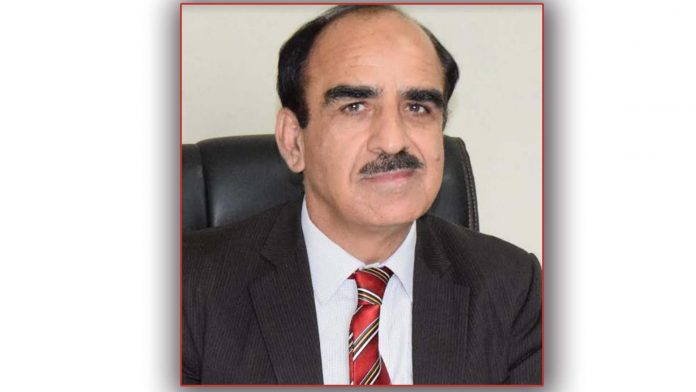
In this regard, university has recently established students facilitation desks at all of its regional centers on the special directives of Prof Dr Zia Ul -Qayyum, VC, AIOU.

The trained staff at the regional centers will facilitate the students in uploading assignments on the Aaghi LMS Portal, participating in online workshops and seeking information about the tutors and workshops related issues.

On the basis of experiences of previous semester’s online workshops, it was realized by the university administration that majority of the students are not trained in the use of latest educational technology, therefore, they seek technical support from the market professionals in submitting their application forms online as well as uploading their assignments.

In order to save their hard-earned money and to provide them training, the university has established students facilitation desks and it is expected this measure would serve the dual purposes.=DNA

==========

Now China-Pakistan Knowledge Corridor

By Prof Dr Attaullah Shah

The academic and research collaboration between China and Pakistan have witnessed impressive growth in last few decades. With huge investment of Chinese government in research and development, more than 100 Chinese Universities are today placed in the global best 500 universities of the world, according to Times Higher Education Ranking (2021), Shanghai Jiao Thong Universities ranking (2020) and US News and World Report (2020).

While looking at the significance of intellectual and knowledge connectivity, alongside the physical routes, HEC has timely established a CPEC centre at its headquarters. Under this initiatives, a consortium of CPEC universities has been created, which is now comprised of more than 50 universities. Lately, HEC approved a project to establish Knowledge and Research Corridor between the two countries. The main aim of the project is to create collaboration amongst the Chinese and Consortium Universities of Pakistan for strengthening Chinese Road and Belt Intuitive (RBI), to exploit the opportunities of China’s appetite for global talent hunt, and support the universities of Pakistan for human resource development, identifying the long term challenges in implementation of CPEC and analysis of Chinese culture and history for drawing lessons for development of Pakistan.

The components of the project are, Joint Research: For implementation of these strategies, HEC has proposed some of the way forward like joint research on selected themes of joint interest, which can include climate adaptation, sustainable mountain development, food security, urban planning, water resource management, supply chain management, IT entrepreneurship, medicinal plants, gemstones and mineral resource management, etc.

Talent Cultivation and Training:This component mainly focuses on the capacity building of faculty to strengthen the academic and intellectual relations. About 400 faculty members will be trained under this component both at Pakistan and China. Post-doctoral research: Post-doctoral research and trainings provide ample opportunities to faculty for exchange of latest knowledge, research and technologies. Short Term Trainings:Due to shortage of qualified PhD faculty in the newly established Universities in Pakistan, it may not be affordable for them to place most of the faculty on PhD studies or Post Doc research. Hence a window of short term placement of 150 faculty and staff for short term trainings of 2-3 weeks will be provided.

Dual degree programs between Chinese and Pakistani Universities:Under the proposed project 10 BS and 20 MS students will be provided with this opportunity to complete their degrees under dual degree programs of Chinese and Pakistani Universities. Conferences, Seminars, Workshops, Colloquia etc.In current phase, about 12 International Conferences will be arranged at Pakistan and China to showcase the research in both countries, which will be focused on the challenges faced by the two countries, with special emphasis over CPEC and BRI. Establishment of China Study Centres: At least 6 China Study Centres will be established across Pakistan, one each in 5 provinces including Gilgit Baltistan and AJ&K. These centres will focus on strengthening the Chinese language teaching, cultural and history studies and act as Think Tank for paving long term understanding about CPEC.

The Chinese New Normal of Economic Development, drawn by current Chinese leadership, is based on the OBOR lately called Belt and Roads Initiative (BRI). The principal and strategic component of this network is CPEC which is part of 21st Century Maritime Silk Road. The multibillion mega projects under CPEC are destined to usher in a new era of economic prosperity and peace in the region. These mammoth projects in the energy sector, strengthening of physical and telecommunication networks, upgradation and strengthening of Gwadar port and establishment of Export Promotions Zones across Pakistan, are collectively called the “Destiny Changer” in the region. The dividends of the first early harvest phase of CPEC have already created trickle-down effects to the masses in Pakistan.

China and Pakistan are time tested friends with shared boundaries, culture and history dating back to the ancient silk route. The two countries have always stood for inclusivity, peaceful co-existence and sustainable growth in the region. While inaugurating the China Pakistan Economic Corridor, President Xi-Jinping said: “Friendship between China and Pakistan is based on trust and mutual support, and we have been devoted friends through both good and hard times. Our friendship is a pacesetter for amicable relations.”The unwavering support of China to Pakistan’s stance on the issue of Kashmir, China’s Foreign Direct Investment (FDI) and the enormous allocation of resources to China Pakistan Economic Corridor as part of One Belt and One Road Initiative are some of the major dividends of this friendship. To restrain the hegemonic and expansionist designs of India and Narendra Modi led BJP government, the need for this partnership has further intensified in last few years.

Gilgit Baltistan is a region blessed with unique opportunities by nature. The region has a distinction of being the converging point of three of the mightiest mountain ranges in the world, namely: Himalaya, Karakoram and Hindu Kush. GB being a gateway to CPEC and Karakoram International University, being a pioneer seat of higher learning has been connected to China both physically, historically and traditionally. The flow of services and goods across the two region under regional trade arrangements, provide unmatched opportunities to the people on both sides of the boarder. KIU established its Confucius Centre, years back to impact Chinese Language literacy to the students and youth. All graduates of KIU are bound to learn the two level of Chinese literacy (HESI&II). Every year more than 1000 students are taught Chinese language by native Chinese teachers. A good number of the faculty of KIU also graduated from Chinese top Universities, who have brought, their rich experience to the region for quality education and research to more than 7000 students at KIU. The faculty and students of Pakistani Universities and general and KIU in particular would need to abreast for harnessing the opportunities provided under CPEC Knowledge and Research Corridor.  Drew Faust President Harvard University quoted: “Higher Education is the strongest, sturdiest ladder for socioeconomic mobility”. CPEC knowledge and Research Corridor (CKRC), will enhance the intellectual capacity of the faculty and staff of Pakistani Higher Education Institutes, which will turn the youth force of Pakistan, as growth engine as envisaged by HEC.

(The author is Vice Chancellor Karakoram International University Gilgit)

Australia gifts a Miyawaki forest to Pakistan

The Australian Government has committed $1.5 billion for global climate finance and over $15 billion domestically to make Australia’s natural resources, environment and water infrastructure more resilient to climate disasters

Ansar M Bhatti

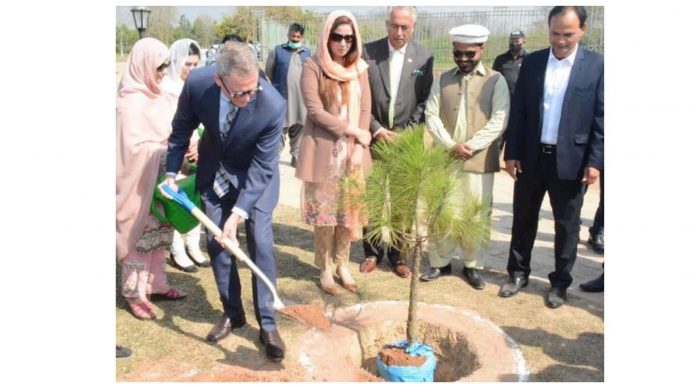
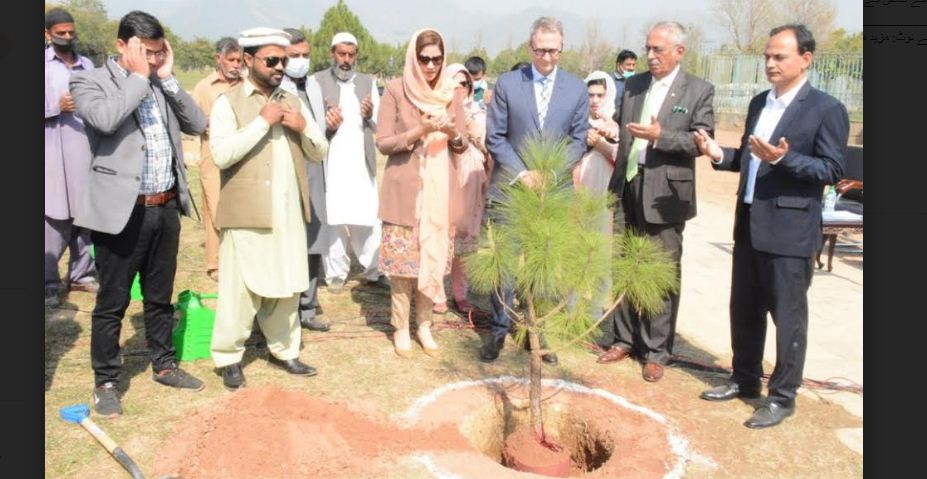
ISLAMABAD: The Australian High Commissioner to Pakistan, Dr Geoffrey Shaw on Wednesday joined the Minister of State for Climate Change, Zartaj Gul to inaugurate a Miyawaki Forest at Fatima Jinnah Park Islamabad.

The Australian High Commission gifted the forest to the public park as part of an initiative, organised by the Capital Development Authority to support Pakistan’s Miyawaki Forest and the Spring Tree Plantation Campaign 2021.

Speaking at the tree plantation ceremony, Dr Geoffrey Shaw said, “This Miyawaki Forest is a gift from the Australian Government to the people of Pakistan. I hope that the trees and shrubs planted here today help regenerate not just the environment of Islamabad but contribute to making Pakistan cleaner and greener.”

Australia has longstanding cooperation with Pakistan on the environment and tackling climate change including improving water management and security, access to clean drinking water, flood forecasting and disaster risk reduction.

DNA 3-1

“Green initiatives such as this are becoming ever more important in the face of the growing impacts of climate change affecting our region – something both Australia and Pakistan are keenly aware of and taking action on,” Dr Shaw added.

Director General Capital Development Authority, Naveed Tareen said, “Miyawaki is one of the techniques to develop forests quickly and Prime Minister Imran Khan has taken keen interest in its implementation.

We all are aware of the threat of global warming and how it’s already affecting our lives. Right and timely initiatives like this are much needed. We are thankful to Australian High Commission for their collaboration in this amazing initiative.”

Australia is committed to combating climate change and is on track to beat our 2030 emissions reduction target under the Paris Agreement, having achieved 17 per cent reduction in emissions since 2005.

The Australian Government has committed $1.5 billion for global climate finance and over $15 billion domestically to make Australia’s natural resources, environment and water infrastructure more resilient to climate disasters.

Stay Connected

64FansLike
60FollowersFollow

Latest Reviews

Exchange Rates

USD - United States Dollar
EUR
1.17
GBP
1.34
AUD
0.67
CAD
0.73