Home Blog Page 2563

Neighbouring countries need to help ensure peace in Afghanistan

Online conference Online Conference on the ‘’ Uzbekistan and Pakistan Partnership: The Perspective for Multidimensional Interaction” organized by Center for Global & Strategic Studies (CGSS)

Staff Report

ISLAMABAD: Furqat A. Sidikov, Deputy Foreign Minister of Republic of Uzbekistan has said bilateral cooperation between Uzbekistan and Pakistan was excellent. He stated that Afghanistan situation has direct spill-over impacts on Pakistan and Uzbekistan being neighboring countries. Therefore, regional countries must cooperate to find solution of Afghanistan crisis.

He expressed these views during an online conference Online Conference on the ‘’ Uzbekistan and Pakistan Partnership: The Perspective for Multidimensional Interaction” organized by Center for Global & Strategic Studies (CGSS), Islamabad with the collaboration of the Information and Analytical Centre for International Relations (IACIR), Tashkent, Uzbekistan.

Khalid Taimur Akram, Executive Director, Center for Global & Strategic Studies (CGSS), Islamabad, Pakistan was the moderator of the online conference.

Furqat A. Sidikov also highlighted the trade and economic turn over between Uzbekistan and Pakistan that has been increasing since last 3 to 4 years. He suggested that it is significant to promote peace and stability in the region for enhanced economic trade and get access to Pakistan’s Gwadar port which is crucial for economic connectivity for CARs.

Aybek A. Usmanov, Ambassador of the Republic of Uzbekistan to Pakistan gave the welcoming remarks. He welcomed all the participants and speakers to the online conference. He appreciated efforts of CGSS for being a major stakeholder in enhancing bilateral relations between Uzbekistan and Pakistan. Aybek A. Usmanov also discussed the grand initiative of Central and South Asia regional connectivity. He stated that prospects for multilateral cooperation are high in which peace in Afghanistan is an important factor.

Major General Syed Khalid Amir Jaffery HI(M), (Retd), President, Center for Global & Strategic Studies (CGSS), Islamabad shared his expert analysis that cooperation between Uzbekistan and Pakistan is interlinked with Afghanistan. He discussed in detail about the recent situation of Afghanistan. While enlightening the audience, Major General Syed Khalid Amir Jaffery HI(M), (Retd) stated that Central and South Asian connectivity is important to enhance economic potentials. In this regard, CARs can benefit from CPEC. He suggested that all regional countries must join hands and move towards economic connectivity for long-term stability and peace in the region.

Lt. General Khalid Naeem Lodhi, HI (M), (Retd), Former Federal Defence Minister of Pakistan expressed his views on Emerging Realities in International political system: U.S. Policy towards South, Central and west Asia. He stated that geopolitics cannot be separated from geo-economics and geostrategic factors. All these factors are interconnected. He discussed that emerging realities of the world are contested and interlinked. For example, China has been trying to enhance its influence through economic ideology and cooperation. Unlike U.S. who always try to use multiple tools to maintain its dominance and political ideologies over others. Lt. General Khalid Naeem Lodhi, HI (M), (Retd), highlighted major important tools, i.e., economic, strategic and hybridthat the superpowers use to gain their interest. While concluding speech, he suggested that all regional countries must cooperate with each other to find ways to create peaceful and powerful region.

Dr. Donyar Qurbanov, Director, Information and Analytical Centre for International Relations (IACIR), Tashkent, Uzbekistan enlightened the audience with his analysis on the ongoing Afghan situation. He stated that Taliban zone has been increasing that will create refuge crisis, and humanitarian issues for the Kabul regime. He suggested that Taliban and Kabul government must reach to a compromise to eradicate existing gap. He also stated that there is growing need to increase interactions between Afghanistan’s neighbor. In this regard, a strong policy framework would be an additional force to bring peace to the region.  He also highlighted prospects for enhancedbilateral ties between Pakistan and Uzbekistan.

Ahmer Bilal Soofi, Former Federal Law Minister of Pakistan gave speech on Current Situation and Future legal Parameters and options for Pakistan and Uzbekistan.  Ahmer Bilal Soofi stated possible ways to enhance cooperation between the two nations, Pakistan and Uzbekistan. In this aspect, he provided options to implement on the legal existing agreements and MoUs between both countries. He discussed that there is a need to take advantage by existing legal bridges and agreements that would open avenues for joint ventures. He suggested that we have to be specific in order to encourage and protect the private business and entrepreneurs of Pakistan and Uzbekistan. In this aspect, best plan of action is to enhance connectivity through economic planning.

Prof. Dr. Shabir Ahmad Khan, Director, Area Study Centre (Russia China & Central Asia), University of Peshawar shared his expert opinion on Implications of U.S. Withdrawal from Afghanistan: Challenges and Options for Pakistan. He stated that if Afghanistan’s conflict is increased it will have massive spill-over on the neighboring countries in the form of drug trafficking, violence and refuge crises. He expressed his views that there is a regional consensus to bring peace in Afghanistan. Therefore, all regional countries must devise a plan to eradicate issues with the continuity of global assistance. He also stated that there is a need that different ethnic factions and groups in Afghanistan must be engaged through Loya Jirga to create peace and reach towards a consensus.  He highlighted prospects for Central and South Asian regional connectivity in that he also appreciated the recently held international conference on Central-South Asian connectivity hosted by Uzbekistan to have constructive implications on the region. 

At the end of the discussion, an interactive session was also held amongst the participants of the Conference.
Webinar on “Strategies for Mitigating Impacts of Climate Crisis”

ISLAMABAD, AUG 13: The Centre for Strategic Perspectives (CSP), Institute of Strategic Studies Islamabad (ISSI) organised a Webinar titled “Strategies for Mitigating Impacts of Climate Crisis,” on August 12, 2021. Mr Ali Tauqeer Sheikh, Climate Change and water expert was the keynote speaker on the occasion. Other speakers for the webinar included Mr Ashfaq Mehmood, former Federal Secretary, Water and Power, Government of Pakistan; Dr Gulfaraz Ahmad, former Federal Secretary, Petroleum and Natural Resources, Government of Pakistan; Dr Arjumand Nizami, Country Director, Helvetas, Pakistan and Ambassador Shafqat Kakakhel, Chairperson BoG, Sustainable Development Policy Institute (SDPI). The Talk was moderated by Mr Malik Qasim Mustafa, Director ACDC & CSP at the ISSI.

Earlier in his welcome remarks, Ambassador Aizaz Ahmed Chaudhry, Director General ISSI, said that there is a need to raise awareness among the country’s policymakers that Climate Change is an existential threat and needs appropriate action to deal with the vulnerabilities arising out of it.

Malik Qasim Mustafa in his introductory remarks said that countries like Pakistan are among the top 10 countries, which are suffering from the Climate Change phenomenon. According to the latest IPCC report, “Climate change is widespread, rapid and intensifying.” The Climate Change threat is real now and Pakistan needs to work and develop strategies to reduce and mitigate the impact of the climate crisis. 

Mr Ashfaq Mehmood said that Pakistan is already in a crisis regarding water availability. Pakistan is approaching water scarcity. Pakistan is an arid country with an average rainfall of 250mm rain per annum in 70 per cent of the area. Pakistan needs to build to store water, as it will be available for a shorter period. Water pricing is also needed for the efficient use of water.

Dr Arjumand Nizami said that mitigation and adaptation are both needed to address the food security issue in Pakistan. Needs assessment regarding the areas, which need to focus on to address food security challenges. Climate corridors are changing due to Climate Change leading to a decline in crop productivity. Furthermore, crops need to be water productive.

Ambassador Shafqat Kakakhel said that in Pakistan heatwaves will be more intense and so will be flash floods creating challenges for the country because of Climate Change. The Paris Agreement 2015 was a guardrail protecting the world against Climate Change. In Pakistan, many policies about Climate Change have been postulated but their effective implementation needs to take place.Ambassador Khalid Mehmood, Chairman BoG ISSI, in his concluding remarks said that things are likely to get worse but there is still hope if there is a coordinated effort between countries to reduce carbon emissions and keep global warming in check.

Three killed in Hazara Motorway mishap

PESHAWAR, Aug 13 :At least three people including a woman were killed when the car met with an accident on Friday at  Hazara Motorway.

Motorway Police said a family from Faisalabad was on way to Mansehra when their car hit the roadside guardrail and overturned it near Abbottabad.

As a result, three family members identified as Muhammad Faizan, Aneesa Bibi, and Munibur Rehman were killed at the scene.

After receiving information from the control room officials of Rescue 1122 reached on the spot and shifted the bodies and injured to Ayub Medical Complex.

Police said overspeeding caused the fatal accident.

Death toll from Turkey’s flash floods rises to 27

Istanbul, Aug 13 :The death toll from Turkey’s flash floods along its northern Black Sea coast rose to 27 on Friday, the disaster and emergency management authority said, rising by 10 overnight.

One person also remained unaccounted for while a massive search and rescue operation involving thousands of people was underway, the emergencies authority added.

Stray dogs injured four children

MUZAFFARGARH, Aug 13 :At least four children were injured when they were bitten by stray dogs, near at Peer Haji Ishaq shrine, Qasba Gujrat.

According to Rescue officials, the kids were playing near their home in Qasba Gujrat area when stray dogs suddenly attacked on kids and injured them.

Rescue teams rushed to the spot and shifted the injured kids at rural health center Qasba Gujrat. Later, the kids were referred to district headquarters hospital for vaccination.

Afghan Govt blaming Pak for own failures

Special Correspondent

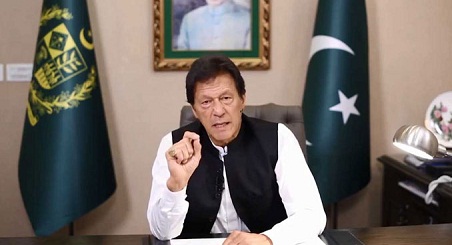
ISLAMABAD: Prime Minister Imran Khan Thursday said that the ‘kleptocratic’ government of Afghanistan had made Pakistan a scapegoat for all its misgovernance done in past years.

The Prime Minister expressed these views in an interaction with journalists, here at the PM House.

Pakistan would try to bring Taliban and Turkey on table to hold direct talks for securing Kabul International Airport as the U.S. troops are set to exit the conflict-hit country by August 31.

“We will be trying the best thing for Turkey and Taliban to have a face-to-face dialogue, so that both could talk about the reasons to secure the Kabul airport,” he said. He was responding to a question by a reporter about the government’s position after Turkey had proposed a new joint mission involving itself, Pakistan and Hungary to protect the Kabul International Airport.

The prime minister mentioned his meeting with Turkish defence minister retired General Hulusi Akar on Wednesday, which also discussed the security situation in the region including Afghanistan.

“We will also talk to the Taliban and use our influence [for a meeting with Turkish government],” he said.

Imran Khan said the Afghan government was getting extremely critical about Pakistan, considering that it had “some magic powers” to persuade the Taliban.

He said in fact, persuading the Taliban had become more difficult.

“Now, our leverage on the Taliban is miniscule as they think that they have won against the Americans,” he said.

He said the Afghan government was trying everything to get the United States back and intervene in the current situation.

Asked about Pakistan’s stance on Taliban demanding Afghan President Ashraf Ghani to step down, he stressed the need for a “ceasefire at all costs”, adding that the “Doha talks would decide the middle ground for a compromise” between the stakeholders.

Pakistan, he said, would deal with any government in Afghanistan, “elected or selected”, by its people.

“An inclusive government would be the best. But if the Taliban do a forceful military takeover, the result will be a civil war and a nightmare for Pakistan,” he added.

The prime minister said Pakistan was “worried” about the law and order situation in Afghanistan because any civil war could result in a direct impact on it in the shape of an influx of refugees.

To a question on China’s future role in Afghanistan, he said China being an emerging power and a neighbour would have its part in the rebuilding of the war-torn country.

IG Motorway for ensuring safety of motorways, roads

DNA

ISLAMABAD: National Highways Motorway police conducted Seminar at Foundation University Islamabad on the topic (Road Safety is shared responsibility of community and State).

Focal person senior patrol officer Atif Ghafoor Bhatti reported that Inspector General of Police Dr. Syed kaleem Imam addressed the audience and highlighted the importance of road safety and emphasized on shared responsibility of community along with state to ensure traffic safety on Highways and Motorways.

Gen Nasir Dilawer Shah Rector of foundation University Islamabad appreciated the cause and efforts by NHMP.

NDS, RAW behind Dassu terror attack

FM Shah Mahmood Qureshi says the Pak-China All Weather Strategic Partnership would not fall prey to any such planning

Shujaat Hamza

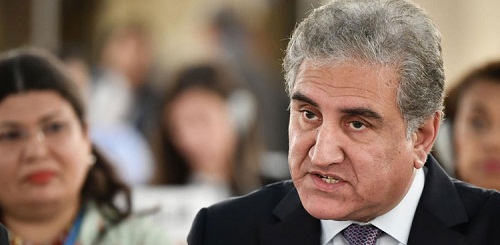
ISLAMABAD: Foreign Minister Shah Mahmood Qureshi Thursday revealed that the nexus of NDS and RAW was behind the terrorist attack took place on July 14 in Dassu and that Afghanistan’s soil was used for the purpose.

“As per our investigation, Afghanistan’s soil was used for this incident. We are clearly looking the traces of its planning and executing meeting with the nexus of NDS and RAW. What do they want? Why did the nexus perpetrated it? We think, there are elements which cannot digest Chinese investment in Pakistan as well as growing economic cooperation,” the foreign minister told media in a news briefing here.

The foreign minister said that the investigation made it clear that the vehicle used in the attack was smuggled from Afghanistan.

He said the security agencies reached this finding based on the CCTV footages of 36 cameras installed along the 1400 kilometer stretch of the road. Moreover, the evidences including a thumb, a finger and other body parts of the bomber were also examined besides analyzing the mobiles data and questioning of over 1000 workers of project.

He said the investigation teams had identified and tracked the movement of the vehicle used in the attack and had also been able reach out to the handlers.

The foreign minister told media that the terrorists’ first target was Diamer Bhasha Dam but could not succeed so opted to target the Dassu Dam project.

Qureshi was confident to say that the elements behind the terrorist attack would not succeed to achieve their designs as both China and Pakistan decided to face such cowardly attempts.

He said the matter was also discussed during his visit to China and the Chinese side looked satisfied over the probe.

He said Pakistan had shared the details of the probe with China and both the sides resolved that such incidents could not undermine their resolve rather they would emerge stronger.

Qureshi resolved that the probe will be taken to the point of exposing the perpetrators as well as taking them to task.

He told media that the government had strengthened the security around the development projects with a resolve that the all CPEC projects would continue and also completed timely.

He resolved that the Pakistan and China All Weather Strategic Partnership would not fall prey to any such planning rather continue to strengthening and expanding the ties and cooperation.

Baku hosting moot of Three Brothers

DNA

BAKU”:  Baku is hosting a final planning conference of the “Three Brothers – 2021” joint exercises with the participation of representatives of the special forces units of Azerbaijan, Pakistan, and Turkey, Azerbaijan’s Ministry of Defense told AZERTAC.

“The conference will clarify the program and objective of the exercises, assigned tasks, number of participants, and other organizational issues.

It was noted that the “Three Brothers – 2021” international exercises will positively impact the creation of a favorable environment for the exchange of knowledge and experience, as well as for the training of the servicemen of friendly and partner countries for operations in peacetime and wartime. The conference will last until August 13,” the ministry said.

Will the Govt complete its five year term?

From the face of it, it appears as if Prime Minister Imran Khan may break this tradition, yet those close to power corridors still believe the tradition will not be broken. They say it is likely that the fresh elections are called before the end of the tenure of this government

Ansar M Bhatti

The opposition parties that gathered on August 11, under the banner of the Pakistan Democratic Movement (PDM) resolved to give tough time to the government especially on the issues of the so-called electronic voting system. The Govt, few days ago, unveiled Electronic Voting Machines (EVMs) to be used in the next general elections. The opposition has unanimously rejected this idea arguing the Govt has introduced yet another method of manipulating the elections. The opposition smells something fishy behind this idea as, according to it, the government did not take it into confidence on this particular issue.

The PDM is of the view the EVMs experience may not be successful in Pakistan until and unless they are tested and tried thoroughly. In last elections, according to the opposition, the powers that-be managed rigging through RTS, which at the eleventh hour went out of order and thus results were delayed abnormally. Now after that system stands fully exposed, the government now wants to try another one, the PDM believes.

The govt must have taken on board all the electoral parties before introducing the EVMs because they are the stakeholders and thus they have every right to be part of a system that relates to the election process. The one sided approach perhaps has cast doubts. The govt says it wants to ensure that the next elections are flawless and held in a transparent manner. So, if that is the case then why not to take the opposition on board?

On the other hand, opposition parties are still groping in the dark when it comes to evolving a joint strategy against the government. At one point in time it became evident that the opposition may send the Govt packing however after some manipulations and lucrative offers, the PPP – the main party in the PDM, torpedoes these efforts as it chose to dance to the tune of Govt wishes. Thus PDM was rendered ineffective. The August 11 meeting sought to instill a new spirit into the PDM as PML N President Shehbaz Sharif re-surfaced on the scene. PML N, during past few months, has witnessed some internal rifts mainly because Shehbaz Sharif is not willing to move ahead in the light Nawaz Sharif philosophy. The latter believes in a head-on collision with the establishment while Shehbaz holds a diametrically different view on this issue. He believes, PML N can grow faster while being in good terms with the establishment, which, in the given scenario, seems to be a logical approach.

In one of his recent interviews Shehbaz Sharif openly admitted that in 2018 PML N could have come to power if it would have reached an understanding with the establishment. This is true to a great extent. Shehbaz Sharif as Prime Minister is accepted to all stakeholders. There was a risk in introducing Imran Khan and his team because of their being new in the field. However, when there was no deal with the PML N, PTI had to be elevated. The top PML N leadership is worried these days as it knows this tug-of-war within the party will lead them nowhere. Next year shall be the election year and still they have not been able to grapple with the internal differences. They genuinely believe, if they go to polls with a party that is badly fragmented and disjointed, it would simply allow PTI and others to beat them easily.

Unlike, the PML N supreme leader Nawaz Sharif is said to have told Shehbaz that the establishment was setting him up in order to fracture the party. Sources say, Nawaz told his younger brother that offers of prime minster ship to him were nothing but bait. Once the party stands fractured, such offers shall also be withdrawn and he will be left in the lurch.

All said and done, one thing is for sure that the government is not going anywhere for another year. But Pakistan’s history suggests that no prime minister has completed five year term. From the face of it, it appears as if Prime Minister Imran Khan may break this tradition, yet those close to power corridors still believe the tradition will not be broken. They say it is likely that the fresh elections are called before the end of the tenure of this government, maybe six months earlier, so if it happens the government and prime minister will not complete five years!!

Stay Connected

64FansLike
60FollowersFollow

Latest Reviews

Exchange Rates

USD - United States Dollar
EUR
1.15
GBP
1.35
AUD
0.70
CAD
0.71