Home Blog Page 2560

INDEPENDENCE DAY CELEBRATIONS AT PAKISTAN EMBASSY AUSTRIA

DNA

VIENNA: Pakistan Embassy in Vienna organised a flag hoisting ceremony at the Embassy to cerebrate country’s 75th Independence Day.The members of Pakistan community in Austria from different towns and cities attended this ceremony to demonstrate their love for the beloved homeland. 

 Ambassador of Pakistan to Austria, Aftab Ahmad Khokher hoisted the national flag. Messages of the President and the Prime Minister marking the 75th Independence Day were read out. 

 Addressing the gathering, Aftab Ahmad Khokher paid tribute to the glorious struggle of Pakistan’s founding fathers and the foresight and sagacious leadership of Quaid-e-Azam. He reaffirmed the nation’s commitment towards realizing the vision of Quaid-e-Azam in building Pakistan as a democratic, progressive and a forward-looking Islamic country. He also highlighted Pakistan’s efforts for peace and stability in South Asia as well as its success in defeating terrorism through resolve and resilience.

 He called upon the Pakistani community to stay united and counter the negative and motivated propaganda against Pakistan by remaining peaceful and showing grace.Prayer was offered for the peace, progress and prosperity of Pakistan.

AMBASSADOR SAJJAD HIGHLIGHTS GOVT ACHIEVEMENTS ON INDEPENDENCE DAY

DNA

MINSK: To commemorate the independence day of Pakistan, a flag-hoisting ceremony was held at the Embassy of Pakistan, Minsk on 14 August 2021. The ceremony was attended by Pakistani Diaspora from different walks of life including students.

Ambassador Sajjad Haider Khan raised the national flag to the tune of national anthem of Pakistan and delivered the messages from the President and Prime Minister of Pakistan whereby a glowing tribute was paid to the leadership of Quaid-e-Azam Muhammad Ali Jinnah and that of the other leaders of the Independence Movement, whose unwavering struggle culminated in freedom for the Muslims of subcontinent.

The Ambassador also highlighted the achievements of the current government in the socio- economic fields. Appreciating the importance of freedom as a basic human right, Pakistan’s resolute commitment to the innocent people of IIOJK by extending them moral, political and diplomatic support was also reiterated. Expressing the resolve to nurture Pakistan into a progressive Islamic society on the ideals of Riasat-e-Madina, the need for unity among nation during these testing times was underlined.

On the occasion, children also sang Pakistani national songs. Towards the end, guests were treated with traditional Pakistani cuisine.

Denmark, Norway shut Kabul missions

KABUL: Denmark and Norway have temporarily shut their Kabul embassies while Finland will evacuate up to 130 local Afghan workers, ministers from the Nordic countries said on Friday. “The Danes in Afghanistan must leave the country immediately, the situation is very serious,” foreign minister Jeppe Kofod told a news conference, adding that all embassy employees will be evacuated and the mission will be closed temporarily.
Norway echoed the move, with foreign minister Ine Eriksen Soreide telling a news conference that evacuation will also be available “to locally employed Afghans with immediate family in Norway who wish it”. Meanwhile Soreide’s Finnish counterpart Pekka Haavisto said the country’s parliament had agreed to “take in up to 130 Afghans who have worked in the service of Finland, the EU and Nato along with their families” because of “the quickly weakening security situation.

No headway at Doha meeting

Staff Report

ISLAMABAD: The extended Troika meeting held in Doha ended without any progress. According to Pakistani foreign office, the meeting of the Extended Troika including Special Envoys of Pakistan, US, China and Russia was held in Doha. The members of the Extended Troika discussed the deteriorating security situation in Afghanistan and explored ways of expediting the intra-Afghan peace talks for achieving an inclusive political settlement and bringing an end to the four decades long conflict in Afghanistan.

Delegations of the Islamic Republic of Afghanistan led by Dr. Abdullah Abdullah and Taliban led by Mullah Bradar also had interaction with the Extended Troika. The Extended Troika countries broadly conveyed following messages to the Afghan sides:

There was a need for urgent measures to reduce violence leading to a ceasefire.

There was no military solution to the Afghan conflict.

The Afghan sides should put forward their peace plans on priority basis so that progress is made towards a political roadmap.

There is a need for all sides to respect human rights and not indulge in human rights violations.

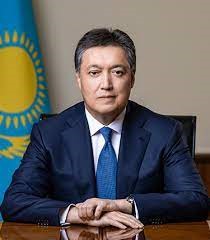
Gen Nadeem Raza meets Kazakh PM

Both sides discuss bilateral issues; regional peace

DNA

NUR SULTAN: General Nadeem Raza, Chairman Joint Chiefs of Staff Committee, who is on official visit to Kazakhstan, called on  Askar Mamin, Prime Minister of Kazakhstan. Chairman JCSC also had separate meetings with Defence Minister, Deputy Minister of Industry & Infrastructural Development, and Chief of General Staff of Kazakhstan Armed Forces.

During the meetings, both sides deliberated upon various areas of interest, bilateral cooperation including security, counter-terrorism and prevailing regional environment particularly with reference to Afghanistan. The dignitaries dilated upon measures to enhance the level and scope of military engagements between both countries and reaffirmed to continue to forge deeper ties.

Chairman JCSC said that Pakistan is keen to expand its existing bilateral military to military cooperation with Kazakhstan. The dignitaries lauded the professionalism of Pakistan Armed Forces and acknowledged their sacrifices in fight against terrorism.

Chairman JCSC also visited National Defense University of Kazakhstan and inaugurated ‘Pakistan Military Art Room’. The room reflects gallant history of Armed Forces of Pakistan, its culture and traditions.

Earlier upon arrival at Ministry of Defense, Chairman JCSC was presented Guard of Honor by a smartly turned out contingent of Kazakhstan Armed Forces.

Education or Graduation?

Ali Raza Momand
Facts, ideas and skills that are learned, either formally or informally, and that positively impact one’s attitude towards existence may logically be defined as education.
If one’s behaviour is not changed positively or a so-called educated still remains part of the engineered propaganda firmly staged against sections of humanity on some offensive religious, ethnic or even patriotic lines, this simply is something not more than the accumulation of the necessary data for getting a degree to run the concerned systems and no, any education.
Moreover, education needs liberal environment and the absence of constraints and control to flourish a culture of research and get the educated lot capable of navigating the pace of time.
Anything like a controlled syllabus and indoctrinating techniques in the form of injecting certain conservative thoughts into the tabula rasa of students are soul-killers for education. The realm and domain of education stands far above than those conservative and static mental landscapes.
The objective of education is to equip humanity with the knowledge to understand time and reality and thereby enriching its soul and intellectual faculty. For all practical purposes, education is above every effort aimed at organising it and overseeing its operation.
We are exposed here in Pakistan to a number of education systems: government-run educational institutes, military-owned garrison schools and cadet colleges, private sector institutes, and the madrassa system. Neither of them imparts education and all of them do nothing more than equipping students with the necessary information required for attaining degrees.
Sequentially, the first two kinds are propagating the schemed programme aimed at producing servants for state services, the other is fulfilling market demands and the fourth manufactures dictatorial clerics. You cannot have free thinkers out of any of the said systems who can otherwise be bringing positive changes in our society. In the first two kinds of educational institutions, students are indoctrinated in state ideology wherein anything, around the world, which is not conforming to the contents of the ideology is rejected or taken as a threat to the state.
History is engineered likewise for teaching purposes at the institutes as well as for propagating in the society in order to have a controlled, unquestioning, yes-boss, sociopolitical robots instead of rational and humane thinkers. In nutshell, the knowledge, what we have, devoid of research and analysis, is far more dangerous than ignorance.
The result of such manipulated schooling is that we don’t have authorities on any discipline of social or natural sciences nor art and literature nor we do have critical thinkers to question the status-quo and mould our sociopolitics in accordance with the demands of time.
Though, on contrary, we have an abundance of state servants produced annually in larger than large numbers. Similarly, private sector educational institutes here with us are established on material grounds designedto produce a workforce for running industries and markets. They have nothing to do with art and literature, philosophy and other disciplines of social sciences for these subjects are considered worthless in job-markets.
As a result, we have business robotshere to produce. On the same pattern, our madrassa system teaches dogma and orthodox divinity devoid of critical questioning, research and the needs of the time. Madrassa of one school of thought teaches hatred for the other giving thereby an addition to our sectarian violence in the end instead of producing students with know-how to coexist and preach religion in accordance with what the time needs.
It can be concluded that in the absence of a researchoriented education system, our society and state haven’t been growing up rather down in terms of sociopolitical and economic thoughts and riches. Our education system has until date produced much the less of the graduates who can add something new to the established knowledge regime. All our problems are yet unresolved.
To make our society and state out of the existing static order into an operational growing one, we need to revisit and open our education system to research and critical thoughts.

Five killed in UK’s first mass shooting in 11 years

22-year-old gunman Jake Davison killed himself after the six-minute spree

News Desk

LONDON: British police said on Friday they were investigating the background of a troubled loner who obtained a firearms license and shot dead five people including a three-year-old girl in the country’s first mass shooting in 11 years.

No motive has yet emerged for Thursday evening’s bloodshed at the hands of 22-year-old gunman Jake Davison, who killed himself after the six-minute spree in a quiet residential area of Plymouth, southwest England, not far from western Europe’s biggest naval base.

But Devon and Cornwall Police ruled out terrorism, including with far-right groups, and said there was a “familial relationship” with Davison’s first victim aged 51, while declining to confirm local reports that she was his mother.

After killing the woman at her house, Davison shot and killed the toddler and her male relative aged 43 on the road outside, before taking the lives of a man and woman nearby, the police said.

Another two local residents received “significant” but not life-threatening gunshot wounds, Chief Constable Shaun Sawyer told reporters, adding that as of 2020, Davison held a valid firearms license.

Taliban seizes Herat; detains commander

The Taliban have taken more than a dozen provincial capitals in recent days and now control more than two-thirds of the country

News Desk/DNA

KABUL: Taliban insurgents detained veteran militia commander Mohammad Ismail Khan on Friday after they seized the western city of Herat, a provincial council member said. The insurgents also captured three more provincial capitals as they press a lightning offensive that is gradually encircling the capital, Kabul.

The seizure of Kandahar and Herat marks the biggest prizes yet for the Taliban, who have taken 12 of Afghanistan’s 34 provincial capitals as part of a weeklong blitz.

Khan, who has been leading fighters against the Taliban in recent weeks, was handed over to the insurgents along with the provincial governor and security officials under a pact, provincial council member Ghulam Habib Hashimi told Reuters.

“The Taliban agreed that they will not pose any threat or harm to the government officials who surrendered,” Hashimi said.

Khan is one of Afghanistan’s most prominent warlords. Known as the Lion of Herat, he battled Soviet occupiers in the 1980s and was a key member of the Northern Alliance whose US-backed forces toppled the Taliban in 2001.

Taliban spokesman Zabihullah Mujahid confirmed that Khan had been detained.

Meanwhile, the capture of Lashkar Gah — Helmand’s provincial capital — came after facing some of the heaviest fighting in the last two decades. Hundreds of foreign troops were killed there over the course of the nearly two-decade war.

The insurgents have taken more than a dozen provincial capitals in recent days and now control more than two-thirds of the country just weeks before the US plans to withdraw its last troops.

Attaullah Afghan, the head of the provincial council in Helmand, said that the Taliban captured the provincial capital of Lashkar Gah following heavy fighting and raised their white flag over governmental installations. He says that three national army bases outside of Lashkar Gah remain under the government’s control.

Atta Jan Haqbayan, the provincial council chief in Zabul province, said the local capital of Qalat fell to the Taliban and that officials were in a nearby army camp preparing to leave.

Two lawmakers from Afghanistan’s southern Uruzgan province said local officials surrendered the provincial capital, Tirin Kot, to the rapidly advancing Taliban. Bismillah Jan Mohammad and Qudratullah Rahimi confirmed the surrender on Friday. Mohammad said the governor was en route to the airport to depart for Kabul.

Pak to work with all stakeholders for peace

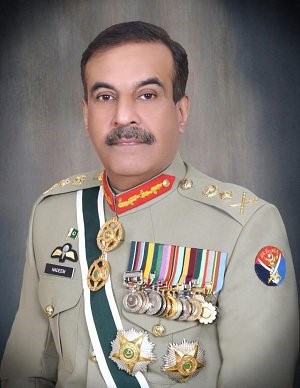
The Army Chief Gen Qamar Javed Bajwa while meeting with the US envoy, said Pakistan wants long-term relationship with the US

Nehal Miraj

RAWALPINDI: Angela Aggeler, United States (US) Charge d’ Affairs to Pakistan called on General Qamar Javed Bajwa, Chief of Army Staff (COAS) at GHQ, on Friday. 

According to an Inter Services Public Relations press statement, matters of mutual interest, current security situation in Afghanistan and bilateral cooperation in various fields were discussed during the meeting. COAS said that Pakistan desires to maintain long term & multi-domain enduring relationship with US. COAS reiterated that Pakistan remains committed to Afghan Peace Process and will continue to work with all stakeholders for a peaceful settlement. 

The US dignitary acknowledged and appreciated Pakistan’s continuous support for peace and stability in the region and pledged to further enhance bilateral relations between both the countries.

Earlier this week, in a phone call to Army Chief Gen Qamar Javed Bajwa, US Defence Secretary Lloyd Austin conveyed Washington’s interest in continuing to improve the US-Pakistan relationship, the Pentagon said.

Secretary Austin “expressed his interest in continuing to improve the US-Pakistan relationship and build upon our multiple shared interests in the region”, the statement added.

“Secretary Austin and General Bajwa discussed the ongoing situation in Afghanistan, regional security and stability, and the bilateral defence relationship more broadly,” Pentagon Press Secretary John Kirby said.

Mr Austin also discussed the mutual goals of security and stability in the region, he said.

Stay Connected

64FansLike
60FollowersFollow

Latest Reviews

Exchange Rates

USD - United States Dollar
EUR
1.15
GBP
1.35
AUD
0.70
CAD
0.71