
Home Blog Page 2558

UZBEKISTAN’S TEN COMMANDMENTS FOR REGIONAL CONNECTIVITY

Dr Mehmood Ul Hassan Khan

While addressing the international conference “Central Asia and South Asia: regional interconnectedness: Challenges and opportunities, President of Uzbekistan H.E. Shavkat Mirziyoyev pinpointed “ten initiatives” to achieve greater regional connectivity. Being prominent regional expert of Uzbekistan and CIS I term it “Ten Commandments of Modern World”.

It is indeed a “Strategic Road Map” to foster trade and commerce activities, joint ventures, mutual investments, new jobs and eradication of poverty.

It is a modern “Transportation Network Modeling and Calibration” to create modern, efficient and safe transport and logistics infrastructure in Central Asia and South Asia.

It is a “Blue Print” of socio-economic prosperity, massive industrialization, persuasion of green energies, sincere efforts of de-carbonization, formation of economic and logistic corridors, paradigm shift in trade tariffs, integrative mechanism of preferential and free trade.

It is “Bible of Commercial Diplomacy” which eschews conspiracies, conflicts and contradictions and promotes spirits of cooperation, coordination and collaboration among the main stakeholder in the region.

It is a “Das Kapital” for modern era in which rights are protected through development orientations, regulatory bodies and investments are made to bring comforts in the lives of common people.

It is a new “Magna Carta” for the 21 century in which equity of finances creates equitable business propositions and sustainable partnerships for all the regional countries.

It is an “Aurora Supercomputer” to stimulate digitalization in the region to enhance virtual connectivity and provide platform of locomotive of economic cooperation between the two regions of Central Asia and South Asia.   It is a comprehensive outline of digital transformation, techniques of survives and thrives in an era of mass extinction.

It is a new version of “Neo-Malthusian Theory” which argues that food security and sustainable development are intrinsically linked. It formulates a holistic approach by involving all main regional as well as global stakeholders to devise a joint development research to institutionalize usage and utility of advanced technologies and of course implementation of industrial cooperation.

It is a “Grand Green Book” of simulation of green development in Central Asia and South Asia which has now instrumental to human survival, productive channels, booming trade and commerce and maintenance of appropriate balance between “Divine and Development”.

It is a new “Blue Book” of tourism to promote “Sustainable Tourism Supply Chain Management System (STSCMS) between both the regions. It is a journey towards beautification of collective cultures, traditions, brands and products. It is vivid reflection of new adventures, adjoining strategies and holy policies to promote tourism in the new age of “virology” in the age of dawn of science and technology.

It is a new “Quantum Theory” of scientific discipline and development to expand scientific, cultural and humanitarian exchanges. It is also a new “Trust Receipt” of mutual trust, friendship, peace, stability and harmony in the entire region. It is new “Rethinking” of youth, nurturing, education and value of human capital among the regional countries.

It is a new “Newtonian Spirits” to promote science, technology and innovations between Central Asia and South Asia. It is of course depiction of human survival through scientific means, induction of modern and smarter technologies to accelerate spells of development in the region.

It is a new “Richer, Wiser and Happier” thoughtfulness process in the crucial decision making for the betterment of common people to achieve immense socio-economic prosperity and of course regional connectivity.

As a renowned “Strategist” President of Uzbekistan H.E. Shavkat Mirziyoyev also suggested comprehensive plans and programs to make these ten initiatives successful.

He like a “Maestro” of applied economics suggested creating “simulative” and “supportive” mechanism and conditions to foster development of economic ties and mutual investments between Central Asia and South Asia.  

As a “Practitioner of Reality” the president Mirziyoyev coined practical contribution of development orientation and institutionalization of effective means for free movement of investments, good and services through the development of advanced “Integrative Transport System (ITS)” and befitting propositions of energy infrastructure. He also used holistic approach and dissemination of “Effective Communication Theory” to translate deities and traditions of common heritage to promote spirits of cooperation in both the regions.

It is indeed a new “Grand Diagnostic Dialogue (GDD)” which would be transformed into specific programs and projects for the creation of new jobs and achieving of stability and sustainability of regional economies.

As an expert “Jurist” the President Mirziyoyev suggested to initiate joint study for the formulation and conclusion of multilateral agreement of economic cooperation among all the regional countries.

As a “Passionate Champion” of modern logistics and integrative transportation system the Uzbek president suggested to start trans-regional railway project of “Termez-Mazar-i-Sharif-Kabul-Peshawar” and termed it real architecture of the interconnection between Central Asia and South Asia. It will full realize the transit potential of the entire region having shortest and smoothest route of regional connectivity.
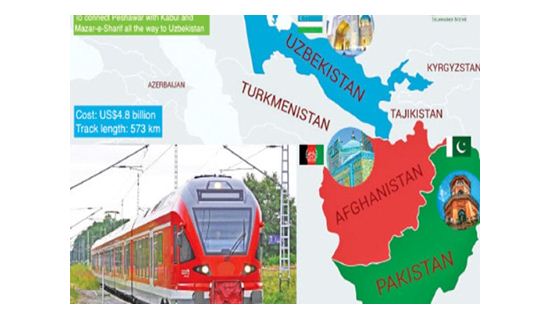
Moreover, it is a time and cost effective project for transporting goods between South Asia and Europe through Central Asia and Commonwealth nations. It would be inclusive economic development project of both the regions.

Moreover, it would be revival of ancient Northern trade route of “Uttarapatha” which used to connect Indo-Gangetic Plain with the Southern territories of Eurasian continent through the historic cities of Taxila, Garndhara and Termez. Furthermore, proposed trans-regional railways project is fully in line with the goals of the Belt and Road Initiative (BRI).

As a “Digitalized Personality” the Uzbek President proposed to develop specific measures to implement digital connectivity in diverse fields of trade, transit and border management through devising a Joint Action Strategy (JAS). 

As an experienced “Food Economist & Technologist”, President Mirziyoyev chalked out comprehensive policies to achieve the goal of optimal food security in the Central Asia and South Asia.  He proposed Food and Agriculture Organization of the United Nations (FAO) to hold a meeting of the regional agriculture ministers to develop of program to overcome serious issue of food security.

As a true “Angle” of humanity, stability, security and of course peace the President Mirziyoyev emphasized the need to consolidate efforts of anti-terrorism, extremism and transnational crime including cyberspace.

He presented Multidimensional Strategy (MS) to counter all these looming threats to human existence, prosperity and sovereignty through “Joint Anti-Drug Action Plan” with the help of UN Office on Drugs and Crime. He was of the opinion that joint efforts should be started in the fight against terrorism. He envisioned holistic approach to eradicate menace of terrorism through the help of regional experts.

As a “True Lover” and “Protectionist” of nature, environment, ecology and biodiversity the president Mirziyoyev suggested taking all possible measures to mitigate devastating effects of climate change which has already produced havocs in terms of water scarcity, air and environment pollution, soil degradation and desertification.

As a “Beautifier” of natural beauty and tourism potential the President Mirziyoyev showcased economic value of regional tourism which would be utilized in creation of new jobs, increase in revenues, GDPs, GNPs and of course grand benching mark of cultural diplomacy in the days to come.

As a “Guru” of international marketing and advertising the President Mirziyoyev pinpointed structural reforms and integrative steps for the development of regional tourism in terms of recognizable travel brands with elements of attractiveness and affordability, and safe routes in the ongoing human sage of COVID-19 with various variants. He suggested developing a comprehensive popular program with the framework of the World Tourism Organization for Central Asia and South Asia Regions.

As an “Applied Scientist” the President Mirziyoyev rightly emphasized to follow scientific ways and means for cultural and humanitarian exchanges and cooperation for achieving ultimate goal of trustworthy friendship among all the regional countries.

He suggested initiating joint programs for regional education, science, culture and sports by involving and participation of young generations. He proposed formation of a permanent Youth Council of both the regions.

As a “True Stimulator” of science and technological innovation the President Mirziyoyev highlighted strategic importance of science, technology and innovations. In this connection the president of Uzbekistan proposed “Facilitated Visa Regime (FVR)” for regional scientists and researchers. Online connectivity among the regional universities would also be vital for economic developed, he further added.

As a “True Champion” of “rational thinking” and “accumulate” decision making having forward looking outlook the President Mirziyoyev proposed formation of permanent expert pool of prominent scientists and researchers from all the regional countries to promote cooperation.

Fallacies of religion and wrong notions of different phobias are the potential threats to regional peace and stability that is why he strongly recommended to joint fight against terrorism, extremism and radicalization through tolerance, education and scientific thinking.

To conclude rapidly changing socio-economic orientations, geopolitical conditionality and last but not geo-political compulsions there is an urgent need to start new journey towards greater regional cooperation, coordination, collaboration and connectivity in which President of Uzbekistan H.E. Shavkat Mirziyoyev ten initiatives may be act as “ten commandments” of modern world. 

AFGHAN TURMOIL HAS SPILL-OVER EFFECTS

The Taliban have positioned themselves as solely concerned with creating an Islamic emirate in Afghanistan and having no inclination to operate beyond the borders of the Central Asian state, but have been consistent in their refusal to expel Al Qaeda, even if the group is a shadow of what it was when it launched the 9/11 attacks on New York and Washington 20 years ago

Dr. James M. Dorsey

Taliban advances in Afghanistan shift the Central Asian playing field on which China, India and the United States compete with rival infrastructure-driven approaches. At first glance, a Taliban takeover of Kabul would give China a 2:0 advantage against the US and India, but that could prove to be a shaky head start.

The potential fall of the US-backed Afghan government of President Ashraf Ghani will shelve if not kill Indian support for the Iranian port of Chabahar that was intended to facilitate Indian trade with Afghanistan and Central Asia.

Chabahar was also viewed by India as a counterweight to the Chinese-supported Pakistani port of Gwadar, a crown jewel of the People’s Republic’s transportation, telecommunications and energy-driven Belt and Road Initiative (BRI).

The United States facilitated Indian investment in Chabahar by exempting the port from harsh US sanctions against Iran. The exemption was intended to “support the reconstruction and development of Afghanistan.”

However, with negotiations with Iran about a revival of the 2015 international nuclear agreement stalled, the United States announced in July together with Afghanistan, Pakistan and Uzbekistan plans to create a platform that would foster regional trade, business ties and connectivity.

The connectivity end of the plan resembled an effort to cut off one’s nose to spite one’s face. It would have circumvented Iran and weakened Chabahar but potentially strengthened China’s Gwadar alongside the port of Karachi.

That has become a moot point with the plans certain to be shelved as the Taliban move to take over Kabul and form a government that would be denied recognition by at least the democratic parts of the international community.

Like other Afghan neighbors, neither Pakistan nor Uzbekistan or for that matter China are likely to join a boycott of the Taliban. On the contrary, China last month made a point of giving a visiting Taliban delegation a warm welcome.

Recognition by Iran, Central Asian states and China of a Taliban government is however unlikely to be enough to salvage the Chabahar project. “Changed circumstances and alternative connectivity routes are being conjured up by other countries to make Chabahar irrelevant,”.

The Taliban have sought to reassure China, Iran, Uzbekistan and other Afghan neighbors that they will not allow Afghanistan to become an operational base for jihadist groups, including Al Qaeda and Uighur militants of the Turkestan Islamic Party (TIP).

The Taliban have positioned themselves as solely concerned with creating an Islamic emirate in Afghanistan and having no inclination to operate beyond the borders of the Central Asian state, but have been consistent in their refusal to expel Al Qaeda, even if the group is a shadow of what it was when it launched the 9/11 attacks on New York and Washington 20 years ago.

The TIP has occasionally issued videos documenting its presence in Afghanistan but has, by and large, kept a low profile in the country and refrained from attacking Chinese targets in Afghanistan or across the border in Xinjiang.

As a result, the Taliban reassurance was insufficient to stop China from repeatedly advising its citizens to leave Afghanistan as soon as possible.

“Currently, the security situation in Afghanistan has further deteriorated … If Chinese citizens insist on staying in Afghanistan, they will face extremely high-security risks, and all the consequences will be borne by themselves,” the Chinese foreign ministry said.

The fallout of the Taliban’s sweep across Afghanistan, despite the group’s assurances, is likely to affect China beyond Afghan borders, perhaps no more so than in Pakistan, a major focus of the People’s Republic’s single largest Belt-and Road-related investment.

The investment has made China a target for attacks by militants primarily Baloch nationalists. However, the killing in July of nine Chinese nationals in an explosion on a bus transporting Chinese workers to the construction site of a dam in the northern mountains of Pakistan, a region more prone to attacks by religious militants, raises the specter of jihadists also targeting China. It was the highest loss of life of Chinese citizens in recent years in Pakistan.

The attack occurred amid fears that the Taliban will bolster ultra-conservative religious sentiment in Pakistan that celebrates the group as heroes whose success enhances the chances for austere religious rule in the world’s second-most populous Muslim-majority state.

“Our jihadis will be emboldened. They will say that ‘if America can be beaten, what is the Pakistan army to stand in our way?’” said a senior Pakistani official.

Indicating Chinese concern, China has delayed the signing of a framework agreement on industrial cooperation that would have accelerated the implementation of projects that are part of the China Pakistan Economic Corridor (CPEC).

Said scholar Kamran Bokhari: “Regime change is a terribly messy process. Weak regimes can be toppled; replacing them is the hard part. It is only a matter of time before the Afghan state collapses, unleashing chaos that will spill beyond its borders. All of Afghanistan’s neighbors will be affected to varying degrees, but Pakistan and China have the most to lose.”

The demise of Chabahar and/or the targeting by the Taliban of Hazara Shiites in Afghanistan could potentially turn Iran into a significant loser too.

Dr. James M. Dorsey is an award-winning journalist and scholar and a senior fellow at the National University of Singapore’s Middle East Institute

TALIBAN, AFGHAN GOVT HOLDING TALKS IN PRESIDENTIAL PALACE

KABUL: /DNA/ – The Taliban have begun entering Kabul, Afghanistan’s interior ministry and the armed group said. According to reports talks between Taltan and Afghan govt are going on in the Presidential Palace for power sharing.

The development on Sunday came just hours after the group seized control of the key eastern city of Jalalabad, securing critical roads connecting the country to Pakistan.

A Taliban leader in Doha, which has been the site of years-long peace negotiations between the Afghan government and the group, said fighters on Sunday were ordered to refrain from violence and offer safe passage to those wishing to leave Kabul.

It is unclear whether the government of President Ashraf Ghani will mount a counteroffensive or capitulate.

DEATH TOLL IN LEBANON FUEL BLAST CLIMBS TO 28: HEALTH MINISTRY

Beirut, Aug 15 The death toll from a fuel tank explosion in the north Lebanon region of Akkar on Sunday climbed to 28, health ministry advisor Reda Moussawi told AFP.

Lebanon’s Red Cross had initially put the toll at 20 killed. They include many civilians who were lining up to fill gasoline from a tank that exploded.

Taliban announce amnesty for all

Regrets Afghan govt baseless propaganda; says Taliban will protect lives of people

News Desk

ISLAMABAD: The spokesman of Taliban has said that  its door are open for all those who have previously worked and helped the invaders, or are now standing in the ranks of the corrupt Kabul administration and already announced  amnesty. We once again invite them all to come and serve the nation and the country, Suhail Shaheen said in his Tweeter message.

He added, Mujahideen should pay utmost attention to the treasury, public facilities, and government offices, equipment of government offices, parks, roads, and bridges. These are the trust and property of the nation; no personal tampering and negligence should be done with them but be strictly guarded, he added.

He regretted that recently the Kabul administration has launched baseless and vicious propaganda, sometimes claiming, the Islamic Emirate forces people to marry their daughters, or to marry them to the Mujahidin. Sometimes they say that the Mujahidin are killing people, killing prisoners and captives.

The Islamic Emirate of Afghanistan is not interested in anyone’s private property, (not in anyone’s cars, land, houses, markets and shops), rather it considers protection of lives and properties of the nation its primary responsibility, he added.

Kashmiris observing India’s independence day as Black Day

ISLAMABAD, Aug 15 :Kashmiris on both sides of the Line of Control (LoC) and the world over are observing the Indian Independence Day, on Sunday, as Black Day to register protest against India’s continued illegal occupation of their homeland and Modi-led fascist Indian government’s illegal actions in the territory.

According to Kashmir Media Service, the day was marked by a complete shutdown and civil curfew in IIOJK call for which has been given by the All Parties Hurriyat Conference and the Hurriyat forum led by Mirwaiz Umar Farooq and supported by almost all Hurriyat leaders and organizations.

The shutdown in IIOJK is part of Ashra-e-Muzahamat 10-Day Resistance being observed on the call of the APHC from August 05 to August 15.

The Kashmiris across the world are holding anti-India demonstrations to draw world’s attention towards the Indian brutalities in IIOJK.

APHC and other Hurriyat leaders and organizations in their statements have said India has no right to celebrate its Independence Day in IIOJK as it is holding the territory against the will of the Kashmiri people.

Meanwhile, the occupation authorities have converted the Kashmir Valley, particularly Srinagar, into a military garrison and a big concentration camp by deploying Indian troops and police personnel in every nook and

corner.

All roads leading to a cricket stadium at Sonawar in Srinagar, the main venue of official function, have been sealed. Indian forces’ personnel are resorting to technical surveillance including the use of drones to monitor the movement of the people.

The troops and police personnel are searching vehicles randomly and checking and frisking people at several places across the valley, especially around the venues of the August 15 functions.

 The occupation authorities have ordered all government employees to attend the Indian Independence Day functions.

Indian forces have conveyed a warning to the father of popular martyred youth leader Burhan Wani, who is a school principal, that if he did not unfurl the Indian flag on India’s Independence Day, he along with fellow teachers would lose the job.

Singapore zoo breeds first panda cub

Singapore, Aug 15 :A panda bred via artificial insemination was born in Singapore’s zoo on Saturday, the first cub to be born in the city-state.

Jia Jia, the zoo’s 12-year-old female giant panda, gave birth to the cub after she was inseminated with frozen semen from 13-year-old Kai Kai, Wildlife Reserves Singapore announced on Sunday.

 After several failed attempts in previous years, the zoo’s animal carers — working with experts from China — hoped the pandas would mate naturally but ultimately decided to use artificial insemination.

 “Jia Jia’s first pregnancy and birth of a cub is a significant milestone for us in the care of this threatened species in Singapore,” said Cheng Wen-Haur, Wildlife Reserves Singapore’s deputy CEO, in a press release.

 “This is the result of good animal care, assisted reproductive science and sheer perseverance on the part of our staff coupled with valuable advice from the China panda experts.”

 The pandas are on a 10-year loan from China and arrived in Singapore in 2012.

 Panda reproduction — in captivity or in the wild — is notoriously difficult, experts say, as few of the animals get in the mood or, even when they do, do not know how to mate.

Further complicating matters, the window for conception is small since female pandas are in heat only once a year, for about 24-48 hours.

 The giant panda is listed as a vulnerable species by the International Union for Conservation of Nature, with fewer than 2,000 thought to remain in the wild.

Qatar urges Taliban to cease fire in Afghanistan during Doha meeting

Qatar said it had urged the Taliban to cease fire and pull back their offensive in Afghanistan during a meeting between the Qatari foreign minister and a top representative of the Afghan insurgents in Doha on Saturday.

“The foreign minister urged the Taliban at the meeting to let up the escalation and to cease fire,” it said.

Envoys from the United States, China, Pakistan, the United Nations, the European Union and others met Taliban representatives and Afghan government officials on Thursday in Doha.

The statement issued following that meeting reaffirmed that foreign capitals would not recognise any government in Afghanistan “imposed through the use of military force”.

‘Publicity stunt’: Pakistan slams Modi for ‘distorting history’ in tweets about Partition

ISLAMABAD – Pakistan on Saturday called out Indian Prime Minister Narendra Modi for “distorting history” after he announced that August 14 — Pakistan’s Independence Day — will be observed as “Partition Horrors Remembrance Day” in India.

As Pakistan celebrated its 75th day of independence, the Indian prime minister took to Twitter to make the controversial announcement.

“Millions of our sisters and brothers were displaced and many lost their lives due to mindless hate and violence,” he tweeted. “In memory of the struggles and sacrifices of our people, August 14 will be observed as Partition Horrors Remembrance Day.”

“May [this day] keep reminding us of the need to remove the poison of social divisions, disharmony and further strengthen the spirit of oneness, social harmony and human empowerment,” Modi added.

In a statement, Foreign Office spokesperson Zahid Hafeez Chaudhri dubbed Modi’s move “a political and publicity stunt”, and said that “no modern state is so much in contradiction with itself as the Indian state – the so-called ‘largest democracy’.”

“It is shameful that the practitioners of ‘Hindutva’ ideology, and purveyors of hate and violence, would so hypocritically and one-sidedly invoke the tragic events and mass migration that occurred in the wake of Independence in 1947.

“Distorting history and stoking communalism is the special forte of the RSS-BJP regime. Far from doing anything to heal old wounds, they would go to any extent to sow further dissensions for electoral gains,” he said.

The FO spokesperson said that Pakistan was sure that the people of goodwill in India would reject this “political and publicity stunt” that only seeks to divide.

Meanwhile, the government of India also notified the decision to observe the day of Pakistan’s Independence as “Partition Horrors Remembrance Day”.The gazette notification, shared by the Indian news agency ANI, stated that the move was aimed at reminding “the present and future generations of Indians of the pain and sufferings faced by the people of India during the Partition”.

PAKISTAN EXPRESSES CONDOLENCES OVER LOSS OF LIVES FROM FLOODS IN TURKEY

ISLAMABAD, AUG 14 /DNA/ – The Government and people of Pakistan extend their heartfelt condolences to the Government and brotherly people of Turkey on the loss of precious lives and material damage as a result of disastrous floods and mudslides, particularly in the Bartın, Kastamonu and Sinop provinces.

Our thoughts and prayers are with the victims and their families, and we wish speedy recovery to those injured as a result of this natural disaster.

We stand in solidarity with the government and people of Turkey at this hour and convey our best wishes to the Turkish authorities in their rescue and relief efforts.

Stay Connected

64FansLike
60FollowersFollow

Latest Reviews

Exchange Rates

USD - United States Dollar
EUR
1.15
GBP
1.35
AUD
0.70
CAD
0.71




