Turkey issues diplomatic note to Greece, Israel and EU over East Med
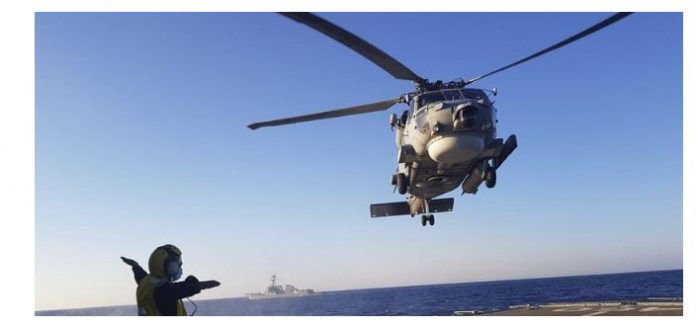
ANKARA, MAR 15 – Turkey, which has the longest continental coastline in the Eastern Mediterranean, has rejected maritime boundary claims made by Greece and the Greek Cypriot administration.
It has stressed that these excessive claims violate the sovereign rights of both Turkey and the Turkish Republic of Northern Cyprus (TRNC). Instead of opting to solve problems with Turkey through dialogue, Greece has, on several occasions, refused to sit at the negotiation table and opted to rally the European Union to take a tougher stance against Ankara.
In November 2019, Turkey and Libya signed a maritime delimitation deal that provided a legal framework to prevent any fait accompli by regional states. Accordingly, the attempts by the Greek government to appropriate huge parts of Libya’s continental shelf, when a political crisis hit the North African country in 2011, were averted.
The agreement also confirmed that Turkey and Libya are maritime neighbors. The delimitation starts from Fethiye-Marmaris-Kaş on Turkey’s southwestern coast and extends to the Derna-Tobruk-Bordia coastline of Libya.
In response, Egypt and Greece signed an agreement in August 2020, designating an EEZ in the Eastern Mediterranean between the two countries.
Between 2002 and 2016, dozens of rounds of talks were held to try and lay the foundation for full negotiations over the delimitation of maritime zones. After a five-year hiatus, prolonged by a dispute over overlapping claims for energy resources in the Eastern Mediterranean last year, the two resumed the exploratory talks on Jan. 25.
The two countries had initiated the talks to discuss the issues in the Eastern Mediterranean on March 12, 2002, in an effort to find a fair, sustainable and inclusive solution.
Talks were regularly held up until 2016, but there have been none since then due to political speculation and the Greek side’s reluctance to sit down at the negotiating table.
Bilateral discussions continued in the form of political consultations but did not return to the exploratory framework.
NATO members Turkey and Greece also participated in deconfliction talks last year, initiated by NATO Secretary-General Jens Stoltenberg, which were designed to reduce the risk of incidents in the Eastern Mediterranean.
The talks facilitated the establishment of a hotline between Athens and Ankara, allowing for conflict resolution at sea and in the air.
But obstacles remain, including what each side is willing to discuss. Greece says it will only address the demarcation of maritime zones in the Aegean and the Eastern Mediterranean, while Turkey argues that they should tackle all of the issues between the two sides, including air space and the status of certain Greek islands.
Turkey aims to have locally-developed COVID-19 vaccine by end of 2021
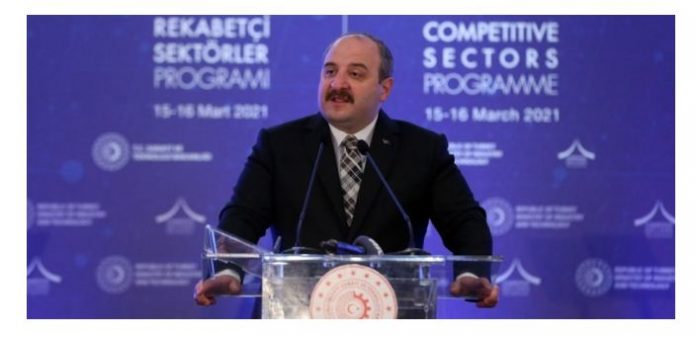
ANKARA, MAR 15 – Turkey is aiming to have its own vaccine by the end of 2021, the country’s industry and technology minister said on Monday.
Speaking at a Competitive Sectors Program event, jointly organized by Turkey and the EU, Mustafa Varank said Turkey will begin human trials of the domestic vaccine after authorization from the Turkish Medicines and Medical Devices Agency (TITCK).
“For the three vaccine candidates — inactive, VLP and adenovirus-based — TITCK has received the applications”, Varank noted.
Noting that the process will take a long time, Varank said there is a “vaccines war” in the world and that poor countries do not receive vaccines.
“Therefore, we know that the vaccine we will develop will be an important success in the fight against the pandemic that will continue for many years, and we are making preparations to share this with other countries.”
He said that there are several projects in Turkish universities, adding: “For example, one of the professors in Kayseri is currently conducting the Phase 2 study of a vaccine candidate, and he is close to moving to Phase 3.”
Pakistan among biggest importers of major arms in Asia
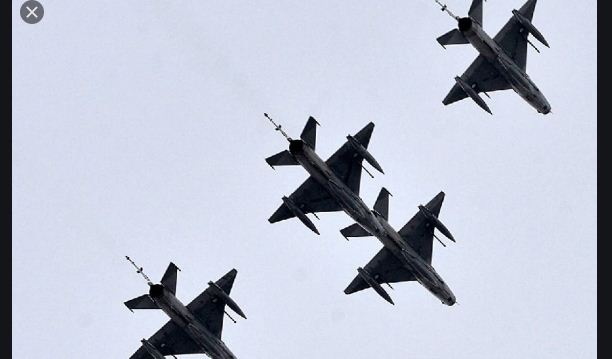
ISLAMABAD, MAR 15 (DNA) – Pakistan was among the biggest importers of major arms in Asia and Oceania from 2016-2020, according to a Stockholm International Peace Research Institute (SIPRI) report published on Monday.
Asia and Oceania was the largest importing region for major arms, receiving 42 per cent of global arms transfers in 2016–2020. In addition to Pakistan, India, Australia, China and South Korea were also among the biggest importers in the region. International transfers of major arms stayed at the same level between 2011–15 and 2016–20.
Substantial increases in transfers by three of the top five arms exporters—the USA, France and Germany—were largely offset by declining Russian and Chinese arms exports. Middle Eastern arms imports grew by 25 per cent in the period, driven chiefly by Saudi Arabia (+61 per cent), Egypt (+136 per cent) and Qatar (+361 per cent). For the first time since 2001–2005, the volume of deliveries of major arms between countries did not increase between 2011–15 and 2016–20.
However, international arms transfers remain close to the highest level since the end of the cold war. “It is too early to say whether the period of rapid growth in arms transfers of the past two decades is over,” said Pieter D. Wezeman, Senior Researcher with the SIPRI Arms and Military Expenditure Programme.
“For example, the economic impact of the Covid-19 pandemic could see some countries reassessing their arms imports in the coming years. However, at the same time, even at the height of the pandemic in 2020, several countries signed large contracts for major arms.”
RUSSIAN AND CHINESE EXPORTS FALL: The United States remains the largest arms exporter, increasing its global share of arms exports from 32 to 37 per cent between 2011–15 and 2016–20. The USA supplied major arms to 96 states in 2016–20, far more than any other supplier. Almost half (47 per cent) of US arms transfers went to the Middle East.
Saudi Arabia alone accounted for 24 per cent of total US arms exports. The 15 per cent increase in US arms exports between 2011–15 and 2016–20 further widened the gap between the USA and second largest arms exporter Russia.
The third and fourth largest exporters also experienced substantial growth between 2011–15 and 2016–20. France increased its exports of major arms by 44 per cent and accounted for 8.2 per cent of global arms exports in 2016–20.
India, Egypt and Qatar together received 59 per cent of French arms exports. Germany increased its exports of major arms by 21 per cent between 2011–15 and 2016–20 and accounted for 5.5 per cent of the global total. The top markets for German arms exports were South Korea, Algeria and Egypt.
Russia and China both saw their arms exports falling. Arms exports by Russia, which accounted for 20 per cent of all exports of major arms in 2016–20, dropped by 22 per cent (to roughly the same level as in 2006–10). The bulk—around 90 per cent—of this decrease was attributable to a 53 per cent fall in its arms exports to India.
“Russia substantially increased its arms transfers to China, Algeria and Egypt between 2011–15 and 2016–20, but this did not offset the large drop in its arms exports to India,” said Alexandra Kuimova, Researcher with the SIPRI Arms and Military Expenditure Programme. “Although Russia has recently signed new large arms deals with several states and its exports will probably gradually increase again in the coming years, it faces strong competition from the USA in most regions.”
Exports by China, the world’s fifth largest arms exporter in 2016–20, decreased by 7.8 per cent between 2011–15 and 2016–20. Chinese arms exports accounted for 5.2 per cent of total arms exports in 2016–20. Pakistan, Bangladesh and Algeria were the largest recipients of Chinese arms.
GROWING DEMAND IN THE MIDDLE EAST: The biggest growth in arms imports was seen in the Middle East. Middle Eastern states imported 25 per cent more major arms in 2016–20 than they did in 2011–15. This reflected regional strategic competition among several states in the Gulf region. Saudi Arabia—the world’s largest arms importer—increased its arms imports by 61 per cent and Qatar by 361 per cent.
Arms imports by the United Arab Emirates (UAE) fell by 37 per cent, but several planned deliveries of major arms—including of 50 F-35 combat aircraft from the USA agreed in 2020—suggest that the UAE will continue to import large volumes of arms. Egypt’s arms imports increased by 136 per cent between 2011–15 and 2016–20. Egypt, which is involved in disputes with Turkey over hydrocarbon resources in the eastern Mediterranean, has invested heavily in its naval forces.
Turkey’s arms imports fell by 59 per cent between 2011–15 and 2016–20. A major factor was the USA halting deliveries of F-35 combat aircraft to the country in 2019, after Turkey imported Russian air defence systems. Turkey is also increasing domestic production of major arms, to reduce its reliance on imports.
IMPORTS BY STATES IN ASIA AND OCEANIA REMAIN HIGH: Asia and Oceania was the largest importing region for major arms, receiving 42 per cent of global arms transfers in 2016–20. India, Australia, China, South Korea and Pakistan were the biggest importers in the region. Japan’s arms imports increased by 124 per cent between 2011–15 and 2016–20.
Although Taiwan’s arms imports in 2016–20 were lower than in 2011–15, it placed several large arms procurement orders with the USA in 2019, including for combat aircraft. “For many states in Asia and Oceania, a growing perception of China as a threat is the main driver for arms imports,’ said Siemon T. Wezeman, Senior Researcher at SIPRI. ‘More large imports are planned, and several states in the region are also aiming to produce their own major arms.”
Arms imports by India decreased by 33 per cent between 2011–15 and 2016–20. Russia was the most affected supplier, although India’s imports of US arms also fell, by 46 per cent. The drop in Indian arms imports seems to have been mainly due to its complex procurement processes, combined with an attempt to reduce its dependence on Russian arms. India is planning large-scale arms imports in the coming years from several suppliers.
OTHER NOTABLE DEVELOPMENTS: Arms exports by the United Kingdom dropped by 27 per cent between 2011–15 and 2016–20. The UK accounted for 3.3 per cent of total arms exports in 2016–20. Israeli arms exports represented 3.0 per cent of the global total in 2016–20 and were 59 per cent higher than in 2011–15.
Arms exports by South Korea were 210 per cent higher in 2016–20 than in 2011–15, giving it a 2.7 per cent share of global arms exports. Between 2011–15 and 2016–20 there were overall decreases in arms imports by states in Africa (–13 per cent), the Americas (–43 per cent) and Asia and Oceania (–8.3 per cent). Algeria increased its arms imports by 64 per cent compared with 2011–15, while arms imports by Morocco were 60 per cent lower.
In 2016–20 Russia supplied 30 per cent of arms imports by countries in sub-Saharan Africa, China 20 per cent, France 9.5 per cent and the USA 5.4 per cent. China was the largest arms importer in East Asia, receiving 4.7 per cent of global arms imports in 2016–20.
Both Armenia and Azerbaijan have been building up their military capabilities through major arms imports in recent years. In 2016–20 Russia accounted for 94 per cent of Armenian arms imports while Israel accounted for 69 per cent of Azerbaijan’s arms imports. = DNA
=============================
RCCI urges for uniform lockdown policy across all cities
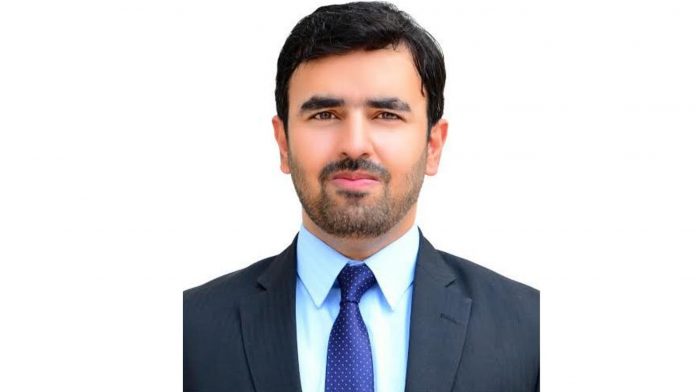
RAWALPINDI, MAR 15 (DNA) – The Rawalpindi Chamber of Commerce and Industry (RCCI) urges to adopt a uniform lock-down policy across the country to deal with Corona.
Acting President RCCI Shahraiz A Malik has said in a statement that a uniform smart lockdown policy should be formulated in collaboration with stakeholders.
Rawalpindi and Islamabad are twin cities. Under Smart Lockdown, shop closing hours should be kept the same.
He said that only by adopting a uniform policy the fourth wave of COVID-19 can be dealt with effectively. The Rawalpindi Chamber stands with the business community, he added.
The number of cases can be reduced only by strictly implementation of standard operating procedures (SOPs).
The electronic and digital media being an effective medium, can play a vital role here in spreading awareness messages to the youth, children and the elderly, he added.
“We have to prove that we are responsible citizens, and this responsibility lies to everyone,” he said.=DNA
=================
OIC commemorates 2nd anniversary of Christchurch terror attack
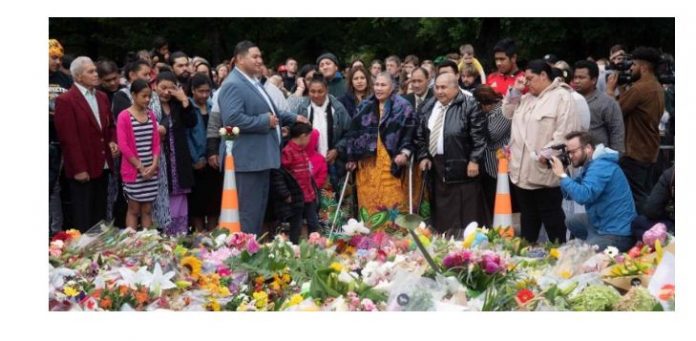
The Organization of Islamic Cooperation (OIC) marked Monday the second anniversary of the 2019 Christchurch terror attack in New Zealand, in which 51 Muslim worshippers were killed.
“OIC Secretary-General Dr. Yousef Al Othaimeen pays tribute to the fallen martyrs and renews the OIC’s deep sympathy and solidarity with the families of the victims,” the Jeddah-based organization said in a statement on Twitter.
Condemning terrorism in all its forms and manifestations, the OIC steadfastly rejected any policies, statements, and practices that link Islam with terrorism.
“Islamophobia as a contemporary form of racism and religious discrimination is on the rise in many parts of the world,” the pan-Muslim bloc said.
Al Othaimeen reiterated the OIC‘s call to the UN and other international and regional organizations to mark March 15 of each year as an international day to combat Islamophobia.
President Alvi felicitates newly-elected Senate chairman Sadiq Sanjrani
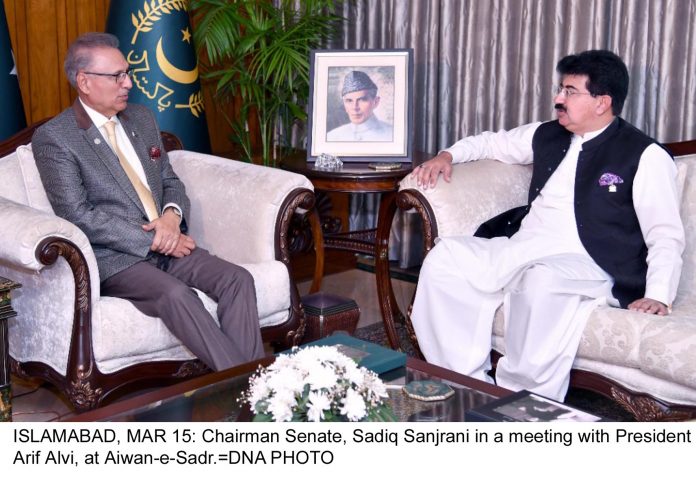
ISLAMABAD, MAR 15 (DNA) – President Dr Arif Alvi on Monday has met newly-elected Chairman of the Upper House of the Parliament, Senate, Sadiq Sanjrani.
During the meeting, the president has felicitated Sanjrani over re-electing as the chairman of Senate and appreciated his services.
Earlier on March 12, 2021, Balochistan Senator Sanjrani had secured 48 votes out of a total of 98 cast for the seat of Chairman Senate, defeating the Pakistan Democratic Movement (PDM) – an 11-party opposition alliance – Syed Yousaf Raza Gilani who received only 42 votes, while eight votes were rejected. = DNA
======================
Erdoğan calls on US to keep its promises to end tragedy in Syria
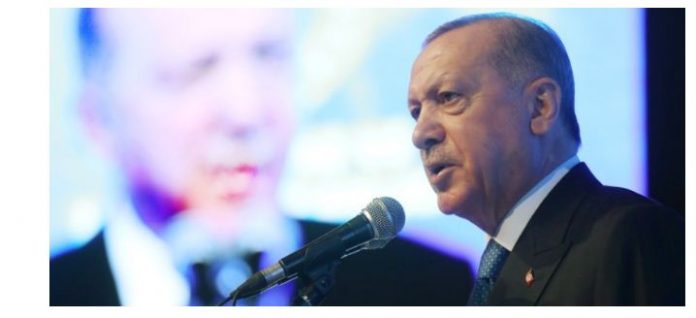
ANKARA, MAR 15 – President Recep Tayyip Erdoğan believes that re-establishing peace and stability in Syria depends on Western support to Ankara.
In a column titled The West should help Turkey end Syria’s Civil War for Bloomberg, Erdoğan wrote that a peaceful and lasting solution will not be possible unless Syria’s territorial integrity and political unity are respected.
“On the 10th anniversary of the Syrian uprising, we should remember the hundreds of thousands of people killed and tortured, and the millions displaced – all because they demanded democracy, liberty and human rights,” he noted.
Erdoğan stressed that Turkey rejects “any plan that does not address the Syrian people’s demand for human dignity,” as such options would only deepen the crisis.
“At the same time, we stress that a peaceful and lasting solution will be impossible in the absence of respect for Syria’s territorial integrity and political unity,” he added.
‘SAFE ZONES BECOME ISLANDS OF PEACE, STABILITY’
The Turkish president said safe zones in Syria, which Turkey created in cooperation with its local partners, are proof of Ankara’s commitment to the future of the war-torn country.
“These areas have become islands of peace and stability, as well as self-sustaining ecosystems. We have implemented basic programs to establish and train law enforcement; improve civilian infrastructure, including power and drinking water; and reopened schools and hospitals,” said Erdoğan.
He went on to say that Ankara created safe zones in areas liberated from terrorist organizations, including the YPG/PKK and Daesh/ISIS, “patiently and decisively” to create “new hope” in Syria.
“By taking all these measures, Turkey has sheltered Europe from irregular migration and terrorism, and secured NATO’s southeastern border. Our actions, which reflect our values, support our claim that Turkey is the hope of oppressed peoples, the guardian of innocents, and the key to a solution,” Erdoğan noted.
Since 2016, Turkey has launched a trio of successful anti-terror operations across its border in northern Syria to enable the peaceful settlement of residents: Euphrates Shield (2016), Olive Branch (2018), and Peace Spring (2019).
In its more than 35-year terror campaign against Turkey, the PKK — listed as a terrorist organization by Turkey, the US, and the EU — has been responsible for the deaths of nearly 40,000 people, including women, children, and infants. The YPG is the PKK’s Syrian offshoot.
‘3 OPTIONS AVAILABLE TO WEST’
Erdoğan stressed that the Western world has three options on the Syrian crisis: The first is “to watch from the sidelines as more innocent people lose their lives in Syria,” while the second is “to take the military, economic and diplomatic measures necessary to develop a lasting solution.”
The third one, he said, being the “most sensible option,” is supporting Turkey and becoming part of the solution in Syria “at minimum cost and with maximum impact.”
Erdoğan added that Turkey specifically expects the West to clearly stand against the YPG/PKK terror group, which “plays into the hands of the Assad regime” and attacks safe zones where millions of displaced Syrian live.
“Moreover, we call on the Western nations to live up to their responsibilities to end the humanitarian crisis, as failure to share Turkey’s burden may result in fresh waves of migration towards Europe,” he added.
The Turkish president also called on the Western world to “invest” in safe zones within Syria and endorse the peace project, saying: “We must show the world that there is a democratic and prosperous alternative for Syria’s future.”
TURKEY’S EFFORTS ON DIPLOMACY, HUMANITARIAN RELIEF
“Turkey proved that it is the only country that can do what’s necessary in Syria by leading humanitarian relief efforts, being on the front line against terrorist groups and actively participating in diplomatic processes,” Erdoğan also said.
“The Joe Biden administration must stay true to its campaign pledges and work with us to end the tragedy in Syria and to defend democracy,” Erdoğan said, adding that the Turkish people are ready to support any initiative that will serve the interests of our Syrian neighbors
Syria has been embroiled in a vicious civil war since early 2011, when the Bashar al-Assad regime cracked down on pro-democracy protests with unexpected ferocity.
Turkey hosts some 3.6 million Syrian refugees, more than any other country in the world.
Uzbekistan, Tajikistan set to electrify Bekabad-Kanibadam-Kokand railway
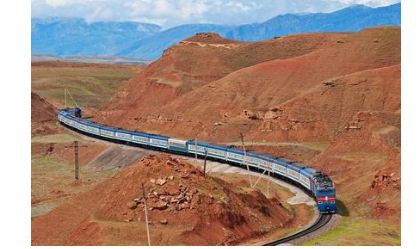
Tashkent – The railway authorities of Uzbekistan and Tajikistan are set to sign an agreement on the construction of a power transmission line along the railway section in the north of Tajikistan: Bekabad-Kanibadam-Kokand.
“The process of approving agreements that are planned to be signed in the very near future is nearing completion,” the Tajik Railways told Asia-Plus.
The company noted that the provisional steps for the implementation of this project by the experts of the two countries began last year, the possibilities of implementing these intentions were reviewed.
The Tajik Railways emphasized that the transition to electric locomotives is in the interests of both parties: the carrier’s costs will be reduced, emissions of harmful substances into the atmosphere from the combustion of diesel fuel will be eliminated, the frequency of services will increase, which will contribute to an increase in the income of the parties.
The company added that the details, including the terms of the agreement, will only be disclosed only after signing of the document.
According to experts, this project was planned back in the Soviet Union. The electrification of this railway section was planned to be carried out in three stages: Tashkent-Bekabad (on the western border of the Sughd province), Bekabad-Kanibadam and Kanibadam-Kokand.
E-voting system to be introduced in next elections: Minister
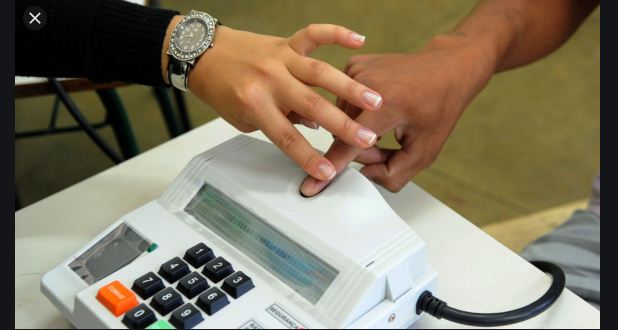
KARACHI, MAR 15 (DNA) – Federal Minister for Information Technology and Telecommunication, Syed Amin-Ul-Haq said that e-voting system would be introduced by next election as the maximum number of overseas Pakistanis could participate in the election by casting their votes.
He expressed such views while addressing the gathering held on the occasion of Sehat Kahani’s Million $ Affair here at local hotel on Monday.
Besides, we will launch G-5 by next year in December, he reaffirmed, adding further that before this, we have to increase the penetration of G-4 in the country which would pave the way for smooth launching of G-5.
Federal minister informed that the investment of Rs.22 billion had been made to increase the connectivity in the country, saying that the rural areas such as Tharparkar, Rajapan, FATA, Dera Bugati had been prioritized for this purpose.
If everybody has Smartphone with 100% penetration of internet in the country, ultimately it would help to make us successful in the world, he believed, recounting that as many as 18 crore people have mobile and 9 crore have access to broadband facility.
There is mobile manufacturing company which would ensure supply of mobile at cheap price of Rs.8000 to each person in the country, Amin-ul-Haq articulated, adding that we can not go ahead without the mobile.
It is vision of Prime Minister Imran Khan to make Pakistan a digital country and we are already working on this, he reiterated, saying that we were working to introduce e-office system for 40 ministries.
Our party is liberal and progressive which always believed in empowerment of women in the country and in connection to this, 50% participation of women is being ensured in the every sector, federal minister recapped.
Appreciating efforts taken by the women for establishing Sehat Kahani (SK), he said that it was great effort which would bring financial investment to Pakistan. Sharing his personal experience with Sehat Kahani, he informed that we found this app (SK) more supportive when we were in a need of this health facility.
We have converted the challenges during Covid-19 in the opportunities and such opportunities could help us to increase our exports especially IT sector, federal minister endorsed, telling that during this period, the exports in IT sector registered a rise by 24%.
We are political worker and believed in serving the nation without any discrimination on the basis of race, color or political affiliation, he added, saying that we became successful because the decisions were transparently taken on the merit and observing zero-tolerance for the corruption. = DNA
====================