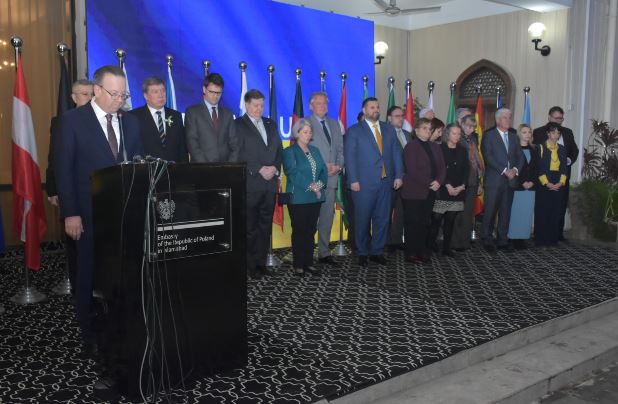
ISLAMABAD, FEB 11 /DNA/ – The European Delegation, Team Europe, and the Embassy of Ukraine jointly held a solemn event on Wednesday to mark the fourth anniversary of Russia’s full-scale invasion of Ukraine. Hosted at the Embassy of the Republic of Poland, the ceremony featured a documentary screening and photographic exhibition highlighting the devastating impact of the conflict on Ukrainian civilians.
The event was attended by diplomats, politicians, journalists, think-tank representatives, human rights activists, NGO members, and civil society leaders, who gathered to express solidarity with Ukraine and reaffirm support for its sovereignty and territorial integrity.
In a joint statement, the EU Delegation, Team Europe, and the Ukrainian Embassy strongly condemned Russia’s ongoing aggression, particularly its deliberate targeting of Ukraine’s energy infrastructure during the harsh winter, calling it unacceptable and a violation of international humanitarian law. The statement urged Russia to cease hostilities, withdraw its forces, and engage in meaningful peace negotiations, noting that the EU had committed an additional €90 billion in support for Ukraine and continued to enforce sanctions to hold Russia accountable.
Ukrainian Ambassador H.E. Mr. Markiian Chuchuk reflected on “Four Years of Ukraine’s Struggle for Freedom,” highlighting the immense human cost of the war, including over one million Russian casualties, tens of thousands of Ukrainian deaths, abductions of children, and the displacement of millions. He condemned Russia’s imperial ambitions, emphasized Ukraine’s commitment to peace, and stressed that compromise and political will from both sides are essential—conditions he said remain absent on the Russian side. Ambassador Chuchuk also thanked Pakistan for its principled support and urged Islamabad to play an active role in advancing a just peace through its position on the UN Security Council.
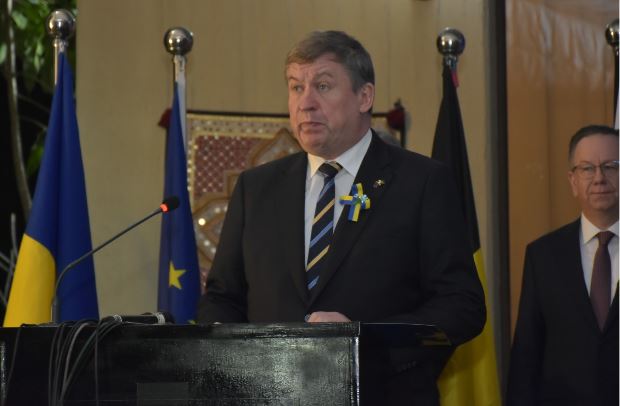
EU Ambassador H.E Mr Raimundas Karoblis, speaking on behalf of Team Europe, praised Ukraine’s resilience and reiterated the EU’s unwavering support. He condemned Russia’s attacks on civilians, energy, and transport infrastructure, leaving millions without electricity and heating during winter, and stressed that the EU would continue to pressure Russia economically, including through energy import reductions and bans on refined petroleum products. He highlighted Europe’s ongoing battles with hybrid threats, including cyberattacks and disinformation campaigns, and emphasized Pakistan’s important role in multilateral efforts to compel Russia into credible peace negotiations.
German Ambassador HE Mrs. Ina Lepel reaffirmed Europe’s support, noting the EU’s €90 billion aid package for Ukraine, condemning Russia’s war crimes, and highlighting the humanitarian crises caused by attacks on energy infrastructure. She reiterated that Ukraine is ready for serious negotiations while Russia persists with maximalist demands, stressing that pressure on Moscow would continue until meaningful dialogue occurs.
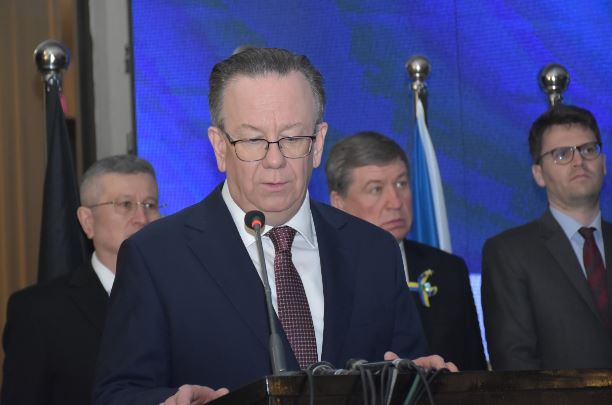
Polish Ambassador H.E. Mr. Maciej Pisarski condemned recent Russian strikes on residential areas and critical infrastructure as a deliberate strategy to inflict civilian suffering, particularly during the harsh winter. He reaffirmed Poland’s full solidarity with Ukraine and called on Russia to end the war immediately. A statement from the Embassy of Poland further noted that Russia’s aggression threatens global security, disrupts energy and food supplies, and destabilizes international peace, urging continued international support for Ukraine, both military and non-military.
The speakers collectively emphasized that ending Russia’s war of aggression requires sustained diplomatic and practical support for Ukraine, accountability for Russian war crimes, and a coordinated global effort to prevent further destabilization.
ISLAMABAD, FEB 11: Amid outcry over newly introduced sweeping reforms in the solar net metering regime, Prime Minister Shehbaz Sharif on Wednesday took notice of the new Prosumer Regulations 2026 issued by the National Electric Power Regulatory Authority (Nepa).
According to a statement issued by the PM Office, the premier directed the Power Division to immediately file an appeal to the power regulator to protect the contract of existing solar consumers.
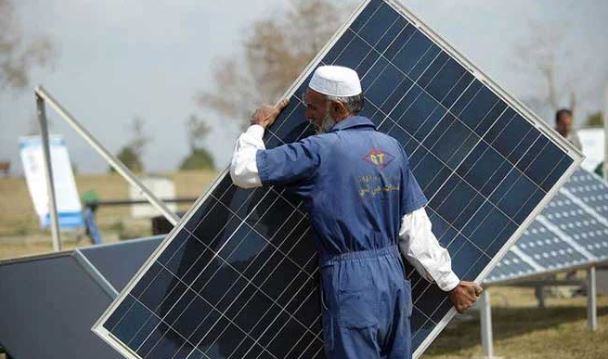
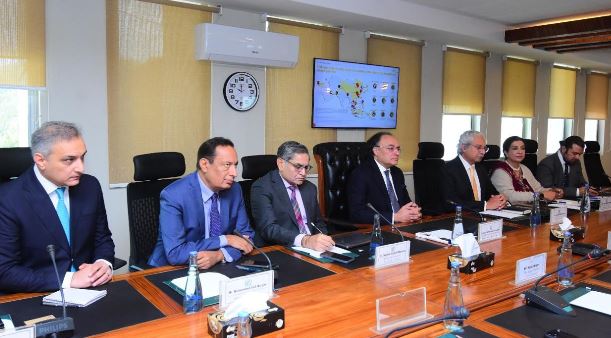
The prime minister, chairing a high-level special meeting on Nepra’s new regulations, directed the Power Division to formulate a comprehensive action plan in this regard so that the burden of 466,000 consumers benefiting from solar would not fall on more than 37.6 million consumers using electricity only from the national grid.
The meeting was attended by Deputy Prime Minister and Foreign Minister Ishaq Dar, Federal Ministers Ahad Khan Cheema, Attaullah Tarar, Ali Pervez Malik, Sardar Owais Khan Leghari, Minister of State Bilal Azhar Kayani, Adviser on Privatisation Muhammad Ali and relevant senior officials.
The development came two days after the Nepra effectively ended the net metering regime, introducing sweeping new rules shifting rooftop solar and other small generators to a “net billing” system.
It is fundamentally changing how electricity is priced and reshaping the economics of distributed generation. Under the Nepra (Prosumer) Regulations, 2026, notified on Monday, the National Electric Power Regulatory Authority will now require power utilities to purchase surplus electricity from prosumers, including households, businesses and industries generating up to one megawatt at the national average energy purchase price, while selling electricity back to them at the applicable consumer tariff.
This ends the one-to-one offset model that previously allowed solar users to neutralise their electricity bills.
The shift also shortens the contract horizon, with the standard agreement term cut to five years from the earlier seven years, renewable by mutual consent. Existing prosumers will remain under their current contracts until expiry, but all future renewals and new connections will fall under the five-year net billing framework, significantly altering long-term investment returns.
If the value of electricity supplied by the prosumer is higher than the electricity taken from the utility, the extra amount will either be adjusted in the next bill or paid to the prosumer every three months.
The new regulations, which take effect immediately, repeal the Nepra Alternative & Renewable Energy Distributed Generation and Net Metering Regulations, 2015, and apply to solar, wind and biogas systems.
ISLAMABAD, FEB 11 /DNA/ – Federal Minister for Finance and Revenue, Senator Muhammad Aurangzeb, held a meeting today at the Finance Division with a delegation of Gobi Partners led by Mr. Thomas Tsao, Chairman, along with Mr. Naiel Ikram, Managing Partner, and Mr. Abraiz Abdullah, Investment Associate.
Welcoming the delegation, the Finance Minister appreciated Gobi Partners’ interest in Pakistan’s venture capital ecosystem and acknowledged the firm’s presence across Asia. He underscored the Government’s commitment to strengthening Pakistan’s venture capital and innovation landscape as part of its broader strategy to promote private sector-led growth, deepen financial markets, and support technology-driven economic diversification.
He emphasized that access to risk capital is critical for the scaling startup entrepreneurial landscape, fostering innovation, and generating sustainable employment opportunities.
The delegation briefed the Minister on Gobi’s regional footprint and its investments in Pakistan through Techxila Fund I, launched in 2020, which has supported startups across fintech, e-commerce, and digital infrastructure.
It was noted that venture capital participation has helped mobilize additional foreign investment into Pakistan and contributed to job creation, financial inclusion, and digital transformation.
Gobi Partners also shared plan regarding Techxila Fund II, with a proposed target size of USD 50 million, aimed at investing in high-potential sectors including fintech, logistics, health technology, and software services. The firm expressed its intention to anchor the fund with its own capital and mobilize participation from domestic and international institutional investors.
During the discussion, the delegation highlighted the importance of further strengthening the enabling framework for venture capital in Pakistan. In this regard, they suggested encouraging greater participation by domestic financial institutions in venture capital and private equity, as well as considering tax pass-through status for venture capital and private equity fund investments to facilitate local investor participation.
The Finance Minister reaffirmed the Government’s resolve to maintain macroeconomic stability, improve the business climate, and advance reforms in tax policy and investment facilitation. He emphasized that mobilizing domestic capital alongside foreign investment remains central to building a resilient and sustainable innovation-led growth model.
The meeting concluded with a shared commitment to continued engagement in support of Pakistan’s evolving venture capital and technology-led financial ecosystem.
CAIRO, FEB 11: Egypt’s parliament on Tuesday approved a cabinet reshuffle proposed by President Abdel Fattah al-Sisi, targeting key economic and service portfolios as the country seeks to weather a prolonged economic crisis compounded by regional instability.
The shake-up centred on ministries responsible for investment, planning, housing, industry and telecommunications and created a new post for a deputy prime minister for economic affairs, according to state-owned Al-Ahram newspaper.
Hussein Issa, the former head of parliament’s budget and planning committee, was appointed to the role.
Ahmed Rostom, a former World Bank specialist, was named minister of planning, while Mohamed Farid Saleh, previously the executive chairman of the Financial Regulatory Authority, was appointed minister of investment and foreign trade.
The reshuffle also revived the Ministry of Information, to be led by Diaa Rashwan, head of the State Information Service.
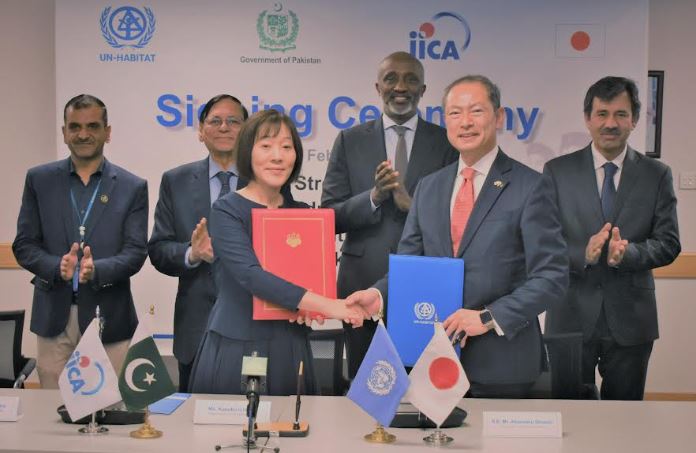
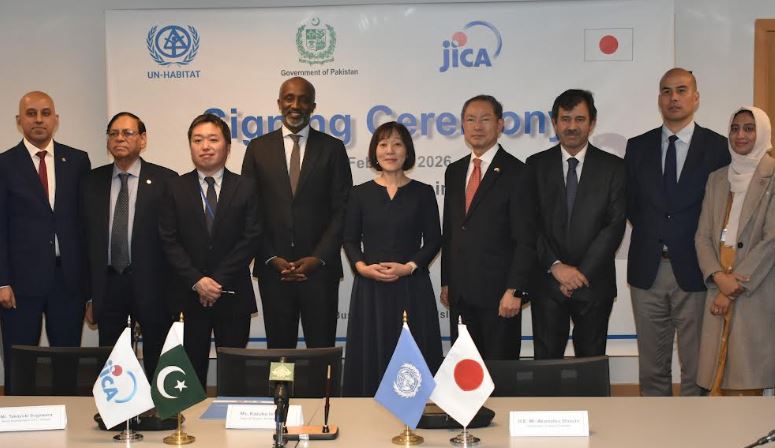
ISLAMABAD, FEB 11 /DNA/ – The Government of Japan, the United Nations Human Settlements Programme (UN-Habitat) and the Japan International Cooperation Agency (JICA) signed an Exchange of Notes and a Grant Agreement during a signing ceremony held on 11 February 2026, for the project on ’Strengthen the disaster resilience of educational infrastructure in Khyber Pakhtunkhwa Province’. The initiative is supported through a grant of JPY 427 million, equivalent to approximately USD 2.7 million, from the Government of Japan.
Due to the geographical characteristics, Khyber Pakhtunkhwa is prone to climate‑driven hazards. The 2025 cloudbursts and flash floods damaged 437 schools, severely disrupting education services especially in Swat and Buner among the hardest-hit districts. The grant will support the rehabilitation and retrofitting of schools damaged by the 2025 floods in Swat and Buner districts. The project aims to restore safe, resilient and functional learning environments by strengthening school structures and improving ventilation and lighting. It will also reinstate gender-sensitive WASH facilities, ensuring dignity, privacy and accessibility for girls and children with disabilities.
Speaking at the signing ceremony, the Ambassador of Japan to the Islamic Republic of Pakistan, H.E. Mr. Akamatsu Shuichi, appreciated the collaborative partnership and reaffirmed Japan’s continued support to Pakistan’s resilience agenda. Ambassador Akamatsu emphasized that strengthening school infrastructure is a critical investment in protecting children and ensuring continuity of education in the face of climate induced disasters.
Ms. Kazuko Ishigaki, Regional Director for Asia and the Pacific, UN-Habitat, highlighted UN-Habitat’s leadership in delivering safer learning environments. She noted that the retrofitted schools will provide structurally stable classrooms, improved ventilation, and essential WASH services, enabling children to learn with confidence, safety and dignity. By positioning schools as hubs for disaster preparedness and response, the project will extend preparedness and first-aid benefits to surrounding communities, strengthening local resilience and emergency response capacities.
Mr. Sugawara Takayuki, Senior Representative of JICA, emphasized that this project addresses the JICA’s approach to disaster risk reduction principally by“Promoting Build Back Better”.He mentioned that JICA promotes this concept to ensure that the country as a whole including the affected areas can rebuild in a way that is more resilient to future disasters. It is crucial not to repeat the same damage in a similar disaster to ensure sustainable economic and social development.
Mr. Mohamed Yahya, United Nations Resident and Humanitarian Coordinator, expressed appreciation to the Government of Japan and JICA for their partnership with Pakistan and the United Nations. He highlighted that the initiative aligns with the UN Sustainable Development Cooperation Framework and supports Pakistan’s implementation of the Sendai Framework, advancing resilience for the most vulnerable communities.
Through the construction and rehabilitation of disaster-resilient schools, along with the provision of disaster resilience training, this collaborative effort will contribute to the implementation of the Sendai Framework by reducing loss of life, the number of people affected, and economic damage caused by natural disasters, while advancing human security in flood-affected communities.
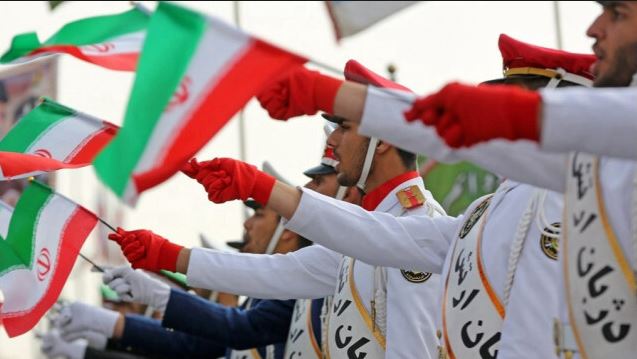
ISLAMABAD, FEB 11 /DNA/ – The Islamic Revolution of Iran represented the collective will of a nation that grounded in faith, historical identity, and a legitimate aspiration for independence, overcame a dictatorial regime dependent on foreign powers. This historic transformation marked the beginning of national sovereignty, popular participation in governance, and the restoration of the dignity and independence of the Iranian people. From its inception, the Islamic Republic of Iran has pursued a path based on independence, freedom, justice, and the rejection of domination, a course that has been followed with resilience and continuity despite sustained pressures.
Over the past five decades, amid complex regional and international developments, the Islamic Republic of Iran has achieved notable progress in various scientific and technological fields by drawing upon domestic capacities, social cohesion, and a skilled and committed human capital.
In the economic sphere, despite unjust sanctions and maximum pressure campaign, tangible progress has been made in industrial production, the expansion of non-oil exports, strengthening of fiscal foundations and diversified and resilient economy. In parallel, progress in social services and infrastructure, including expanded healthcare coverage, substantial self-sufficiency in indigenous production, education etc. have contributed meaningfully to improving citizens’ quality of life.
In foreign policy, the Islamic Republic of Iran has pursued a balanced and constructive approach through active diplomacy, pragmatic engagement, and the expansion of relations with neighboring countries, emerging economies, and key regional and international organizations. Iran considers itself a responsible, independent, and constructive actor at the regional and global levels and has consistently supported dialogue, multilateralism, and cooperation as essential tools for promoting peace, stability, and sustainable development.
Despite the policy of maximum pressure and coercive measures pursued by the United States, the Islamic Republic of Iran entered into negotiations on nuclear-related issues as a demonstration of goodwill and commitment to diplomacy. However, during the course of these efforts, acts of aggression against Iran by the Zionist Regime, with the involvement of the US, resulted in significant human and economic losses.
Public protests regarding economic concerns began on 28 December 2025 and were initially peaceful in nature. These gatherings were subsequently exploited by violent and extremist elements, leading to acts of armed unrest and public disorder.
The Government of the Islamic Republic of Iran remains fully cognizant of its human rights obligations, including the right to peaceful assembly, and has exercised maximum restraint in responding to unrest, while upholding its fundamental responsibility to protect citizens, maintain public order, and safeguard national security. The Iranian people, through vigilance and responsible participation, once again prevented efforts aimed at destabilizing the country.
Today, the Islamic Republic of Iran continues to face coordinated military, political, and narrative pressures. While Iran remains firm and resolute in defending its sovereignty and national security, it remains equally committed to diplomacy as a means of protecting national interests and contributing to regional peace and stability. Respect for national sovereignty and mutual interests constitute the cornerstone of effective diplomacy; accordingly, negotiations conducted under threat, coercion, or demands for unilateral and illegitimate concessions cannot yield constructive outcomes.
On the occasion of the forty-seventh anniversary of the victory of the Islamic Revolution of Iran, we reaffirm our commitment to the causes of the Founding Father and architect of the Islamic Revolution and honor the memory of the revered martyrs of our beloved nation.
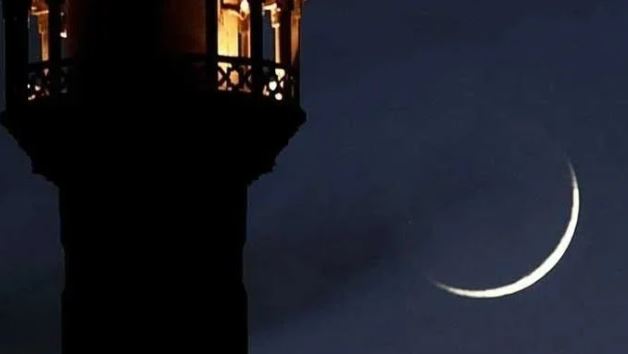
ISLAMABAD, FEB 11: The Pakistan Meteorological Department (PMD) has said the new moon of Ramadan 1447 AH will be born on February 17 at 5:01pm (PST), with a fair chance of sighting on the evening of February 18.
In an advisory issued to the Research and Reference Wing of the Ministry of Religious Affairs, the department said the moon will be born at the conjunction point at 5:01pm on February 17, and that astronomical parameters indicate a fair chance of sighting on February 18 (29th Shaban 1447 AH).
According to the PMD’s Climate Data Processing Centre (CDPC), climate records suggest the weather is expected to be partly cloudy or fair in most parts of the country on the evening of February 18, which may support visibility for moon-sighting efforts.
The department also shared region-wise timings for the last time of moon sighting (PST) on February 18, saying it will remain visible until 7:24pm in Sindh, 7:08pm in Punjab, 7:47pm in Balochistan, 7:13pm in Khyber Pakhtunkhwa (KP), 6:58pm in Azad Jammu and Kashmir (AJK), and 6:53pm in Gilgit-Baltistan (GB).
It added that stations not listed in the moon-coordinate schedule may also observe the moon up to the time of moonset according to their respective region.
As per tradition, the Central Ruet-e-Hilal Committee would hold its session on Shaban 29, with zonal committees meeting in their respective domains, to receive and assess moon sighting reports and announce the sighting of the moon.
Clerics from all schools of thought would attend the central huddle to ascertain the beginning of the ninth Islamic month.
The holy month, which is observed with religious fervour and zeal, will see millions of Pakistanis, along with billions of Muslims around the world, observing a fast from dawn till sunset.
Like many other countries, Ramadan in Pakistan is marked by increased charity and public food drives, with the people establishing roadside stalls for people returning to their homes in the evening.
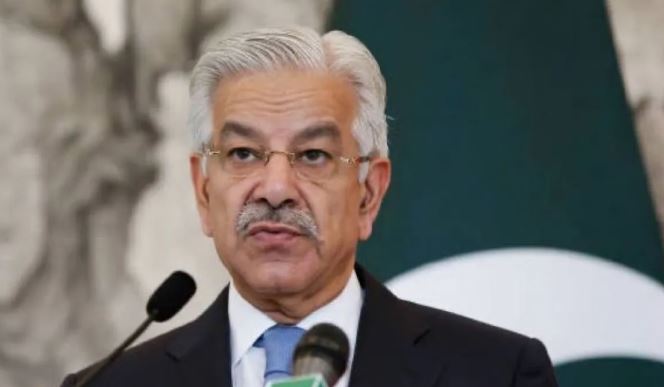
ISLAMABAD, Feb 11 (DNA): Federal Minister for Defence Khawaja Muhammad Asif on Wednesday said that the opposition leader’s remarks in the National Assembly the other day regarding the Pakistan Army were “highly irresponsible,” as such statements undermined a national institution that has rendered immense sacrifices for the country.
Addressing the National Assembly, he said, “Political differences are natural in a democracy. We may disagree on policies and ideologies, but targeting a national institution in this manner is inappropriate.”
He said that the Pakistan Army represented the entire federation and all provinces and highlighted their sacrifices in the fight against terrorism, particularly over the past several years as thousands of officers and soldiers had embraced martyrdom in the line of duty.
He explained that 3,141 officers and soldiers of the Pakistan Army had embraced martyrdom from 2021 to February 2026 in the ongoing war against terrorism.
The minister strongly rejected claims that the Army represents any single province or region, terming it a “federal force” with personnel from across the country, including Punjab, Sindh, Khyber Pakhtunkhwa, Balochistan, Azad Jammu and Kashmir, Gilgit-Baltistan, and minority communities.
“The composition of the Pakistan Army reflects the entire federation. It is a truly national institution,” he said. Khawaja Asif said the record should clearly reflect that the Pakistan Army is a national institution with participation from all federating units and religious minorities.
He urged political leaders to refrain from statements that could hurt national sentiments, particularly amid ongoing security challenges. “Differences of opinion are everyone’s right, but national emotions and institutions should not be targeted,” he said.
Khawaja Asif said members of Parliament take an oath to safeguard Pakistan’s sovereignty and integrity but added that politicians often operate in “grey areas” shaped by political convenience.
He contrasted this with the armed forces, saying that soldiers who take an oath upon joining the military never change their commitment. “Many politicians switch parties multiple times in their careers. But those who embraced martyrdom never changed their oath. They laid down their lives to honour it,” he said.
He reiterated that the Pakistan Army is a federal force representing all federating units, with citizens from across the country making sacrifices to defend the homeland.
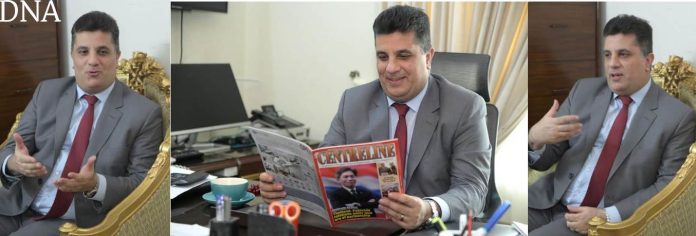
1: Your Excellency, thank you for speaking with us. Syria is often described as the cradle of human civilization. How do you explain this unique identity to the world?
Thank you for having me. Indeed, Syria is not just a country; it is a living archive of human history. Cities such as Damascus and Aleppo are among the oldest continuously inhabited cities in the world, with histories spanning over 11,000 years. Syria has hosted dozens of civilizations — Roman, Greek, Byzantine, Islamic, Umayyad, Ayyubid, and many others. Each left behind its architectural, cultural, and linguistic imprints. This deep heritage is why we proudly call Syria the cradle of civilization.
“Syria is a museum under the open sky.”
2: Damascus is highlighted as one of the oldest cities in human history. What makes it so special?
Damascus is often described as a city where time folds in on itself—layers of civilizations stitched together in stone, wood, and light. Designated a UNESCO World Heritage Site in 1979, its Old City holds more than 125 archaeological landmarks within walls that have witnessed Aramean, Roman, Byzantine, and Islamic eras. Step through one of its ancient gates and you pass from modern bustle to a living museum of streets, courtyards, minarets, and markets.
At the heart stands the Umayyad Mosque, a masterpiece of early Islamic architecture. Its vast marble courtyard gleams under the sun; golden and emerald mosaics portray paradisal gardens; and within lies the revered shrine associated with John the Baptist (Prophet Yahya).
Nearby rests the mausoleum of Salah ad-Din (Saladin), a reminder of Damascus’s role on the world stage. The mosque is not merely a monument—it is a breathing center of worship, scholarship, and community life.Radiating from this core are souqs that have hummed for centuries. Hamidiyah Market stretches like a river of sound beneath a perforated iron canopy: the rhythm of cobblers’ hammers, the call of spice merchants, the perfume of cardamom, sumac, and rose. Under its archways, you’ll find hand-beaten copper, Damascene inlay, silk brocade, and the famed pistachio-rolled ice cream at Bakdash. Caravanserais such as Khan As’ad Pasha still stand, their domed halls once sheltering traders from Aleppo, Baghdad, and beyond.
The palatial Al-Azm complex, once home to Ottoman governors, captures Damascene domestic elegance: ablaq stonework in alternating light and dark, carved wooden ceilings, latticed mashrabiya screens, and courtyard fountains ringed with jasmine. Traditional houses turn inward, around cool, shaded patios where citrus trees and water basins temper the desert heat—architecture as climate wisdom and social fabric. Churches and chapels, such as those along the Straight Street (Via Recta) and the Chapel of St. Ananias, speak to the city’s deep Christian heritage; old quarters like Bab Touma and Bab Sharqi keep distinct identities while blending into the whole.From the slopes of Mount Qasioun, the city unfurls in a tapestry of roofs and minarets, with the Barada River and the orchards of the Ghouta plain historically feeding Damascus’s gardens and kitchens.
Food here is culture made edible: herb-laced fattoush, kibbeh in countless regional forms, trays of ma’amoul dusted in sugar, and coffee scented with cardamom—rituals of hospitality that have survived every century’s turn.
Damascus has endured earthquakes, empire shifts, and modern conflict. Yet restoration efforts, the resilience of craftspeople, and the continuity of worship and trade have kept its soul remarkably intact. The Old City is not a relic behind glass; it is a lived-in palimpsest where shopkeepers inherit their stalls, families their courtyards, and artisans their tools and secrets. This is why Damascus feels timeless: its past is not past at all, but present—spoken through stone arcades, whispered in jasmine-scented evenings, and echoed in the rhythms of its markets and prayers.
3: Syria’s other cities, such as Aleppo and Homs, are also historically significant. Could you elaborate?
Aleppo’s story stretches to the second millennium BC, layered with Hittite, Hellenistic, Roman, Byzantine, and Islamic legacies. Crowned by its hilltop Citadel—an Ayyubid-Mamluk masterpiece with a monumental bent entrance, bridge, and gatehouse—the city radiates through quarters once lined by khans, hammams, and the vaulted Souq al-Madina.
The Great Mosque of Aleppo, caravanserais like Khan al-Wazir, and delicate stone façades attest to a mercantile metropolis on the Silk Road. Despite the scars of recent conflict, conservation has revived alleys, workshops, and spice-laden stalls, restoring the cadence of a city long renowned for craft, cuisine, and music.Homs, by contrast, is a crossroads of Syria’s religious and ethnic mosaic.
Its skyline is marked by the Mosque of Khalid ibn al-Walid, whose twin minarets and domed sanctuary house the revered companion’s shrine, drawing pilgrims and students alike. Westward rises Krak des Chevaliers (Qal‘at al-Hosn), a UNESCO-listed crusader stronghold commanding the Homs Gap. With concentric walls, arrow slits, and a formidable donjon, it is a textbook of medieval military architecture, later adapted by Mamluk hands. Together, Aleppo and Homs embody Syria’s endurance: urban centers where markets, mosques, churches, and fortresses narrate a civilization that survives, restores, and remembers. Their stones hold memory and meaning.
4: Palmyra holds special importance. How would you describe its global relevance?
Palmyra is a world treasure. Located in the heart of the Syrian desert, it served as a major caravan stop between East and West from 44 BC to 272 AD. Its Roman temples, the Great Colonnaded Street, the theater, tombs, and the famous Fakhr al-Din al-Maani Castle have made it a UNESCO World Heritage Site since 1980. Palmyra is a testimony to the grandeur of ancient Syrian civilization.
5: Syria is home to remarkable religious sites, both Islamic and Christian. How important is this aspect?
Our religious heritage is a symbol of coexistence. The Umayyad Mosque in Damascus stands not only as an architectural masterpiece but also as a cultural symbol where different faiths intersect. Nearby is the shrine of Sayyida Ruqayyah. A few kilometers away lies the revered shrine of Sayyida Zainab, visited by hundreds of thousands of pilgrims from Pakistan, Iran, Iraq, India, and beyond.
Christians also find deep roots in Syria. From the Church of Saint Simon the Stylite and the ancient monasteries of Maaloula and Saydnaya, to the earliest-known house-church of Dura-Europos — Syria is integral to early Christian history.
6: How do you evaluate Syria’s relationship with Pakistan?
Pakistan is not just a friendly nation—it is a brotherly partner with whom Syria shares deep-rooted cultural, historical, and political ties. The warmth and goodwill consistently shown by the Pakistani people toward Syria reflect a relationship built on mutual respect, solidarity, and shared values.
We hold in high regard Pakistan’s unwavering support for Syria’s sovereignty, unity, and territorial integrity. This principled stance has reinforced the trust and affection between our peoples, reminding us that true friendship is tested and proven in times of challenge.
Looking ahead, Syria is committed to expanding cooperation with Pakistan across diverse fields:
Tourism: Facilitating easier travel for Pakistani visitors to Syria’s sacred sites and historic landmarks, while encouraging Syrians to explore Pakistan’s natural beauty and cultural richness.
Education: Promoting academic exchanges, scholarships, and joint research programs to strengthen intellectual and scientific collaboration.
Culture: Organizing festivals, exhibitions, and artistic exchanges to celebrate the shared heritage and creativity of our nations.
Archaeology: Partnering in the preservation and study of ancient civilizations, recognizing the importance of both countries as custodians of world history.
Trade: Expanding economic ties, encouraging investment, and opening new markets to benefit both nations.
Pakistanis have always shown deep affection for Syria’s holy sites, including revered shrines and places of worship, as well as its rich cultural history. This spiritual and cultural connection forms a strong foundation for people-to-people ties, which we are determined to strengthen further.
By facilitating easier travel, encouraging cultural exchanges, and deepening academic cooperation, Syria and Pakistan are laying the groundwork for a future of even closer partnership. Together, we aspire to build bridges of understanding, prosperity, and solidarity that will serve generations to come.
7: What message would you like to convey to Pakistani tourists, students, and researchers?
I warmly invite the people of Pakistan to visit Syria — a land where every stone speaks history, and every city tells a timeless story. Syria is not only a country of resilience, but also a cradle of civilizations, faith, and culture.
From the ancient streets of Damascus, the world’s oldest continuously inhabited capital, to the majestic ruins of Aleppo, from the legendary temples of Palmyra to the serene waters of Hama, Syria offers a journey through centuries of human achievement. The coastal charm of Tartus and Latakia, the spiritual depth of Suwayda, the vibrant heritage of Homs, and the historical richness of Deir ez-Zor together form a mosaic of experiences awaiting discovery.
Syria today is rebuilding and revitalizing its heritage. Our monuments, mosques, churches, and archaeological treasures are being restored with care, ensuring that visitors can witness both the grandeur of the past and the promise of renewal.
Above all, Syria welcomes visitors with the warmth of its people. Syrian hospitality is legendary — guests are treated not as strangers but as family. We look forward to embracing our Pakistani brothers and sisters, strengthening bonds of friendship, and sharing with them the beauty of Syria’s soul.
8 : Your Excellency, how do you view Syria’s new path of economic development as we approach the year 2026, when Syria will host the largest international textile exhibition in the region starting on April 1, 2026, and engage with global markets?
Answer: To begin, I would like to point out that the Syrian Arab Republic has suffered in recent years from a deteriorating economic situation that was unsuitable for the Syrian state and the Syrian people due to previous economic sanctions. However, by the end of last year and the start of the new year, the new Syrian leadership began to take action in various fields, particularly at the international level, to lift the sanctions on Syria. Through numerous visits carried out by the new leadership, and with the support of many countries around the world standing by Syria and the Syrian people, part of the economic sanctions imposed on Syria has been lifted, and we hope that the remaining sanctions will be lifted soon. From here began the movement of organizing international exhibitions and advancing economic development in Syria, so that the country could play its role through these international exhibitions held on Syrian soil. They represent a major opportunity for businessmen from the friendly Islamic Republic of Pakistan, as well as entrepreneurs from all over the world, to participate in these international exhibitions in Damascus. This, in turn, forms a strong bridge for fostering and expanding cooperation between Syria and the rest of the world. The International Textile Exhibition is one of the most important of these events, scheduled to take place from April 1 to 4, 2026. We have invited Pakistani companies, institutions, and businessmen to participate, given that Syria is a pioneer in the textile sector, and likewise, our sister country Pakistan is also a leader in textile manufacturing.
9 : How will the “NASTEX 2026” exhibition serve as a valuable platform for Pakistan’s textile and industrial sector to enhance cooperation between the two sides?
Answer: As I mentioned earlier, this exhibition to be held in Damascus is one of the most important economic and industrial events that will take place at the Damascus Fairgrounds, and it will enjoy international participation. Since Syria is a global leader in the textile sector, and likewise Pakistan is also a leader in textile manufacturing, this represents a major opportunity for Pakistani participation in the exhibition. It will enable direct engagement with Syrian institutions, companies, and businessmen, which will positively contribute to developing economic and trade relations between Syria and Pakistan across various sectors, foremost among them cooperation in textile industries and other related activities and events. Therefore, we once again warmly welcome our brothers in Pakistan—textile companies, businessmen, and various entities—to participate in this exhibition.
10: Your concluding remarks?
Syria is a nation that has stood the test of time. For thousands of years, it has endured wars, invasions, and natural challenges, yet it continues to rise with dignity and strength. The true power of Syria lies not only in its ancient monuments and historic cities, but in its people — a community bound by culture, faith, and an unshakable spirit of resilience.
Today, Syria stands as a living testament to perseverance. We are determined to preserve our heritage, safeguard our traditions, and build a peaceful future for generations to come. Every stone in Syria tells a story, every city carries the memory of civilizations that shaped the world, and every visitor becomes part of this timeless journey.
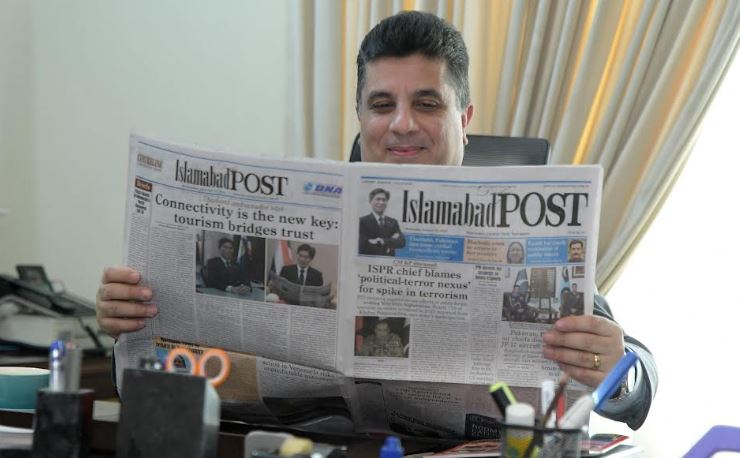
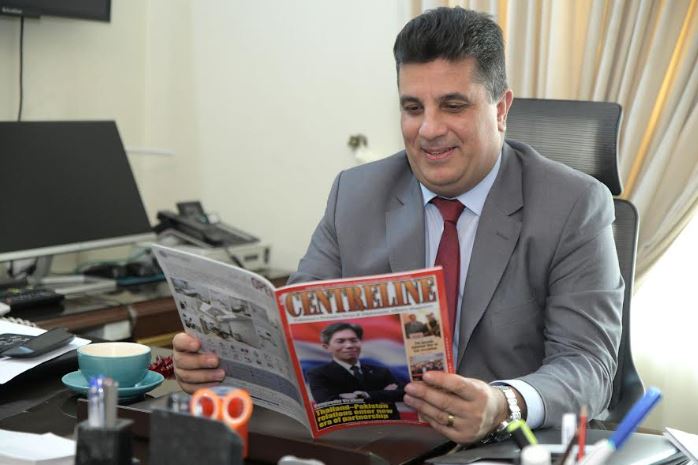
To our brothers and sisters in Pakistan, readers of Daily Islamabad Post and Centreline, we extend a heartfelt invitation: come and rediscover Syria, the land where history began. Walk through the ancient streets of Damascus, marvel at the grandeur of Palmyra, feel the spirit of Aleppo, and witness the rebirth of a nation that continues to inspire.
Syria is not only rebuilding its cities and monuments, but also revitalizing its cultural and spiritual life. We welcome scholars, pilgrims, tourists, and explorers alike to experience Syrian hospitality warm, generous, and deeply rooted in tradition.
Let Syria be your destination for discovery, reflection, and connection. In visiting Syria, you will not only witness history, but also share in the hope of a nation determined to shape a brighter tomorrow.
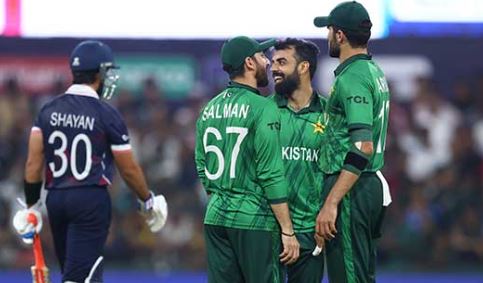
COLOMBO, FEB 10: A combined effort from batters and bowlers powered Pakistan to a 32-run victory over the United States of America (USA) in the ICC Men’s T20 World Cup 2026 at Colombo’s SSC Ground on Tuesday.
A combined effort from batters and bowlers powered Pakistan to a 32-run victory over the United States of America (USA) in the ICC Men’s T20 World Cup 2026 at Colombo’s SSC Ground on Tuesday.
Set to chase a daunting 191-run target, USA could muster 158/8 in their 20 overs.
The associate nation got off to a decent start to the pursuit as their opening pair of Andries Gous and Shayan put together 42 runs at a brisk pace before Mohammad Nawaz struck, dismissing the former, who made a run-a-ball 13 with the help of two fours.
Gous’s dismissal halted the flow of runs for USA as captain Monank Patel attempted to anchor the run chase but fell victim to Shadab Khan in the ninth over and walked back after scoring a scratchy three off 10 deliveries.
Shadab struck again in the next over to dismiss set batter Shayan, who made 49 off 34 deliveries with the help of five fours and two sixes.
Following the consecutive dismissals, Shubham Ranjane and Milind Kumar (29) attempted to launch a recovery by knitting a 54-run stand for the fourth wicket, which was broken by Usman Tariq in the 16th over with the latter’s scalp.
Kumar’s dismissal sparked a collapse as USA lost four more wickets at an alarming rate, including that of set batter Ranjane, who eventually fell prey to Shaheen Shah Afridi in the final over after top-scoring with a 29-ball 51, three sixes and as many fours.
Tariq spearheaded Pakistan’s bowling charge with economical figures of 3/27 in his four overs, followed by Shadab’s 2/26, while Nawaz, Abrar Ahmed and Shaheen chipped in with one scalp apiece.
USA captain Monank Patel’s decision to field first backfired as Pakistan finished at 190/9 in their 20 overs.
The Green Shirts got off to a flamboyant start to their innings as their opening pair of Sahibzada Farhan and Saim Ayub yielded a brisk 54 runs in five overs.
Shadley van Schalkwyk forced USA’s comeback in the final over of the batting powerplay, during which he struck twice, dismissing left-handed opener Ayub and Pakistan captain Salman Ali Agha as the former champions slipped to 56/2.
Ayub made a 17-ball 19 with the help of two sixes and a four, while Agha made just one of three deliveries.
Following the back-to-back dismissals, star batter Babar Azam joined opener Farhan in the middle, and the duo batted fluently to stabilise the innings with a platform-setting 81-run partnership for the third wicket.
The stand eventually culminated on the fourth delivery of the 15th over when Mohammad Mohsin sent back Babar, who made a brisk 46 off 32 deliveries, laced with four fours and a six.
Pakistan then suffered another major setback in the next over when Harmeet Singh dismissed their batting mainstay Farhan, who remained the top-scorer with a blazing 73 off just 41 deliveries, studded with six fours and five sixes.
Shadab Khan then shared a one-sided 34-run partnership for the fifth wicket with Mohammad Nawaz, which came off just 16 deliveries.
Shadab contributed to the stand with a 12-ball 30, comprising four fours and a six, before falling victim to van Schalkwyk in the penultimate over, during which the right-arm pacer also dismissed Faheem Ashraf (one).
Nawaz, on the other hand, perished on the first delivery of the final over as he smashed a fuller delivery from Saurabh Netravalkar straight to Shayan Jahangir, stationed at deep midwicket, and walked back after scoring a scratchy five off 10 deliveries.
Shadley van Schalkwyk was the standout bowler for USA, taking four wickets for just 25 runs in his four overs, while Netravalkar, Mohsin and Harmeet picked up one apiece.