Home Blog Page 254

Make America Go Away

Qamar Bashir

Qamar Bashir

The red caps were impossible to miss. In Copenhagen’s winter chill, protesters gathered waving Danish and Greenlandic flags, their message stitched in bold white letters across crimson fabric: “Make America Go Away.” What began as a satirical play on Donald Trump’s “Make America Great Again” slogan has become something more serious — a symbol of European unease, even defiance, in the face of escalating rhetoric over Greenland.

The hats were created by Danish vintage shop owner Jesper Rabe Tonnesen. Initially a novelty, they gained traction only after Washington intensified its language about Greenland’s strategic value and potential American control. What might once have been dismissed as political theatre began to feel real. “This isn’t reality TV,” Tonnesen remarked. “It’s actually reality.” Within a single weekend, thousands of caps were ordered. Protest signs at Copenhagen’s city hall declared “No Means No” and “Make America Smart Again,” combining humor with unmistakable political intent.

The symbolism extended beyond Denmark. At the Winter Olympics opening ceremony in Milan, Vice President JD Vance was met with audible boos when his image appeared on stadium screens during the Parade of Nations. The U.S. delegation of athletes received cheers, but the mood shifted when the camera cut to the American political contingent. Italian protesters had already marched earlier that day against reports of U.S. Immigration and Customs Enforcement personnel advising on Olympic security. For many Europeans, the moment crystallized a broader frustration — not necessarily with the American people, but with Washington’s posture.

The episode in Milan was not isolated. It came amid growing debate in Europe over U.S. foreign policy choices, including the controversial military operation that resulted in the capture of Venezuelan President Nicolás Maduro, heightened tensions with Iran, and Washington’s unwavering alignment with Israel during the Gaza conflict. Each event, viewed individually, can be defended by American policymakers as a matter of national security or strategic necessity. But collectively, they are reshaping perceptions abroad.

Greenland, long considered a peripheral issue outside diplomatic circles, has suddenly become central to Arctic geopolitics. Its vast mineral reserves, strategic location, and proximity to new shipping lanes have elevated its importance in a world defined by great-power competition. Yet the tone of Washington’s overtures — seen by many in Denmark as coercive — has triggered a backlash. European governments have publicly reaffirmed Denmark’s sovereignty and emphasized that territorial integrity is non-negotiable. The Arctic, once framed as a zone of cooperation, now risks becoming a theatre of suspicion.

Relations with Canada have been further strained by controversy surrounding the Gordie Howe International Bridge, a $6.4 billion infrastructure project linking Detroit, Michigan, and Windsor, Ontario. The bridge—expected to open in 2026—is jointly owned on a 50/50 basis by the State of Michigan and the Government of Canada. Notably, Canada financed the entire construction cost after Michigan lawmakers declined to contribute upfront funding. However, in January 2026, Trump threatened to block the bridge’s opening unless the United States was “fully compensated,” suggesting America should own “at least one half” of the asset—despite the existing equal ownership structure. The dispute underscores how a project designed to strengthen bilateral trade—facilitating approximately 25% of total U.S.-Canada goods trade that crosses the Detroit River corridor—has become entangled in broader trade tensions and political leverage, raising concerns about the reliability of cross-border economic cooperation.

Meanwhile, the operation in Venezuela has set a dangerous precedent for unilateral intervention and raised questions about international law. Latin American leaders voiced alarm at the optics of a powerful nation apprehending a sitting head of state. Whether justified or not, the event reinforced a perception among some allies that Washington is increasingly comfortable acting alone.

Soft power — the intangible currency of legitimacy, cultural attraction, and moral authority — depends less on force and more on trust. The United States has historically wielded enormous soft power, built on alliances, democratic ideals, economic partnerships, and cultural influence. But soft power can erode quietly. It does not collapse in a single moment; it thins through accumulated grievances.

The Gaza conflict has intensified that erosion. While Washington frames its position as support for a longstanding ally, public opinion across Europe has grown sharply critical of Israeli military actions. In cities from Berlin to London to Copenhagen, demonstrations have linked U.S. policy directly to the humanitarian crisis. Israel itself has faced a steep reputational decline internationally, and by extension, so has the United States as its principal backer.

At home, polarization further complicates America’s global image. Open confrontations between federal and state authorities on immigration, sanctuary policies, and law enforcement create the impression of internal instability. For foreign observers, domestic discord weakens diplomatic leverage. Allies prefer predictability. Strategic partnerships rely on continuity.

The war in Ukraine also looms large. What began as a united Western front against Russian aggression has grown more complex. Questions about burden-sharing, fatigue, and long-term commitment circulate in European capitals. If America appears distracted or transactional, doubts multiply.

What the red caps truly signify is not a desire for American disappearance, but a demand for recalibration. Satire often captures what formal diplomacy cannot. “Make America Go Away” is less a literal plea than an expression of frustration — a shorthand for “we feel unheard.”

Power exercised without broad consent becomes expensive. Influence sustained through persuasion endures. If Washington is perceived as substituting pressure for partnership, the cost will not appear immediately in treaties or troop deployments. It will surface in subtle ways: in public opinion polls, in parliamentary debates, in hesitant endorsements at multilateral forums.

The United States does not deserve to be haunted by slogans calling for its departure, nor should its leaders be booed at global celebrations meant to transcend politics. But neither can those moments be dismissed as trivial. They are signals. They reflect accumulated discontent over tone, method, and alignment.

The challenge now is not whether America should go away. It is whether it can pause, reassess, and restore confidence among those who once viewed it as indispensable. The red caps in Copenhagen may fade from fashion. The deeper question is whether the sentiments they represent will fade as well — or whether they mark the beginning of a more profound shift in the transatlantic relationship.

Bridges can connect, or they can become bargaining chips. The choice, ultimately, rests not in slogans, but in statecraft.

Qamar Bashir

Press Secretary to the President (Rtd)

Former Press Minister, Embassy of Pakistan to France

Former Press Attaché to Malaysia

Former MD, SRBC | Macomb, Michigan
President warns escalation involving Iran could destabilize region

President warns escalation involving Iran could destabilize region

DNA

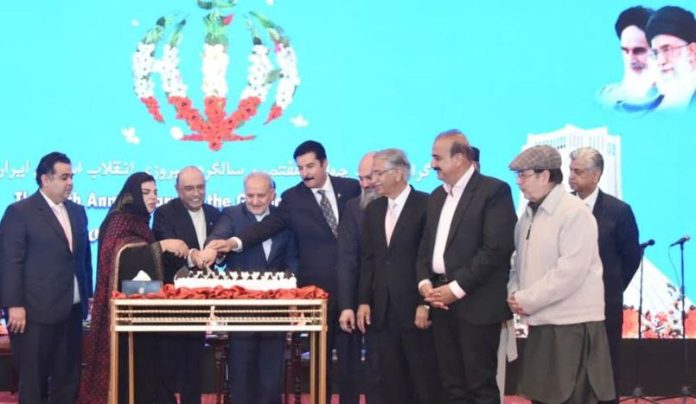
ISLAMABAD, President Asif Ali Zardari on Wednesday welcomed the efforts aimed at easing tension and promoting regional peace, warning that any military escalation involving Iran could destabilise the Gulf region, South Asia and Western Asia.

“Any instability involving Iran, or any attempt to resolve issues through military means, carries grave risks. Such actions could …, undermine global peace, and cause serious harm to the global economy. The stakes are far too high for confrontation,” The president said while speaking at a reception hosted by the embassy of Iran to celebrate 47th anniversary of Iran’s National Day.

He said Pakistan opposed unilateral sanctions and coercive measures, including against Iran, and believed that peaceful engagement best served regional and global security.

“Pakistan welcomes efforts aimed at easing tensions and encourages continued dialogue among relevant parties in a constructive spirit, with the objective of promoting peace and stability in the region,” he added.

Earlier, the president requested the participants to observe one minute of silence in memory of the victims of the recent blast in Islamabad, and the tragedies in Iran. “Let’s pray that wars never come to us,” the president prayed.

Referring to the ongoing conflicts, terrorism, external interference and unresolved regional flashpoints in the region, the president said Pakistan firmly believed that such challenges could not be addressed through force or unilateral actions.

President Zardari emphasized that Pakistan and Iran shared responsibilities as neighbouring countries and remained committed to cooperation on border management, counter-terrorism, and turning the shared frontier into a zone of cooperation, lawful trade and development.

He said Pakistan valued balanced relations globally and remained ready to play a constructive role in promoting restraint, dialogue and regional peace.

The president extended his warm congratulations to the leadership and people of Iran. “May our partnership continue to grow, and may our region move towards security, stability and shared prosperity,” he prayed.

He said Pakistan and Iran were not only neighbours; but also civilisational partners. “Our shared border reflects centuries of interaction, coexistence and mutual respect. Our relationship is rooted in faith, history and enduring cultural bonds that continue to shape our region.”

He noted that the Persian language and its great literary tradition had profoundly influenced Pakistan’s intellectual life. For hundreds of years, he said Persian served as the official language of large parts of the regions that now form Pakistan.

“Its influence remains deeply embedded in our national consciousness. Pakistan’s national anthem itself reflects the deep imprint of the Persian language on our collective identity.”

He said long before the time of Allama Muhammad Iqbal, our great Haft Zaban poet, Sachal Sarmast, the renowned 18th-century poet of Sindh, was composing profound poetry in Persian, reflecting a shared spiritual and philosophical space.

Poets and thinkers such as Rumi, Hafiz, Saadi and Ferdowsi are widely respected in Pakistan, while Iqbal, who wrote much of his work in Persian, remains a shared symbol of dignity and renewal for both our societies, he added.

In his welcome address, Ambassador of Iran to Pakistan Dr Reza Amiri Moghaddam said that despite facing various external pressures and challenges, Iran had made remarkable progress in key sectors including technology, defence, science and the economy. He noted that the Iranian nation had consistently demonstrated resilience and self-reliance, turning challenges into opportunities and continuing its development journey with determination.

The ambassador reiterated that Iran did not seek war and believed in resolving disputes through dialogue and diplomacy. However, he made it clear that if war was imposed, Iran would fully retaliate in defence of its sovereignty. He also referred to the visit of the Prime Minister Shehbaz Sharif during which multiple agreements and Memorandums of Understanding were signed in various sectors. He also expressed appreciation to the government and people of Pakistan for their support, particularly during Israeli aggression against Iran.

British woman shot dead by father

British woman shot dead by father

News Desk

TEXAS: A British woman who was shot dead by her father while visiting his home in Texas had argued with him about US President Donald Trump earlier that day, an inquest has heard.

Lucy Harrison, from Warrington in Cheshire, was shot in the chest on 10 January 2025 in Prosper, near Dallas.

Police in the town investigated the 23-year-old’s death as possible manslaughter but no criminal case was brought against Kris Harrison after a grand jury in Collin County declined to indict him.

An inquest into Lucy Harrison’s death opened earlier at Cheshire Coroner’s Court, where her boyfriend Sam Littler described the “big argument” about Trump, who was preparing to be inaugurated for his second term of office.

Littler, who travelled to the US with Lucy Harrison for the holiday, said she would often become upset with her father when he spoke about owning a gun.

The inquest also heard how Kris Harrison, who moved to the United States when his daughter was a child, had previously been to rehab for alcohol addiction.

Kris Harrison, who did not attend the inquest, admitted in a statement sent to the court that he had relapsed on the day of the shooting and had drunk about 500ml of white wine.

Littler said on the morning of 10 January his partner had asked her father during the Trump row: “How would you feel if I was the girl in that situation and I’d been sexually assaulted?”

Kris Harrison had replied that he had two other daughters who lived with him so it would not upset him that much.

Littler said Lucy became “quite upset” and ran upstairs

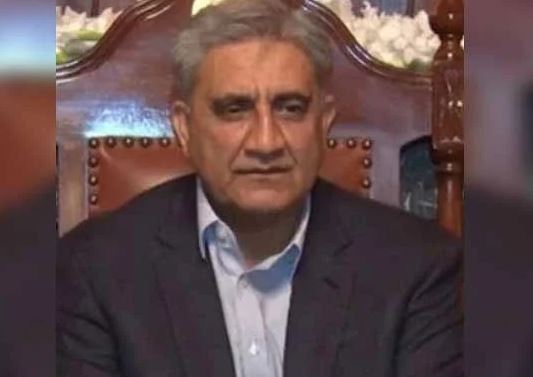
Ex-COAS Bajwa admitted to ICU

Ex-COAS Bajwa admitted to ICU

News Desk

RAWALPINDI: Former army chief Gen (retd) Qamar Javed Bajwa was admitted to the intensive care unit (ICU) after sustaining a head injury in a fall at his residence early Tuesday morning, according to family sources.

“Qamar Bajwa fell in the bathroom of his house at around 4:30am on Tuesday,” the family sources added.

They said that the former army chief sustained head injuries and is currently under treatment in the ICU.

General (retd) Qamar Bajwa served as Chief of Army Staff (COAS) from 2016 to 2022 and retired from office on November 29, 2022.

Prior to his appointment as COAS, he served at the General Headquarters (GHQ) as Inspector General of Training and Evaluation. He also held key positions in the 10 Corps as a lieutenant colonel, where he served as a General Staff Officer (GSO).

Bajwa served with a United Nations mission in the Democratic Republic of Congo as a brigade commander. He also served as Commandant of the Infantry School in Quetta.

Gen (retd) Bajwa belongs to the infantry’s Baloch Regiment, which has produced three army chiefs: Gen Yahya Khan, Gen Mirza Aslam Beg and Gen Ashfaq Parvez Kayani.

Haider Ali Strikes Gold for Pakistan at Grand Prix

Haider Ali Strikes Gold for Pakistan at Grand Prix

By our correspondent 

ISLAMABAD: National hero Haider Ali has once again brought immense pride to Pakistan by winning the gold medal in the discus throw event at the World Para Athletics Grand Prix held in Dubai.  

Haider Ali secured the top spot on the podium with an impressive throw of 54.71 meters, outperforming elite athletes from 54 countries, including competitors from India. 

Speaking from the venue, an emotional Haider Ali credited his success to rigorous preparation and divine intervention, saying, “I worked tirelessly for this championship, and I am grateful that my efforts have resulted in the Pakistani flag flying highest in the UAE. I am grateful to Almighty Allah and my entire nation, whose prayers have rewarded my dedication with a gold medal.” 

The athlete further said, “My gold medal victory is proof of the 360-degree support from ACTIVIT and its CEO, Rd. Rizwan Aftab Ahmed. From the podium in Paris to the World Grand Prix in Dubai, their great commitment — spanning elite medical care, precision nutrition, and financial stability — allowed me to focus solely on winning gold. “My deepest thanks also go to the Athletics Federation of Pakistan for providing the international stage. Together, we didn’t just compete; we conquered,” he added. 

This golden victory further solidifies Haider Ali’s status as Pakistan’s most successful Paralympic figure. He is expected to land in Pakistan on February 14, where a hero’s welcome awaits him. District authorities and local sports fans in Gujranwala are already preparing for a historic reception to honor the man who continues to prove that physical challenges are no barrier to world dominance.

‘Economic diplomacy’: Pakistan announces appointments of envoys to key capitals

'Economic diplomacy': Pakistan announces appointments of envoys to key capitals

DNA

ISLAMABAD: The federal government has appointed 19 ambassadors and consuls general to key capitals and cities abroad following the approval of Prime Minister Shehbaz Sharif, Deputy PM and Foreign Minister Senator Ishaq Dar announced on Wednesday.

The foreign minister said the new postings were aimed at building on two years of active international engagement.

Dar expressed confidence that the envoys would represent Pakistan with “clarity of purpose and wisdom, with clear emphasis on “economic diplomacy'”.

He praised the Ministry of Foreign Affairs and diplomats serving far from home, describing their professionalism as central to Pakistan’s global representation.

The appointments cover major missions in the United Kingdom, Europe, Africa, Central Asia and North America, reflecting Islamabad’s focus on diversifying partnerships and promoting commercial interests overseas.

Ambassadors/High Commissioners

Bangkok, Thailand — Saadia Altaf Qazi

Berlin, Germany — Salman Sharif

Dar-es-Salaam, Tanzania — Hasnain Yousaf

Dushanbe, Tajikistan — Irfan Ahmed

Geneva, Switzerland — Tahir Hussain Andrabi

Kampala, Uganda — Ashar Shahzad

Kathmandu, Nepal — Mohammad Aamir Khan

London, United Kingdom — Chaudhry Tipu Usman

Nairobi, Kenya — Dr Bilal Ahmed

Oslo, Norway — Asim Ali Khan

Stockholm, Sweden — Ahmed Amjad Ali

Tashkent, Uzbekistan — Muhammad Mudassir Tipu

Tehran, Iran — Imran Ahmed Siddiqui

Consuls General

Frankfurt, Germany — Ali Anser Zaidi

Guangzhou, China — Yasir Iqbal Butt

Kandahar, Afghanistan — Shahbaz Hussain

Los Angeles, United States — Siraj Ahmad Khan

Mazar-e-Sharif, Afghanistan — Awais Ahmad Khan

Montreal, Canada — Faisal Abro

Chief of Protocol Capt retd Usman has been designated as high commissioner to the UK, replacing Dr Mohammad Faisal, who is set to return to headquarters in August.

Faisal, formerly Pakistan’s envoy to Germany and ex-spokesperson for the Foreign Office, is among the likely candidates for the soon-to-be-vacant position of foreign secretary when incumbent Amna Baloch retires in September.

Ambassador Mudassir, currently serving in Iran, was designated for Uzbekistan, a post from which Ahmad Farooq is returning.

Additional Secretary for Disarmament and Foreign Office spokesperson, Andrabi, was posted as Permanent Representative to the UN in Geneva, a location where he has previously served.

Tension with Afghanistan mounts as diplomatic efforts falter

Tension with Afghanistan mounts as diplomatic efforts falter

Shamim Shahid

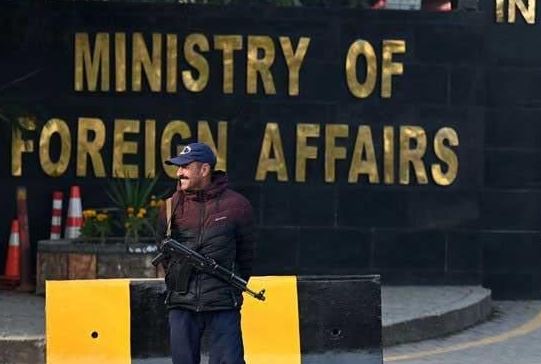
PESHAWAR: Tensions between Pakistan and Afghanistan have escalated sharply following a series of RETALIATORY measures that have strained diplomatic ties, disrupted trade and deepened mistrust between the two neighbouring countries.

Despite official justifications from Pakistan’s security establishment regarding the closure of border crossings, suspension of trade routes and tightening of travel restrictions, analysts suggest Islamabad may have misjudged Kabul’s response.

According to a senior Afghan journalist, Pakistan appeared to assume that the Taliban administration, like previous governments in Kabul, would eventually yield under economic and diplomatic pressure. However, the Afghan authorities have responded with what analysts describe as an unusually firm and uncompromising stance.

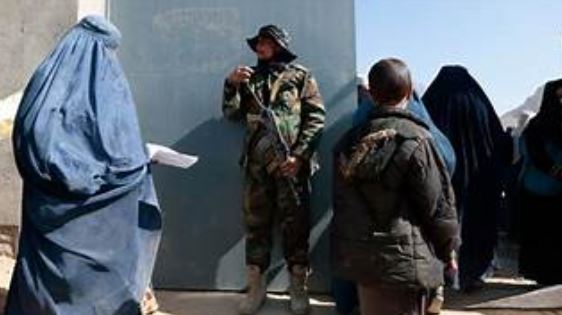
In recent weeks, Pakistan sealed key border crossings, halted bilateral trade and intensified measures against undocumented Afghan nationals, including arrests and repatriations. Afghan officials and commentators have criticised these steps, calling them coercive and counterproductive.

The fallout has affected ordinary citizens on both sides of the border. Traders have reported significant losses due to suspended supply chains, while families dependent on cross-border movement face uncertainty. The repatriation drive targeting Afghan nationals has also drawn criticism from humanitarian groups.

Diplomatic efforts to ease tensions have so far yielded limited results. Dialogues held in Doha, Ankara, Tehran and Riyadh reportedly failed to produce a breakthrough. In addition, informal outreach through religious scholars and clerics has not led to a thaw in relations, particularly amid continued public statements from Islamabad emphasising security concerns.

Observers note that this marks one of the rare occasions when Kabul has adopted a sustained and consistent position in the face of pressure from Islamabad. The Taliban administration has maintained that it will not compromise on what it describes as sovereignty and national dignity.

Meanwhile, some political figures in Pakistan have acknowledged past policy miscalculations regarding Afghanistan. Defence Minister Khawaja Asif recently conceded that previous engagements with militant groups had produced unintended consequences — a statement seen by analysts as a sign of introspection within sections of the political leadership.

US envoy lauds Pakistan’s macroeconomic stabilization efforts

US envoy lauds Pakistan’s macroeconomic stabilization efforts

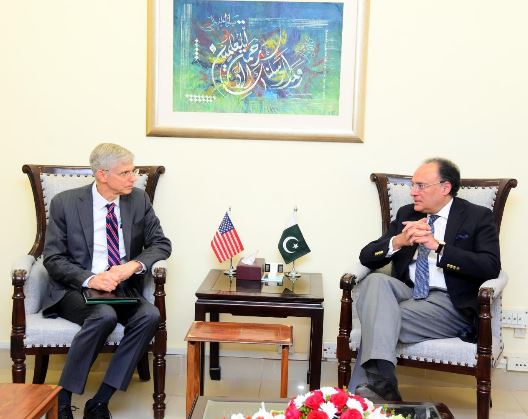
ISLAMABAD, FEB 11: /DNA/ – John Mark Pommersheim, Deputy Assistant Secretary, Bureau of South and Central Asian Affairs, United States Department of State, accompanied by Natalie A. Baker, the U.S. Chargé d’Affaires to Pakistan, called on the Federal Minister for Finance and Revenue at the Finance Division today.

The Finance Minister welcomed Mr. Pommersheim and appreciated the longstanding support and engagement of the United States in Pakistan’s economic development, particularly cooperation in multilateral financial frameworks. Both sides exchanged views on Pakistan’s economic outlook, reform agenda, and avenues for enhancing bilateral economic cooperation.

The Finance Minister briefed the visiting delegation on Pakistan’s macroeconomic stabilization and reform progress with focus on transitioning toward sustainable, export-led growth. He shared that the fiscal deficit has declined, the current account has improved due to strong remittance inflows and growth in IT exports, and credit ratings have shown positive movement.

The Minister emphasized that the government will stay the course in strengthening fiscal discipline, ensuring external stability, and undertaking structural reforms that support durable growth. He noted that reforms in state-owned enterprises and right-sizing of the public sector are being accelerated to improve efficiency and reduce fiscal risks.

The Finance Minister also highlighted growing investor confidence, citing recent indigenous investment initiatives and increased private-sector participation.

Mr. Pommersheim acknowledged Pakistan’s efforts toward fiscal stabilization and welcomed the signs of improvement in key macroeconomic indicators. He emphasized that the United States values a stable and prosperous Pakistan and noted that strengthening the investment climate remains a shared priority. He observed that U.S. businesses are closely watching reform progress and that improved policy consistency would further support commercial engagement.

The Finance Minister reiterated Pakistan’s commitment to facilitating foreign investment and maintaining regular engagement with the U.S. business community, including the U.S. Chamber of Commerce and the American Business Council.

The Finance Minister also briefed Mr. Pommersheim on Pakistan’s plans to re-enter international capital markets, including Panda Bond issuance, as part of a broader strategy to diversify financing sources.

On privatization, the Minister reaffirmed the government’s resolve to move forward expeditiously. He noted that the privatization process is gaining momentum, with upcoming steps including transactions in the banking and power distribution sectors, as well as outsourcing of major airports beginning with Islamabad. He added that recent developments have reinforced the government’s commitment to reform and private-sector participation.

The meeting concluded with both sides expressing appreciation for the constructive dialogue and agreeing to maintain close engagement to further strengthen Pakistan–U.S. economic cooperation.

RCCI delegation meets Pakistan envoy in Washington

RCCI delegation meets Pakistan envoy in Washington

ISLAMABAD, FEB 11 /DNA/ – A delegation of the Rawalpindi Chamber of Commerce and Industry (RCCI), led by President Usman Shaukat, visited the Embassy of Pakistan in Washington, D.C., and held a fruitful and meaningful meeting with Pakistan’s Ambassador to the United States, Mr. Rizwan Saeed Sheikh, and Mr. Mohammad Hanif Channa, Minister (Trade & Investment).

The RCCI delegation included Senior Vice President Khalid Farooq Qazi and members representing diverse sectors of trade and industry.

During the meeting, Ambassador Rizwan Saeed Sheikh lauded RCCI’s proactive role in promoting trade and investment opportunities and appreciated its continued efforts to strengthen economic engagement between Pakistan and the United States. He highlighted the unprecedented positive momentum in bilateral relations and emphasized the importance of transforming this goodwill into a strategic, economically entrenched partnership based on mutually beneficial opportunities.

The Ambassador underscored Pakistan’s improving economic indicators, including single-digit inflation, upgraded credit ratings by all three major international agencies, and continued engagement with the International Monetary Fund (IMF), describing these developments as strong signals of stability and investment potential.

RCCI President Usman Shaukat briefed the Ambassador on the Chamber’s key initiatives and programs aimed at promoting trade, facilitating investment, and exploring new and non-conventional sectors. He emphasized RCCI’s commitment to promoting a wide range of Pakistani products in the U.S. market and strengthening meaningful engagement between the business communities of both countries.

The meeting also provided an opportunity to exchange views on challenges in bilateral trade and to enhance coordination for effective interaction with policymakers.

Both sides reaffirmed their commitment to further strengthening economic cooperation and expanding Pakistan–U.S. trade and investment relations.

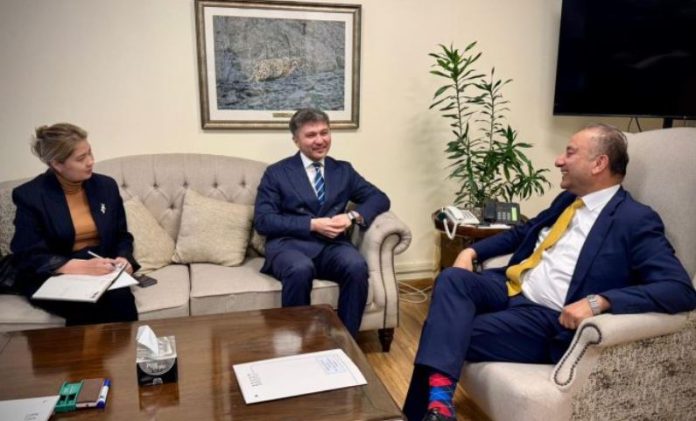
Kazakhstan envoy meets climate minister

Kazakhstan envoy meets climate minister

ISLAMABAD, 11 FEB (DNA) — Kazakhstan’s Ambassador to Pakistan, Yerzhan Kistafin, on Wednesday called on Federal Minister for Climate Change and Environmental Coordination Dr Musadik Malik to discuss bilateral relations, environmental cooperation and upcoming regional initiatives.

According to an official statement, the ambassador appreciated the hospitality extended to Kazakhstan’s President Kassym-Jomart Tokayev and his delegation during their recent visit to Pakistan, noting that ties between the two countries were steadily strengthening. Kistafin invited Dr Malik to attend a Regional Ecological Summit scheduled to be held in Astana in April.

The minister welcomed the invitation and highlighted the longstanding historical and cultural links between Pakistan and Kazakhstan, stressing the need to expand cooperation and trade not only bilaterally but also with the wider Central Asian region.

The two sides also reviewed progress on the implementation of a memorandum of understanding signed during President Tokayev’s visit and explored potential joint initiatives, particularly in artificial intelligence, financial technology and e-governance.

Environmental challenges, including water scarcity and climate change, also featured in the discussions, with both sides emphasising enhanced collaboration in environmental protection and sustainable development. — DNA

Stay Connected

64FansLike
60FollowersFollow

Latest Reviews

Exchange Rates

USD - United States Dollar
EUR
1.14
GBP
1.34
AUD
0.70
CAD
0.71