Home Blog Page 2532

Shaukat Tareen’s move to reduce cement prices lauded

The Pakistan Economy Watch (PEW) on Friday lauded the efforts of Finance Minister Shaukat Tareen to reduce the cement prices which have increased to historic highs hitting developmental projects.

FM Shaukat Tareen has advised the cement manufacturers to sell the commodity at affordable prices as cement is one of the main component of construction, it said.

Mr. Tareen should also direct manufacturers of steel bars to reduce their prices which has crossed all the limits, said Chairman PEW Brigadier (retd) Muhammad Aslam Khan.

He said that the prices of all the construction material are rising despite protests by builders which are hitting public sector and private sector projects.

The government has increased allocation for developmental projects by 40 percent in the current budget which include transformation of Karachi, construction of small and large dams, and other initiatives that need to be shielded from the price hikes, he said.

Similarly, he said, the government has allocated Rs30 billion for Naya Pakistan Housing Plan which should be completed within projected costs otherwise, it may not remain affordable for many aspirants.

Aslam Khan said that the prices of cement and steel is very high therefore the government should allow its import after reducing taxes.

Import of cement, steel, iron, and other items will stabilize the prices in the local market while authorities should direct the Competition Commission of Pakistan to probe allegations of collusion in the cement and steel sector.  

It is an open secret that cement companies underutilize capacity when demand is low and; they stop colluding and prices go down but when demand strengthens, they get back their pricing power and raise prices in unanimity.

A cement bag that was supposed to be sold at Rs510 is now being sold at Rs670 while the price of steel bar has jumped from 112,000 per tonne to 167,000 per tonne which is not acceptable as these prices increases seem to be unfair and anti-competitive, he said.

Britain to end evacuations from Afghanistan ‘in a matter of hours’

London, Aug 27 :Britain said Friday that it plans to complete its evacuations out of Afghanistan “in a matter of hours”.

“We will process those people that we have brought with us, the 1,000 people approximately inside the airfield now,” British Defence Secretary Ben Wallace told Sky News.

“And we will seek a way to continue to find a few people in the crowd, where we can, but overall the main processing has now closed and we have a matter of hours.”

Wallace said that the UK had “closed the Baron Hotel” at 0330 GMT, where those wanting to fly to Britain had gathered.

It also closed the processing centre for asylum seekers, and shut Abbey Gate, one of the points of access to Kabul airport and one of the areas targeted in the twin suicide bombings on Thursday.

Nearly 14,000 British citizens and Afghans had been rescued as part of the UK evacuations since mid-August, Wallace said, but added: “The sad fact is not every single one will get out.”

Twin suicide bombs ripped through crowds outside Kabul airport on Thursday, killing at least 85 people including 13 US troops and deepening panic in the final days of an already frenzied evacuation effort from Taliban-controlled Afghanistan.

The bombings, claimed by the Islamic State (Da’esh) group, left scenes of carnage outside the airport where thousands of Afghans desperate to flee their country had massed.

Wallace said that the “horrendous” attacks “didn’t hasten our departure.

“We closed the Baron Hotel almost exactly on schedule. The threat is obviously going to grow the closer we get to leaving.”

Hunerkada to organize short courses of textile & fashion designing

ISLAMABAD, Aug 27 :Hunerkada College of Visual and Performing Arts on Sunday announced to organize classes of textile and fashion designing short courses aiming at promoting arts and fashion skills in the field of traditional culture.

According to Hunerkada officials, the registration process was started for 3 months, 6 months, and one year program.

Head of Hunerkada Amna Shah told APP, that highly professional faculty would impart training to the participants about textile advanced skills and new fashion.

She said that registered participants would be imparted training about a wide variety of techniques and topics, including vector pattern design, block-printing, texture mapping, creating watercolor fabric, and more.

  She said that there were so many topics to explore and with the support of experienced artists students would learn advanced skills in the textile & fashion fields.

  Amna said that Textile and Fashion designers play a vital role in the fashion industry.

She said that Hunerkada short courses were perfect for beginners, or those already working in fashion textile fields and wanted to expand their skills.

60 die in Kabul explosions

Over 100 critically injured; casualties include children; one blast occurred near the airport’s Abbey Gate and the other close to the nearby Baron Hotel

NEWS DESK/DNA

KABUL: Explosions outside Kabul airport on Thursday killed at least 60people, including children, and wounded many Taliban guards, a Taliban official said. The Turkish Defence Ministry said there were two explosions.

The Russian Foreign Ministry said a second explosion went off outside the airport in the Afghan capital, adding that at least 60 were killed and 15 injured.

Pentagon spokesman John Kirby also said one blast occurred near the airport’s Abbey Gate and the other close to the nearby Baron Hotel. Two US officials said at least one of the explosions appeared to be from a suicide bombing.

US officials say one of the explosions appears to be a suicide bomb.

A United States official said US service members were among the wounded, adding he was citing an initial report and cautioning that it could change. He said there were casualties but did not know how many or of what nationality.

Kabul’s Emergency Hospital said in a tweet that it has received more than 30 patients so far while six others were already dead on arrival.

Thousands of people have been gathering outside the airport in recent days. Western troops are racing to evacuate foreigners and Afghans who helped Western countries during the 20-year war against the Taliban, and to get out themselves by an Aug 31 deadline.

“We can confirm that the explosion at the Abbey Gate was the result of a complex attack that resulted in a number of US & civilian casualties,” Kirby said on Twitter. “We can also confirm at least one other explosion at or near the Baron Hotel, a short distance from Abbey Gate.”

A US official told Reuters as many as three US service members were among those hurt, and that US casualty numbers were expected to increase, according to initial information. At least one of the US personnel was seriously hurt, an official said.

The US Embassy in Kabul described “a large explosion” and said there had been reports of gunfire. US and allied officials have said they had intelligence that suicide bombers were threatening to attack the airport.

US President Joe Biden has been briefed on the explosion, according to a White House official. Biden was in a meeting with security officials about the situation in Afghanistan when the explosion was first reported, according to a person familiar with the matter.

Britain’s defence ministry said it was working urgently to establish what had happened at Kabul airport following reports of an explosion. “We are working urgently to establish what has happened in Kabul and its impact on the ongoing evacuation effort,” the defence ministry said on Twitter.

Institute of Strategic Studies (ISSI) held a webinar on “Evolving Situation in Afghanistan ”

ISLAMABAD: The Centre for Afghanistan, Middle East & Africa (CAMEA) at the Institute of Strategic Studies (ISSI) held a webinar on “Evolving Situation in Afghanistan ” on August 26, 2021. The distinguished speakers included: Dr. Abdullah Anas , author of ‘To the Mountains: My Life in Jihad, from Algeria to Afghanistan’, Mr. Tamim Asey, Founder & Executive Chairman of the Institute of War and Peace Studies (IWPS), Kabul, Mr. Adam N Weinstein, Research Fellow at the Quincy Institute, Ms. Amina Khan, Director CAMEA, ISSI. Ambassador Aizaz Ahmad Chaudhry, Director General ISSI, Dr. Daud Abdullah, Director Middle East Monitor (MEMO), and Ambassador Khalid Mahmood, Chairman BOG, ISSI also spoke on the occasion.

During his introductory remarks, Dr. Daud Abdullah stated that the presence of foreign troops in Afghanistan was always seen as an affront to what it means to be an Afghan. The reaction which we saw as a result of the invasion was predictable for a country that was never colonised. There had long been a recognition that the war in Afghanistan was unwinnable. Even after the Afghan army mobilized a force, they were unable to reverse the trend of defeat and the invading forces could not motivate young Afghans to fight against their fellow Afghans. He also added that after what he called a ‘misadventure’, the inquisition, export and imposition of western values remains a fantasy. Afghanistan represents a classic case in this regard, he stated.

During his welcome remarks, Ambassador Aizaz Ahmad Chaudhry said that the end of any occupation is an inevitable reality and should be endorsed. He believed that the Taliban could achieve political stability in Afghanistan, provided they form an inclusive setup and honour their commitments and adopt a more moderate outlook. Moreover, the Taliban should honour their promise that Afghan soil will not be used against any other country- something which all of Afghanistan’s neighbours are very sensitive about. He said that the Ashraf Ghani government was dependent on economic assistance from the West, but  now the Taliban should not expect any economic assistance from the West. Hence, the Taliban should instead count on trade and transit trade for economic development, especially through Pakistan and Iran.

Dr Abdullah Anas said that though I am Algerian and I live in the UK, my heart remains in Afghanistan. Happiness through military victory is not permanent; the real victory will be a political victory. He said that before we go to the topic of  international recognition of the Taliban, we have to solve the issue of a political solution inside Afghanistan. History is a witness that the politics of exclusion and intolerance did not last long. The Taliban need to learn from this and be compelled to shape the future political system of Afghanistan. He added that there needs to be reconciliation between all Afghan factions for enduring peace and stability. Pakistan is like the ‘big brother’ of Afghanistan, which automatically means it has the responsibility of facilitating the establishment of an inclusive political system in Afghanistan. One system, one idea and one faction cannot rule Afghanistan, he concluded.

Dr. Tamim Asey said no single group can rule Afghanistan and any power grab will not survive in Afghanistan. He stated that wars are a costly business and the resources to facilitate war in Afghanistan should be questioned. It is too early to say that the Taliban takeover is a military victory since fighting is still ongoing. He advised the Taliban to accept the diversity of Afghanistan. The way to win peace is to form an inclusive, broad based government. At the moment the smartest policy for the Taliban to secure international support is to first announce their vision, form an inclusive government and not to pursue security trade offs. If these are not done within the next six months, fighting will re-emerge and Afghanistan will plunge into another civil war. There also needs to be a reset of relations with Pakistan and the Taliban should also rethink their relation with the West. The key is to win peace now, he concluded.

Dr. Adam Weinstein said that Afghanistan has always been beholden to what outside powers want for it. The ideal situation would have been the formation of an inclusive set up in Afghanistan and there was some form of transition instead of the present uncertainty.  The previous government in Kabul was mired in strategic incompetence and pursued their own short sighted political gains; as a result, Afghans suffered. He also said if something is not done soon, there will be casualties in Afghanistan due to starvation. It also needs to be ensured that there needs to be the creation of a system where a political equilibrium emerges. Afghanistan is not a country that can be sustained through cross border trade since it is a country which has been heavily dependent on aid. He also added that the recent ‘Sanction Pakistan’ movement is a laughable proposition because it does not solve any US problem related to Afghanistan. Here he added that though Pakistan does not have complete leverage over the Taliban, it is in Islamabad’s interest to work with the Taliban government and form an inclusive government.

Ms. Amina Khan stated that there is no doubt that  with the announcement of the US withdrawal, in the absence of a negotiated settlement,  a military takeover by the Taliban was expected, the manner, and  the speed at which the group  has taken over, along with the tactics employed was certainly not anticipated. While many were foreseeing bloodshed, unlike the past, the Taliban have so far  adopted non offensive tactics,  and thus by far the transition process has been relatively smooth. The Taliban have assured that they  will not resort to any sort of violence in fear that they will lose the support and recognition the group so badly needs from the international community  to legitimize their rule even if it is within the context of an inclusive set up. The Taliban have been holding meetings with major Afghan stakeholders and  while there are some signs of resistance, it appears that key Afghan stakeholders / factions are willing to work with the Taliban in this inclusive political set up we keep on hearing about. She concluded by stating that  Afghanistan must be viewed as  a  collective and shared responsibility –  which entailed ensuring the formation of an inclusive political setup that is acceptable to all.

In his conclusion remarks, Ambassador Khalid Mahmood stated that the Afghan war ended with a great human and economic loss and one thing which is certain is that Afghanistan is a graveyard of empires. He did not think the US has completely withdrawn from the region and remains a pre-eminent power. Sensitivity needs to be shown to the local culture and multilateralism needs to be reinforced. To have credibility there need to be no double standards, he said. The Taliban should be aware that international legitimacy needs to be earned.

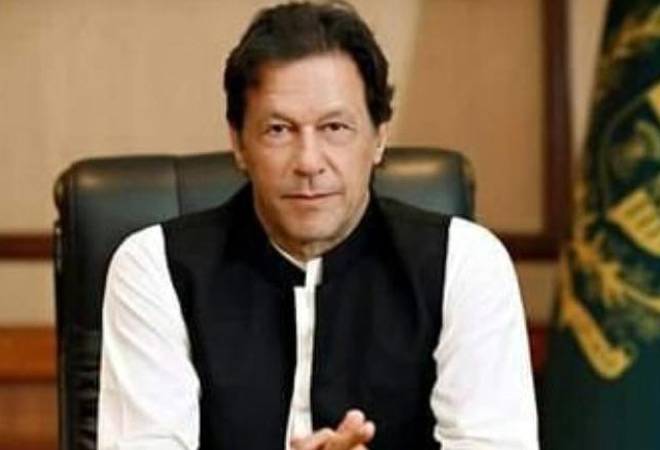
Pak will not become part of any conflict: PM

Says people have started criticizing Taliban even before their government is formed; Taliban should be given a chance
Ansar M Bhatti

ISLAMABAD, Prime Minister Imran Khan has emphatically stated that Pakistan will not become part of any foreign conflict and vowed to economically uplift the country.

He was addressing a ceremony in connection with three-year performance of Pakistan Tehreek-e-Insaf government in Islamabad on Thursday. The prime minister further said that Taliban should be given a chance to deliver. He said people have started criticizing Taliban even before their government is formed. He said Taliban have assured the world community that their soil shall not be used against anybody therefore they should be given proper time. If they fail to keep up their promises then the world has every right to criticize them.
Talking about the evolving situation in Afghanistan, Imran Khan urged the international community to play its due role in bringing peace to Afghanistan. He said the Taliban have assured to form an inclusive government for durable peace in Afghanistan and the world community should help them achieving this goal.
Drawing a comparison between the performances of his government with that of the previous one, the Prime Minister said current account deficit was twenty billion dollars in 2018 which has now been reduced to 1.8 billion dollars. Foreign exchange reserves have increased to 27 billion dollars which were 16. 4 billion dollars, three years ago.

The Prime Minister said our tax collection has increased from 3800 billion rupees to 4700 billion rupees and the remittances from 19.9 billion dollars to 29.4 billion dollars.

He said the industry has witnessed a growth of eighteen percent whilst the cement sale has witnessed an increase of forty-two percent. There has been a record sale of motorcycles and tractors whilst the sale of
cars has shown an increase of eighty-five percent. He said 1100 billion rupees of additional income has gone to the farmers. He said it is the first time that our exports are witnessing an increase.

The Prime Minister said Pakistan pursued a sagacious policy of smart lockdown after the break out of Covid-19 pandemic in order to protect lives and livelihood of the people. He said our policy was appreciated at the international level, including World Health Organization and World Economic Forum.

Imran Khan said our government is pursuing the mission of justice, humanity and self-esteem. He said the government has waged a struggle against the mafia in order to bring the influential people under the law as it is the only way the country can be taken forward on the path of progress and development.

The Prime Minister said anti-corruption department in Punjab made recoveries of 450 billion rupees in the last three years which were mere 2.5 billion rupees before the PTI came into the power. Similarly, the NAB made recoveries of 519 billion rupees during the last three years.

Alluding to Ehsaas program, he said allocation of this social safety net has been enhanced from 110 billion rupees to 260 billion rupees. He said our Cash Emergency program, launched after the breakout of Covid-19 to protect the vulnerable groups, has got recognition from the World Bank.

He said our focus is to empower the women through education. He said this is the reason that female students at the school level are being given more scholarships than the boys. He said legislation has also been done to protect the rights of women.
The Prime Minister said our Kamyab Pakistan Program is also on the cards to uplift four million poor households. He said under this program, interest free loans will be provided to the families to start their
businesses. Besides, one person from each family will be provided with technical training. These families will also be provided with health cards and easy loans to build their houses.

He said health cards have been provided to each household in Khyber Pakhtunkhwa whilst the same facility will be extended to each household in Punjab by the end of this year.

He said Kissan Card scheme has also been launched to provide necessary assistance to the farmers. He said initially this scheme has been started in Punjab and it will be extended to Azad Kashmir, Gilgit
Baltistan and Khyber Pakhtunkhwa.

Urging the youth to learn from the life and teachings of the Holy Prophet Hazrat Muhammad Sallallaho Alaihe Wasallam Khatim-un-Nabiyeen, the Prime Minister said the government will introduce a course for the students of grade 8 to 10 for this purpose.

The Prime Minister specially thanked and appreciated the armed forces saying their professionalism and readiness give a sense of security to the people of this country. He said the real strength and importance of our armed forces came to the fore in the wake of Pulwama incident.

CGSS organizes 6 week on-campus internship for undergrads

ISLAMABAD: Six weeks On-Campus Internship Program for the Under-Grad Students of Bahria University is being organized by Center for Global & Strategic Studies (CGSS), Islamabad.

His Excellency Aybek Arif Usmanov, Ambassador of the Republic of Uzbekistan to Pakistan discussed Regional Connectivity between Central Asia and South Asia and the future of Pakistan and Uzbekistan.

The lecture commenced with the video speech of His Excellency President of the Republic of Uzbekistan Shavkat Mirziyoyev that he delivered at the International Conference on “Central and South Asia: Regional Connectivity, Challenges and Opportunities”.

His Excellency Aybek Arif Usmanov, Ambassador of the Republic of Uzbekistan to Pakistan expressed gratitude to Dr. Adam Saud, Dean, Bahria University, Islamabad, Mr. Khalid Taimur Akram, Executive Director, CGSS and the interns. He praised the CGSS’s initiative of organizing this on campus internship program.

H.E Aybek Arif Usmanov gave brief description on creation of Uzbekistan. He stated that the roots of Islam belongs to Uzbekistan and Islam came from Uzbekistan. Pakistan and Uzbekistan have historical ties and they are linked to each other. He praised the initiatives of Prime Minister of Pakistan regarding Regional Connectivity among Central Asia and South Asia. He also discussed some challenges that can come in the way of connectivity between two regions.

H.E Aybek Arif Usmanov gave a detailed overview of Uzbekistan’s President Speech presented at the International Conference on the Central and South Asia: Regional Connectivity, Challenges and Opportunities.

His Excellency stated that the President’s speech has the message that the fate and future of Central and South Asian countries depends on how the younger generation grows, what education they get, how they will be brought up, and what environment we will create for them.

H.E Aybek Arif Usmanov emphasized that Uzbekistan is a reliable, stable and predictable partner aimed at developing the constructive and manually beneficial cooperation. He discussed how Regional Integration will help in the future by reducing the costs of producers and promotion of goods that are competitive in foreign markets. In addition when the Central Asian countries carry out trade operations with the region, they have the shortest route to deliver goods which gives them advantage in saving the transport costs.He discussed that the interests of the Central Asian countries also meet the joint creation of international transport corridors and International transport infrastructure in the region which will help to reduce transport costs in delivering of exports from Central Asia to world markets.

H.E Aybek Arif Usmanov discussed the prospects for economic cooperation with Central and South Asian countries, he stated that main trading partners of Central Asia countries among the South Asian Countries are Afghanistan and Pakistan. The most active trade and economic cooperation of the Central Asian countries is with Afghanistan, due to the geographical proximity as well as the great dependence of the Afghan domestic market on imports of food and industrial products.

He mentioned that Pakistan and Uzbekistan are catalysts for connectivity between Central and South Asia. He appreciated the bilateral relations between Pakistan and Uzbekistan that are growing day by day.

Mr. Jasur Saidahmedov, 2nd Secretary, Embassy of the Republic of Uzbekistan stated that in order to continue to effectively expand Pak-Uzbek bilateral economic and cultural cooperation, we developed strategy for intra-provincial partnership. That means direct cooperation between respective territories, provinces of two states without the involvement of central or federal government.  He also stated that Uzbekistan’s Government has created favorable and attractive investment climate for the business community of Pakistan. As the result of this, around 166 joint venture companies with Pakistan are successfully operation in Uzbekistan.

Mr. Khalid Taimur Akram, Execuitve Director CGSS highlighted the significance of the Central & South Asia Connectivity presented by H.E Shavkat Mirziyoyev. He encouraged the students to study the prospects of this initiative for Pakistan and for the world. He also enlightened the students about the culture of Uzbekistan and the shared history with Pakistan. Mr. Khalid Taimur Akram was of the view that President Shavkat Mirziyoyev has presented a revolutionary idea that will do wonders for our region and it’s future. The lecture was followed by an interactive session which was moderated by Mr. Muhammad Sheraz Hamid, student of 8th semester, Bahria University, Islamabad.

Accused involved in firing on police arrested

RAWALPINDI, Aug 26 :Rawalpindi District Police have arrested an accused allegedly involved in firing on police at Range Road and injuring a cop.

According to a police spokesman, Westridge police after receiving information about firing on police at Range road launched search operation to arrest the accused. When the police signaled to stop two bikers, they opened fire and tried to flee.  During exchange of fire, an accused namely Yasir received bullet injuries and rounded up by Westridge police while other managed to escape from the scene.

The arrested accused revealed that he was involved in firing at Range Road on Wednesday night.

According to details, on Wednesday night, Westridge Police stopped a biker and recovered ‘Ice’ from his possession.

Meanwhile, the accused opened fire on the Head Constable Sher Afghan and managed to escape from the scene leaving his motorcycle.

The injured cop was shifted to hospital where City Police Officer, Rawalpindi and other senior police officers reached and inquired after the health of the Head Constable.

CPO directed Superintendent Police, Potohar to ensure provision of best possible medical treatment facilities to the injured cop.

A search operation to net the fugitive accused was also launched.

Superintendent Police, Potohar told that the fugitive criminal would also be arrested and brought to justice.

Those who attack the lives and property of the citizens cannot escape the law, the CPO Muhammad Ahsan Younis said.

Govt urged to tackle shortage of doctors, medical equipments in Tank hospital

PESHAWAR, Aug 26 :Medical Superintendent (MS) of Tank hospital has urged the government to address the shortage of doctors and medical equipment in the health facility which catered to a vast area.

Talking to APP, MS Dr. Abbas Sherani said provision of clean drinking water in Tank hospital was one of the grave problems but authorities concerned resolved it.

Moreover, he said that provision of uninterrupted power supply was vital for better service delivery and in this regard an amount of Rs 25 million had been allocated for 24-hour power supply for feeders.

He said despite limited resources, the management of the hospital was trying their level best to provide best healthcare facilities to people and added inclusion of Tank Hospital in B category and removing shortage of doctors would have the best impact on performance of the hospital.

He was of the view that referral rate would also decrease when people would get best treatment in the hospital of their own area.

He said the hospital had neither a heart specialist nor a CT scan machine and added it was not possible to treat a head injury or a heart patient without a CT scan.

Thus, he added that the government would provide more doctors and medical equipment to the hospital. Dr. Abbas Sherani further said that a letter had been sent to the provincial government and boards of directors to fill the shortage of doctors for Tank Hospital. He hoped that the shortage of staff in Tank Hospital would be met

Stay Connected

64FansLike
60FollowersFollow

Latest Reviews

Exchange Rates

USD - United States Dollar
EUR
1.15
GBP
1.35
AUD
0.70
CAD
0.71