Home Blog Page 253

Pakistan Navy Ship KHAIBAR joins Türkiye Naval drills

Pakistan Navy Ship KHAIBAR joins Türkiye Naval drills

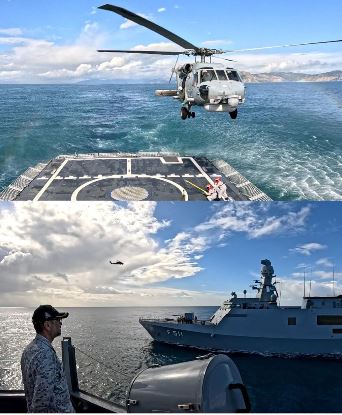
RAWALPINDI: /DNA/ – The newly commissioned, state-of-the-art Pakistan Navy Ship KHAIBAR, during its maiden voyage from Türkiye to Pakistan, visited Aksaz Naval Base, Türkiye, and participated in Exercise TURGUTREIS-XIII and joint patrols with ships of the Turkish Navy.

During the stay at Aksaz, the Commanding Officer of PNS KHAIBAR called on the Turkish Southern Sea Area Commander. During the meeting, discussions focused on enhancing bilateral naval cooperation and fostering regional stability through collaborative efforts.

Later, Southern Sea Area Commander, and Commander Aksaz Naval Base, along with other Turkish Naval Forces officers, visited PNS KHAIBAR.

Following the port visit, PNS KHAIBAR participated in the PN-TN bilateral Exercise TURGUTREIS-XIII with Turkish Naval Forces ship TCG HEYBELIADA and a TNF SH-70 helicopter. The exercise featured a variety of sea evolutions to rehearse joint maritime operations and enhance interoperability. Upon culmination of the exercise, PNS KHAIBAR and TCG HEYBELIADA conducted a Coordinated Patrol (CORPAT) in the Eastern Mediterranean Sea.

The successful conduct of bilateral Exercise TURGUTREIS-XIII and CORPAT stands as a testament to the enduring strategic partnership and brotherly ties shared between Pakistan and Türkiye.

French govt honors Ayesha Raza with National Order of Merit award

French govt honors Ayesha Raza with National Order of Merit award

Taking the floor after receiving the honor, Ms. Farooq became visibly emotional as she thanked the French Government and the French Embassy for recognizing her work. She dedicated the award to her parents, her late husband, and her family members, acknowledging their unwavering support throughout her journey

Ansar M Bhatti

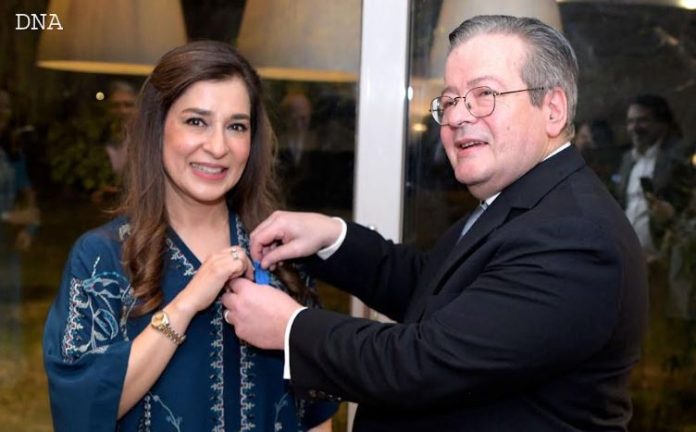
ISLAMABAD, FEB 13 /DNA/ — In a distinguished ceremony at the Residence of France, Ms. Ayesha Raza Farooq, Chairperson of Pakistan’s National Commission on the Rights of the Child (NCRC) and National Coordinator for Polio Eradication, was awarded the Ordre National du Mérite (Chevalier rank) by the Ambassador of France to Pakistan, Nicolas Galey.

The event gathered prominent figures including Finance Minister Muhammad Aurangzeb, Minister of State for Law and Justice Barrister Aqeel Malik, senior officials from the Ministry of Foreign Affairs and Ministry of Human Rights, as well as ambassadors, representatives of international organizations, and members of the diplomatic corps.

In his address, Ambassador Galey praised Ms. Farooq’s unwavering dedication to human rights, particularly children’s rights. He highlighted her distinguished career as a Senator, where she chaired key committees and contributed to legislation on health, justice, economic affairs, human rights, and climate change. Her leadership in Pakistan’s polio eradication campaign was noted as a cornerstone of her public service, earning her the Sitara-e-Imtiaz in 2018.

The Ambassador emphasized her tireless advocacy for education, pointing to the 25 million children still out of school in Pakistan. He also commended her efforts to ensure universal vaccination against polio, despite resistance from certain groups. France’s collaboration with Pakistan in these areas was underscored, including projects against child labor and abuse, initiatives to enroll out-of-school children, and healthcare programs supported by the French Development Agency and the Bill & Melinda Gates Foundation.

Recent legislative progress in Pakistan, such as laws prohibiting child marriage under 18 in Islamabad, Balochistan, Sindh, and Punjab, was celebrated as a collective achievement. However, Ambassador Galey reminded that challenges remain, particularly in meeting international human rights conventions linked to Pakistan’s trade relations with the European Union.

Concluding his speech, Ambassador Galey lauded Ms. Farooq’s energy, sincerity, and tenacity, qualities that have earned her respect and admiration across communities. He formally conferred upon her the insignia of Chevalier of the National Order of Merit, recognizing her exceptional contributions to children’s rights, education, health, and the strengthening of Franco-Pakistani cooperation.

Taking the floor after receiving the honor, Ms. Farooq became visibly emotional as she thanked the French Government and the French Embassy for recognizing her work. She dedicated the award to her parents, her late husband, and her family members, acknowledging their unwavering support throughout her journey.

She highlighted the progress Pakistan has made in reducing polio cases, noting that collective efforts by the government, international partners, and civil society have brought the country closer to eradication. “This award is not just mine,” she said, “it belongs to all those who have stood by me in the fight for children’s rights and in the struggle to eliminate polio from Pakistan.”

Her heartfelt words resonated with the audience, underscoring the human dimension of her lifelong commitment to children’s welfare and public health.

The ceremony concluded with warm applause, marking a significant moment of recognition for Ms. Farooq’s contributions to strengthening human rights, advancing education and healthcare, and fostering Franco-Pakistani cooperation.=DNA

============

Azerbaijan, Russia explore bilateral cooperation

Azerbaijan, Russia explore bilateral cooperation

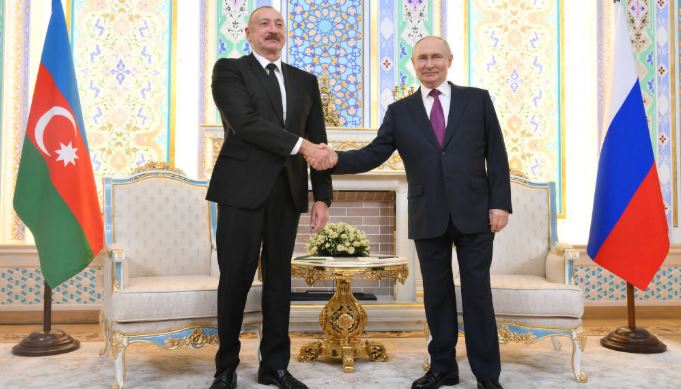
MOSCOW, FEB 13: Rahman Mustafayev, Azerbaijan’s Ambassador to Russia, met with Mikhail Galuzin, Russian Deputy Minister of Foreign Affairs.

The meeting focused on the topical issues of bilateral cooperation agenda. The officials reaffirmed both countries’ commitment to further develop relations in line with the Declaration on Allied Interaction between Azerbaijan and Russia.

The meeting also covered other regional and international developments.

February 13 marks World Radio Day

February 13 marks World Radio Day

BAKU, FEB 13: Proclaimed in 2011 by UNESCO Member States and adopted by the United Nations General Assembly in 2012, World Radio Day (WRD) is celebrated every February 13. It is a Day to thank broadcasters for the news they deliver, the voices they amplify and the stories they share.

Today Artificial Intelligence (AI) opens a new chapter: not just for innovation but for deepening their bond with listeners.

Radio stands at a moment of transformation where AI can help strengthen its core mission: informing, educating, and entertaining. By automating routine tasks—like scheduling, voice-tracking, weather and sports updates, and administrative workflows—stations can free teams to focus on creativity and connection.

AI also supports deeper audience insights, more relevant advertising, personalized listening experiences, and the amplification of under represented voices. With tools that enhance fact checking, validation, and archival discovery, radio can deliver higher quality content while maintaining human judgment at the center. These innovations ultimately reinforce what matters most: listener trust.

AI can drive the next wave of media innovation

To use AI responsibly, broadcasters need thoughtful strategy rather than just technology. This includes creating ethical internal policies, protecting privacy and data ownership, ensuring transparency, and handling generative audio with care. It also means investing in staff skills and collaboration and putting legal and security safeguards in place to manage emerging risks.

UNESCO’s World Radio Day 2026 initiative encourages stations to approach AI as an opportunity for growth and innovation—while preserving the warmth, reliability, and human touch that audiences value.

Among the many events being prepared for World Radio Day, UNESCO is encouraging radio stations to make use of new free resources, including access to broadcasting related AI tools and free AI training sessions. As in previous years, stations can also register to appear on the UNESCO World Radio Day map.

Pakistan seeks to bolster ‘brotherly’ ties with Bangladesh after BNP’s victory

Pakistan seeks to bolster 'brotherly' ties with Bangladesh after BNP's victory

ISLAMABAD, FEB 13: Top Pakistani leaders have congratulated the Bangladesh National Party (BNP) on its historic victory in Dhaka and sought to strengthen historic brotherly ties.

Relations between Pakistan and Bangladesh became better following the Gen Z-led ouster of Sheikh Hasina in 2024. Both nations have also started sea trade and began expanding government-to-government commerce last year.

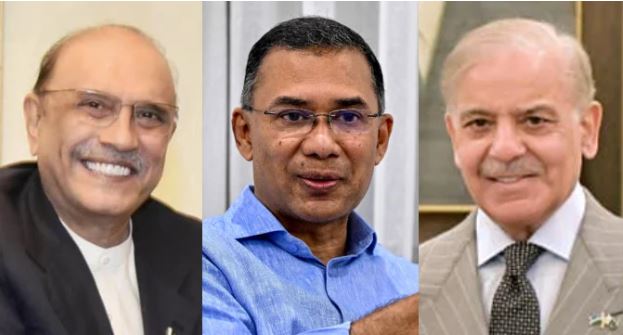
In his congratulatory message, Prime Minister Shehbaz Sharif said: “I extend my warmest felicitations to Mr. Tarique Rahman on leading the BNP to a resounding victory in the Parliamentary elections in Bangladesh.”

He also congratulated the people of Bangladesh on the successful conduct of the elections.

“I look forward to working closely with the new Bangladesh leadership to further strengthen our historic, brotherly multifaceted bilateral relations and advance our shared goals of peace, stability, and development in South Asia and beyond,” the PM added.

President Asif Ali Zardari, meanwhile, felicitated Rahman on BNP’s landslide victory and congratulated the people of Bangladesh on their successful, peaceful polls.

“Pakistan reaffirms strong support for democratic partnership and shared progress ahead,” he added.

The BNP won a decisive two-thirds majority on Friday in general elections, a result expected to bring stability after months of tumult following the ouster of former prime minister Hasina in a Gen Z-led uprising.

Latest counts in an election seen as the South Asian nation’s first truly competitive in years gave the BNP and its allies at least 212 of the 299 seats up for grabs, domestic TV channels said. The opposition Jamaat-e-Islami and its allies won 70 seats in the Jatiya Sangsad, or House of the Nation.

The BNP, which returns to power after 20 years, thanked the people soon after winning a majority in the overnight vote count and called for special prayers on Friday for the nation and its people.

“Despite winning … by a large margin of votes, no celebratory procession or rally shall be organised,” the party said in a statement calling for prayers nationwide.

A clear outcome had been seen as key for stability in the Muslim-majority nation of 175 million after months of deadly anti-Hasina unrest disrupted everyday life and industries such as garments, in the export of which Bangladesh is No.2 globally.

BNP leader Tarique Rahman is widely expected to be sworn in as prime minister. The son of the party’s founder, former president Ziaur Rahman, he returned in December to the capital, Dhaka, from 18 years abroad.

Nobel peace laureate Muhammad Yunus, 85, held office as interim head after Hasina fled to neighbouring India in August 2024.

In major upset, Zimbabwe beat Australia in T20 World Cup 2026

In major upset, Zimbabwe beat Australia in T20 World Cup 2026

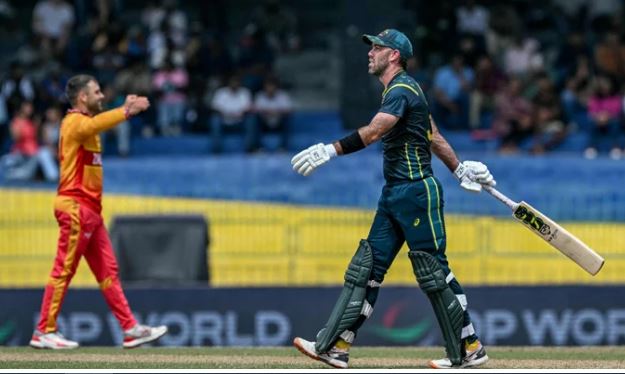
Zimbabwe on Friday pulled off a major upset by defeating Australia in their ICC Men’s T20 World Cup 2026 group-stage clash, registering a memorable victory against the favourites.

Chasing a target of 170, Australia were bowled out for 146 in a tense finish. The Kangaroos stumbled early as opener Josh Inglis was dismissed for just eight runs off four balls, including a six, by Blessing Muzarabani.

In the next over, Brad Evans struck, removing Cameron Green for a second-ball duck, leaving Australia in deep trouble at 24-2 in 2.5 overs. The pressure continued as Muzarabani struck again, sending back Tim David for a duck.

Stand-in captain Travis Head added 17 runs off 15 balls, including three crisp fours, before falling, leaving Australia reeling at 29-4 in 4.3 overs.

Glenn Maxwell and Matt Renshaw then rebuilt the innings with a vital 77-run partnership, taking Australia past the 50-run mark and giving hope of a chase.

However, Ryan Burl broke the stand in his first over, dismissing Maxwell for 31 off 32 balls, which included a four and a six, leaving the team at 106-5 in 14.2 overs.

The sixth wicket fell in the 16th over when Wellington Masakadza trapped Stoinis for six off four deliveries, leaving Australia needing 53 runs from 25 balls.

Renshaw held the innings together, reaching a well-deserved fifty, but Brad Evans removed Ben Dwarshuis for six, reducing Australia to 131-7 in 17.4 overs.

In a dramatic finish, Muzarabani dismissed Renshaw for a crucial 65 off 44 balls, which included five fours and a six, and also accounted for Adam Zampa, leaving Australia 23 runs short with the final batter Matthew Kuhnemann run out.

Batting first, Zimbabwe got off to a flying start as openers Brian Bennett and Tadiwanashe Marumani put on a 61-run partnership, setting the tone against the Kangaroos.

Marumani was dismissed by Marcus Stoinis for a brisk 35 off 21 balls, including seven boundaries, breaking the opening stand.

Bennett then partnered with Ryan Burl, and together they added 70 runs to guide Zimbabwe past the 100-run mark.

Bennett showcased his class, reaching his 10th T20I fifty while keeping the scoreboard ticking. The partnership ended when Burl was run out for 35 off 30 balls, leaving Zimbabwe at 131-2 in 16 overs.

Skipper Sikandar Raza joined Bennett and played a quick cameo, helping Zimbabwe cross the 150-run mark.

The Chevrons finished their innings strongly, losing only two wickets in the full 20 overs.

Bennett remained unbeaten on 64 off 56 balls, hitting seven fours, while Raza contributed a crucial 25 off 13 deliveries, featuring two fours and a six.

For Australia, Marcus Stoinis and Cameron Green claimed one wicket each, while the other bowlers struggled to make an impact.

Trump defies Israel on Iran strategy

Qamar Bashir


Qamar Bashir

Benjamin Netanyahu’s recent rush to Washington was not routine diplomacy. It was a geopolitical stress test. Since President Donald Trump resumed office, the Israeli prime minister has maintained close coordination with Washington. Yet this visit carried an urgency that signaled concern — perhaps even anxiety. The core question hovering over the meeting was unmistakable: Would the United States once again expand confrontation with Iran under Israeli pressure, or was Washington beginning to assert strategic independence?

The regional environment is tense. The United States has reinforced its military posture across the Gulf and Eastern Mediterranean, citing deterrence and stability. Iran’s nuclear enrichment levels — reportedly reaching up to 60% purity according to the International Atomic Energy Agency — remain the focal point of Western concern. Tehran insists its program is peaceful and reversible, while Israel views it as an existential threshold.

Netanyahu arrived seeking expansion of the negotiation framework. Israel has long argued that any agreement must go beyond uranium enrichment to include limits on Iran’s ballistic missile program and restrictions on its regional alliances. In Israeli strategic doctrine, Iran’s missile range and regional deterrence network form a unified threat architecture.

Yet post-meeting signals from Washington were restrained. President Trump indicated that nuclear talks would continue — but remain confined to the nuclear file. No immediate commitment was made to incorporate missile restrictions or regional dismantlement demands. That silence spoke volumes.

For decades, Washington’s Middle East posture closely mirrored Israeli security framing. This time, the United States appeared to draw a boundary. Why now?

First, domestic opinion is shifting. The Gaza war has deeply polarized American society. Estimates from humanitarian agencies suggest total Palestinian fatalities — direct and indirect — have surpassed 80,000 since the conflict’s escalation. The scale of destruction has fueled sustained protests across American universities and major cities. Younger voters increasingly question unconditional military assistance and open-ended strategic alignment.

Organizations such as the American Israel Public Affairs Committee remain influential, but the environment has changed. Campaign contributions and policy alignments are scrutinized in real time through digital media ecosystems. Lawmakers now face direct public questioning regarding foreign aid allocations and lobbying relationships.

Second, the economic calculus is sobering. A full-scale war with Iran would dwarf previous Middle Eastern interventions. The Iraq War cost the United States an estimated $2–3 trillion over two decades. Iran is geographically larger, militarily more advanced, and strategically integrated into regional networks. Disruption of the Strait of Hormuz — through which roughly 20% of global oil supply flows — could send crude prices above $150 per barrel. Inflationary shocks would ripple through American households already burdened by high interest rates and federal debt exceeding $34 trillion.

Third, the geopolitical landscape is no longer unipolar. China and Russia maintain strategic partnerships with Tehran. Europe has little appetite for another Middle Eastern war. The Global South increasingly resists Western military adventurism. Any unilateral escalation risks diplomatic isolation rather than coalition-building. In this context, “America First” takes on new meaning. Strategic restraint becomes not weakness, but prudence.

Netanyahu’s urgency reflects Israel’s own vulnerability calculations. From Jerusalem’s perspective, Iran’s missile program and regional alliances create encirclement risk. Israel’s security doctrine prioritizes preemption and dominance. But Washington’s calculus is broader: preserving global stability, economic balance, and strategic bandwidth across multiple theaters — including Ukraine and the Indo-Pacific.

Nuclear containment through verifiable inspection may be imperfect, but it is far less costly than war. The International Atomic Energy Agency remains central to any enforceable framework. If Iran restores comprehensive inspection access and caps enrichment levels, escalation logic weakens. Tehran frequently references a religious decree prohibiting nuclear weapons, though Western governments demand technical verification over theological assurances.

Washington increasingly recognizes that unqualified alignment with Israel carries reputational costs. In a world where emerging powers challenge U.S. moral authority, strategic overreach erodes influence.

There is also the question of sustainability. Continuous regional fragmentation — Iraq, Syria, Libya — has not produced durable stability. Military decapitation strategies have often created power vacuums rather than order. Iran, unlike those states, possesses cohesive national institutions and deep historical identity. Attempting regime destabilization would carry unpredictable consequences.

The emerging signal from Washington is not abandonment of Israel. It is recalibration. Conditional partnership rather than automatic escalation.In geopolitical terms, this is subtle but profound. For the first time in decades, the United States appears willing to define its own negotiation parameters, even when they do not fully align with Israeli maximalist positions.

If diplomacy holds, several outcomes become possible. Nuclear transparency reduces immediate escalation risk. Multilateral engagement on Gaza diffuses regional tension. Economic stabilization limits energy shocks. Strategic focus remains distributed rather than concentrated in one volatile theater.

But if negotiations collapse, pressure will return — from hawkish factions in Washington and from Israeli leadership advocating preemption. The durability of this recalibration will then face its true test. History rarely pivots on dramatic declarations. It turns on measured refusals — on lines quietly drawn.

Netanyahu’s urgent visit may ultimately be remembered not for what was demanded, but for what was declined. If Washington sustains its current posture, it signals a new doctrine: partnership without submission, deterrence without recklessness, and diplomacy before dominance.

In a region long defined by escalation cycles, even strategic restraint can reshape history. The question is no longer whether America supports Israel. The question is whether America will define its Middle East policy by Israeli urgency — or by American interest. The answer to that question may determine the next decade of regional stability.

Qamar Bashir

Press Secretary to the President (Rtd)

Former Press Minister, Embassy of Pakistan to France

Former Press Attaché to Malaysia

Former MD, SRBC | Macomb, Michigan

CDWP approves Rs160bn development projects

CDWP approves Rs160bn development projects

ISLAMABAD, Feb 13 (APP/DNA): The Central Development Working Party (CDWP) on Wednesday considered and approved a portfolio of development projects worth Rs160.2 billion at a meeting chaired by Federal Minister for Planning, Development and Special Initiatives Prof Ahsan Iqbal in Islamabad.

The forum reviewed proposals relating to the health, physical planning, housing, transport, and communications sectors, approving two projects with a cumulative cost of Rs8.5bn and recommending four major projects amounting to Rs151.7bn for consideration by the Executive Committee of the National Economic Council (ECNEC), said a release issued here on Friday.

Presiding over the meeting, Prof Ahsan Iqbal underscored the importance of aligning development interventions with national priorities, stating that public investment must deliver measurable improvements in human development, urban services and connectivity, particularly in regions affected by climate-induced shocks.

He said that the government remained committed to ensuring that federally supported and provincially implemented projects were designed for long-term sustainability and tangible socio-economic impact.

In the health sector, the CDWP examined the Sindh government’s project titled “Sindh Human Capital Investment: 1,000 Days – Integrated Health and Population Programme,” with a total cost of Rs55,078.535 million, which was recommended to ECNEC.

The project focuses on improving key indicators related to reproductive, maternal, newborn, child and adolescent health, nutrition and family planning.

It will be implemented by the Sindh Health Department in collaboration with the Population Welfare Department and is proposed to be financed through foreign funding.

The initiative is aimed at strengthening human capital outcomes during the critical early life cycle period, which is widely recognised as essential for sustainable economic growth.

Under the transport and communications sector, the Government of Sindh presented the Hyderabad Urban Infrastructure Development Package, with an estimated cost of Rs5bn. The CDWP approved the project, which will be financed through the Public Sector Development Programme (PSDP).

The project is expected to improve urban mobility and infrastructure, generating economic activity and enhancing access to services for residents of the Hyderabad region.

The forum also discussed the Karachi Urban Infrastructure Development Package under the physical planning and housing sector and recommended the project to ECNEC.

With a total cost of Rs15bn, the project will focus on priority infrastructure aimed at supporting the sustainable development of Karachi. The proposed interventions will cover multiple districts, including Karachi Central, East, South and West, as well as Korangi and Malir, and will be financed through the PSDP. The project is designed to address critical urban infrastructure gaps in Pakistan’s largest metropolitan centre.

Another major project recommended to ECNEC was the Emergency Flood Assistance Project – Sindh Works and Services Department Component, with a total cost of Rs60,054.590 million. The project will be financed through foreign funding, with 87 per cent provided by the Asian Development Bank and the remaining 13pc to be borne by the Government of Sindh through its Annual Development Plan.

The project covers several flood-affected districts, including Badin, Dadu, Hyderabad, Jamshoro, Kashmore, Larkana, Matiari, Mirpurkhas, Naushahro Feroze, Qambar Shahdadkot, Sanghar, Shaheed Benazirabad, Shikarpur, Tando Allahyar, Tando Muhammad Khan, Thatta and Umerkot. Its objectives include restoring and rehabilitating road infrastructure to ensure all-weather connectivity, improving access to markets and social services, reducing travel time and costs, and supporting agricultural and broader socio-economic recovery in flood-hit areas.

The CDWP approved the project titled “Improvement and Rehabilitation of BT Road from Liari to Lakhra and Uthal to Lakhra, District Lasbela,” to be executed in Balochistan at a cost of Rs3,515.067 million. The project, to be financed through the PSDP, aims to connect Lakhra tehsil with the district headquarters at Uthal and the Makran Coastal Highway.

The area was severely affected by floods in 2022, which disrupted mobility and economic activity. The rehabilitation of this road is expected to facilitate the transport of agricultural produce from Lakhra, an important agricultural hub, to markets, while improving access to education, healthcare and employment opportunities for local communities.

The meeting also considered the revised PC-I of the Winder Dam Project in Balochistan, with a total cost of Rs21,621.588 million, which was recommended to ECNEC.

The project will be financed through the PSDP, while land acquisition, command area development, security costs and provincial taxes will be borne by the Government of Balochistan. The dam is expected to contribute to water storage, irrigation development and improved water availability for agriculture and domestic use, thereby supporting livelihoods and enhancing resilience in the surrounding areas.

CDWP approved selection committee for Seerat Chairs. Under PSDP project, nine Seerat chairs are being established: Leadership and Governance, Human Rights and Justice, Education and Knowledge,  Social Justice and Welfare, Global Peace, Inter-Faith and Communal Harmony, Business, Commerce and Property Rights, Sustainable Development, and Gender Studies and Women’s Rights.

The purpose of establishing Seerat Chairs is to develop a body of knowledge from Seerat Studies in light of contemporary challenges and issues.

The Planning Minister directed that the Digital Media Unit should be established in the Seerat Centre to acquaint the new generation with Seerat and informing global audience about the timeless teachings of the Prophet Mohammad and remove misconceptions about Islam. The Minister also directed that the selection of Seerat Scholars should be completed within three weeks.

Concluding the meeting, Prof Ahsan Iqbal reiterated that development planning would continue to prioritise projects that strengthen human capital, restore climate-resilient infrastructure, and promote inclusive growth.

He said the Planning Commission would closely monitor implementation to ensure timely execution and effective utilisation of public resources, in line with the government’s broader development and reform agenda.

NUML, Korea University ink academic pact

NUML, Korea University ink academic pact

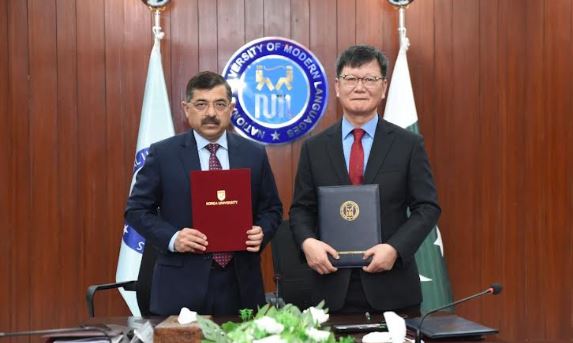
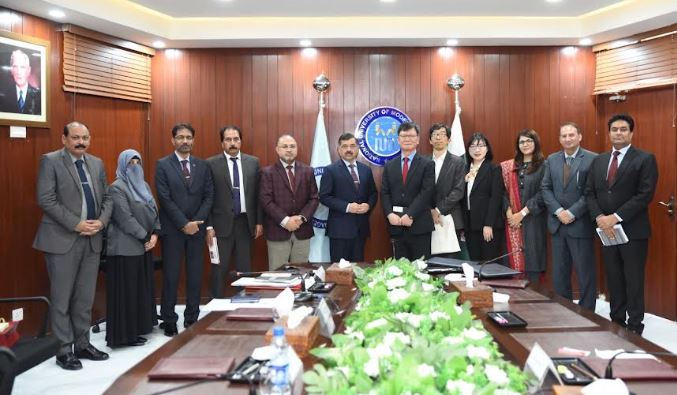
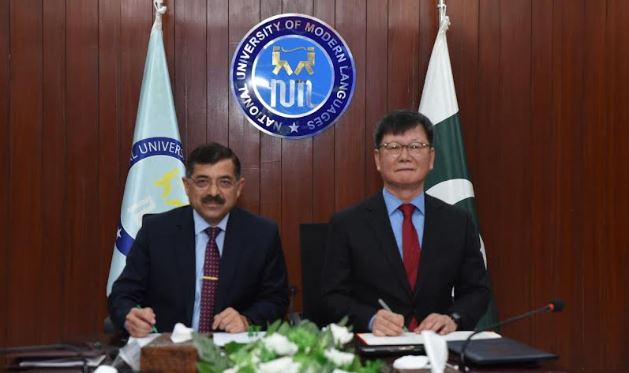
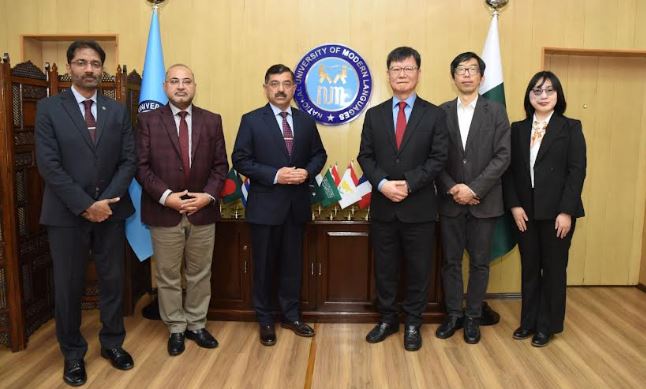
ISLAMABAD, FEB 13 /DNA/ – A Letter of Interest (LoI) was signed between the National University of Modern Languages, Department of Korean Language and Culture, and Korea University to promote academic exchange, research collaboration, and cultural cooperation between the two institutions.

NUML, Korea University ink academic pact

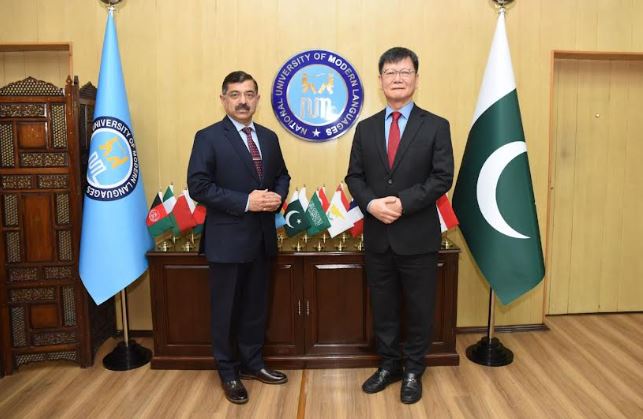
In this connection, a three-member delegation from The Korea University, led by Dr. Lee Hyungdae, Director, Institute of Korean Language and Literature, visited NUML and called on the Rector, Maj Gen Shahid Mahmood Kayani, HI (M) (retd.), at his office.

NUML, Korea University ink academic pact

During the meeting, both sides expressed their strong commitment to strengthening bilateral academic ties. The LoI aims to enhance cooperation in key areas including faculty and staff exchange, student exchange, academic material sharing, and joint programs such as collaborative teaching, research, conferences, and cultural activities.

NUML, Korea University ink academic pact

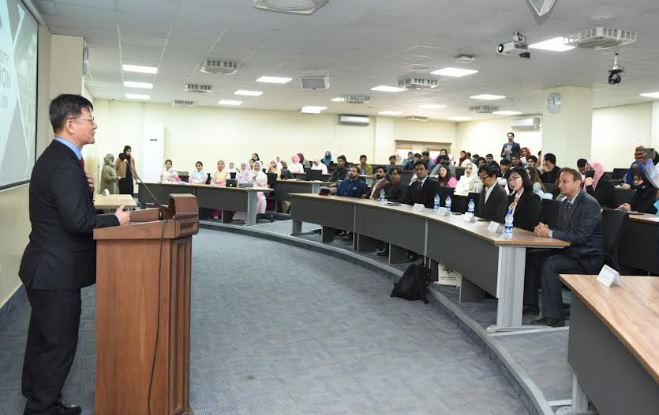
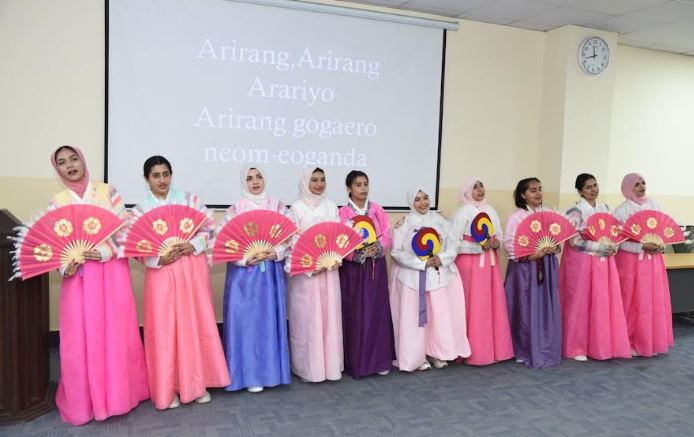
Later, the visiting delegation participated in a vibrant event showcasing Korean culture, organized by the Department of Korean Language and Culture at Iqbal Hall. Students presented colorful performances reflecting various aspects of Korean language and culture, which were highly appreciated by the guests.

NUML, Korea University ink academic pact

Addressing the gathering, Dr. Lee Hyungdae commended NUML for its active role in promoting the Korean language and culture in Pakistan. He announced that students of NUML’s Department of Korean Language and Culture who wish to pursue studies at Korea University would be granted a waiver of tuition fees, terming it a significant step toward encouraging academic mobility and international exposure.

NUML, Korea University ink academic pact

The visit and signing of the LoI mark an important milestone in strengthening educational and cultural relations between Pakistan and the Republic of Korea, reaffirming NUML’s commitment to international collaboration and academic excellence.

Pakistan assures BAT of policy reforms to curb Illicit tobacco trade

Pakistan assures BAT of policy reforms to curb Illicit tobacco trade

ISLAMABAD, FEB 12 /DNA/ – Federal Minister for Finance and Revenue, Senator Muhammad Aurangzeb, held a meeting today at the Finance Division with a delegation of British American Tobacco (BAT) led by Ms. Pascale Muelemeester, Regional Director, Asia Pacific, Middle East & Africa, along with senior executive members of British American Tobacco (BAT) and Pakistan Tobacco Company (PTC).

In his opening remarks, the Finance Minister underscored that Pakistan’s ongoing structural reform agenda, undertaken under the leadership of the Prime Minister, is aimed at breaking the historical boom-and-bust cycles through fiscal discipline, broadening of the tax base, and strengthened enforcement and compliance. He emphasized that fiscal sustainability requires equitable taxation, improved compliance across all sectors, and decisive action to curb leakages and illicit activity.

Highlighting progress on tax administration reforms, he noted that the Government’s tax transformation, anchored in reforms to people, processes, and technology, has strengthened enforcement mechanisms through AI-led CRM systems, AI-led production monitoring, and track-and-trace initiatives. He shared that enhanced enforcement across sectors including sugar, cement, tobacco, textiles, and beverages has resulted in measurable improvements in compliance and revenue collection.

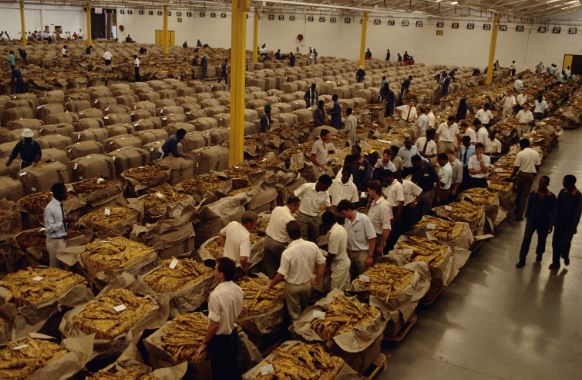
The delegation was briefed on ongoing enforcement actions against illicit cigarette manufacturing and smuggling. It was shared that record seizures have been made during the current year, with coordinated operations involving customs, inland revenue, provincial authorities, and dedicated enforcement units to curb the illegal trade of both finished products and raw materials.

The BAT delegation appreciated the Government’s enforcement efforts and raised concerns regarding excise stability, the widening price differential between formal and illicit products, and the export competitiveness of Pakistani tobacco. The delegation emphasized that policy predictability and a stable excise regime would support formal sector growth, strengthen revenue generation, and enable long-term investment planning.

The delegation also highlighted export opportunities, particularly in the Kingdom of Saudi Arabia and other international markets, and underscored the importance of competitive crop pricing and regulatory alignment to enable Pakistan to expand its footprint in global tobacco exports.

Responding to these concerns, the Finance Minister noted that sectoral reviews are underway to assess policy measures and address anomalies where required, while ensuring alignment with broader fiscal objectives. He reiterated that revenue mobilization remains critical for fiscal stability; however, the Government remains open to constructive engagement to ensure policies are effective and sustainable.

On the macroeconomic front, the Minister highlighted significant progress over the past two years, including improved fiscal indicators, declining inflation, strengthened foreign exchange reserves, and enhanced external stability. He emphasized that maintaining macroeconomic discipline is essential to providing a predictable and stable environment for both domestic and foreign investors.

The Minister further stressed that Pakistan’s long-term growth strategy is anchored in export expansion. He emphasized the importance of enhancing export competitiveness and facilitating sectors with strong export potential, including tobacco and related value-added products.

The meeting concluded with both sides agreeing to continue constructive engagement on enforcement, taxation, and competitiveness issues to ensure policy coherence and sustainable sectoral development.

Stay Connected

64FansLike
60FollowersFollow

Latest Reviews

Exchange Rates

USD - United States Dollar
EUR
1.14
GBP
1.34
AUD
0.70
CAD
0.71